
Kōpiko (Psychotria hawaiiensis)
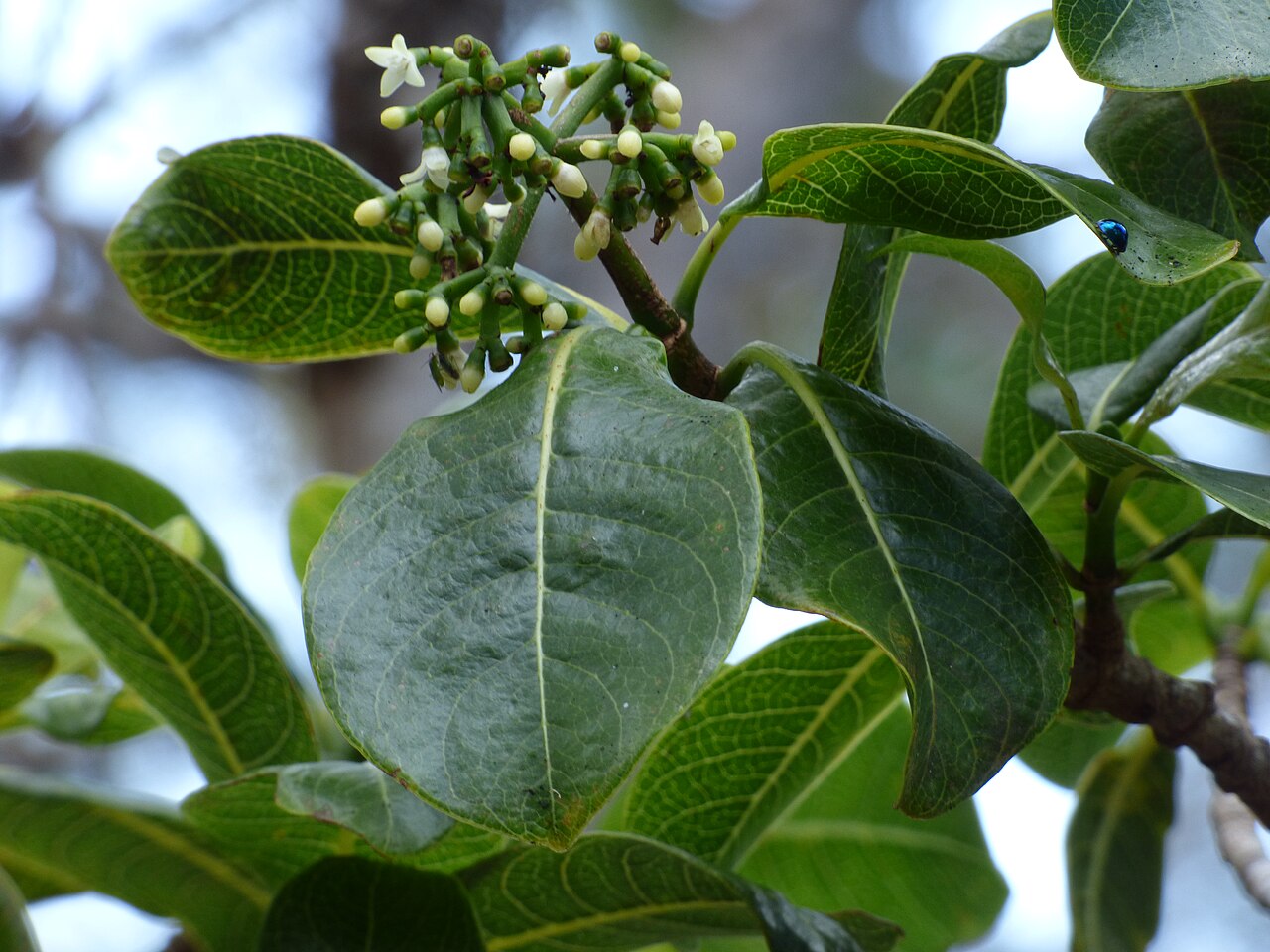
Kōpiko (Psychotria hawaiiensis) is a Hawaiian forest tree whose appeal lies in its foliage, branching, and ecological relationships. White to greenish-white flowers are modest, and the small fruits become more conspicuous as they mature. In a suitable garden it can provide the layered, leafy character of an understory tree without relying on enormous blossoms or a rigid formal outline.
The species is endemic to Hawaiʻi. The University of Hawaiʻi profile records it on Molokaʻi, Maui, and Hawaiʻi Island, where it is especially common relative to the other listed islands. It is one of several plants called kōpiko, so a common-name label alone is not enough to establish identity. Ask for the complete botanical name and, where known, the variety and source of the nursery stock.
For planting, think first about partial sun, reliable moisture, and drainage. Kōpiko is not a substitute for a drought-adapted coastal tree simply because some records come from relatively dry forest. Its forest setting offers a better starting point: protection from harsh exposure, space for a small tree crown, and soil that remains aerated while supplying water.
Quick Facts
| Scientific Name | Psychotria hawaiiensis |
| Family | Rubiaceae |
| Plant Type | Evergreen native tree or variable shrub/tree |
| Mature Height | 15–30 ft in many plantings; old trees can approach 45 ft |
| Mature Spread | Variable; older forest trees can spread around 30 ft |
| Growth Rate | Site dependent; do not assume rapid growth |
| Sun Exposure | Partial sun |
| Water Needs | Average to moist, with good drainage |
| Soil Type | Well-drained soil matched to native habitat and nursery provenance |
| Soil pH | Assess local soil and nursery performance before amending |
| Bloom Time | Variable with source and conditions; observe local seasonality |
| Flower Color | Small white to greenish-white flowers |
| Fall Color | Evergreen; seasonal new growth may contrast with older foliage |
| Fruit | Small fleshy fruits maturing toward orange |
| Deer Resistant | Not a browse-proof planting; protect young trees where needed |
| USDA Hardiness Zones | Use Hawaiian island, elevation, and exposure guidance for site selection |
Identification and Form
A Variable Hawaiian Understory Tree
Psychotria hawaiiensis belongs to Rubiaceae, the coffee family. Family membership does not make its fruit an edible coffee substitute. The useful identification features are the combination of foliage, flowers, fruit, and documented provenance. Kōpiko names have been applied to multiple related Hawaiian species, and older references may use Straussia rather than Psychotria.
The University of Hawaiʻi account recognizes varieties hawaiiensis, hillebrandii, and scoriacea. It also notes intergradation with Psychotria mauiensis, especially in the Kohala Mountains. This is a reason to be careful with a photograph-based identification, not a reason to assume that every plant bearing the common name is interchangeable. Restoration projects should resolve the identity and origin of planting material before installation.
Many garden-sized trees fit within a roughly 15–30-foot planning range, but the species is not confined to that size. The published profile records old trees reaching about 45 feet with a spread around 30 feet and notes that such dimensions are unlikely under ordinary cultivation. Leave room for the actual tree rather than treating a small nursery specimen as a permanent shrub.
Flowers and Fruit
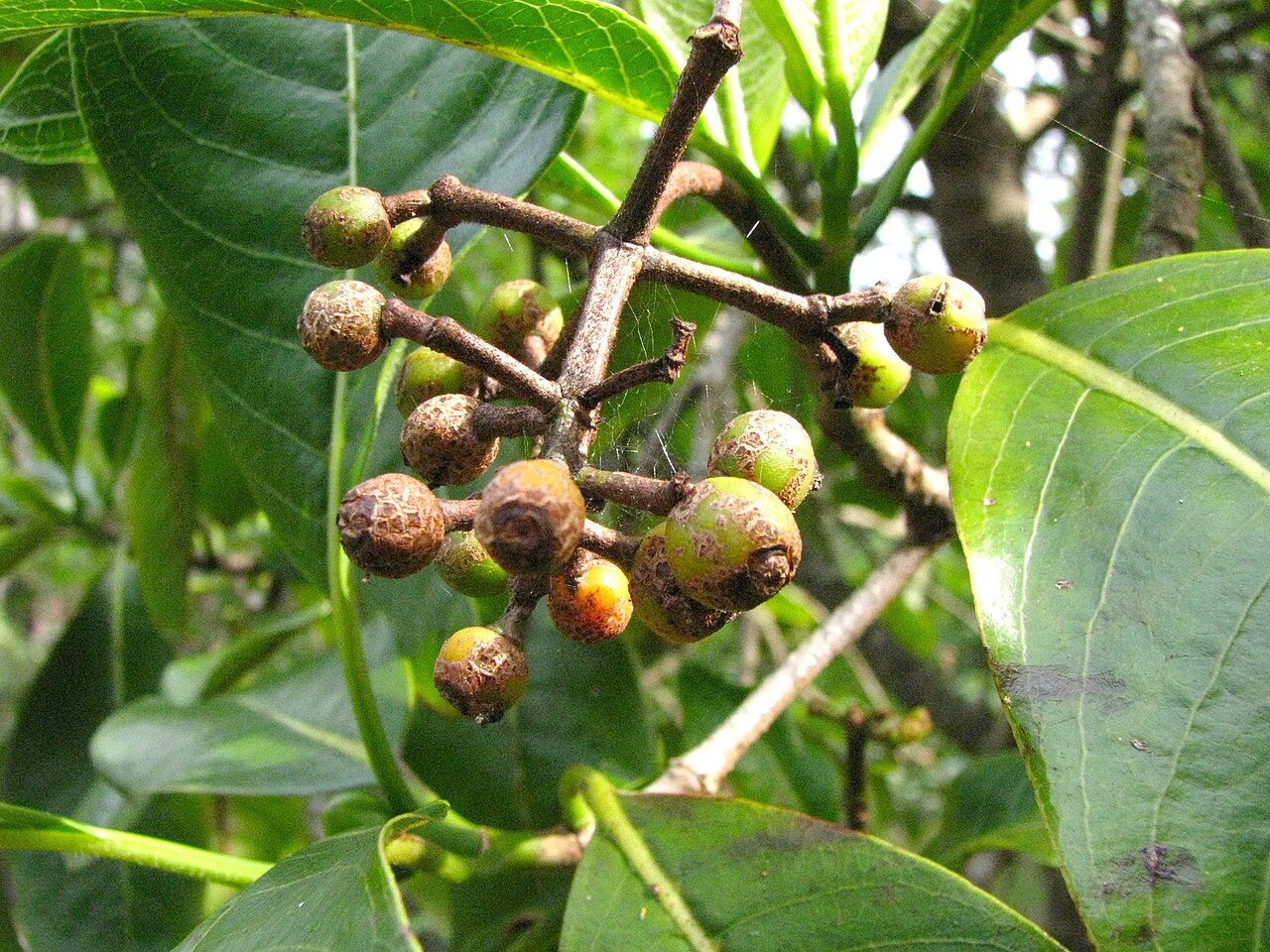
The flowers are white or greenish white and are described as not showy. Their smaller scale suits close viewing from a path or garden edge. Fruits add another stage of interest, becoming orange as they mature. Avoid frequent shearing if flowers and fruit are part of the reason for planting; repeatedly removing branch tips can reduce the features that distinguish a mature tree from a clipped mass of foliage.
Different plants and sites may not flower or fruit together. Observe the seasonal pattern of the actual tree rather than expecting a fixed mainland-style bloom calendar. Record when new growth, flowers, and fruit appear, along with unusual weather. Over time, that local record is more useful for management than an exact month copied from a different elevation or island.
Native Range and Forest Habitat
The University of Hawaiʻi species profile places kōpiko in wet forest and sometimes dry to mesic forest, usually as an understory plant. Its habitat account gives an elevation range of roughly 500 to more than 5,200 feet for variety hawaiiensis. Those figures describe known natural occurrence; they do not mean that every garden within that elevation band supplies the same combination of shade, humidity, rainfall, and root conditions.
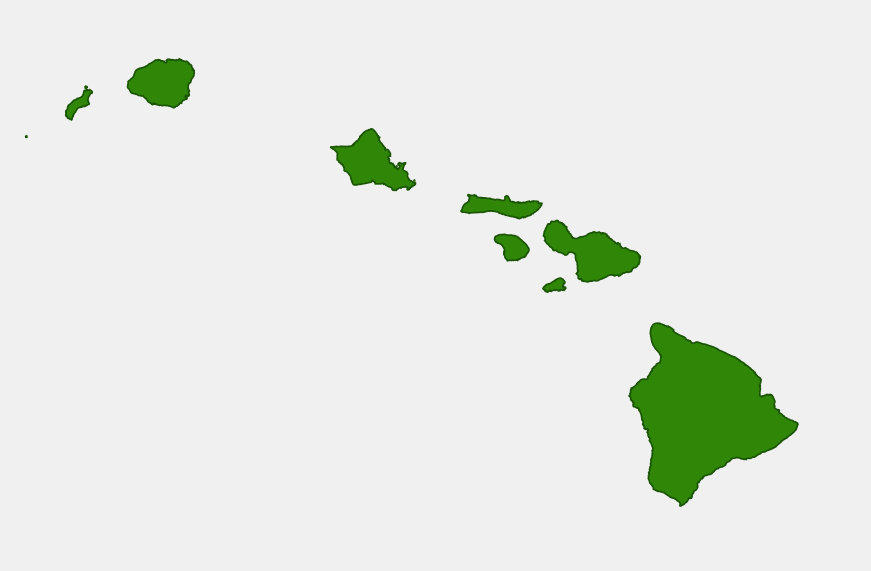
Molokaʻi, Maui, and Hawaiʻi are the islands listed for this species in that account. A garden photograph from one island does not, by itself, demonstrate a native population there, and the statewide map below should not be interpreted as an island-by-island distribution record. For a restoration or conservation planting, use local botanical records and source material that fits the project’s purpose.
Native Range
| U.S. States | Hawaii |
| Hawaiian Islands | Molokaʻi, Maui, Hawaiʻi in the UH species profile |
| Mexico / Canadian Provinces | Not included in the verified native range used here |
| Ecoregion | Hawaiian tropical forest and woodland |
| Elevation Range | About 500–5,200 ft or more |
| Habitat | Forest understory, often wet forest and sometimes drier mesic sites |
| Common Associates | Site-appropriate native forest canopy and understory |
USDA PLANTS profile (PSHA3). Species identity verified; this link is not a guarantee of county-level distribution data.
Forest structure helps explain the planting guidance. An understory tree experiences light filtered through neighboring crowns and shares the ground with other plants adapted to the same environment. Recreating every detail is impossible, but a gardener can still respect the important conditions: moderate exposure, reliable root-zone moisture, drainage, and enough space for a layered planting to develop.
Placing Kōpiko in a Landscape
Use Partial Sun Thoughtfully
Partial sun is the published light recommendation. A sheltered position with morning light or broken canopy light is a reasonable starting point, provided the tree is not crowded beneath a dense, competing canopy. The goal is neither a baking open surface nor a dark corner with little air movement. Observe the proposed site through the day before deciding that it supplies “shade.”
Nearby walls and paving can change conditions substantially. Reflected heat, roof runoff, and drying wind may make two locations only a short distance apart behave differently. If the tree is intended beside a building, evaluate both the root-zone conditions and the space the mature crown will occupy. Solving these questions before planting avoids years of corrective pruning or irrigation adjustments.
Plan for a Tree, Not a Container Plant
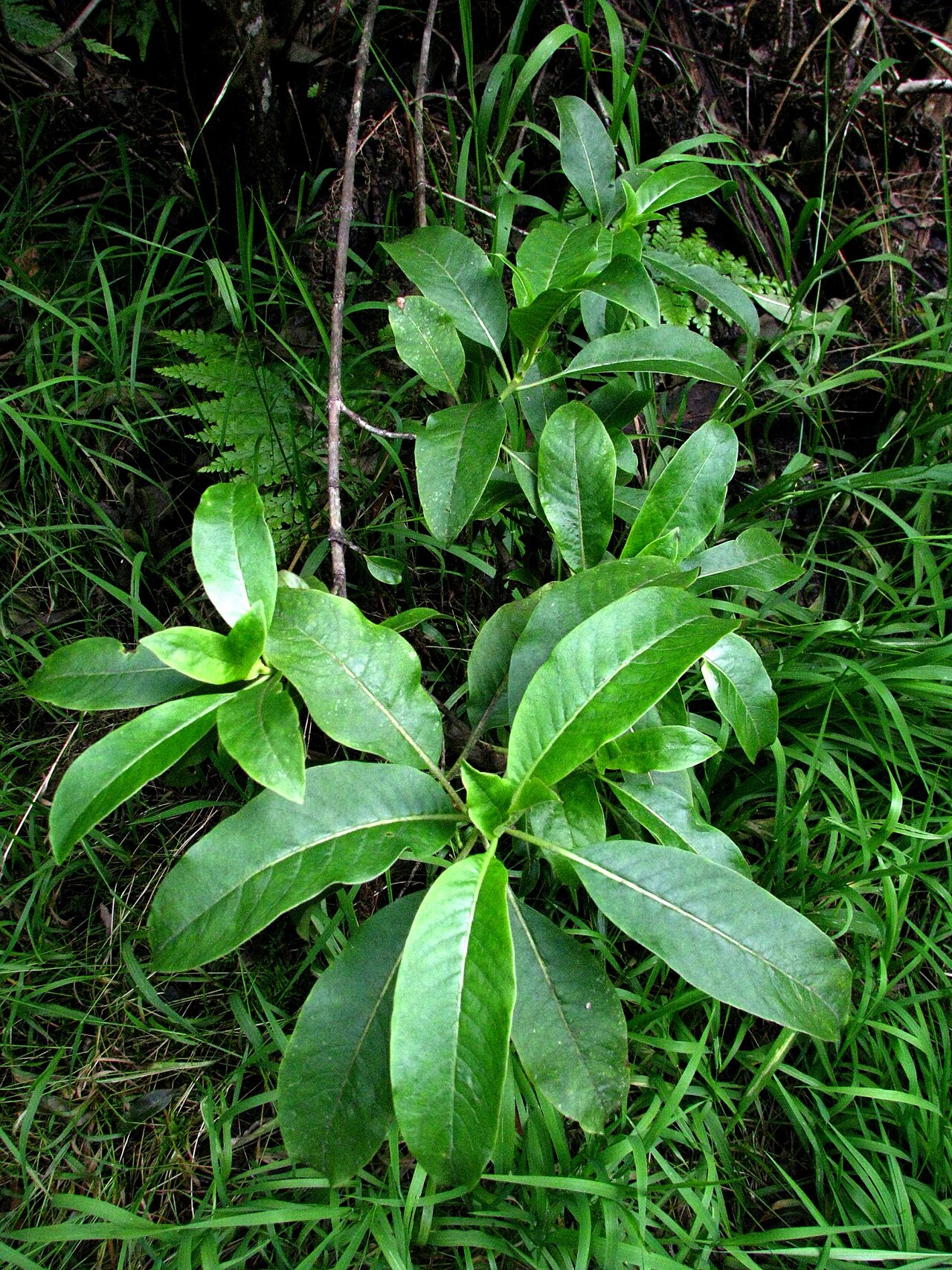
A young kōpiko can look compact in a nursery pot. That temporary appearance should not determine its permanent spacing. Allow clearance from paths, roof edges, and other trees, using the mature dimensions of the actual nursery form where available. An older tree with a broad crown needs more room than a narrow planting strip can provide.
The tree can contribute to a mixed native planting where companion plants share its moisture and light requirements. Establish the tree’s root system before packing the surrounding area with vigorous competitors. A layered garden can be developed gradually; it does not need to resemble a mature forest on the day it is installed.
Soil, Planting, and Establishment
The published growing guidance calls for moist conditions with well-drained soil. Check drainage at the intended location after substantial rain. Water that stands in a compacted depression is different from moisture held in an aerated forest soil. If the site is unsuitable, moving the planting position may be more effective than trying to compensate with an unusually deep or heavily amended hole.
Plant at the appropriate original soil level, keeping the root-to-stem transition from being buried. Handle the root ball gently, minimize the time it spends exposed to sun and wind, and water after planting to settle the surrounding soil. Avoid piling soil or mulch against the trunk. A visible stem base makes later inspection and maintenance easier.
A mulch layer over the surrounding ground can help reduce evaporation and weed competition. Leave a clear ring at the trunk and keep the surface accessible for checking moisture. Mulch is not a substitute for irrigation during establishment, and a damp mulch surface does not prove that the nursery root ball beneath it is adequately wet.
Watering According to Conditions
Check the root ball and adjacent soil separately during establishment. Container media may dry differently from the ground into which the plant has been placed. Apply water slowly enough to reach the roots, then allow the soil to drain. The right interval depends on rainfall, exposure, soil texture, root development, and season rather than a universal number of days.
As roots expand, widen the area receiving water instead of concentrating every irrigation at the trunk. Continue to assess the tree through dry or windy periods. A plant associated with moist forest should not be assumed to become drought-proof merely because it has been in the ground for a year.
If leaves wilt or growth stalls, inspect before changing the schedule. Both insufficient water and poorly aerated, saturated soil can impair a tree. Check planting depth, drainage, recent weather, and the condition of the root ball. Increasing water without understanding the problem can make an already wet site less suitable.
Pruning and Routine Care
Preserve the natural branching pattern where space permits. Remove damaged or poorly positioned growth with a clear purpose, and avoid repeated hard cutting to fit the tree into a site that is too small. A tree allowed to retain a coherent crown is more likely to show its flowers, fruit, and characteristic foliage than one maintained as a dense geometric shape.
Do not interpret every period of slow extension as a need for fertilizer. First consider whether the plant is receiving suitable light and moisture and whether roots are establishing normally. Where nutrient concerns persist, use soil assessment and local nursery or extension guidance. A specific pH target or fertilizer dose is not justified merely by the plant’s membership in the coffee family.
Inspect leaf undersides before treating insects or other small animals as pests. Kōpiko can support native organisms that are part of its value. When damage occurs, identify the cause and distinguish cosmetic injury from a problem that threatens establishment. Targeted decisions preserve more of the tree’s ecological role than routine broad treatment.
Wildlife Relationships
The University of Hawaiʻi profile identifies kōpiko fruit as part of the diet of ʻōmaʻo, the Hawaiian thrush. Whether ʻōmaʻo visits a particular garden depends on the bird’s present range and the surrounding habitat. Planting the tree supports a documented ecological relationship where the participants occur; it does not guarantee a wildlife sighting at every address.
The undersides of the leaves are also noted as a place to look for the endemic happy-face spider, Theridion grallator. That observation encourages a useful gardening habit: look closely before disturbing a leaf or reaching for a treatment. A native tree’s small inhabitants may be as interesting as its flowers, and their presence can be missed when a plant is judged only from a distance.
For habitat-oriented planting, combine appropriate native trees and understory plants, retain reasonable structural complexity, and avoid unnecessary disturbance. The aim is not simply to collect a list of native names. It is to provide conditions in which those plants and their associated organisms can persist together.
Cultural Context and Responsible Sourcing
Historical Hawaiian uses recorded for kōpiko include hard, pale wood used for kua kuku, the anvils employed in beating kapa, as well as fuel. The University of Hawaiʻi account notes these uses for this species and other kōpiko. The distinction matters: a cultural record attached to a shared common name should not automatically be narrowed to one modern botanical taxon without evidence.
Today, a living garden tree offers opportunities for observation, teaching, and connection with Hawaiian forest. Obtain nursery-propagated material with a documented identity rather than collecting wild seedlings. For restoration, follow the project’s provenance requirements and the guidance of those responsible for the site. For home planting, ask how the stock was grown and whether it has performed at comparable elevations and exposures.
Common Questions
Is every kōpiko the same species? No. The common name is used for multiple related plants. This page concerns Psychotria hawaiiensis; check the complete label when buying or comparing sources.
Can it be grown as a small shrub? Young plants may be small, and forms vary, but this is a tree-capable species. Choose a site that can accommodate its likely mature form instead of depending on repeated severe pruning.
Does a dry-forest record make it a drought plant? Not automatically. The growing guidance specifies moist, well-drained conditions, and provenance and local microclimate matter. Ask about the actual nursery stock and observe the site.
Are the fruits edible because it is in the coffee family? Family relationships do not establish food safety. This guide treats the fruits as botanical and wildlife features, not as a human food crop.
Growing a Piece of Hawaiian Forest
Kōpiko is most rewarding when its quieter qualities are given time to develop. Select a sheltered, partly sunny site, maintain a moist but aerated root zone, and allow the crown enough space to mature. The result can be a distinctive native tree that links a garden to the structure, wildlife, and history of Hawaiian forest without demanding an exaggerated floral display.
Sources & Further Reading
- University of Hawaiʻi, Native Plants Hawaiʻi species profile
- USDA Forest Service: species identification and ecology
Botanical range, identification, and cultural information are based on these sources. Garden-management advice should be adapted to local soil, exposure, and nursery provenance.
Find Native Plants Near You
Look for correctly identified, nursery-propagated plants with documented Hawaiian provenance. Visit our Hawaii native plant nursery directory and ask about stock suited to your island, elevation, and rainfall. Compare other trees in our Hawaii native plant list.