
Sandberg Bluegrass (Poa secunda)
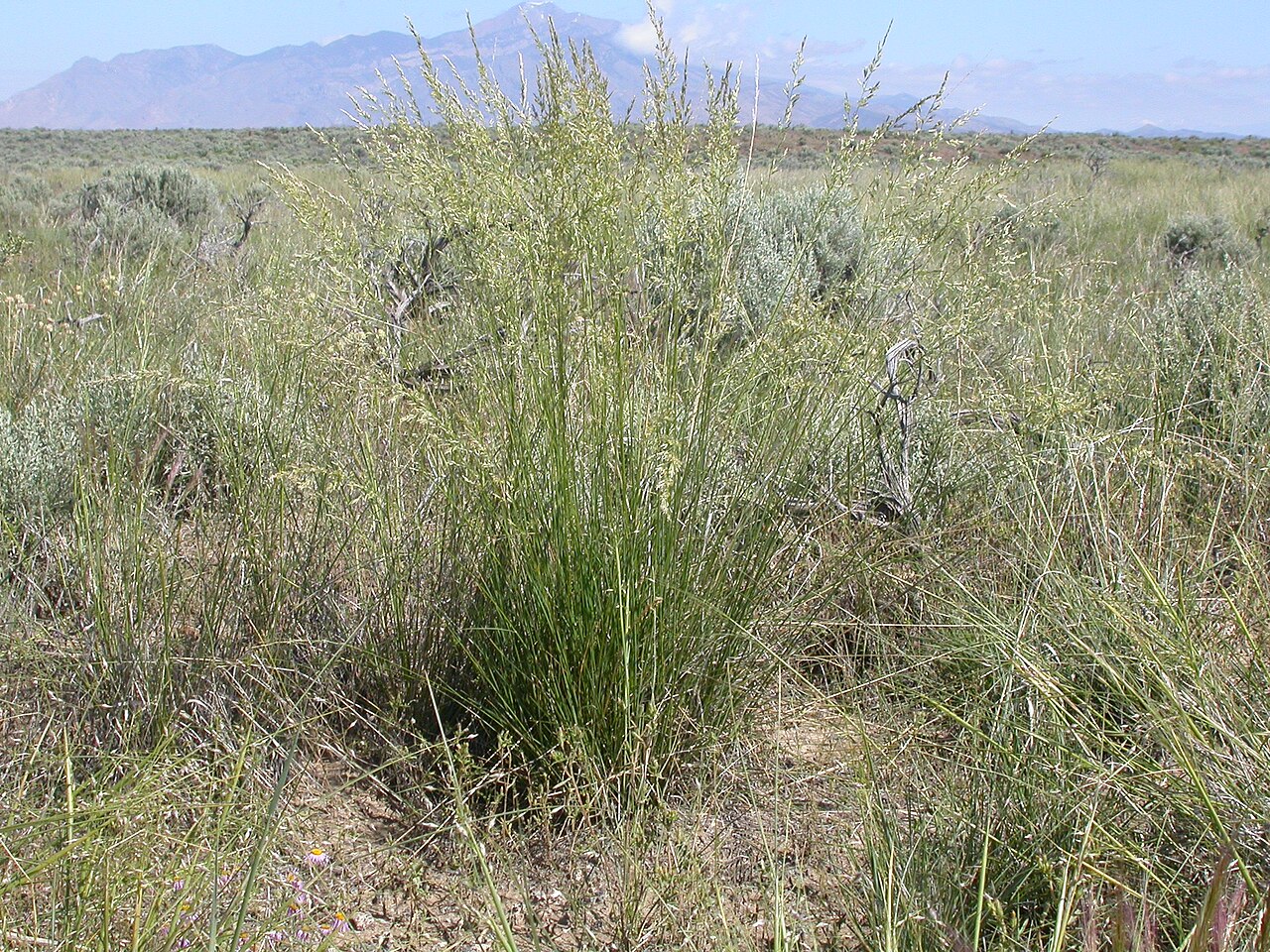
Sandberg bluegrass is a small grass with an outsized role in western landscapes. In dry sagebrush country, its tufts can green up early, flower while moisture is available, and cure before the long summer drought. That timing makes it useful between larger native bunchgrasses, where it adds a different season of growth without needing to look like a lush lawn all year.
The name Poa secunda covers a variable complex. Older references separate Sandberg bluegrass, big bluegrass, alkali bluegrass, Nevada bluegrass and several other forms; modern treatments group many of them at infraspecific rank. This guide explains the complex but emphasizes the smaller dryland form useful in Utah and western Colorado. A tall seed-production release and a tiny scabland plant can share the species name without being interchangeable in a garden.
Choose seed or plugs by both botanical identity and source habitat. The short dryland forms suit sunny, draining sites and informal native plantings, while some other members of the complex come from more mesic mountain or alkaline meadow settings. A supplier who can explain the origin and form of a lot is far more useful than a label saying only native bluegrass. Kentucky bluegrass lawn seed is not a substitute.
Identification
Tufts and stems
The familiar dryland form makes small perennial tufts with much of its foliage close to the ground. Slender flowering stalks rise above that basal foliage and carry relatively few stem leaves. Typical short Sandberg plants may flower around 8–14 inches tall, while many regional garden plants reach 12–24 inches; larger forms within the broad complex can be several feet tall. Do not use a single height to identify the entire species complex. The habit is generally clumping rather than the long-running sod associated with conventional lawn bluegrass.
Leaves and ligules
Look for the characteristic boat- or prow-shaped tips of bluegrass leaves and a membranous ligule where the blade meets the sheath. The leaves are narrow, and a double groove on the upper surface is a useful close-view clue. The size and shape of the ligule help in a technical key, but weather and plant age alter how conspicuous it appears. A dried tuft without reproductive stems is often not enough for a confident identification.
Flowering panicles
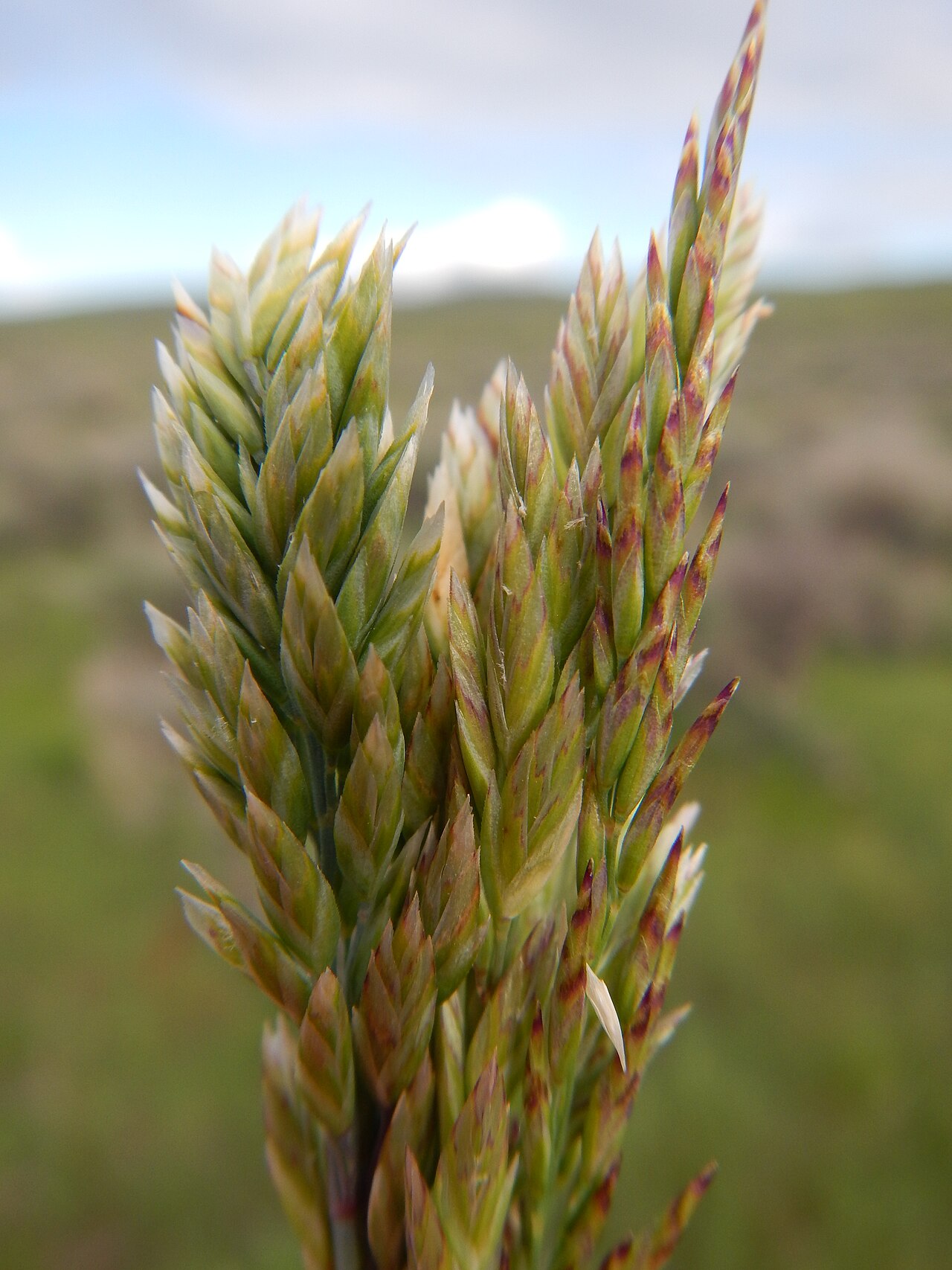
The flowering stems bear branching panicles rather than the unbranched wheatlike spikes of wheatgrasses. In many dryland forms the panicle is narrow, opening somewhat at flowering, with green to purplish spikelets. Other forms, such as those formerly called Poa gracillima, have a more open panicle. The comparison photograph here identifies Sandberg bluegrass on the right and mutton grass on the left; both species occur in western grasslands, so the image should not be read as two views of the same plant.
Seeds and related bluegrasses
Small dry grains develop within the florets, and mature seed is readily shed. The species complex includes both sexual reproduction and forms capable of producing seed without fertilization. This botanical complexity is another reason to retain provenance records. P. curtifolia is not automatically included simply because some older bluegrass names were merged. Nor should a photograph labeled only Poa be used to infer that a supplier's plant is Sandberg bluegrass.
Quick Facts
| Scientific Name | Poa secunda; a variable complex including the older name Poa sandbergii |
| Family | Poaceae (grass family) |
| Plant Type | Cool-season perennial bunchgrass |
| Mature Height | Commonly 8–24 inches for small dryland forms; larger forms of the complex taller |
| Mature Spread | Small tufts, sometimes approaching 12 inches across; varies by form |
| Growth Rate | Early seasonal growth; populations renew by seed |
| Sun Exposure | Full sun to light, open shade |
| Water Needs | Low for established dryland forms; seasonal moisture needed for establishment |
| Soil Type | Usually well-drained mineral soil; choose ecotype for site texture and alkalinity |
| Soil pH | Varies by form; alkaline tolerance is not uniform across all seed lots |
| Bloom Time | Spring to early summer for dryland forms; later for some mountain forms |
| Flower Color | Small green to purple-tinged spikelets |
| Fall Color | Straw tan; may regreen with suitable autumn moisture |
| Fruit | Tiny dry grains in a branching panicle |
| Deer Resistant | Not absolute; native ungulates may graze green growth |
| USDA Hardiness Zones | Wide cold-climate range; local ecotype and moisture regime are more useful than one zone rating |
Native Range
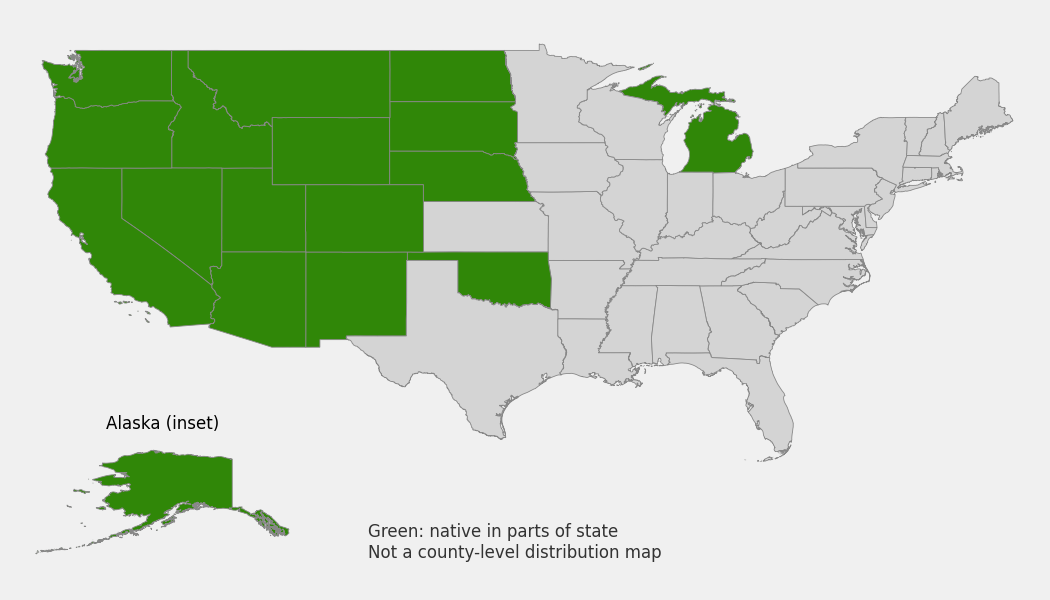
Poa secunda is native across western North America, including southeastern Alaska, and extends eastward in scattered populations beyond the Rocky Mountains. It also has a South American range. The map uses the core U.S. distribution supported by the modern taxonomic review, not every historical occurrence in older aggregated databases. In particular, Maine occurrences associated with old wool waste are introduced and are not colored as native here.
The species is native in Utah and Colorado, but the broad name spans habitats from dry open steppe to some mountain meadows. The traditional small Sandberg form is especially characteristic of dry interspaces among larger grasses and shrubs. Ecological differences remain important even where botanists recognize related forms as one species: a seed lot selected from a moist meadow may not be the right choice for a dry, shallow-soil garden.
State shading is deliberately coarse. Alaska is shown in an inset so a mainland map does not hide part of the range, while introduced Hawaiian records are excluded. The USDA profile is useful for finer distribution work, but a county record still needs interpretation alongside current floras and seed-source information. For conservation plantings, use a regional source compatible with the local habitat rather than transporting a distant cultivar simply because both carry the name Poa secunda.
📋 Regional plant list: Utah and Western Colorado
Growing & Care Guide
Light
Open sunlight is the most reliable setting for the small dryland forms. Light shade from scattered shrubs can occur in natural communities, but dense shade changes both competition and flowering. Place plugs where they will not soon be buried under the foliage of larger grasses. Their small scale is an advantage in gaps and edges, provided taller neighbors do not eliminate the light they need.
Soil and water
Use a draining site and match the seed source to the soil rather than treating all Poa secunda as equally tolerant of every condition. Dryland plants can persist on shallow or stony ground, but seed germination still needs moisture. Water new plugs sufficiently to establish roots beyond the original container. Once established, allow the normal seasonal cycle instead of repeatedly irrigating solely to prevent summer browning. Persistently flooded stream margins are not the default habitat for the small steppe form.
Planting tips
The seed is tiny, so a firm seedbed and shallow placement matter. USDA guidance commonly uses about one-eighth to one-quarter inch rather than deep sowing. In a home garden, press seed into prepared ground and use only a light covering appropriate to the seed lot. Do not bury it beneath a thick layer of bark. In mixed plantings, mark the sown area and learn to recognize the seedlings before weeding; native grass seedlings are easily removed by mistake.
Choosing a form or seed release
Ask whether a lot is the small Sandberg type or a larger form such as big bluegrass, and request its collection or release information. Cultivar names such as Sherman or Service represent particular material with a history of selection, not a generic promise of local suitability. For a small dry garden, nursery plugs of a known regional source may be simpler to evaluate than a bag of unidentified bluegrass seed. Do not assume the tallest, fastest-growing release is the best ecological match.
Seasonal care
Expect the short dryland forms to grow and set seed early. A cured tuft in July may be following its normal cycle rather than suffering an irrigation failure. Look for a firm crown and the response to the next appropriate moisture period. Some forms remain active longer, particularly at cooler or moister sites, so compare plants of the same source. A small notebook of green-up and flowering dates is often more useful than forcing every plant onto one universal monthly schedule.
Pruning and maintenance
Remove damaged or collapsed stems when needed, but avoid repeated close cutting during spring growth. Let at least some plants ripen seed if natural replacement is desired. Their low stature makes them easy to overlook under mulch or garden debris; keep the crown exposed and do not bury it during annual bed maintenance. Respect defensible-space requirements near buildings, and retain standing material where it is compatible with access and fire safety.
Propagation and competition
The population can renew from seed and by new shoots within a tuft. Establishment among dense annual grasses is harder than survival of mature plants, so reduce weeds before sowing and continue monitoring. Sandberg bluegrass can occupy gaps used by invasive annuals, but planting it is not a one-step cure for cheatgrass. Remove competing seed sources and evaluate the entire site, including disturbance and runoff. For larger restoration projects, local specialists should determine the mix and establishment timing.
Landscape Uses
- Fine-scale planting between larger native bunchgrasses.
- Early spring interest in an informal dryland garden.
- A regionally appropriate component of restoration seed mixtures.
- Low cover on suitable open, draining ground without a promise of evergreen turf.
- A labeled teaching collection showing why seed provenance and grass taxonomy matter.
Wildlife & Ecological Value
Pollinators and insects
Its flowers are adapted to grass reproduction rather than providing a nectar display. A garden designed for pollinators should combine the grass with locally native flowering plants that bloom at different times. The grass adds shelter and structural variety, but broad claims about insects using grasses should not be converted into a species-specific host list without evidence.
Birds and small mammals
The tiny seeds can be used by birds and small mammals, and the tufts contribute low cover. Leaving a portion of the seed stems uncut lets that resource remain available. A mosaic of low grass, taller vegetation and appropriate open ground is more useful than judging habitat quality solely by how densely every inch has been planted.
Larger grazers
Green growth may be eaten by deer, pronghorn, bighorn sheep and livestock. Small stature and early curing limit the quantity of forage compared with larger grasses, while some robust forms in the complex produce considerably more. In a garden, grazing resistance and resistance to being eaten are different things: protect new plants if repeated browsing prevents them from establishing.
Community role
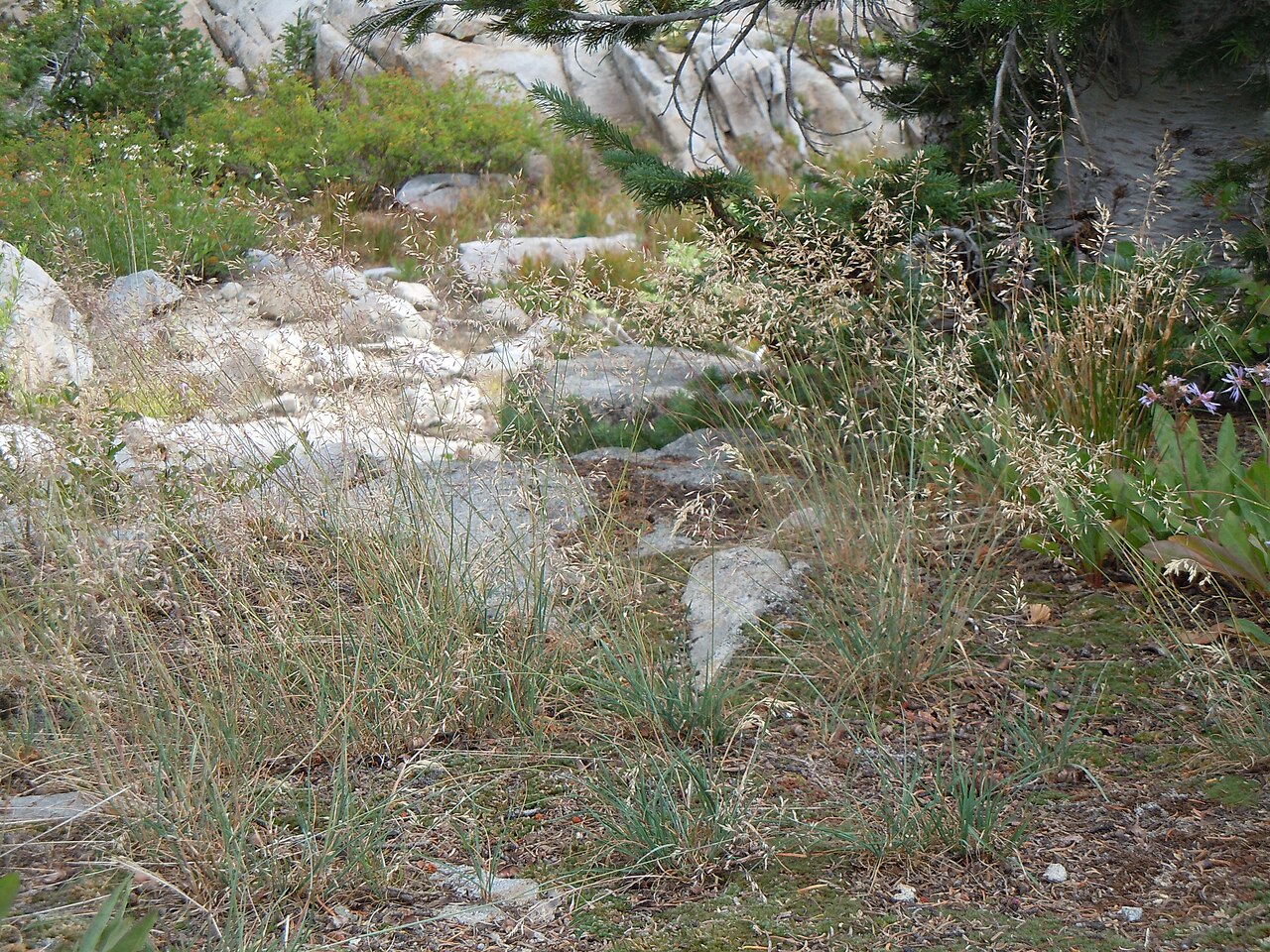
Sandberg bluegrass is a persistent component of many western open communities and can occupy spaces between larger perennials. Research on its response to invasive annual grasses shows why native populations and their genetic variation matter, but it does not justify claiming that one commercial release will solve every invaded site. Keep restoration expectations tied to local conditions and monitor establishment over several seasons.
Cultural & Historical Uses
The taxonomic history is unusually important for a practical planting guide. Names once treated as separate species were grouped after research showed that some distinguishing characters varied within populations or changed under cultivation. Modern work still recognizes meaningful infraspecific variation. The result is not that names are useless, but that gardeners should carry source and habitat information alongside them.
USDA plant-materials programs have developed and maintained releases for different purposes and regions. Alaska's Service material, for example, belongs to a northern planting context rather than serving as a universal substitute for Utah steppe seed. The history of a release explains what it was intended to do; it does not erase ecological differences across a species' continental range.
The name Sandberg bluegrass commemorates a botanical collection history, while the broader Poa secunda name traces to a South American type. This page does not offer food or medicinal instructions. Its practical purpose is to help distinguish a useful native grass from superficially similar lawn grasses and to encourage informed, regionally appropriate planting.
Frequently Asked Questions
Is Sandberg bluegrass the same as Kentucky bluegrass?
No. The garden lawn grass commonly sold as Kentucky bluegrass is Poa pratensis, not Poa secunda. Check the full name and origin before buying.
Why do sources give such different heights?
Poa secunda is a broad complex. Small dryland forms may be under a foot, while big-bluegrass forms can be several feet tall. Buy a known form that fits the site.
Is summer browning a sign that it needs more water?
Not necessarily. Early growth followed by summer dormancy is characteristic of small dryland forms. Check establishment and soil conditions before trying to maintain lawn-like green foliage.
Can it prevent cheatgrass by itself?
No reliable planting can be reduced to that promise. It is a useful native component, but seedbed preparation, other native species and ongoing weed control remain important.
Why is Maine not shaded on this map?
Regional botanical sources treat the documented Maine wool-waste occurrences as introduced. An occurrence record is not automatically a native-range record.
Sources & Further Reading
- USDA NRCS: Sandberg Bluegrass complex plant guide
- Modern taxonomic review of Poa secunda
- US Forest Service: ecology of Sandberg bluegrass
- Native Plant Trust: introduced Maine records
- Alaska Plant Materials Center: Service big bluegrass
- USDA ARS: Great Basin physiology research
Find Native Plants
Ask growers about nursery propagation and regional provenance. Browse our UT native plant nurseries, CO native plant nurseries directory for suppliers. Explore the native nursery finder.