
Goldie’s Wood Fern (Dryopteris goldieana)
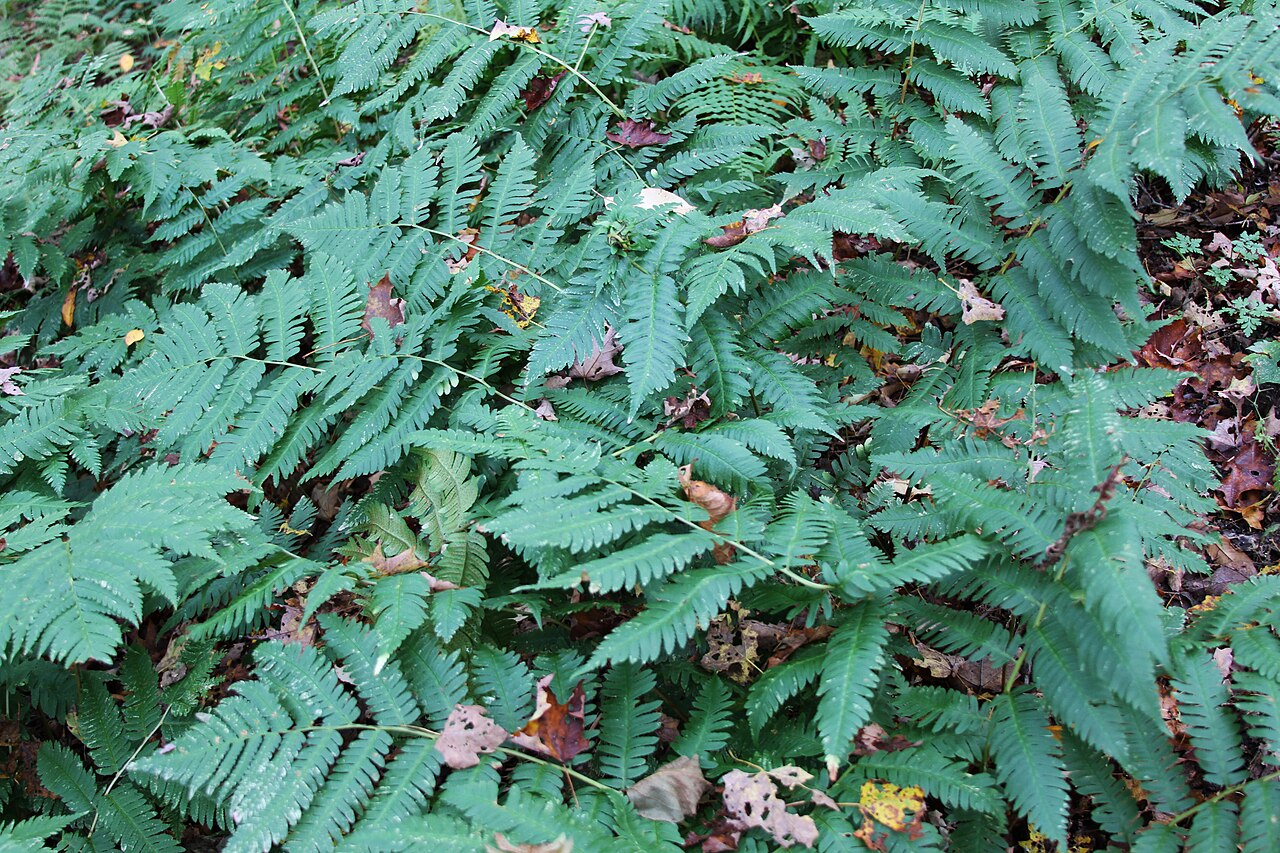
Goldie's wood fern (Dryopteris goldieana) is a substantial woodland perennial for a genuinely shaded, moisture-retentive garden. Its broad fronds make a strong architectural presence among lower woodland flowers, without the running habit of some colony-forming ferns. Give it room to develop as a clump: this is not a tiny edging fern, even if a young nursery pot looks compact. The old regional-table height of 2–3 inches was a unit error, not a dwarf form.
In Ohio and Indiana, the species belongs with rich woodland conditions rather than exposed dry landscaping. A shaded bed with humus, steady moisture, and room for roots is a better starting point than a sunny rain garden basin or a narrow strip under a roof overhang. Moist and waterlogged are different conditions. The goal is soil that does not repeatedly dry hard, yet still has air around the roots.
The name appears as Dryopteris goldiana in older references and nursery records; current botanical sources use Dryopteris goldieana. Both spellings in this profile refer to the same Goldie's wood fern, not two plants to purchase separately. Use propagated stock and keep the label. Large eastern wood ferns can hybridize, so a vigorous wild fern should not be identified only by its size or by the general impression of a lush green clump.
Identification
Rhizome and frond stalks
Fronds arise from a short rhizome and a substantial crown, forming an upright-to-arching clump. The stalks carry scales toward the base. Look at an intact plant from the side to understand the arrangement: many separate fronds emerge from the crown, rather than a single branching stem carrying ordinary leaves. Avoid breaking emerging fiddleheads while checking the base. A nursery-grown young fern may take time to develop the imposing habit shown in photographs of established plants.
Frond outline and divisions
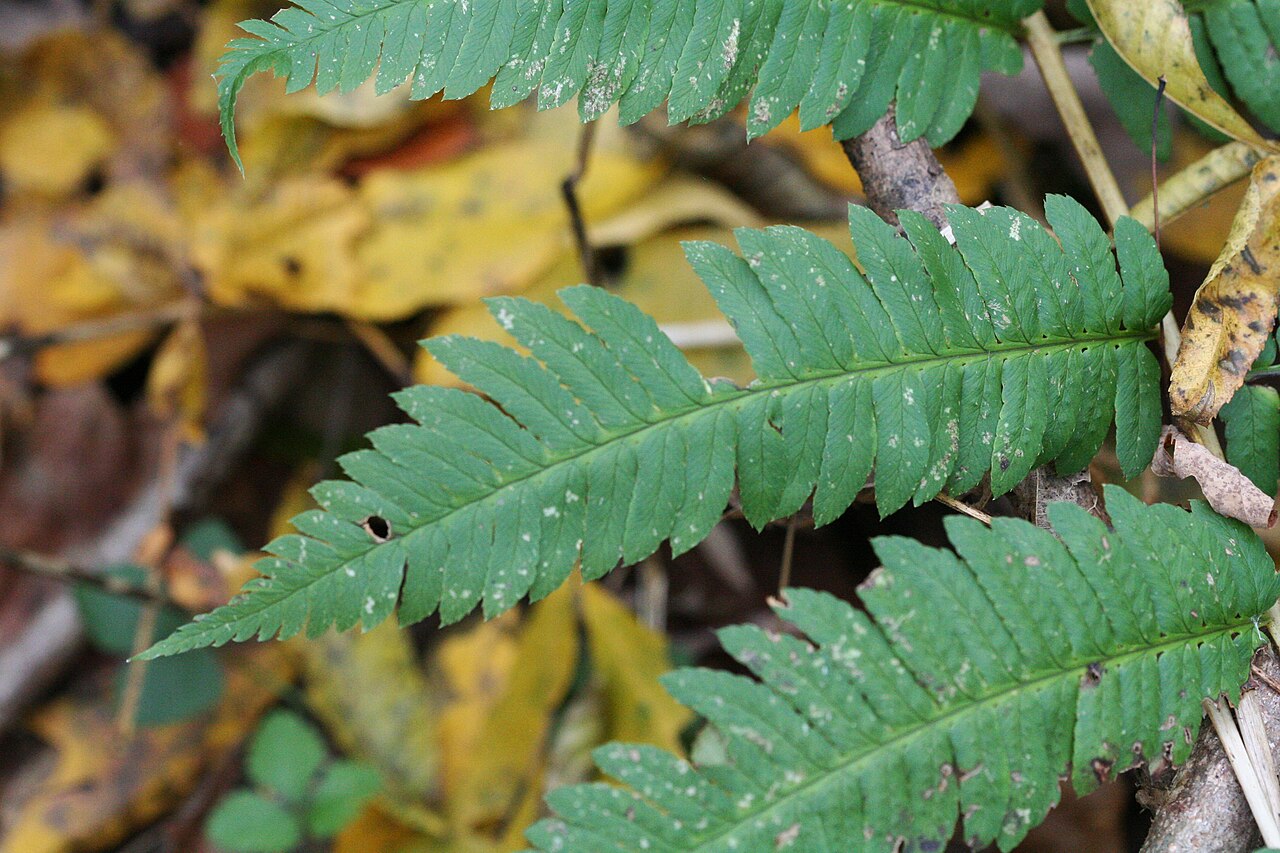
Mature fronds are broad, divided, and lushly green. The blade has a comparatively abrupt narrowing toward the tip, one of the useful features in a complete identification. Its pinnae are divided into smaller segments, giving a coarse, layered texture rather than the extremely fine lace of some other ferns. Individual leaflets alone are not a reliable identifier; compare the overall blade outline, lower pinnae, stalk scales, and fertile underside together.
Sori, not flowers
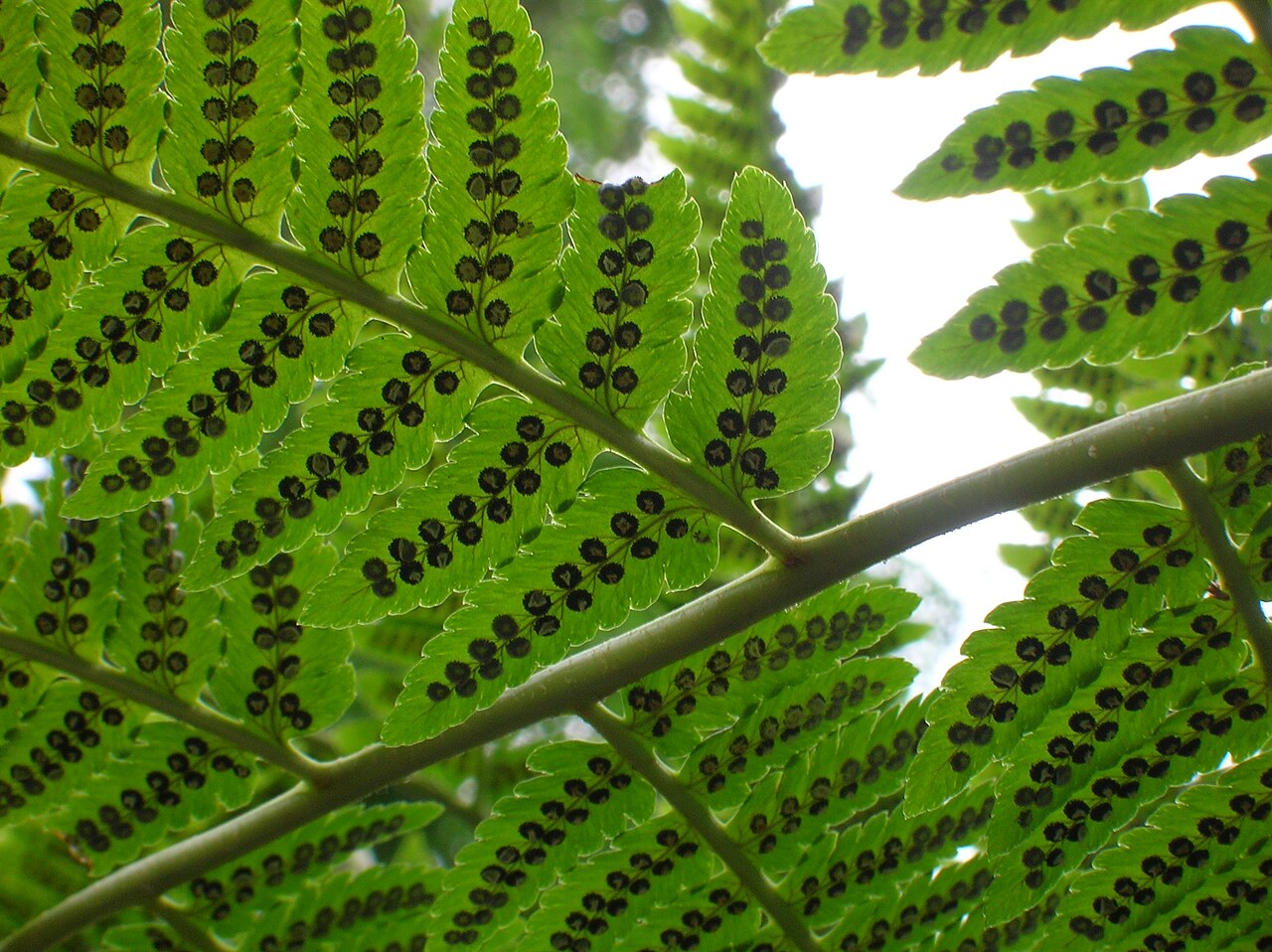
Goldie's wood fern has no flowers, petals, fruits, or seeds. On fertile fronds, rounded clusters of spore-producing structures occur on the lower surface, arranged in lines associated with the veins. Their color changes as they mature. The orderly dots shown in the close-up photograph are normal sori, not a fungal disease to spray. They are quite different from irregular dead patches caused by drought damage or physical injury.
Similar ferns and seasonal appearance
Several Dryopteris species occur in eastern forests, and hybrids complicate identification. Do not assume every large wood fern is Goldie's wood fern. A regional flora may require characters of scales, veins, and indusia that are difficult to see in a casual photograph. This is a deciduous fern: fronds decline with seasonal cold, then new growth develops from the crown. Winter absence is not, by itself, proof the plant has died.
Quick Facts
| Scientific Name | Dryopteris goldieana; older spelling Dryopteris goldiana |
| Family | Dryopteridaceae |
| Plant Type | Deciduous perennial fern |
| Mature Height | Usually about 3–4 feet; smaller plants occur |
| Mature Spread | Often about 2.5–3 feet initially; old clumps may become wider |
| Growth Rate | Slow to moderate clump development |
| Sun Exposure | Partial to full shade |
| Water Needs | Consistently moist, well-drained soil; avoid repeated drying |
| Soil Type | Rich woodland soil with organic matter |
| Soil pH | Humus-rich woodland conditions; evaluate local soil rather than automatically adding lime |
| Bloom Time | None; reproduces by spores |
| Flower Color | None |
| Fall Color | Fronds yellow or brown before dying back |
| Fruit | None; spores in rounded sori beneath fronds |
| Deer Resistant | Often little browsed, but not guaranteed deer-proof |
| USDA Hardiness Zones | Generally 3–7; local heat and moisture conditions matter |
Native Range
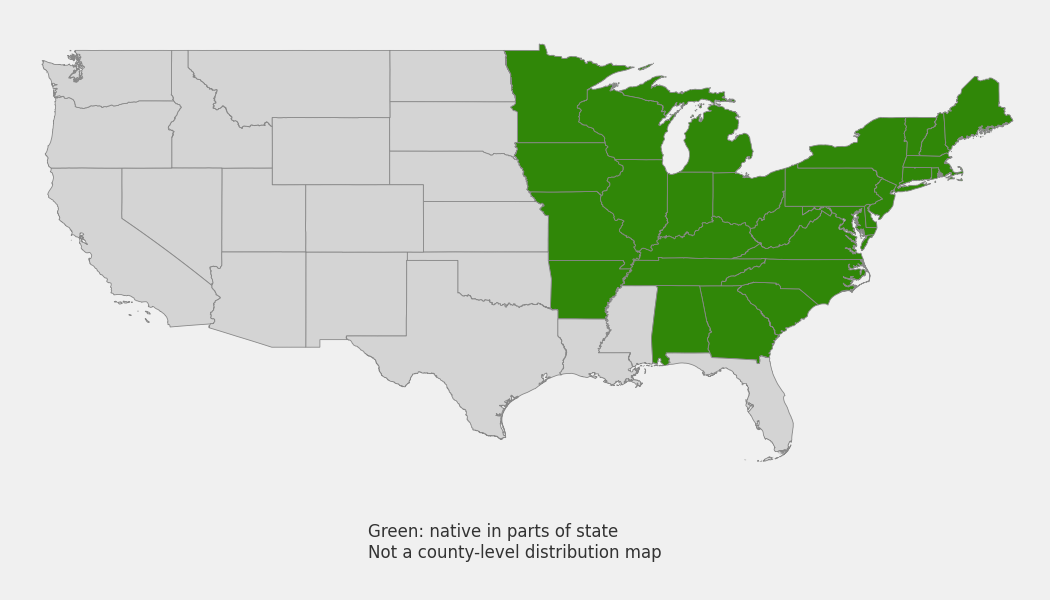
Goldie's wood fern is native to eastern and north-central North America, including Ohio and Indiana. Its distribution extends into eastern Canada and south along suitable forest habitats. The broad regional range does not make it a fern for every eastern landscape: rich woodland soil and a sheltered moisture regime are essential context for understanding where it belongs.
Kew's native distribution supports the state list used for this map. The shading is deliberately state-level, not a claim that every green county or yard has a natural population. At the margins of the range, the fern may be local and conservation-sensitive. Minnesota, for example, maintains a species account explaining its uncommon status there. Garden sourcing should therefore rely on propagation rather than collecting from a seemingly plentiful patch.
In a restoration, compare the proposed location with nearby documented habitat and consult local botanical records. In an ornamental native garden, a well-chosen shaded bed can support a propagated plant even where the immediate property was not historically its habitat. These are different objectives, and a hardiness-zone number cannot substitute for either a native-range check or a soil-moisture assessment.
📋 Regional plant list: Ohio and Indiana Native Plants
Growing & Care Guide
Light
Choose filtered light or partial to full shade, especially where afternoon summers are hot. A deciduous-tree canopy can provide brighter spring conditions and protective summer shade. Do not judge a planting place solely in winter before the canopy closes. Reflected heat from a wall or pavement can dry fronds even when the sun reaches them for only part of the day. Shelter from persistent drying wind is also useful.
Soil and water
Aim for a deep, moisture-retentive root zone that still drains. Leaf mold or well-finished organic matter can help a degraded garden bed approximate woodland texture, but a hole filled with rich material inside compacted clay may behave like a sump. Check drainage before planting. Water newly planted ferns thoroughly and monitor them through the first dry periods. If the soil is moist yet fronds are wilting, investigate root damage or poor aeration rather than adding water automatically.
Planting and placement
Plant the crown at its nursery depth, without burying its growing point. Keep the original root ball intact where possible and select the long-term position carefully; an established clump is not something to move casually each season. Space neighboring plants for a fern several feet tall and wide, not for the small pot it came in. A low woodland ground layer can accompany it, but do not smother the crown with aggressive runners or a deep mulch pile.
Pruning and seasonal maintenance
Leave healthy green fronds to supply the crown. Remove broken or fully dead material when it can be cut without injuring new growth. In late winter or early spring, check for tightly curled emerging fronds before reaching into an apparently empty clump. Leaf litter is appropriate around woodland plants, but wet mats pressed tightly over the crown may need loosening. Avoid routine shearing, which removes the shape that makes the fern valuable in the first place.
Propagation
Division of nursery-grown material is possible, but use care with the substantial crown and retain viable buds with each rooted section. Work in a suitable cool season and give divisions attentive establishment care. Spore propagation follows a different life cycle from seed sowing: the spores produce small gametophytes before a young fern develops. That process needs cleanliness, moisture control, and patience. For most gardeners, a propagated plant from a reputable fern nursery is the simpler starting point.
Problem-solving in a shade garden
Brown frond margins during a dry spell suggest checking the root zone and exposure, but old or damaged fronds will not turn fresh green again merely because the soil is watered. Protect the next growth rather than repeatedly cutting the entire plant down. A fern that remains small may be competing with tree roots or enduring too much drought. Conversely, a crown that stays wet in compacted soil may decline despite its preference for moisture. Diagnose the site, not just the symptom.
Containers and small spaces
A container is a more demanding home for a large moisture-loving fern because the pot heats and dries faster than woodland ground. If growing one temporarily in a pot, provide drainage holes, shelter, and enough root volume, and monitor moisture during hot weather. Do not let the container stand indefinitely in a deep saucer of water. For a permanent narrow border, choosing a naturally smaller fern is usually better than trying to constrain Goldie's wood fern through repeated cutting.
Landscape Uses
- Use as a large foliage anchor in a sheltered eastern woodland garden.
- Place behind lower spring flowers so the emerging fern provides summer structure after their bloom.
- Repeat a few well-spaced clumps along a shaded path where their full frond shape can be appreciated.
- Use in a moist woodland restoration only where local records, provenance, and site conditions support the choice.
Wildlife & Ecological Value
For pollinators
A fern does not offer the nectar-and-pollen display of a flowering perennial. Include suitable woodland flowering plants nearby if pollinator forage is a goal. The value of Goldie's wood fern is instead tied to foliage, cover, and the layered habitat of a mixed planting. Avoid assigning a specific butterfly host relationship without species-level evidence; not every native plant fills every wildlife role.
Birds
A mature clump adds shaded ground-level structure within a broader woodland planting. The surrounding leaf layer and varied vegetation are more important than a claim that birds depend on this fern's spores. Keep maintenance selective and avoid clearing all litter to bare soil. Where a path needs to remain safe and usable, leave habitat patches beyond it rather than allowing fronds to block access.
Mammals and browsing
Goldie's wood fern is often described as relatively little browsed, but that is not a promise in a garden with high deer pressure. Temporary protection can be useful during establishment. Observe actual browsing before choosing a control. The fern is not presented here as an edible fiddlehead; common names and the curled shape of new growth are not sufficient evidence of food safety.
Ecosystem role
As a persistent woodland perennial, the fern helps maintain a layered, seasonally shaded ground environment. Its slowly developing clump complements rather than replaces the larger forest canopy and smaller understory plants. Protecting existing natural populations includes protecting the soil and hydrology around them. A garden project should never begin by digging mature ferns from a ravine or conservation site.
Cultural & Historical Uses
The epithet honors the botanist and collector John Goldie. Historical spellings explain why older garden references and some image captions use goldiana while current accepted-name resources use goldieana. Retaining that connection in a planting record helps prevent duplicate purchases and mistaken assumptions that one name represents a different species.
Woodland gardens often use ferns as the structural counterpart to a short spring-flower season. Goldie's wood fern is especially suited to that role because its broad fronds have visual weight after smaller flowers have faded. This is a design use, not a claim that every forest floor naturally contains the species. The distinction matters when choosing between an ornamental planting and a habitat-restoration project.
No medicinal, food, or ceremonial preparation is recommended in this profile. The documented historical connection to a botanical collector does not justify inventing broader ethnobotanical uses. The most responsible way to enjoy the plant is to grow propagated stock in an appropriate site, preserve the scientific label, and appreciate the natural populations without removing them.
Frequently Asked Questions
Is Goldie's fern only a few inches tall?
No. The old 2–3-inch entry was a unit mistake. Established plants commonly reach several feet. Allow roughly 3–4 feet of height and enough width for an arching clump, with variation according to age and site.
Are Dryopteris goldiana and Dryopteris goldieana different plants?
In this context they are historical and corrected spellings for Goldie's wood fern. The accepted spelling used here is Dryopteris goldieana. A nursery label should still be checked for identity and provenance.
What are the dots beneath the fronds?
Regular rounded sori contain the spore-producing structures. They are part of normal fern reproduction, not an automatic sign of pests. Irregular dead tissue or distortion should be assessed separately.
Can I put it in a permanently flooded rain garden?
Do not equate moist woodland soil with constant submergence. Choose a shaded, moisture-retentive but aerated site. If the intended bed remains stagnant, select plants specifically suited to that hydrology instead.
Can I harvest the fiddleheads?
This guide does not identify Goldie's wood fern as a food plant. Do not eat a fern based on its common name or curled new growth. Enjoy the fiddleheads as the beginning of the seasonal foliage display.
Sources & Further Reading
- Kew Plants of the World Online — accepted name and native distribution
- NC State Extension — Goldie’s fern
- University of Georgia Extension — Native Plants for Georgia, Ferns
- Minnesota DNR — Goldie’s fern species account
- USDA PLANTS — Goldie’s woodfern
Find Native Plants
Ask growers about nursery propagation and regional provenance. Browse our OH native plant nurseries, IN native plant nurseries directory for suppliers. Explore the native nursery finder.