
American Pasqueflower (Pulsatilla nuttalliana)
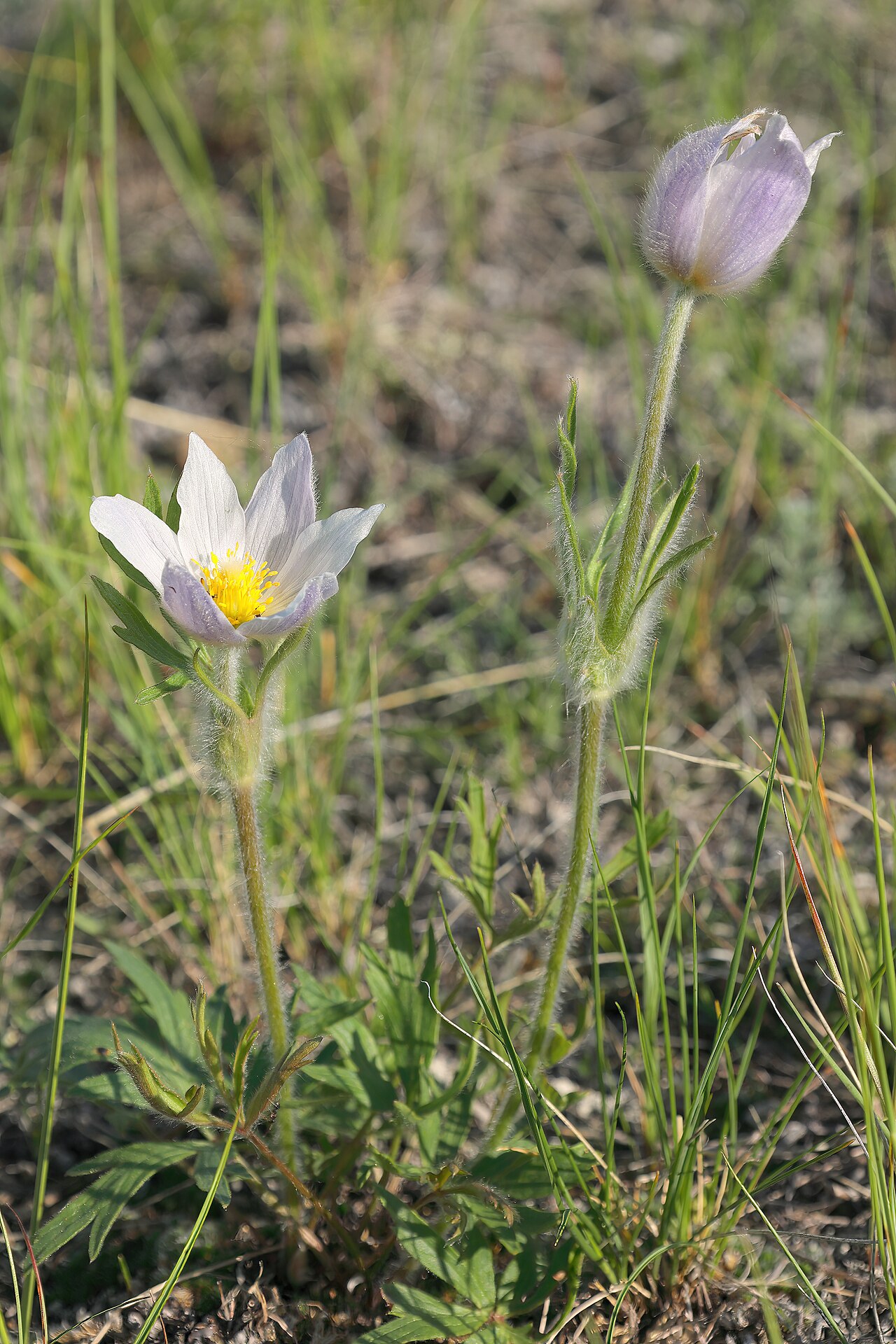
American pasqueflower (Pulsatilla nuttalliana) is one of the small plants that can make an entire prairie hillside feel awake after winter. Its pale violet to lavender flowers rise close to the ground on silky stems, with a cluster of yellow stamens at the center. Later, the flower stalks lengthen and carry feathery seed heads. These two very different displays belong to the same perennial, so leaving the plant after flowering rewards the gardener with a second season of texture.
The name wild crocus used in the Dakota regional list is descriptive rather than botanical. This is a member of the buttercup family, not a true Crocus bulb. It is also different from the European pasqueflower, Pulsatilla vulgaris, which is common in ornamental trade. A packet labelled only pasqueflower or prairie crocus is not enough to establish the right identity for a native planting.
The North American plant has appeared under several scientific treatments, including Anemone patens var. multifida and names within Pulsatilla patens. This page follows the accepted Pulsatilla nuttalliana name used by Kew for the North American species and explains the older naming rather than treating every pasqueflower record worldwide as interchangeable. In a Dakota or western Minnesota garden, open light and well-drained soil are more important than a deep, richly watered perennial bed.
Identification
Stems and overall form
The early flower stalks are short, upright and densely hairy. They arise from a perennial base rather than from an annual seedling each spring. As the plant fruits the stalks can extend well above their flowering height, which explains why a four- to six-inch flowering plant may later stand much taller. Record both stages when measuring a garden plant. A comparison made only between a spring photograph and a summer photograph can otherwise create the false impression of two species.
Leaves
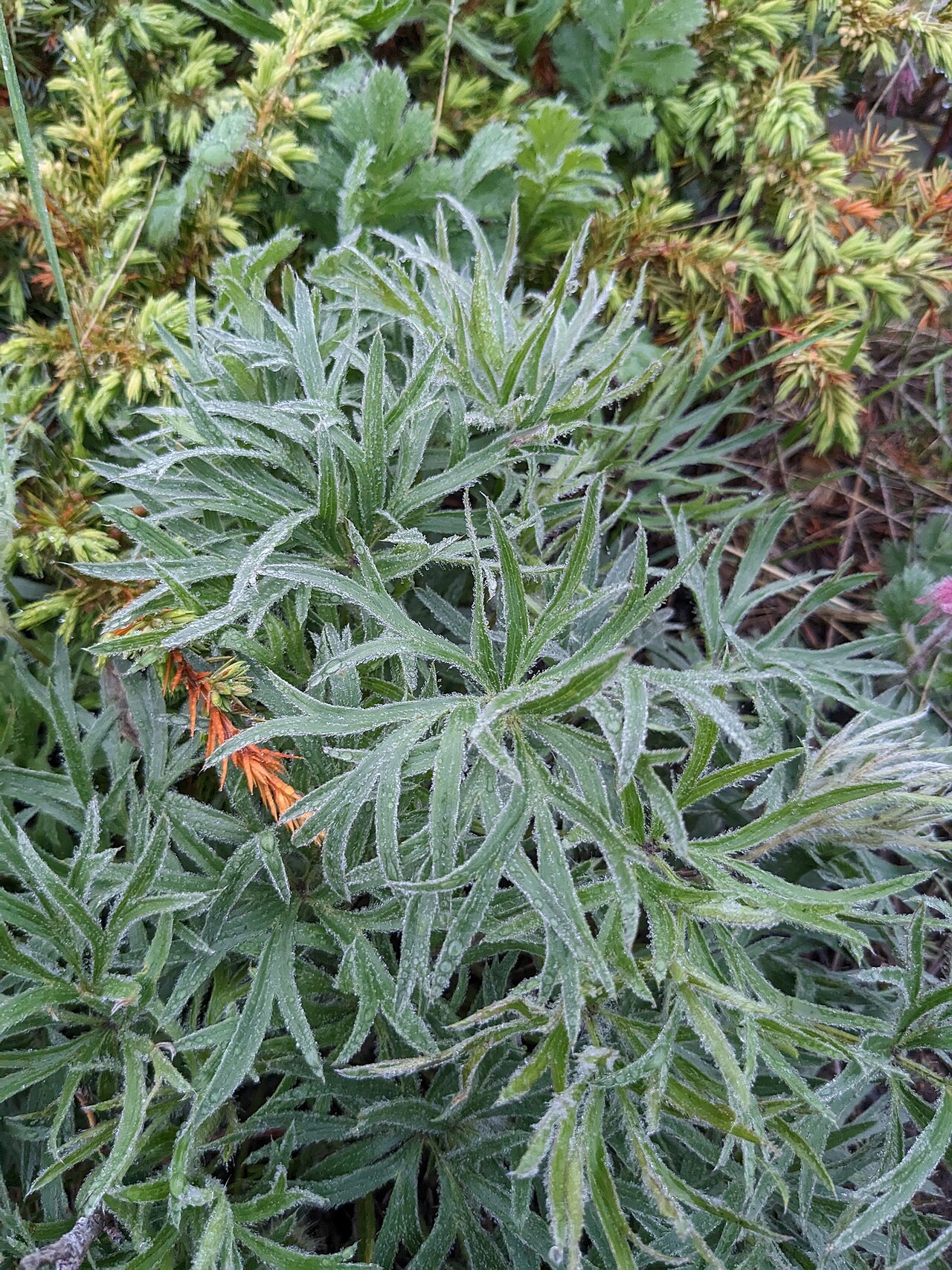
A divided whorl of narrow segments occurs below the flower, while the basal foliage develops into finely cut, long-stalked leaves. Silky hairs are conspicuous on emerging growth. The leaves are not the strap-like leaves of true crocuses. Avoid pulling unfamiliar green shoots around the crown simply because the flowers have gone: these leaves supply the energy for the perennial's future growth. Their finely divided pattern also provides a valuable identification feature when flowers are absent.
Flowers
The solitary flowers have a broad cup or open bowl form, typically with pale violet, lavender or nearly white petal-like sepals around many yellow stamens. Hair on the outer surface and stalk can catch low spring light. The showy parts are sepals rather than true petals, a distinction useful when comparing descriptions in different floras. Flower color varies, so a very pale individual need not be a different species. Color alone is not sufficient to separate North American material from cultivated Eurasian pasqueflowers.
Fruit and lookalikes
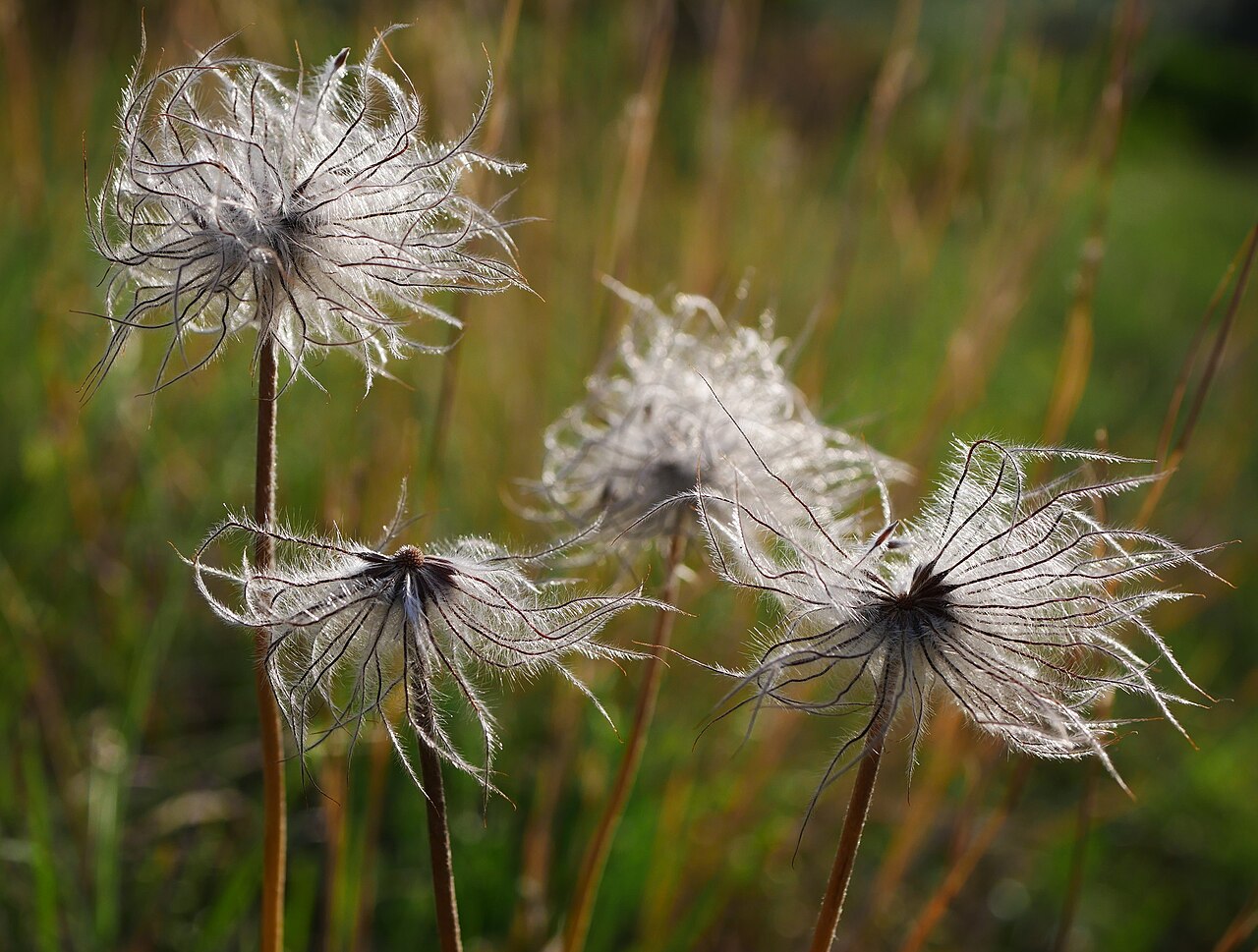
Each developing fruit carries a long, hairy style, and many together form the distinctive plume-like seed head. The fruiting stage should be retained if seed production is desired. European Pulsatilla vulgaris and other members of the group require careful identity checks, especially in gardens where they may have been planted. Prairie smoke, Geum triflorum, also has feathery fruiting heads but is not a pasqueflower; its flowers and leaves are different. Use the entire plant and its provenance, not a single fuzzy seed photograph, when making an identification.
Quick Facts
| Scientific Name | Pulsatilla nuttalliana |
| Family | Ranunculaceae |
| Plant Type | Herbaceous perennial with a persistent root system |
| Mature Height | About 3–18 inches across flowering and fruiting stages; early flowers may be only 4–6 inches high |
| Mature Spread | A compact clump; allow roughly 12 inches of space and adjust to local stock |
| Growth Rate | Slow to moderate; establishment requires patience |
| Sun Exposure | Full sun to light partial shade |
| Water Needs | Dry to average, well-drained soil; water young plants during establishment |
| Soil Type | Sandy, gravelly or otherwise freely draining soil |
| Soil pH | Follow local provenance and soil conditions; no universal narrow target asserted |
| Bloom Time | Early spring; often March–May in the central part of the range, later in cold locations |
| Flower Color | Lavender to pale violet or nearly white; yellow stamens |
| Fall Color | Foliage browns; valued chiefly for spring flowers and feathery fruit |
| Fruit | Dry fruits with long silky styles forming plume-like heads |
| Deer Resistant | Not a reliable deer-proof claim; protect young plants where necessary |
| USDA Hardiness Zones | Cold-climate perennial; local nursery provenance is more useful than a single broad zone claim |
Native Range
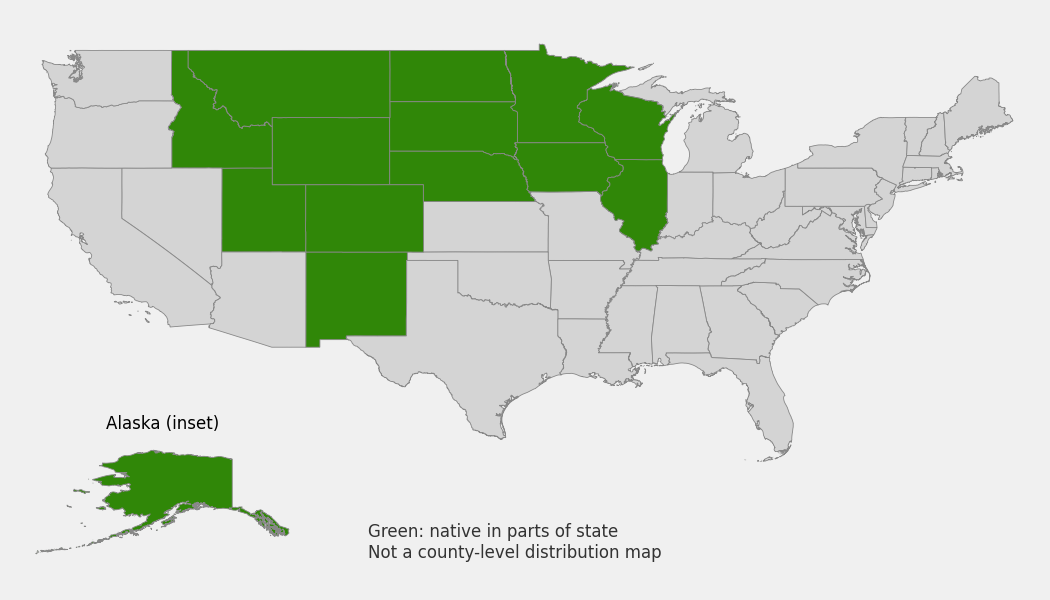
American pasqueflower is native to a broad northern and interior North American region. The Kew treatment followed for this map extends from Alaska and much of western and central Canada into the northern plains, Rocky Mountain states and parts of the upper Midwest, reaching south to New Mexico. The map includes an Alaska inset so that northern range is not accidentally omitted by a lower-forty-eight crop.
Within the Dakota regional list, the species is a genuine native, but it is not uniformly distributed through every habitat. Dry prairie slopes, open grassland and some open woodland situations can be suitable; saturated depressions and dense shade are not equivalent sites. A state shaded green is a starting point for investigation, not a claim that any seed source is appropriate throughout that state.
Taxonomic treatments differ in their boundaries and naming within the broader pasqueflower complex. The USDA link uses the older North American subspecies concept, Pulsatilla patens subsp. multifida, while this page uses Pulsatilla nuttalliana. It is not a licence to merge all Eurasian records of P. patens into the native range shown here. For restoration, verify local herbarium records and obtain seed from a source suited to the project area.
📋 Regional plant list: North Dakota, South Dakota and Western Minnesota
Growing & Care Guide
Light
Select a bright, open position. Full sun is usually the clearest match for prairie material, while light partial shade can be suitable in some local settings. Do not rely on spring light alone: the root zone and summer foliage still need a workable growing environment after nearby shrubs leaf out. Place a low-growing clump where it will not be overtopped immediately by vigorous tall perennials. A path edge or raised part of a naturalistic bed can make the small spring flowers easier to see without crowding them.
Soil and water
Give the plant drainage first. A sandy or gravelly site, or a slope where water moves through rather than collecting, is preferable to a compacted bowl. Newly planted material still needs enough moisture to establish; dry-site adaptation is not an instruction to desiccate a small nursery root ball. Check below the surface and water when needed, allowing air to return to the soil between waterings. Avoid a thick, wet mulch cap over the crown. If a bed stays saturated in winter or spring, choose another position rather than assuming summer dryness will compensate.
Planting
Use nursery-grown plants or responsibly produced seed, not plants dug from prairie remnants. Plant a small container-grown specimen at its original crown depth, keeping root disturbance modest. Mark the location so the quiet summer or dormant-season plant is not accidentally cultivated or replanted over. Give it room to develop a persistent root system rather than expecting an immediate large clump. In a mixed border, select neighbors whose mature spread will leave the crown and fine leaves visible.
Maintenance
This is not a perennial that benefits from routine shearing after its short flower display. Leave healthy foliage to continue growing and retain fruiting stalks if you want the ornamental seed heads or seed. Remove only damaged material as needed. Hand weed carefully near the base; repeated hoeing can injure a small crown. Do not divide a well-established plant simply because division works for other perennials. Seed propagation is generally the more appropriate way to increase a planting without disrupting an established root system.
Propagation
Fresh, correctly identified seed offers a useful route to new plants. Ask the supplier about collection date, storage and recommended treatment; seed performance can depend on handling, so a universal calendar is less useful than information about the particular lot. Sow in a clean, well-drained medium and maintain even moisture during germination without saturating the pot. Label the North American identity and source clearly. Transplant while seedlings are manageable, then harden them gradually to outdoor sun and wind. A young plant may need more than one growing season before it provides the flowering display expected of a mature specimen.
Problems and practical safeguards
A plant that disappears in a lush border may have been outcompeted rather than killed by winter cold. Check neighbor growth and drainage before replacing it in the same spot. A newly transplanted specimen needs different water management from a long-established prairie plant. Treat this as an ornamental, not a food crop: buttercup-family plants can contain irritating compounds, and this guide does not recommend tasting or preparing pasqueflower. Gloves are sensible when handling damaged tissues if your skin is sensitive.
Landscape Uses
- An early-flowering feature in a locally appropriate dry prairie garden.
- A sunny slope or freely draining raised bed with restrained neighboring plants.
- A low planting beside a viewing path, followed by attractive feathery seed heads.
- A labelled native-plant collection that distinguishes American from European pasqueflowers.
Wildlife & Ecological Value
Early-season flowers
A spring flower can be valuable in a landscape where many summer perennials have not begun to bloom. Pasqueflower supplies a floral opportunity during that early window, although actual visitors depend on temperature, weather and the local insect community. Observe rather than assume a particular specialist relationship. Pair it with other regionally appropriate plants that bloom later so the garden does not provide a brief spring pulse followed by a long resource gap.
Seed and small-scale habitat
The silky fruiting structures allow dispersal and give a small planting seasonal complexity. Retaining some heads lets the plant complete reproduction, even if a garden does not produce many volunteer seedlings. The species should not be presented as a major bird-fruit resource: it makes small dry fruits, not berries. Its contribution is one part of a diverse open-land community, complemented by grasses and other forbs with different structures and schedules.
Mammals and herbivory
Do not build a planting plan around an unsupported promise that mammals will never touch it. Small plants can be damaged by trampling, digging or incidental browsing even when they are not favored food. Temporary protection may be worthwhile during establishment. Conversely, modest insect activity on a healthy plant is not automatically a pest outbreak. Avoid broad-spectrum insecticides around early flowers when pollinators may be using them.
Prairie conservation
Pasqueflower is strongly associated in the public imagination with spring on the prairie. Protecting that experience means protecting the plant community and soil, not just a single showy species. Do not remove wild clumps to create a garden display. In a home planting, use appropriately sourced nursery material and keep invasive competitors out. On a conservation site, follow the management plan for the whole habitat rather than importing generic garden practices into a remnant ecosystem.
Cultural & Historical Uses
The common name pasqueflower connects spring flowering with the Easter season, while prairie crocus and wild crocus describe its early appearance. Neither makes it a member of the iris family or a true bulbous crocus. Names can help people remember a plant while still creating identification traps, which is why the scientific name and its synonyms are provided here.
The North American pasqueflower is associated with South Dakota's state-flower tradition and Manitoba's floral emblem under older scientific names. These naming histories explain why different references may appear to discuss different plants when they are using different treatments of the North American complex. They do not establish that a European ornamental pasqueflower is an equivalent native choice.
Historical medicinal use is not reproduced here as a home remedy. Species identity, preparation and safety require more than a common-name anecdote, and living plants need not be harvested to have cultural significance. A spring visit to a protected prairie, or a carefully labelled nursery-grown specimen in the garden, is a safer and more useful way to appreciate its seasonal role.
Frequently Asked Questions
Is American pasqueflower a crocus?
No. Wild crocus and prairie crocus are common names for this buttercup-family perennial. It does not have the same botanical identity or growth structure as a true Crocus.
Is Pulsatilla vulgaris the same native plant?
No. Pulsatilla vulgaris is European. For a North American native planting, check the label for the accepted North American identity and verify provenance rather than buying on flower color or the word pasqueflower alone.
Why did my plant become taller after blooming?
Fruiting stalks elongate as the feathery seed heads develop. A height measured at early flowering is not the final height of the fruiting plant. This is why this guide gives a broader seasonal height range than the old four- to six-inch table shorthand.
Should I cut off the fuzzy seed heads?
Leave them if you enjoy their appearance or want seed. They are a normal fruiting stage, not a disease. Removing them is a garden choice but prevents that portion of the plant from completing seed production.
Can I move a wild clump into my garden?
Do not dig wild plants. Obtain nursery-propagated material or responsibly produced seed. Established root systems are not an invitation to transplanting, and removal damages the prairie population as well as risking failure in the garden.
Sources & Further Reading
- Kew: Pulsatilla nuttalliana taxonomy and native distribution
- Flora of North America: North American Anemone patens treatment
- Minnesota Wildflowers: field identification and seasonal height
- Minnesota DNR: northern prairie wildflowers
- USDA PLANTS: North American subspecies treatment
- NatureServe: taxonomic interpretation
Find Native Plants
Ask growers about nursery propagation and regional provenance. Browse our ND native plant nurseries, SD native plant nurseries, MN native plant nurseries directory for suppliers. Explore the native nursery finder.