
Green Dragon (Arisaema dracontium)
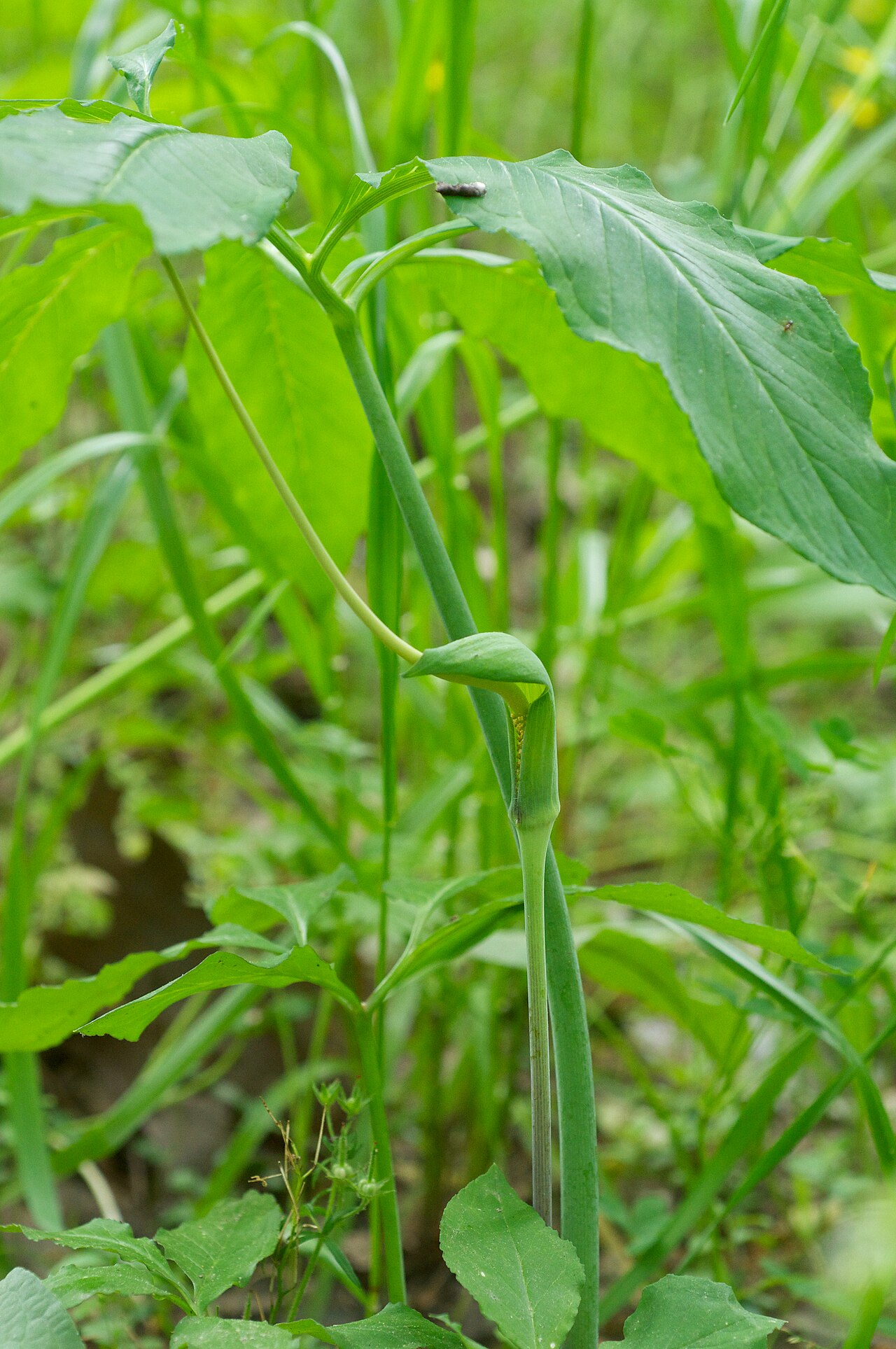
Green dragon is a woodland perennial best appreciated at close range. A broad divided leaf rises above a narrow green floral sheath, from which a long pale spadix projects like a slender tail. Its quiet color conceals one of the most distinctive flower structures in the eastern forest.
The plant is related to jack-in-the-pulpit but is not simply a taller form of it. The many leaf divisions and long exposed spadix give it a different silhouette. It suits a moist, shaded planting where people can pause to look beneath the foliage, rather than a distant sunny border in which its green flowers disappear among other leaves.
This guide follows Arisaema dracontium in the broad species treatment used by Kew, NC State Extension and the North Carolina flora account. Some specialist regional treatments subdivide the complex. For restoration, obtain a locally identified source rather than assuming that every plant sold as green dragon represents the same local form. All parts contain irritating calcium oxalate; admire the berries and corms, but do not eat them.
Identification
One leaf, many divisions
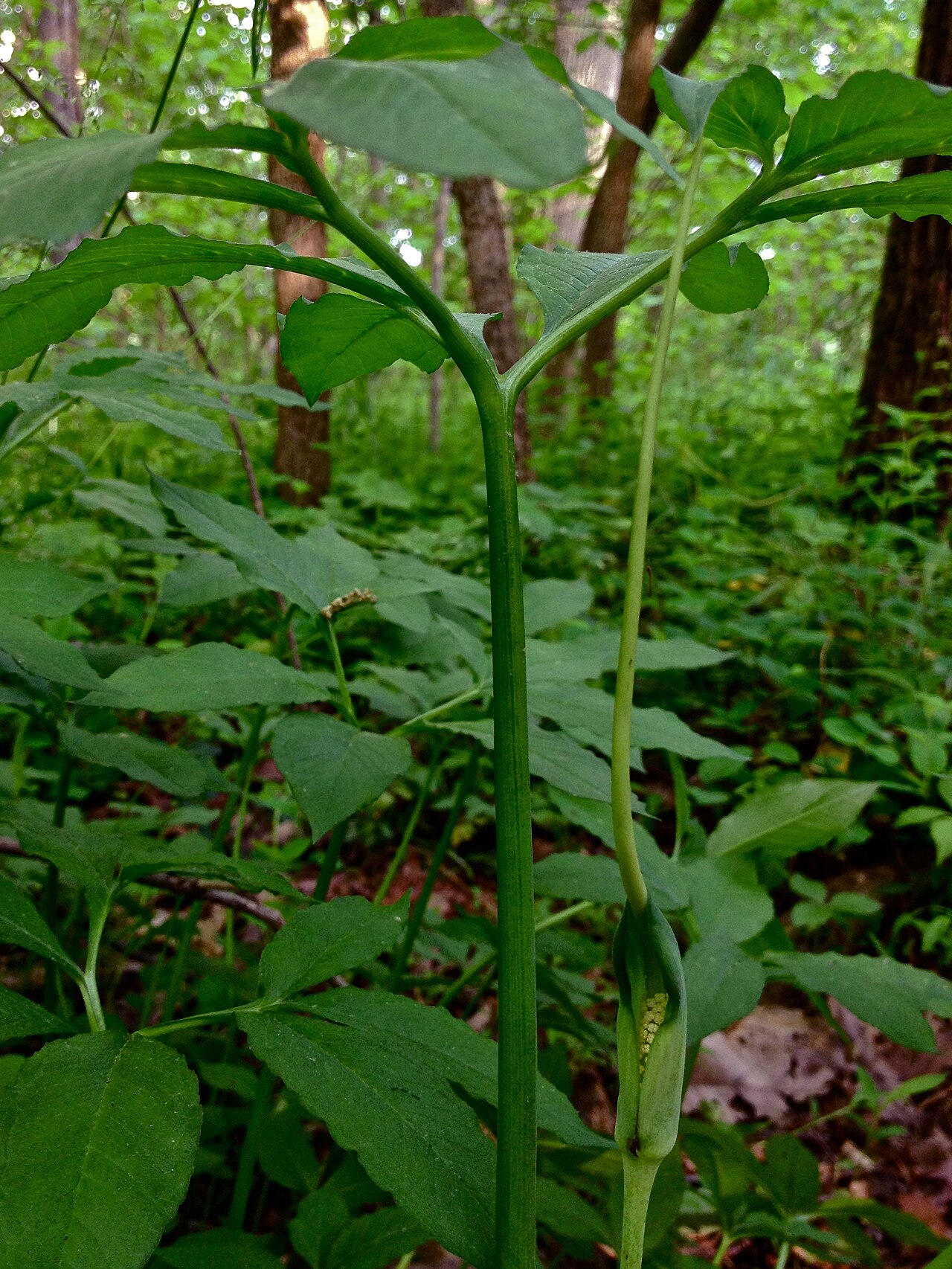
A mature shoot typically carries one large divided leaf. Its leaflets spread across a branching, roughly fan-like structure, which can look like several separate leaves from a distance. Counts vary, commonly within about five to fifteen divisions. Photograph the entire arrangement, including the point where its branches join, instead of submitting a single detached leaflet for identification.
Spathe and spadix
The green spathe wraps around the lower portion of the spadix, where the tiny true flowers occur. The long narrow upper part projects well beyond that sheath. This is not a single giant petal or a grass seed head. Looking from the side and slightly below the leaf usually reveals the structure better than viewing the plant directly from above.
Fruit and seasonal change
The berries begin green and become conspicuously red. A fruit cluster without leaves is not enough to separate green dragon confidently from jack-in-the-pulpit, whose berries look similar. Record the plant while it is in leaf and flower, and keep that identity with any seed you collect legally. Late-season disappearance of the leaf can be normal dormancy rather than a sudden failure.
Confusing relatives and garden escapes
Jack-in-the-pulpit usually has fewer leaflets and a hooded floral structure, while introduced Pinellia species can also produce divided leaves and arum-like flowers. NC State emphasizes the risk of confusing green dragon with Pinellia pedatisecta. Check the complete leaf pattern and the position and shape of the inflorescence; do not spread unidentified corms around a garden simply because they were offered under a native common name.
Quick Facts
| Scientific Name | Arisaema dracontium |
| Family | Araceae |
| Plant Type | Herbaceous perennial from an underground corm |
| Mature Height | Usually about 1–3 feet |
| Mature Spread | About 1–1.5 feet of foliage; allow room for the broad leaf |
| Growth Rate | Seasonal emergence followed by late-season dormancy |
| Sun Exposure | Partial to full shade |
| Water Needs | Average to moist, humus-rich soil; avoid chronic drought |
| Soil Type | Rich, aerated woodland soil; often floodplain habitat |
| Soil pH | Varies with locality; rich circumneutral soils suit many populations |
| Bloom Time | Spring into early summer; roughly April–June by region |
| Flower Color | Green spathe with a long pale green to cream spadix |
| Fall Color | Foliage dies back; red fruit clusters may remain |
| Fruit | Clustered berries turning red; not edible |
| Deer Resistant | Not a guaranteed browse-proof plant; toxic sap requires care |
| USDA Hardiness Zones | Often grown in USDA zones 4–9, with appropriate site and provenance |
Native Range
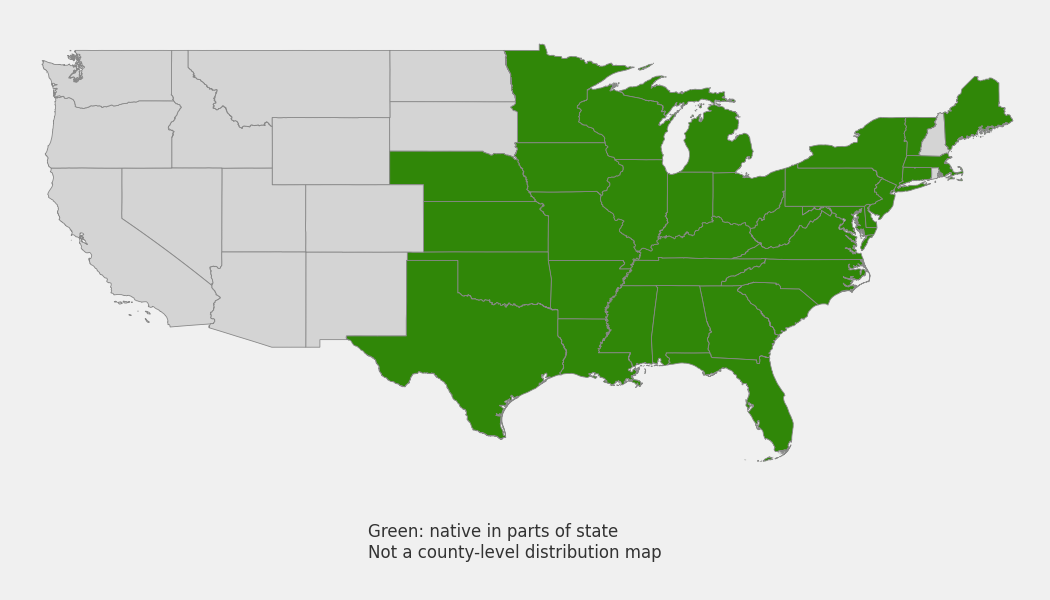
In the broad treatment followed here, green dragon is native across much of central and eastern North America, reaching eastern Canada and northeastern Mexico. The U.S. map follows Kew’s species-level state list. It is deliberately a broad orientation map: green shading is not a claim of occurrence in every county, and it does not resolve fine-scale taxonomic divisions.
The North Carolina flora places it mainly in rich bottomland hardwood settings, especially along larger rivers and streams. Its abundance varies across the state, with substantial gaps in unsuitable sandy or coastal settings. That is an important correction to any reading of the regional table that treats dry shade anywhere in the Carolinas as equivalent habitat.
For ordinary garden use, choose rich, moisture-retentive but aerated woodland soil and partial shade. For ecological restoration, verify both local occurrence and the taxonomic treatment used by your supplier or herbarium. The map and USDA link can guide further investigation, but they should not be used to certify an anonymous nursery plant or infer that a wetland can be planted without other site considerations.
📋 Regional plant list: North Carolina and South Carolina
Growing & Care Guide
Choose a viewing place and a suitable root zone
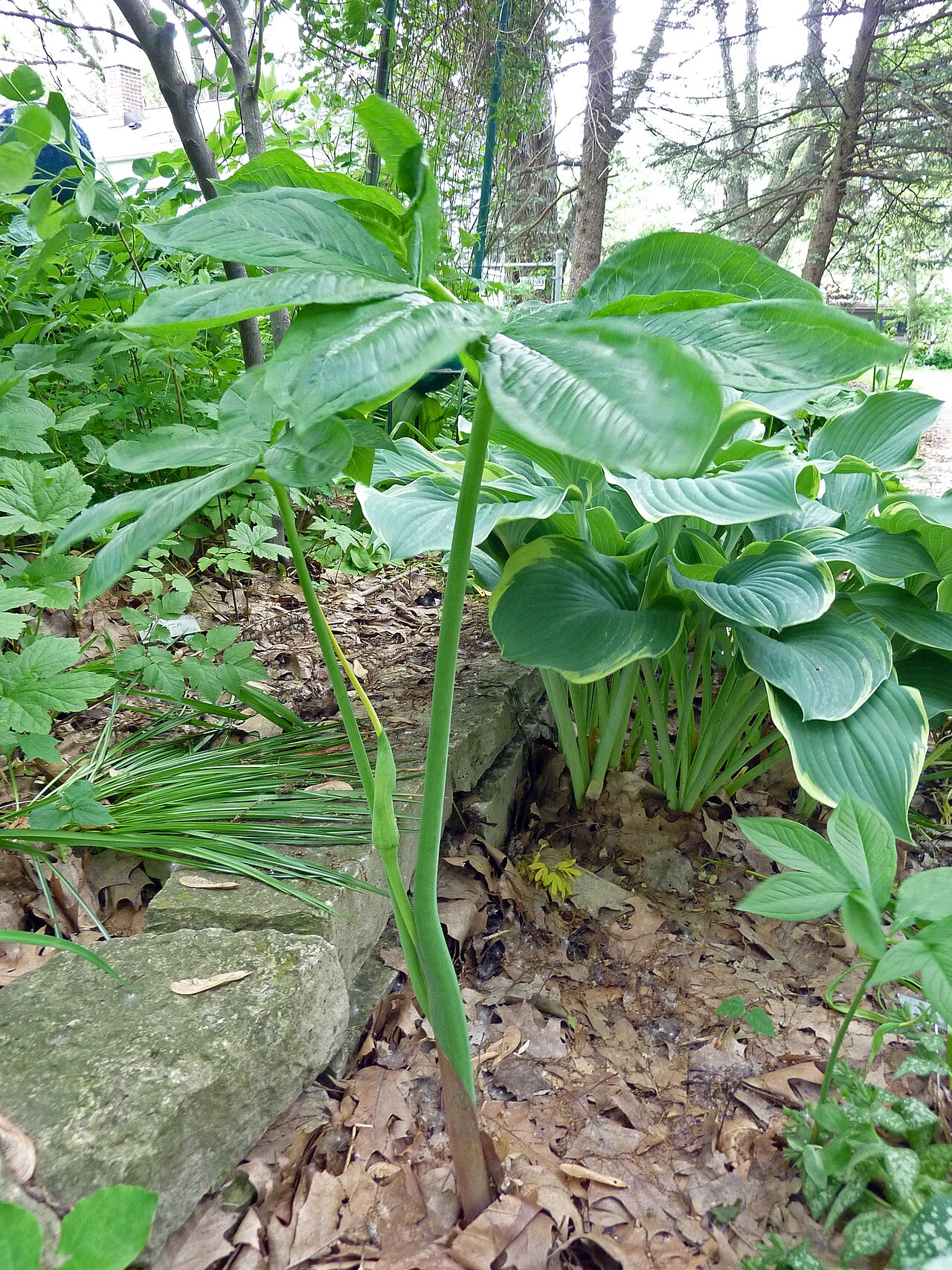
A shaded path edge can make the unusual flowers visible without requiring visitors to walk into the bed. Choose that location only if the soil also suits the plant. Do not sacrifice moisture and drainage for a convenient viewing angle. Leave enough room for the broad leaf to unfold without being continually brushed by feet or hidden beneath a dense shrub.
Plant nursery-propagated stock
Use a reputable grower who can explain whether plants were propagated from seed or corm offsets. Avoid material dug from wild woodland. With a container-grown plant, retain the established soil level and disturb roots as little as practical. If planting a dormant corm, follow the grower’s depth guidance for its size and mark the position before it is hidden by leaf litter.
Manage moisture, not standing water
Water newly installed plants when their rooting zone begins to dry, then allow excess water to drain. A native floodplain association does not mean that a small garden corm should sit in an anaerobic pot or a permanently flooded hole. Likewise, a brief dry spell tolerated by a mature plant does not justify placing it in a drought-prone bed under thirsty surface roots.
Retain a woodland surface
A light layer of decomposing leaves fits the planting better than a thick, compacted mat. Keep mulch from burying the emerging shoot or trapping water around the crown. Where tree roots already occupy the ground, work gently and avoid deep digging to create an artificial compost pocket. Improving the surface over time is less disruptive than repeatedly cultivating around the corm.
Respect seasonal dormancy
Leave green foliage in place until it naturally declines. Mark the plant with a discreet label so a dormant period is not mistaken for an empty space ready for replanting. If a leaf collapses unusually early, inspect moisture and physical damage, but do not immediately excavate the corm. Repeated digging to check whether a plant is alive can itself become the cause of failure.
Propagation and safe handling
Seed and corm offsets are possible routes, but they require patience and careful labeling. Wear gloves when handling sap or cleaning berries, keep plant material away from food preparation areas and follow a reliable species-specific propagation protocol. Do not improvise edible processing from historical accounts. For a small home garden, buying a few propagated plants is often simpler than handling a large crop of berries.
Companion planting
Pair green dragon with plants that share its moisture and shade needs while leaving space around the leaf. Avoid a dense carpet that hides emerging shoots, and avoid aggressive spreaders that force frequent disturbance. A taller summer fern can provide continuity after dormancy if it does not overwhelm the green dragon during spring growth. Treat spacing as something to observe and adjust gradually.
Diagnose problems before intervening
A missing shoot may reflect late emergence, dormancy, disturbance or an unhealthy corm; those possibilities need different responses. Record planting position and seasonal dates. If leaf damage occurs, photograph the whole plant and the affected area before removing evidence. Do not apply routine pesticide treatments to an otherwise stable woodland bed, and check for an introduced lookalike before propagating volunteers.
Landscape Uses
- A close-view botanical feature in a moist shade garden.
- A native woodland planting within its documented range, using known propagated stock.
- An educational comparison with jack-in-the-pulpit that retains labels through dormancy.
- A rich, shaded stream-side garden position above prolonged standing water.
Wildlife & Ecological Value
A different flower strategy
The small flowers are sheltered low on the spadix rather than displayed as bright open petals. That structure makes green dragon a useful reminder that a wildlife garden need not consist entirely of showy daisy-like blooms. Avoid assigning it a long list of specific pollinator partnerships without local or species-level evidence.
Berries are not human food
Birds can use the fruits, but wildlife consumption does not establish human edibility. Keep the plant away from places where children may mistake red berries for snack fruit, and label it clearly in educational gardens. Preserve the natural fruiting display where practical rather than harvesting it for decorative use indoors.
Protect the existing woodland
A few planted specimens do not compensate for removing a rich forest floor. Where the species already occurs naturally, preserve the canopy, soil and hydrology that support it. Do not dig wild plants to stock a new bed. If seed collection is contemplated for a conservation project, obtain permission and follow local collection guidance.
Cultural & Historical Uses
The name green dragon describes the striking outline of the flowering structure rather than a relationship to dragon fruit or other edible plants. Older references may place it under Arum dracontium or Muricauda dracontium. Those historical combinations help trace records, but the accepted name used here is Arisaema dracontium.
Historical accounts describe Indigenous processing of the underground parts. That history should be presented with respect and without turning it into a home preparation recipe. Raw or improperly handled plant material is irritating and toxic. The safer role for this species in a modern garden is ornamental and ecological, not as an experimental food crop.
The broad green dragon concept has also been studied in more finely divided regional treatments. This page makes its scope explicit rather than silently mixing taxonomic systems. For gardeners, the practical lesson is to preserve the botanical label and origin of a purchased plant; for restoration practitioners, it is to consult the flora used by the relevant conservation program before selecting stock.
Frequently Asked Questions
Is green dragon the same as jack-in-the-pulpit?
No. Green dragon generally has a many-divided leaf and a long spadix projecting beyond its narrow sheath. Jack-in-the-pulpit has a different hooded floral structure and usually fewer leaflets.
Are the red berries edible?
No. Treat the plant as toxic and irritating because of calcium oxalate. Wildlife use and historical processed-food accounts are not instructions for home consumption.
Why has my plant disappeared in summer?
Seasonal dormancy can follow flowering and fruiting. Keep the position marked and review moisture and timing before assuming the corm has died or digging it up.
Will it thrive in dry shade?
Rich soil with dependable moisture is the better target. The old table’s broad dry-to-average code should not be taken as a recommendation for chronically dry ground beneath competitive trees.
Can I take a corm from the woods?
Use nursery-propagated material instead. Wild removal damages existing populations and may be prohibited. A grower with known provenance is also more useful for confirming identity.
Sources & Further Reading
- Kew POWO — broad accepted species and native distribution
- NC State Extension — identification, care and safety
- Vascular Plants of North Carolina — habitat and regional distribution
- Missouri Department of Conservation — identification and conservation
- Missouri Plants — botanical description and field observations
Find Native Plants
Ask growers about nursery propagation and regional provenance. Browse our NC native plant nurseries, SC native plant nurseries directory for suppliers. Explore the native nursery finder.