
Prairie Coreopsis (Anacis palmata)
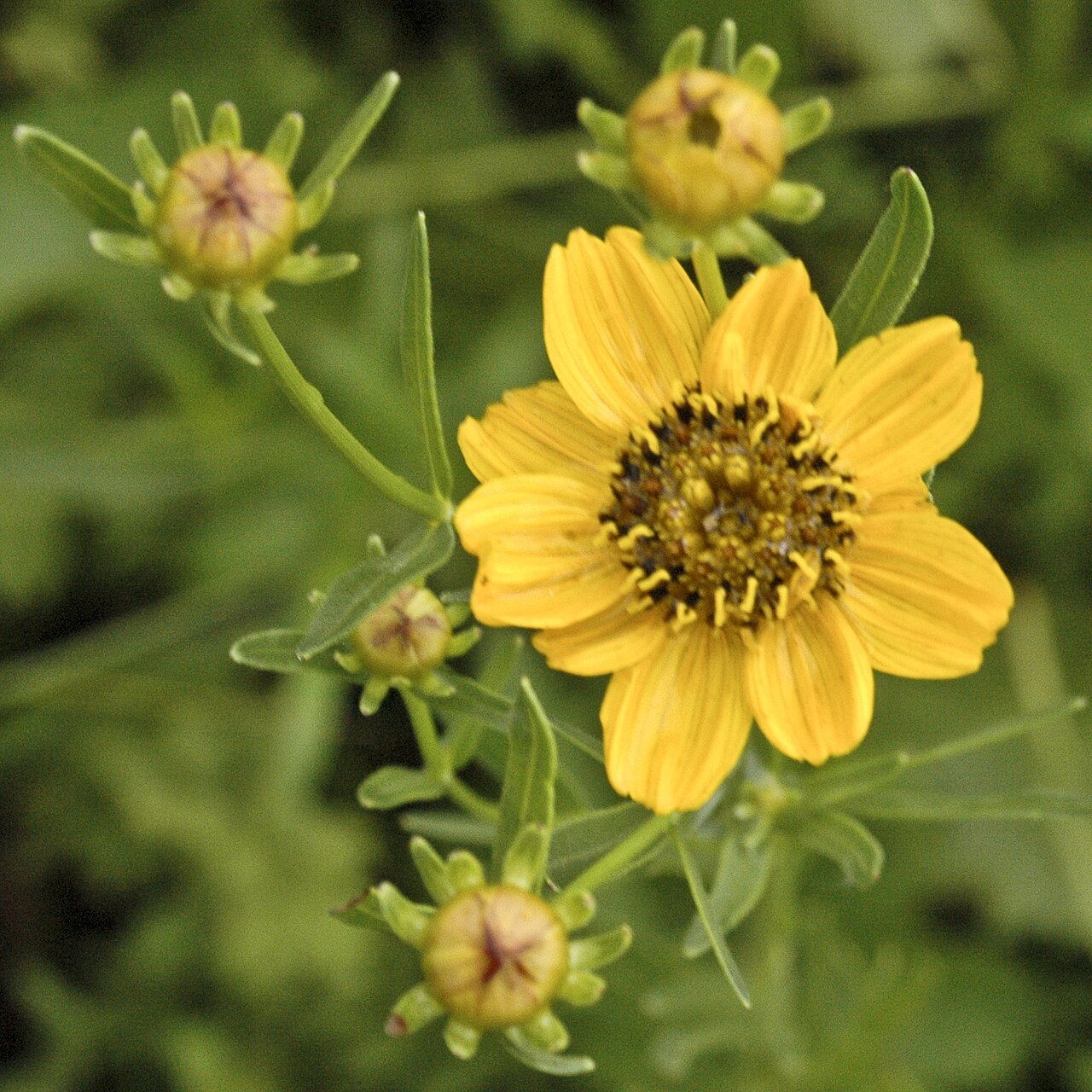
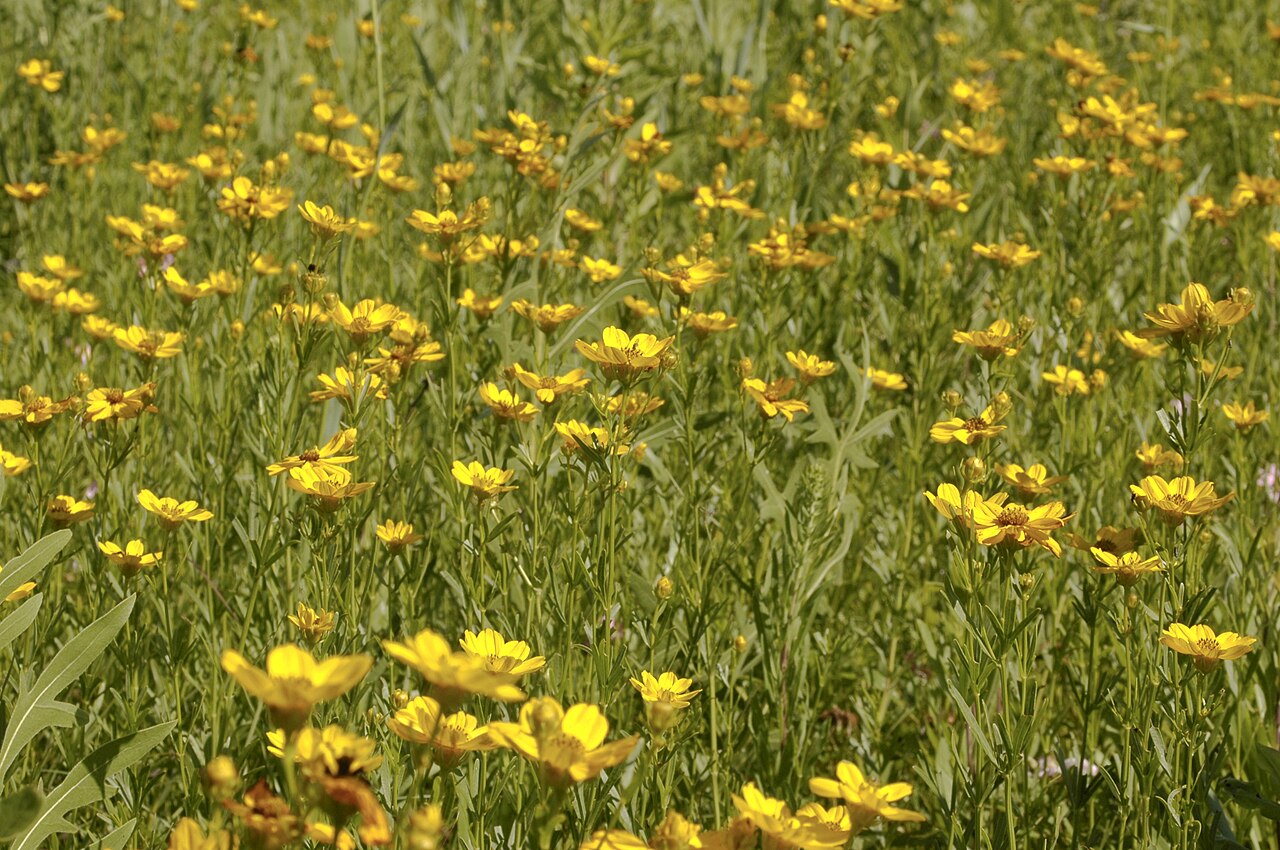
Prairie coreopsis provides a warm yellow display above distinctive three-part leaves. Unlike some short-lived garden tickseeds, it is a spreading prairie perennial that can form a substantial colony. It fits a sunny native meadow or a roomy naturalistic border better than a tiny pocket where every stem must stay within a fixed circle.
The plant is still widely known as Coreopsis palmata in regional floras and nursery catalogues. Kew now accepts Anacis palmata following a recent taxonomic combination; both names refer to the same species treated here. Keeping the familiar synonym visible helps gardeners connect an older plant list with current nomenclature without creating a duplicate page for the same plant.
In Michigan, Minnesota and Wisconsin, prairie coreopsis belongs to open native plant communities rather than a wet woodland understory. Its deeply divided leaves and comparatively few large flower heads help distinguish it from other yellow-flowered composites. Establish it in sun and draining soil, then allow its rhizomes enough space to express the natural colony-forming habit.
Identification
Stems & Habit
Upright stems arise from an underground spreading system. Individual stems are fairly slender, but together they can make a broad patch. This is not the same growth pattern as a tightly tufted bedding annual. Mark the intended area before planting and decide whether gradual spread is welcome or whether periodic division will be needed at a border edge.
Leaves
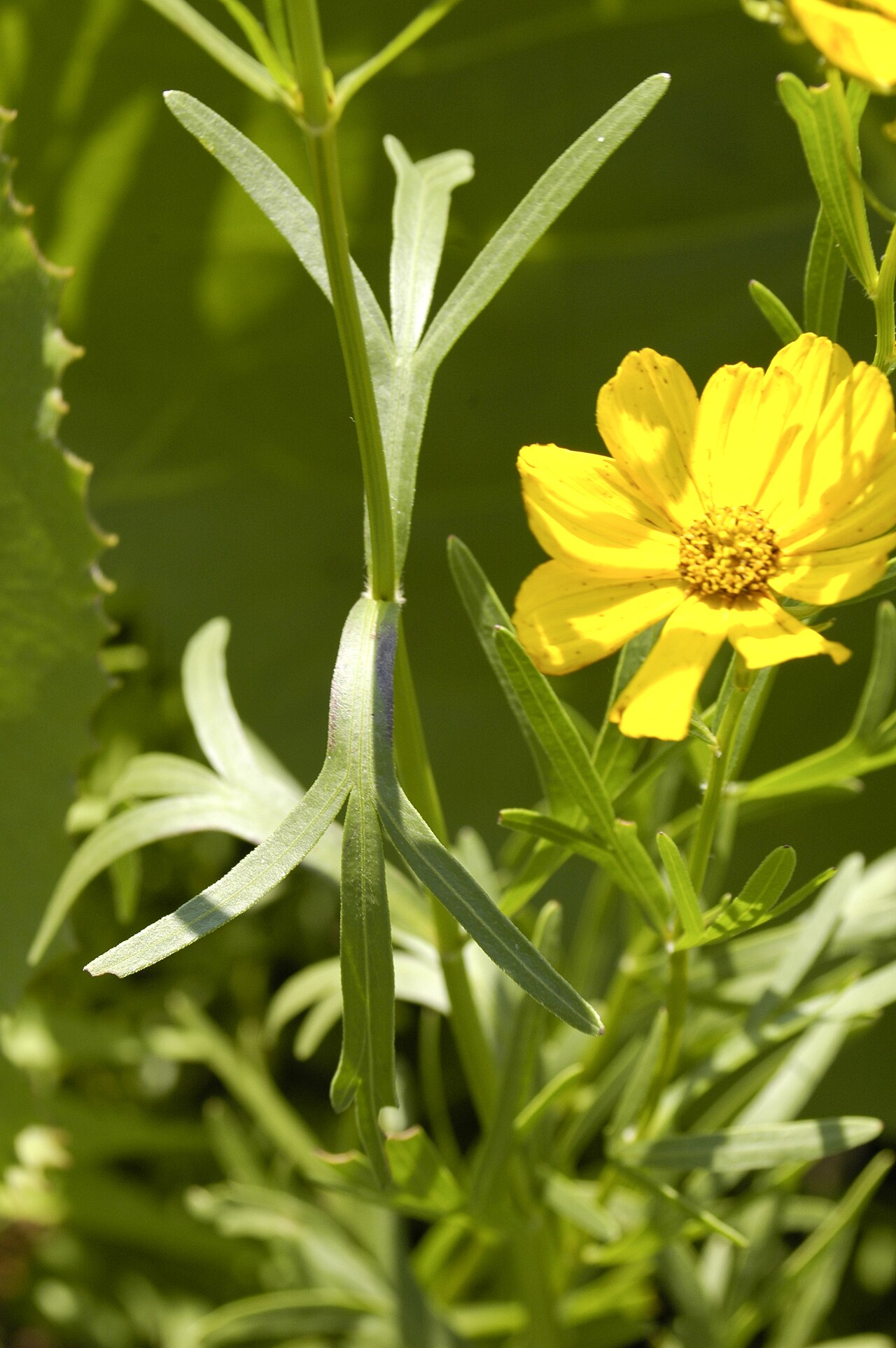
Leaves are opposite and deeply divided into three narrow lobes, with the central lobe usually longest. They are not composed of separate leaflets. The three-part outline gives rise to names such as finger coreopsis and helps separate this plant from lanceleaf coreopsis. Examine mature leaves below the flowers rather than relying on a distant view of yellow heads.
Flowers
Yellow ray florets surround a disk of many smaller florets. The outer rays may have slight notching, but the leaf pattern and overall habit are stronger clues than a petal count alone. Minnesota Wildflowers records heads about one and a half to two inches across. The disk darkens as the head ages, so old and fresh flowers can look quite different on the same patch.
Fruit & Seeds
The flower head becomes a dry seed head containing achenes rather than fluffy windborne plumes. Leave some heads if natural regeneration and wildlife use are desired. Collect only mature seed from a correctly identified cultivated patch, keeping provenance labels; yellow daisy-like flowers in a mixed meadow can be easy to confuse once the leaves have weathered.
Quick Facts
| Scientific Name | Anacis palmata; widely known as Coreopsis palmata |
| Family | Asteraceae |
| Plant Type | Rhizomatous prairie perennial |
| Mature Height | 1–3 feet; commonly 18–30 inches |
| Mature Spread | Expanding colonies; allow more room than one stem suggests |
| Growth Rate | Moderate, spreading by rhizomes |
| Sun Exposure | Full sun; tolerates some light shade |
| Water Needs | Dry to average moisture after establishment |
| Soil Type | Well-drained prairie soil, including sandy or rocky ground |
| Soil pH | Broad tolerance where drainage is suitable |
| Bloom Time | Late spring through summer, commonly June–August |
| Flower Color | Yellow rays and yellow disk florets |
| Fall Color | Brown foliage and dry seedheads |
| Fruit | Dry achenes in persistent seed heads |
| Deer Resistant | Not deer-proof; protect establishing plants where browsing is heavy |
| USDA Hardiness Zones | 3–8 in horticulture; choose local prairie provenance |
Native Range
Kew’s native distribution for Anacis palmata includes a central United States group extending from the upper Midwest southward into the Mississippi-region states. The map follows that native list, not every garden or roadside occurrence. Michigan, Minnesota and Wisconsin are included, though native occurrence remains local rather than universal within each state.
Prairies, open grassy places and well-drained open habitats are characteristic. It can grow in a range of prairie soils, but standing water and a heavily shaded woodland floor are poor models for its care. A regional map cannot distinguish a dry ridge from a wet depression on the same property.
Taxonomic changes do not change the plant’s native ecology. Anacis palmata, Coreopsis palmata and the recent combination Gyrophyllum palmatum need to be reconciled when checking inventories. For a restoration project, use a local species list and documented seed source rather than assuming any commercial coreopsis mix contains this exact taxon.
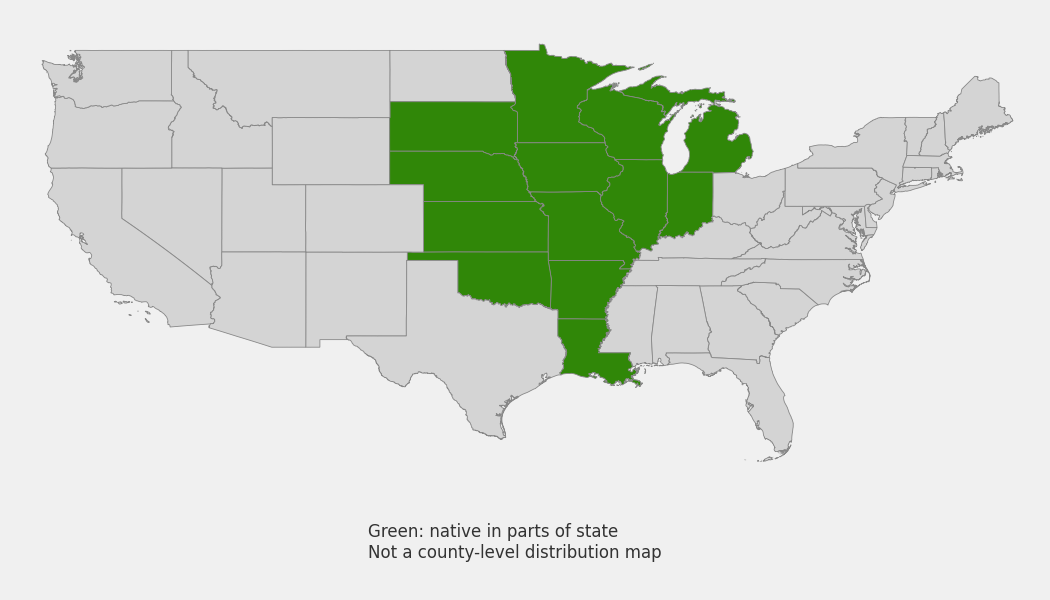
📋 Regional plant list: Michigan, Minnesota & Wisconsin
Growing & Care Guide
Light
Use a sunny site for sturdy growth and reliable bloom. Light shade is possible, but competition from trees and tall shrubs can reduce flowering. In a meadow, judge light at midsummer after the surrounding plants have reached height, not only in spring when the site appears open.
Soil & Water
Choose draining soil and avoid routine heavy fertilization. Once rooted, the plant is suited to drier conditions than most woodland perennials, but new transplants still need water while their roots establish. Excess richness and irrigation can create a lush planting that needs more support and maintenance than a leaner prairie-style bed.
Planting Tips
Plant propagated plugs or divisions with enough room for eventual spread. Weed carefully during establishment and distinguish emerging coreopsis leaves from nearby seedlings before pulling. In a mixed meadow, use several locally appropriate species with complementary seasons rather than relying on one yellow-flowered perennial to carry the whole design.
Pruning & Maintenance
Deadheading can reduce seed production, but leaving some heads supports the seasonal character of a prairie planting. Cut back dead stems according to the garden’s habitat and access needs, not simply because bloom has finished. Where a patch overruns its space, divide or remove edge growth deliberately rather than repeatedly shearing all shoots.
Propagation
Division of an established cultivated colony is a practical method. Seed propagation also allows genetic diversity, especially when seed comes from an appropriate regional source. Keep the labels Anacis palmata and Coreopsis palmata together in records so later divisions are not treated as different species. Do not collect from protected remnants without permission.
Landscape Uses
- A sunny native meadow with room for colonies
- A dry-to-average border with prairie grasses
- A naturalistic slope where yellow summer flowers are welcome
- An educational planting showing deeply divided opposite leaves
Wildlife & Ecological Value
For Pollinators
The composite flower heads present many small florets to visiting insects. Leave access to flowers and avoid insecticide use during bloom. Include plants that flower before and after coreopsis to provide a longer season of resources than its own bloom window.
For Birds
Dry seed heads can contribute to the food and structural diversity of a meadow. Retaining stems also provides perches and foraging surfaces. Wildlife use will depend on the surrounding landscape; a single plant cannot guarantee visits from a particular bird.
For Mammals
As with other prairie plantings, establishment may require protection from concentrated grazing or trampling. Do not describe a native perennial as immune to browsing. The aim is to let a young patch establish before expecting it to tolerate the pressures of an open landscape.
Ecosystem Role
A rhizomatous prairie herb occupies space differently from a bunchgrass or a taprooted forb. Its spreading habit can be beneficial in a diverse meadow but inconvenient in a small formal bed. Matching that habit to the design prevents unnecessary removal after the plant has begun to thrive.
Cultural & Historical Uses
Prairie coreopsis illustrates how botanical names change while horticultural familiarity lags. The name Coreopsis palmata remains useful for finding regional observations and nursery stock. The accepted Anacis combination is included here so both research trails reach the same species.
The common name tickseed refers to the appearance of fruits in this group, not to the plant attracting ticks. A garden label can explain that distinction without promising any pest-control effect. The most recognizable living feature is the three-lobed leaf, not the common name alone.
Its modern use is strongest in prairie-inspired planting and regional restoration. Choose propagated material and avoid removing plants from remnant prairie. An attractive garden colony is not a substitute for conserving the soil, plant diversity and management history of an intact native grassland.
Frequently Asked Questions
Are Anacis palmata and Coreopsis palmata different plants?
No. Kew treats Coreopsis palmata as a synonym of Anacis palmata. This page keeps both names visible to connect modern taxonomy with familiar nursery and regional-list usage.
Will it stay in a small clump?
Not necessarily. It spreads by rhizomes and can form colonies. Give it room or plan occasional division at the edge of a border.
How do I tell it from lanceleaf coreopsis?
Prairie coreopsis has opposite leaves deeply divided into three lobes. Lanceleaf coreopsis usually has undivided narrow leaves or only limited lateral lobing. Check several leaves, not just flower color.
Does it need rich compost and frequent feeding?
Usually not. Well-drained prairie-style conditions are a better starting point. Overly rich, wet treatment can encourage growth that is less suited to a naturalistic planting.
Can I cut off all the seed heads?
You can if reducing reseeding is important, but leaving some retains seasonal interest and potential wildlife resources. Decide according to the role of the planting rather than a universal rule.
Sources & Further Reading
- Kew: accepted Anacis palmata and native range
- Minnesota Wildflowers: prairie coreopsis
- Minnesota BWSR: prairie coreopsis
- USDA NRCS: prairie coreopsis germplasm
Find Native Plants
Ask growers about nursery propagation and regional provenance. Browse our MI native plant nurseries, MN native plant nurseries, WI native plant nurseries directory for suppliers. Explore the native nursery finder.