
Canada Goldenrod (Solidago canadensis)
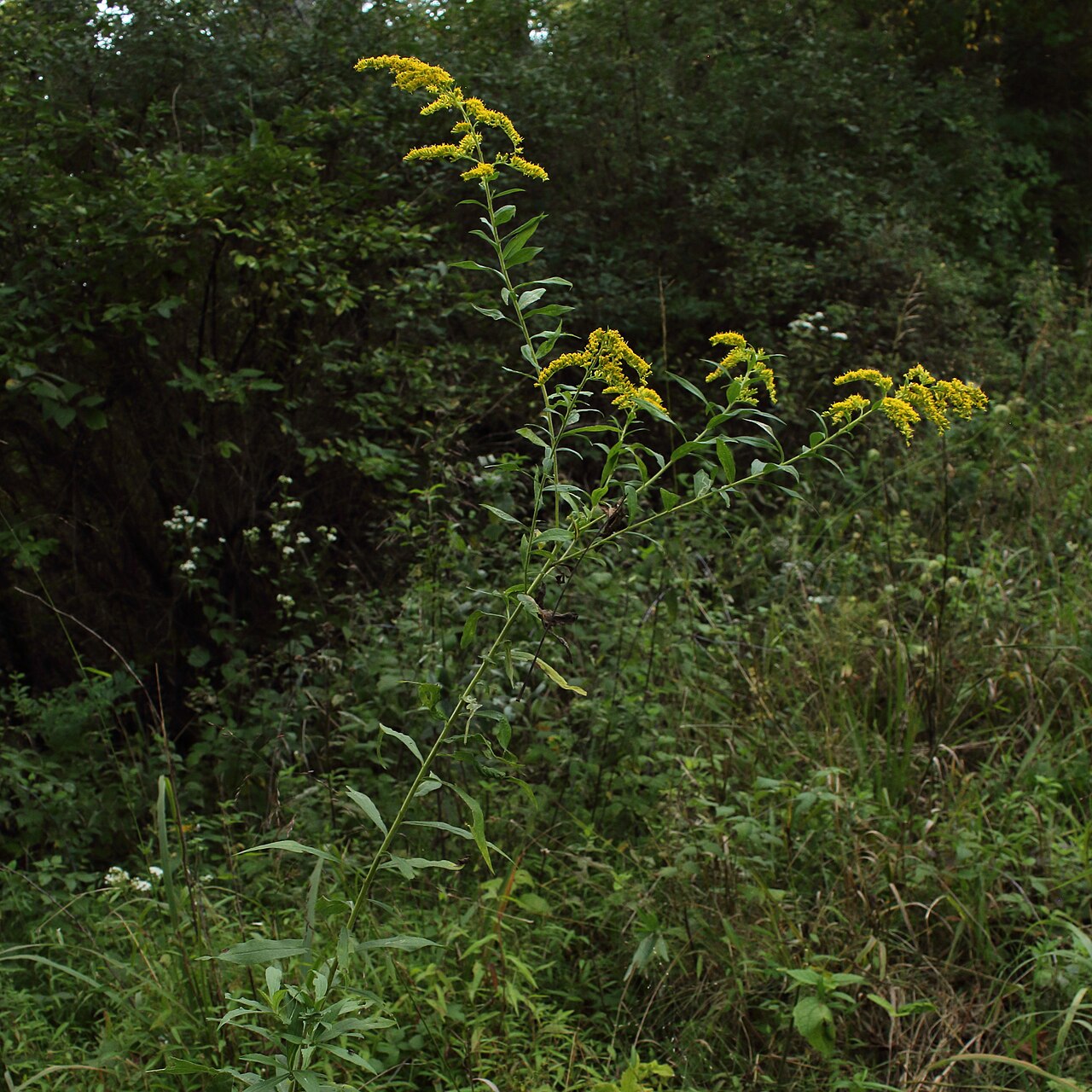
Solidago canadensis, commonly called Canada Goldenrod, is one of the most familiar native wildflowers of late summer and fall across eastern and central North America. A member of the aster family (Asteraceae), it forms upright, leafy stems topped with an arching, plume-shaped cluster of hundreds of tiny golden-yellow flower heads. Few native perennials put on a bigger show for pollinators, and few are so often misjudged — Canada goldenrod does not cause hay fever (that is ragweed’s doing), but it does spread with real enthusiasm once it finds a spot it likes.
In the wild, Canada goldenrod grows in old fields, prairie remnants, roadsides, woodland edges, and disturbed meadows, typically reaching 2 to 5 feet tall, occasionally more under rich conditions. Its lance-shaped, three-veined leaves line sturdy stems that terminate in a broad, one-sided panicle of recurving flower branches, each crowded with small composite blooms. By late August the plant becomes a magnet for bees, wasps, beetles, and butterflies fueling up for migration or winter.
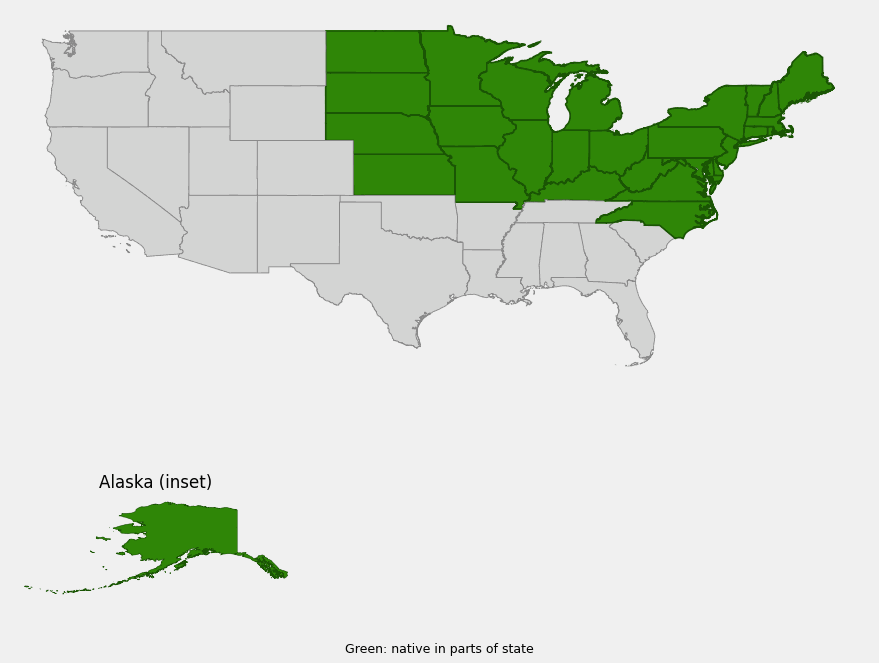
Canada goldenrod is native to the northern two-thirds of the eastern and central United States and across most of Canada, but it is absent as a native species through much of the Southeast and the West. It has also become a notorious garden escapee and invasive weed in Europe and Asia, where it was introduced ornamentally and has since spread aggressively through disturbed ground — a reminder that a plant can be a well-behaved community member in its home range and a problem guest elsewhere. In the garden, give it room: this species spreads by rhizomes and self-seeds freely, so it suits naturalistic meadows and restoration plantings better than tidy borders.
Identification
Canada goldenrod is an herbaceous perennial that dies back to the ground each winter and resprouts from a spreading rhizome system. A single plant can expand into a sizeable colony within a few seasons, so what looks like a stand of many plants is often one genetic individual.
Stems & Leaves
Stems are erect, usually unbranched below the flower cluster, light green, and often finely hairy toward the top. Leaves are numerous, alternate, stalkless or nearly so, lance-shaped to narrowly elliptical, 3 to 6 inches long, with sharply toothed margins and three prominent parallel veins running from the base — a key field mark that separates this goldenrod from many lookalikes. The leaf surface is rough to the touch, and the undersides are often softly hairy.
Flowers
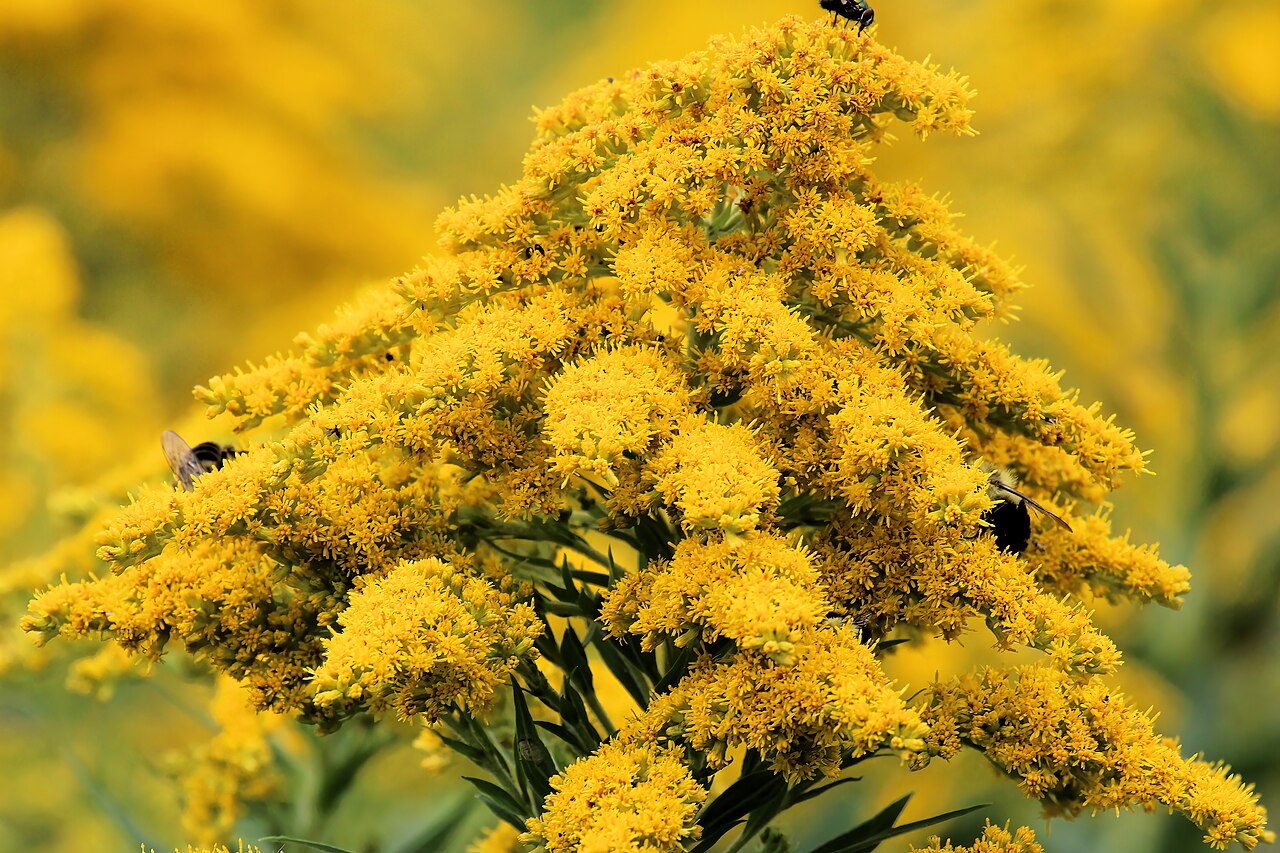
Flower heads are tiny, about ⅛ inch across, but packed by the hundreds into a large, pyramid-shaped panicle 4 to 10 inches long with branches that curve outward and downward, giving the whole inflorescence a plume-like, one-sided look. Each head carries a small ring of short yellow ray florets around a center of disc florets. Bloom runs from August into October depending on latitude, making this one of the last major nectar sources before frost.
Fruit & Seeds
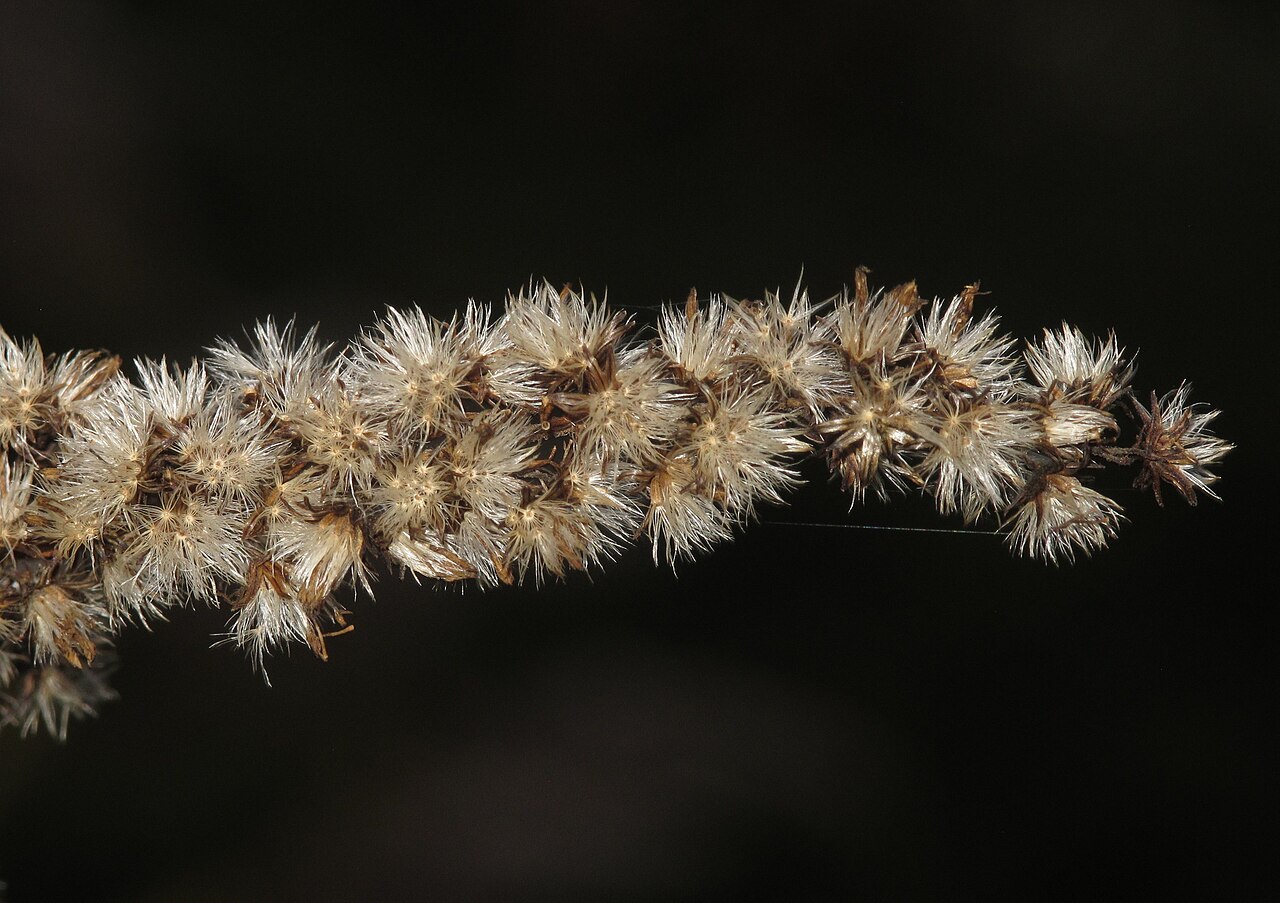
After flowering, each head dries into a fuzzy tuft of tan to buff-colored bristles (the pappus) attached to tiny one-seeded achenes, which catch the wind and carry seed well beyond the parent colony. A single robust stem can produce thousands of seeds in addition to spreading by rhizome, which together explain how quickly this species can colonize open ground.
Quick Facts
| Scientific Name | Solidago canadensis |
| Family | Asteraceae (Aster) |
| Plant Type | Herbaceous Perennial Wildflower |
| Mature Height | 2–5 ft (taller in rich soil) |
| Mature Spread | Colonizes by rhizome; spread is effectively unbounded without control |
| Growth Rate | Fast |
| Sun Exposure | Full Sun to Part Shade |
| Water Needs | Average; tolerates both moist and fairly dry soils |
| Soil Type | Adaptable; loam, clay or sandy, including poor and disturbed soils |
| Soil pH | 5.5–7.5 (adaptable) |
| Bloom Time | August – October |
| Flower Color | Golden yellow |
| Fall Color | Foliage yellows and browns after bloom; plume turns tan and fluffy as seed matures |
| Fruit | Tiny wind-dispersed achenes with a tan bristly pappus |
| Deer Resistant | Yes (occasional light browsing only) |
| USDA Hardiness Zones | 3–9 |
Native Range
Canada goldenrod is native across the northern two-thirds of the eastern and central United States, from New England and the Mid-Atlantic west through the Great Lakes states and the eastern Great Plains, with populations reaching north into most of Canada and even to Alaska. Within this broad range it is a true generalist, equally at home in tallgrass prairie remnants, old hayfields, forest-edge clearings, and the weedy margins of roads and ditches.
South and west of this core range, Canada goldenrod is largely absent as a native plant; populations found in the Deep South, Texas, and much of the West are typically garden escapes or naturalized rather than indigenous. The species should not be confused with the many regional goldenrods that fill those niches natively, such as seaside goldenrod or Missouri goldenrod — always check which goldenrod actually belongs on your local soil before planting.
Across its true native range, Canada goldenrod is an early-successional opportunist: it is often among the first native perennials to colonize abandoned fields and disturbed prairie, paving the way for longer-lived grasses and forbs as succession proceeds. It is genuinely abundant and secure throughout this range, unlike many native wildflowers that have declined with habitat loss.
📋 Regional plant lists featuring Canada Goldenrod: New Hampshire, Maine & Vermont · Connecticut, Massachusetts & Rhode Island · New York, Pennsylvania & Northern New Jersey · Delaware, Southern New Jersey & Long Island · Maryland, Virginia & West Virginia · North Carolina & South Carolina · Kentucky & Tennessee · Ohio & Indiana · Illinois, Iowa & Missouri · Michigan, Wisconsin & Eastern Minnesota · North Dakota, South Dakota & Western Minnesota · Nebraska, Kansas & Eastern Colorado · Alaska
Growing & Care Guide
Canada goldenrod is about as easy to grow as a native wildflower gets — the challenge for most gardeners is managing its enthusiasm rather than coaxing it along. It rewards almost any sunny, open spot with a reliable late-season flower show and a steady stream of pollinator visitors.
Light
Full sun produces the sturdiest stems and the heaviest bloom. The plant tolerates part shade but tends to flop and flower more sparsely as light decreases. Choose an open meadow, prairie planting, or sunny border edge rather than a shaded garden bed.
Soil & Water
Canada goldenrod is remarkably unfussy about soil, thriving in loam, clay, or sand, including compacted or disturbed ground where many other perennials struggle. It handles average moisture well and tolerates short dry spells once established, though it also grows readily in soils that stay evenly moist. Rich, fertile soil tends to produce taller, floppier growth and faster spread — lean soil keeps it more restrained.
Planting Tips
Plant in spring or fall, spacing young plants 18 to 24 inches apart if you want a quick-filling patch, or farther apart if you plan to manage the spread. Because it colonizes by rhizome and reseeds freely, Canada goldenrod is best suited to naturalistic meadows, pollinator plantings, and restoration sites rather than small formal borders, unless you are prepared to divide and edit it regularly.
Pruning & Maintenance
Deadhead before seed matures if you want to limit self-seeding into neighboring beds. Cut plants back in late fall or leave the dried seed heads standing through winter for birds and winter interest, then clear old stems in early spring. To control spread, dig out unwanted rhizomes in spring or install a root barrier around the planting area.
Landscape Uses
- Pollinator meadows and prairie restorations, where its late bloom extends the nectar season
- Naturalized borders at the back of a sunny bed, given room to spread
- Erosion control on disturbed or marginal ground thanks to its spreading rhizomes
- Cut flower gardens — the plumes hold up well in arrangements
- Wildlife gardens focused on fall-migrating pollinators and seed-eating birds
- Reclamation plantings on old fields, roadcuts and other disturbed sites
Wildlife & Ecological Value
Few native wildflowers do more for late-season pollinators than Canada goldenrod. Its long bloom window, right as most other nectar sources are fading, makes it one of the most ecologically important plants of the fall landscape.
For Pollinators
The flowers draw an enormous range of insects: native bees of many kinds, honeybees stocking up for winter, soldier beetles, hover flies, wasps, and migrating monarch and other butterflies refueling before their journey south. Goldenrods as a group are considered keystone plants for native bee diversity, supporting both generalist foragers and a number of specialist bee species that depend on goldenrod pollen.
For Birds
Seed-eating birds such as American goldfinches, sparrows, and juncos feed on the ripe seed heads through fall and winter. The dense stands also provide low cover for ground-nesting and overwintering songbirds.
For Mammals
Rabbits and deer occasionally browse young foliage, though the plant is generally left alone once mature. Small mammals use dense goldenrod stands for cover while foraging.
Ecosystem Role
As an early-successional colonizer, Canada goldenrod helps stabilize disturbed soil and build the structure that later-arriving prairie and meadow species need to establish. Its extensive rhizome network also plays a real role in erosion control on marginal land. Note that the related rayless goldenrod of the Southwest can be toxic to livestock through tainted milk, but Canada goldenrod itself is not implicated in livestock poisoning and is not toxic to people or pets.
Cultural & Historical Uses
Several Indigenous nations used goldenrods, including Canada goldenrod, as a source of yellow dye and in traditional preparations; the Ojibwe and other Great Lakes peoples are recorded using goldenrod leaves and flowers in various infusions. These uses are part of a long ethnobotanical history rather than a basis for modern herbal claims, and this article does not recommend medicinal use.
During the colonial period and into the 19th century, goldenrod — including this species — was sometimes brewed as “Liberty Tea” after the Boston Tea Party, when colonists sought substitutes for imported black tea. Canada goldenrod’s dye properties were also put to practical use, yielding shades of yellow and gold for wool and other natural fibers.
In the 20th century, the inventor Thomas Edison experimented with goldenrod as a domestic source of natural rubber (latex), since the plant’s sap contains a small amount of rubber compound; his goldenrod-derived rubber was used in a set of tires presented to Henry Ford, though the project never reached commercial scale. Today Canada goldenrod’s main cultural role is horticultural and ecological — as an unpretentious, high-value plant for pollinator gardens across its native range.
Frequently Asked Questions
Does Canada goldenrod cause hay fever?
No. Goldenrod pollen is heavy and sticky, carried by insects rather than wind, so it rarely reaches human sinuses. The real culprit for fall allergies is ragweed (Ambrosia), which blooms at the same time with small, inconspicuous green flowers that release huge amounts of wind-borne pollen.
Is Canada goldenrod invasive?
Within its native range in the eastern and central U.S. and Canada, it is a vigorous but ecologically appropriate native plant, not an invasive species. It has, however, become a serious invasive weed in Europe and parts of Asia after being introduced there as an ornamental, and it can behave aggressively even within North America if planted outside a managed meadow or prairie setting.
How do I stop Canada goldenrod from taking over my garden?
Give it a dedicated space with root barriers or regular edging, deadhead before seed set to reduce self-sowing, and divide or thin the rhizome mass every year or two. It is best planted where spreading is welcome, such as a naturalized meadow, rather than in a small mixed border.
What is the difference between Canada goldenrod and other goldenrod species?
The three-veined, sharply toothed, lance-shaped leaves and the arching, one-sided plume of flowers are good field marks, but more than 100 goldenrod species grow in North America and many hybridize or look similar. For a planting decision, it is worth confirming the species with a regional plant guide or extension office, since not every goldenrod is native to every area.
Can I use Canada goldenrod as a cut flower?
Yes. The bright plumes hold their color well in arrangements and pair nicely with asters and ornamental grasses. Cut stems just as the lower flowers on the plume begin to open, before pollen sheds heavily, for the cleanest look indoors.
