
Sweet Black-eyed Susan (Rudbeckia subtomentosa)
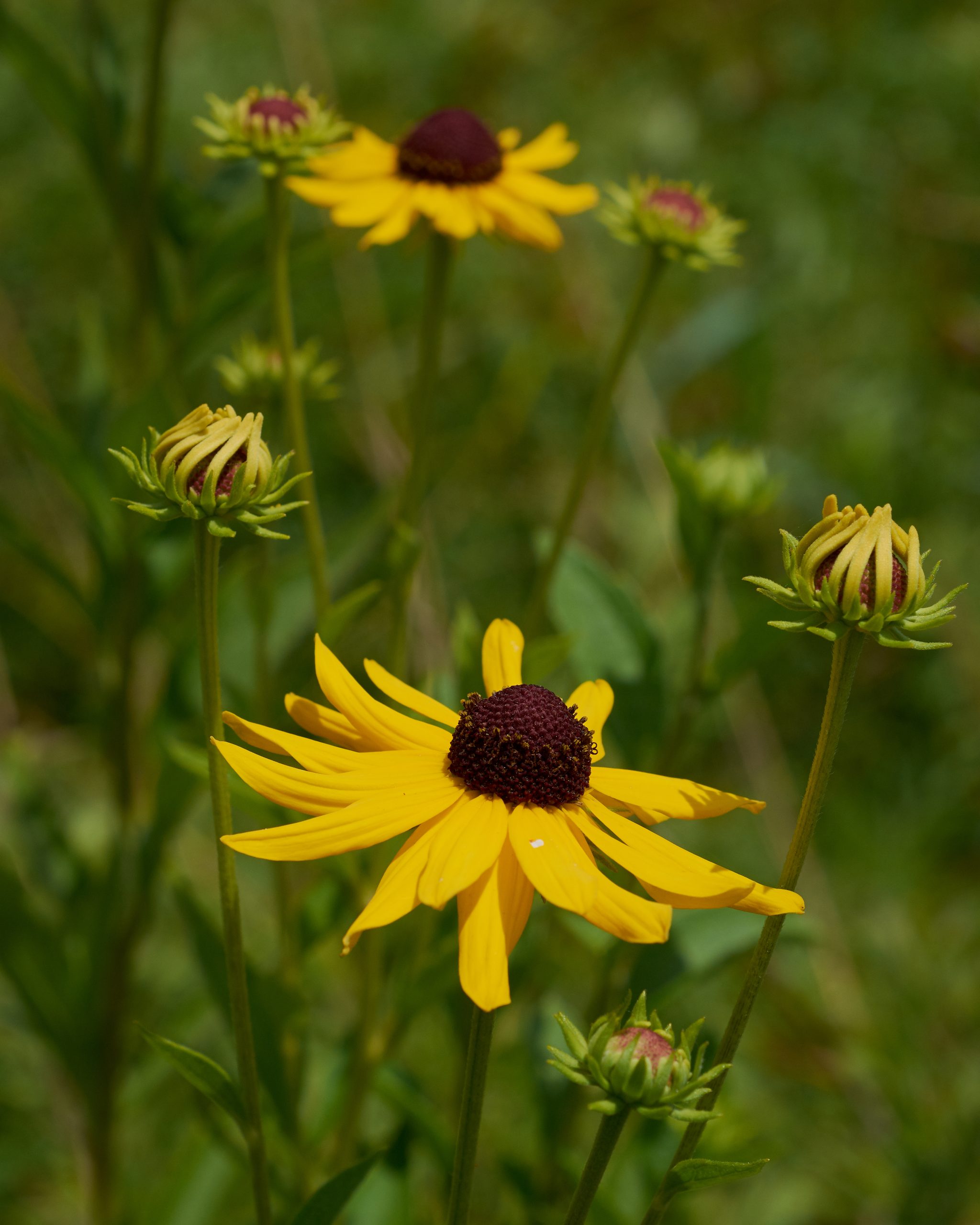
Rudbeckia subtomentosa, commonly called Sweet Black-eyed Susan or Sweet Coneflower, is a tall, long-lived perennial wildflower of the central United States’ moist prairies and streambanks. Unlike its shorter-lived cousin Black-eyed Susan (Rudbeckia hirta), which behaves as an annual or biennial, Sweet Black-eyed Susan is a true perennial that returns from the same clump for many years, slowly building into a sturdy, floriferous stand.
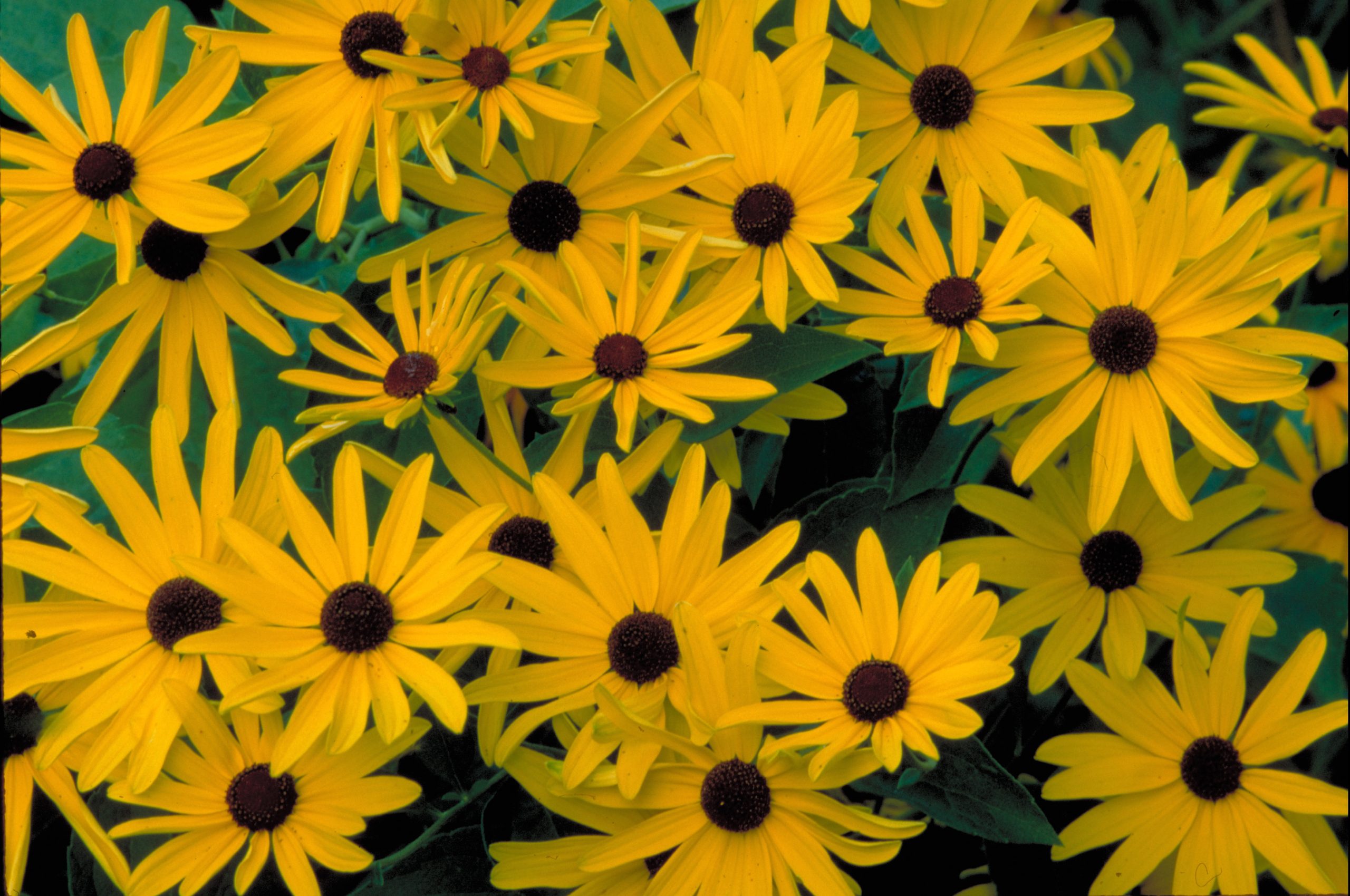
From midsummer into fall, branched stems topped with silvery-haired foliage carry dozens of golden-yellow, daisy-like flowerheads, each centered with a dark brown to purplish-brown cone. Crush a leaf and you’ll notice a faint anise or vanilla-like scent — one of the easiest ways to confirm you have this species rather than a look-alike Rudbeckia. The “sweet” in the common name refers to this fragrance, not the flavor of any plant part.
Reaching 3 to 6 feet tall, Sweet Black-eyed Susan is substantial enough to anchor the back of a sunny border or a rain garden, yet it is well-behaved in clumping habit rather than aggressively spreading. It is a reliable, long-blooming nectar and pollen source for a wide range of pollinators and a good choice for anyone restoring tallgrass prairie, wet meadow, or streambank habitat within its native range.
Identification
Sweet Black-eyed Susan is best recognized by the combination of its height, branching habit, softly hairy gray-green foliage, and late-summer bloom of yellow daisies with domed, dark centers.
Stems & Leaves
Stems are erect, strongly branched in the upper half, and covered in fine, soft hairs that give the whole plant a slightly grayish, velvety look — the source of the species name subtomentosa (“somewhat downy”). Leaves are alternate, lance-shaped to narrowly ovate, 3 to 6 inches long, with the lower leaves sometimes shallowly three-lobed. Leaf margins are toothed, and both leaf surfaces feel soft rather than rough or sandpapery, which helps distinguish this species from rougher-leaved Rudbeckias such as R. hirta.
Flowers
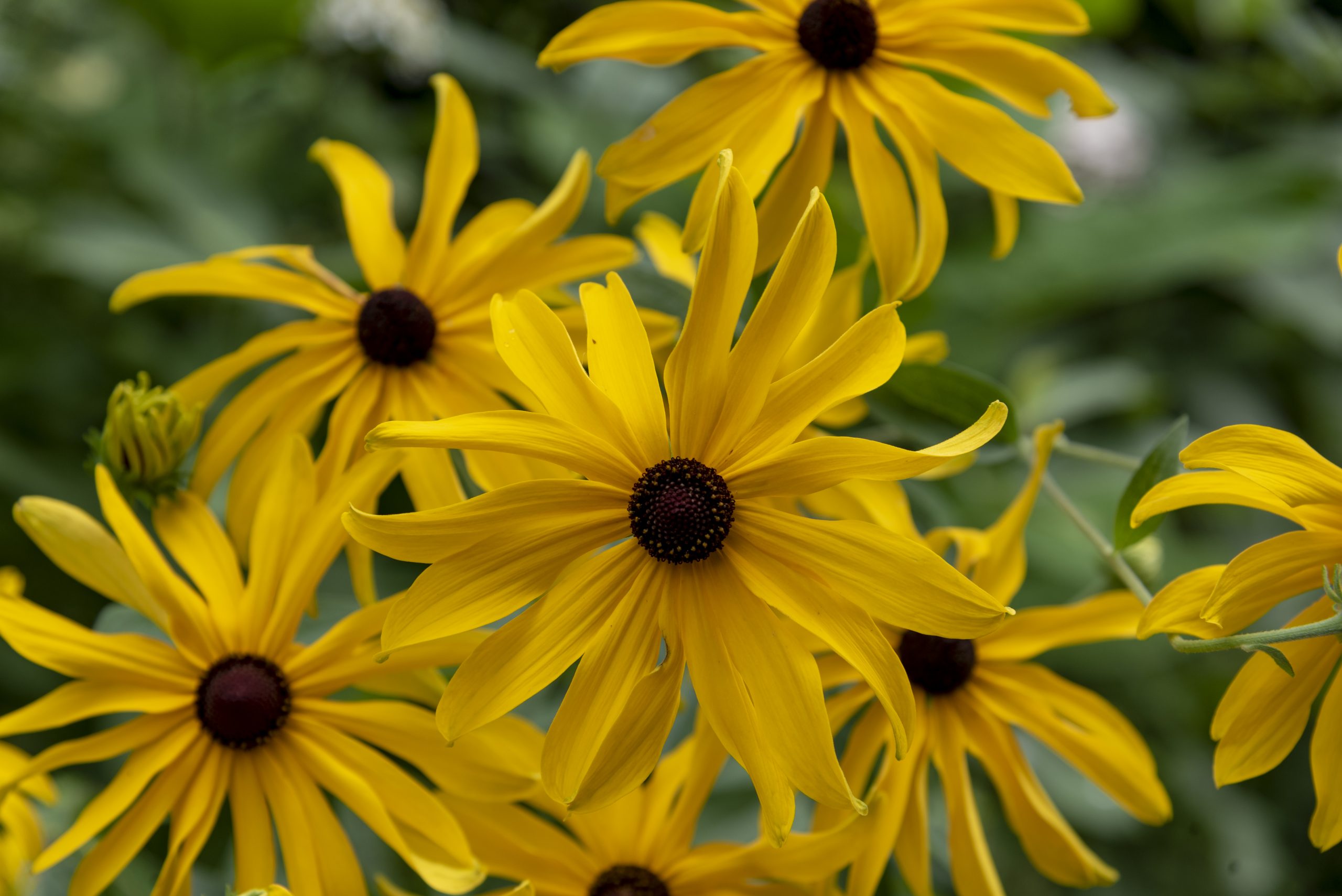
Each flowerhead is 2 to 3.5 inches across, with 12 to 20 bright yellow ray florets surrounding a raised, dome-shaped disc of dark brown to purple-brown disc florets. Numerous flowerheads open in succession atop branched stems from late July through September, occasionally into October in the southern part of the range. The effect is a long season of continuous bloom rather than one big flush.
Fruit & Seeds
Like other Rudbeckias, the fertilized disc florets mature into small, four-angled, dark brown achenes (technically a type of dry fruit, often loosely called “seeds”) packed into the cone-shaped seedhead. Left standing through winter, the seedheads feed finches and other seed-eating birds and add structural interest to the dormant garden.
Quick Facts
| Scientific Name | Rudbeckia subtomentosa |
| Family | Asteraceae (Aster/Daisy) |
| Plant Type | Herbaceous Perennial |
| Mature Height | 3–6 ft |
| Mature Spread | 2–3 ft |
| Growth Rate | Moderate to fast |
| Sun Exposure | Full Sun to Part Shade |
| Water Needs | Average to Moist |
| Soil Type | Loam, clay-loam, or sandy loam; tolerates occasional flooding |
| Soil pH | 6.0–7.5 |
| Bloom Time | Late July – September |
| Flower Color | Golden yellow with dark brown-purple center |
| Fall Color | Foliage browns after frost; seedheads persist |
| Fruit | Small dry achenes in a dome-shaped seedhead |
| Deer Resistant | Moderate (occasionally browsed) |
| USDA Hardiness Zones | 4–9 |
Native Range
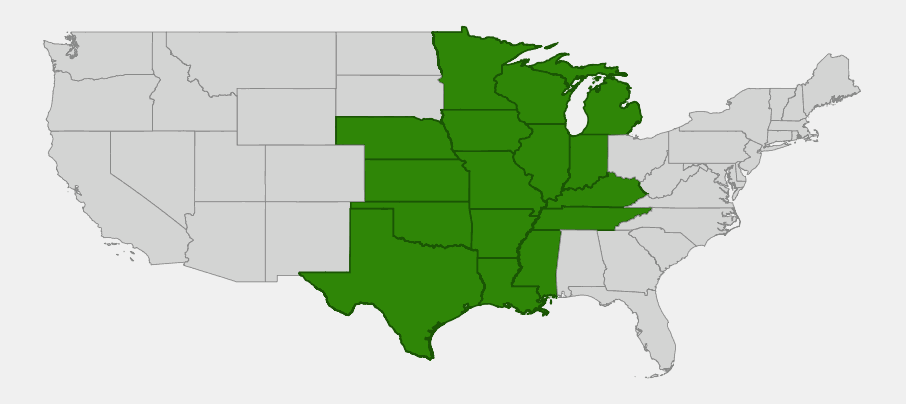
Sweet Black-eyed Susan is native to the central United States, centered on the tallgrass prairie region but reaching from the western Great Lakes south to the Gulf Coastal Plain. Its core range runs through Wisconsin, Michigan, Illinois, Indiana, Iowa, Missouri, Minnesota, Nebraska, and Kansas, and continues south through Oklahoma, Arkansas, Louisiana, and eastern Texas, with outlying native populations in Kentucky, Tennessee, and Mississippi.
In the wild it favors low prairies, wet-mesic meadows, marsh edges, streambanks, and roadside ditches — essentially anywhere soil stays consistently moist to seasonally wet but is not permanently flooded. It is often found growing with other moisture-loving prairie forbs and tall grasses rather than in dry upland prairie.
This species is widely sold and planted as an ornamental well outside this native range, including in gardens throughout the Northeast and Pacific Northwest. If you garden outside the states listed below, you are growing it as an introduced ornamental rather than a regionally native plant, which is still a fine pollinator plant but worth knowing for restoration or “straight native” projects.
📋 Regional plant lists featuring Sweet Black-eyed Susan: Michigan, Wisconsin & Eastern Minnesota · Illinois, Iowa & Missouri · Ohio & Indiana · Nebraska, Kansas & Eastern Colorado · Arkansas, Louisiana, Eastern Oklahoma & Eastern Texas · Kentucky & Tennessee · Georgia, Alabama & Mississippi
Growing & Care Guide
Sweet Black-eyed Susan is an easygoing, dependable perennial that rewards minimal fuss with months of bloom. It is one of the longer-lived Rudbeckias, forming a stable clump rather than needing frequent division or reseeding to persist.
Light
Full sun produces the sturdiest stems and the most flowers. In part shade the plant still blooms well but tends to grow taller and lankier, often needing support or close neighbors to lean on. Aim for at least 6 hours of direct sun for the best floral display.
Soil & Water
This species wants consistently moist, fertile soil and is naturally at home in low spots, rain gardens, and along pond or stream margins. It tolerates brief flooding and heavy clay far better than drought; in sandy or dry sites it will survive but bloom less and may need supplemental water during summer dry spells. It is not fussy about pH within the normal garden range.
Planting Tips
Set out container plants in spring or fall, spacing clumps 18 to 24 inches apart to allow for the plant’s eventual width. Because mature plants can reach 5 to 6 feet and flop in rich soil or too much shade, place them toward the middle or back of a bed, or among sturdy companions like Big Bluestem that offer mutual support.
Pruning & Maintenance
Deadheading is not required for rebloom, but removing spent flowerheads can tidy the plant and extend bloom slightly. Leave the seedheads standing over winter for finches and other birds, then cut stems back to a few inches in late winter before new growth emerges. Clumps can be divided every 3 to 4 years in spring if they become congested or start to flop excessively.
Propagation
Propagate by division of established clumps in spring, or by seed sown outdoors in fall or cold-stratified for 30 days before spring sowing. Self-sown seedlings appear occasionally but the species is not aggressively weedy in a garden setting.
Landscape Uses
- Rain gardens and bioswales where soil stays periodically wet
- Back-of-border plantings in sunny perennial beds
- Pollinator gardens for extended late-summer nectar and pollen
- Prairie and wet-meadow restoration within its native range
- Pond and stream margins where periodic moisture is available
- Cut flower gardens — long stems hold up well in arrangements
Wildlife & Ecological Value
Sweet Black-eyed Susan is a workhorse late-summer nectar and pollen source, bridging the gap between early-summer and fall-blooming prairie perennials.
For Pollinators
The open, flat-faced flowerheads are easy landing pads for a wide range of bees, including native long-horned bees and sweat bees, as well as honeybees. Butterflies and skippers nectar freely at the blooms, and the extended bloom window from midsummer through fall makes it an important resource when many spring bloomers have finished.
For Birds
American Goldfinches and other finches feed on the ripening seedheads from fall into winter if stems are left standing. The dense clumping foliage also offers some cover for ground-feeding birds in prairie and meadow settings.
For Mammals
Deer and rabbits will browse the foliage occasionally, especially young growth, though the soft hairs on the leaves make it somewhat less palatable than tender garden perennials. It is not considered a preferred browse species.
Ecosystem Role
As a moisture-loving prairie forb, Sweet Black-eyed Susan helps stabilize soil along streambanks and in wet meadows while contributing structural diversity and extended bloom to tallgrass prairie plant communities. Its deep, fibrous root system aids water infiltration and helps the plant persist through seasonal flooding and drought alike.
Cultural & Historical Uses
Sweet Black-eyed Susan does not carry the extensive documented ethnobotanical history of some prairie plants, but it has long been recognized and appreciated by prairie botanists and naturalists for its reliability and fragrance. The anise-like scent released when the foliage is crushed or bruised was noted by early prairie plant collectors as a useful identification trait distinguishing it from other yellow-flowered Rudbeckias growing in the same habitat.
In the 20th century, the species became a mainstay of the prairie restoration and native plant gardening movements centered in the Midwest, valued for its long bloom season, clumping (non-aggressive) habit, and tolerance of the wet-to-average soils common in restored prairies and rain gardens.
A selected form with distinctive quilled, tubular ray petals, found in an Illinois prairie remnant and named ‘Henry Eilers’ after the prairie enthusiast who discovered it, has become a popular garden cultivar and has received awards from horticultural societies — a sign of how far this once-overlooked prairie native has traveled into mainstream horticulture.
Frequently Asked Questions
Is Sweet Black-eyed Susan the same as regular Black-eyed Susan?
No. Sweet Black-eyed Susan (Rudbeckia subtomentosa) is a taller, longer-lived true perennial with softly hairy foliage and a faint anise scent, while common Black-eyed Susan (Rudbeckia hirta) is shorter-lived (often biennial), rougher-leaved, and unscented. Both are native prairie wildflowers but are distinct species.
Does Sweet Black-eyed Susan spread aggressively?
No. It forms a slowly expanding clump rather than spreading by rhizomes, and while it does self-seed, it is not considered weedy or aggressive in garden settings.
How much water does it need?
It prefers consistently moist soil and performs best in rain gardens, low spots, or along water features. It tolerates average garden soil but will bloom less and may need supplemental water during dry summers.
Will it flop over without staking?
In full sun and average-to-moist soil it generally stands upright, but in rich soil or partial shade the 5- to 6-foot stems can lean. Planting in full sun, siting among sturdy companion grasses, or pinching stems back in early summer helps keep plants compact.
Is Sweet Black-eyed Susan native to my state?
It is native to the central U.S. prairie region, from the western Great Lakes south through the Mississippi and lower Missouri valleys to the Gulf Coastal Plain — see the states listed above. Outside that range it is commonly grown as a garden ornamental but is not considered regionally native.

Looking for a nursery that carries Sweet Black-eyed Susan?
Browse our native plant nursery directory: Illinois, Indiana, Iowa & Kansas · Kentucky, Louisiana, Michigan, Minnesota, Mississippi & Missouri · Nebraska & Oklahoma · Tennessee & Texas · Arkansas · Wisconsin