
Staggerbush (Lyonia mariana)
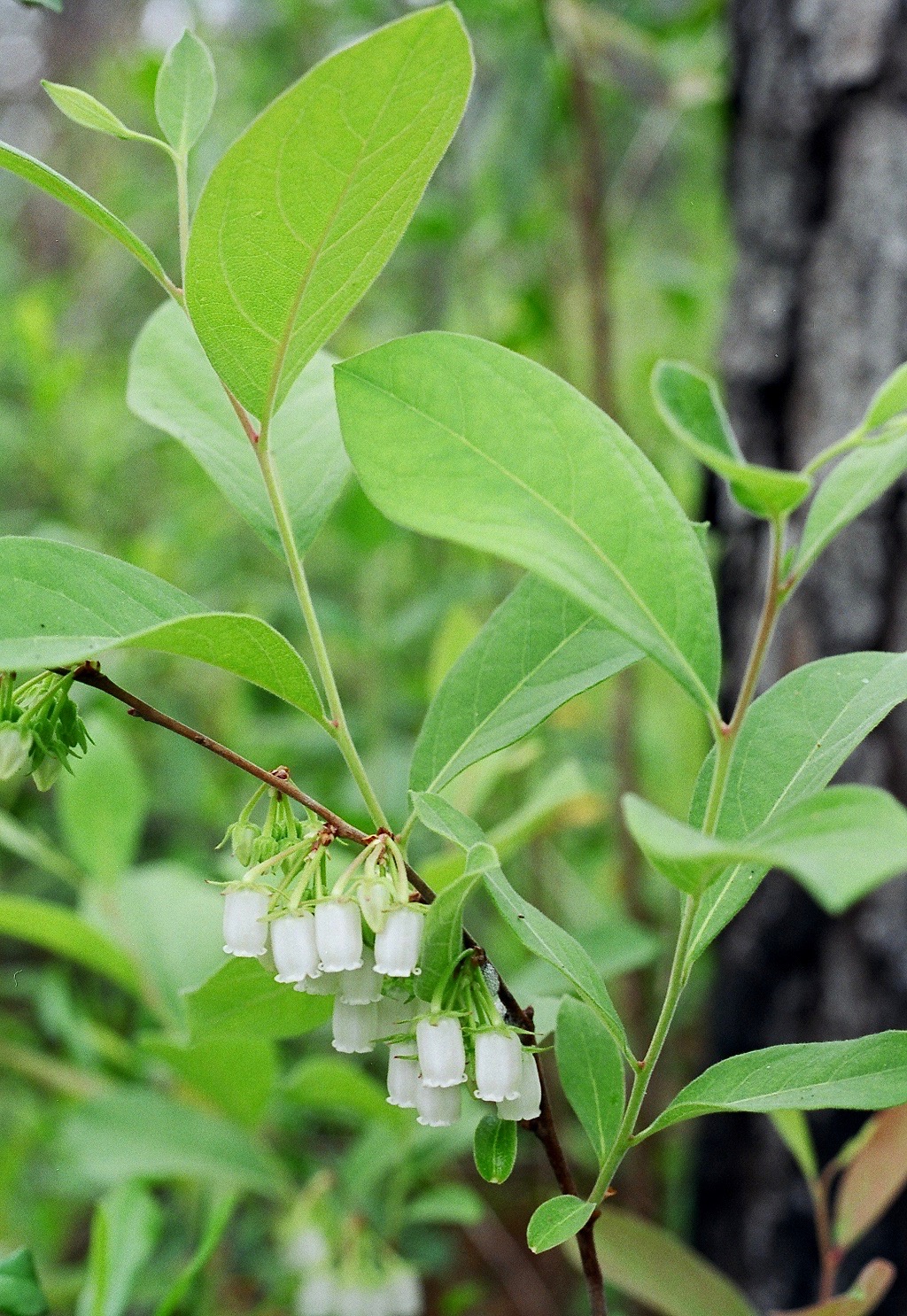
Lyonia mariana, commonly called Staggerbush or Piedmont Staggerbush, is a deciduous shrub of acidic, sandy woodlands and pine barrens in the heath family (Ericaceae), native to the Atlantic and Gulf coastal plains of the eastern United States with scattered inland outposts farther west. Its old-fashioned common name comes from a reputation — well documented in livestock-poisoning literature of the 1800s and early 1900s — for causing cattle and sheep that graze the foliage to stagger and collapse, the result of grayanotoxins shared with its heath-family relatives.
In the garden, Staggerbush’s reputation is far more benign. It is a modest, rounded shrub reaching 2 to 6 feet, blooming in spring with small, waxy-white, urn-shaped flowers borne in loose clusters along bare or nearly bare stems before the new leaves fully expand — a classic heath-family bloom display reminiscent of blueberry and fetterbush, its close relatives. The oval leaves that follow are clean and medium green through summer, often taking on red to bronze fall tones before dropping.
Staggerbush is a specialist of poor, sandy, acidic soils — exactly the sites where many showier garden shrubs struggle — making it a useful, low-input choice for naturalistic plantings, pollinator gardens, and restoration work on dry, infertile ground within its native range. It is not a plant for rich garden loam or heavy clay; give it the lean, acidic conditions it evolved for and it asks for very little else.
Identification
Staggerbush is a rounded, multi-stemmed deciduous shrub, typically 2 to 6 feet tall, occasionally taller on favorable sites, with an open, somewhat airy branching structure.
Bark & Stems
Young twigs are slender, reddish-brown, and finely hairy, aging to gray-brown bark with age. The branching habit is loosely upright to rounded, often with a slightly irregular, informal silhouette rather than a tight, dense form.
Leaves
Leaves are alternate, deciduous, oval to elliptical, 1 to 3 inches long, with a leathery texture and a dull, somewhat grayish-green upper surface; the underside is paler and often finely hairy along the veins. Fall color ranges from yellow to red or bronze, varying by individual plant and site conditions, before the leaves drop for winter.
Flowers
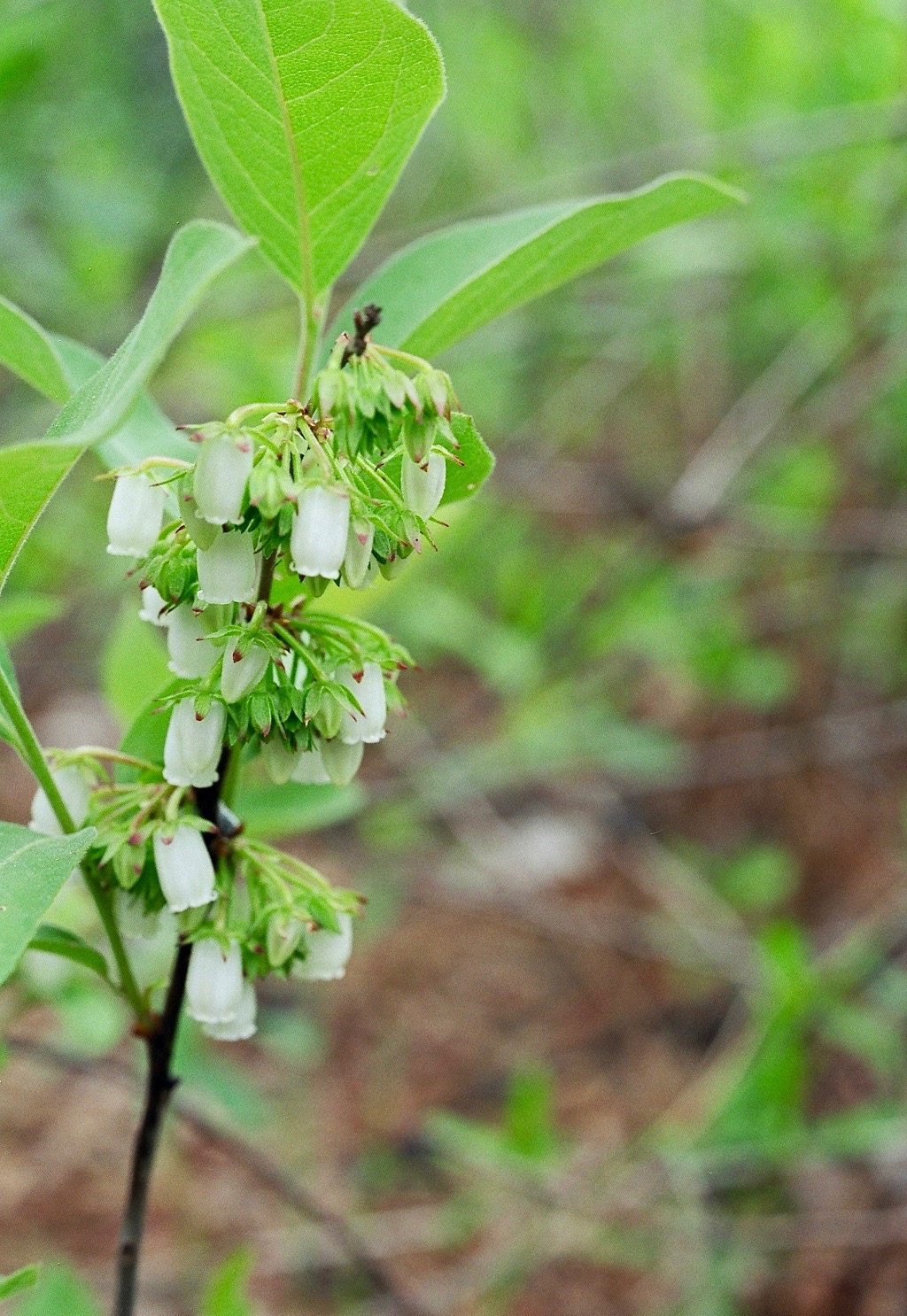
Flowers are small, urn- or barrel-shaped, about ¼ to ⅓ inch long, waxy-white (occasionally tinged pink), and borne in loose, drooping clusters (racemes) along the previous year’s stems. They open in mid-to-late spring, typically appearing alongside or just before the new leaves fully unfurl, giving the shrub a delicate, bell-strewn look for several weeks.
Fruit & Seeds
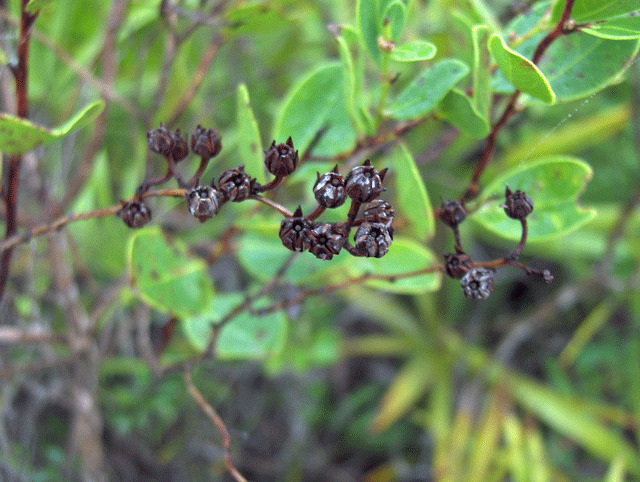
The fruit is a small, hard, rounded to slightly flattened capsule, about ¼ inch across, maturing from green to brown and splitting open at the top to release tiny seeds. Capsules persist on the bare winter stems well after leaf drop, giving the shrub a distinctive silhouette in the off-season and serving as a handy identification feature when no leaves or flowers are present.
Quick Facts
| Scientific Name | Lyonia mariana |
| Family | Ericaceae (Heath) |
| Plant Type | Deciduous Shrub |
| Mature Height | 2–6 ft |
| Mature Spread | 2–4 ft |
| Growth Rate | Slow to moderate |
| Sun Exposure | Full Sun to Part Shade |
| Water Needs | Low to moderate |
| Soil Type | Sandy, well-drained, infertile |
| Soil pH | 4.5–6.0 (acidic) |
| Bloom Time | April – May |
| Flower Color | Waxy white |
| Fall Color | Yellow to red or bronze |
| Fruit | Small round capsule, persistent through winter |
| Deer Resistant | Yes (toxic foliage) |
| USDA Hardiness Zones | 6–9 |
Native Range
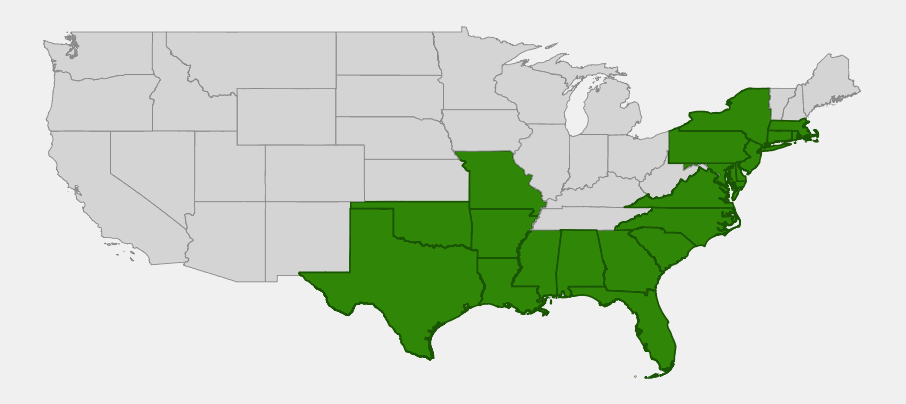
Staggerbush’s core range runs along the Atlantic and Gulf coastal plains, from southern New England and Long Island south through the Mid-Atlantic and Southeast to Florida, and west along the Gulf Coast into Louisiana and East Texas. Beyond this continuous coastal-plain band, it also occurs in a series of disjunct inland populations — in the Ozark and Ouachita region of Missouri and Arkansas, and in scattered sites in southeastern Oklahoma — wherever similarly poor, sandy, acidic soils occur far from the coast.
Across this range, Staggerbush is consistently tied to dry, sandy, acidic, nutrient-poor soils: pine flatwoods, sandhills, oak-pine barrens, and dry open woodlands where competition from richer-soil species is limited. It is notably rare or declining at the northern edge of its range — it is listed as endangered in Pennsylvania, is considered historical (likely extirpated) in Rhode Island, and is a species of special concern believed extirpated in Connecticut — making mid-Atlantic and southern populations the more reliable source of the species today.
Gardeners near the northern or inland edges of this range should treat the species as locally uncommon to rare and should never collect from wild populations; nursery-propagated stock sourced from within the native range is the appropriate way to add Staggerbush to a home landscape.
📋 Regional plant lists featuring Staggerbush: Connecticut, Massachusetts & Rhode Island · New York, Pennsylvania & Northern New Jersey · Delaware, Southern New Jersey & Long Island · Maryland, Virginia & West Virginia · North Carolina & South Carolina · Georgia, Alabama & Mississippi · Arkansas, Louisiana, Eastern Oklahoma & Eastern Texas · Illinois, Iowa & Missouri
Growing & Care Guide
Staggerbush rewards gardeners who give it the lean, acidic, sandy conditions it evolved for and generally struggles in richer, wetter, or limed soils. Matching its native habitat is the single most important factor in success.
Light
Staggerbush grows well in full sun to light or part shade. Plants in more open, sunnier sites tend to flower and set fruit more heavily and hold a more compact form; in shadier woodland settings they grow taller and more open, reaching for light.
Soil & Water
Sandy, acidic, well-drained, infertile soil is essential — the same conditions found in its native pine flatwoods and sandhills. Avoid heavy clay, poorly drained sites, and any soil amended with lime or wood ash, which raise pH away from the acidic range the plant requires. Established plants tolerate dry spells well and need only occasional deep watering during extended drought; they do not tolerate standing water or constantly wet soil.
Planting Tips
Plant container-grown stock in fall or early spring, siting it in sandy or sandy-loam soil amended with pine bark or peat if the native soil runs toward clay. Avoid planting where irrigation or drainage will keep the root zone consistently moist. Space plants 3 to 5 feet apart for a naturalistic massed planting.
Pruning & Maintenance
Little pruning is required. Remove dead or winter-damaged wood in late winter before new growth begins, and thin out crowded interior branches occasionally to maintain an open, airy form. Staggerbush is generally free of serious pest or disease problems when grown in appropriate soil.
Propagation
Propagate from semi-hardwood cuttings taken in summer, rooted in a sandy, well-drained medium. Seed propagation is possible but slow; fresh seed sown on the surface of a sandy, acidic mix and kept lightly moist will germinate, though seedlings grow slowly in their first year or two, typical of many heath-family shrubs.
Landscape Uses
Staggerbush fits a specific but valuable niche in naturalistic and restoration landscaping:
- Sandhill and pine-barren restoration plantings within its native range
- Low-input shrub borders on dry, sandy, infertile sites other shrubs struggle with
- Pollinator gardens paired with other spring-blooming heath-family natives
- Naturalistic woodland edges alongside longleaf pine and blackjack oak
- Deer-resistant plantings where browsing pressure limits shrub choices
Wildlife & Ecological Value
Staggerbush contributes modest but genuine wildlife value within the fire-adapted sandhill and pine-barren communities where it naturally occurs.
For Pollinators
The small, urn-shaped spring flowers are visited by native bees, including specialist heath-family pollinators, as well as honeybees. Blooming before many other understory plants in its sandy-soil habitat, Staggerbush provides an early, reliable nectar source in otherwise resource-poor sandhill communities.
Birds
The dense, twiggy branching provides nesting cover and shelter for small songbirds in open pine-oak woodland and sandhill habitat, and the understory structure it adds is valuable in the relatively sparse shrub layer typical of fire-maintained pine ecosystems.
Mammals
Because Staggerbush foliage contains grayanotoxins, it is generally avoided by deer and livestock, a trait documented since the 19th century in agricultural reports of cattle and sheep poisoning on open range where the plant was abundant. This same toxicity makes it a reliably deer-resistant choice in home landscapes.
Ecosystem Role
As a long-lived, fire-tolerant shrub, Staggerbush resprouts readily after the low-intensity fires that historically maintained its native pine flatwoods and sandhill habitats, helping stabilize the understory shrub layer in these fire-dependent ecosystems between burn cycles.
Cultural & Historical Uses
Staggerbush’s common name and its place in American agricultural history both stem from its toxicity rather than any culinary or medicinal use. Nineteenth- and early twentieth-century agricultural bulletins on poisonous range plants, including federal publications on livestock poisoning, specifically documented Staggerbush as a cause of grayanotoxin poisoning in cattle and sheep that grazed its foliage on open range in the Southeast, producing the staggering, uncoordinated movement that gave the plant its name.
Beyond this cautionary agricultural history, Staggerbush has not been documented as a significant food, medicine, or craft material among Indigenous peoples of its range, likely owing to the same toxicity that made it a livestock hazard. Its historical significance is almost entirely as a plant ranchers and farmers needed to recognize and avoid in pastures carved out of former pine-sandhill habitat.
In more recent decades, Staggerbush has found a quieter role in native-plant horticulture and ecological restoration, valued for its spring flowers, fall color, and ability to thrive on poor sandy soils where few ornamental alternatives perform well.
Frequently Asked Questions
Is Staggerbush poisonous?
Yes. Like other members of the heath family that produce grayanotoxins, Staggerbush foliage is toxic if ingested, historically causing staggering and collapse in grazing cattle and sheep. Keep it out of pastures and areas grazed by livestock.
Why is Staggerbush considered rare in some states?
At the northern edge of its range, Staggerbush is uncommon because its required habitat — dry, sandy, acidic soil — is itself limited there. It is listed as endangered in Pennsylvania and is considered historical or likely extirpated in Rhode Island and Connecticut.
Can Staggerbush grow in clay soil?
Not well. Staggerbush is adapted to sandy, well-drained, acidic, infertile soil and generally struggles or develops root problems in heavy clay or poorly drained sites. Amending clay soil with coarse sand or pine bark, or choosing a naturally sandy planting site, gives much better results.
When does Staggerbush bloom?
Staggerbush typically blooms in April and May, with small white urn-shaped flowers appearing on bare or nearly bare stems just before or alongside the emerging new leaves.
Is Staggerbush deer resistant?
Yes. Its toxic, grayanotoxin-containing foliage is generally avoided by deer, making it a dependable choice in landscapes with heavy deer browsing pressure.

Looking for a nursery that carries Staggerbush?
Browse our native plant nursery directory: Arkansas · Connecticut, Delaware, Florida & Georgia · Alabama, Louisiana, Massachusetts, Maryland, Mississippi & Missouri · North Carolina, New Jersey, New York & Oklahoma · Pennsylvania, Rhode Island, South Carolina, Texas & Virginia