
Sand Bluestem (Andropogon hallii)
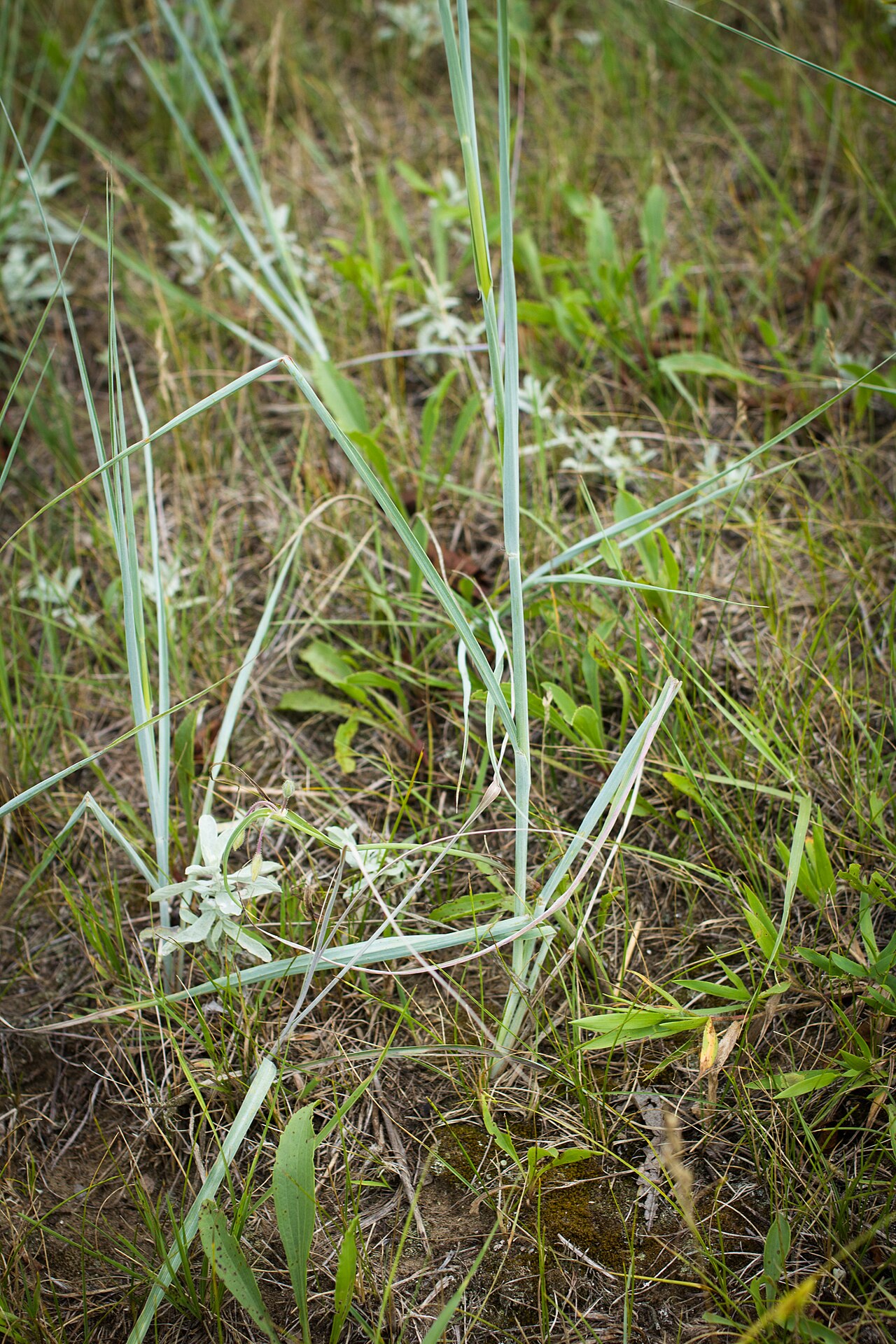
Andropogon hallii, commonly called Sand Bluestem, is a tall, warm-season native bunchgrass of the sandhills and sandy plains of the central and western United States. It is a close relative of the familiar big bluestem, and the two are similar enough that they sometimes hybridize where their ranges overlap, but sand bluestem is distinguished by its preference for loose, sandy soil, its more rhizomatous, spreading habit, and its distinctive blue-green to silvery stem color.
Sand bluestem is a defining species of the Great Plains sand dune and sandhill prairies, from the Nebraska Sandhills south through the sand sagebrush country of Kansas, Oklahoma and Texas, and west into the sandy basins of the Rocky Mountain states and the desert Southwest. Its deep, extensive root and rhizome system is exceptionally effective at anchoring loose, wind-blown sand, making it one of the most important soil-stabilizing grasses of its region.
For gardeners and land managers working with sandy, well-drained soil across its native range, sand bluestem offers dramatic vertical structure, striking blue-toned summer foliage, copper-bronze fall and winter color, and genuine toughness in heat and drought. It is equally at home in a naturalistic prairie planting, a large-scale erosion control project, or as a bold architectural accent at the back of a sunny border.
Identification
Sand bluestem is a robust, warm-season perennial grass, typically reaching 3 to 7 feet tall in flower, forming loose clumps that spread slowly via short, stout underground rhizomes rather than staying as a tight, non-spreading bunch.
Stems & Foliage
The stems are upright, round, and often have a distinctive powdery blue-green to silvery cast, especially where exposed to full sun, which gives the plant much of its ornamental appeal. Leaves are flat to slightly rolled, up to half an inch wide, blue-green in summer, and arise from the base and along the lower stem. In fall and winter the whole plant turns an attractive coppery orange to reddish-bronze, a color that persists well into winter.
Flowers & Seed Heads
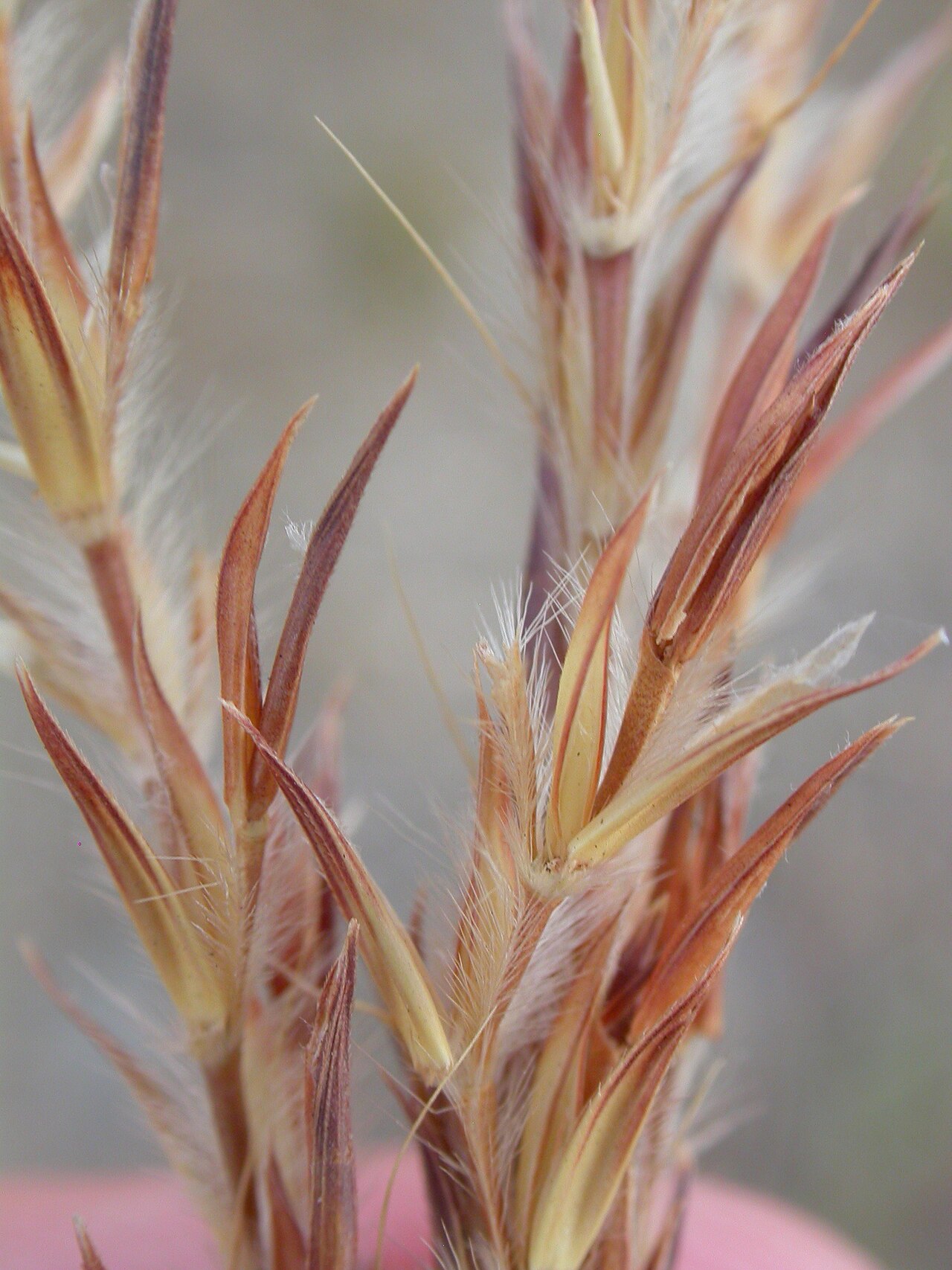
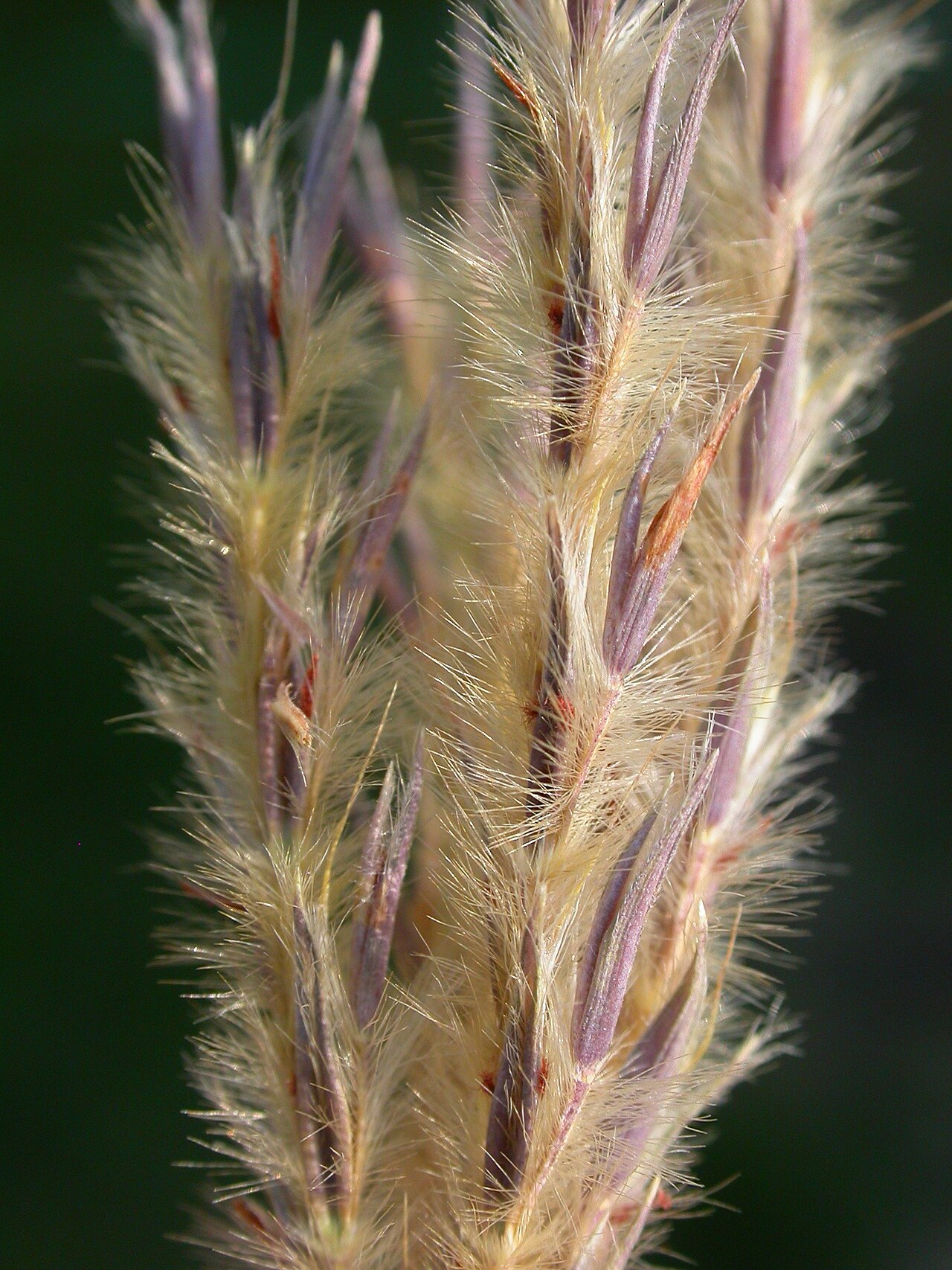
Flowering occurs from late summer into fall, when each stem produces a pair of slender, finger-like seed spikes at the top, covered in long, silvery-white to golden hairs that catch the light and give the plant its common nickname, “turkeyfoot,” shared with big bluestem. These fluffy seed heads are a standout ornamental feature, persisting through much of the winter and catching low fall and winter light beautifully.
Roots & Rhizomes
Unlike the tighter clumps of big bluestem, sand bluestem spreads by short, scaly rhizomes just below the soil surface, allowing it to form broad colonies over time. Its root system is extremely deep and extensive, a key adaptation for both drought survival and anchoring the loose sandy soils it favors.
Quick Facts
| Scientific Name | Andropogon hallii |
| Family | Poaceae (Grass) |
| Plant Type | Warm-season perennial grass |
| Mature Height | 3–7 ft in flower |
| Growth Rate | Moderate; spreads slowly by rhizomes |
| Sun Exposure | Full Sun |
| Water Needs | Low once established; drought tolerant |
| Soil Type | Loose, well-drained sand or sandy loam |
| Soil pH | Slightly acidic to slightly alkaline |
| Bloom Time | August – October |
| Flower Color | Silvery-white to golden seed hairs |
| Fall Color | Coppery orange to reddish-bronze |
| Deer Resistant | Yes (grazed by livestock and wildlife, but not preferred ornamentally) |
| USDA Hardiness Zones | 4–9 |
Native Range
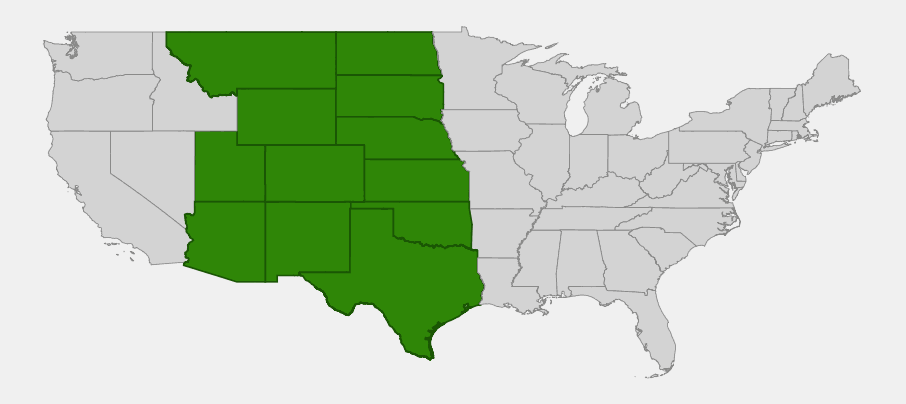
Sand bluestem is native to the central and western Great Plains and parts of the Intermountain West, with a range running from Montana, North Dakota and South Dakota south through Wyoming, Nebraska, Kansas, Colorado, Oklahoma and Texas, and west into Utah, Arizona and New Mexico. It is not native to Idaho or the Pacific Northwest. It is a defining species of stabilized and semi-stabilized sand dune country, most famously the Nebraska Sandhills, the largest dune formation in the Western Hemisphere.
Typical habitat is deep, loose, well-drained sandy soil: active and stabilized dunes, sand prairies, sandsage grasslands, and sandy stream terraces, generally in areas receiving 14 to 30 inches of annual precipitation. It is usually absent from heavier clay soils, where big bluestem tends to take over the same ecological role. Sand bluestem often grows alongside sand sagebrush, little bluestem, and prairie sandreed as a co-dominant species of these sandy grassland communities.
Because sand bluestem and big bluestem readily hybridize where their ranges and habitats overlap, intermediate plants are sometimes found at the edges of sandy sites; the two are usually distinguishable by sand bluestem’s more rhizomatous spread and blue-toned stems versus big bluestem’s tighter bunch habit and generally greener color.
📋 Regional plant lists featuring Sand Bluestem: Montana & Wyoming · North Dakota, South Dakota & Western Minnesota · Nebraska, Kansas & Eastern Colorado · Utah & Western Colorado · Arizona & New Mexico
Growing & Care Guide
Sand bluestem is built for tough, sandy, sun-baked sites and is remarkably easy to grow within its preferred conditions, though it is not well suited to heavy clay or constantly moist soils.
Light
Full sun is essential; sand bluestem does not perform well in shade and will become sparse and weak-stemmed without at least six to eight hours of direct sun. Full sun also produces the best blue stem color in summer and the richest bronze tones in fall.
Soil & Water
This grass is specifically adapted to loose, well-drained, sandy soil and does not thrive in heavy clay, where big bluestem is generally the better choice instead. Once established, it is highly drought tolerant thanks to its deep root system, and it should not be planted in consistently wet or poorly drained sites. Little to no supplemental watering is needed after the first one to two growing seasons.
Planting Tips
Plant container-grown divisions or plugs in spring, spacing them 2 to 3 feet apart to allow for the plant’s eventual spread by rhizomes. Direct seeding is also effective in larger restoration plantings, typically done in late spring once soil has warmed. Because of its spreading habit, give sand bluestem room in a bed, or use a root barrier if combining it with less vigorous companions in a smaller garden.
Maintenance
Cut the entire plant back to a few inches in late winter before new growth emerges, which removes the previous year’s dried stems and encourages vigorous new growth. Sand bluestem needs no fertilization in typical sandy soils and has no significant pest or disease problems. It tolerates occasional mowing or grazing, a trait that has long made it valuable for rangeland.
Landscape Uses
Good uses for sand bluestem include:
- Sand dune and dry slope stabilization on large sites
- Naturalistic prairie and meadow plantings on sandy soil
- Vertical accent at the back of a sunny border
- Rangeland and erosion-control seeding projects
- Winter interest gardens valuing persistent seed heads and bronze color
Wildlife & Ecological Value
Sand bluestem is a foundational species of Great Plains sandhill ecosystems, providing forage, cover and nesting habitat across a wide range of prairie wildlife.
For Birds
Ground-nesting grassland birds, including prairie-chickens, meadowlarks and sparrows, use sand bluestem bunches for nesting cover and concealment from predators. The seeds are eaten by a variety of grassland songbirds through fall and winter, particularly where stands are left standing rather than mowed.
For Mammals
Sand bluestem is an important forage grass for pronghorn, deer and historically bison, especially in its tender early-season growth. Small mammals shelter within its dense basal growth, and the extensive root and rhizome network supports a healthy soil community that benefits burrowing species throughout the sandhills.
Ecosystem Role
As one of the primary stabilizers of loose sand dune environments across the Great Plains, sand bluestem’s deep, spreading root and rhizome system is critical to preventing wind erosion on the active and semi-stabilized dunes it colonizes. Its presence is often what allows other, less wind-tolerant prairie species to establish nearby, making it a true foundation species of the sandhill plant community.
Cultural & Historical Uses
Sand bluestem has long been valued as a forage grass across the Great Plains, grazed historically by vast bison herds and, after European settlement, by cattle and other livestock on the region’s extensive rangelands. Its deep roots and drought tolerance made sandhill rangeland productive even through dry years that devastated less resilient forage species.
In the twentieth century, sand bluestem became an important species in soil conservation efforts following the Dust Bowl, planted widely to stabilize blowing sand and restore degraded rangeland across the central Plains. It remains a staple seed-mix component in prairie restoration and erosion-control projects on sandy soils to this day, alongside its more recent adoption as an ornamental grass.
Frequently Asked Questions
What is the difference between sand bluestem and big bluestem?
Sand bluestem is adapted to loose, sandy soils and spreads by short rhizomes, with stems that often show a powdery blue-green to silvery cast. Big bluestem favors heavier, more fertile soils, stays in a tighter non-spreading bunch, and is typically a richer green. The two can hybridize where their ranges and habitats overlap.
Will sand bluestem grow in clay soil?
It can survive in heavier soil but performs best, and spreads most readily, in loose, well-drained sand. On clay sites, big bluestem is generally the better-adapted native alternative.
Is sand bluestem invasive in a garden setting?
It spreads by rhizomes and can form broad colonies over time in loose soil, so it should be given adequate room or contained in smaller beds. It is a native species, not an invasive one, but its spreading habit is worth planning for.
When should sand bluestem be cut back?
Leave the stems standing through winter for habitat value and visual interest, then cut the clump back to a few inches in late winter, just before new growth begins in spring.
Does sand bluestem need fertilizer?
No. In its preferred sandy soil, sand bluestem thrives without added fertilizer, and excess nutrients can actually cause weak, floppy growth. Lean, well-drained soil is ideal.

Looking for a nursery that carries Sand Bluestem?
Browse our native plant nursery directory: Montana · Wyoming · Nebraska, North Dakota, Oklahoma & New Mexico · South Dakota, Texas & Utah · Kansas & Idaho · Colorado · Arizona