
Wild Calla (Calla palustris)
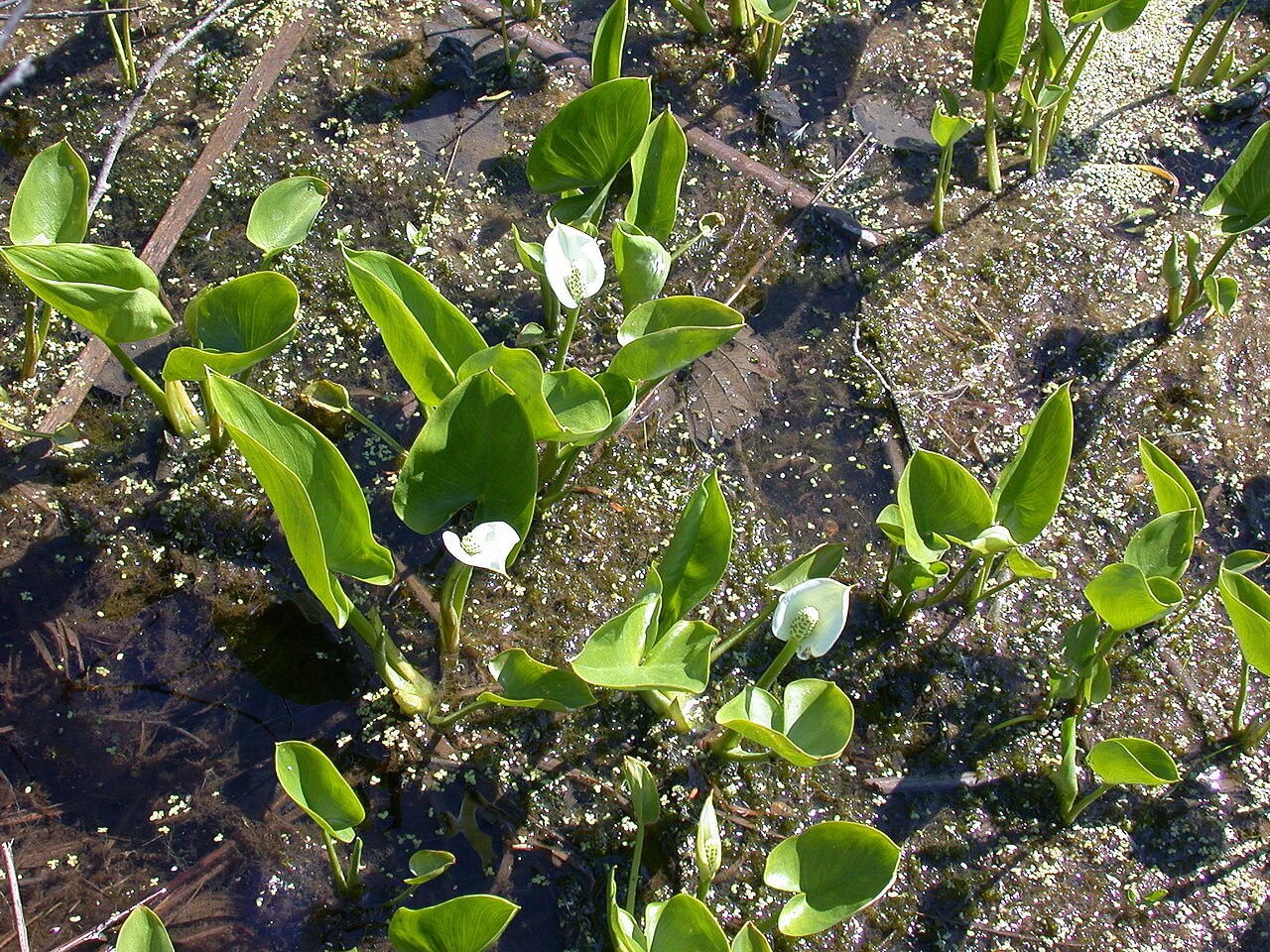
Calla palustris, commonly called wild calla or water arum, is a low, creeping perennial of cold-climate wetlands found across the northern United States, Canada, and the boreal regions of Europe and Asia. It is the only species in its genus, and despite the superficial resemblance of its white flower to the familiar florist’s “calla lily,” it is not closely related to that South African plant — the two simply share a similar flower shape through unrelated lineages in the arum family, Araceae.
Wild calla grows as a sprawling, mat-forming herb with a thick, trailing rhizome that roots as it creeps across saturated peat, mud, and shallow water at the margins of bogs, fens, and slow streams. Its glossy, heart-shaped leaves rise on long stalks directly from the rhizome, and in late spring to early summer each flowering stem produces a single small white “flower” — actually a white spathe (a modified leaf) wrapped around a short, stubby spadix packed with tiny true flowers, a structure typical of the arum family.
Because it depends on consistently saturated, acidic to neutral wetland soils, wild calla is a true specialty plant rather than a general garden perennial. It belongs at the shallow, shaded edge of a pond or bog garden, where its glossy foliage and distinctive spring flower reward the extra care of keeping its roots wet.
Identification
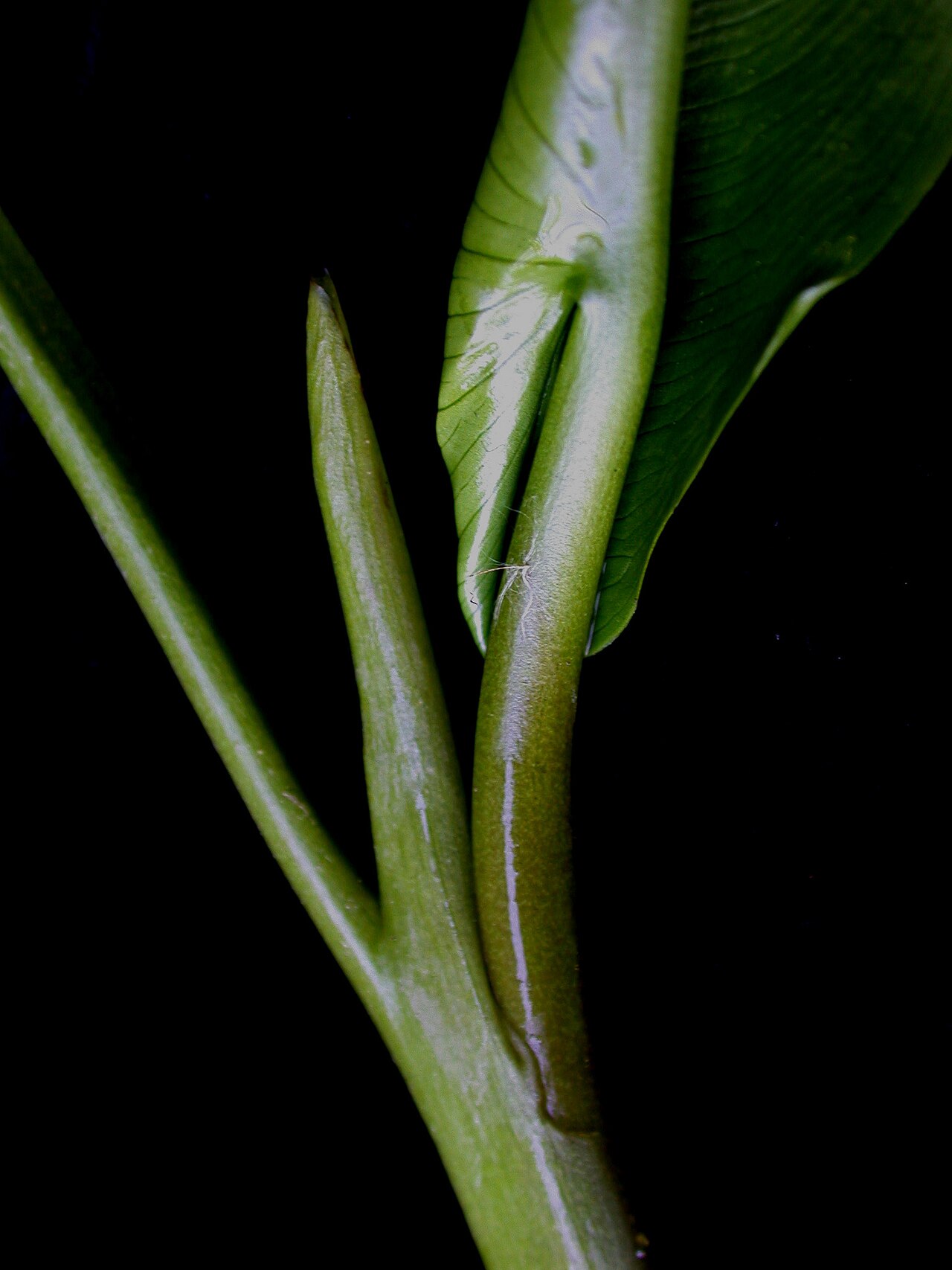
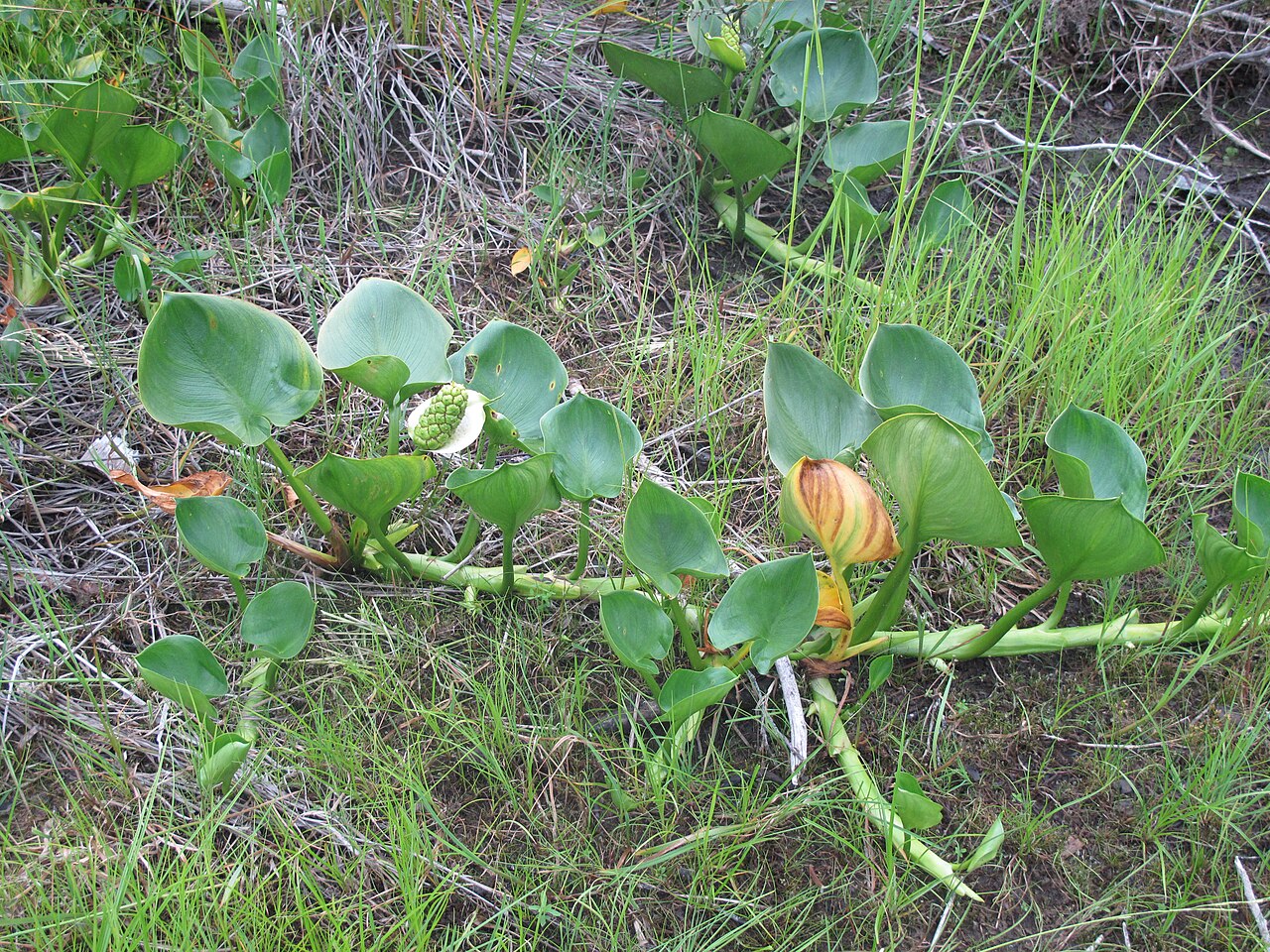
Wild calla is a low-growing, rhizomatous perennial, usually 6 to 12 inches tall, that spreads horizontally by thick, creeping, partly submerged rhizomes rather than forming an upright clump.
Leaves
Leaves are glossy, dark green, heart-shaped to broadly rounded, 2 to 5 inches long, and rise on long stalks directly from the rhizome. The thick, somewhat succulent leaf stalks and blades help the plant stay buoyant and upright in the shallow water and saturated mud it favors.
Flowers
Each flowering stem bears a single inflorescence: a flat, oval, pure white spathe, 1 to 2 inches long, that opens to reveal a short, cylindrical, greenish-white spadix densely covered with tiny true flowers. This arum-family structure is the plant’s main identification feature and the source of its resemblance to garden calla lilies, which belong to a different, unrelated genus.
Fruit & Seeds
After flowering, the spadix develops into a tight cluster of berries that ripen from green to bright red by late summer, forming an eye-catching infructescence at the base of the leaves. The berries contain the plant’s seeds, which are dispersed by water movement and by birds and mammals that feed on the fruit.
Quick Facts
| Scientific Name | Calla palustris |
| Family | Araceae (Arum) |
| Plant Type | Herbaceous Perennial (Aquatic/Wetland) |
| Mature Height | 6–12 in |
| Mature Spread | Spreading/creeping, indefinite via rhizome |
| Growth Rate | Moderate |
| Sun Exposure | Part Sun to Full Shade |
| Water Needs | High (saturated soil to shallow standing water) |
| Soil Type | Saturated peat, muck, or shallow water |
| Soil pH | Acidic to neutral |
| Bloom Time | May – July |
| Flower Color | White (spathe) |
| Fall Color | Not showy; foliage dies back with cold |
| Fruit | Cluster of bright red berries |
| Deer Resistant | Yes, generally (acrid, calcium-oxalate-containing tissue) |
| USDA Hardiness Zones | 2–7 |
Native Range
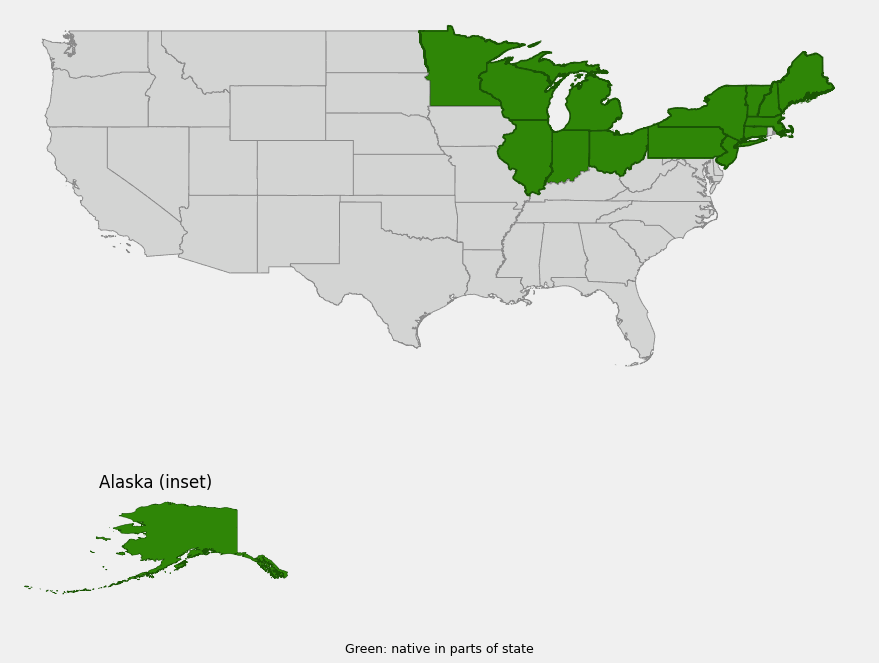
Wild calla is a circumboreal species, and in the United States its range is concentrated in the colder wetlands of the Northeast, the Great Lakes region, and Alaska. It occurs from Maine south through New Hampshire, Vermont, Massachusetts, Connecticut, New York, northern New Jersey, and Pennsylvania, west through Ohio, Indiana, and Illinois, and north through Michigan, Wisconsin, and Minnesota, with a disjunct presence in Alaska reflecting its wide circumpolar distribution. It is not native to the central and southern United States, where summer heat and the absence of suitable cold-bog habitat put it well outside its range.
Within this range, wild calla is restricted to acidic to neutral bogs, fens, swamp margins, and the quiet, shallow edges of slow streams and ponds, usually in at least partial shade. It is often found growing alongside skunk cabbage and marsh marigold in the same wet, shaded wetland communities, though its rhizomes typically root in shallower water than fully aquatic species.
In several states at the warmer edge of its range, wild calla is uncommon because the cold, acidic wetland habitat it needs is itself limited. Gardeners should rely on nursery-propagated plants rather than wild-collected rhizomes, both to protect wild populations and because transplant success from habitat is often poor.
📋 Regional plant lists featuring Wild Calla: Connecticut, Massachusetts & Rhode Island · New Hampshire, Maine & Vermont · New York, Pennsylvania & Northern New Jersey · Illinois, Iowa & Missouri · Ohio & Indiana · Michigan, Wisconsin & Eastern Minnesota · Alaska
Growing & Care Guide
Wild calla is a specialist plant for a specific niche: the shallow, shaded edge of a cold-climate pond, bog garden, or water feature. Outside of consistently saturated soil, it will not thrive.
Light
It grows best in part sun to full shade, mimicking the dappled light at the edge of wooded bogs and swamps. Too much direct, hot sun combined with any drying of the soil surface stresses the plant quickly.
Soil & Water
This is a true wetland plant that needs saturated soil or shallow standing water at all times — it is not drought tolerant in any degree. Acidic to neutral peaty or mucky soils that mimic bog conditions are ideal. In a garden setting, it is best grown directly in the shallow margin of a pond or water garden, in containers submerged at the pond edge, or in a constructed bog garden that stays reliably wet.
Planting Tips
Plant rhizomes in spring directly into saturated soil or very shallow water (an inch or two deep) at a pond or bog garden margin. Choose a partly shaded site to reduce heat stress. Because it spreads by creeping rhizome, give it room to expand or plan to divide and contain it within a defined wet area.
Pruning & Maintenance
Little maintenance is required beyond removing dead or tattered foliage at the end of the season. Divide congested rhizome mats every few years in spring if controlling spread or propagating new plants for another wet spot.
Landscape Uses
Wild calla fits only genuinely wet, shaded planting situations:
- Pond and water garden margins in shallow water
- Bog gardens built with consistently saturated, acidic soil
- Shaded wetland restoration plantings
- Container water gardens where the pot can stay submerged at the edge
Wildlife & Ecological Value
Within its specialized bog and fen habitat, wild calla contributes food and structure to a wetland community that supports a distinct set of cold-climate species.
For Birds
Marsh and wetland birds use the dense leaf cover at the water’s edge for foraging and concealment, and some waterfowl and songbirds feed on the bright red berries in late summer and fall.
For Mammals
Muskrats are known to feed on the rhizomes and foliage of wild calla in the wetlands where it grows, and the plant’s dense mats contribute to the structural cover that supports small wetland mammals generally.
For Pollinators
The tiny true flowers packed onto the spadix produce a faint, somewhat unpleasant scent that attracts flies and other small insects, which serve as the plant’s primary pollinators — a common pollination strategy among arum-family plants.
Ecosystem Role
As a rhizomatous mat-former at the water’s edge, wild calla helps stabilize saturated peat and mud substrates in bogs and fens, and its presence is often associated with the cold, acidic wetland conditions that support many other specialized northern plant species.
Cultural & Historical Uses
All parts of wild calla contain calcium oxalate crystals and are acrid and irritating if eaten raw, causing a burning sensation in the mouth and throat — this is the same chemical defense found in many other arum-family plants, including jack-in-the-pulpit. Despite this, some northern Indigenous and European peoples historically processed the rhizome into a starchy flour after extensive drying, grinding, and leaching or cooking to break down the irritating compounds, using it as a famine food in times of scarcity.
This traditional processing was labor-intensive and risky if done incorrectly, and the plant has no established modern food or medicinal use. Today wild calla is valued almost entirely as an ornamental for bog and water gardens and as an indicator species for the cold-climate wetlands botanists and naturalists study.
Frequently Asked Questions
Can I eat wild calla?
No. All parts of the fresh plant contain calcium oxalate crystals that cause burning and irritation if eaten raw. While some historical accounts describe processing the rhizome as a famine food after extensive treatment, this is not something to attempt today, and the plant should be treated as inedible.
Is wild calla related to the calla lilies sold by florists?
No. Florist’s calla lily (Zantedeschia aethiopica and relatives) is native to southern Africa and belongs to a different genus. The resemblance of the white flower structure is a case of two unrelated arum-family plants evolving a similar spathe-and-spadix flower shape.
Will wild calla grow in a normal garden bed?
No. It requires saturated soil or shallow standing water at all times and will not survive in average garden soil that dries out, even partially, between waterings.
How cold-hardy is wild calla?
Very hardy — it is native as far north as Alaska and across the boreal forest of Canada, and it is reliably hardy through USDA zone 2.
What plants grow naturally alongside wild calla?
In the wild it is frequently found with marsh marigold and skunk cabbage in the same shaded, saturated wetland habitat, making marsh marigold a natural companion plant in a bog or pond-edge garden.

Looking for a nursery that carries Wild Calla?
Browse our native plant nursery directory: CT · ME, MA, MI, MN · NH, NY, OH, NJ · VT, PA · IL, IN · WI · AK
Another shaded wetland native that pairs well with wild calla: marsh marigold.