
Hairy Alumroot (Heuchera villosa)
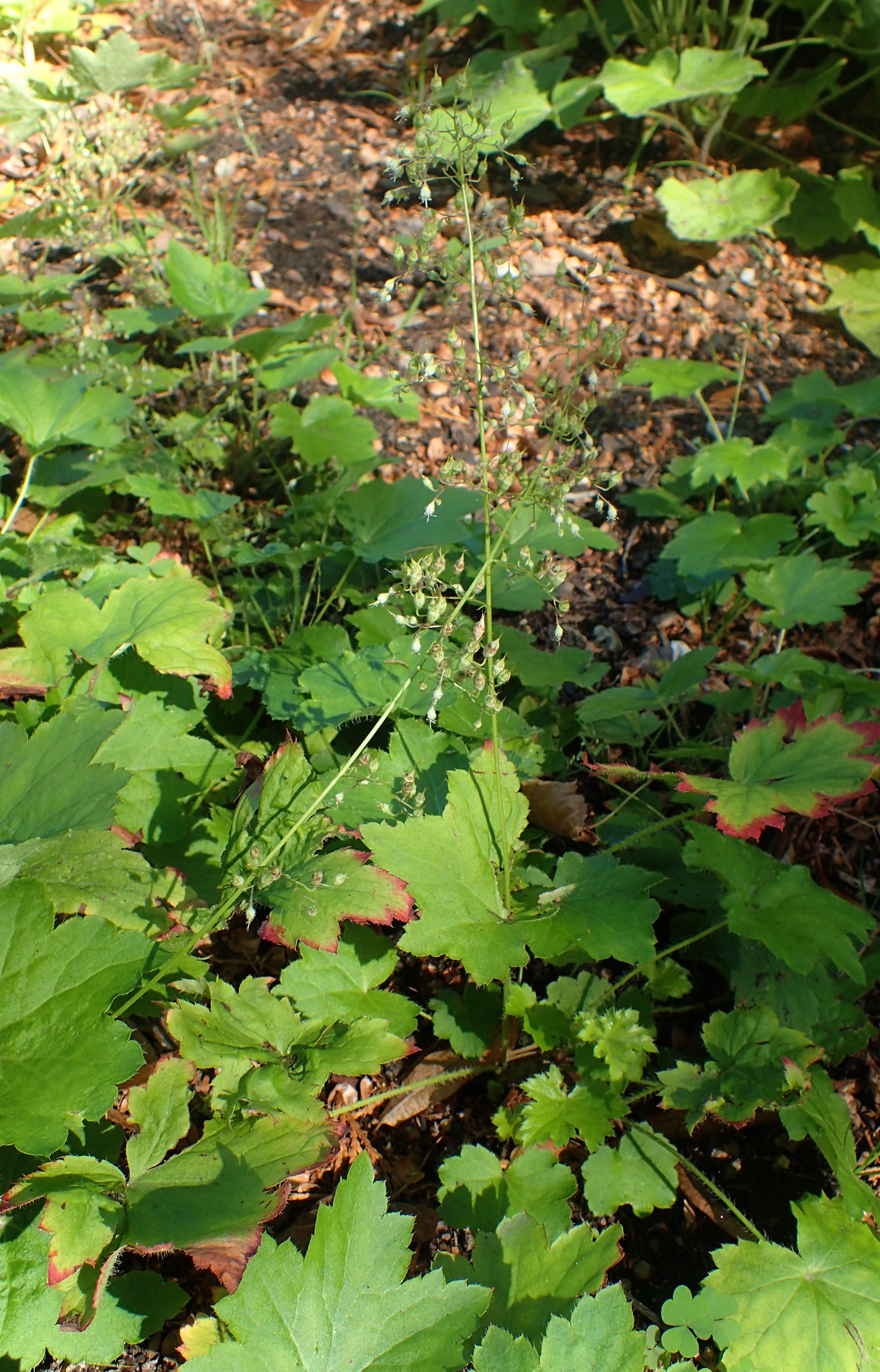
Heuchera villosa, commonly called Hairy Alumroot or Maple-Leaved Alumroot, is a tough, shade-loving perennial native to rock outcrops, cliffs, and wooded slopes of the eastern United States, especially through the central and southern Appalachians. A member of the saxifrage family (Saxifragaceae), it forms a neat, low mound of broad, lobed, hairy leaves from which wiry flower stalks rise in late summer, carrying airy sprays of tiny cream to white blooms well after most woodland wildflowers have finished for the season.
This species is the wild parent of many popular garden Heuchera cultivars, including the bronze- and burgundy-leaved selections sold widely in the nursery trade — for example, the compact cultivar “Bronze Wave,” whose glossy, wine-colored foliage traces directly back to this native species. The wild, green-leaved species itself is less commonly offered than its cultivars, but it is every bit as garden-worthy: tougher, more heat tolerant, and better adapted to difficult rocky or dry-shade sites than many of the showier hybrids bred from it.
Hairy Alumroot earns its common name honestly — the leaves, leaf stalks, and flower stems are all covered in fine, soft hairs, giving the whole plant a slightly fuzzy, textured look. In the wild, it is a true rock-dweller, rooting into thin soil pockets on cliff faces, boulders, and ledges where few other perennials can compete, which makes it an excellent, low-maintenance choice for rock gardens and tough shaded slopes at home.
Identification
Hairy Alumroot forms a low, spreading basal rosette of foliage 8 to 12 inches tall and wide, with flowering stems rising well above the leaves, often reaching 2 to 3 feet in bloom. The plant is evergreen to semi-evergreen in milder parts of its range, dying back to the crown in the coldest winters.
Leaves
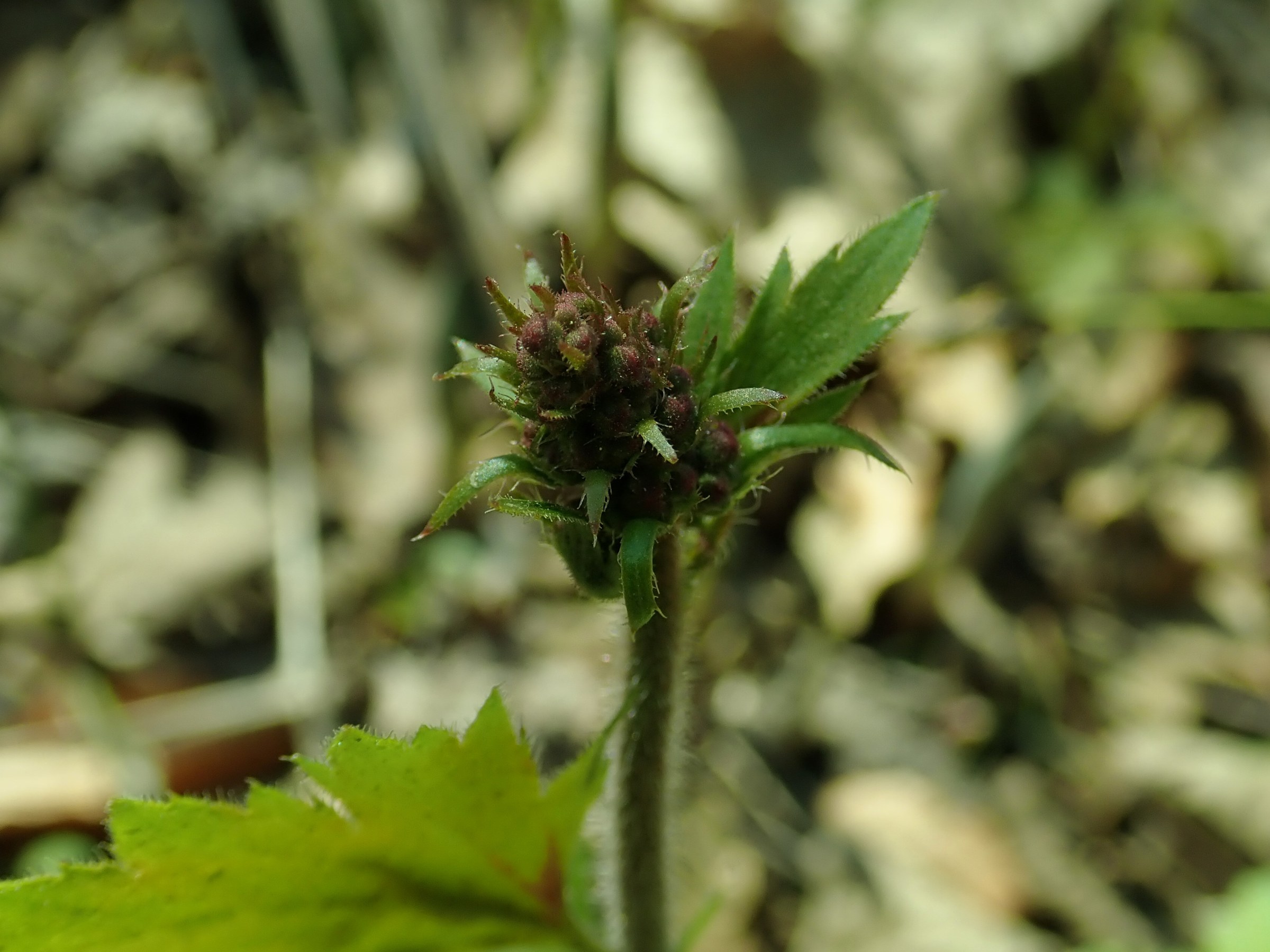
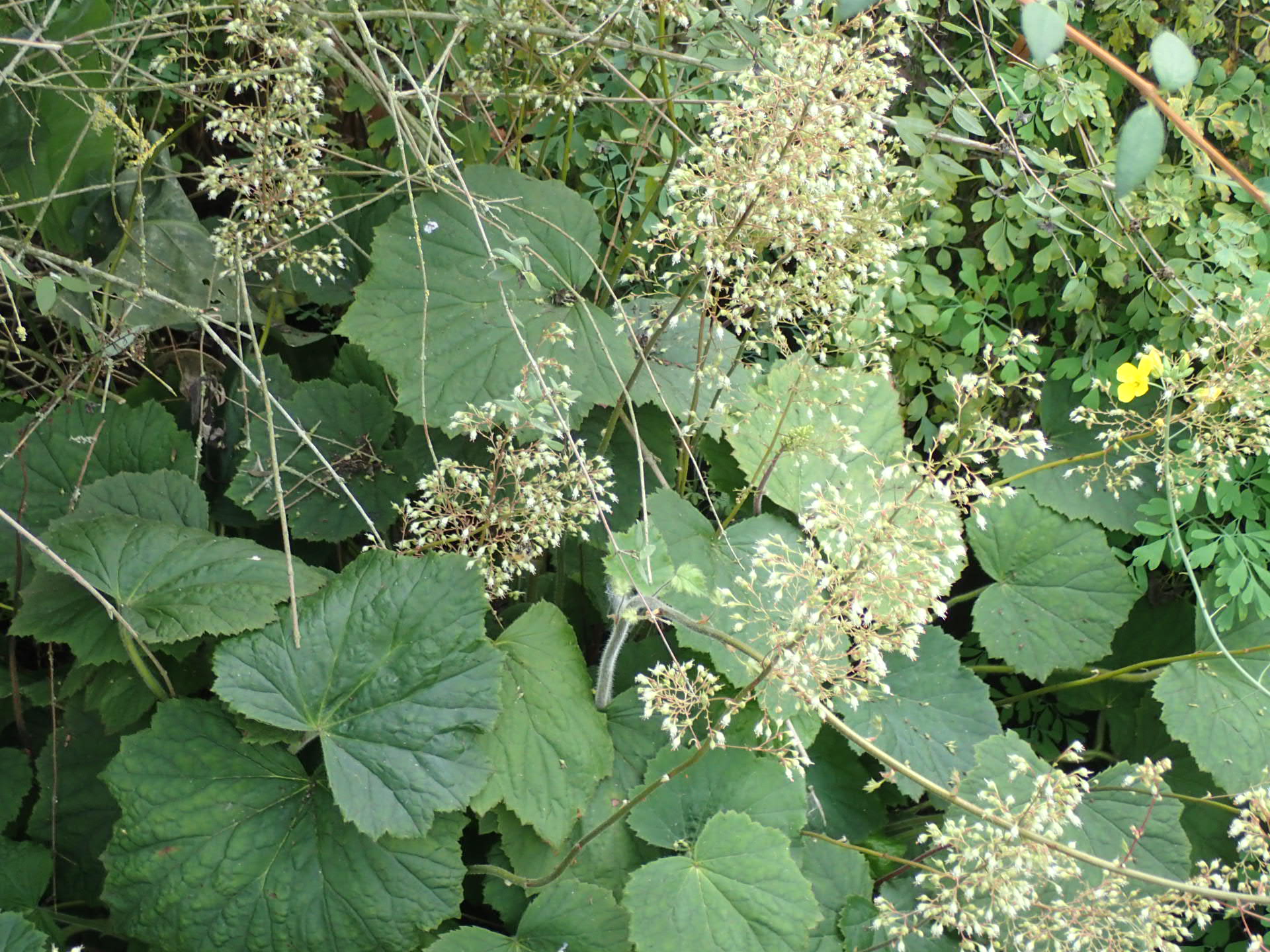
The leaves are broad, rounded to heart-shaped at the base, and shallowly to moderately lobed in a pattern reminiscent of a maple leaf, typically 3 to 6 inches across on long, hairy petioles. Leaf margins are toothed, and both the leaf surface and stalks are covered in short, soft, glandular hairs that give the foliage a slightly velvety, grayish-green cast. Fall and winter color often develops reddish to bronze tints along the leaf margins and veins, especially in plants grown in more sun.
Flowers
From midsummer into early fall, well after most woodland perennials have finished blooming, wiry, hairy flower stalks rise above the foliage carrying loose, airy panicles of small, bell-shaped flowers in cream to greenish-white, sometimes with a faint pink blush. Each individual flower is tiny, only about a quarter inch long, but the branched flower spikes together create a delicate, see-through haze of bloom that hovers above the solid foliage mound.
Fruit & Seed
Flowers are followed by small, two-beaked capsules that split open to release numerous tiny seeds. Self-sown seedlings can appear in favorable rock-garden or rocky-slope conditions, though the species is not aggressively weedy.
Quick Facts
| Scientific Name | Heuchera villosa |
| Family | Saxifragaceae (Saxifrage) |
| Plant Type | Herbaceous/Semi-Evergreen Perennial |
| Mature Height | 8–12 in foliage; 2–3 ft in bloom |
| Mature Spread | 12–18 in |
| Growth Rate | Slow to moderate |
| Sun Exposure | Part Shade to Shade (tolerates more sun with moisture) |
| Water Needs | Average; drought tolerant once established |
| Soil Type | Rocky, well-drained; tolerates thin, lean soils |
| Soil pH | 6.0–7.5 (slightly acidic to neutral) |
| Bloom Time | Midsummer – early fall |
| Flower Color | Cream to greenish-white |
| Fall Color | Bronze-red leaf margins |
| Deer Resistant | Yes, generally |
| USDA Hardiness Zones | 4–9 |
Native Range
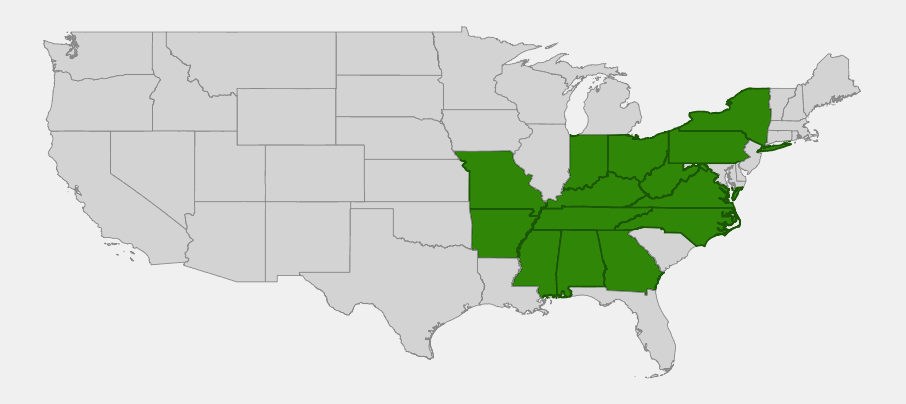
Hairy Alumroot is native to the eastern United States, with its core range running from southern New York and Pennsylvania south through the Appalachian Mountains to northern Georgia and Alabama, and west through the Ohio Valley and Interior Low Plateau to Missouri and Arkansas. Within that broad range, the species is most abundant and reliably found in West Virginia, Virginia, North Carolina, Kentucky, and Tennessee, where the Appalachian and Cumberland Plateau landscapes provide abundant rock outcrop habitat. In many states at the edges of its range, it is known from only a handful of counties.
True to its common name, Hairy Alumroot is overwhelmingly a plant of exposed rock: cliff faces, boulder fields, rocky wooded slopes, sandstone and limestone ledges, and talus, generally in part shade to shade at low to moderate elevations. It is far less often found on ordinary forest-floor soil away from rock, which sets it apart from several of its woodland Heuchera relatives.
Because the species occurs widely but often sparsely across this range, it appears here on several regional lists; where it reaches only one or two states within a multi-state list’s area, treat it as a locally occurring, rock-habitat specialist rather than a plant for every site in that region.
📋 Regional plant lists featuring Hairy Alumroot: New York, Pennsylvania & Northern New Jersey · Maryland, Virginia & West Virginia · North Carolina & South Carolina · Georgia, Alabama & Mississippi · Kentucky & Tennessee · Ohio & Indiana · Illinois, Iowa & Missouri · Arkansas, Louisiana, Eastern Oklahoma & Eastern Texas
Growing & Care Guide
Hairy Alumroot is one of the toughest and most heat-tolerant native Heuchera species, and it is particularly valuable for rocky, dry-shade sites where many shade perennials fail.
Light
Part shade to full shade suits this species best, mimicking its native cliff and wooded-slope habitat. It tolerates more sun than many woodland perennials, especially with consistent moisture, but foliage can scorch in hot afternoon sun without adequate water.
Soil & Water
Hairy Alumroot wants sharply drained, rocky or gravelly soil above all else — good drainage matters more to this species than soil fertility. It tolerates lean, thin soils that would starve many garden perennials and is notably more heat- and humidity-tolerant than some of its Heuchera relatives, a trait that has made it valuable in breeding garden cultivars for the hot, humid Southeast. Water regularly during the first year to establish roots in rock crevices; established plants handle brief drought well but appreciate occasional deep watering during prolonged dry spells.
Planting Tips
Tuck Hairy Alumroot into rock garden crevices, dry-laid stone walls, or the edges of rock outcrops where its roots can follow moisture down into crevices. In ordinary garden beds, amend heavy soil generously with gravel or coarse sand to replicate the sharp drainage it prefers. Space plants 12 to 18 inches apart; they form tidy, slowly spreading clumps rather than running aggressively.
Pruning & Maintenance
Remove tattered or winter-damaged leaves in early spring to make way for fresh new growth. Spent flower stalks can be cut back after bloom if a tidier look is preferred, though leaving some seed capsules in place allows for welcome self-sowing in rock garden settings. This species generally shows better resistance to foliar rust and other Heuchera leaf diseases than many garden hybrids, particularly in well-drained sites with good air circulation.
Landscape Uses
Hairy Alumroot fits naturally into several garden settings:
- Rock gardens and crevice plantings
- Dry shade beneath trees where few other perennials thrive
- Stone wall and retaining wall plantings
- Late-season woodland garden interest after spring ephemerals fade
- Native plant breeding stock for heat-tolerant Heuchera cultivars
- Erosion control on rocky wooded slopes
Wildlife & Ecological Value
Though a modest-sized perennial, Hairy Alumroot contributes real wildlife value, especially through its unusually late bloom time.
For Pollinators
Blooming from midsummer into early fall, well after most spring woodland wildflowers have finished, Hairy Alumroot provides a valuable late-season nectar source for native bees, small butterflies, and other pollinating insects at a time when fewer other shade-tolerant natives are in flower. Its small, open, bell-shaped blooms are especially accessible to short-tongued native bees.
For Birds
Small songbirds forage among the seed capsules in fall, and the dense basal foliage provides minor ground-level shelter for insects and the small creatures that feed on them in rocky woodland settings.
Ecosystem Role
As a specialist of cliffs, boulders, and rock ledges, Hairy Alumroot helps stabilize soil in crevices on otherwise bare rock faces and contributes to the specialized plant communities that develop on Appalachian and Interior Low Plateau rock outcrops — habitats that support a disproportionate number of regionally rare and specialized plant species. Its presence is often an indicator of relatively undisturbed rock outcrop habitat.
Cultural & Historical Uses
Various Heuchera species, including relatives of Hairy Alumroot, were used historically by Indigenous peoples for the astringent properties of their roots, which are rich in tannins — a trait reflected in the common name “alumroot,” referencing the puckering, alum-like astringency of the root when chewed or prepared as a wash. This page describes that historical use as part of the plant’s ethnobotanical record rather than as a recommendation; readers should not use any part of this plant medicinally without guidance from a qualified professional.
In modern horticulture, Hairy Alumroot’s greatest contribution has been as parent stock for garden breeding. Its exceptional heat and humidity tolerance, compared with many other Heuchera species adapted to cooler climates, made it a key parent in developing garden cultivars suited to hot, humid summers — including numerous bronze, purple, and burgundy-leaved selections sold today, such as the compact “Bronze Wave” cultivar. Gardeners who enjoy those colorful cultivars are, whether they realize it or not, growing selections bred from this unassuming wild Appalachian rock-dweller.
Frequently Asked Questions
Is “Bronze Wave” the same plant as Hairy Alumroot?
Not exactly. Bronze Wave is a garden cultivar selected from Heuchera villosa for its glossy bronze-purple foliage. The true wild species described on this page has plain green, hairy leaves; Bronze Wave and similar colorful selections are cultivated varieties bred from it, not the wild native plant itself.
Where does Hairy Alumroot grow in the wild?
It is a true rock-dweller, found on cliffs, boulders, and rocky wooded slopes from New York and Pennsylvania south through the Appalachian Mountains to Georgia and Alabama, and west to Missouri and Arkansas. It is most common in West Virginia, Virginia, North Carolina, Kentucky, and Tennessee.
Will Hairy Alumroot grow in ordinary garden soil, or does it need rocks?
It will grow in ordinary beds as long as drainage is sharp, but it performs best and lives longest when given rocky, gravelly conditions similar to its native cliff and ledge habitat. Heavy, poorly drained soil is its main enemy.
How much sun can Hairy Alumroot tolerate?
It prefers part shade to full shade but can handle more sun than many woodland perennials, particularly with reliable moisture. In hot, humid climates, afternoon shade helps prevent leaf scorch.
When does Hairy Alumroot bloom?
It blooms later than most native woodland perennials, typically from midsummer into early fall, providing a valuable late-season nectar source for pollinators after most spring wildflowers have finished.

Looking for a nursery that carries Hairy Alumroot?
Browse our native plant nursery directory: New York, Ohio & North Carolina · Pennsylvania, Virginia & Tennessee · Indiana · West Virginia · Kentucky, Mississippi & Missouri · Georgia · Alabama & Arkansas