
Spotted Phlox (Phlox maculata)
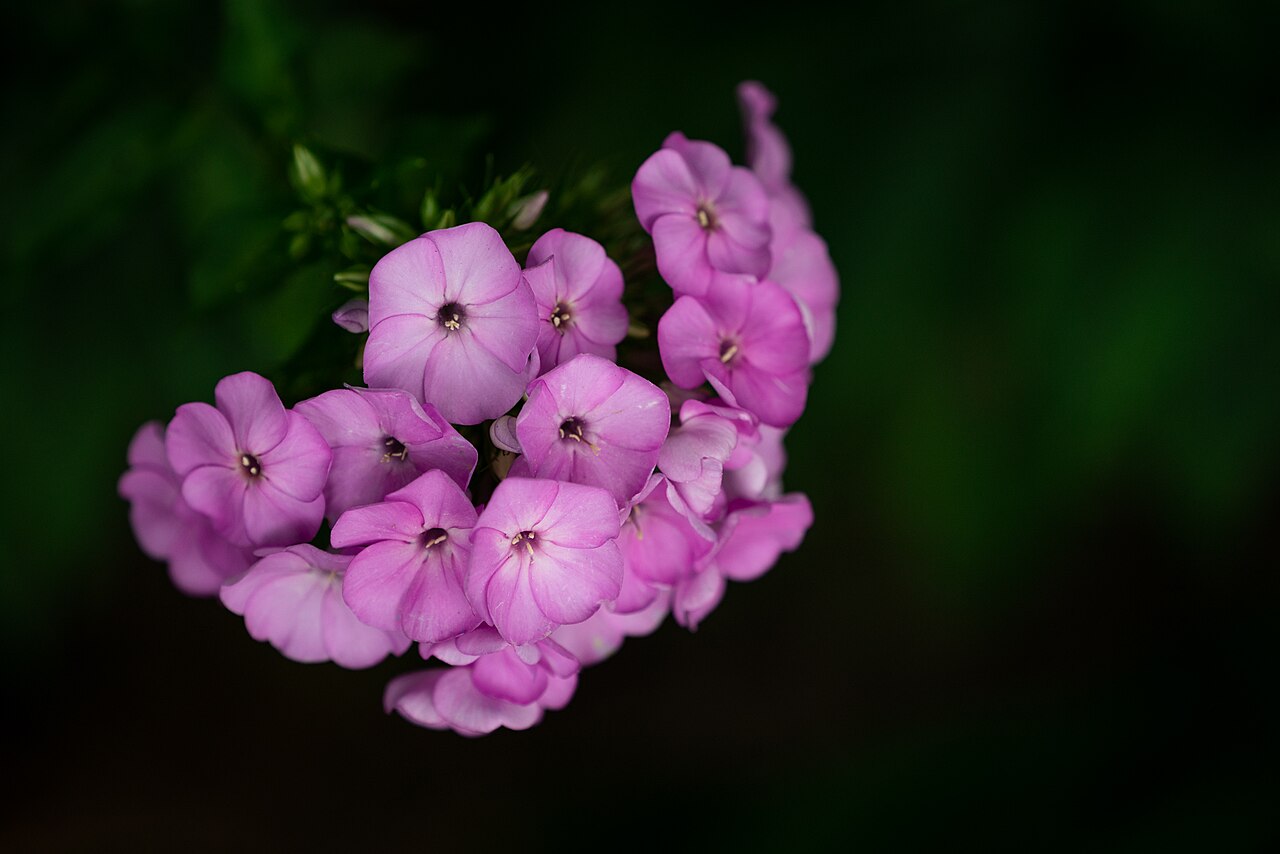
Phlox maculata, commonly called spotted phlox or wild sweet William, is a clump-forming perennial wildflower of moist eastern meadows, streambanks and open woods. Its common name comes from the small purple-red speckles that often mark the lower stem, a feature that, along with its narrower, glossier flower clusters, distinguishes it from the similar garden phlox (Phlox paniculata). From early to midsummer it carries dense, cylindrical to pyramidal clusters of fragrant pink to purple flowers atop sturdy, upright stems.
In the wild, spotted phlox grows in damp meadows, streambank thickets, calcareous fens and the edges of low woods, often alongside other moisture-loving prairie and meadow natives. It has also long been grown in gardens, and nursery cultivars such as ‘Natascha’ and ‘Rosalinde’ are common in the trade; this profile covers the wild species and its native range.
Identification
Spotted phlox is an upright, clump-forming perennial reaching 2 to 3 feet tall on sturdy, unbranched or sparingly branched stems rising from a shallow, fibrous-rooted base.
Stems
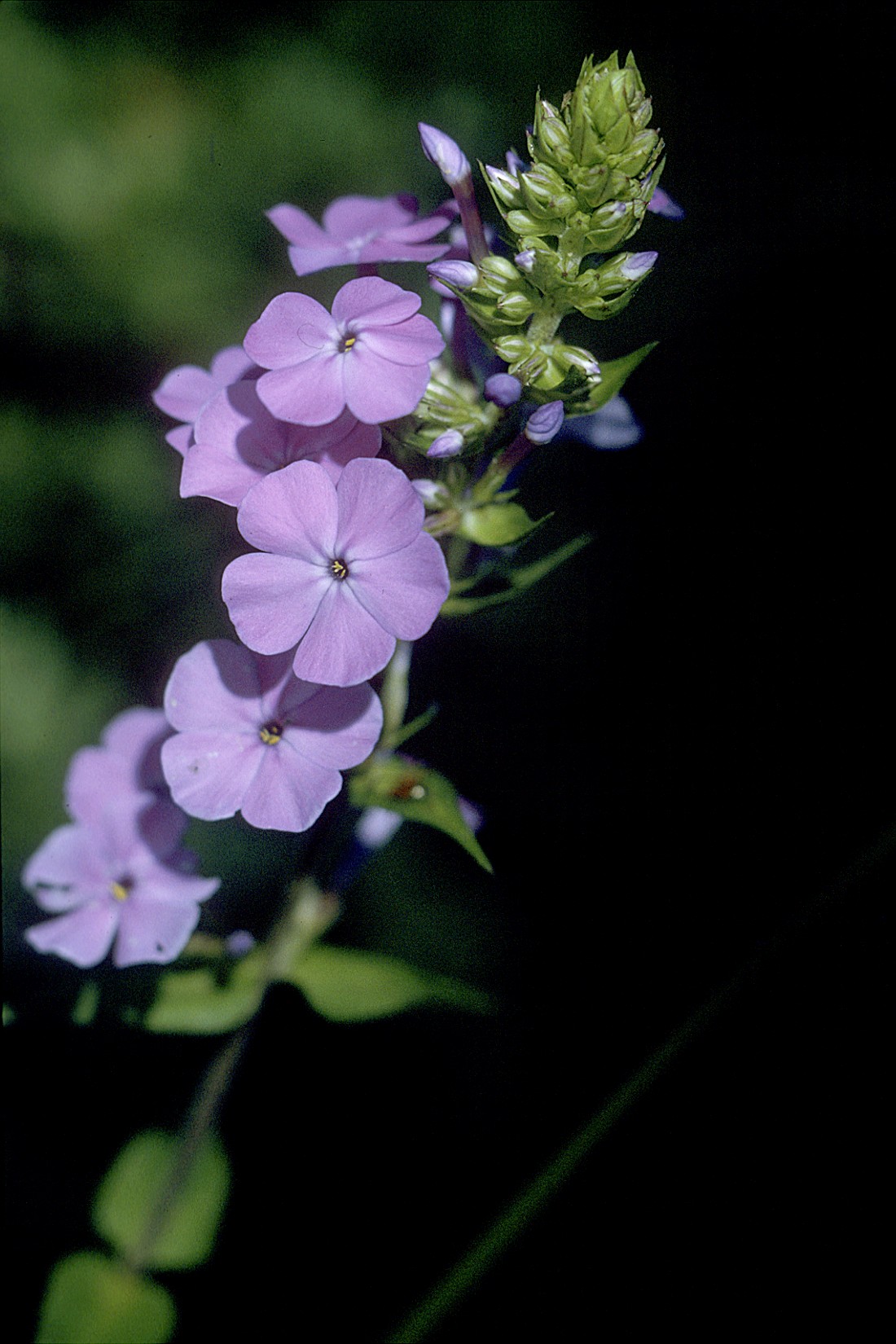
The stems are smooth to minutely hairy and often marked with small purple-red spots or streaks, especially toward the base — the trait behind the common name “spotted phlox.” Stems are noticeably stiffer and less prone to flopping than garden phlox.
Leaves
Leaves are opposite, lance-shaped to narrowly oval, 2 to 5 inches long, smooth-edged, and taper to a point. They are sessile or nearly so, with little or no leaf stalk, and are glossier and narrower than the broader leaves of garden phlox.
Flowers
Flowers are fragrant, five-lobed, about 3/4 inch across, and range from pink to purple-pink, rarely white, each with a long, slender corolla tube. They are packed into a dense, cylindrical to narrowly pyramidal cluster (a panicle) that is noticeably longer and narrower than the rounded flower heads of garden phlox. Bloom runs from June into August, somewhat earlier than garden phlox.
Fruit & Seeds
After flowering, each blossom forms a small three-chambered capsule that splits open to eject a few seeds a short distance from the parent plant. Plants also spread slowly by short rhizomes, thickening into clumps over time.
Quick Facts
| Scientific Name | Phlox maculata |
| Family | Polemoniaceae (Phlox) |
| Plant Type | Herbaceous perennial wildflower |
| Mature Height | 2–3 ft |
| Mature Spread | 1–2 ft |
| Growth Rate | Moderate |
| Sun Exposure | Full Sun to Part Shade |
| Water Needs | Medium to high; prefers consistently moist soil |
| Soil Type | Moist loam or clay-loam; tolerates heavier soils than garden phlox |
| Soil pH | 6.0–7.5 (neutral to slightly acidic or alkaline) |
| Bloom Time | June – August |
| Flower Color | Pink to purple-pink, rarely white |
| Fall Color | None notable |
| Fruit | Small three-chambered seed capsules |
| Deer Resistant | Moderate (deer may browse flower buds) |
| USDA Hardiness Zones | 4–8 |
Native Range
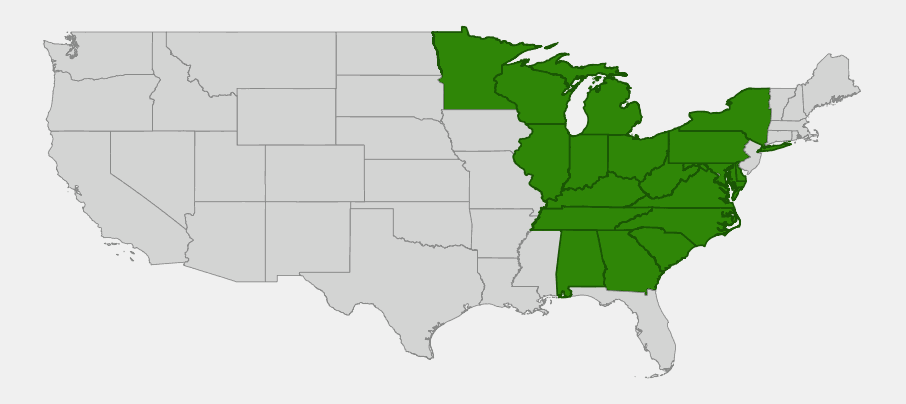
Spotted phlox is native to the eastern and central United States, from the western Great Lakes and upper Midwest east through the Appalachians to the mid-Atlantic, and south through the southern Appalachians into the Deep South. It is found from Wisconsin, Minnesota, Illinois, Indiana and Michigan east through Ohio, Pennsylvania and New York, south through Delaware, Maryland, Virginia and West Virginia, and on into Kentucky, Tennessee, North Carolina, South Carolina, Georgia and Alabama.
The species was historically also recorded in parts of New England and in Iowa and Missouri, but it has been extirpated or is now very rare in most of those areas and is not treated here as part of its current native range. Gardeners in those regions can still grow it, since nursery stock is widely available, but should know that wild populations are no longer reliably present locally.
Within its range, spotted phlox favors consistently moist ground: wet meadows, streambank thickets, calcareous fens, swamp margins and the open edges of low, moist woods. It tends to grow in sunnier, wetter sites than garden phlox, often in the company of other wet-meadow perennials.
📋 Regional plant lists featuring Spotted Phlox: Michigan, Wisconsin & Eastern Minnesota · Illinois, Iowa & Missouri (native to the Illinois portion only) · Ohio & Indiana · New York, Pennsylvania & Northern New Jersey · Delaware, Southern New Jersey & Long Island (native to the Delaware portion only) · Maryland, Virginia & West Virginia · Kentucky & Tennessee · North Carolina & South Carolina · Georgia, Alabama & Mississippi (native to the Georgia and Alabama portions only)
Growing & Care Guide
Spotted phlox is an easygoing meadow perennial for gardeners who can give it reliably moist soil; it is considerably more forgiving of heavy, wet ground than garden phlox.
Light
Grow in full sun for the densest flower clusters and sturdiest stems, though it tolerates light or part shade, especially in hot climates, with a slight reduction in bloom.
Soil & Water
Give it consistently moist, fertile loam or clay-loam; it handles heavier, wetter soils than most garden phlox and is a good choice for low spots and rain garden margins that stay damp but are not permanently flooded. In dry soil it will survive but bloom poorly and may go dormant early.
Planting Tips
Space plants 15 to 18 inches apart to allow good air circulation, which helps limit powdery mildew in humid climates. Mulch lightly to conserve soil moisture, and avoid letting the root zone dry out during the first growing season.
Pruning & Maintenance
Deadhead spent flower clusters to tidy the plant and encourage a modest rebloom. Divide clumps every three to four years in spring or fall to maintain vigor. Good air circulation and avoiding overhead watering go a long way toward preventing powdery mildew, which can affect this species as it does other phlox.
Propagation
Propagate by division in spring or fall, or by stem cuttings taken in early summer. Seed can be sown outdoors in fall for natural cold stratification, though named selections will not come true from seed.
Landscape Uses
- Rain gardens and moist meadow plantings where soil stays consistently damp
- Pollinator gardens for butterflies and day-flying moths drawn to the fragrant flowers
- Streambank and pond-margin plantings in part sun
- Cottage-style perennial borders with reliable summer moisture
- Cut flower gardens, since the long-lasting, fragrant clusters hold up well in a vase
Wildlife & Ecological Value
Spotted phlox is a valuable nectar source through the heart of summer, when many spring wildflowers have finished blooming.
For Pollinators
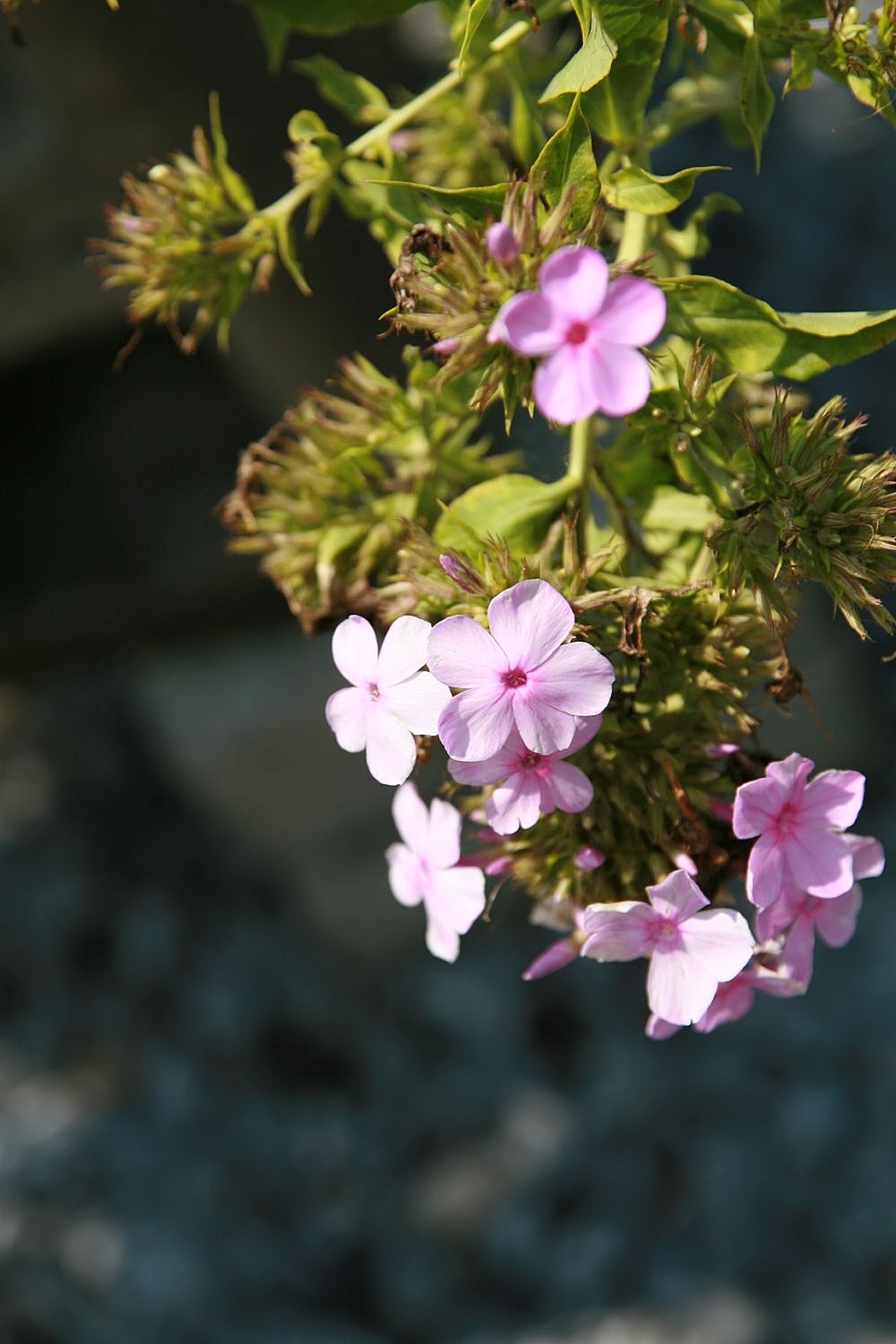
The fragrant, tubular flowers are especially attractive to butterflies and day-flying moths, including swallowtails and fritillaries, whose long proboscises reach the nectar at the base of the narrow corolla tube. Bumblebees and hummingbird-moths also visit regularly.
For Birds
While not a major seed source, the dense summer foliage and flower clusters provide cover and foraging opportunities for insect-eating songbirds moving through wet meadow habitat.
Ecosystem Role
As a clump-forming perennial of wet meadows and streambanks, spotted phlox helps stabilize damp soil and contributes to the diverse summer-blooming plant community that supports pollinators through the hottest part of the growing season.
Cultural & Historical Uses
Spotted phlox does not carry a well-documented history of medicinal or culinary use among Indigenous peoples comparable to many other eastern wildflowers; it has long been valued primarily as a garden ornamental. Nineteenth- and twentieth-century American and European nurseries bred and selected numerous garden forms from it and its relative garden phlox, prizing its fragrance and long, colorful bloom spikes for cottage gardens and cut-flower beds.
Today its main cultural role remains horticultural: named selections are still sold by perennial nurseries, valued for better mildew resistance and more compact habit than some garden phlox cultivars.
Frequently Asked Questions
How is spotted phlox different from garden phlox?
Spotted phlox has narrower, glossier leaves, purple-spotted stems, and denser, narrower cylindrical flower clusters that bloom earlier in summer than garden phlox (Phlox paniculata), which has broader leaves and rounder flower heads.
Does spotted phlox get powdery mildew?
It can, especially in humid conditions with poor air circulation, though generally less severely than garden phlox. Good spacing, full sun and avoiding overhead watering reduce the risk.
Is spotted phlox native to my state?
It is native across much of the eastern and central United States, from the upper Midwest through the Appalachians to the mid-Atlantic and Deep South. It has been lost from much of New England and is not currently considered native to Iowa or Missouri, even though nursery stock is widely sold there.
How wet does the soil need to be?
Aim for consistently moist, not waterlogged, soil. It tolerates occasional standing water for short periods but does best in soil that stays damp without being permanently saturated.

Looking for a nursery that carries Spotted Phlox?
Browse our native plant nursery directory: West Virginia & Wisconsin · Illinois & Indiana · Kentucky, Maryland, Michigan & Minnesota · New York, North Carolina & Ohio · Pennsylvania, South Carolina, Tennessee & Virginia · Delaware & Georgia · Alabama