
Scarlet Sage (Salvia coccinea)
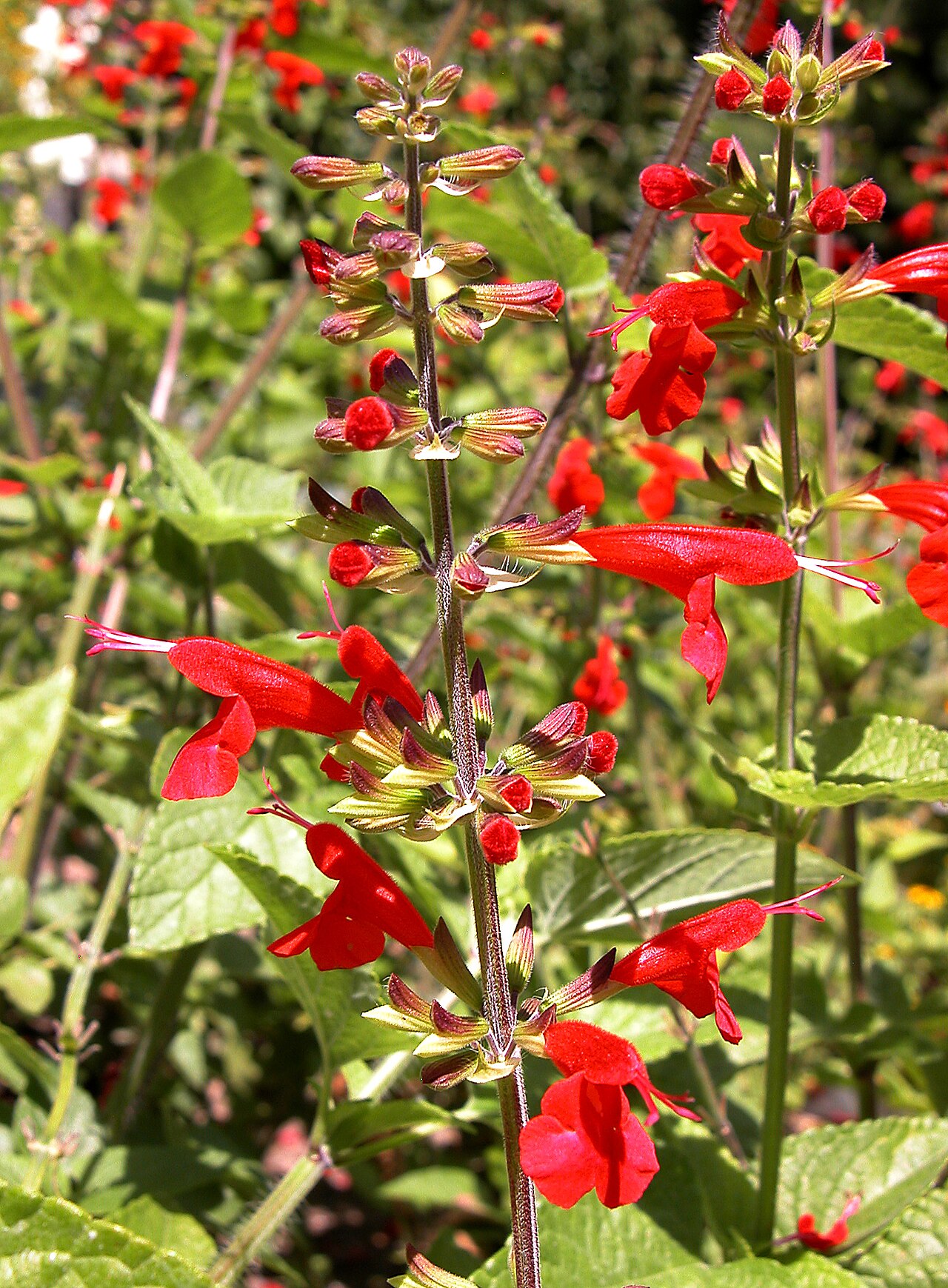
Salvia coccinea, commonly called Scarlet Sage or Tropical Sage, is a short-lived, free-flowering member of the mint family (Lamiaceae) that lights up hot, sandy ground with loose spikes of red, hairy-throated flowers almost year-round. It is one of the easiest and most rewarding salvias to grow in the Gulf Coast states, self-sowing readily and drawing hummingbirds and butterflies from spring frost to fall frost.
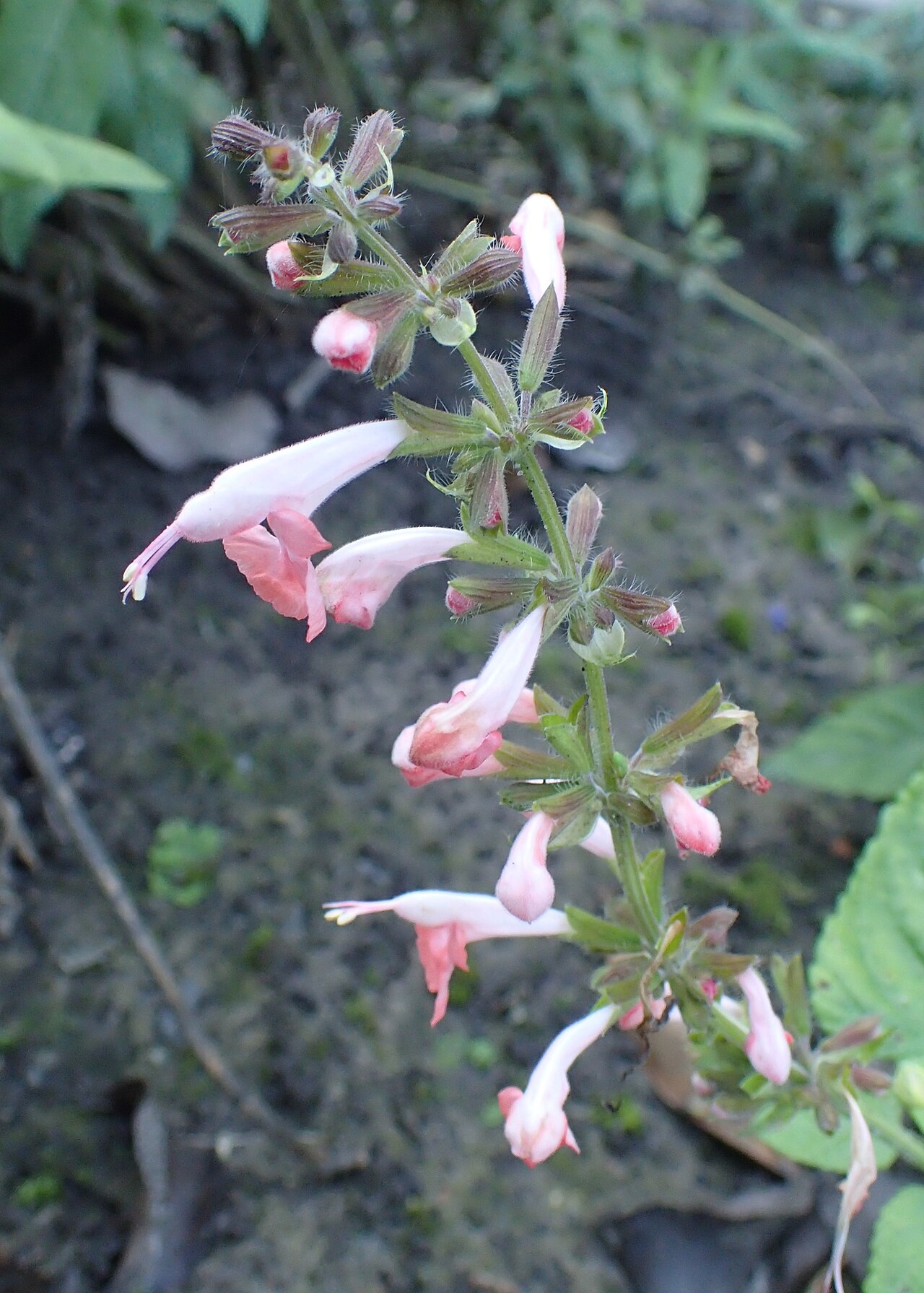
Scarlet sage grows as a bushy, somewhat sprawling annual or short-lived perennial, usually 1 to 3 feet tall, with soft, triangular, slightly fuzzy leaves and square stems typical of the mint family. The flowers themselves are small — about an inch long — but they open in a steady, overlapping succession along an open, airy spike, so a single plant can stay in color continuously. While garden forms come in white, pink, and bicolor, the wild form is a true, hot red.
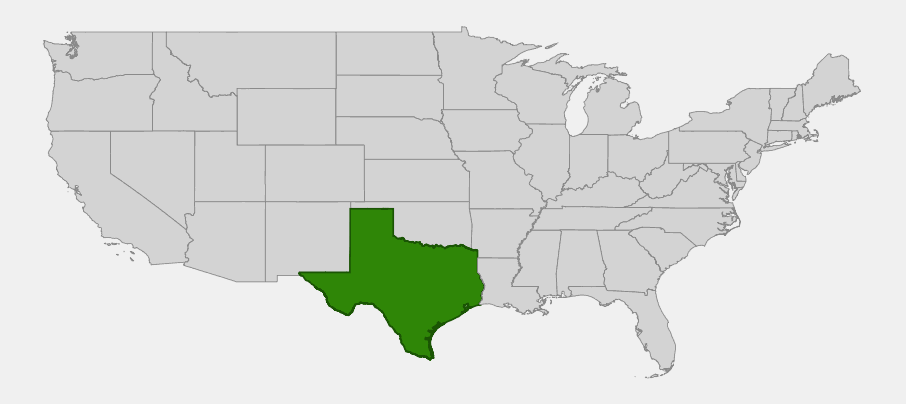
Its native status is genuinely debated among regional floras. The Flora of the Southeastern United States notes that scarlet sage “is certainly only an introduction in the more northern parts of its distribution” and that whether it is native at all in the more southeastern part of its range — the Carolinas, Georgia, and Florida — “is uncertain and disputed.” The Atlas of Florida Plants and the South Carolina Native Plant Society both list it as not native in those states. The strongest, least-contested case for native status is in Texas, where it grows wild in sandy soils, thickets, and open woodland edges across the eastern and southern part of the state, and that is the range treated as native here. Gardeners elsewhere in the Southeast can still grow it — it is simply best understood there as a well-naturalized, long-cultivated Gulf Coast native rather than a plant original to every state where it now grows.
Identification
Scarlet sage is a bushy, multi-stemmed herb, typically reaching 18 to 30 inches tall and about as wide, occasionally taller in rich, moist soil. Like all mints, its stems are square in cross-section, and the whole plant has a soft, slightly sticky, aromatic feel when brushed or crushed.
Leaves
The leaves are opposite, triangular to heart-shaped (deltoid), 1 to 3 inches long, with scalloped or shallowly toothed margins and a soft, slightly velvety texture from fine hairs. They are bright to medium green and carry a mild, herbal scent — pleasant rather than pungent — when handled.
Flowers
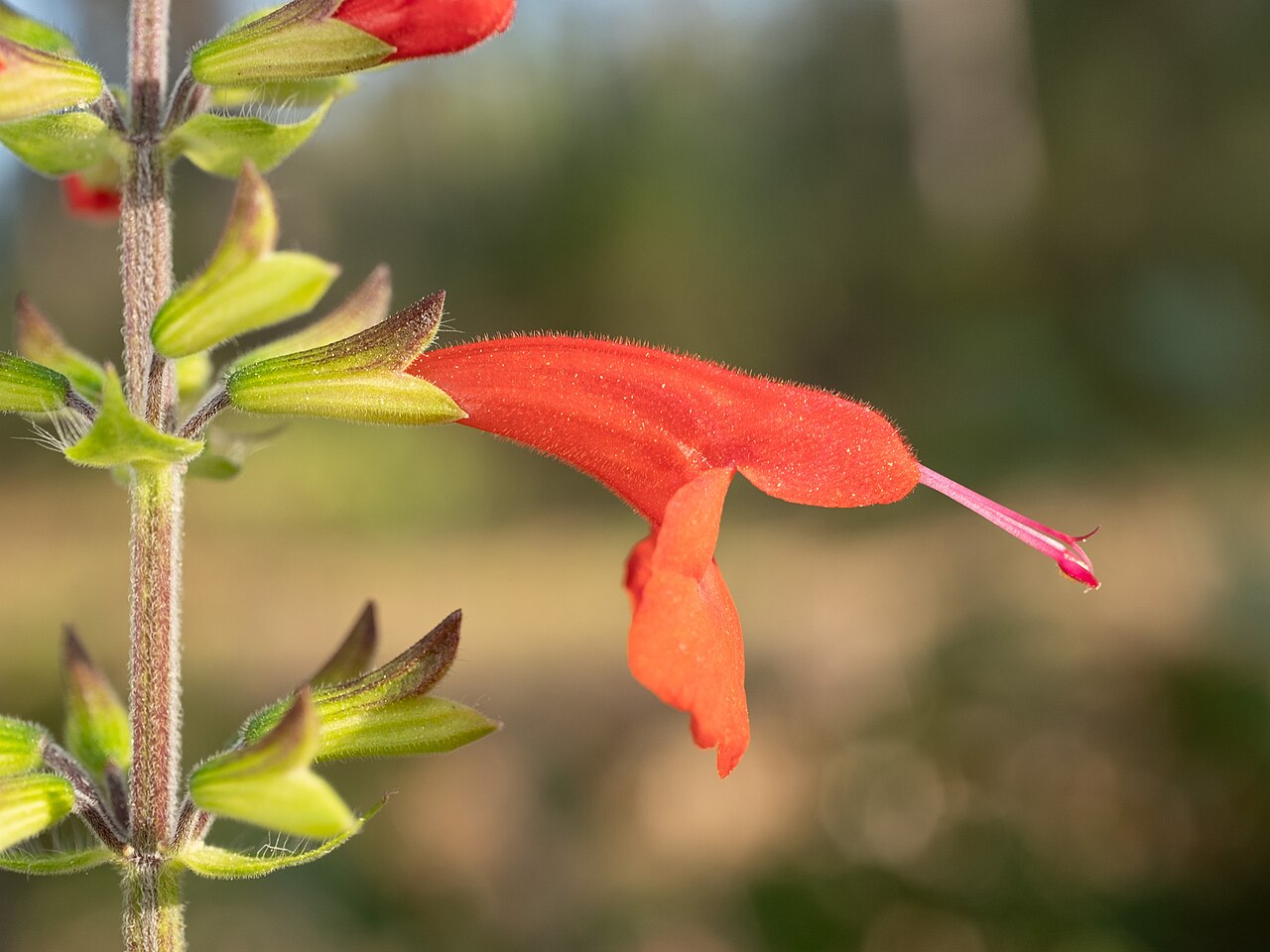
Flowers appear in open, interrupted spikes (racemes) at the stem tips, each spike made up of a few flowers in a whorl, then a gap, then another whorl. Individual flowers are tubular and two-lipped, about 1 inch long, with the lower lip extended into a wide landing pad and fine hairs along the throat. Wild populations are almost always scarlet red, though white, salmon, and bicolor red-and-white forms occur both as natural variants and as garden selections. Bloom is nearly continuous from spring through the first hard freeze across the Gulf Coast.
Fruit & Seeds
After flowering, each flower leaves behind four small, smooth nutlets cradled in the persistent calyx. The seeds drop readily near the parent plant, and scarlet sage self-sows so reliably that a single planting often becomes a small, shifting colony within a few seasons.
Quick Facts
| Scientific Name | Salvia coccinea |
| Family | Lamiaceae (Mint) |
| Plant Type | Short-lived perennial or annual herb |
| Mature Height | 1.5–3 ft |
| Mature Spread | 1.5–2.5 ft |
| Growth Rate | Fast |
| Sun Exposure | Full Sun to Part Shade |
| Water Needs | Low to moderate; drought tolerant once established |
| Soil Type | Sandy, caliche, or loamy; well-drained |
| Soil pH | Neutral to slightly alkaline (6.5–8.0) |
| Bloom Time | February – November (nearly year-round in mild winters) |
| Flower Color | Red (wild form); white, pink, and bicolor in cultivation |
| Fall Color | None notable |
| Fruit | Four small nutlets per flower, not ornamental |
| Deer Resistant | Yes (aromatic foliage) |
| USDA Hardiness Zones | 8–11 (root-hardy perennial in 8b–9; grown as an annual farther north) |
Native Range
Scarlet sage’s clearest native range lies in eastern and southern Texas, where it grows wild in sandy soils in thickets, chaparral, and open woodland edges, generally within about 150 miles of the Gulf Coast. From there it has long been cultivated and has naturalized widely across the Southeast — Louisiana, Mississippi, Alabama, Georgia, the Carolinas, and Florida — but authoritative state and regional floras differ on whether those eastern populations represent a native range or a centuries-old pattern of escape and naturalization from a Texas and tropical American source.
In Texas, scarlet sage favors open, sun-baked ground: sandy roadsides, brushland edges, prairie remnants, and disturbed clearings in post oak and live oak woodlands. It tolerates heat, poor soil, and considerable neglect, which is part of why it has spread so successfully as a garden escape outside its confirmed native range.
Beyond the continental United States, scarlet sage is native or long-established through much of Mexico, Central America, and the Caribbean, and it has become a popular, widely planted garden annual worldwide, including in Hawaii, where USDA PLANTS lists it only as introduced.
📋 Regional plant lists featuring Scarlet Sage: Arkansas, Louisiana, Eastern Oklahoma & Eastern Texas
Growing & Care Guide
Scarlet sage is about as forgiving as native flowering plants get. Give it sun and decent drainage and it will largely take care of itself, flowering for months and reseeding to fill in gaps.
Light
Full sun produces the most compact, floriferous plants, but scarlet sage also performs well in part shade, especially in the hottest parts of its range, where afternoon shade can extend bloom and reduce water needs. In heavier shade, plants stretch and flower less.
Soil & Water
This plant wants well-drained soil above all else — sandy, caliche, or ordinary garden loam all work, but soggy, heavy clay invites root rot. Once established, scarlet sage is quite drought tolerant, though it flowers more heavily with occasional deep watering during long dry spells. Avoid overwatering; this is a plant that thrives on a bit of neglect.
Planting Tips
Set out transplants in spring after the last frost, spacing them 12 to 18 inches apart to allow for their bushy, sprawling habit. Scarlet sage is easy from seed sown directly in warm soil, and it self-sows so readily that most established plantings maintain themselves without replanting. In its hardiness range it often behaves as a short-lived perennial, resprouting from the base after a light frost.
Pruning & Maintenance
Pinch young plants once or twice to encourage bushier growth, and shear back leggy plants by a third in mid-summer to refresh the bloom. Deadheading is not necessary for continued flowering, but removing spent spikes can reduce excessive self-sowing if a tidier look is wanted. Cut plants back hard after a freeze; they typically resprout from the crown in zones 8b and warmer.
Landscape Uses
- Hummingbird and pollinator gardens, where its long bloom season is hard to match
- Mixed sunny borders with other sun-loving Gulf Coast wildflowers
- Cottage-style and cutting gardens, since the flowers hold up well in arrangements
- Dry, sandy, low-fertility sites where many ornamentals struggle
- Containers and raised beds, especially in colder parts of its range where winter protection helps
Wildlife & Ecological Value
Scarlet sage is a workhorse nectar plant, blooming through more of the year than almost any other herbaceous native in its range.
For Pollinators
The tubular, hairy flowers are built for long-tongued visitors. Bumblebees and other native bees work the blooms regularly, and the extended bloom season means scarlet sage supplies nectar across multiple generations of pollinators each year.
For Birds
Ruby-throated hummingbirds are the star visitors, and scarlet sage is considered one of the most reliable hummingbird plants in Texas gardens, flowering from spring migration through fall departure. The long, red, tubular flowers are a near-textbook match for hummingbird pollination.
Ecosystem Role
As a fast-growing, early-colonizing herb of open, disturbed ground, scarlet sage helps stabilize bare sandy soil and provides an early nectar source in cleared or recently burned areas before slower-growing perennials fill back in.
Cultural & Historical Uses
Scarlet sage has long been grown as a dooryard flower throughout Texas and the Gulf South, valued for its reliability, its long bloom, and its appeal to hummingbirds — qualities that likely helped carry it, by seed and cutting, well beyond its confirmed native range over the past two centuries.
Within the broader genus Salvia, many species have a history of medicinal and culinary use, and some herbal traditions have used scarlet sage leaves in folk preparations, but it has no significant documented traditional food or medicinal use specific to this species in North America, and it should not be treated as a culinary sage substitute without expert identification and guidance.
Today its primary human value is horticultural: a dependable, low-maintenance source of season-long color that nurseries across the South propagate and sell widely, both in the straight red species and in selected pink, white, and bicolor cultivars.
Frequently Asked Questions
Is scarlet sage really native to the Southeast, or just Texas?
Authorities disagree. USDA PLANTS marks it native across much of the Gulf South, but regional floras such as the Flora of the Southeastern United States call its status in Georgia, the Carolinas, and Florida “uncertain and disputed,” and Florida’s and South Carolina’s own state plant atlases list it as not native. Texas has the strongest, least-contested record of wild, native populations.
Will scarlet sage come back every year?
In zones 8b and warmer it often behaves as a short-lived perennial, resprouting from the base after mild winters. Farther north it is usually killed by hard freezes and is grown as a reseeding annual, though its prolific self-sowing means a planting can persist for years even where the original plants do not survive winter.
Do hummingbirds really prefer it?
Yes — its narrow, red, nectar-rich tubular flowers and near-continuous bloom make it one of the most consistently visited hummingbird plants in Texas and Gulf Coast gardens, often outperforming showier ornamental salvias.
Can scarlet sage become weedy?
It self-sows freely and can spread beyond where it is planted, especially in loose, sandy soil. This is rarely a problem in a garden bed, but gardeners who want to limit spread should deadhead spent flower spikes before seed drops.
Is scarlet sage the same plant as Texas sage?
No. “Texas sage” usually refers to Leucophyllum frutescens, an unrelated silver-leaved shrub in the figwort family. Scarlet sage is a true Salvia in the mint family; the shared common name is a frequent source of confusion at nurseries.

Looking for a nursery that carries Scarlet Sage?
Browse our native plant nursery directory: Texas