
Roundleaf Serviceberry (Amelanchier sanguinea)
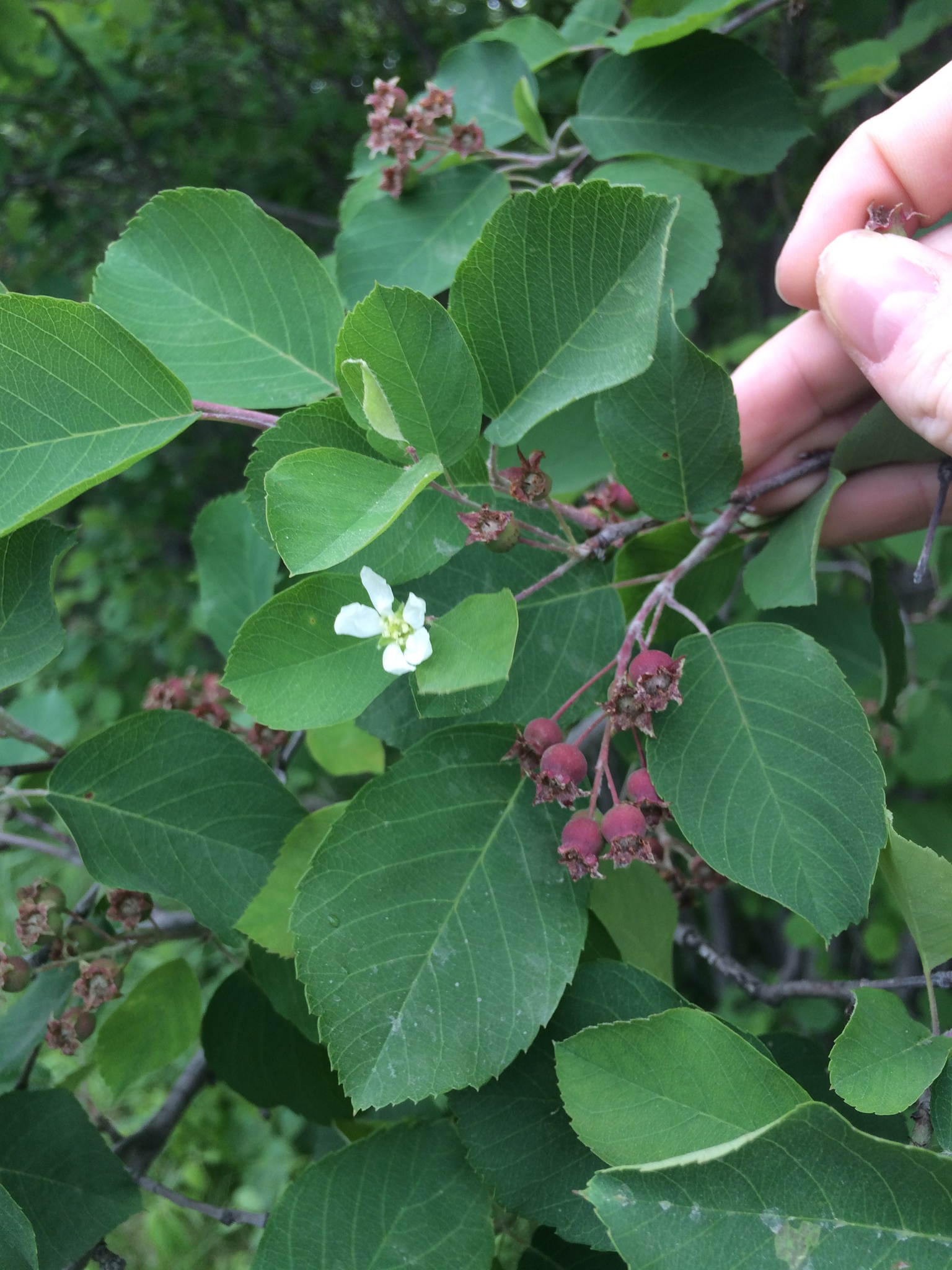
Amelanchier sanguinea, commonly known as Roundleaf Serviceberry — also called Sand Serviceberry, Red-Twigged Shadbush, or Rounded Shadbush — is a deciduous, multi-stemmed shrub of eastern and central North America. The USDA PLANTS Database lists “roundleaf serviceberry” as its accepted common name, though the plant goes by several regional names across its range. It belongs to the Rosaceae (rose family) and is one of several native Amelanchier species whose white spring flowers are among the earliest woodland blooms to appear, giving rise to old folk names like “shadbush” for their coincidence with the spring shad runs in eastern rivers.
This serviceberry typically grows as a compact, thicket-forming shrub up to about 9.8 feet (3 m) tall, smaller and shrubbier than tree-form relatives such as Downy Serviceberry (Amelanchier arborea) or Shadblow Serviceberry (Amelanchier canadensis). Its rounded, coarsely toothed leaves give the species its common name, and its young twigs often show a reddish cast, the source of the alternate name “red-twigged shadbush.” Clusters of showy white flowers open in mid-spring, usually before or as the leaves unfurl, followed by small pome fruits that ripen from red to a deep purple-blue and are genuinely sweet and edible, much like the better-known fruits of other serviceberry species.
Roundleaf Serviceberry is most common in eastern Canada, the northeastern United States, and the Great Lakes region, with scattered, more localized populations reaching south along the Appalachians into the Carolinas and northern Georgia. NatureServe ranks the species as globally secure, and it remains a reliable, low-maintenance choice for native shrub borders, pollinator gardens, and wildlife plantings throughout its eastern range.
Identification
Roundleaf Serviceberry can be distinguished from other eastern Amelanchier species chiefly by its smaller stature, thicket-forming habit, and the rounded shape of its leaves, which are more broadly oval than the narrower, more pointed leaves of Shadblow or Downy Serviceberry.
Bark & Stems
Roundleaf Serviceberry grows as a multi-stemmed shrub rather than a single-trunked tree, typically forming spreading thickets from root suckers. Young twigs often have a reddish or reddish-brown tint, which is the basis for the species’ older common name, red-twigged shadbush. Mature bark is smooth and grayish, similar to other serviceberries but on a much smaller scale given the shrub’s modest height.
Leaves
Leaves are alternate, simple, and distinctly rounded to broadly oval, with a sharply and coarsely toothed margin running nearly to the leaf base. They emerge covered in fine white hairs that typically wear away as the leaf matures, leaving a smoother deep-green surface by summer. In fall, the foliage can turn attractive shades of orange and red, though this is less dependable than in some other native shrubs.
Flowers
In mid-spring, five-petaled white flowers appear in short, loose clusters (racemes), typically opening just before or alongside the unfolding leaves. Each flower is similar in form to other serviceberries — slender, strap-shaped petals around a central cluster of stamens — but Roundleaf Serviceberry’s flower clusters tend to be shorter and less showy en masse than those of taller tree-form relatives.
Fruit & Seeds
The fruit is a small pome, resembling a tiny apple or blueberry, that ripens from green to red and finally to a deep purple-blue when fully mature in early to mid-summer. The fruit is genuinely sweet and edible, consistent with the whole Amelanchier genus, and is eagerly eaten by birds and mammals as well as people. Each fruit contains several small seeds.

Quick Facts
| Scientific Name | Amelanchier sanguinea |
| Family | Rosaceae (Rose) |
| Plant Type | Deciduous Shrub |
| Mature Height | 4–10 ft (1.2–3 m) |
| Mature Spread | 4–8 ft (1.2–2.4 m), thicket-forming by root suckers |
| Growth Rate | Moderate |
| Sun Exposure | Full Sun to Part Shade |
| Water Needs | Low to Moderate |
| Soil Type | Dry to average, well-drained; sandy, rocky, or gravelly soils tolerated |
| Soil pH | 5.0–7.0 (acidic to neutral) |
| Bloom Time | April – May |
| Flower Color | White |
| Fall Color | Orange to red (variable) |
| Fruit | Small pome, red ripening to purple-blue; sweet and edible |
| Deer Resistant | No (deer browse foliage and twigs) |
| USDA Hardiness Zones | 3–7 |
Native Range
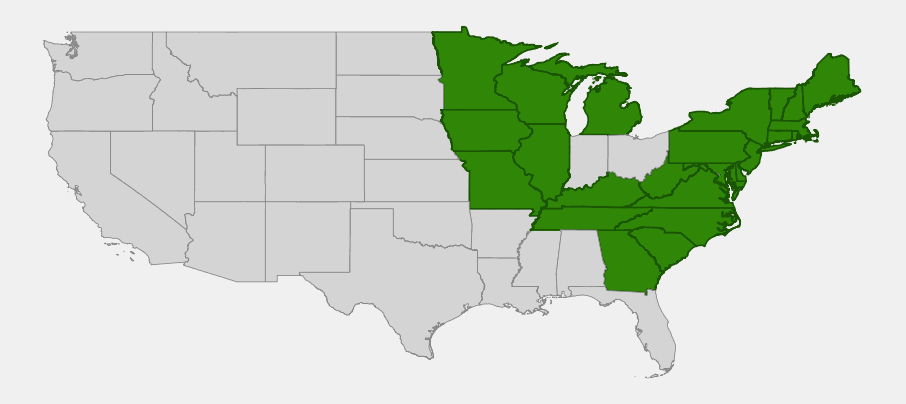
Roundleaf Serviceberry is native to eastern and central North America, with a range stretching from New Brunswick and Quebec west to Ontario and Manitoba, south through the northeastern United States and Great Lakes region, and along the Appalachian chain as far south as northern Georgia. It is most common and most frequently encountered in eastern Canada, the Northeast, and the upper Midwest, becoming progressively more scattered and locally rare toward the southern and western edges of its range in states such as Iowa, Illinois, Missouri, Kentucky, Tennessee, Maryland, and Delaware.
Across this range, Roundleaf Serviceberry favors dry, open, well-drained sites rather than the richer, moister woodlands preferred by some of its relatives. It is typically found on rocky outcrops, sandy or gravelly barrens, dry open woodlands, forest edges, and roadsides, often alongside other plants adapted to lean, fast-draining soils. This preference for dry, sandy, or rocky ground is reflected in one of its common names, Sand Serviceberry.
Because the species becomes uncommon toward the edges of its mapped range, gardeners in marginal states such as Ohio, Indiana, or the Deep South should confirm local botanical records before assuming it is reliably native to their specific area; this guide follows county-level BONAP mapping, which shows the species thinning out considerably south and west of its Appalachian and Great Lakes core.
📋 Regional plant lists featuring Roundleaf Serviceberry: New Hampshire, Maine & Vermont · Connecticut, Massachusetts & Rhode Island · New York, Pennsylvania & Northern New Jersey · Delaware, Southern New Jersey & Long Island · Maryland, Virginia & West Virginia · North Carolina & South Carolina · Georgia, Alabama & Mississippi · Kentucky & Tennessee · Illinois, Iowa & Missouri · Michigan, Wisconsin & Eastern Minnesota
Growing & Care Guide
Roundleaf Serviceberry is an easygoing native shrub, well suited to the lean, dry, well-drained sites where richer-soil shrubs often struggle. Its smaller stature compared to tree-form serviceberries makes it a good fit for foundation plantings, shrub borders, and naturalized thickets.
Light
This serviceberry flowers and fruits most heavily in full sun but tolerates part shade well, particularly at the edge of woodland plantings. In its native habitat it is frequently found in open, exposed sites such as rocky barrens and roadside edges.
Soil & Water
Roundleaf Serviceberry is notably tolerant of dry, sandy, rocky, or gravelly soils that many other flowering shrubs reject, reflecting its natural preference for lean, fast-draining ground. It prefers slightly acidic to neutral soil and, once established, needs only modest supplemental water, performing best when not overwatered or planted in heavy, poorly drained clay.
Planting Tips
Plant in early spring or fall, choosing a well-drained site in full sun to part shade. Because the species naturally spreads by root suckers to form loose thickets, give it room to colonize an area, or plan to manage suckering if a single, more contained shrub form is preferred. It transplants well from container stock available at regional native plant nurseries.
Pruning & Maintenance
Little pruning is required. Remove dead, damaged, or overly crowded stems in late winter while the shrub is dormant, and thin root suckers as needed to control the size of the thicket. Roundleaf Serviceberry is generally free of serious pest or disease problems, though like other Amelanchier species it can occasionally show rust or leaf spot in humid conditions.
Landscape Uses
Roundleaf Serviceberry’s compact size and tolerance for lean soils make it useful in several settings:
- Dry shrub borders and foundation plantings on sandy or rocky sites
- Naturalized thickets and wildlife hedgerows
- Pollinator gardens for early-spring nectar and pollen
- Erosion control on dry slopes and barrens
- Edible landscaping — the sweet fruit can be harvested alongside wildlife
Wildlife & Ecological Value
Like its serviceberry relatives, Roundleaf Serviceberry is a valuable early-season resource for pollinators and a reliable summer food source for wildlife.
For Pollinators
The white spring flowers open early in the season, when few other nectar sources are available, making them valuable to native bees and other early-emerging pollinators. The blossoms are a magnet for a range of generalist bee species as well as some early butterflies.
For Birds
The sweet summer fruit attracts a wide range of songbirds, including robins, waxwings, and orioles, which help disperse the seeds. Dense thickets also provide nesting cover and protection from predators in open, sunny habitats where taller tree cover is scarce.
For Mammals
Deer and rabbits browse the twigs and foliage, and the fruit is eaten by a variety of small mammals in addition to birds. Because deer readily browse this species, young plants may need temporary protection in areas with heavy deer pressure.
Ecosystem Role
By thriving on the dry, rocky, and sandy sites that many other flowering shrubs cannot tolerate, Roundleaf Serviceberry helps stabilize soil and fills an ecological niche in barrens and open woodland edges across its eastern range. Its thicket-forming habit also provides valuable structural cover in otherwise open habitats.
Cultural & Historical Uses
Serviceberries as a group, including Amelanchier sanguinea, have long been gathered by Indigenous peoples across their eastern North American range for their sweet, early-summer fruit, which was eaten fresh, dried, or mixed into preparations with other foods for storage through the year. The common name “shadbush,” shared across several Amelanchier species including this one, reflects a colonial-era observation that the shrubs bloomed around the same time that shad fish ran up eastern rivers to spawn, making the flowers a useful seasonal marker for both Indigenous and settler communities.
Because Roundleaf Serviceberry’s wood is hard and fine-grained like that of its relatives, it saw some historical use for small tool handles and similar purposes, though its typically shrubby, multi-stemmed form limited the size of wood available compared to tree-form serviceberries. Its primary historical significance, shared across the genus, remains culinary rather than material — as one of the earliest wild fruits of the growing season in the regions where it occurs.
Today, Roundleaf Serviceberry continues to be valued both for its ornamental spring flowers and its edible fruit, which can be eaten fresh off the shrub or used in the same ways as other serviceberries, in pies, jams, and baked goods, when harvest can be shared with the many birds that also depend on it.
Frequently Asked Questions
Is Roundleaf Serviceberry the same as Sand Serviceberry?
Yes. “Sand Serviceberry” and “Rounded Shadbush” are both older or regional common names for Amelanchier sanguinea. The USDA PLANTS Database lists “roundleaf serviceberry” as the current accepted common name, which this guide uses as the primary title.
Can you eat the berries?
Yes. Like other Amelanchier species, the ripe purple-blue fruit is sweet and safe to eat, similar in flavor to a mild blueberry with a hint of almond from the seeds. Birds and other wildlife rely on the same fruit, so it is worth leaving a share for them.
How is it different from other serviceberries like Downy or Shadblow Serviceberry?
Roundleaf Serviceberry is smaller and more shrub-like than tree-form relatives such as Downy Serviceberry (Amelanchier arborea) or Shadblow Serviceberry (Amelanchier canadensis), rarely exceeding about 10 feet, and it spreads by root suckers into loose thickets. Its leaves are also more distinctly rounded than the narrower, more pointed leaves typical of those taller relatives.
Does Roundleaf Serviceberry need rich soil?
No — it actually performs best on lean, dry, sandy, or rocky soils and can struggle in rich, consistently moist garden beds better suited to other serviceberry species. This makes it a good choice for difficult, well-drained sites.
Is Roundleaf Serviceberry endangered?
No. NatureServe ranks the species as globally secure. It does become locally uncommon toward the southern and western edges of its range, so gardeners in those areas should confirm it is appropriate for their specific region before planting.

Looking for a nursery that carries Roundleaf Serviceberry?
Browse our native plant nursery directory: Kentucky, Maine, Maryland, Massachusetts, Michigan, Minnesota & Missouri · New Hampshire, New Jersey, New York & North Carolina · Pennsylvania, Rhode Island, South Carolina, Tennessee, Vermont & Virginia · Connecticut, Delaware & Georgia · Illinois & Iowa · West Virginia & Wisconsin