
Seepwillow (Baccharis salicifolia)
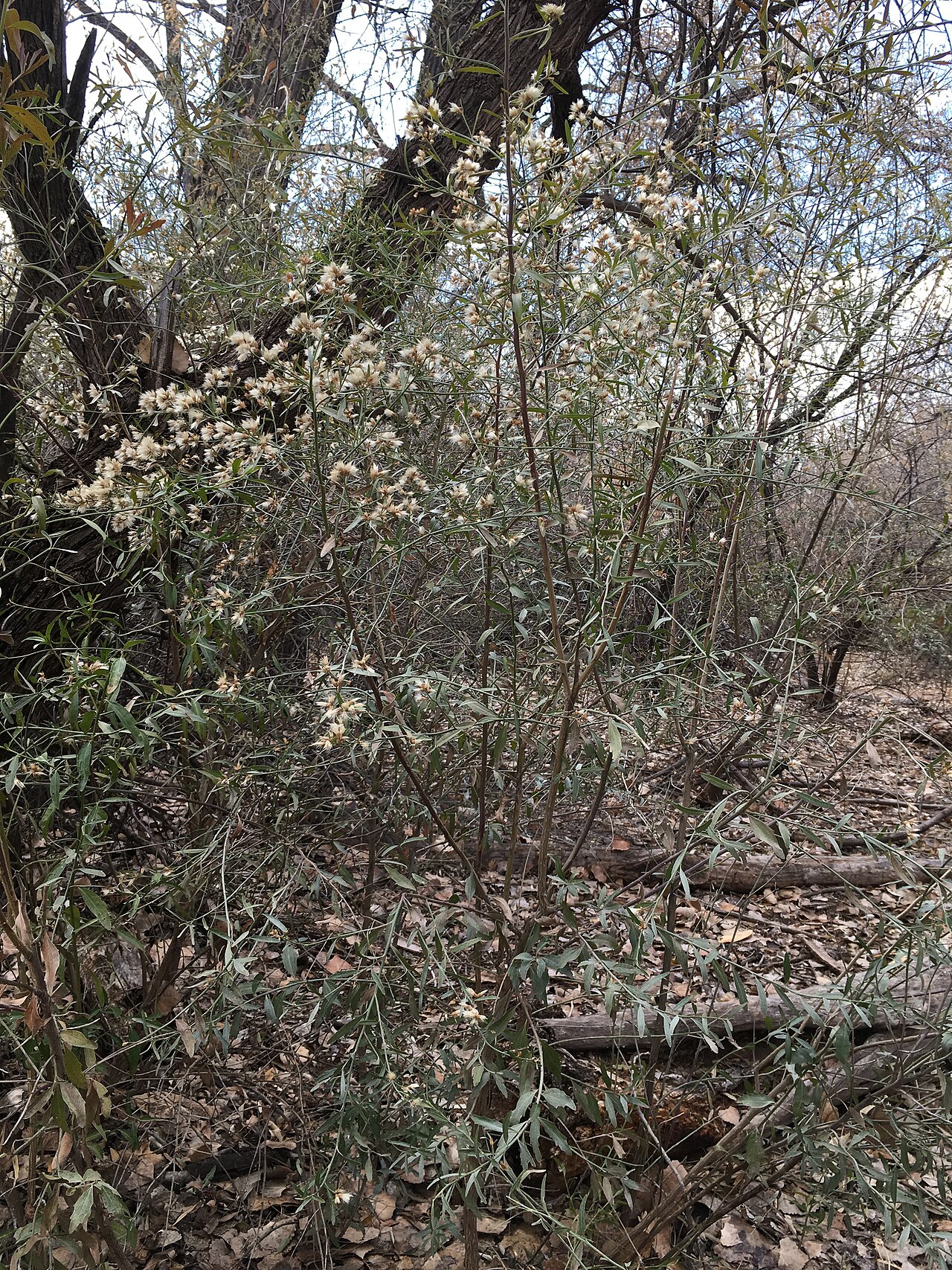
Baccharis salicifolia, commonly called Seepwillow, Mule-Fat, or Water-Wally, is a fast-growing, evergreen-to-semi-evergreen shrub in the Asteraceae (aster/sunflower family) native to the deserts and riparian corridors of the southwestern United States. Despite the common names referencing willows, it is not a true willow (genus Salix) at all — the resemblance is only in its narrow, lance-shaped leaves, a case of unrelated plants converging on a similar look for a similar habitat.
Seepwillow typically grows 6 to 15 feet tall, sometimes taller, forming an upright, multi-stemmed shrub or small tree with sticky, resinous, narrow leaves and frequent, fluffy clusters of cream to pale pink flower heads. It is one of the most important pioneer shrubs of desert washes, arroyos, and streambanks across the Southwest — often the first woody plant to establish on freshly scoured gravel bars after a flood, where its rapid growth and dense root system help stabilize banks that would otherwise continue eroding.
Though it thrives with its roots near water, established Seepwillow is surprisingly drought-tolerant and undemanding once established, making it a practical, low-maintenance choice for riparian restoration, erosion control, and wildlife gardens throughout its native range in the Southwest.
Identification
Seepwillow is a dense, upright, woody shrub with a somewhat willow-like silhouette, especially when not in flower.
Stems
Stems are slender, reddish-brown to gray-brown, and numerous, arising from the base to form a dense, rounded-to-upright shrub. New growth is sticky with resin, a trait shared across much of the Baccharis genus.
Leaves
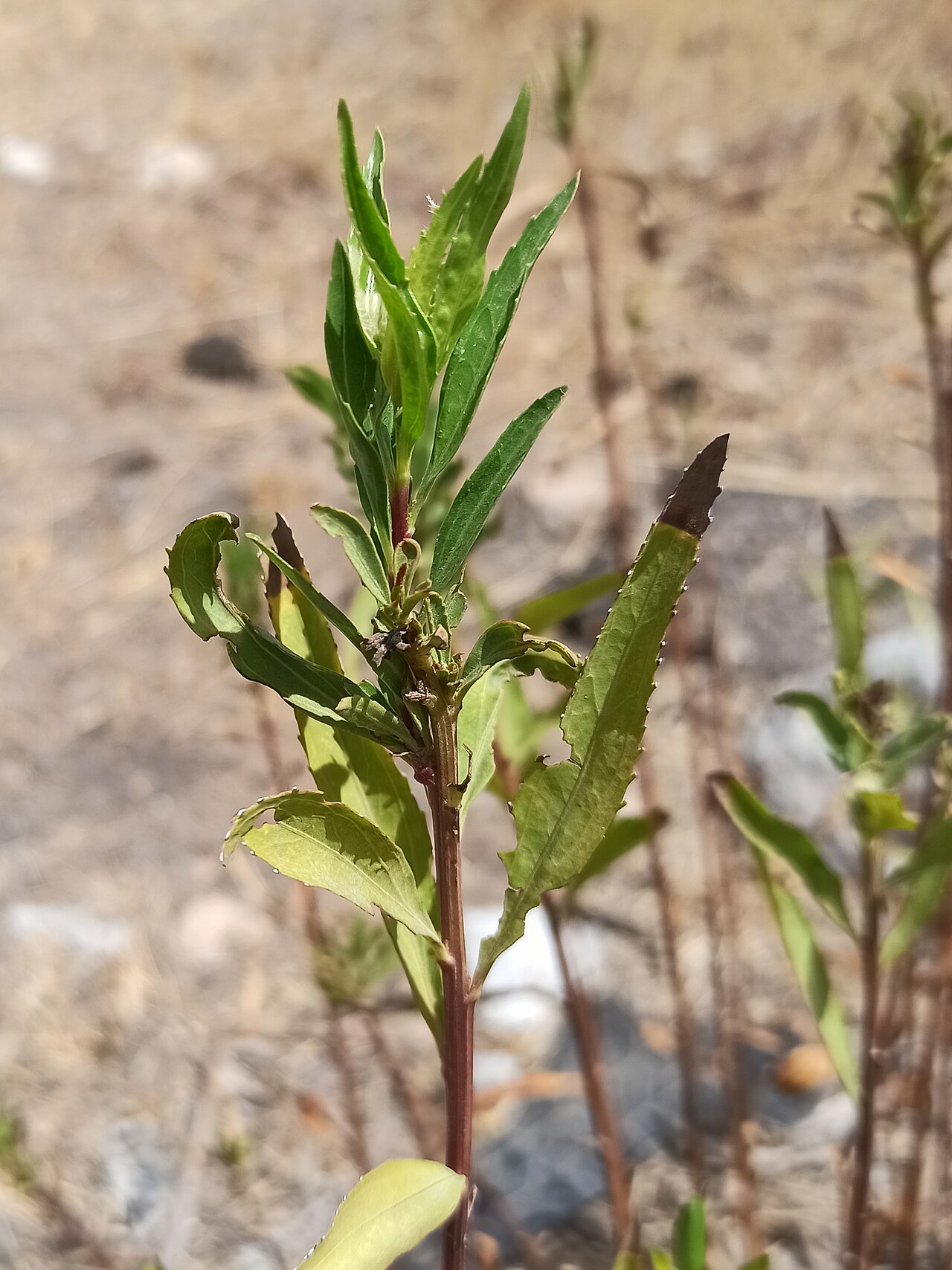
Leaves are narrow, lance-shaped (willow-like), 2 to 6 inches long, with three prominent parallel veins and finely toothed margins. They are a bright, somewhat glossy green and sticky-resinous to the touch, evergreen in mild climates but may drop in colder or drier conditions.
Flowers
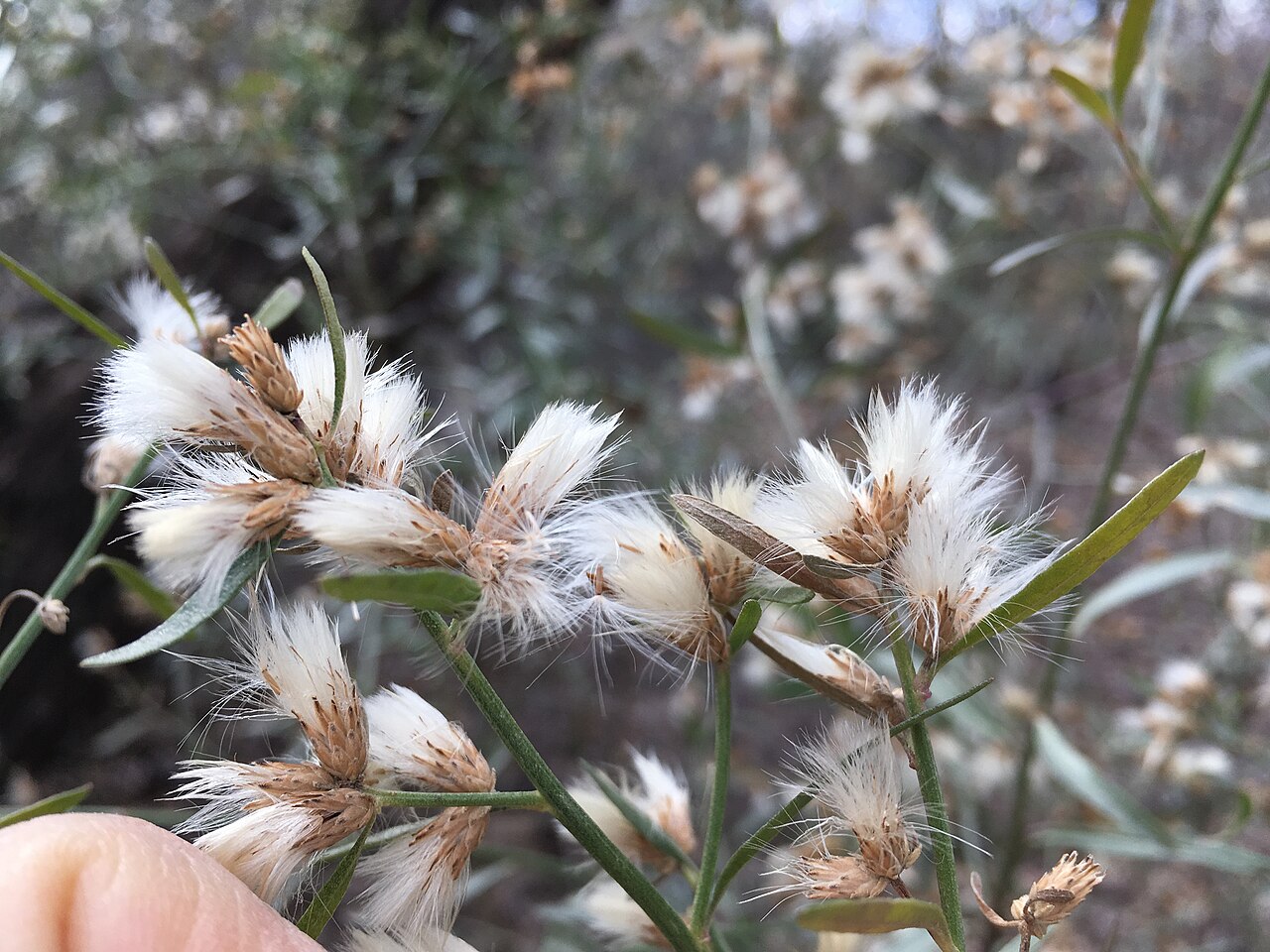
As with other Baccharis species, Seepwillow is dioecious, with separate male and female plants. Flower heads are small but produced in abundant branched clusters at the stem tips; male heads are cream to pale yellow, while female heads mature into fluffy white to pinkish puffs of silky pappus. Bloom can occur nearly year-round in mild coastal and low-desert climates, with the heaviest flush typically from late winter through fall.
Fruit & Seeds
The fruit is a tiny achene tipped with silky white bristles, wind-dispersed much like a dandelion seed. A single shrub can produce seed prolifically, which is part of why Seepwillow spreads and establishes so readily on bare, disturbed streambank soil.
Quick Facts
| Scientific Name | Baccharis salicifolia |
| Family | Asteraceae (Aster/Sunflower) |
| Plant Type | Evergreen to Semi-Evergreen Shrub |
| Mature Height | 6–15 ft |
| Mature Spread | 6–10 ft |
| Growth Rate | Fast |
| Sun Exposure | Full Sun to Part Shade |
| Water Needs | Moderate to High; drought-tolerant once established |
| Soil Type | Adaptable; thrives in sandy or gravelly wash soils |
| Soil pH | 6.5–8.0 (neutral to alkaline) |
| Bloom Time | Nearly year-round in mild climates; peak late winter–fall |
| Flower Color | Cream to pale yellow (male) / white-pink tufted (female) |
| Fall Color | Evergreen to semi-evergreen; no notable fall color |
| Fruit | Tiny achenes with silky white-pink pappus |
| Deer Resistant | Mostly (resinous foliage is rarely browsed) |
| USDA Hardiness Zones | 8–11 |
Native Range
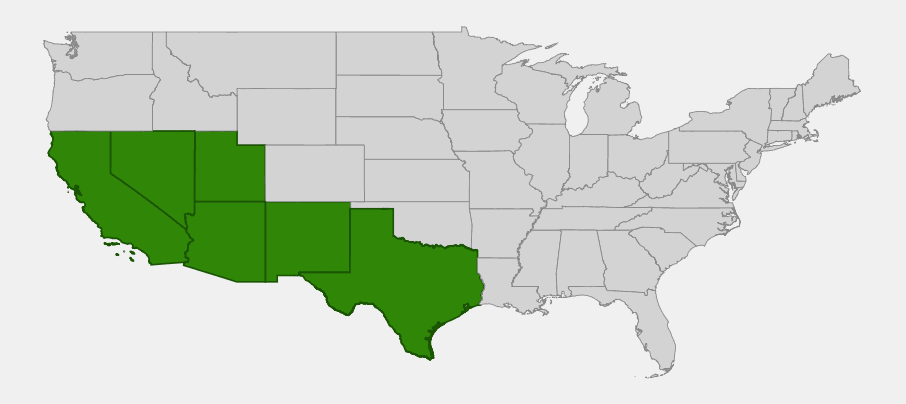
Seepwillow is native to the desert Southwest, found across California, Nevada, Utah, Arizona, New Mexico, and central and western Texas, extending south into northern Mexico and, as a related complex of forms, much further into Central and South America. It is absent as a native plant from the eastern two-thirds of Texas and from the rest of the country outside this southwestern range.
Within this range, Seepwillow is tightly associated with water, even in the driest landscapes: it grows along perennial and intermittent streambanks, in desert washes and arroyos, around springs and seeps, and on the margins of irrigation ditches and agricultural drains. It is especially characteristic as a pioneer species on fresh gravel and sand bars left behind after flash floods, where it often establishes faster than any other native woody plant.
Seepwillow tolerates a wide elevation range, from low desert washes near sea level up into pinyon-juniper and chaparral foothill drainages at several thousand feet, as long as some seasonal water reaches its roots.
📋 Regional plant lists featuring Seepwillow: Arizona & New Mexico · Utah & Western Colorado (native to Utah; not native in western Colorado)
Growing & Care Guide
Seepwillow is an easy, fast-growing native shrub for Southwest gardens, especially useful anywhere soil stays damp at least part of the year — around downspouts, low spots, pond and stream margins, or seasonally wet drainage swales.
Light
Full sun produces the densest growth and heaviest flowering, matching its typical open, sunny wash habitat. It tolerates part shade, particularly when grown with other riparian trees and shrubs, but becomes looser and more open as shade increases.
Soil & Water
Seepwillow adapts to sandy, gravelly, or loamy soils and tolerates both periodic flooding and extended dry spells, a combination typical of desert wash species. In the garden, it performs best with regular to generous water, especially during establishment, but can be weaned to infrequent deep watering once its root system is developed. It is a good choice for the damper parts of a xeriscape — rain garden basins, bioswales, or the downhill edge of a graywater system — rather than the driest zones.
Planting Tips
Set out container plants in fall or early spring. Space plants 6 to 8 feet apart for a naturalistic streamside thicket, or farther apart for individual accent specimens. Because it establishes and grows quickly from both containers and cuttings, Seepwillow is a practical, economical choice for large-scale riparian restoration plantings as well as home gardens.
Pruning & Maintenance
Seepwillow grows quickly and can become leggy or overgrown without occasional attention. Cut it back hard — by a third to a half — in late winter to encourage dense, compact new growth and abundant flowering; it responds vigorously to this kind of renewal pruning. Removing spent, woody stems every few years keeps plantings looking fresh rather than straggly.
Landscape Uses
Seepwillow is especially valuable in these settings:
- Riparian restoration along streambanks, washes, and arroyos
- Erosion control on fresh-cut banks and disturbed drainage channels
- Rain gardens and bioswales that see intermittent flooding
- Wildlife and pollinator gardens, especially in desert and low-water landscapes
- Informal screening or windbreaks in fast-growing naturalistic plantings
Wildlife & Ecological Value
As one of the most common woody pioneers along Southwest waterways, Seepwillow punches well above its weight ecologically, especially in arid landscapes where riparian vegetation of any kind is scarce and heavily used by wildlife.
For Pollinators
The abundant small flower heads, produced over a long bloom season, draw a wide range of native bees, butterflies, and other pollinating insects, offering a reliable nectar source through much of the year in a region where flowering natives can be seasonally scarce.
For Birds
Dense Seepwillow thickets provide crucial nesting and cover habitat for riparian bird species, including some of conservation concern that depend on structurally diverse streamside scrub. The insects the plant attracts and hosts are an important food source for insectivorous birds, and the dense branching offers protective cover along otherwise open desert waterways.
For Other Wildlife
Seepwillow serves as a larval host plant for several butterfly and moth species, and its root system plays an outsized role in stabilizing stream banks and wash edges, reducing erosion and helping maintain the physical structure of desert riparian corridors that many other species depend on.
Ecosystem Role
As a fast-establishing pioneer on bare, flood-scoured ground, Seepwillow is often the first woody plant to recolonize after high water events, stabilizing sediment and creating the shaded, structurally complex conditions that allow willows, cottonwoods, and other longer-lived riparian species to establish in its wake. In many Southwest drainages, it functions as an essential early-succession species underpinning the recovery of the whole riparian plant community after disturbance.
Cultural & Historical Uses
Indigenous peoples of the Southwest, including groups throughout the Sonoran and Mojave desert regions, made practical use of Seepwillow’s abundant, straight, lightweight stems. The slender poles were woven or lashed together for construction purposes, including lattice work, fencing, and the framework of shade structures (ramadas), taking advantage of a plant that grew reliably and in quantity along nearly every wash and streambank.
The dried stems were also valued for fire-starting, since Seepwillow’s wood has an unusually low ignition temperature compared to many other dryland shrubs, making it useful for hand-drill and spindle fire-making techniques recorded among desert peoples.
Seepwillow has no significant history of food or medicinal use, and this guide does not suggest any — its value, historically and today, lies in its structural usefulness and in the outsized ecological role it plays in stabilizing and sheltering desert waterways.
Frequently Asked Questions
Is Seepwillow a real willow?
No. Despite the common name and willow-like narrow leaves, Seepwillow is a member of the aster family (Asteraceae), unrelated to true willows in the genus Salix. The resemblance comes from both plants adapting to similar streamside habitats.
What is the difference between Seepwillow and Mule-Fat?
None — these are simply different common names for the same species, Baccharis salicifolia. “Mule-Fat” is more common in California and the Southwest generally, while “Seepwillow” is used more widely across its range.
Does Seepwillow need to grow right next to water?
It is most common along streambanks and washes in the wild and performs best with regular moisture, but established plants tolerate real drought and can be grown successfully in a typical garden setting with occasional deep watering rather than constant wet soil.
How fast does Seepwillow grow?
Very fast — it is one of the quickest-establishing native shrubs in the Southwest, often reaching several feet in its first year or two with adequate water, which is part of why it is so effective for erosion control on freshly disturbed banks.
Is Seepwillow native to eastern Texas?
No. Its native range in Texas is limited to the western and central parts of the state; it is not considered native in eastern Texas or the rest of the southeastern United States.

Looking for a nursery that carries Seepwillow?
Browse our native plant nursery directory: California · Arizona · Nevada & New Mexico · Texas & Utah