
California Brickellbush (Brickellia californica)
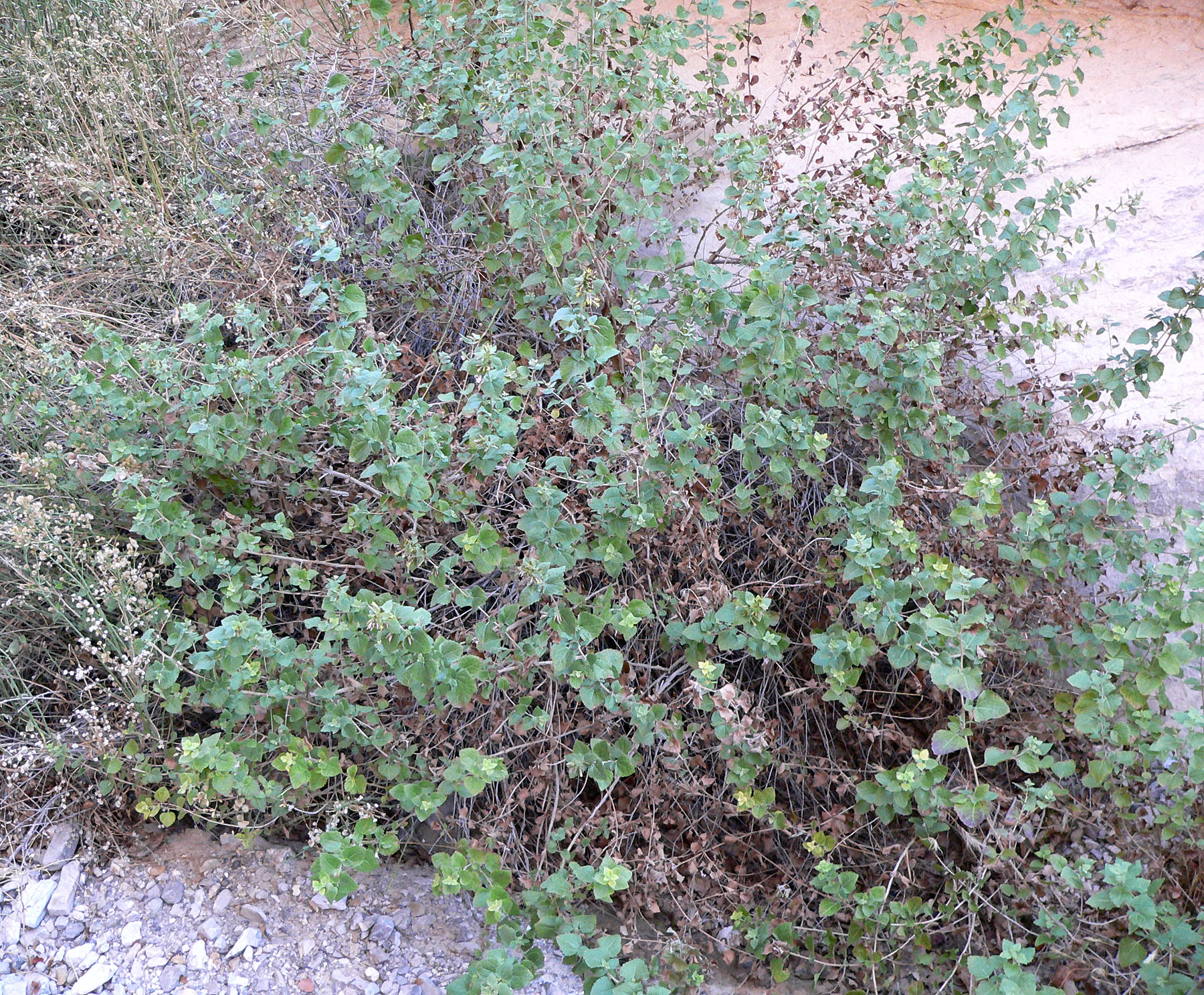
Brickellia californica, commonly known as California Brickellbush, is a modest but tough little shrub that most hikers in the Southwest have brushed past without a second glance. It belongs to the Asteraceae (sunflower) family, though you’d never guess it from the flowers — rather than showy rays, it produces small, tubular, cream-to-greenish disc florets tucked into narrow, drooping heads. What it lacks in flashy blooms it makes up for in persistence: this shrub colonizes dry, rocky slopes, canyon walls, and disturbed ground across much of the Interior West, often where little else will take hold.
Growing as a rounded, many-branched shrub from one to several feet tall, California brickellbush is instantly recognizable once you know its triangular, toothed, sage-green leaves and the faint minty-resinous smell they release when crushed. It flowers late in the season, from late summer into fall, when most of the surrounding desert and chaparral vegetation has already gone dormant — making it a valuable late-season nectar source for a range of pollinators at a time when options are scarce.
This species is sometimes confused with bursage (Ambrosia species) in casual references because both are gray-green, aromatic shrubs of arid Western landscapes, but they are unrelated genera with very different flowers and growth habits — bursage produces small wind-pollinated flower heads with no petals at all, while brickellbush’s nodding, cylindrical heads are insect-pollinated. For rock gardens, slope stabilization, and low-water native plantings from the Mojave to the Rockies, California brickellbush is an underused but dependable choice.
Identification
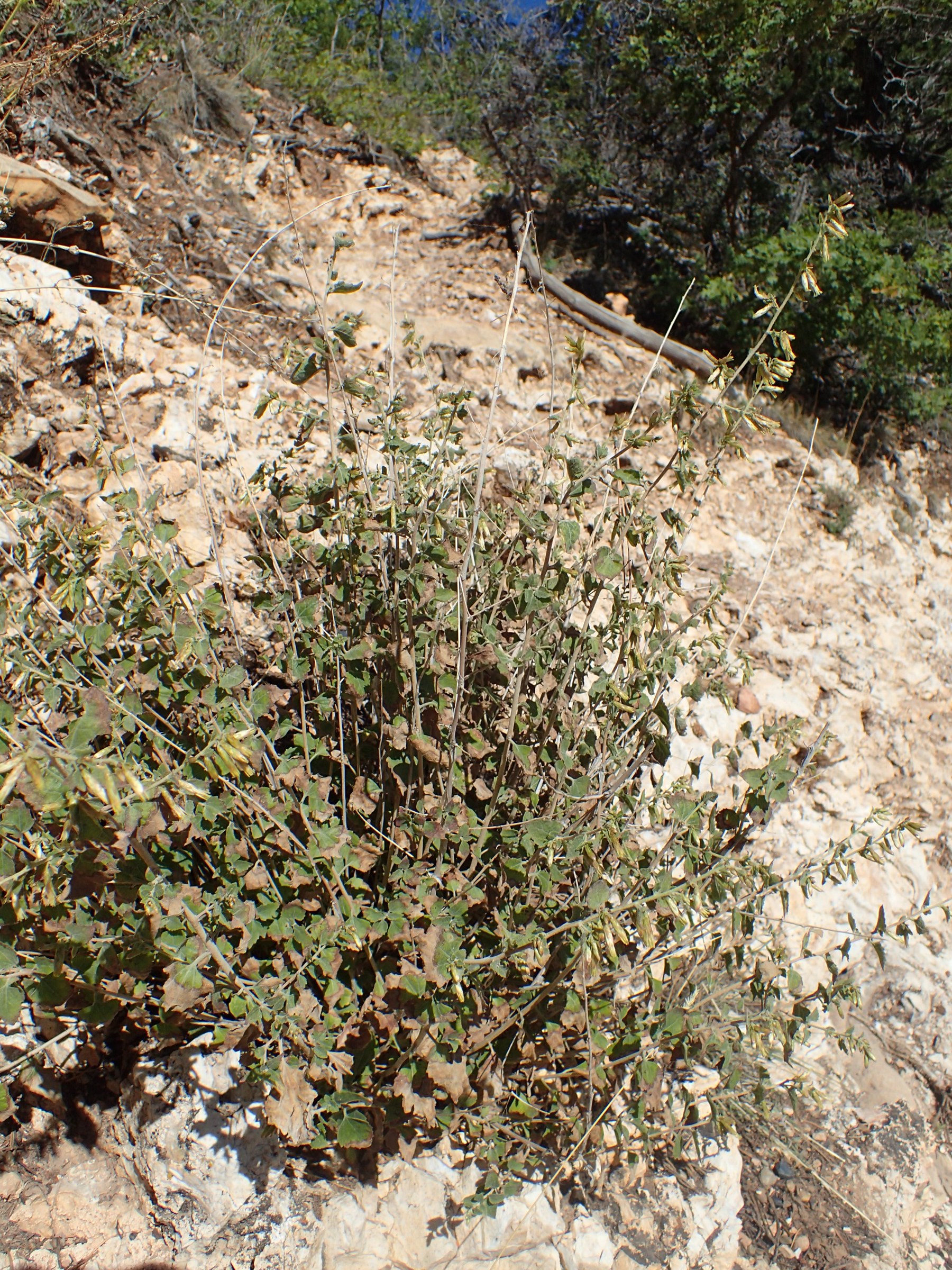
California brickellbush is a many-stemmed, rounded to sprawling shrub or subshrub typically reaching 1.5 to 5 feet tall, sometimes taller in favorable canyon-bottom sites. The young stems are slender, reddish-brown, and finely hairy, becoming woody and gray with age. The overall silhouette is loose and airy rather than dense, with branches arching outward from a woody base.
Leaves
Leaves are alternate, broadly triangular to heart-shaped (deltoid), 1 to 2.5 inches long, with coarsely toothed margins and a somewhat rough, glandular, grayish-green surface. They are borne on short petioles and release a resinous, faintly minty odor when crushed — a reliable field character for separating this species from true bursage, whose foliage is more finely dissected and smells quite different.
Flowers
Flower heads are narrow and cylindrical, about ½ inch long, wrapped in overlapping purplish-green bracts (phyllaries) and packed with 15 to 45 small, tubular, whitish to pale greenish-yellow disc florets — there are no ray florets or showy petals. The heads nod or droop in loose, branched clusters at the stem tips. Bloom time runs from August into November, later than most of its neighbors, which makes the plant a magnet for late-flying bees, flies, and butterflies.
Fruit & Seeds
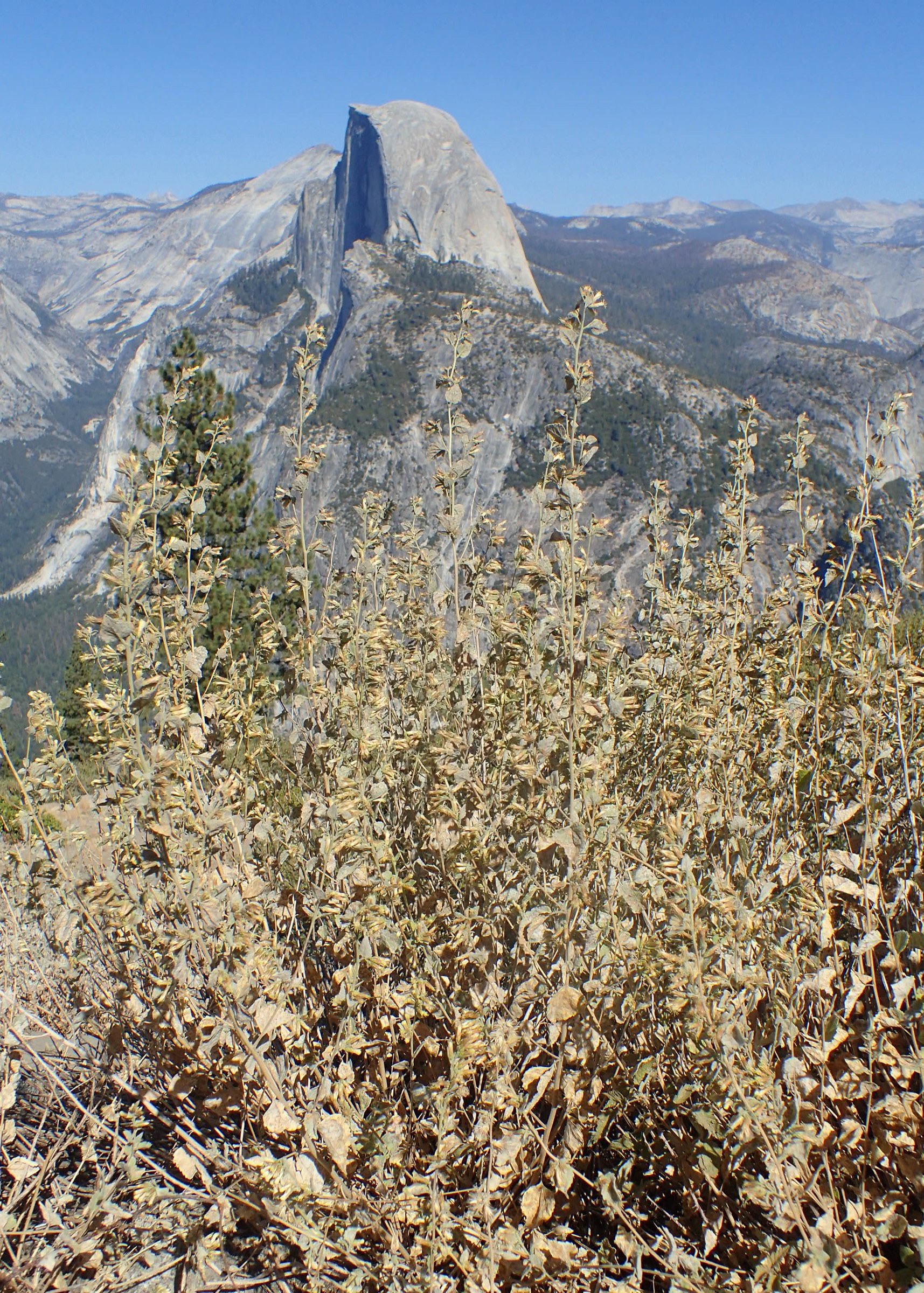
The fruit is a small, ribbed, hairy achene about ⅛ inch long, tipped with a tuft of bristly pappus that aids wind dispersal, typical of the sunflower family. Seed set is heavy in good years, and the dry seed heads often persist on the plant into winter.
Quick Facts
| Scientific Name | Brickellia californica |
| Family | Asteraceae (Sunflower) |
| Plant Type | Deciduous Shrub / Subshrub |
| Mature Height | 2–5 ft |
| Mature Spread | 2–4 ft |
| Growth Rate | Moderate |
| Sun Exposure | Full Sun to Part Shade |
| Water Needs | Low |
| Soil Type | Rocky, gravelly or sandy; well-drained |
| Soil pH | 6.5–8.0 (neutral to alkaline) |
| Bloom Time | August – November |
| Flower Color | Whitish to pale greenish-yellow |
| Fall Color | Foliage dries tan-gray, not showy |
| Fruit | Small hairy achenes with bristly pappus |
| Deer Resistant | Yes (aromatic, resinous foliage) |
| USDA Hardiness Zones | 6–9 |
Native Range
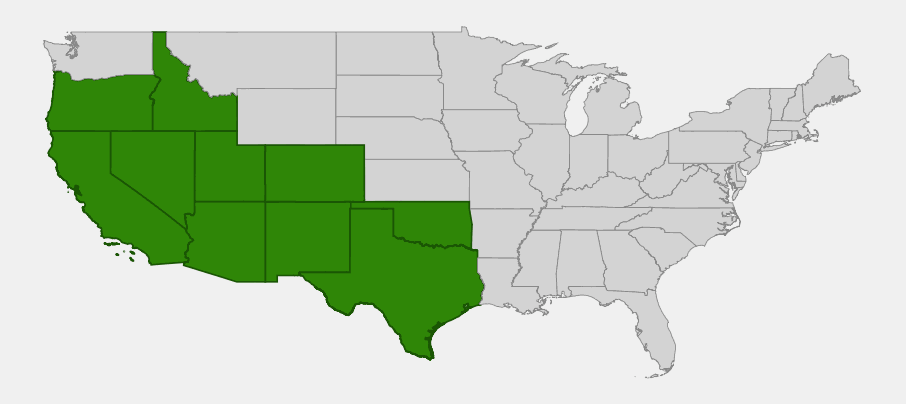
California brickellbush is widespread across the dry mountains and canyons of the Interior West, from the Sierra Nevada and Coast Ranges of California north into Oregon (it is not native to Washington), east across the Great Basin through Nevada, Idaho, and Utah, and south through Arizona and New Mexico into west Texas and the Oklahoma Panhandle. Its range continues south into northern Mexico, including Baja California, Sonora, Chihuahua, and Coahuila.
It typically grows on dry, rocky slopes, canyon walls, and outcrops below about 8,900 feet elevation, in a wide range of plant communities — chaparral, coastal sage scrub, oak and pinyon-juniper woodland, desert grassland, and the edges of yellow pine forest. It is especially common on limestone and other calcareous substrates, where its deep roots can exploit crevices that hold little soil.
Despite the broad range, California brickellbush is not aggressive or weedy; it tends to persist as scattered individuals or small colonies rather than forming dense stands, and it is not listed as invasive anywhere in its native range.
📋 Regional plant lists featuring California Brickellbush: Arizona & New Mexico · Utah & Western Colorado · Idaho, Eastern Oregon & Eastern Washington · Western Oregon & Western Washington
Growing & Care Guide
California brickellbush is an easygoing, low-water shrub once it’s established, well suited to rock gardens, slope plantings, and xeric native beds anywhere in its range.
Light
Plant in full sun to light part shade. In the hottest, lowest-elevation parts of its range, afternoon shade from a nearby tree or rock outcrop helps keep the foliage from scorching, but at higher elevations full sun produces the best flowering.
Soil & Water
This shrub wants sharp drainage above all else — rocky, gravelly, or sandy soils that mimic the canyon slopes and outcrops where it grows wild. It tolerates neutral to alkaline, calcareous soils well, including thin soils over limestone. Water deeply but infrequently during the first year to establish a deep root system; after that, it needs little to no supplemental irrigation except during extended drought.
Planting Tips
Set out container plants in fall or early spring so roots can establish before summer heat. Choose a site with good drainage — raised beds, slopes, or rocky berms work well — and avoid low spots where water collects. Space plants 3 to 4 feet apart to allow for their mature spread.
Pruning & Maintenance
Cut back by about a third in late winter or early spring to encourage denser, more compact growth and remove any dieback from the previous season. The plant resprouts readily from the base. Deadheading is not necessary, and the dry seed heads can be left through winter for visual interest and bird forage.
Landscape Uses
California brickellbush fits naturally into many dry-garden settings:
- Rock gardens and crevice plantings on slopes or berms
- Slope and erosion stabilization on dry, rocky hillsides
- Late-season pollinator gardens, filling the fall nectar gap
- Xeriscaping and low-water native plant beds
- Canyon or wash restoration plantings
- Background or filler shrub among cacti and succulents
Wildlife & Ecological Value
Though inconspicuous for most of the year, California brickellbush becomes an important late-season resource once it begins flowering in late summer.
For Pollinators
The small tubular flowers open at a time when few other desert and woodland plants are still blooming, drawing native bees, honeybees, wasps, flies, and late-season butterflies looking for nectar before cold weather sets in. The extended bloom window from August into November makes it a dependable nectar source for migrating and overwintering pollinators.
For Birds
Small songbirds forage through the dense branching for insects drawn to the flowers, and the bristly seed heads provide minor forage for seed-eating birds once the achenes mature in late fall.
For Mammals
The foliage’s resinous, aromatic quality makes it generally unpalatable to deer and other browsers, which helps the plant persist in areas with heavy grazing pressure — a trait that also makes it a reliably deer-resistant choice for home gardens.
Ecosystem Role
As a deep-rooted shrub of thin, rocky soils, California brickellbush helps stabilize slopes and canyon walls where erosion is a constant challenge. Its late bloom period fills an ecological gap in the pollinator calendar, and its persistence on disturbed or recently burned ground helps it serve as an early colonizer that stabilizes soil while longer-lived shrubs reestablish.
Cultural & Historical Uses
Several Indigenous peoples of the Southwest, including the Navajo and Kumeyaay, historically used California brickellbush as a medicinal plant. Accounts describe preparations of the leaves and stems used for fevers, coughs, and complaints related to pregnancy and childbirth. These uses are documented as historical ethnobotanical practice, not as guidance for modern self-treatment, and anyone interested in traditional plant medicine should consult qualified practitioners rather than experimenting on their own.
Beyond medicinal use, the plant held little commercial value and was never cultivated widely or harvested for trade, unlike some of its showier desert neighbors. Its modest, workmanlike character — persisting on bare rock where little else grows — made it more a part of the everyday landscape than a plant singled out for special use.
Today, California brickellbush is gaining some recognition among native-plant gardeners in the Southwest and Intermountain West for exactly the qualities that made it unremarkable in the past: toughness, low water needs, and reliable late-season bloom.
Frequently Asked Questions
Is California brickellbush the same plant as bursage?
No. They are unrelated genera that are sometimes confused because both are gray-green, aromatic shrubs of arid Western landscapes. Bursage (Ambrosia species) has finely dissected leaves and tiny wind-pollinated flowers with no petals, while California brickellbush (Brickellia californica) has broad, triangular, toothed leaves and small but insect-pollinated tubular flower heads.
When does California brickellbush bloom?
It flowers later than most of its neighbors, typically from August into November, which makes it an important nectar source for pollinators after most other desert and woodland plants have finished blooming for the year.
How much water does it need?
Very little once established. It is adapted to dry, rocky slopes and needs regular water only during its first year while the root system develops. After that, occasional deep watering during extended drought is usually enough.
Is California brickellbush deer resistant?
Generally yes. The aromatic, resinous foliage tends to discourage browsing by deer and other large herbivores, making it a reasonably reliable choice in areas with deer pressure, though no plant is completely deer-proof.
Can I grow California brickellbush outside of its native range?
It is best suited to gardens within or near its native range in the Interior West and Southwest, where soils, rainfall patterns, and winter chill match its needs. In much wetter or more humid climates, the sharp drainage it requires can be difficult to replicate, and it is not considered reliably hardy or well adapted outside Zones 6–9.

Looking for a nursery that carries California Brickellbush?
Browse our native plant nursery directory: Arizona · California · Colorado · Idaho · Nevada, New Mexico & Oklahoma · Oregon · Texas & Utah