
White Clintonia (Clintonia umbellulata)
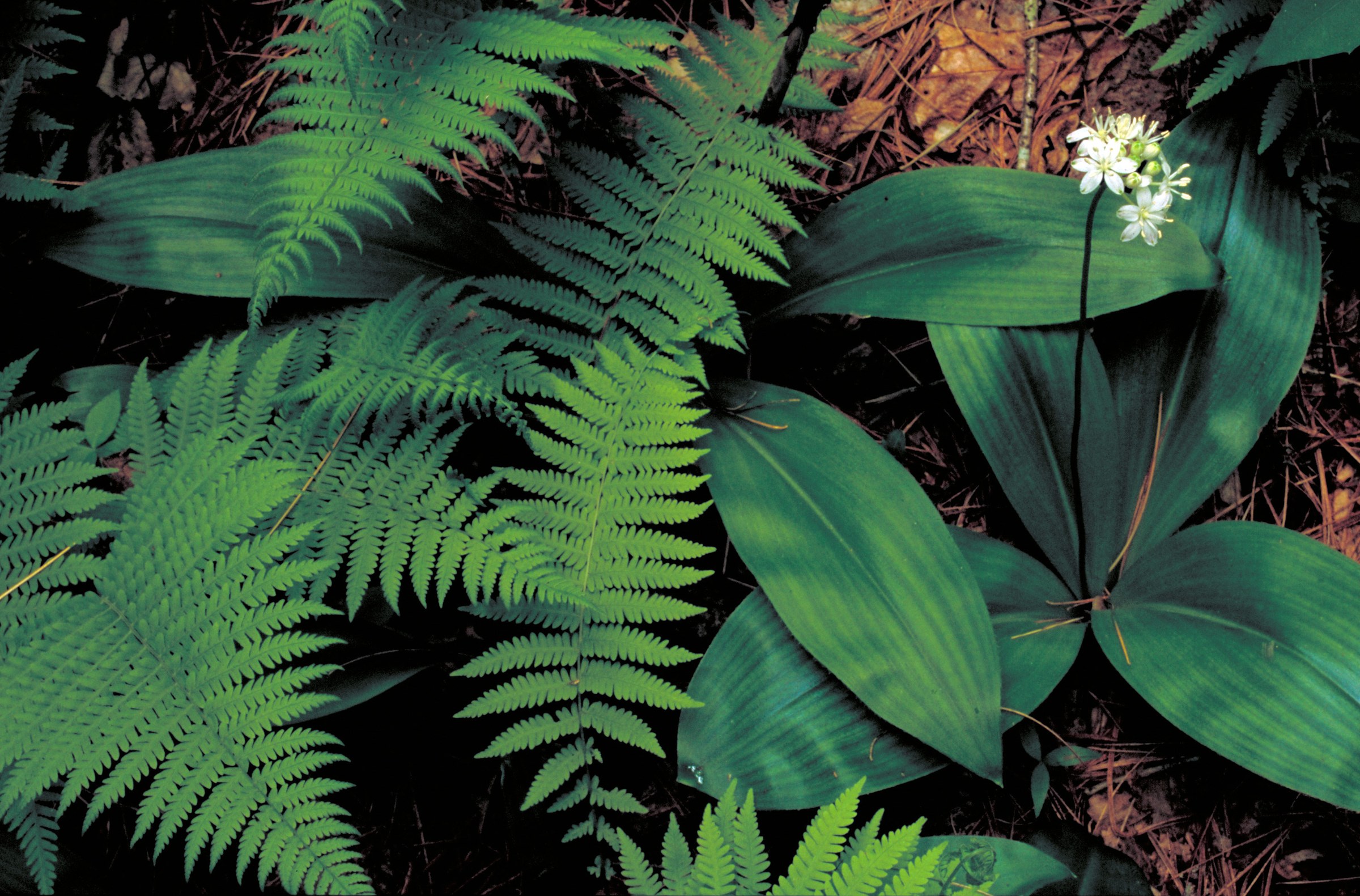
Clintonia umbellulata, commonly known as White Clintonia, Speckled Wood-lily, or White Bluebead Lily, is a low, shade-loving perennial wildflower of the Appalachian Mountains and the rich hardwood forests that flank them. It belongs to the lily family (Liliaceae) and is one of two Clintonia species native to the eastern United States, the other being the yellow-flowered Clintonia borealis, whose range lies mostly to the north and only lightly overlaps this species. White Clintonia is easy to tell apart from its northern cousin once you know the trick: it blooms in a tight, umbrella-like cluster of white flowers speckled with purple-green dots, rather than borealis’s loose cluster of nodding yellow bells.
In the wild, White Clintonia forms modest colonies in the deep shade of cove forests and rich, moist slopes, where its two to three broad, shiny basal leaves carpet the forest floor beneath taller wildflowers like trillium and mayapple. A single leafless flower stalk rises from the center of each rosette in late spring, topped by a loose umbel of small white, bell-shaped flowers. By late summer the flowers give way to a cluster of dark blue-black berries that persist into fall, feeding wildlife long after the blooms have faded.
For gardeners building a native shade or woodland garden in the southern and central Appalachians, White Clintonia is a quietly rewarding groundcover. It spreads slowly by rhizome into tidy colonies, asks for almost nothing once established in the right soil, and adds textural interest through the growing season even when it isn’t in bloom. It is considered globally secure, though it has become uncommon and is tracked as rare in parts of its range, including New York and Ohio, so plant only nursery-propagated stock and never dig from the wild.
Identification
White Clintonia is a low perennial herb, typically 6 to 16 inches tall when in flower, spreading by creeping underground rhizomes to form loose colonies over time. Each plant produces just two or occasionally three leaves directly from the base, with no leaves on the flowering stalk itself — a helpful identification feature that separates Clintonia from many other forest wildflowers.
Leaves
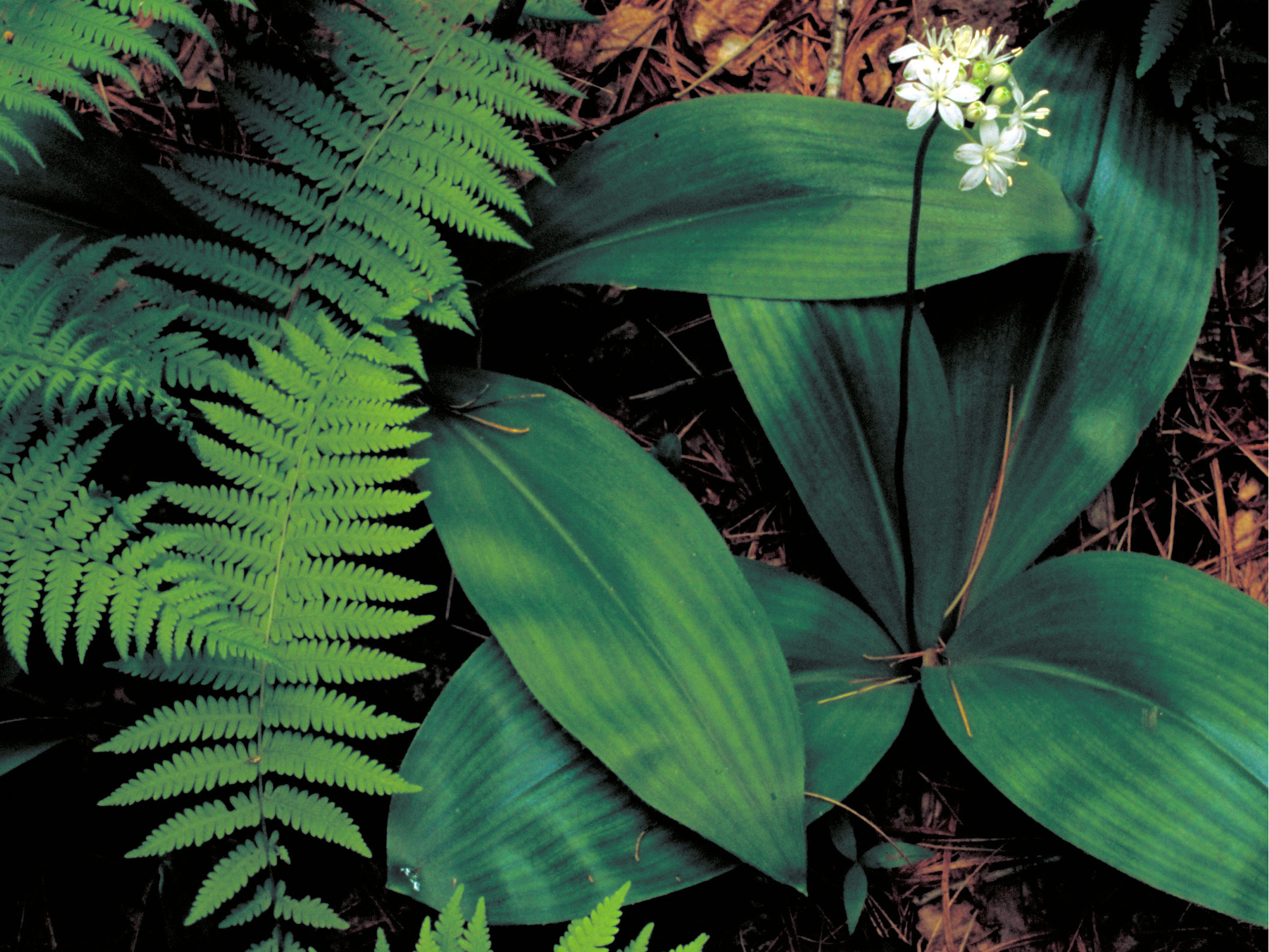
The basal leaves are broadly elliptic to oblong, 4 to 10 inches long and 1.5 to 4 inches wide, tapering to a short stalk at the base. They are glossy, deep green, and smooth-edged, with parallel veins running the length of the blade — a monocot trait shared with lilies and their relatives. The leaf margins are often lined with fine hairs (cilia), visible up close or by running a finger along the edge. The leaves persist through the growing season and give the plant a lush, almost tropical look on the forest floor.
Flowers
In May and June, a single hairy, leafless stalk rises from the center of the leaf rosette, topped by an umbel (umbrella-shaped cluster) of 3 to 10 small flowers. Each flower has six white tepals, usually marked with fine purple-green speckles near the base, giving rise to the common name “Speckled Wood-lily.” The flowers nod slightly and have a delicate, understated beauty that rewards a closer look rather than a showy garden display from a distance.
Fruit & Seeds
By late July through September, the flowers develop into a cluster of round, dark blue-black berries about ⅜ inch across, held on the same stalk above the leaves. The berries are eye-catching against the green foliage and are an important late-summer food source for birds and small mammals — the berries are not a food source for people; like many members of the lily family, they are not considered edible and should be left for wildlife.
Quick Facts
| Scientific Name | Clintonia umbellulata |
| Family | Liliaceae (Lily) |
| Plant Type | Herbaceous Perennial Wildflower |
| Mature Height | 6–16 in |
| Mature Spread | 8–12 in per rosette; spreads slowly by rhizome |
| Growth Rate | Slow |
| Sun Exposure | Part Shade to Full Shade |
| Water Needs | Moderate to High |
| Soil Type | Moist, humus-rich, well-drained loam |
| Soil pH | 5.0–6.5 (acidic) |
| Bloom Time | May – June |
| Flower Color | White with purple-green speckles |
| Fall Color | Foliage remains green, declines with frost |
| Fruit | Dark blue-black berries, not edible for people |
| Deer Resistant | No (foliage is browsed where deer pressure is high) |
| USDA Hardiness Zones | 4–7 |
Native Range
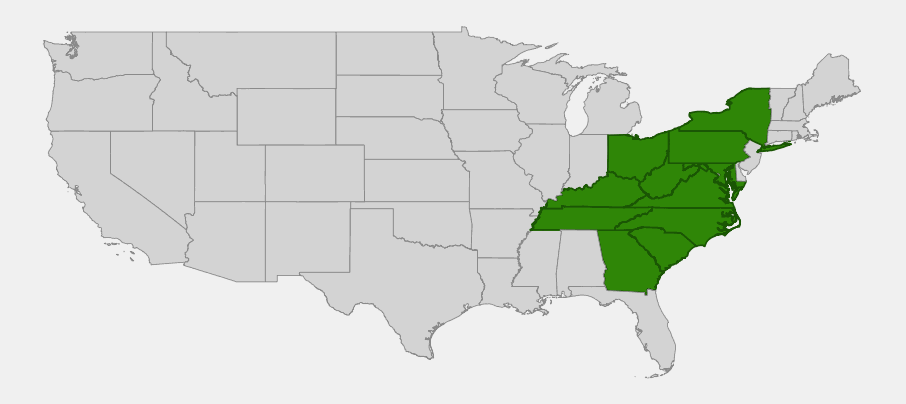
White Clintonia is native to the Appalachian Mountains and adjacent hardwood forests of the eastern United States, from southern New York and Pennsylvania south through the mountains of Ohio, Maryland, West Virginia, Virginia, Kentucky, Tennessee, North Carolina, South Carolina, and into northern Georgia. It is essentially a mountain and upland species, rarely found far from the Appalachian chain or the Piedmont forests immediately below it.
Across this range it grows in rich, moist deciduous and mixed forests, especially on shaded slopes, coves, and ravine bottoms with deep, humus-rich soil. It is a frequent associate of other spring wildflowers in cove hardwood forests, often found alongside trilliums, foamflower, and mayapple beneath a canopy of sugar maple, yellow buckeye, and American beech. The species is listed as globally secure, but it is considered rare and tracked by natural heritage programs in New York and endangered in Ohio, where it sits at the edge of its range — a reminder that even a widespread species can be locally vulnerable.
White Clintonia does not naturally occur in the Deep South, the Midwest outside the Appalachian foothills, or anywhere west of the mountains; gardeners outside its native hardwood forest range should treat it as a regional specialty rather than a universal shade groundcover.
📋 Regional plant lists featuring White Clintonia: Maryland, Virginia & West Virginia · Kentucky & Tennessee · North Carolina & South Carolina · New York, Pennsylvania & Northern New Jersey · Georgia, Alabama & Mississippi · Ohio & Indiana
Growing & Care Guide
White Clintonia is not a plant for a sunny border — it is a true woodland specialist that rewards gardeners who can offer it the cool, shaded, humus-rich conditions of its native cove forests. Given the right spot, it needs almost no maintenance and slowly fills in as an attractive, long-lived groundcover.
Light
Plant White Clintonia in part to full shade, ideally beneath a deciduous canopy that offers dappled light in spring before the trees leaf out and deeper shade through summer. Too much direct sun scorches the broad leaves and dries the soil faster than the plant can tolerate. A north-facing slope or the shaded side of a building can work well outside a true forest setting.
Soil & Water
This species needs consistently moist, humus-rich, acidic soil that mimics the leaf-litter-covered floor of a mature hardwood forest. Good drainage matters — White Clintonia does not tolerate standing water or heavy clay, but it also will not thrive in soil that dries out between rains. Working leaf mold or compost into the planting area before setting out plants goes a long way toward recreating its preferred conditions, and a yearly top-dressing of leaf litter helps maintain both moisture and soil acidity.
Planting Tips
Set out nursery-propagated plants in spring or fall, spacing them 10 to 12 inches apart if establishing a colony; they will fill in slowly over several years as the rhizomes spread. Never collect this species from the wild — populations are already uncommon in parts of its range, and wild-dug plants rarely transplant well. Mulch newly planted specimens with shredded leaves to retain moisture and suppress competing weeds while the colony establishes.
Pruning & Maintenance
White Clintonia needs essentially no pruning. Leave the spent flower stalks in place through summer so the berries can mature and feed wildlife, then simply allow the foliage to die back naturally with the first hard frosts. Avoid disturbing the shallow rhizomes when working nearby, and keep the area free of heavy foot traffic, which can compact the soil and damage the roots.
Landscape Uses
White Clintonia fits naturally into several shaded garden settings:
- Woodland gardens paired with trillium, foamflower, and other spring ephemerals
- Shaded groundcover beneath mature deciduous trees
- Native plant restorations in Appalachian hardwood forest settings
- Rock garden shade pockets with consistent moisture
- Naturalized slopes and ravine edges where erosion control and shade coincide
Wildlife & Ecological Value
Though modest in stature, White Clintonia contributes to the layered diversity of the Appalachian forest floor and supports a quiet but real web of wildlife interactions through its growing season.
For Pollinators
The speckled white flowers attract small native bees and flies in late spring, offering nectar at a time when the forest canopy is just beginning to close and herbaceous bloom is still relatively limited.
For Birds
Ground-foraging songbirds take advantage of the dark berries in late summer and early fall, and the dense basal foliage offers cover for small birds and other ground-dwelling wildlife moving through the forest understory.
Ecosystem Role
As a long-lived perennial of mature, undisturbed forest, White Clintonia is considered something of an indicator species — its presence often signals a forest that has not been heavily logged or disturbed in recent decades. Its leaf litter and root mass contribute to the structure of the forest floor, and its persistence over many years, slowly expanding by rhizome, makes it part of the stable herbaceous layer that supports the broader cove-forest ecosystem.
Cultural & Historical Uses
White Clintonia has no significant documented history of use by Indigenous peoples or early settlers as a food or medicinal plant, unlike many showier Appalachian wildflowers. Its modest size and the inedibility of its berries likely kept it out of both the kitchen and the medicine cabinet throughout the region’s history.
The genus Clintonia itself was named in the 19th century in honor of DeWitt Clinton, the New York politician and naturalist who served as governor of New York and was an early advocate for scientific exploration of the state’s flora. The specific epithet umbellulata refers to the small, umbrella-like cluster (umbel) in which the flowers are arranged — a useful descriptive clue for identifying the plant even without seeing it in bloom.
Today, White Clintonia’s chief value is horticultural and ecological rather than historical: it is prized by native plant gardeners for its quiet beauty and its role as an indicator of healthy, undisturbed forest, and botanists and hikers in the Appalachians still look for its glossy leaves and speckled flowers each spring as a marker of rich, high-quality woodland habitat.
Frequently Asked Questions
Can I eat White Clintonia berries?
No. The dark blue-black berries are not a food source for people and should not be eaten. Like many members of the lily family, they are left for birds and other wildlife, which do consume them as part of their late-summer diet.
How is White Clintonia different from Clintonia borealis?
White Clintonia has white, purple-speckled flowers in a tight umbel and blue-black berries, while Clintonia borealis (Bluebead Lily) has yellow, bell-shaped flowers in a looser cluster and blue berries. Their ranges overlap only slightly, with White Clintonia generally found further south and at somewhat lower elevations.
Will White Clintonia grow outside the Appalachians?
It can be grown outside its native range if given cool, consistently moist, acidic, humus-rich soil in deep shade, but it performs best and spreads most reliably within or near its native mountain forest range. Gardeners in hot, humid lowland climates or alkaline-soil regions will likely struggle to keep it happy long-term.
Is White Clintonia endangered?
The species as a whole is considered globally secure, but it is uncommon and tracked by state natural heritage programs in parts of its range, including New York, and is listed as endangered in Ohio. Always buy nursery-propagated plants rather than wild-collected stock.
How long does it take White Clintonia to form a colony?
It is a slow spreader. A single planted rosette may take several years to produce new shoots via its creeping rhizome, so patience is key — established colonies in undisturbed forest can be many decades old.

Looking for a nursery that carries White Clintonia?
Browse our native plant nursery directory: Georgia · Kentucky & Maryland · New York, North Carolina & Ohio · Pennsylvania, South Carolina, Tennessee & Virginia · West Virginia