Whorled Tickseed (Coreopsis major)
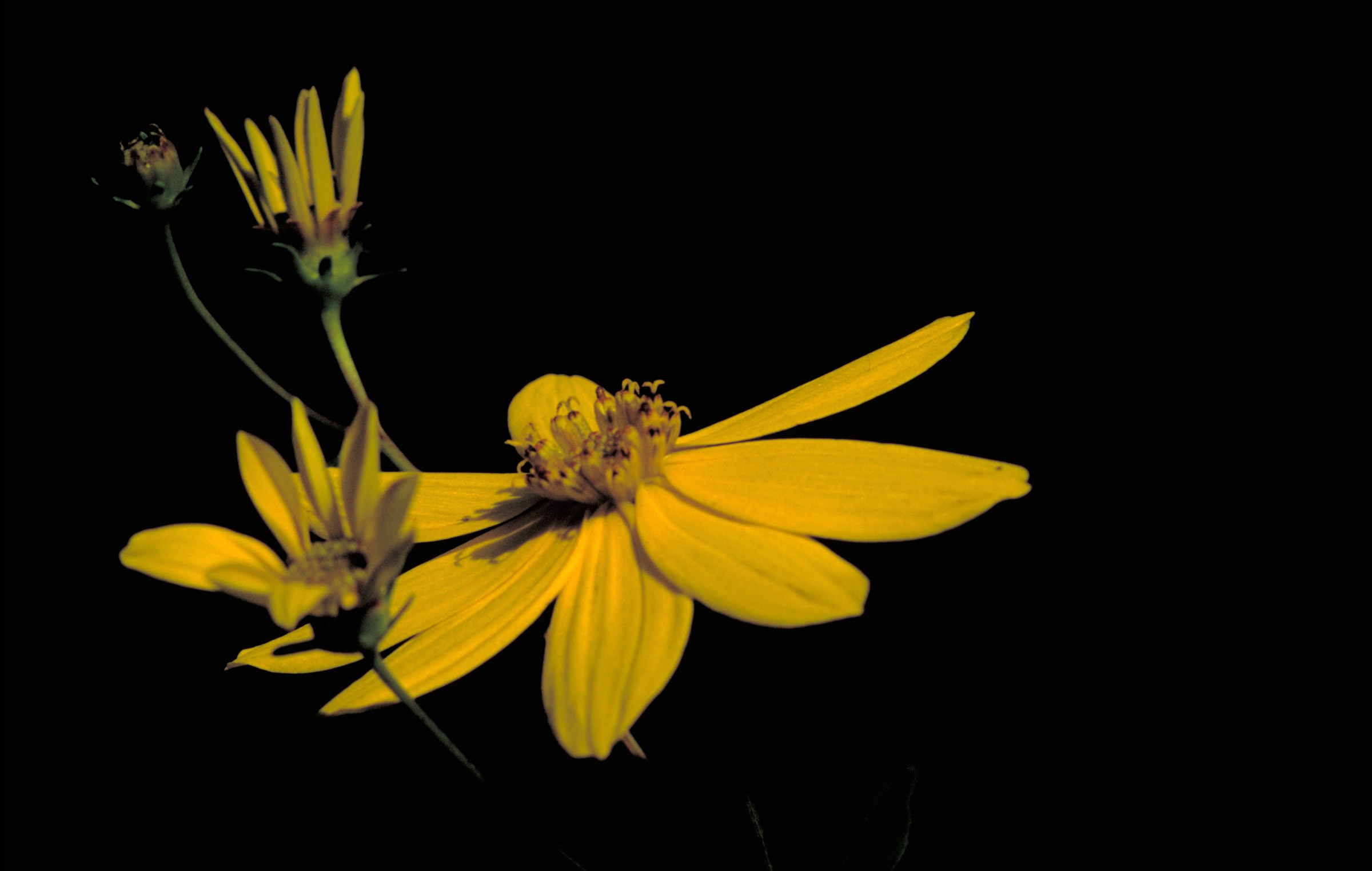
Coreopsis major, commonly called Whorled Tickseed or Greater Tickseed, is a sun-loving perennial wildflower of open woodlands and rocky slopes across the southeastern United States. A member of the aster family (Asteraceae), it is easy to pick out among the many native Coreopsis species by its distinctive leaf arrangement: each leaf is divided into three narrow lance-shaped segments, and pairs of these leaves are set so close together around the stem that they appear to form a whorl of six — the feature that gives the plant both its common name and much of its garden appeal.
In the wild, Whorled Tickseed grows as an upright clump 2 to 4 feet tall, topped from early to midsummer with cheerful bright yellow, daisy-like flowers held well above the foliage on slender branching stems. It favors dry to average soils and full sun to light shade, often turning up along woodland edges, open pine-oak uplands, rocky slopes, and roadside banks throughout its range. Unlike some of its shorter, mat-forming Coreopsis relatives, Whorled Tickseed has a more upright, airy habit that works well mixed into a sunny native border rather than as a groundcover.
For gardeners in the southeastern states, Whorled Tickseed is a reliable, low-maintenance choice that delivers a long season of cheerful yellow bloom while asking for very little in return — it thrives in poor, well-drained soil, shrugs off summer heat and drought once established, and draws a steady stream of pollinators through the growing season.
Identification
Whorled Tickseed is an upright, clump-forming herbaceous perennial, typically 2 to 4 feet tall and 1 to 2 feet wide, with multiple branching stems rising from a central crown. Its overall look is airy and open rather than dense, with flowers carried well clear of the foliage on thin, wiry stalks.
Leaves
The leaves are the single best identification feature of this species. Each leaf is opposite and deeply divided into three narrow, lance-shaped segments (technically ternately divided), and because the leaf pairs are so closely spaced along the stem, two opposite leaves appear to form a whorl of six slender blades radiating around the stalk — hence “Whorled Tickseed.” Upper leaves near the flower clusters are smaller and sometimes undivided. The foliage is medium green, thin-textured, and largely free of pest problems.
Flowers
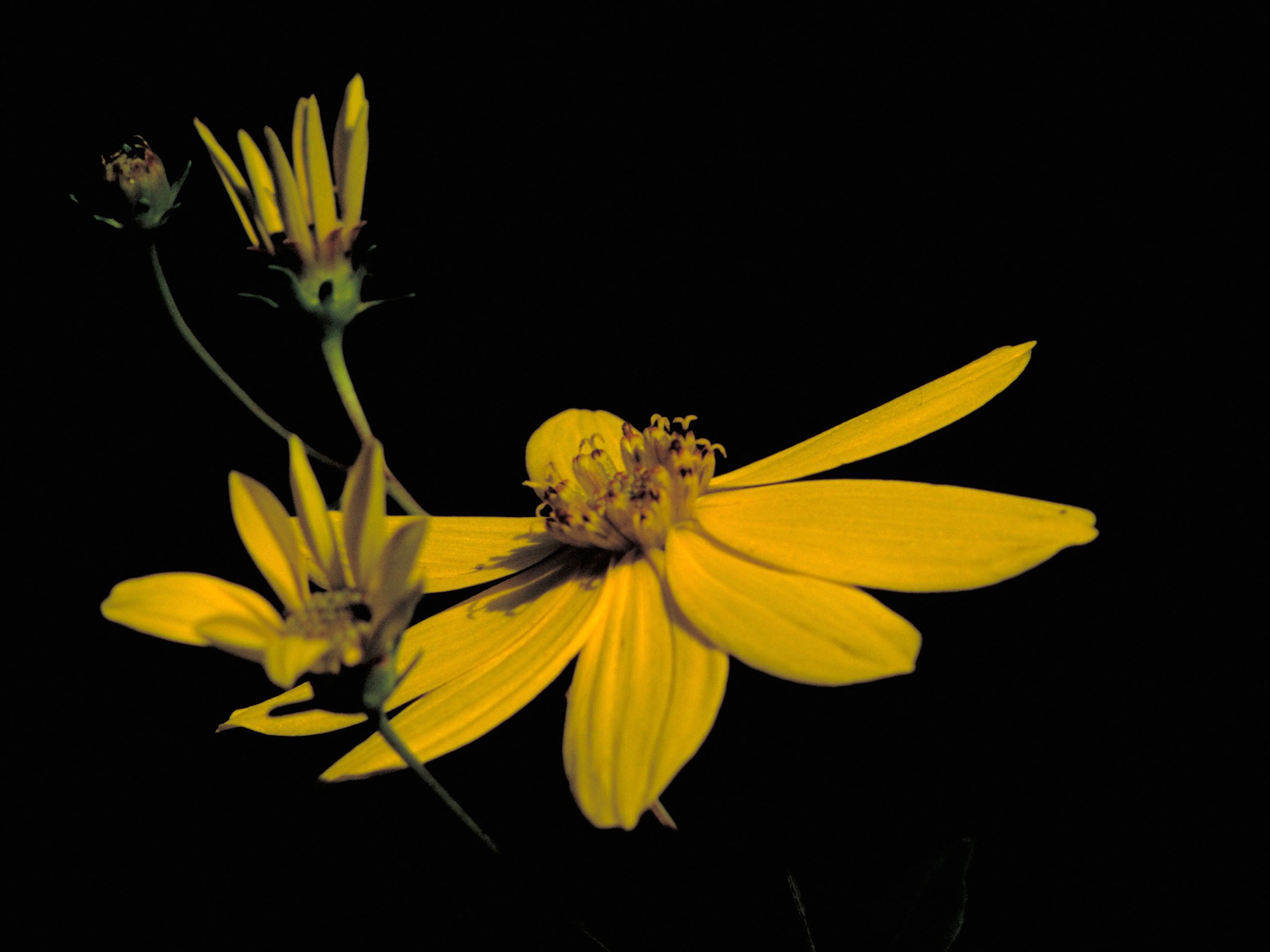
From roughly June through August, the plant produces numerous daisy-like flower heads, 1.5 to 2 inches across, with 8 bright yellow ray petals (often slightly notched at the tip) surrounding a center disk that starts yellow-green and darkens with maturity. The flowers are held singly or in loose, branching clusters well above the foliage, giving the whole plant a light, dancing quality in a breeze. Established clumps can produce an impressive, long-lasting floral display when massed.
Fruit & Seeds
After flowering, each head develops into a cluster of small, dark, flattened achenes (the typical Coreopsis “tickseed,” which gives the whole genus its common name) that ripen in late summer and persist into fall if left unmowed. Birds, particularly goldfinches, readily feed on the ripening seed heads.
Quick Facts
| Scientific Name | Coreopsis major |
| Family | Asteraceae (Aster / Sunflower) |
| Plant Type | Herbaceous Perennial Wildflower |
| Mature Height | 2–4 ft |
| Mature Spread | 1–2 ft |
| Growth Rate | Moderate |
| Sun Exposure | Full Sun to Part Shade |
| Water Needs | Low to Moderate |
| Soil Type | Dry to average, well-drained; sandy, rocky, or loamy |
| Soil pH | 5.5–7.0 (slightly acidic to neutral) |
| Bloom Time | June – August |
| Flower Color | Bright yellow |
| Fall Color | Foliage fades tan-brown after frost |
| Fruit | Small dark achenes (“tickseed”) |
| Deer Resistant | Yes, generally avoided |
| USDA Hardiness Zones | 5–9 |
Native Range
Whorled Tickseed is native to the southeastern United States, with a range centered on the Gulf Coastal Plain and southern Appalachian foothills. It occurs from Louisiana east through Mississippi, Alabama, and Georgia, north through the Carolinas, Tennessee, Kentucky, and Virginia, and into the Ohio Valley as far as Ohio and Indiana, plus Maryland, Pennsylvania, and West Virginia at the northern edge of its range. It does not naturally occur in New England, the upper Midwest, or west of the Mississippi River drainage, so gardeners in those regions should treat it as a regional native rather than assume it is appropriate everywhere.
Across this range, Whorled Tickseed is typically found in dry to mesic open woodlands, along woodland margins, on rocky or sandy slopes, and in other sunny to lightly shaded sites with well-drained soil. It is a characteristic plant of open pine-oak uplands and similar dry forest communities throughout the Southeast, where it benefits from periodic natural disturbance such as fire that keeps the canopy open enough for sun-loving wildflowers to persist.
Because it tolerates a wide range of soils and light conditions within this broad native footprint, Whorled Tickseed has become a popular choice in native plant gardens well beyond its immediate wild populations — but always within its native southeastern and lower Midwest range, not as a universal substitute for regionally appropriate Coreopsis species elsewhere in the country.
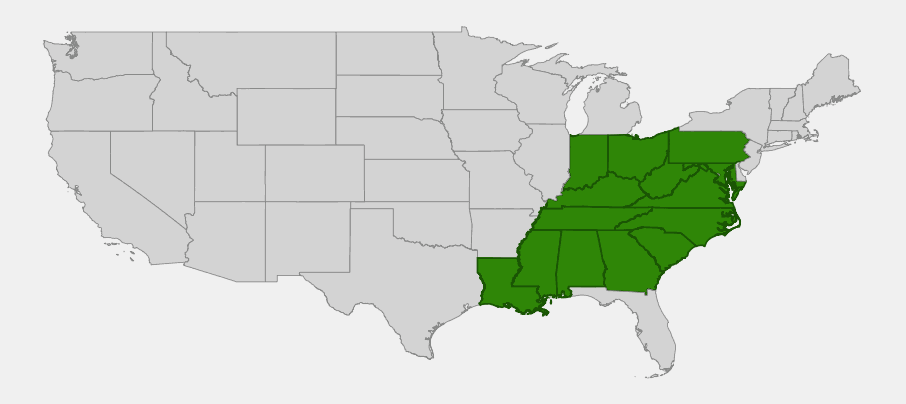
📋 Regional plant lists featuring Whorled Tickseed: Georgia, Alabama & Mississippi · Arkansas, Louisiana, Eastern Oklahoma & Eastern Texas · Ohio & Indiana · Kentucky & Tennessee · Maryland, Virginia & West Virginia · North Carolina & South Carolina · New York, Pennsylvania & Northern New Jersey
Growing & Care Guide
Whorled Tickseed is an easygoing, drought-tolerant perennial that rewards minimal care with months of cheerful yellow bloom. It is an excellent choice for gardeners who want reliable color from a native plant without fussing over soil amendments or regular watering.
Light
Plant Whorled Tickseed in full sun for the best, most floriferous display; it also tolerates light or part shade, especially in the hotter parts of its range, though bloom will be somewhat reduced and stems may lean toward the light. A minimum of four to six hours of direct sun keeps plants compact and floriferous.
Soil & Water
This species prefers dry to average, well-drained soil and actually performs better in lean, sandy, or rocky soil than in rich, heavily amended garden beds, where it can become floppy and short-lived. Once established, it is quite drought-tolerant and needs supplemental water only during extended dry spells. Avoid heavy, poorly drained clay or consistently wet sites, which can lead to crown rot.
Planting Tips
Set out plants in spring or fall, spacing them 12 to 18 inches apart to allow for their mature clump size and good air circulation. Whorled Tickseed is easy to start from seed sown directly in fall or after a period of cold stratification, and self-sows modestly in favorable sites without becoming aggressive. It establishes quickly and typically blooms in its first or second year.
Pruning & Maintenance
Deadheading spent flowers encourages additional bloom and keeps plants tidy, though leaving some seed heads in place through fall provides food for goldfinches and other seed-eating birds. Cut plants back in late winter before new growth emerges. Established clumps can be divided every three to four years in early spring to maintain vigor and to share with other gardeners.
Landscape Uses
Whorled Tickseed’s airy habit and long bloom season suit many sunny garden settings:
- Native plant and pollinator gardens for season-long yellow color
- Dry, rocky slopes where few other perennials thrive
- Meadow and prairie-style plantings mixed with grasses and other wildflowers
- Cut flower gardens, since the long stems hold up well in arrangements
- Roadside and erosion-control plantings on well-drained banks
Wildlife & Ecological Value
Whorled Tickseed’s long bloom period and abundant flowers make it a dependable resource for pollinators and seed-eating birds throughout the growing season and into fall.
For Pollinators
The bright yellow flowers attract a wide range of native bees, honeybees, and butterflies throughout the summer bloom period, serving as a reliable nectar and pollen source during the hottest, driest part of the growing season when some other flowers are less productive.
For Birds
American Goldfinches and other seed-eating songbirds are drawn to the ripening achenes in late summer and fall, often working over seed heads left standing through the cooler months rather than deadheaded immediately.
Ecosystem Role
As a component of open pine-oak woodland and dry upland plant communities, Whorled Tickseed contributes to the herbaceous diversity that supports a wide range of insect life in fire-adapted southeastern ecosystems. Its drought tolerance and modest soil requirements also make it a useful species for stabilizing disturbed, sunny, well-drained sites without requiring intensive soil preparation.
Cultural & Historical Uses
Like many Coreopsis species, Whorled Tickseed does not have a widely documented history of medicinal or culinary use among Indigenous peoples of the Southeast, though various Coreopsis species in the region were historically used by some groups to produce dyes, with the flowers and other plant parts yielding shades of yellow, orange, or red depending on the mordant used.
The common name “tickseed,” shared across the genus, comes from the small, flattened achenes that resemble ticks in size and shape — a simple observational name rather than any reference to pest control or medicinal use. The species name major reflects its relatively large flowers and tall stature compared with some other southeastern Coreopsis species.
In more recent decades, Whorled Tickseed has become a staple of southeastern native plant horticulture, valued for its ease of cultivation, long bloom season, and value to pollinators — a modern horticultural role that has helped introduce many gardeners to native plant gardening through an easy, rewarding first success.
Frequently Asked Questions
How is Whorled Tickseed different from other Coreopsis species?
Its most distinctive feature is the leaf arrangement — pairs of deeply three-parted leaves set so close together that they appear to form a whorl of six slender segments around the stem, unlike the simple or less-divided leaves of many other native Coreopsis species.
Does Whorled Tickseed spread aggressively?
No. It forms a well-behaved clump and self-sows modestly in favorable conditions, but it is not considered weedy or aggressive and is easy to manage in a garden setting.
Can Whorled Tickseed tolerate drought?
Yes, once established it is quite drought-tolerant, reflecting its native habitat on dry, well-drained rocky and sandy slopes. Lean soil and infrequent watering actually produce sturdier, more floriferous plants than rich, consistently moist conditions.
Is Whorled Tickseed deer resistant?
Generally yes — deer tend to avoid it, likely due to its slightly bitter foliage, making it a reliable choice for gardens with deer pressure.
How long does Whorled Tickseed bloom?
It typically blooms from June through August, and deadheading spent flowers can extend the display further into late summer before the plant is allowed to set seed for the birds in fall.

Looking for a nursery that carries Whorled Tickseed?
Browse our native plant nursery directory: Alabama · Georgia · Indiana · Kentucky, Louisiana, Maryland & Mississippi · North Carolina & Ohio · Pennsylvania, South Carolina, Tennessee & Virginia · West Virginia