
Buffalo Gourd (Cucurbita foetidissima)
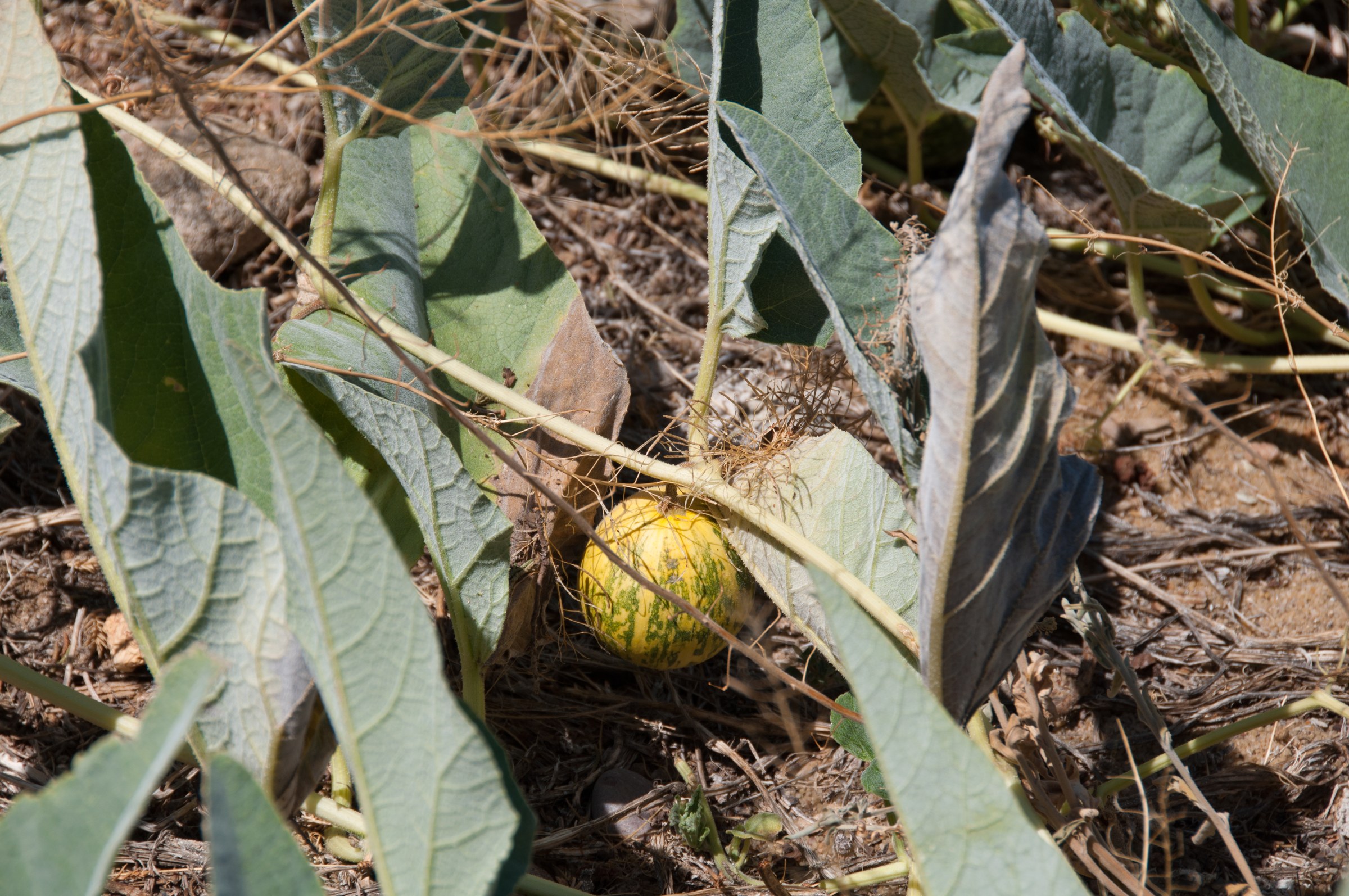
Cucurbita foetidissima, best known as Buffalo Gourd and also called Missouri gourd, coyote gourd, or calabazilla, is a sprawling perennial vine native to the dry plains and deserts of the central and southwestern United States. It is one of the toughest members of the squash family, surviving brutal heat and drought by dying back to a massive underground taproot every winter and resprouting vigorously each spring. The species name foetidissima is Latin for “most foul-smelling,” a nod to the strong, unpleasant odor released when the foliage is bruised or crushed.
Buffalo gourd grows as a trailing, non-climbing vine, its coarse, triangular to heart-shaped leaves and stout, prickly stems spreading 10 to 20 feet or more across open ground from a single crown. Bright yellow, trumpet-shaped flowers open in the morning along the vine through summer, followed by smooth, round, striped gourds about the size of a baseball that mature from green to yellow and finally dry to a hard, tan rind. The massive, carbohydrate-storing taproot — sometimes exceeding 50 pounds on an older plant — is what allows this vine to survive year after year in places where most plants cannot.
For gardeners in the hot, dry Southwest and southern Plains, buffalo gourd is a striking choice for stabilizing bare, eroding ground or covering a sunny slope where little else will grow without irrigation, and it is a magnet for specialist squash bees. It is not a plant for small, tidy beds: once established, its taproot makes it extremely difficult to remove, and the trailing vines can cover a large area in a single season.
Identification
Buffalo gourd is unmistakable where it occurs: a sprawling, non-climbing vine with large, rough, gray-green leaves, small yellow squash-type flowers, and smooth, round, striped fruits.
Stems & Taproot
Stems are coarse, angled, and covered in short, stiff, somewhat prickly hairs. They trail along the ground rather than climbing, radiating outward from a central crown and often extending 10 to 20 feet in a single growing season. Beneath the crown lies a massive, fleshy taproot that can weigh tens of pounds on a mature plant; this root stores the carbohydrates and water reserves that let the vine die back each winter and regrow from the same root year after year, sometimes for a decade or more.
Leaves
The leaves are large, 8 to 10 inches long and nearly as wide, triangular to heart-shaped, with a grayish, felted or sandpapery texture from dense short hairs on both surfaces. They are borne on long petioles alternately along the trailing stems and, when crushed, release the strong, disagreeable odor that gives the species its Latin name.
Flowers & Fruit
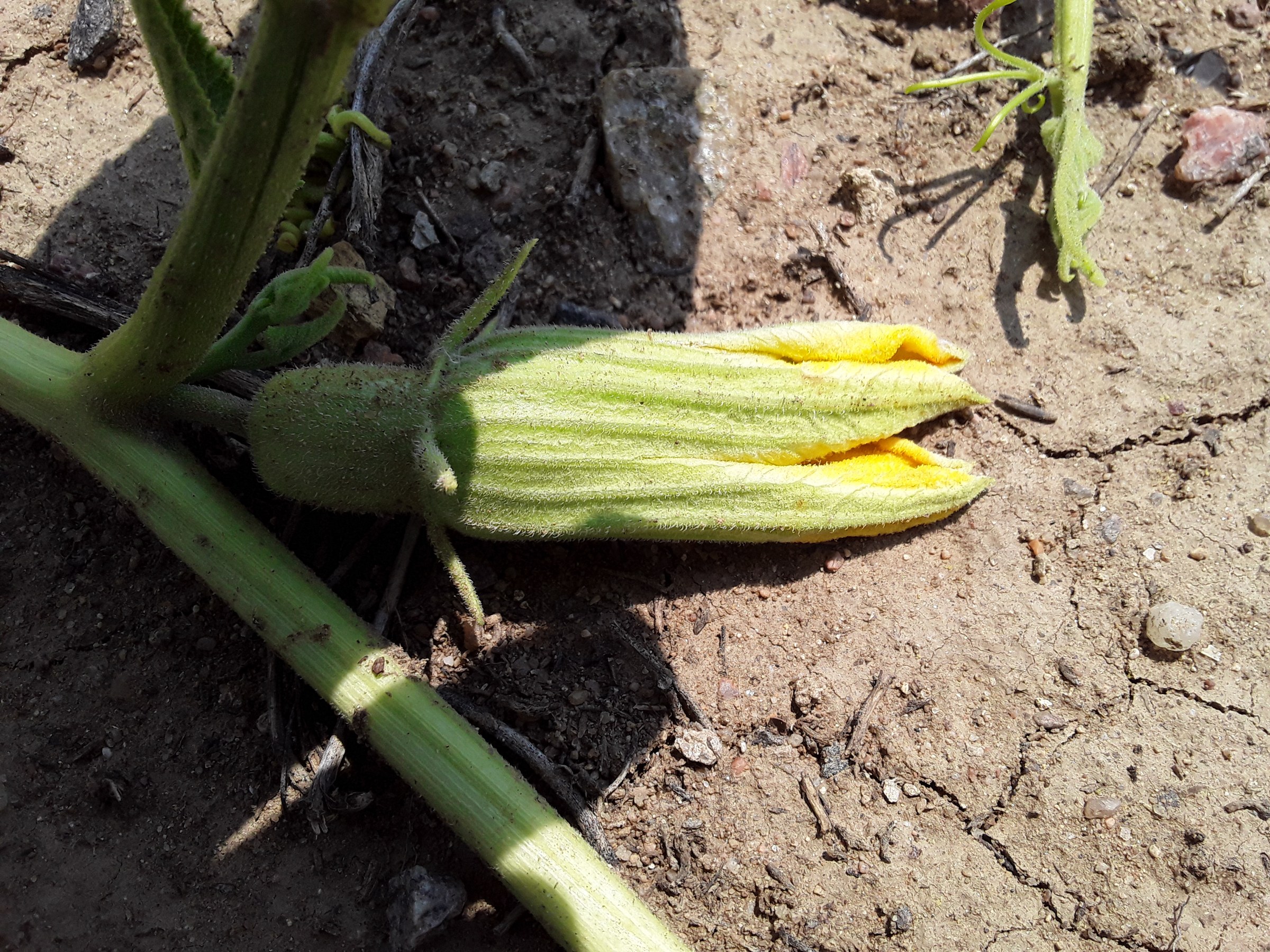
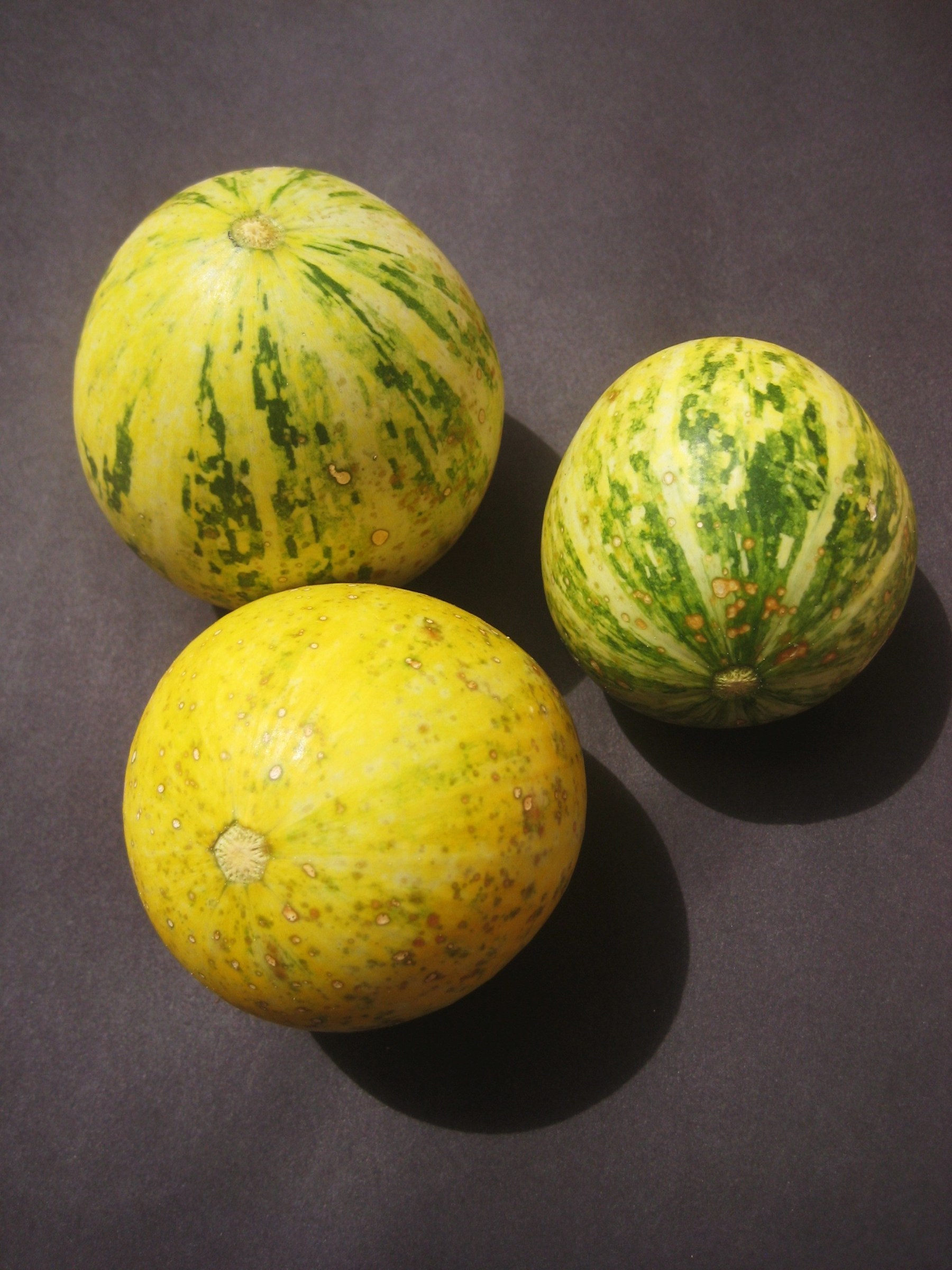
Flowers are solitary, bright yellow to orange-yellow, funnel-shaped, and up to 4 inches long, opening in early morning and closing by midday. Like other squashes, buffalo gourd produces separate male and female flowers on the same plant, with female flowers recognizable by the small swollen ovary at the base. The fruit is a smooth, nearly round gourd, roughly 3 to 4 inches across, striped green and cream when young and ripening to solid yellow before drying to a hard, tan, woody shell that persists on the ground long after the vine has died back. Each gourd holds 200 to 300 flattened, white to tan seeds.
Quick Facts
| Scientific Name | Cucurbita foetidissima |
| Family | Cucurbitaceae (Gourd/Cucumber) |
| Plant Type | Perennial trailing vine (herbaceous, from a woody taproot) |
| Mature Height | 6–12 in (trails along the ground) |
| Mature Spread | 10–20 ft or more per vine |
| Growth Rate | Fast once established |
| Sun Exposure | Full sun |
| Water Needs | Low; highly drought tolerant once established |
| Soil Type | Sandy to rocky loam, well-drained; tolerates poor soil |
| Soil pH | Neutral to alkaline |
| Bloom Time | June – September |
| Flower Color | Bright yellow to orange-yellow |
| Fall Color | None; vine dies back to the root with frost |
| Fruit | Round striped gourds, 3–4 in, ripening yellow; bitter and not edible when mature |
| Deer Resistant | Yes |
| USDA Hardiness Zones | 5–10 (root survives winter; top growth is frost-killed annually) |
Native Range
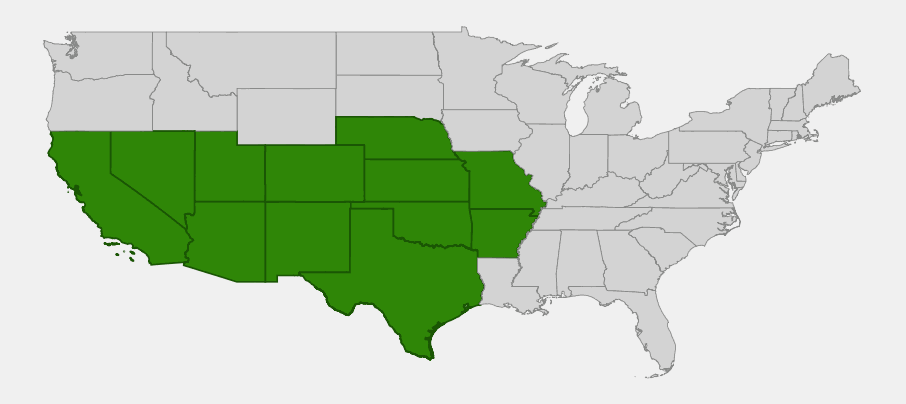
Buffalo gourd is native to the central and southwestern United States, with its core range running from Missouri, Kansas, and Nebraska south through Oklahoma and Arkansas to Texas, and west across New Mexico, Colorado, Arizona, and into southern Nevada, southern Utah and southern California. It also occurs widely in northern Mexico. It is a true plant of the plains and warm desert edge, not a species of moist eastern woodlands.
Typical habitat includes dry plains, prairie roadsides, overgrazed rangeland, sandy washes, and disturbed ground at the margins of deserts and grasslands. Buffalo gourd is especially good at colonizing bare, disturbed soil — it is one of the first plants to cover abandoned fields, graded roadsides, and eroding slopes within its native range — which makes it ecologically valuable for erosion control even though it can look weedy in a tidy garden setting.
Because its enormous taproot lets it persist through extreme heat and drought that kill most other vegetation, buffalo gourd often appears as a conspicuous patch of gray-green vine on bare ground where few other plants survive, making it a familiar sight along highways and dry washes across its native range.
📋 Regional plant lists featuring Buffalo Gourd: Arizona & New Mexico · Nebraska, Kansas & Eastern Colorado · Utah & Western Colorado · Illinois, Iowa & Missouri · Arkansas, Louisiana, Eastern Oklahoma & Eastern Texas
Growing & Care Guide
Buffalo gourd is about as low-maintenance as native plants get, but it needs space and sun, and gardeners should plant it with its mature spread and permanent taproot firmly in mind — it is not a plant you can easily relocate once settled in.
Light
Full sun is essential. This is a plant of open plains and desert margins and performs poorly, if at all, in shade.
Soil & Water
Buffalo gourd thrives in lean, fast-draining sandy, gravelly or rocky soils and tolerates alkaline conditions and poor fertility without trouble. Once its taproot is established — usually by the end of the first growing season — it needs no supplemental irrigation and will outlast most garden plants through extended drought. Established plants can rot in constantly wet or poorly drained soil, so good drainage matters more than fertility.
Planting Tips
Start buffalo gourd from seed sown directly where it is to grow, after the danger of frost has passed; like other squash relatives, it transplants poorly once the taproot begins to form. Give it a minimum of 15 to 20 feet of open ground to spread into, well away from smaller perennials that the vine can quickly overrun. Because the taproot makes mature plants nearly impossible to remove, site buffalo gourd deliberately — along a back fence line, over a bare slope, or on disturbed ground slated for long-term native cover.
Pruning & Maintenance
Little maintenance is needed beyond occasionally directing or trimming vine tips to keep them within bounds. The vine dies back to the ground with the first hard frost; old dried gourds and vine debris can be left in place over winter for wildlife or cleared for a tidier look. No regular fertilizing is needed or recommended.
Landscape Uses
- Erosion control on bare, eroding slopes and disturbed ground
- Difficult dry sites where irrigation is unavailable or undesirable
- Large-scale ground cover for open, sunny areas with room to spread
- Pollinator gardens, especially for specialist squash bees
- Naturalistic plains and desert-margin restoration plantings
Wildlife & Ecological Value
Despite its reputation as a weedy roadside plant, buffalo gourd plays a real ecological role in the dry grasslands and desert margins where it grows, especially for specialized pollinators.
For Pollinators
Buffalo gourd flowers are a favored resource for squash bees (Xenoglossa and Peponapis species), specialist native bees that are active in the early morning when the flowers are open and that rely heavily on Cucurbita flowers for pollen. Honeybees and other native bees also visit the blooms for nectar and pollen.
For Birds & Mammals
Various rodents and other small mammals gnaw into the hard gourds to reach the seeds inside, and the dense trailing vines provide ground-level cover for small wildlife on otherwise open, exposed terrain.
Ecosystem Role
As a fast-spreading perennial that readily colonizes bare and disturbed ground, buffalo gourd helps stabilize soil and reduce erosion on overgrazed rangeland, eroding slopes, and abandoned fields across its native range, often serving as one of the first plants to reclaim disturbed sites before slower-growing perennials move in.
Cultural & Historical Uses
Buffalo gourd has a long history of use among Indigenous peoples of the Southwest and Plains, though almost entirely for non-food purposes, since the mature fruit is bitter and not safe to eat. The Zuni traditionally made a medicinal poultice from powdered seeds, flowers and saliva for treating swellings. Among the Cahuilla and other peoples, the fruit and other plant parts — which contain bitter compounds called saponins — were rubbed directly on soiled clothing as a natural soap substitute, since saponins produce a soapy lather in water.
The plant’s enormous, carbohydrate- and protein-rich taproot and oil-rich seeds have drawn repeated agricultural interest over the past century as a potential crop for marginal, arid lands — researchers have studied buffalo gourd root starch for industrial and biofuel uses and its seed oil as a source of edible and industrial oil, though it has never become a major commercial crop.
The young, immature fruit, picked while still small and green, has historically been prepared and eaten like summer squash in some traditional contexts, but the mature gourd develops strong bitter compounds (cucurbitacins) and should never be eaten; only carefully identified young fruit, prepared following tested traditional methods, is safe, and home gardeners should treat any mature buffalo gourd fruit as inedible and potentially irritating rather than a food source.
Frequently Asked Questions
Can you eat buffalo gourd fruit?
No. The mature fruit is bitter and contains cucurbitacins that make it unpalatable and potentially irritating to the digestive tract; it should never be treated as food. Only very young, immature fruit has a documented history of limited traditional preparation, and mature gourds are strictly ornamental or utilitarian (as dried gourds), not edible.
Is buffalo gourd invasive?
Within its native range it is a vigorous, fast-spreading perennial rather than an invasive species, and it plays a genuine ecological role in stabilizing disturbed desert and plains soil. Outside its native range it can behave as an aggressive weed, so it should only be planted within or very near its documented native states.
Why does buffalo gourd smell bad?
The foliage contains volatile compounds that produce a strong, unpleasant odor when leaves or stems are bruised or crushed — the source of the species name foetidissima, Latin for “most foul-smelling.” The flowers themselves are not notably odorous.
How do I remove buffalo gourd if I no longer want it?
This is genuinely difficult once the taproot is established, since even a small piece of root left in the ground can resprout. Persistent digging out of the entire root, or repeated cutting back of new growth over multiple seasons to exhaust the root’s reserves, are the most effective non-chemical approaches. This is why siting the plant thoughtfully from the start is so important.
Does buffalo gourd need a trellis?
No. Unlike climbing squash relatives, buffalo gourd does not produce grasping tendrils strong enough to climb a trellis in a meaningful way; it is a ground-trailing vine and should be given open horizontal space rather than vertical support.

Looking for a nursery that carries Buffalo Gourd?
Browse our native plant nursery directory: Arizona & Arkansas · California · Colorado · Kansas · Missouri · Nebraska, Nevada, New Mexico & Oklahoma · Texas & Utah