
Franklin Tree (Franklinia alatamaha)
Franklinia alatamaha, the Franklin Tree, is one of the most remarkable stories in American botany: a small flowering tree that has been extinct in the wild for roughly two centuries, surviving today only because of plants raised from seed collected by the Philadelphia botanists John and William Bartram along Georgia’s Altamaha River in the 1770s. Every Franklin tree growing anywhere in the world — in arboretums, botanical gardens, and home landscapes — is a descendant of that single population, making it a living piece of 18th-century natural history as much as a garden plant.
In cultivation, Franklin tree is a large, upright shrub or small tree, typically 10 to 20 feet tall, prized for a rare combination of features: large, fragrant, camellia-like white flowers that open in late summer and early fall, when few other woody plants are blooming, combined with brilliant orange-red fall foliage that often appears on the same branches as the last flowers of the season. It is closely related to loblolly bay (Gordonia lasianthus) and the camellias, all members of the tea family, Theaceae.
Growing Franklin tree today is as much an act of conservation as of gardening. Because the species no longer exists anywhere in the wild, every specimen planted helps maintain the genetic line that the Bartrams preserved, and growing one connects a garden directly to a documented piece of American botanical history and to a tree that William Bartram himself described and named in honor of his father’s friend, Benjamin Franklin.
Identification
Franklin tree is a deciduous large shrub or small tree with an upright, somewhat open, vase-shaped habit, usually developing multiple trunks unless trained and pruned to a single leader when young.
Bark & Stems
Young bark is smooth and gray-brown, developing shallow fissures and a slightly striped or ridged texture with age. Branching is upright and somewhat sparse compared to denser ornamental trees, giving mature specimens an airy, open silhouette rather than a dense canopy.
Leaves
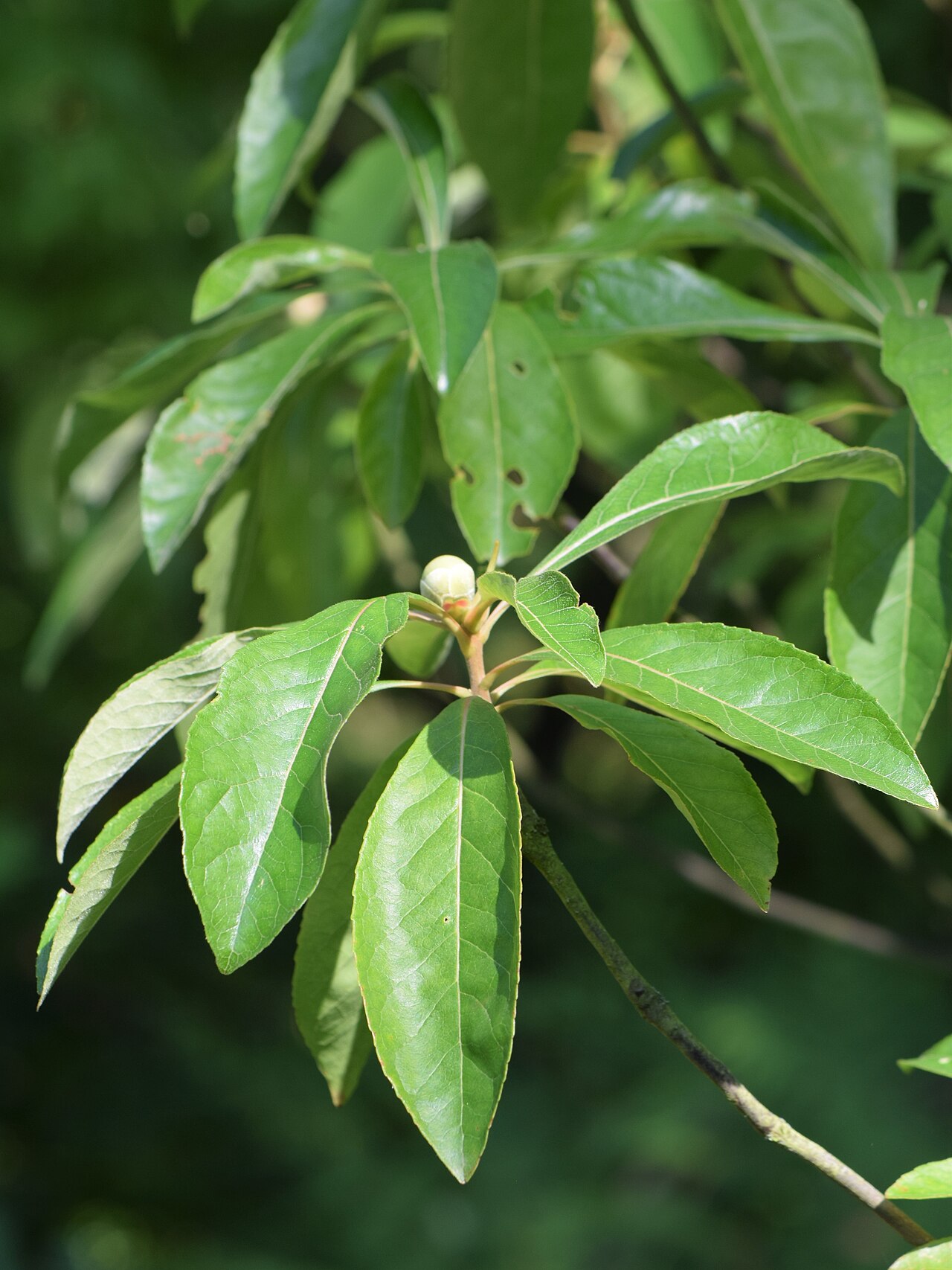
Leaves are alternate, elliptical to oblong, 4 to 6 inches long, glossy dark green above and paler beneath, with finely toothed margins. They often cluster toward the ends of branches. In autumn the foliage turns brilliant shades of orange, red, and purple, frequently while the last of the season’s flowers are still open — an unusual and highly ornamental combination that is one of the species’ signature features.
Flowers & Fruit
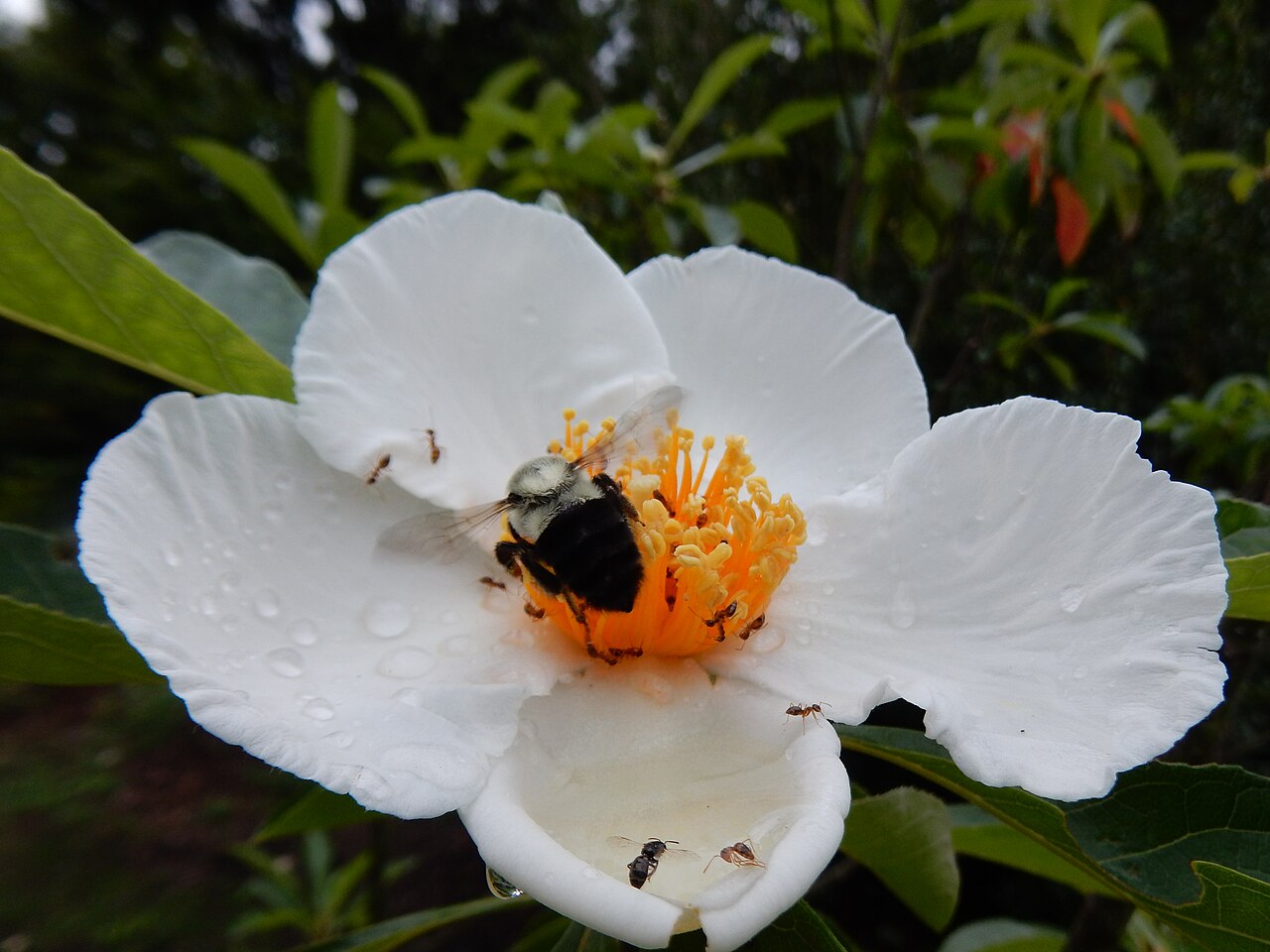
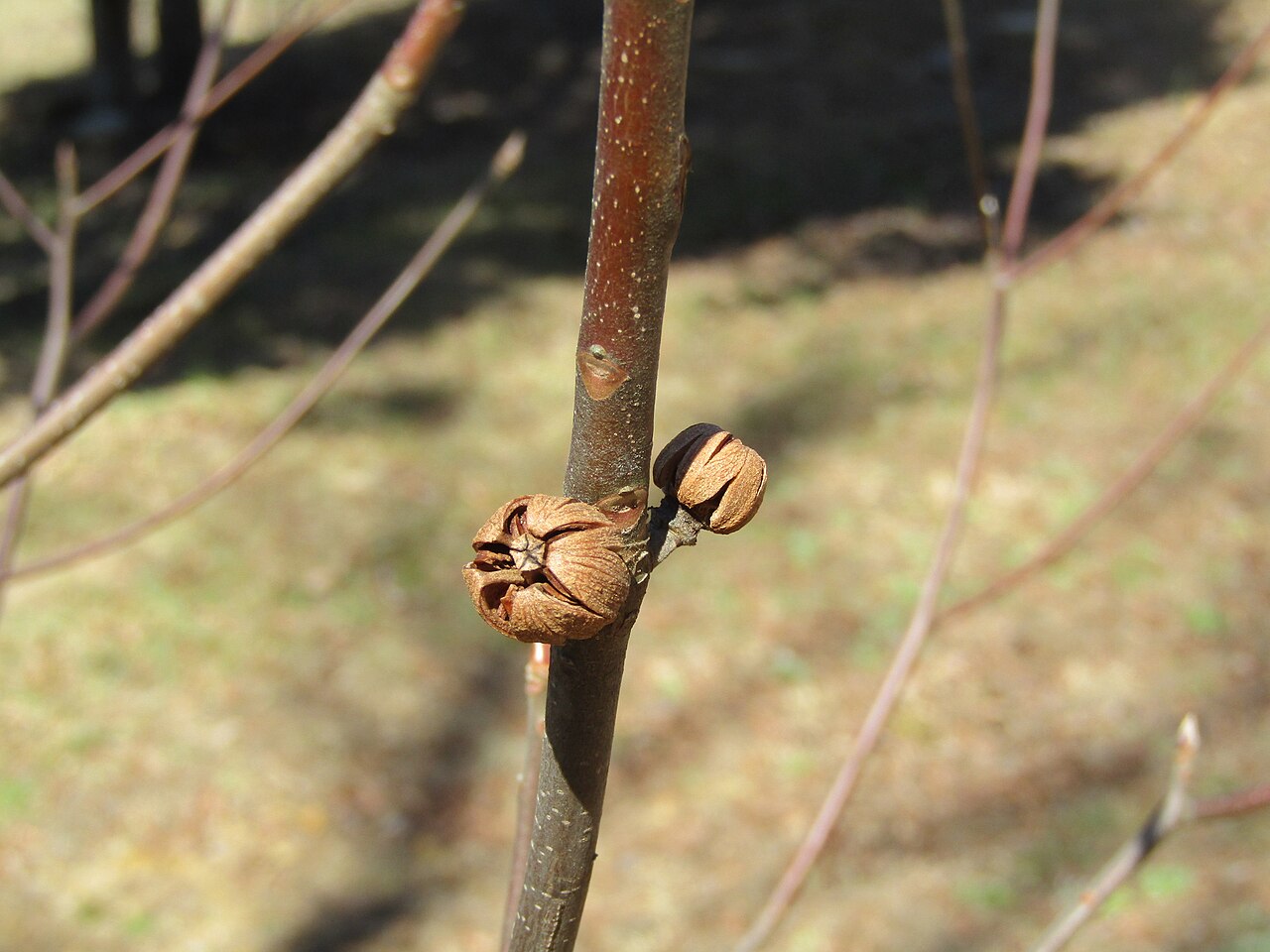
Flowers are large, 3 inches or more across, with five pure white, slightly cupped petals surrounding a dense cluster of golden-orange stamens, and carry a light, pleasant fragrance similar to that of a camellia. They open from late July into October depending on climate, appearing over an unusually long season for a woody plant and continuing even as fall color develops in the leaves. The fruit is a hard, woody, rounded capsule about three-quarters of an inch across that ripens slowly, often taking a full year to mature, and splits open to release a small number of seeds.
Quick Facts
| Scientific Name | Franklinia alatamaha |
| Family | Theaceae (Tea) |
| Plant Type | Deciduous large shrub / small tree |
| Mature Height | 10–20 ft (rarely to 30 ft) |
| Mature Spread | 6–15 ft |
| Growth Rate | Moderate |
| Sun Exposure | Full sun to light shade |
| Water Needs | Moderate to high; consistent moisture preferred |
| Soil Type | Moist, acidic, well-drained, high in organic matter |
| Soil pH | Acidic (about 5.0–6.5) |
| Bloom Time | Late July – October |
| Flower Color | White with golden-orange stamens |
| Fall Color | Orange, red, and purple |
| Fruit | Woody capsule, about 0.75 in, matures over roughly a year |
| Deer Resistant | Moderate (occasional browsing reported) |
| USDA Hardiness Zones | 5–8 (some success in sheltered zone 9 sites) |
Native Range
Franklin tree’s entire known native range was a small area along the Altamaha River in McIntosh County, coastal Georgia, where William Bartram first observed and collected it in 1765 and later returned with his father John Bartram to gather seed in the 1770s. The last confirmed wild sighting was recorded in 1803, and despite extensive searching by botanists ever since, no wild population has ever been rediscovered. The species is considered extinct in the wild and survives only because of the plants propagated from that original Bartram seed collection.
Based on Bartram’s own descriptions, the tree grew in a sandy, acidic bottomland near the Altamaha River’s edge, in a habitat that may have been naturally limited in extent even before the species disappeared. Proposed explanations for its extinction include overcollection by early plant hunters, habitat disturbance from agriculture and flooding, and a fungal pathogen (possibly related to one that affects cotton) that may have been introduced to the area; no single cause has ever been definitively confirmed.
Today, every Franklin tree in existence — whether in a botanical garden, arboretum, or home landscape anywhere in the world — is a cultivated descendant of that one historical Georgia population, making every planted specimen part of an unbroken, two-and-a-half-century chain of propagation rather than part of a wild, self-sustaining population.
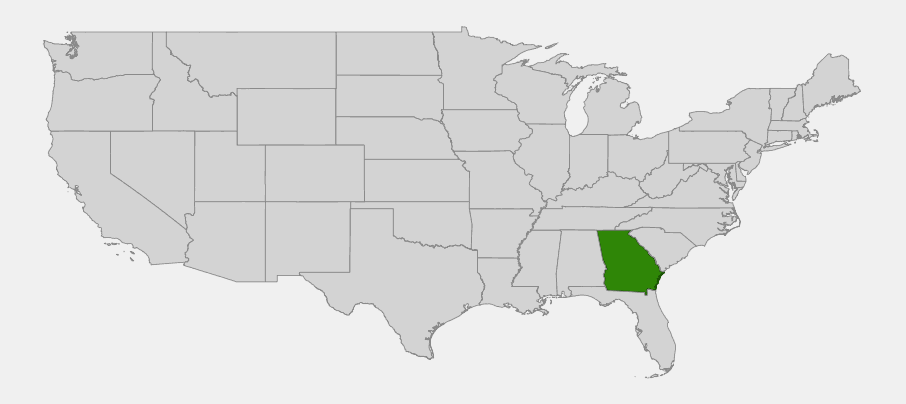
📋 Regional plant lists featuring Franklin Tree: Georgia, Alabama & Mississippi (listed for its historical Georgia origin and ongoing cultivation in the region; the species survives only in cultivation and has no self-sustaining wild population anywhere)
Growing & Care Guide
Franklin tree has a reputation for being finicky, but gardeners who can offer it consistently moist, acidic, well-drained soil and avoid root disturbance are usually rewarded with years of reliable late-season flowers.
Light
Plant Franklin tree in full sun to light shade. In the hottest parts of its growable range, light afternoon shade helps protect the foliage from scorch and keeps soil moisture more consistent, while full sun in cooler climates produces the best flowering and fall color.
Soil & Water
Franklin tree needs consistently moist, acidic, well-drained soil rich in organic matter; it does not tolerate drought well and is notoriously sensitive to a root and vascular wilt disease often linked to soil-borne Verticillium or Phytophthora pathogens, especially in heavy, poorly drained, or previously cultivated soils. Raised beds, generous compost amendment, and a site with reliable but not waterlogged moisture give it the best chance of long-term success. Avoid planting it where cotton, tomatoes, or other Verticillium-susceptible crops have grown, since this has long been suspected as a contributing factor in the species’ decline and in garden losses.
Planting Tips
Plant young, container-grown trees in spring, disturbing the root ball as little as possible, since Franklin tree resents transplanting and root damage. Choose a permanent site carefully, since mature specimens establish slowly and do not transplant well once settled. A 2- to 3-inch mulch layer of pine straw or shredded leaves helps maintain the cool, moist, acidic root zone the species needs.
Pruning & Maintenance
Prune minimally, removing only dead, damaged, or crossing wood in late winter, since the plant can be slow to recover from heavy cuts. Watch for sudden wilting or branch dieback, which can signal the vascular disease that affects this species, and remove affected wood promptly; severely affected plants sometimes cannot be saved. Consistent watering during dry spells is the single most effective way to keep a Franklin tree healthy long-term.
Propagation
Franklin tree is propagated from seed collected from the hard, slow-ripening capsules, or from softwood cuttings taken in early summer and rooted under mist. Because every existing tree descends from the same narrow genetic base collected by the Bartrams, propagation today is about multiplying and distributing a historically irreplaceable line rather than preserving genetic diversity, which is part of why nursery-grown, well-rooted stock is strongly preferred over any attempt at wild collection (which is, in any case, impossible, since no wild population exists).
Landscape Uses
- Specimen tree for a prominent spot where its late-season flowers and fall color can be appreciated
- Historical and botanical gardens, where it is often grown specifically for its conservation story
- Woodland garden edges with consistent moisture and light shade
- Companion planting with other acid-loving Southeastern natives such as loblolly bay and sweetbay magnolia
- Pollinator gardens, since the late blooms support bees moving into fall
Wildlife & Ecological Value
Because Franklin tree exists today only in scattered cultivated plantings rather than as part of any functioning wild ecosystem, its wildlife role is necessarily limited and mostly observed in gardens and arboretums rather than in the wild.
For Pollinators
The late-summer and fall flowers are an important nectar source for bees at a time of year when many other flowering plants have finished blooming, and bumblebees in particular are frequently seen working the large, open blossoms.
For Birds
No significant specialized bird relationships have been documented for this species, unsurprising given that it no longer exists as part of a wild plant community; in gardens it offers the same general branch structure and incidental insect-foraging value as other small flowering trees.
For Mammals
Deer occasionally browse young growth, though Franklin tree is not a preferred food source, and no other notable mammal relationships are documented for the species.
Ecosystem Role
Franklin tree’s modern ecological role is almost entirely as a conservation and horticultural curiosity rather than as a functioning part of any native plant community, since the species has had no wild population to contribute to ecosystem processes for roughly two centuries.
Cultural & Historical Uses
Franklin tree’s entire story is a cultural and historical one. John Bartram, the Philadelphia botanist often called the father of American botany, first noted the tree along Georgia’s Altamaha River in 1765 while traveling with his son William. William Bartram returned to the site years later, collected seed in the 1770s, and later named the tree Franklinia alatamaha in honor of his father’s close friend Benjamin Franklin, with the species epithet drawn from an older spelling of the Altamaha River.
No naturalist ever confirmed a wild Franklin tree after 1803, making the Bartrams’ seed collection one of the most consequential acts of plant conservation in American history, whether or not it was recognized as such at the time. Every Franklin tree alive today, across botanical gardens and private landscapes worldwide, descends from that collection, and the species has become a frequently cited example of a plant saved from extinction purely through cultivation.
Franklin tree has no recorded Indigenous or early-settler uses as food, medicine, or material, since its documented history begins with its scientific discovery and ends with its disappearance from the wild within about four decades. Its cultural significance today lies entirely in its status as a living historical artifact and a favorite subject for garden writers and botanical historians.
Frequently Asked Questions
Is Franklin tree really extinct in the wild?
Yes. No confirmed wild Franklin tree has been seen since 1803, despite repeated searches, and the species is considered extinct in the wild by conservation botanists. Every tree in existence today was propagated from the Bartrams’ 18th-century seed collection.
Why did Franklin tree disappear from the wild?
No one knows for certain. Leading theories include overcollection by early plant enthusiasts, habitat disturbance along the Altamaha River, and a soil-borne fungal disease possibly introduced through nearby cotton cultivation, but none of these has been conclusively proven as the sole cause.
Is it legal or ethical to grow Franklin tree in my garden?
Yes. Because no wild population exists to protect, growing a nursery-propagated Franklin tree raises no conservation concerns and in fact helps keep this historically important genetic line in cultivation.
Why is Franklin tree considered hard to grow?
It is sensitive to a root and vascular wilt disease, especially in soil that has previously grown cotton or tomatoes, and it dislikes drought and root disturbance. Consistently moist, acidic, well-drained soil in a permanent, undisturbed site greatly improves its odds.
What does Franklin tree have to do with Benjamin Franklin?
Nothing botanically — the connection is purely in the name. William Bartram named the tree in honor of Benjamin Franklin, a close friend of his father John Bartram, when he formally described the species after its collection along the Altamaha River.

Looking for a nursery that carries Franklin Tree?
Browse our native plant nursery directory: Georgia