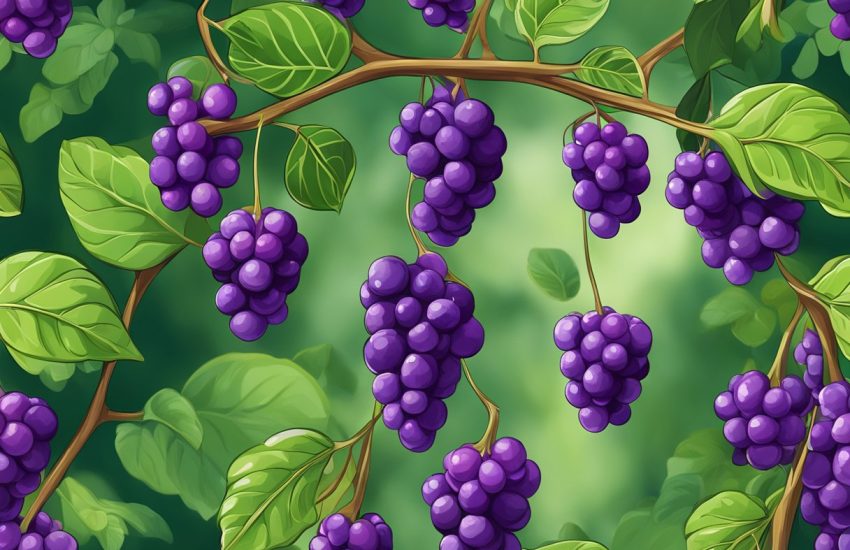
Narrowleaf Forestiera (Forestiera angustifolia)
Forestiera angustifolia, known to botanists and the U.S. Fish & Wildlife Service as Narrowleaf Forestiera or Texas Forestiera, and called Texas Swampprivet by USDA PLANTS, is a tough, small-leaved shrub of the limestone hills and brushlands of central and south Texas. Gardeners in its home range often simply call it “elbow bush,” a nod to the stiff, angular branching that gives mature plants a distinctive zig-zag look. It belongs to the Oleaceae (olive family), the same family as ash trees and true privets, though it is not related to and should not be confused with the invasive Asian privets sold under the name “Texas privet” in nurseries.
This is a plant built for Texas heat and limestone soil. Narrowleaf forestiera grows as a dense, rounded shrub or small tree, usually 6 to 12 feet tall, with narrow gray-green leaves barely a quarter-inch wide that give the plant its scientific name. Tiny yellow-green flowers open in early spring before the leaves fully emerge, followed by small dark fruits that ripen through summer. The plant is evergreen to semi-evergreen depending on winter severity, holding most of its foliage through all but the coldest Texas winters.
For native plant gardeners in Texas, narrowleaf forestiera fills a niche that few other shrubs can match: extreme drought tolerance, high alkalinity tolerance, and a dense, twiggy form that makes an excellent informal hedge or wildlife thicket. It asks for almost nothing once established and rewards that neglect with reliable cover and food for birds and small mammals.
Identification
Narrowleaf forestiera is most easily recognized by its narrow, linear leaves and its distinctive branching pattern, in which branchlets come off the main stems at close to right angles, creating the tangled, angular look that earns it the common name “elbow bush” in some parts of its range.
Bark & Stems
Young stems are smooth and gray, becoming slightly rougher and furrowed with age. The branching is dense and stiff, with twigs meeting the main branches at sharp, almost perpendicular angles. Older plants develop multiple trunks from the base and can be trained into a small single-trunked tree with pruning, though most specimens in the wild and in gardens keep a many-stemmed shrub form.
Leaves
The leaves are simple, opposite, and narrowly linear to narrowly elliptic, typically 1 to 2 inches long but only about a quarter-inch wide — much narrower than the leaves of its wetland-loving relative, Spring Herald (Forestiera pubescens). Leaf margins are smooth or very finely toothed, and the gray-green color helps the plant stay cool and conserve water through the hottest parts of the Texas summer. The species holds its leaves through most winters, dropping some or all of them only after a hard freeze.
Flowers & Fruit
Flowers are small, inconspicuous, and greenish-yellow, lacking petals, and appear in dense clusters along the branches in late winter to early spring, typically before or just as new leaves emerge. Like other members of its genus, narrowleaf forestiera is usually dioecious, meaning individual plants bear either male or female flowers, so female plants need a male nearby to set fruit. The fruit is a small, dark bluish-black drupe about a third of an inch long, ripening from late spring into summer and eaten readily by birds.
Quick Facts
| Scientific Name | Forestiera angustifolia |
| Family | Oleaceae (Olive) |
| Plant Type | Evergreen to semi-evergreen shrub (occasionally small tree) |
| Mature Height | 6–12 ft |
| Mature Spread | 6–10 ft, dense and rounded |
| Growth Rate | Slow to moderate |
| Sun Exposure | Full sun to part shade |
| Water Needs | Low; excellent drought tolerance once established |
| Soil Type | Dry, rocky, well-drained; thrives on limestone |
| Soil pH | Alkaline (above 7.2); tolerates high caliche content |
| Bloom Time | February – April |
| Flower Color | Greenish-yellow, inconspicuous |
| Fall Color | None (evergreen to semi-evergreen) |
| Fruit | Small dark blue-black drupes, late spring–summer (female plants only) |
| Deer Resistant | Yes, generally |
| USDA Hardiness Zones | 8–10 |
Native Range
Narrowleaf forestiera is native only to Texas, where it grows across the central and southern part of the state — the Edwards Plateau, the South Texas Plains, and the brushlands stretching down toward the Rio Grande. It is not native to the Piney Woods of East Texas or to any state outside of Texas, despite being sold in nurseries well beyond its natural range as a tough, low-water hedge plant.
Typical habitat is rocky limestone hillsides, caliche flats, dry creek beds, and brushy slopes, usually in the company of other drought-adapted shrubs and small trees of the South Texas brush country. The species thrives in exactly the kind of shallow, rocky, alkaline soil that defeats most garden shrubs, which is part of why it has become a reliable choice for xeric landscaping across its native region.
Because narrowleaf forestiera tolerates both extreme heat and periodic drought so well, it has expanded in cultivated use well beyond its wild range, planted as a hedge or screen throughout Texas and the Southwest. Gardeners outside central and south Texas should recognize that while the plant performs well there, it is a native resident only of its home range in Texas.
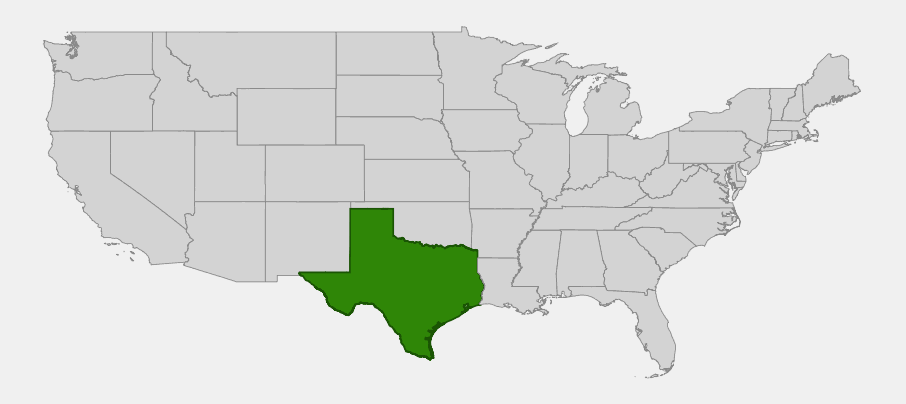
📋 Regional plant lists featuring Narrowleaf Forestiera: none yet — no current Plant Native regional list covers central and south Texas, so narrowleaf forestiera is not included on a regional list on this site.
Growing & Care Guide
Narrowleaf forestiera is about as low-maintenance as native shrubs get, provided you respect its need for sharp drainage and do not try to grow it in heavy, wet, or acidic soil.
Light
Give narrowleaf forestiera full sun for the densest, most compact growth, though it tolerates part shade without complaint. In the wild it often grows in full exposure on open rocky slopes, and garden plants in full sun develop the tightest branching and best form for use as a hedge.
Soil & Water
This shrub wants dry, rocky, alkaline soil with excellent drainage; it is naturally adapted to the caliche and limestone-derived soils of central and south Texas and struggles in heavy clay that stays wet. Once established, usually after the first full growing season, it needs no supplemental irrigation except in extended drought. Overwatering or planting in poorly drained soil is far more likely to kill this plant than underwatering.
Planting Tips
Plant container-grown narrowleaf forestiera in fall or early spring so roots can establish before the heat of summer arrives. Because the species is usually dioecious, gardeners who want fruit for wildlife should plant more than one specimen to improve the odds of having both male and female plants nearby. Space plants 4 to 6 feet apart for a continuous hedge, or give single specimens 8 to 10 feet of room to develop their natural rounded form.
Pruning & Maintenance
Narrowleaf forestiera tolerates shearing well and is often grown as a clipped or informal hedge in Texas landscapes. For a more natural look, limit pruning to removing dead wood and shaping lightly after the spring bloom. The plant can also be limbed up and trained into a small single-trunked tree form with patience. It has few serious pest or disease problems in the alkaline, well-drained soils it prefers.
Landscape Uses
- Xeriscaping and water-wise gardens across central and south Texas
- Informal or sheared hedges and screens, thanks to its dense branching
- Wildlife thickets that provide cover and fruit for birds
- Caliche and limestone slope plantings where few other shrubs will grow
- Erosion control on dry, rocky banks and cuts
- Background or filler planting in South Texas brush-country gardens
Wildlife & Ecological Value
Though it rarely draws attention for its flowers, narrowleaf forestiera plays a steady supporting role in the South Texas brush ecosystem.
For Pollinators
The small, early-spring flowers, though inconspicuous, are visited by small native bees and other insects at a time of year when few other nectar sources are blooming in the Texas brush country.
For Birds
Mockingbirds and other fruit-eating songbirds feed on the small dark drupes through late spring and summer, and the dense, twiggy branching gives small birds secure nesting sites and cover from predators and summer heat.
For Mammals
Small mammals browse the foliage and take shelter in the tangled branches, and deer generally leave the plant alone, making it a useful component of deer-resistant brush-country plantings.
Ecosystem Role
As a dense evergreen shrub in an often sparse and rocky landscape, narrowleaf forestiera adds year-round structure and cover to South Texas plant communities, helping stabilize thin soils on slopes and providing a reliable mid-story layer in brushland that otherwise alternates between open ground and taller mesquite and acacia.
Cultural & Historical Uses
Narrowleaf forestiera has no significant recorded history as a food, medicine, or craft plant among the Indigenous peoples of its Texas range, and it remains primarily known today as a landscaping and hedge plant rather than a species with deep ethnobotanical traditions.
Its modern popularity comes almost entirely from the nursery trade, where ranchers and homeowners across Texas and the broader Southwest have adopted it as a tough, low-water hedge and screening plant. Because of this widespread cultivated use, some nurseries market it under names like “Texas privet,” which can cause confusion with the invasive Asian privets (Ligustrum species); narrowleaf forestiera is not related to those plants and is not invasive.
Within its native range, the plant is valued mainly by ranchers and land managers as part of the natural brush cover that supports game birds and other wildlife, and more recently by native-plant gardeners looking for genuinely regional alternatives to non-native hedge shrubs.
Frequently Asked Questions
Is narrowleaf forestiera the same plant as “Texas privet”?
No. “Texas privet” is a nursery trade name sometimes applied to narrowleaf forestiera, but true privets (Ligustrum species) are unrelated, non-native, and often invasive. Narrowleaf forestiera is a true Texas native in the olive family and is not invasive.
Does narrowleaf forestiera need a lot of water?
No. Once established, it is highly drought tolerant and actually performs poorly in soil that stays consistently wet. It is one of the better choices for low-water Texas landscaping.
Will narrowleaf forestiera produce berries for birds?
Only female plants produce fruit, and they typically need a male plant nearby for pollination, since the species is usually dioecious. Planting several specimens improves the odds of reliable fruit production.
Can narrowleaf forestiera be grown outside Texas?
It is hardy and sometimes planted as an ornamental in similar hot, dry, alkaline-soil climates in the Southwest, but it is native only to Texas (and adjacent northern Mexico), so gardeners outside that range should check regional nursery recommendations and know they are planting it outside its natural habitat.
How is narrowleaf forestiera different from other Forestiera species?
Its leaves are much narrower than those of Forestiera pubescens (commonly called spring herald or New Mexico olive), and it prefers much drier, rockier sites than the wetland-loving swampprivets like Forestiera acuminata.

Looking for a nursery that carries Narrowleaf Forestiera?
Browse our native plant nursery directory: Texas