California Ash (Fraxinus dipetala)
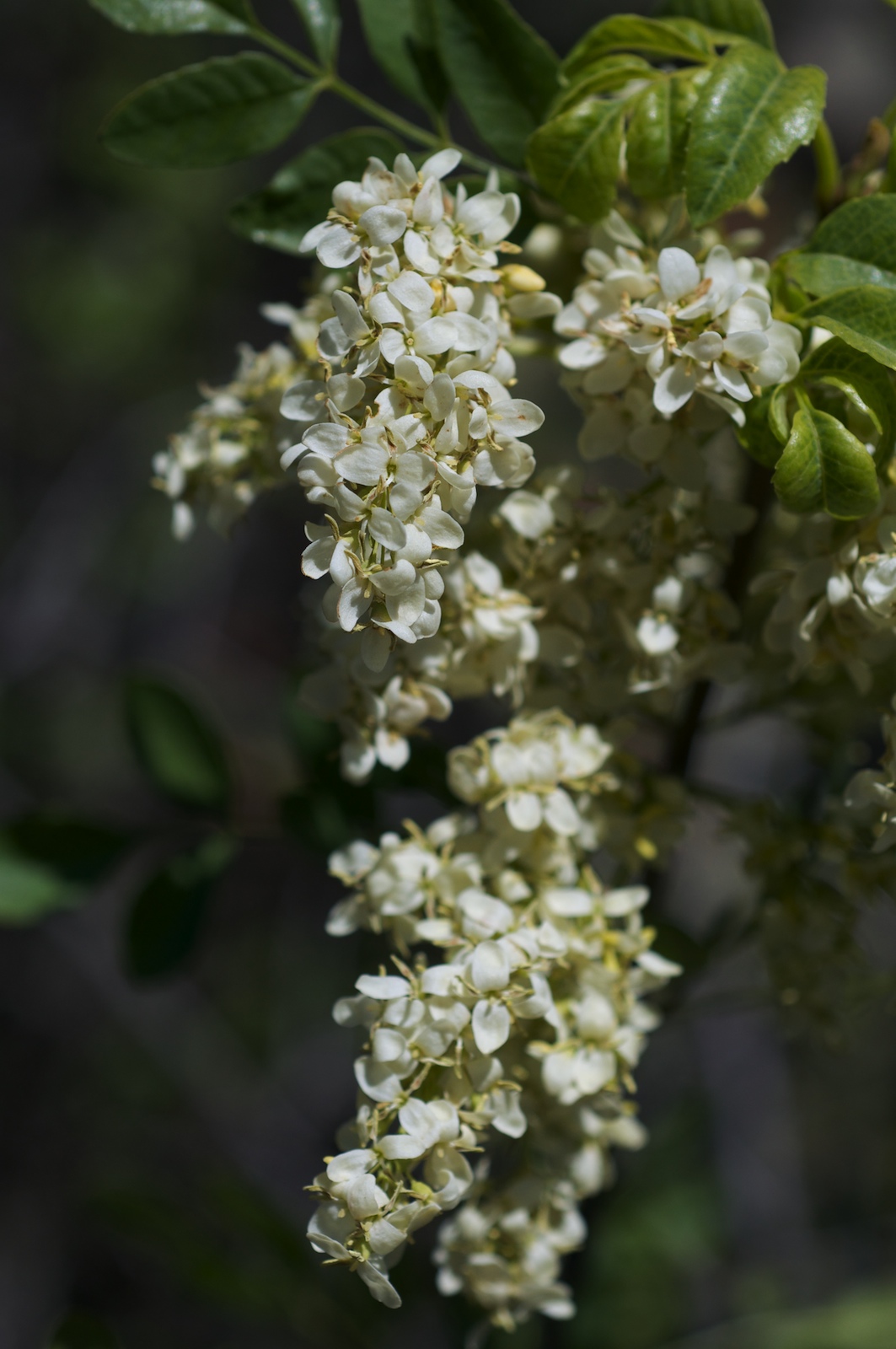
Fraxinus dipetala, commonly called California Ash or two-petal ash, is a deciduous shrub or small tree native to the dry foothills and canyons of the southwestern United States. It belongs to the olive family (Oleaceae) and is unusual among ashes for its tiny white flowers with only two petals each — most Fraxinus species have four petals or none at all, and the feature is distinctive enough that it gives the species its scientific name and one of its common names.
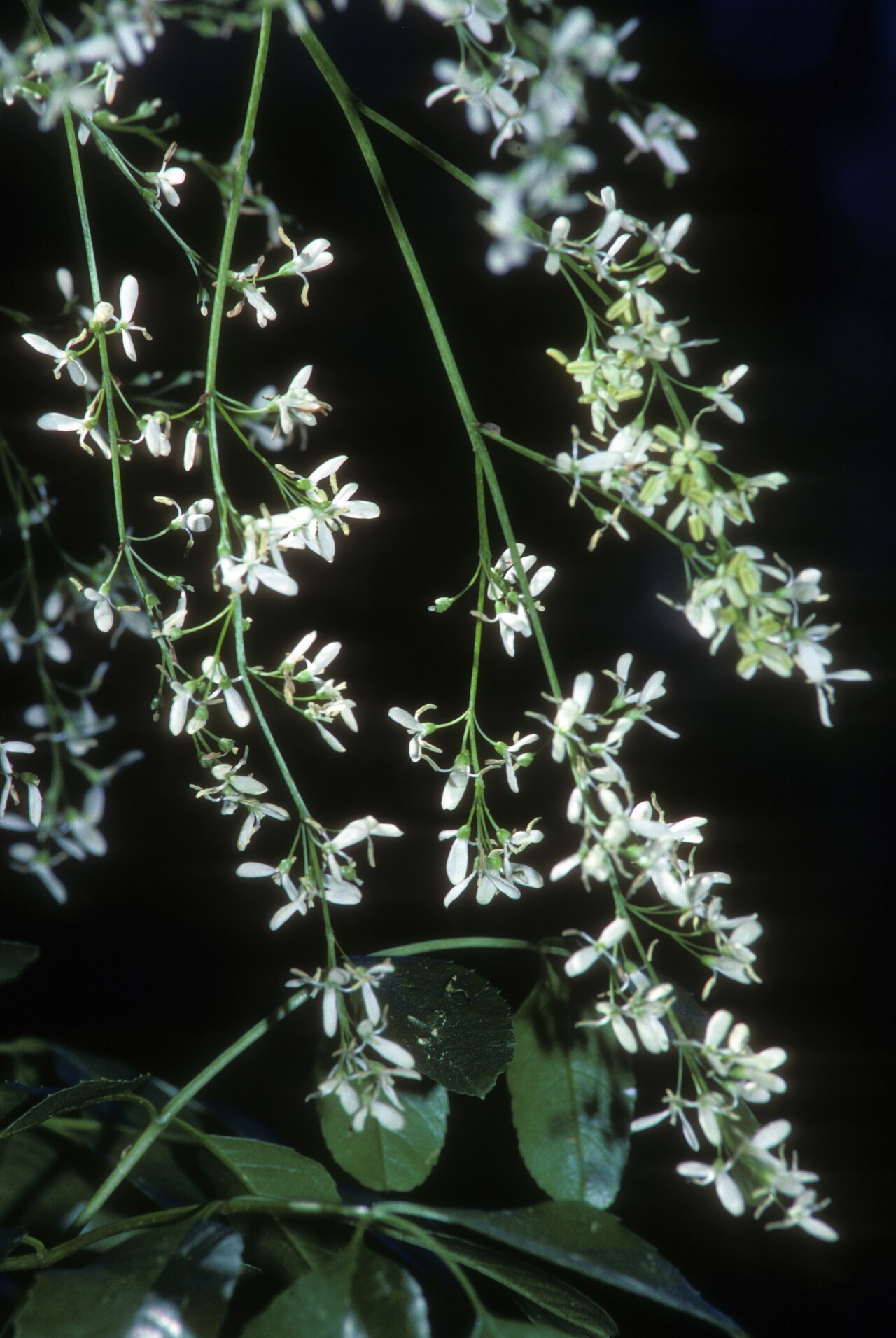
In the wild, California ash grows as a many-stemmed, rounded shrub or small tree, usually 10 to 20 feet tall, on dry, rocky slopes in chaparral and foothill woodland. It is most at home in the Coast Ranges and Sierra Nevada foothills of California, typically growing just above seasonal streams and springs where its roots can reach residual moisture while its crown stays dry through the long California summer. In spring, before or as the new leaves unfold, the branches are hung with loose, drooping clusters of small, sweetly fragrant white flowers that are easy to miss from a distance but reward a closer look.
For gardeners in its native range, California ash is a tough, low-water small tree or large shrub for dry slopes, rock gardens and the back of a chaparral border, where its airy form and fragrant spring bloom provide a welcome contrast to the heavier foliage of many native shrubs. It tolerates serpentine soils, decomposed granite and seasonal flooding, and once established needs little attention.
Identification
California ash is a deciduous, many-stemmed shrub or small tree reaching about 10 to 20 feet tall, occasionally to 23 feet (7 m) under good conditions. It typically has a rounded, open crown and several trunks arising near the base rather than a single straight trunk, which gives older plants a thicket-like form.
Bark & Stems
Young stems are slender and more or less four-angled in cross-section, with smooth, gray bark. The buds are small and finely hairy (glandular-puberulent) rather than smooth, a useful field mark when the plant is not in leaf or flower.
Leaves
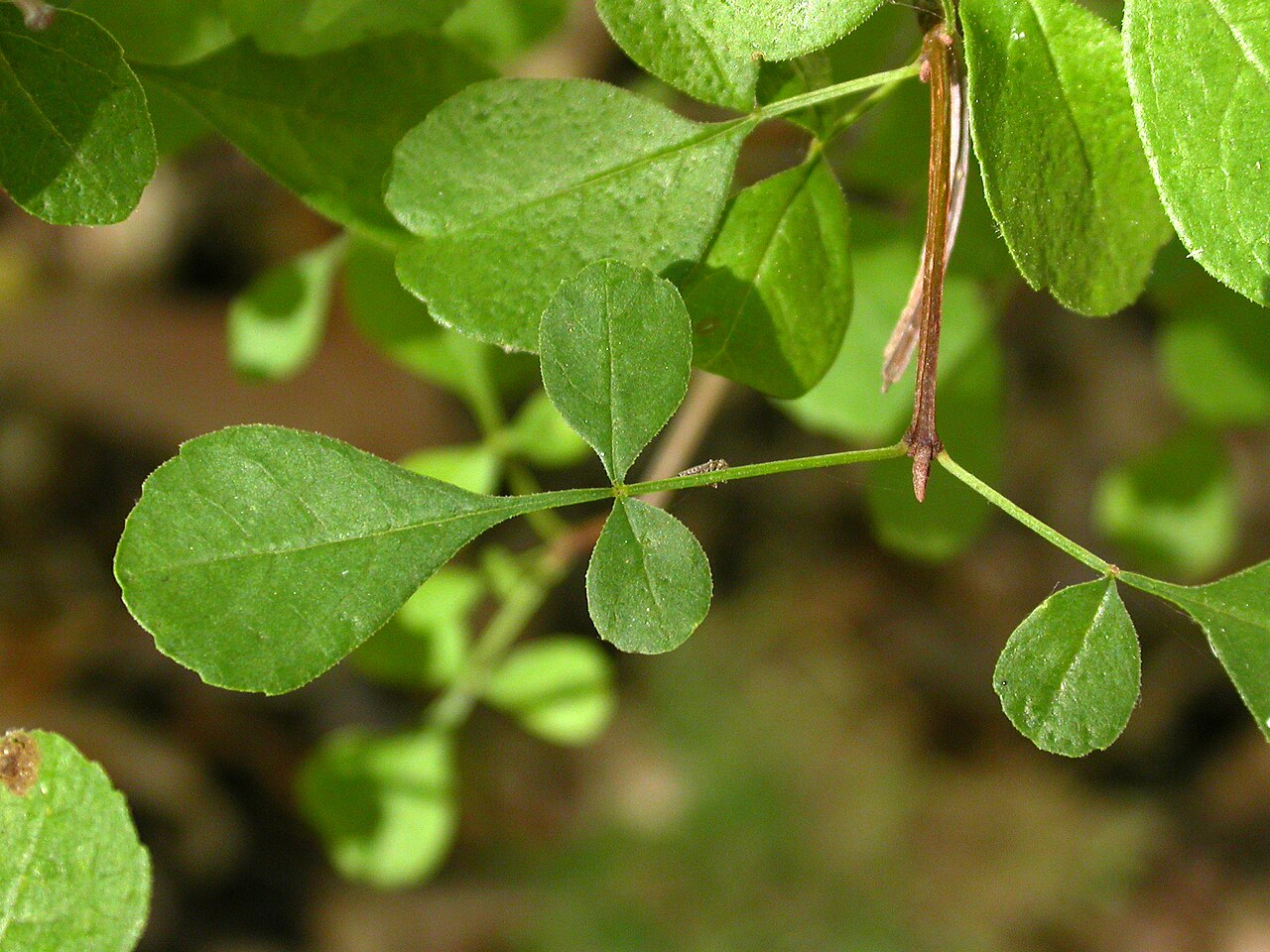
The leaves are pinnately compound, 2 to 7½ inches (5–19 cm) long, carried on a petiole 1 to 1¾ inches (2.4–4.5 cm) long. Each leaf has three to seven leaflets, occasionally nine, that are oval to egg-shaped, thin-textured, and usually smooth-edged or very shallowly toothed. Leaves emerge later than many chaparral associates and drop early in the fall drought, which helps the plant conserve water through the dry season.
Flowers & Fruit
Flowers open in early spring, from March into April, in loose, drooping panicles at the branch tips, often appearing just before or with the new leaves. Unlike most ashes, each tiny flower has only two narrow white petals, giving the clusters an airy, lacy look and a light, sweet fragrance that carries on warm spring days. Fraxinus dipetala is also unusual in bearing both perfect (bisexual) flowers and male flowers on the same plant. The fruit is a typical ash samara — a single, flattened, winged seed about ½ to ¾ inch long — maturing by early summer and dispersing on the wind through the dry months that follow.
Quick Facts
| Scientific Name | Fraxinus dipetala |
| Family | Oleaceae (Olive) |
| Plant Type | Deciduous shrub / small tree |
| Mature Height | 10–20 ft (occasionally to 23 ft) |
| Mature Spread | 8–15 ft, multi-stemmed, rounded |
| Growth Rate | Slow to moderate |
| Sun Exposure | Full Sun to Part Shade |
| Water Needs | Low once established; excellent drought tolerance |
| Soil Type | Rocky, clay, decomposed granite; tolerates serpentine |
| Soil pH | Slightly acidic to alkaline |
| Bloom Time | March – April |
| Flower Color | White, fragrant |
| Fall Color | Pale yellow, early leaf drop |
| Fruit | Winged samara, ½–¾ in, early summer |
| Deer Resistant | Generally yes (not preferred browse) |
| USDA Hardiness Zones | 7–9 |
Native Range
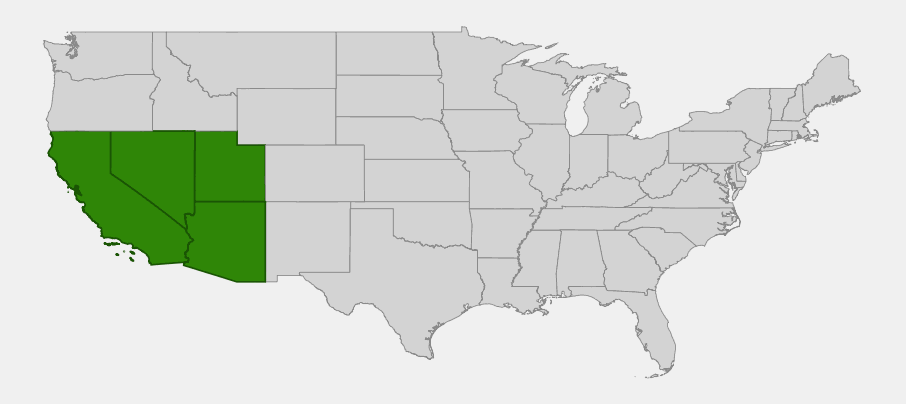
California ash is native to the dry interior foothills of the southwestern United States: the Coast Ranges and Sierra Nevada foothills of California, the transverse and peninsular ranges of southern California, northwestern Arizona, southern Nevada, and Utah. It also occurs south of the border in northern Baja California, Mexico. Within this range it grows at elevations of roughly 300 to 4,300 feet (100–1,300 m).
This is strictly an interior, dry-foothill species — it is not found along the immediate California coast or in the state’s wetter northwestern forests, and gardeners outside its native southwestern range should not plant it as a substitute for locally native ash or buckeye species. Within California, Arizona, Nevada and Utah it is also uncommon in cultivation, so look for it at native plant nurseries that specialize in regional chaparral and foothill species rather than general garden centers.
Typical habitat is chaparral and foothill (oak) woodland, where California ash grows on dry slopes above creeks and seasonal drainages, often in the company of interior live oak, blue oak, redbud, toyon, and various species of Ceanothus and chamise. It tolerates both serpentine-derived soils and seasonally flooded sites, which makes it more adaptable to difficult garden soils than many of its chaparral neighbors.
📋 Regional plant lists featuring California Ash: Arizona & New Mexico · Utah & Western Colorado
Growing & Care Guide
California ash is an easy, low-water small tree once it is established, well suited to gardeners who want something airy and fragrant for a dry slope or chaparral-style planting without the water demands of many ornamental trees.
Light
Plant California ash in full sun to part shade. In the hottest, driest interior sites it appreciates a little afternoon shade, but across most of its range it performs best in full sun, which produces the most compact form and the heaviest spring bloom.
Soil & Water
This species is adapted to thin, rocky soils and tolerates clay, decomposed granite, and even serpentine-derived soils that many other garden shrubs reject. It is remarkably drought tolerant once established, needing supplemental water only during its first one to two summers. It also tolerates brief seasonal flooding, reflecting its habit of growing just above streambeds in the wild, so it is forgiving of a wide range of garden drainage as long as it is not kept constantly wet.
Planting Tips
Plant young container stock in fall or early winter so roots can establish during the rainy season before the first dry summer. Because California ash naturally grows as a multi-stemmed shrub, allow it to keep several trunks for a fuller, more natural look, or select and prune to one or two leaders if a small single-trunk tree form is preferred. Give it room to spread, 8 to 15 feet depending on how many stems are retained.
Pruning & Maintenance
Little pruning is needed beyond removing dead or crossing branches in winter dormancy. Because the plant naturally sheds leaves early in response to summer drought, do not mistake this normal dry-season leaf drop for a watering problem. Established plants are low-maintenance and essentially pest-free in garden settings.
Landscape Uses
- Dry slope and chaparral gardens, paired with Ceanothus, toyon and manzanita
- Rock gardens and decomposed-granite plantings where few small trees thrive
- Erosion control on dry banks above seasonal drainages
- Serpentine soil gardens, where plant choices are otherwise limited
- Fragrance gardens — plant near a path or window to enjoy the spring bloom
- Wildlife gardens, as a nectar source and larval host for swallowtail butterflies
Wildlife & Ecological Value
Though modest in size, California ash plays a useful role in the chaparral and foothill woodland communities where it grows, especially as one of the few deciduous, flowering small trees in a landscape dominated by evergreen shrubs.
For Pollinators
The fragrant spring flowers attract native bees and other insects at a time when few other chaparral shrubs are in bloom, making California ash a useful early-season nectar source in dry foothill gardens.
For Birds & Butterflies
Like other native ashes, California ash serves as a larval host plant for swallowtail butterflies, including the two-tailed swallowtail (Papilio multicaudata), whose caterpillars feed on ash foliage. The open, airy branching also offers some cover and perching habitat for small birds moving through chaparral and oak woodland.
Ecosystem Role
By growing just above seasonal streams and springs, California ash helps stabilize soil on dry slopes and canyon sides where erosion is a constant pressure. Its deciduous habit — leafing out later and dropping leaves earlier than many associates — reflects a strategy for surviving the long California dry season while still contributing seasonal leaf litter to the thin foothill soils around it.
Cultural & Historical Uses
California ash is a minor species in the historical record compared to large hardwoods such as valley oak, and specific documented traditional uses are limited. As a member of the ash genus, its wood shares the strength and flexibility associated with ashes generally, and small, straight stems of similar foothill shrubs were traditionally useful to California Indigenous peoples for tool handles and basketry framework, though detailed, species-specific accounts for Fraxinus dipetala are scarce in the available literature.
The plant’s modern significance is mainly horticultural and ecological: it is valued today by native-plant gardeners in California, Arizona, Nevada and Utah as a drought-tolerant, fragrant small tree for low-water landscaping, and by land managers as a component of healthy chaparral and oak woodland restoration plantings.
Unlike eastern and midwestern ash species, California ash has so far remained largely outside the range of the invasive emerald ash borer, which has devastated many North American ash populations; its dry, interior southwestern distribution has limited the insect’s spread into its habitat to date.
Frequently Asked Questions
Is California ash a true ash tree?
Yes. Fraxinus dipetala is a true member of the ash genus (Fraxinus) in the olive family, though it is smaller and more shrub-like than familiar landscape ashes such as Arizona ash or green ash.
Why is it called “two-petal ash”?
Its flowers have only two narrow white petals each, which is unusual in the ash genus — most ashes have four petals or lack petals entirely. This distinctive flower structure gives the species both its alternate common name and its species epithet, dipetala.
How much water does California ash need?
Very little once established. It is adapted to the dry foothill climate of the Southwest and needs supplemental water mainly during its first couple of summers after planting. Established plants tolerate long dry periods, as well as occasional seasonal flooding.
Does California ash grow outside California?
Yes. Despite its common name, it is also native to northwestern Arizona, southern Nevada, Utah, and northern Baja California, Mexico — always in dry, interior foothill habitats rather than coastal or high-mountain settings.
Will California ash grow in clay or rocky soil?
Yes. It naturally grows in thin, rocky soils, decomposed granite, and even serpentine-derived soils, making it a good choice for difficult garden sites where many other small trees struggle.

Looking for a nursery that carries California Ash?
Browse our native plant nursery directory: Arizona · California · Nevada · Utah