
Arctic Lupine (Lupinus arcticus)
⚠️ Toxicity note: Like all lupines, Arctic Lupine contains quinolizidine alkaloids (including sparteine) in its leaves, pods, and especially its seeds. These compounds are toxic to livestock, pets, and people if eaten in quantity, and can cause birth defects in grazing animals that consume large amounts during certain growth stages. Admire this plant in the garden or on the trail — never eat any part of it.
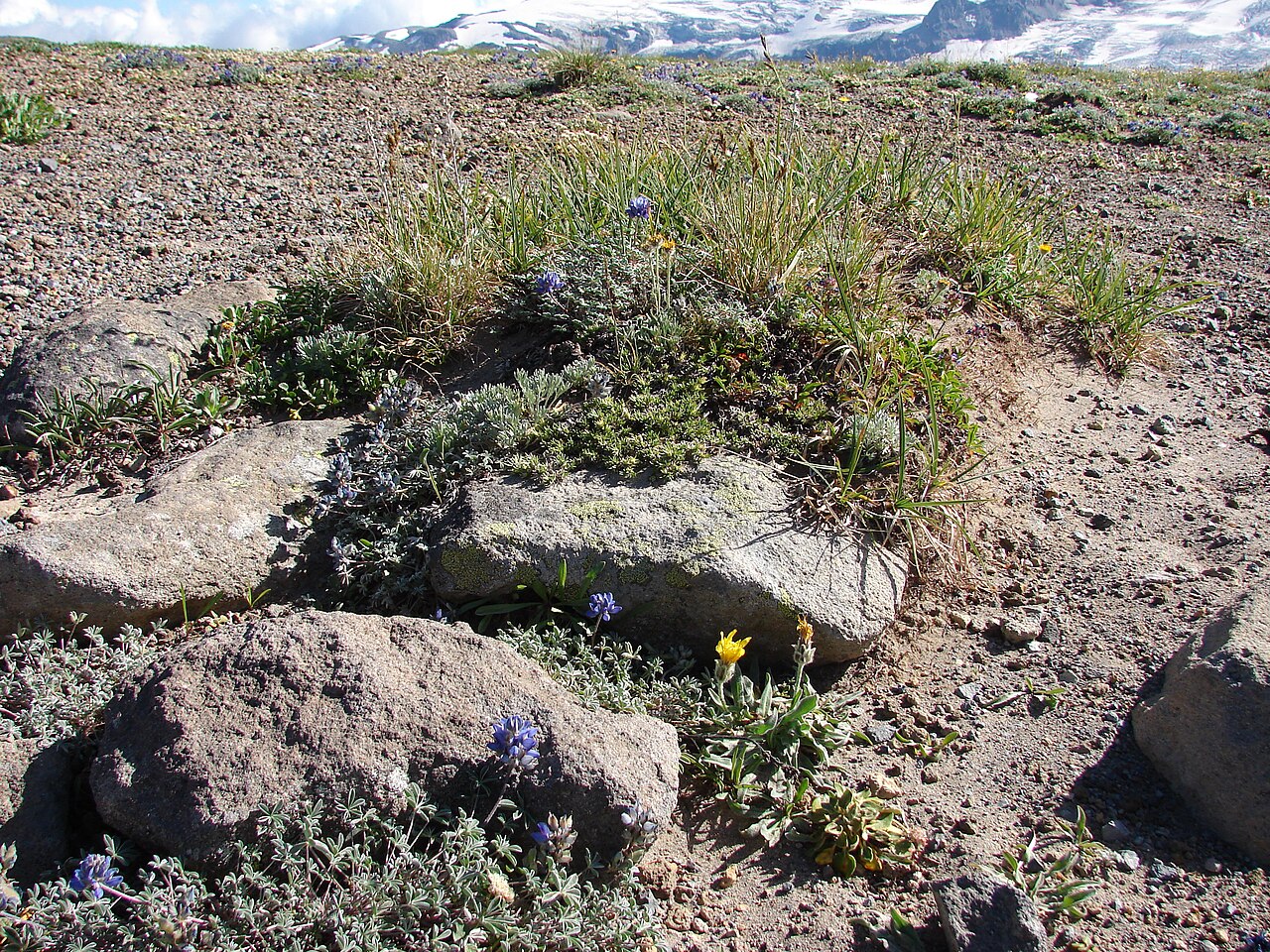
Lupinus arcticus S. Watson, commonly called Arctic Lupine or Subalpine Lupine, is a low, clump-forming perennial wildflower of the mountains and far north of western North America. A member of the pea family (Fabaceae), it produces short spikes of blue-to-purple pea-shaped flowers above hairy, palmately divided leaves, and it is one of the most recognizable wildflowers of alpine meadows from the Oregon Cascades north through British Columbia and Alaska to the Canadian Arctic.
Arctic Lupine typically grows 6 to 20 inches tall from a woody taproot, forming tidy mounds that spread slowly by seed and short rhizomes. Its deep green, silky-haired leaflets fold and droop during cold nights and dry spells, a trait that helps the plant conserve moisture at high elevation and high latitude. Like other lupines, its roots host nitrogen-fixing bacteria in small nodules, allowing the plant to thrive in the thin, recently glaciated or disturbed soils typical of alpine and subarctic terrain — and to improve those soils for the plants that follow it.
In the garden, Arctic Lupine is best suited to rock gardens, alpine troughs, and naturalistic plantings in cool-summer climates of the Pacific Northwest and Alaska. It rewards well-drained soil and a site that mimics its native talus slopes and subalpine meadows, rather than a conventional border.
Identification
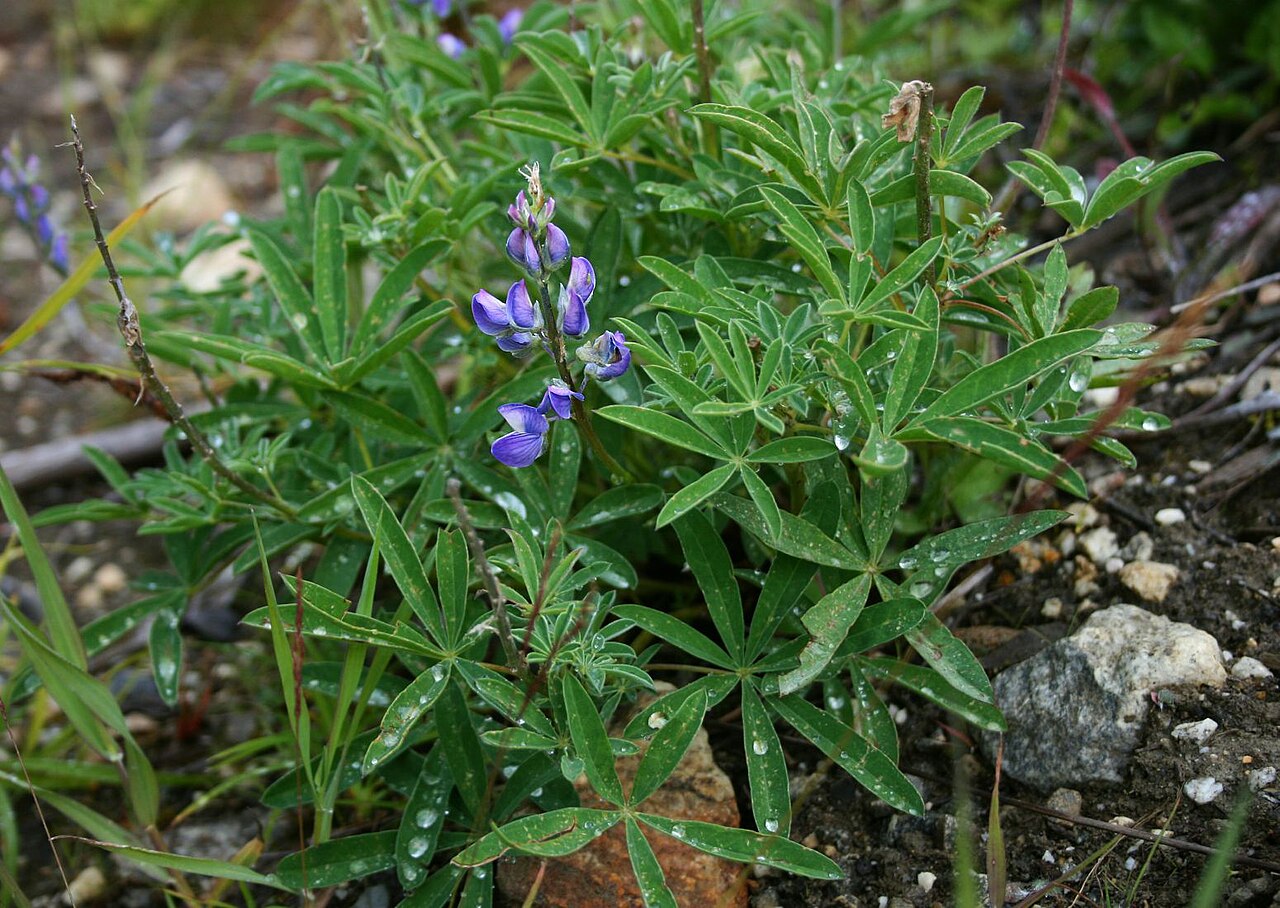
Arctic Lupine is a herbaceous perennial reaching 6 to 20 inches (15–50 cm) tall, with multiple erect to ascending flowering stems rising from a basal clump of leaves.
Leaves
The leaves are palmately compound, with 3 to 9 narrow leaflets up to 2.5 inches (6 cm) long radiating from a hairy petiole as long as 6.5 inches (17 cm). Both leaflet surfaces are covered in fine silky hairs, giving the foliage a soft gray-green cast, especially when backlit. Leaflets close upward along their midrib at night and in cold or dry conditions.
Flowers
Flowers are borne in a dense raceme up to 6 inches (15 cm) long carrying as many as 30 individual pea-shaped blossoms. Each flower has the typical lupine banner-wings-keel structure, usually blue to purple, occasionally shading to white, with the banner petal sometimes tinged pink. Bloom occurs from late spring at lower elevations to mid-summer on high alpine sites, timed to the short northern growing season.
Fruit & Seeds
The fruit is a hairy, flattened legume pod about 1 to 1.2 inches (2–3 cm) long, green ripening to blackish, that splits explosively when dry to fling up to 10 white-speckled black seeds a short distance from the parent plant. The seeds are extremely long-lived in cold, dry storage conditions.
Quick Facts
| Scientific Name | Lupinus arcticus S. Watson |
| Family | Fabaceae (Pea/Legume) |
| Plant Type | Perennial Forb/Wildflower |
| Mature Height | 6–20 in (15–50 cm) |
| Mature Spread | 8–14 in (20–35 cm) |
| Growth Rate | Slow to moderate |
| Sun Exposure | Full Sun to Part Shade |
| Water Needs | Low to Moderate |
| Soil Type | Gravelly, rocky, well-drained |
| Soil pH | 5.5–7.0 (slightly acidic to neutral) |
| Bloom Time | June – August (later at higher elevation/latitude) |
| Flower Color | Blue to purple, occasionally white |
| Fall Color | Foliage dies back; no notable fall color |
| Fruit | Hairy green-to-black legume pods, 1–1.2 in |
| Deer Resistant | Yes — foliage contains bitter alkaloids |
| USDA Hardiness Zones | 2–7 |
Native Range
Arctic Lupine ranges from the Oregon Cascades north through Washington State and the Idaho Panhandle, through British Columbia, and across Alaska and the Yukon to Nunavut and the Canadian Arctic Archipelago — one of the northernmost-reaching lupine species on the continent. In the Lower 48, confirmed native populations are concentrated in the Cascade Range and northern Rocky Mountain foothills of Washington, Oregon, and Idaho.
Within this range, Arctic Lupine is a plant of cool, open ground: subalpine and alpine meadows, talus slopes, tundra, and recently exposed glacial or volcanic soils. It is especially common on Cascade volcanoes such as Mount Rainier, where it colonizes rocky benches and pumice flats alongside other alpine wildflowers.
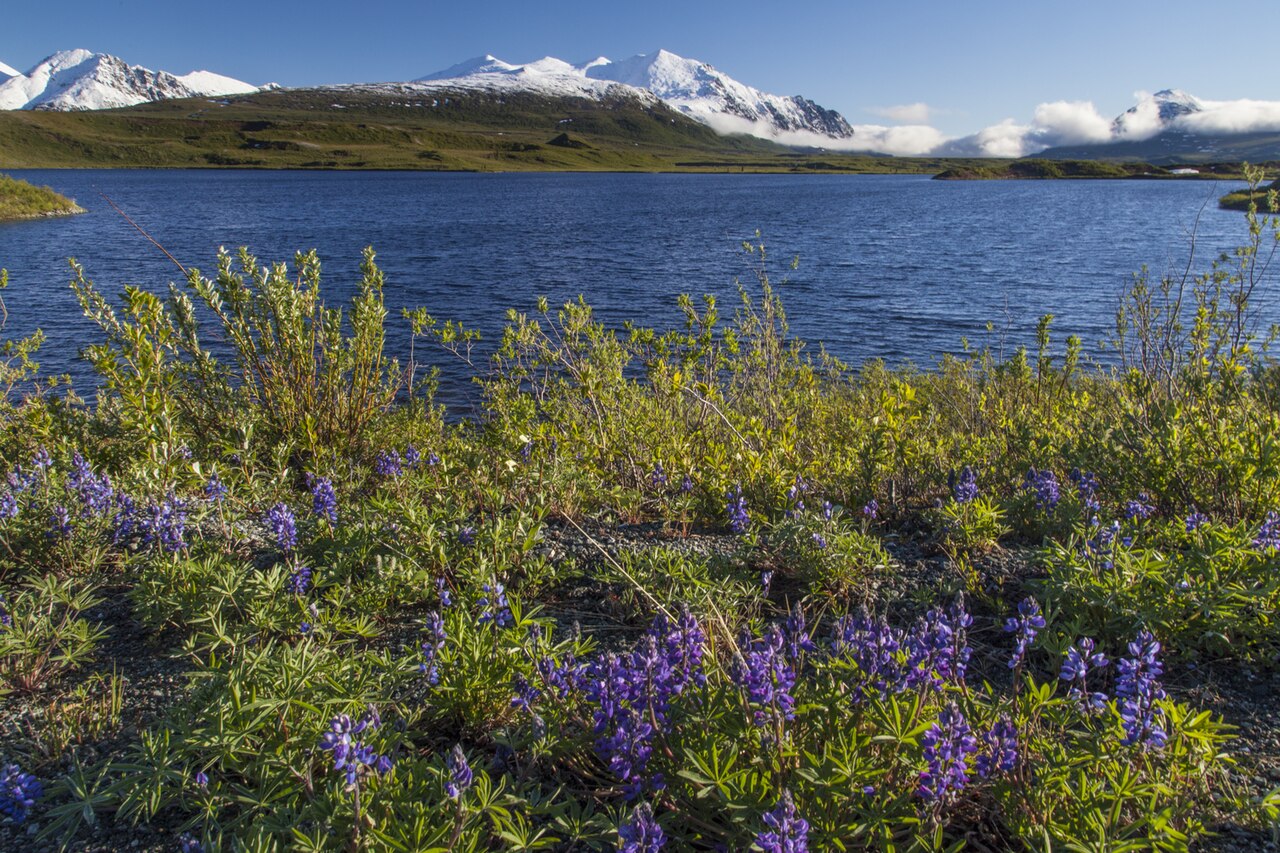
In Alaska and the Canadian Arctic, Arctic Lupine grows in sedge and moss tundra and on well-drained hillsides, often forming conspicuous purple-blue drifts across otherwise subdued tundra color in early summer. The species is not considered native outside this western and northern range, and garden escapes outside cool mountain and subarctic climates are not expected to persist.
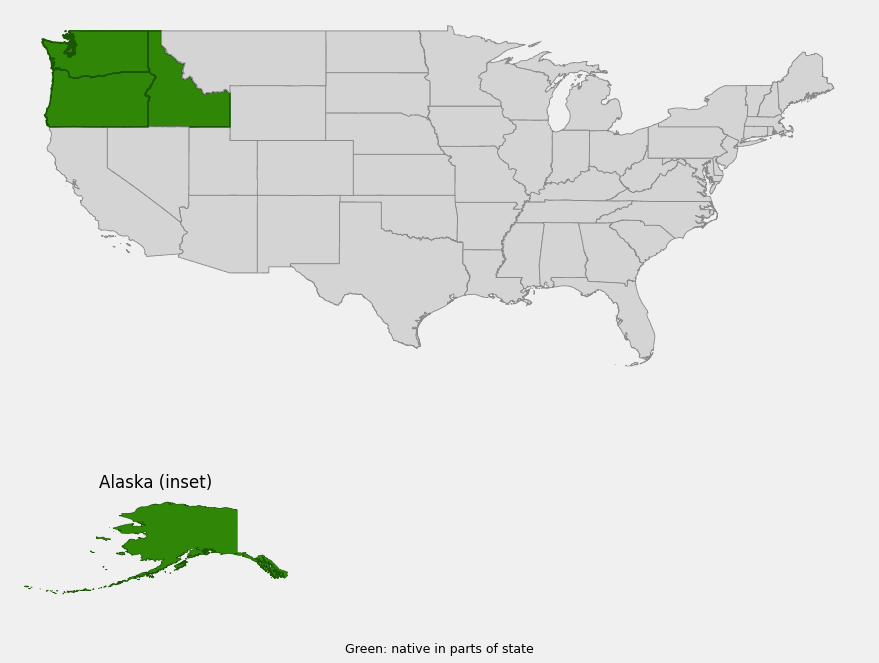
📋 Regional plant lists featuring Arctic Lupine: Alaska · Western Oregon & Western Washington · Idaho, Eastern Oregon & Eastern Washington
Growing & Care Guide
Arctic Lupine is not a plant for a typical lowland perennial border — it wants the cool nights, bright light, and lean, fast-draining soil of a mountain meadow. Gardeners in cool-summer climates from Alaska through the Pacific Northwest mountains can grow it successfully in rock gardens, scree beds, and alpine troughs.
Light
Give Arctic Lupine full sun in cool climates, or light afternoon shade where summer heat builds up. At its native elevations, intense but brief summer sun is balanced by cold nights; gardens at lower, warmer elevations should avoid reflected heat from pavement or south-facing walls.
Soil & Water
This species demands sharp drainage — gravelly, rocky, or sandy soil that never stays soggy. Established plants tolerate dry spells well but appreciate occasional deep watering during active summer growth; constantly wet or heavy clay soil will rot the taproot. A top-dressing of gravel mulch around the crown helps keep foliage dry and discourages rot in humid gardens.
Planting Tips
Like most lupines, Arctic Lupine resents root disturbance, so start it from seed sown directly where it is to grow, or transplant young container stock carefully while small. Seed benefits from scarification (nicking the hard seed coat) and a cold, moist stratification period of several weeks to mimic a mountain winter before it will germinate reliably.
Pruning & Maintenance
Deadheading spent flower spikes can encourage a second, lighter bloom and prevents excessive self-seeding in small gardens. Otherwise this is a low-maintenance plant; avoid fertilizing, since rich soil produces leggy, floppy growth and reduces the longevity of lupines in general.
Propagation
Propagate by seed collected just as pods begin to split, since mature pods shatter quickly. Division is difficult and usually fatal to the taproot, so seed is the practical method for home gardeners.
Landscape Uses
Arctic Lupine’s tidy, mounding habit suits several planting styles:
- Alpine and rock gardens paired with other high-elevation natives
- Scree beds and gravel gardens that replicate talus conditions
- Containers and troughs for patios in cool-summer climates
- Restoration plantings on disturbed subalpine or subarctic sites
- Pollinator gardens at higher elevations and northern latitudes
Wildlife & Ecological Value
In the demanding alpine and subarctic habitats where it grows, Arctic Lupine is both a food source and a soil engineer, playing an outsized role for a plant of its modest size.
For Pollinators
The flowers are visited by bumblebees and other native bees adapted to cold mountain and northern climates, which are among the few pollinators active at these elevations and latitudes. Bumblebees are especially effective at tripping the lupine’s spring-loaded keel petal to release pollen.
For Mammals
Ground squirrels feed on Arctic Lupine’s foliage and seeds despite the plant’s alkaloid content, and snowshoe hares browse the leaves selectively — research has shown that sparteine levels in the foliage rise at night, when hare browsing pressure is highest, suggesting the plant adjusts its chemical defenses on a daily cycle.
Ecosystem Role
As a nitrogen-fixing legume, Arctic Lupine is one of the first wildflowers to colonize raw, nutrient-poor ground left behind by retreating glaciers, volcanic eruptions, or mountain erosion. Its root nodules add usable nitrogen to the soil, gradually improving conditions for less hardy pioneer species and helping stabilize loose alpine slopes.
Cultural & Historical Uses
Arctic Lupine holds a unique place in scientific history. In 1967, Canadian researchers reported that seeds recovered from an ancient lemming burrow in the Yukon, believed to be tens of thousands of years old, had germinated and grown into flowering plants — a sensational claim that made headlines as the discovery of the oldest viable seeds ever found. For decades the story stood as a celebrated example of the species’ extraordinary seed longevity.
In 2009, radiocarbon dating of the original seed coats showed that the seeds were in fact only a few years old at the time of the 1960s discovery, not ancient at all — they had likely fallen into the burrow from nearby plants shortly before it was excavated. The episode remains a well-known cautionary tale in botany about verifying extraordinary claims, even as it is still sometimes repeated as fact in popular writing.
Among Indigenous peoples of the Arctic and Subarctic, detailed documented traditional uses of this particular species are limited in the available literature, though lupines in general were recognized across many northern and mountain cultures as conspicuous, reliable markers of the brief summer growing season. As with other lupines, no part of the plant was used as a food source, given its alkaloid content.
Frequently Asked Questions
Is Arctic Lupine poisonous?
Yes. All parts of Arctic Lupine, especially the seeds, contain quinolizidine alkaloids that are toxic to livestock, pets, and people if ingested in quantity. Keep it out of pastures and away from small children and grazing animals, and never treat it as an edible plant.
Will Arctic Lupine grow outside cold mountain or northern climates?
It struggles in hot, humid, or mild lowland gardens. This species evolved for short, cool summers and long, cold winters, and it generally performs best above roughly 3,000 feet in the Cascades or in Alaska and similarly cold climates — USDA zones 2 through 7.
How is Arctic Lupine different from other lupines in the Pacific Northwest?
Arctic Lupine is distinguished by its compact, silky-leaved clumps, relatively short flower spikes, and strong affinity for alpine, subalpine, and tundra habitats, as opposed to lowland prairie or roadside species. Positive identification of lupines often requires close attention to leaf hairiness, pod shape, and habitat, since the genus hybridizes readily.
Do the seeds really stay viable for thousands of years?
No — this is a persistent myth traced to a famous but since-debunked 1967 report. Later radiocarbon testing showed the “ancient” seeds were actually modern. Arctic Lupine seeds are long-lived in cold, dry storage, but not on the scale once claimed.
Can I plant Arctic Lupine in a regular flower bed?
Only if your garden has cool summers and sharply drained, lean soil; otherwise it is better suited to a rock garden, scree bed, or alpine trough where its drainage and light needs can be met more precisely than in a standard perennial border.

Looking for a nursery that carries Arctic Lupine?
Browse our native plant nursery directory: Alaska · Washington · Oregon · Idaho