
Coulter’s Lupine (Lupinus sparsiflorus)
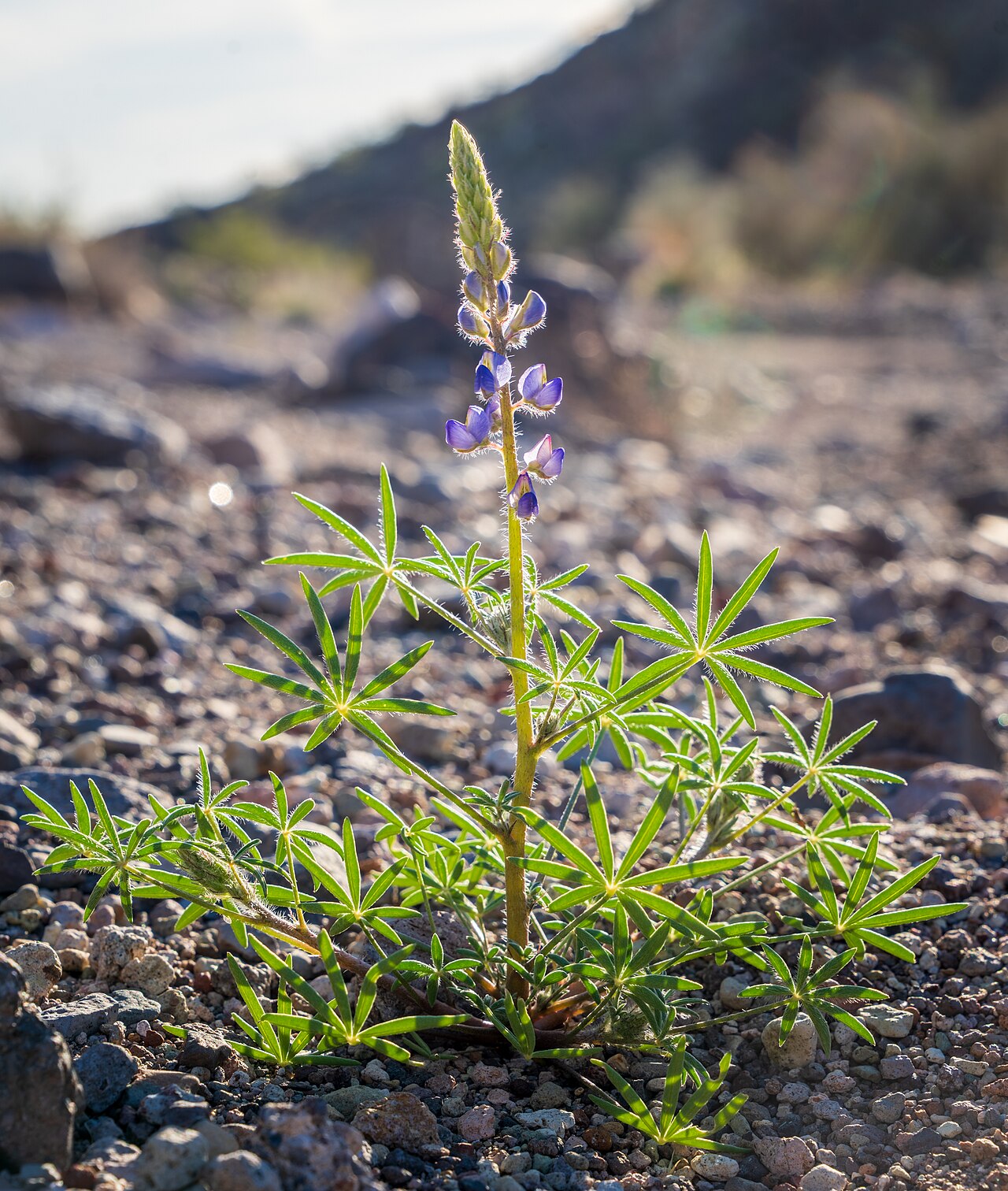
Lupinus sparsiflorus, known as Coulter’s lupine or desert lupine, is one of the most reliable spring wildflowers of the Sonoran and Mojave Deserts. Each winter’s rains determine how good the show will be, but in a favorable year this slender annual carpets desert flats, washes, and rocky slopes in soft blue-violet, often blooming alongside California poppy, desert sand verbena, and other ephemeral wildflowers in one of the Southwest’s great seasonal spectacles.
Like other lupines, Coulter’s lupine is toxic if eaten — its foliage and seeds contain quinolizidine alkaloids that can sicken or kill livestock and pets, and the plant should never be treated as edible by people either. That caution aside, it is an easy, low-water annual for a desert wildflower garden, asking only for a sunny spot, well-drained soil, and the patience to let it set and drop seed for next year’s bloom.
As an annual, Coulter’s lupine completes its entire life cycle in a single growing season: germinating with fall or winter rains, flowering from late winter into spring, and setting seed before desert heat arrives in earnest. Gardeners who want it to return year after year should let at least some plants go to seed rather than deadheading everything.
Identification
Coulter’s lupine is a low, often branching annual typically reaching 4 to 16 inches tall, though size varies enormously with rainfall — plants in a dry year may flower at just a few inches, while those in a wet winter can form sprawling, many-stemmed clumps.
Leaves
Leaves are palmately compound with 5 to 9 narrow, spoon-shaped leaflets radiating from the tip of a slender petiole, each leaflet covered in fine silvery hairs that give the foliage a soft, grayish-green sheen. The hairy texture helps the plant reduce water loss in its hot, dry habitat.
Flowers
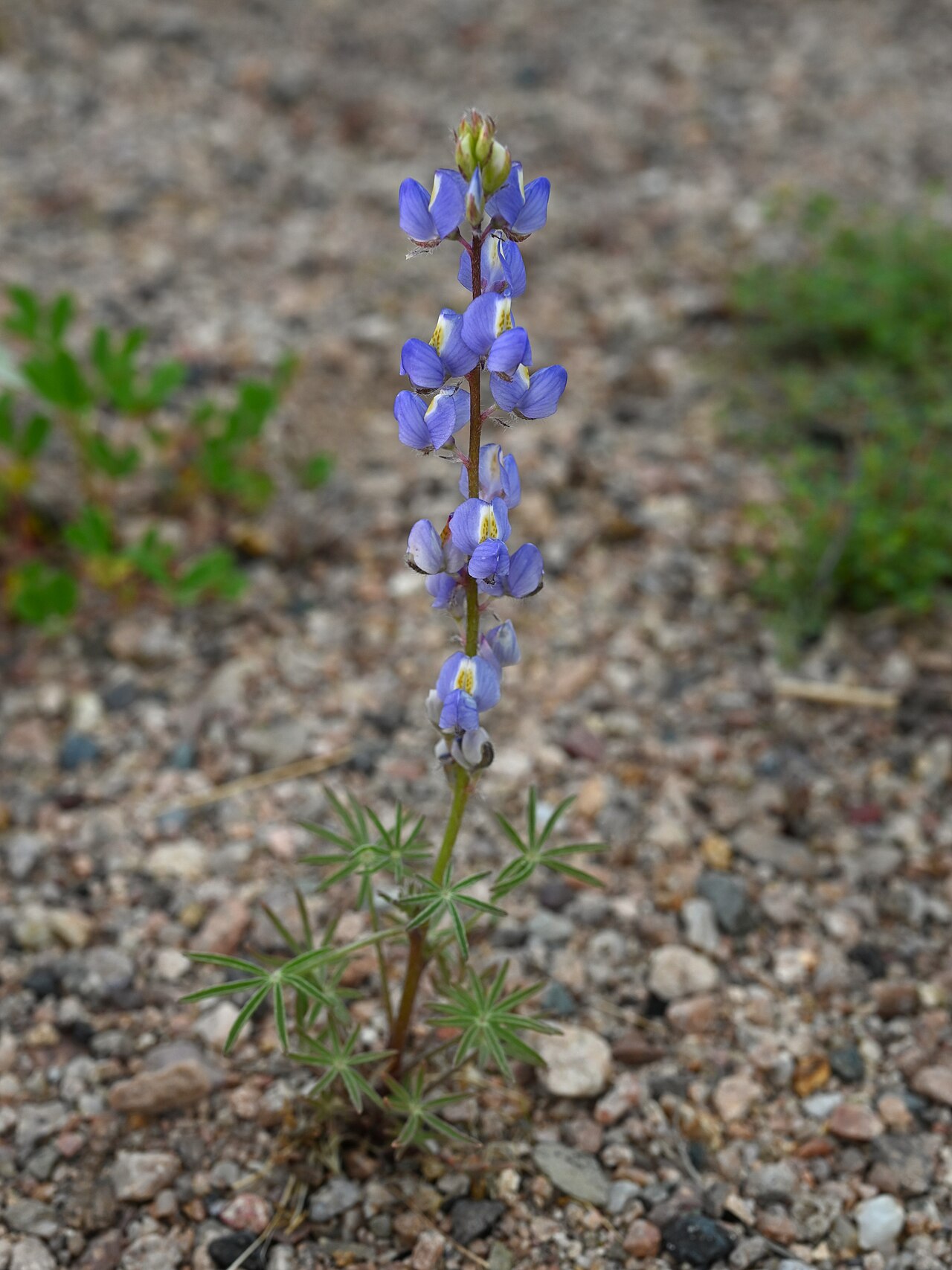
Flowers are borne in loosely spaced spikes (racemes) 2 to 6 inches long — the specific name sparsiflorus refers to this comparatively open, sparse arrangement of blossoms compared to denser-flowered lupine species. Individual flowers are small, typically ⅓ to ½ inch long, blue to violet with a white or pale yellow patch on the banner petal that often turns reddish-purple with age, a common lupine trait thought to signal spent flowers to pollinating bees. Bloom runs from February into April depending on elevation and winter rainfall.
Fruit & Seeds
Flowers give way to small, hairy legume pods roughly ½ to 1 inch long, each containing a handful of hard, mottled seeds. Pods dry and split open to scatter seed nearby, and the hard seed coat allows seeds to remain viable in the soil for years, germinating only when a wet winter provides enough moisture — the reason a single good rain year can produce an explosion of lupines in a landscape that showed none the year before.
Quick Facts
| Scientific Name | Lupinus sparsiflorus |
| Family | Fabaceae (Pea/Legume) |
| Plant Type | Annual Wildflower |
| Mature Height | 4–16 in (10–40 cm) |
| Mature Spread | 6–12 in (15–30 cm) |
| Growth Rate | Fast (completes life cycle in one season) |
| Sun Exposure | Full Sun |
| Water Needs | Low |
| Soil Type | Sandy or gravelly, well-drained desert soils |
| Soil pH | 6.5–8.0 (neutral to alkaline) |
| Bloom Time | February – April |
| Flower Color | Blue-violet with pale banner spot |
| Fall Color | None (annual; plant dries and dies by early summer) |
| Fruit | Small hairy legume pods |
| Deer Resistant | Yes (toxic foliage deters browsing) |
| USDA Hardiness Zones | 8–11 |
Native Range
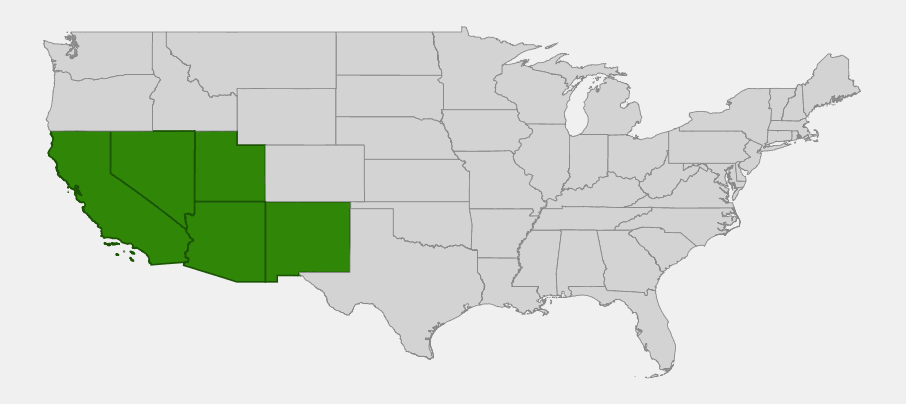
Coulter’s lupine is native across the warm deserts of the American Southwest, found in Arizona, California, Nevada, Utah, and New Mexico, with its range continuing south into Baja California and Sonora, Mexico. It is especially abundant through the Sonoran Desert of southern Arizona and southeastern California, where it is one of the most widespread annual lupines.
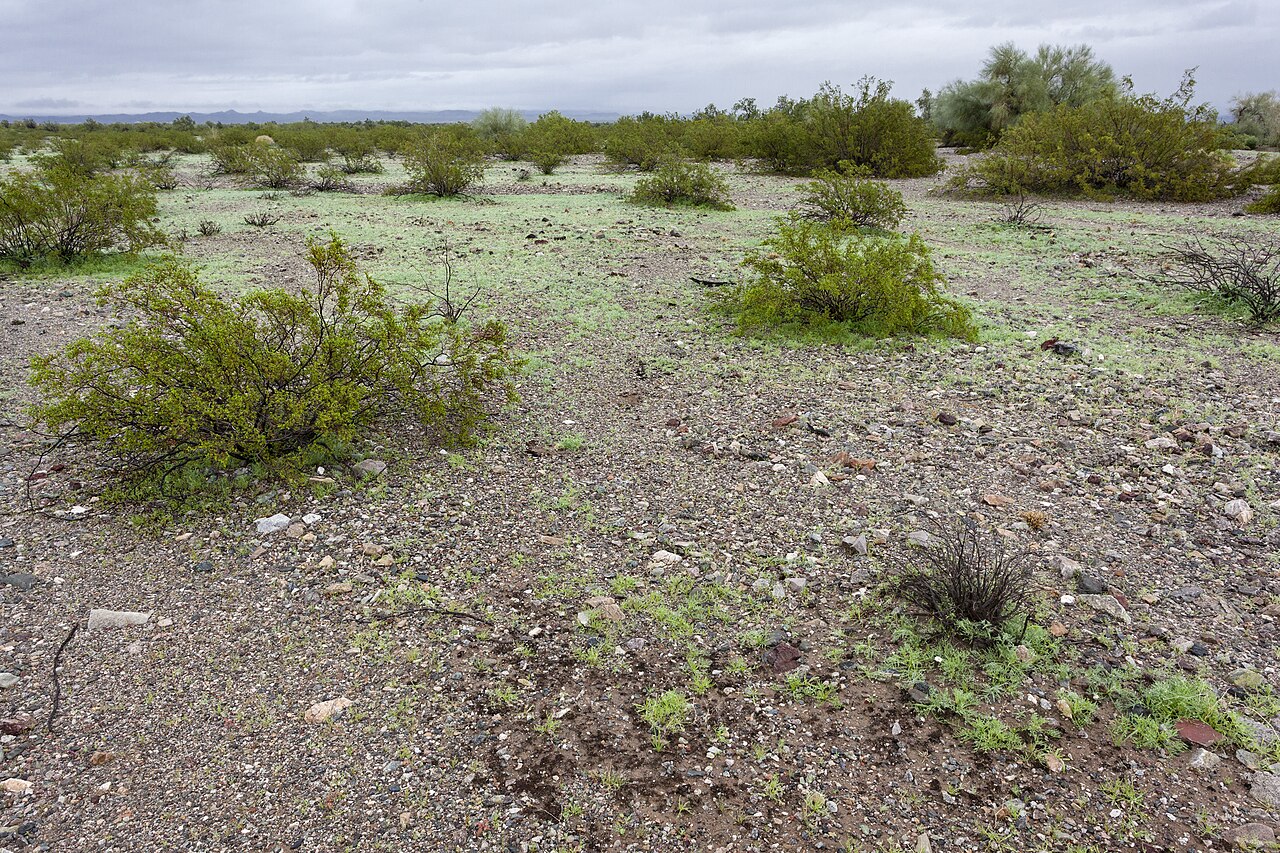
Within this range, Coulter’s lupine grows from low desert flats and washes up into creosote bush scrub, Joshua tree woodlands, and the lower edges of desert grassland, generally below about 3,000 feet elevation. It favors sandy or gravelly soils on flats, bajadas, and disturbed roadside areas, and often appears in dense stands after a wet winter in places where it was barely visible the year before.
Rainfall timing and amount drive Coulter’s lupine’s abundance from year to year far more than location does — a pattern typical of Southwestern desert annuals. Gardeners growing it outside its native desert range, in milder but wetter West Coast climates, should expect it to behave differently and potentially need more careful drainage to avoid rot.
📋 Regional plant lists featuring Coulter’s Lupine: Arizona & New Mexico · Utah & Western Colorado
Growing & Care Guide
Coulter’s lupine is an easy, low-maintenance annual for a Southwestern desert wildflower garden, especially when grown alongside other desert annuals for a naturalistic spring display. It is not a plant for year-round structure, but for a reliable burst of blue-violet color each spring.
Light
Plant in full sun, matching the open desert flats and washes where it grows wild. Too much shade will produce weak, leggy plants with fewer flowers.
Soil & Water
Coulter’s lupine wants fast-draining sandy or gravelly soil and minimal supplemental water. In the garden, a deep soak at planting time followed by natural winter rainfall is usually enough; overwatering, especially in heavier soils, invites root and crown rot. Avoid rich, amended garden soil, which tends to produce floppy growth and fewer flowers than the lean conditions this species prefers.
Planting Tips
Direct-sow seed in fall, scratching seeds lightly into the soil surface rather than burying them deeply. Scarifying the hard seed coat (nicking it or soaking seeds briefly in hot water) improves and speeds germination. Because it is an annual, Coulter’s lupine is best grown from seed rather than purchased as a potted plant, and it readily reseeds itself once established if some plants are allowed to mature and drop seed.
Pruning & Maintenance
No pruning is needed. Simply allow plants to complete their natural cycle, flowering, setting seed, and drying up by early summer. Leaving spent plants in place until seed has dropped ensures a return bloom the following year, assuming adequate winter rain.
Landscape Uses
- Desert wildflower meadows mixed with California poppy and other spring annuals
- Low-water xeriscaping in Southwestern gardens
- Pollinator gardens supporting native desert bees
- Erosion control on disturbed desert soils and roadsides within its native range
Wildlife & Ecological Value
As one of the most widespread spring annuals of the Southwestern deserts, Coulter’s lupine plays an outsized role in the brief but intense desert wildflower season.
For Pollinators
The flowers are visited by native bees, including digger bees and bumblebees capable of tripping the pea-shaped blossoms to access pollen, making the species a valuable early-season nectar and pollen source in the desert.
For Birds
Seed-eating desert birds forage on the ripening pods, and the dense stands that form in good rain years provide brief cover for small birds and other wildlife moving through otherwise open desert terrain.
For Mammals
Most mammalian herbivores, including livestock, avoid eating Coulter’s lupine because of its toxic alkaloid content, though some desert rodents are known to eat the seeds. This natural resistance to grazing is part of why lupines can carpet grazed desert flats where more palatable annuals are quickly consumed.
Ecosystem Role
Like other lupines, Coulter’s lupine fixes nitrogen in the soil through its roots, modestly enriching the nutrient-poor desert soils it grows in. Its mass blooms are also an important part of the pulse of productivity that follows wet desert winters, supporting insect populations that in turn feed birds and other wildlife through spring.
Cultural & Historical Uses
Coulter’s lupine has little recorded history of use by Indigenous peoples of the Southwest as a food or material plant, likely owing to its toxicity; like other lupines, its foliage and seeds contain alkaloids that can cause illness or death in livestock and are unsafe for people to eat. The species was named for Thomas Coulter, an Irish botanist and physician who collected extensively in the Southwest and Mexico in the 1830s.
Today Coulter’s lupine is best known as one of the signature wildflowers of the Southwestern desert “superbloom” phenomenon, when unusually wet winters trigger mass germination of dormant seed banks and produce carpets of blue-violet flowers across desert flats that draw visitors from well outside the region. It has no history of medicinal use and should not be treated as a folk remedy.
Frequently Asked Questions
Is Coulter’s lupine the same as desert lupine?
Yes, “desert lupine” is a commonly used alternate name for Lupinus sparsiflorus in its native Southwestern range, alongside “Coulter’s lupine.”
Is Coulter’s lupine poisonous?
Yes. Like other lupines, its foliage and seeds contain toxic alkaloids that can be dangerous to livestock, pets, and people if eaten. It should never be treated as edible or medicinal.
Why didn’t my Coulter’s lupine come back this year?
It’s an annual, so individual plants complete their life cycle and die within one growing season. A poor bloom usually means a dry winter reduced germination from the dormant seed bank rather than a problem with the planting itself.
Can I grow Coulter’s lupine outside the desert Southwest?
It can be grown elsewhere with full sun and very well-drained soil, but it performs best and reseeds most reliably within or near its native desert range, where rainfall timing matches its natural growth cycle.
How do I get Coulter’s lupine to reseed itself?
Let at least some plants mature fully and drop their seed pods naturally rather than deadheading everything, and avoid disturbing the soil surface where seed has fallen.

Looking for a nursery that carries Coulter’s Lupine?
Browse our native plant nursery directory: Arizona · California · Nevada & New Mexico · Utah