
Purple Mat (Nama demissum)
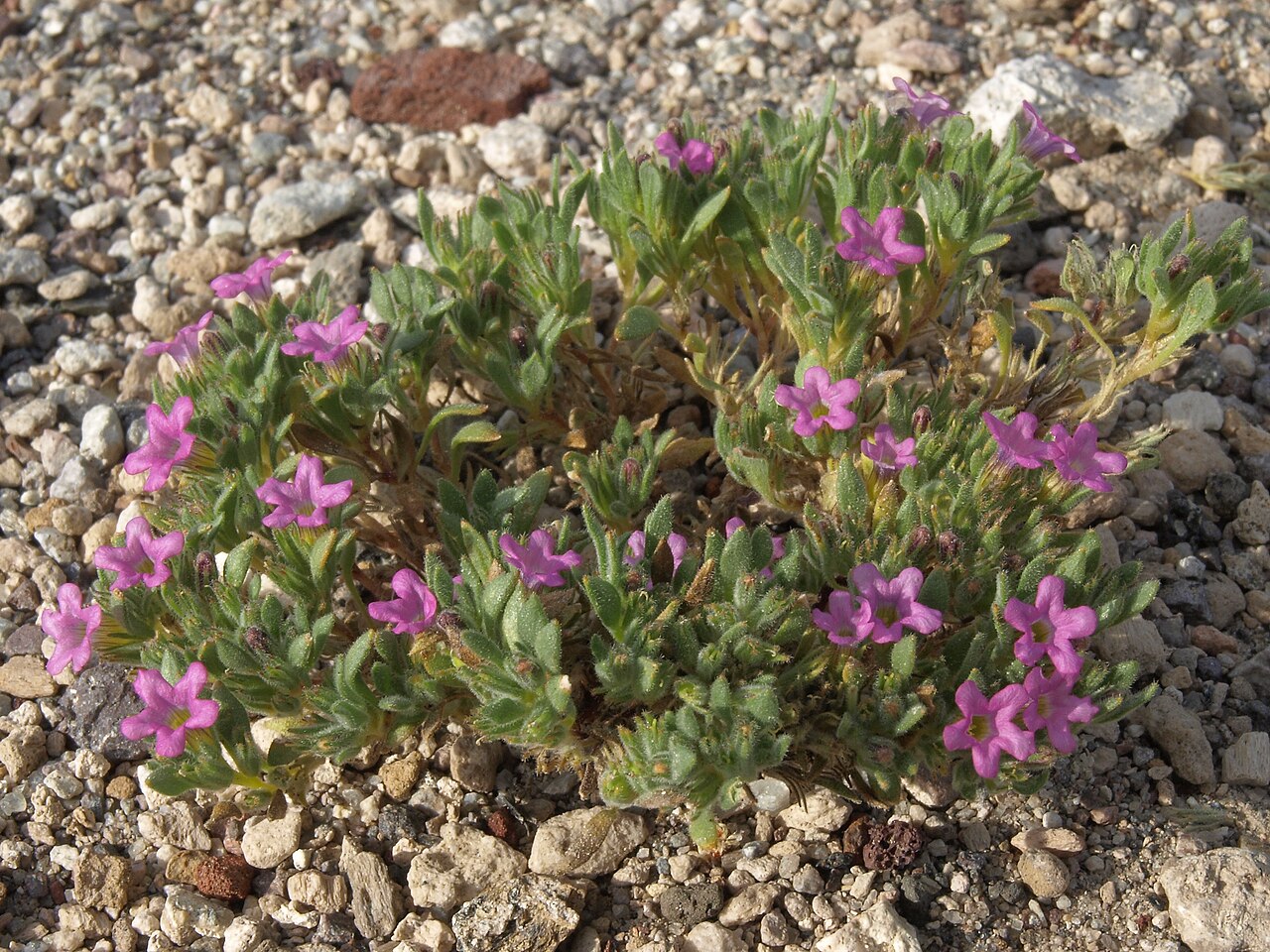
Nama demissum A. Gray, commonly called Purple Mat or Desert Purplemat, is one of the small annual wildflowers that turns bare desert gravel into a carpet of color after a good winter or spring rain. A member of the waterleaf family, it forms low, flat mats of hairy, grayish foliage studded with small, funnel-shaped flowers in shades of magenta to purplish pink, each centered with a contrasting pale or yellow throat. The genus name Nama, from the Greek word for “stream,” is a nod to wetter relatives elsewhere in the family; this particular species, true to its desert home, thrives in the driest, rockiest ground the Mojave and Sonoran deserts have to offer.
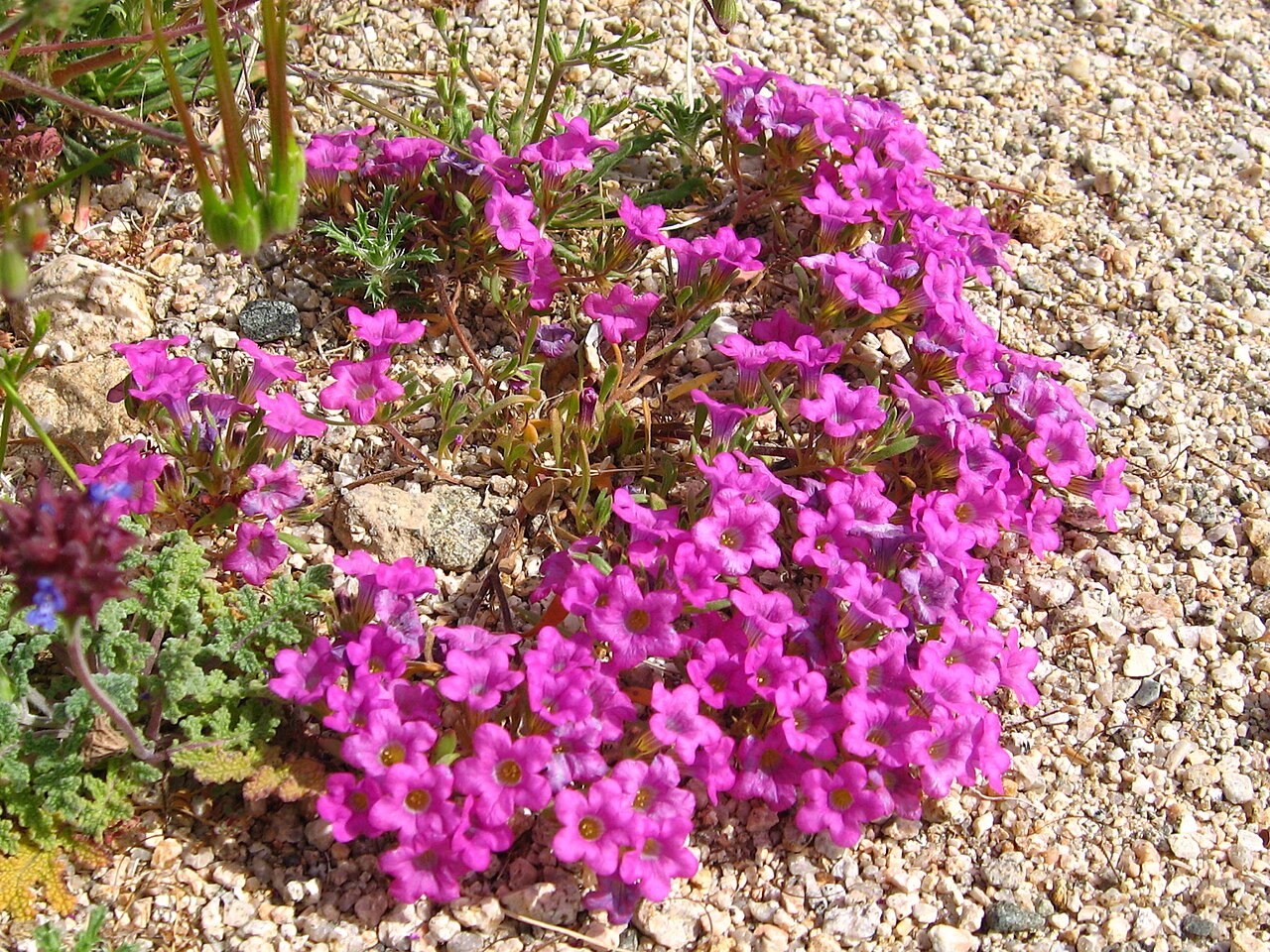
Purple mat is a true desert annual, completing its entire life cycle — germination, bloom and seed set — within a single wet season, then vanishing until conditions bring it back. In good bloom years it can carpet creosote bush flats and sandy washes with color, and even in average years it persists as scattered low mats tucked among rocks and gravel where little else grows.
For desert gardeners, Purple mat offers an easy, low-maintenance way to add reliable spring color to gravel gardens, dry washes and naturalistic desert landscaping, asking for nothing more than the lean, fast-draining soil and winter moisture it already expects in the wild.
Identification
Purple mat is a small annual herb that grows as a low, spreading mat rarely more than 3 to 6 inches tall but often a foot or more across, with branching stems that sprawl outward from a central point. The entire plant is covered in short, bristly, glandular hairs, giving the foliage a grayish-green, slightly sticky texture.
Leaves
Leaves are small, narrow and spoon- to linear-shaped, arranged alternately along the sprawling stems, and like the rest of the plant they are coated in coarse hairs. The foliage has a somewhat dusty gray-green cast that helps the plant blend into its gravelly surroundings when not in bloom.
Flowers
Flowers are small, funnel- or trumpet-shaped, with five fused petals flaring into rounded lobes in shades of bright magenta to purplish pink, occasionally pale lavender or white, often with a lighter or yellowish throat. They are borne singly or in small clusters along the stems and open readily in sunny weather, closing on cool or overcast days. Bloom typically runs from February into May, depending on winter rainfall and elevation.
Fruit & Roots
After flowering, each flower produces a small, dry seed capsule holding numerous tiny seeds. Purple mat has a simple, shallow taproot suited to a short annual life, with no woody tissue — by early summer the above-ground plant dries and disappears entirely, leaving only seed in the soil to await the next rain.
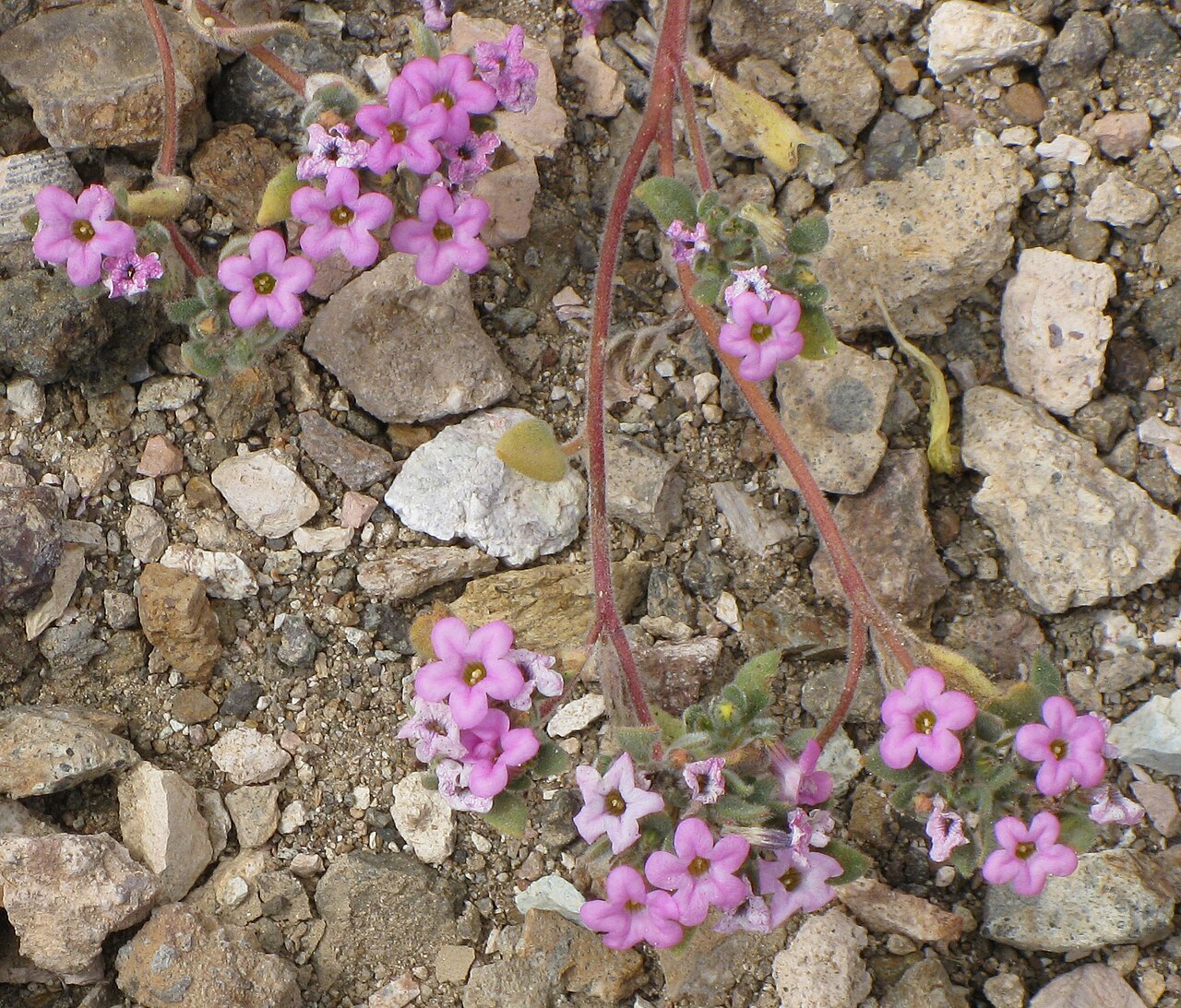
Quick Facts
| Scientific Name | Nama demissum |
| Family | Namaceae / Boraginaceae (Waterleaf) |
| Plant Type | Annual Wildflower (mat-forming) |
| Mature Height | 3–6 in (8–15 cm) |
| Mature Spread | 8–16 in (20–40 cm) |
| Growth Rate | Fast (completes life cycle in one season) |
| Sun Exposure | Full Sun |
| Water Needs | Low; relies on winter/spring rainfall |
| Soil Type | Sandy, gravelly or rocky, fast-draining |
| Soil pH | Neutral to alkaline |
| Bloom Time | February – May |
| Flower Color | Magenta to purplish pink, pale throat |
| Fall Color | None; plant dies back by early summer |
| Fruit | Small dry seed capsules, not ornamental |
| Deer Resistant | Yes, generally avoided |
| USDA Hardiness Zones | 8–10 |
Native Range
Purple mat is native to the low desert country of the American Southwest, occurring across the Mojave and Colorado/Sonoran deserts of California, Nevada, Arizona and southwestern Utah, and extending south into Baja California and Sonora, Mexico. It is a true low-elevation desert specialist, typically found below about 3,500 to 5,500 feet, well below the pinyon-juniper and chaparral belts.
Within this range it favors open, sun-baked ground: sandy washes, gravelly flats and rocky desert pavement, most often in the company of Creosote Bush scrub. These are harsh, exposed sites with little competition from larger shrubs, which is exactly the niche an opportunistic, fast-cycling annual like Purple mat is built to exploit.
Purple mat’s abundance varies enormously from year to year, tracking winter and early spring rainfall. In wet years it can be one of the more conspicuous low-growing wildflowers of a desert superbloom, carpeting washes and flats; in dry years, seed simply waits in the soil, sometimes for several seasons, until rainfall is sufficient to trigger germination again.
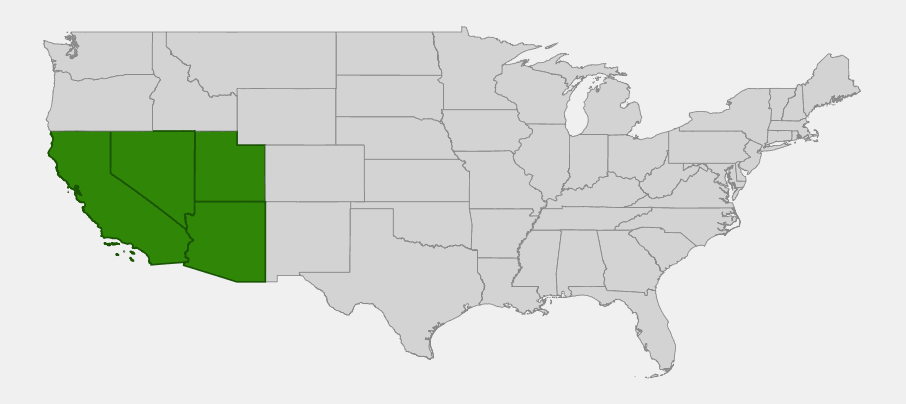
📋 Regional plant lists featuring Purple Mat: Arizona & New Mexico · Utah & Western Colorado
Growing & Care Guide
Purple mat is about as low-maintenance as a native wildflower gets, provided it is given the lean, sunny, fast-draining conditions it evolved for. It is not a plant for rich garden soil or regular irrigation — treat it like the desert annual it is, and let nature’s winter rains (supplemented sparingly if needed) do the work.
Light
Give it full, unobstructed sun. Purple mat is adapted to the most exposed, baking-hot sites in the desert and will not perform well in shade or part shade.
Soil & Water
Plant in sandy, gravelly or rocky soil with excellent drainage; heavy clay or regularly irrigated garden beds are not a good match and tend to favor weeds over this plant. Rely on winter and early spring rainfall for germination and growth; established seedlings need little or no supplemental water, and in cultivation it is best watered sparingly and only during dry spells, mimicking natural desert rainfall patterns rather than a regular garden watering schedule.
Planting Tips
Purple mat is grown from seed, scattered over bare, lightly raked soil in fall so that winter rains can trigger germination naturally. Avoid burying seed deeply — surface sowing followed by a light raking works best. Because germination and bloom depend heavily on rainfall timing, flowering displays will vary noticeably from year to year, which is part of its appeal as an authentic desert wildflower rather than a predictable bedding plant.
Pruning & Maintenance
None needed. As an annual, Purple mat completes its life cycle and dries up on its own by late spring or early summer. Leaving spent plants in place allows seed to drop and reseed the area for future years.
Propagation
Propagate exclusively by seed, collected after capsules dry and before they shatter, then sown in fall. Purple mat does not transplant well once established and is not propagated by division or cuttings.
Landscape Uses
- Gravel and rock gardens in low-desert climates
- Dry washes and naturalistic desert drainage features
- Wildflower meadows seeded alongside other low desert annuals
- Erosion control on bare, disturbed desert soils
- Low-water xeriscaping where a splash of spring color is wanted without irrigation
Wildlife & Ecological Value
As one of the many short-lived desert annuals that respond to winter rain, Purple mat contributes to the pulse of life that follows rainfall in an otherwise sparse landscape.
For Pollinators
The bright, nectar-bearing flowers attract small native bees and other pollinating insects that are active during the brief desert bloom season, when flowering plants are at their most abundant and pollinators correspondingly active.
For Birds
Seed-eating desert birds forage among the dried mats and gravel after bloom, picking up the tiny seeds along with those of other desert annuals, part of the broader seed resource that sustains desert bird populations through the dry months.
For Mammals
Small desert rodents and other granivores feed on the seeds, and the fresh spring growth is browsed lightly by desert mammals when more palatable annuals are scarce.
Ecosystem Role
Purple mat is part of the ephemeral annual wildflower community that stabilizes bare desert soil surfaces after germination, reduces erosion during rain events, and contributes organic matter to notoriously thin desert soils once the plants dry and decompose. Its boom-and-bust population cycle, tracking rainfall rather than season alone, is a defining feature of healthy desert plant communities.
Cultural & Historical Uses
Purple mat has little documented history of use by Indigenous peoples of the Southwest, likely owing to its small size, short season and lack of substantial edible or fiber-producing parts. It is primarily known today as one of the many small, easily overlooked annual wildflowers that botanists, desert naturalists and wildflower enthusiasts watch for each spring as an indicator of a productive desert bloom season.
In recent decades, Purple mat and similar low-growing desert annuals have become more widely appreciated in native plant horticulture as the demand for authentic, water-wise desert landscaping has grown, offering a low-input way to bring the color of a wild desert spring into a home garden.
Frequently Asked Questions
Will Purple mat come back every year?
Not predictably as visible plants, since it is a true annual. However, if allowed to set seed, it will reliably reappear from the soil seed bank in years with adequate winter and spring rainfall, sometimes skipping dry years entirely.
Does Purple mat need regular watering?
No. It is adapted to rely on natural winter and spring rainfall and performs poorly with regular garden irrigation, which favors weeds and can rot the shallow roots. Light supplemental water during an unusually dry bloom season is the most it needs.
Can Purple mat be grown outside the desert Southwest?
It can be attempted in other arid, low-humidity climates with very well-drained soil, but it is best suited to its native low-desert range and climates that mimic the dry, mild winters and hot summers of the Mojave and Sonoran deserts.
Why didn’t Purple mat come up this year?
Germination is tied closely to rainfall amount and timing. In years with insufficient winter rain, seed simply remains dormant in the soil rather than germinating, which is a normal part of its life cycle rather than a sign of a problem.
Is Purple mat edible or used medicinally?
No documented food or medicinal use is recorded for this species; it is grown strictly as an ornamental desert wildflower.

Looking for a nursery that carries Purple Mat?
Browse our native plant nursery directory: California · Nevada · Arizona · Utah