
Guayule (Parthenium argentatum)
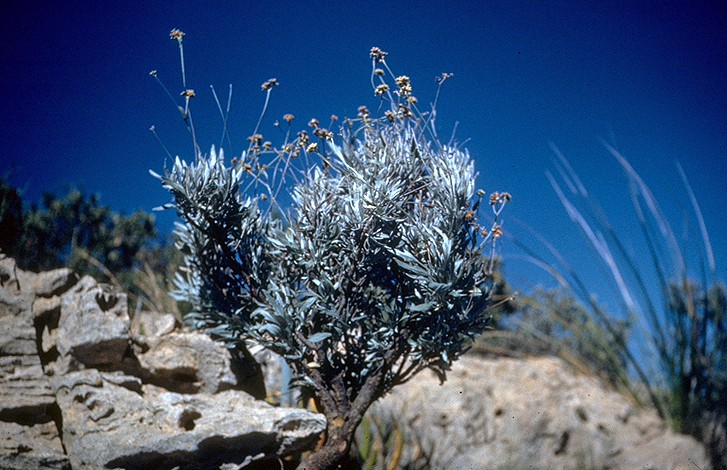
Parthenium argentatum, commonly known as Guayule (pronounced “why-OO-lee,” from the Nahuatl huauhzontli-adjacent word used by Mexican rubber harvesters), is a small, silvery-leaved shrub of the Chihuahuan Desert that occupies an unusual place among native plants: it is both a tough, drought-proof member of the aster family (Asteraceae) and the only North American plant ever developed into a commercial source of natural rubber. In the wild it is a modest, rounded shrub of limestone slopes and desert flats in the Trans-Pecos region of West Texas, rarely noticed by hikers unless it happens to be in bloom. In agricultural and industrial history, though, Guayule has repeatedly been called on as a strategic rubber crop whenever the supply of tropical rubber from Hevea brasiliensis trees has been threatened.
The shrub itself is unassuming: a dense, compact mound 1 to 3 feet tall and about as wide, covered in small, felty, blue-gray to silvery leaves that reflect sunlight and reduce water loss — a classic desert adaptation. From late spring through fall it produces small clusters of tiny white-to-cream flower heads, each only about a quarter inch across, that are easy to overlook but support small native bees and other desert pollinators. What makes Guayule biologically distinctive is hidden in its tissue: unlike most latex-producing plants, which store rubber in a fluid latex that flows when cut, Guayule accumulates rubber as solid particles inside its bark, stem, and root cells, which is why it must be harvested and the whole plant crushed to extract the rubber rather than tapped like a rubber tree.
For a home gardener in the Chihuahuan Desert region, Guayule is a legitimately useful low-water shrub for xeriscaping, erosion control on dry slopes, and native-plant demonstration gardens — it asks for almost nothing once established and tolerates the kind of heat, drought, and alkaline, rocky soil that defeats most ornamental shrubs. Outside its native range it is mostly grown experimentally by researchers and specialty rubber producers rather than home gardeners, since it is adapted to a very specific desert climate.
Identification
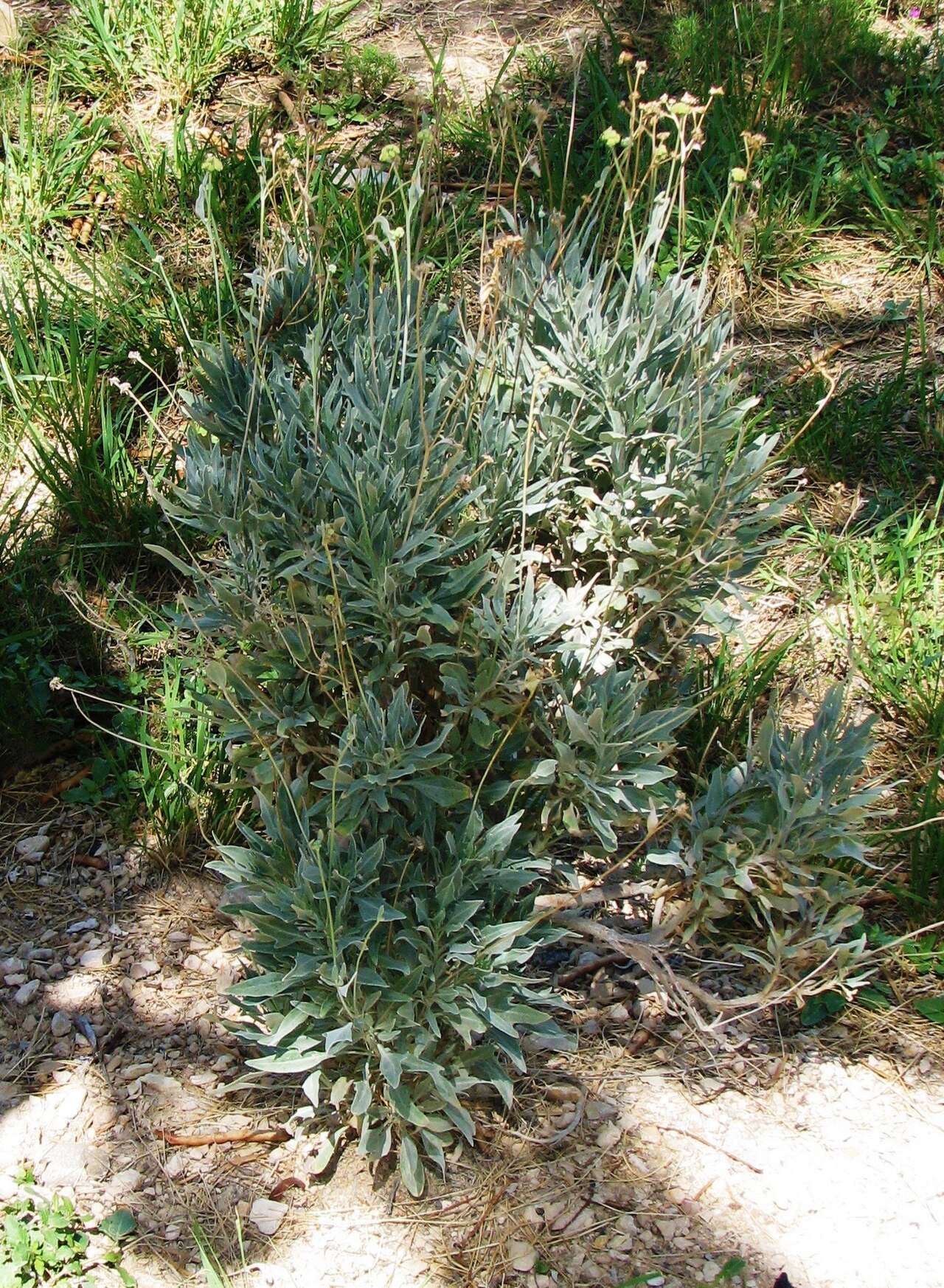
Guayule is a low, rounded, woody subshrub, typically 1 to 3 feet (30–90 cm) tall and similar in spread, with a dense, many-branched habit that gives mature plants a tidy, mounded silhouette. The stems are brittle and woody at the base, becoming more herbaceous toward the tips, and the whole plant has a slightly resinous feel and faint resinous odor when crushed, due to the rubber and resin compounds in its tissues.
Leaves
Leaves are small, 1 to 2 inches (2.5–5 cm) long, alternately arranged, and variable in shape from narrowly oval to irregularly lobed, with wavy or toothed margins. Their most identifiable feature is their color and texture: a dense covering of fine hairs gives the foliage a silvery, felted, almost metallic blue-gray cast, especially noticeable in bright sun. This silvery coloring, more than any single leaf shape, is what gardeners and botanists use to pick Guayule out from similar desert shrubs at a glance.
Flowers & Fruit
Guayule blooms over an extended season, generally late spring through fall in response to rainfall, producing small flower heads about ¼ inch (6 mm) across in loose, branched clusters at the stem tips. Each head carries a handful of tiny white to cream-colored ray flowers surrounding a cluster of disc flowers, typical of the aster family but on a much smaller scale than showier native asters or sunflowers. The fruit is a small, dry, single-seeded achene that drops near the parent plant; Guayule also spreads clonally by root sprouts under favorable conditions, so established colonies are often made up of genetically identical ramets rather than separate seedlings.
Quick Facts
| Scientific Name | Parthenium argentatum |
| Family | Asteraceae (Aster/Sunflower) |
| Plant Type | Evergreen Perennial Shrub |
| Mature Height | 1–3 ft (30–90 cm) |
| Mature Spread | 1–3 ft (30–90 cm) |
| Growth Rate | Slow to moderate |
| Sun Exposure | Full Sun |
| Water Needs | Very Low |
| Soil Type | Dry, rocky, well-drained; limestone or caliche tolerant |
| Soil pH | 7.0–8.5 (neutral to alkaline) |
| Bloom Time | Late spring – fall (rain-dependent) |
| Flower Color | White to cream |
| Fall Color | Evergreen, no notable fall color change |
| Fruit | Small dry achene |
| Deer Resistant | Yes (resinous foliage is rarely browsed) |
| USDA Hardiness Zones | 8–10 |
Native Range
Guayule’s native range in the United States is narrow and specific: it is found only in the Trans-Pecos region of far West Texas, including the Big Bend country, where it grows on dry limestone hills, rocky flats, and desert grassland edges of the Chihuahuan Desert. Its range extends south into the adjoining Mexican states of Chihuahua, Coahuila, Durango, and Zacatecas, where it is considerably more widespread and has historically been the center of wild rubber harvesting. Within Texas, Guayule is a true desert specialist, restricted to the driest, rockiest ground in the state’s westernmost counties — it is not found in central, eastern, or coastal Texas, and gardeners outside the Trans-Pecos and adjoining desert Southwest should not expect it to thrive without irrigation.
In its native habitat, Guayule typically grows on limestone-derived soils and caliche flats in open desert scrub and grassland, often alongside other Chihuahuan Desert natives such as Creosote Bush (Larrea tridentata), Ocotillo (Fouquieria splendens), and various agaves and yuccas. It favors well-drained, sun-baked sites with minimal competition and can be found from roughly 2,000 to 5,000 feet in elevation on the rocky bajadas and hillsides typical of the Big Bend region.
Guayule has been cultivated experimentally well outside this native range — including in Arizona, California, and even overseas — wherever researchers have tried to develop it as an alternative rubber crop, but those plantings are agricultural trials, not naturalized wild populations. Gardeners in Arizona or California growing Guayule should understand it as an introduced desert crop plant there, not a locally native species.
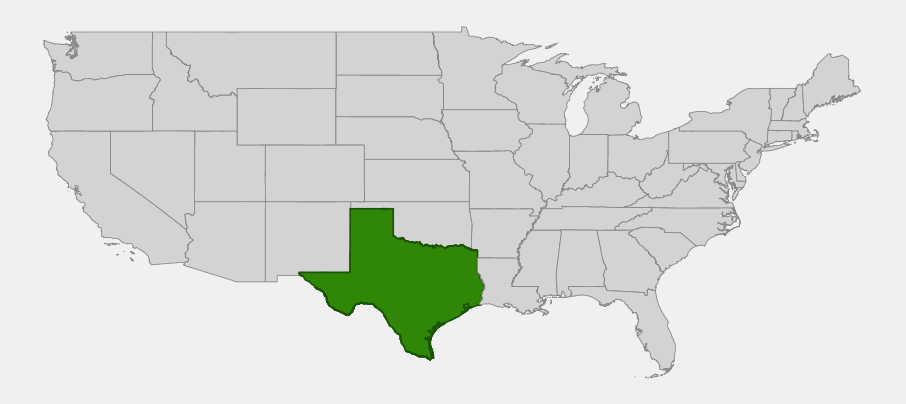
📋 Guayule’s native range is limited to the Trans-Pecos / Big Bend area of West Texas, which falls outside the area covered by our regional plant lists.
Growing & Care Guide
Guayule rewards gardeners who can offer it heat, sun, and excellent drainage, and it punishes any attempt to baby it with rich soil or regular watering. Think of it as a plant for the toughest, driest corner of a Southwestern xeriscape rather than a typical border shrub.
Light
Guayule needs full sun. It is adapted to the intense, unfiltered light of open desert flats and hillsides, and will become leggy, sparse, and prone to rot in shaded or even lightly filtered conditions. Site it where it receives sun for the entire day.
Soil & Water
This is a plant built for poor, rocky, alkaline soil and minimal rainfall. It performs best in well-drained, gravelly or caliche-based soils with a neutral to alkaline pH, and established plants need very little supplemental water beyond natural desert rainfall patterns. Overwatering or planting in heavy, poorly drained clay is the most common way to kill Guayule in cultivation — root and crown rot set in quickly when soil stays wet.
Planting Tips
Plant in spring or fall to allow roots to establish before the most extreme heat or any winter cold snaps. Choose the driest, sunniest, most well-drained spot available — raised beds, berms, or naturally rocky slopes all work well. Space plants roughly 2 to 3 feet apart if planting in groups, since mature specimens will fill out to a dense, rounded mound.
Pruning & Maintenance
Guayule needs little pruning. An occasional light shaping in late winter can keep the mounded form tidy, and removing dead or winter-damaged growth after a hard freeze helps the plant recover its shape. Avoid heavy pruning, since the plant’s slow growth rate means it takes time to fill back in.
Propagation
Guayule can be grown from seed, though germination is often irregular, or from stem cuttings taken from healthy, actively growing shoots. In research and agricultural settings it is also propagated clonally to preserve high-rubber-content lines, but home gardeners will typically rely on seed-grown nursery stock from specialty native or desert-plant nurseries.
Landscape Uses
Guayule fits a specific but valuable niche in desert landscaping:
- Xeriscaping in the hottest, driest, most neglected parts of a Chihuahuan Desert garden
- Erosion control on dry rocky slopes where little else will establish
- Native plant demonstration gardens focused on Trans-Pecos or Big Bend flora
- Rock gardens paired with other low, silvery-leaved desert shrubs
- Low-water borders in West Texas communities practicing water-wise landscaping
Wildlife & Ecological Value
Guayule is not a dominant wildlife food source, but it plays a quiet supporting role in its desert plant community and offers some value to the small, specialized fauna of the Chihuahuan Desert.
For Pollinators
The small white-to-cream flower heads attract native desert bees and other small pollinating insects during the warmer months, providing a nectar and pollen source in a landscape where blooming plants can be sparse outside of rainy periods.
For Birds
The dense, resinous foliage offers some cover for small desert birds, though Guayule is not a notable seed or fruit source for birds in the way that many other desert shrubs are.
For Mammals
The resinous, rubber-bearing tissue that makes Guayule commercially interesting also makes it largely unpalatable to browsing mammals, including deer and livestock, which generally avoid eating it — one reason it persists well on overgrazed range in parts of its native habitat.
Ecosystem Role
As a low, drought-tolerant shrub, Guayule helps stabilize thin desert soils on the rocky slopes and flats where it grows, and its presence alongside Creosote Bush, Ocotillo, and other Chihuahuan Desert natives contributes to the structural diversity of this sparse but ecologically important plant community.
Cultural & Historical Uses
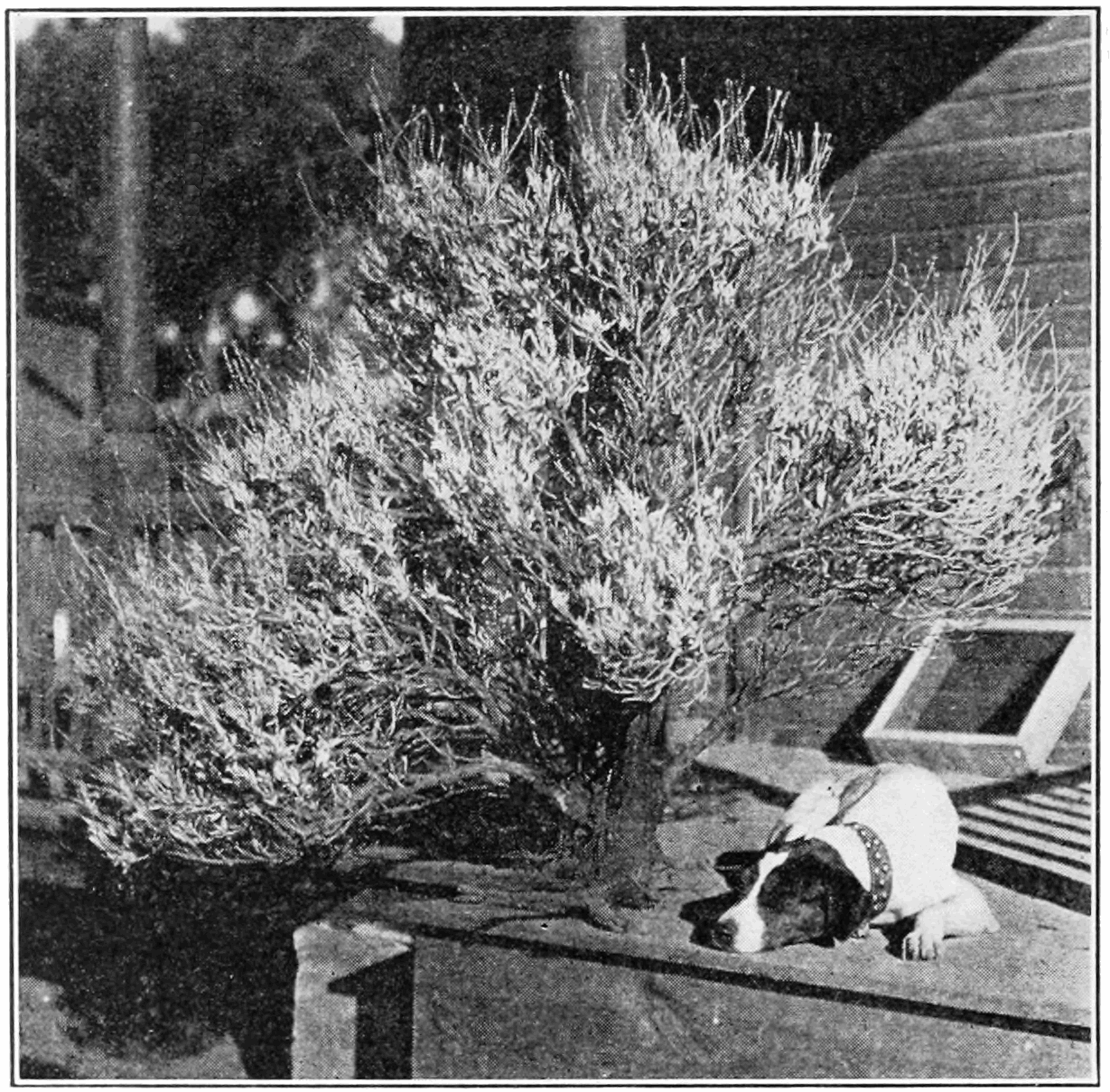
Guayule’s most famous role is as a source of natural rubber, a use documented among Indigenous peoples of northern Mexico long before industrial rubber production began. The plant’s name comes from the Nahuatl language, and Mexican harvesters historically chewed the crushed stems to extract a gum-like rubber for use in balls and other simple objects, a practice noted by early Spanish and American naturalists exploring the Chihuahuan Desert.
Industrial interest in Guayule rubber began in earnest in the late 1800s and accelerated sharply during the 20th century whenever supplies of tropical rubber from Southeast Asian Hevea plantations were threatened. The U.S. government funded major Guayule research and cultivation programs during World War II, when Japanese control of Southeast Asian rubber plantations cut off the primary U.S. rubber supply; the Emergency Rubber Project established experimental plantings across the Southwest, including at the Manzanar War Relocation Center in California, where Japanese American internees — some of them trained agricultural scientists — were put to work on Guayule rubber research and propagation under government order.
Unlike tropical rubber trees, which are tapped for a flowing latex, Guayule stores its rubber as solid particles within the stem and root tissue, so historical extraction required harvesting and crushing the whole shrub rather than tapping individual plants. Interest in Guayule has resurfaced periodically since World War II, including modern research into it as a source of hypoallergenic, latex-free rubber for medical gloves and products, since Guayule rubber lacks the proteins responsible for common latex allergies associated with Hevea rubber.
Frequently Asked Questions
Is Guayule actually a source of rubber?
Yes. Guayule stores natural rubber as solid particles in its stem and root tissue, and it has been harvested and processed into rubber commercially, especially during wartime shortages of tropical rubber. It remains of ongoing research interest as a domestic, latex-allergy-friendly rubber source.
Can I grow Guayule outside of West Texas?
Guayule can be grown in other hot, arid parts of the Southwest with excellent drainage, but it is only native to the Trans-Pecos/Big Bend region of Texas and adjoining northern Mexico. Elsewhere it should be treated as an introduced desert crop plant rather than a locally native species.
Is Guayule poisonous or toxic?
Guayule is not documented as a significant toxicity concern for humans or livestock, and its resinous tissue generally discourages browsing rather than causing illness. It is not grown or recommended as an edible plant, and no part of it should be eaten.
How much water does Guayule need?
Very little once established. It is adapted to the arid Chihuahuan Desert and performs best with minimal supplemental irrigation in well-drained soil; overwatering is far more likely to harm the plant than drought.
Does Guayule have showy flowers?
No — its small white-to-cream flower heads are modest compared to many native wildflowers. Guayule is grown primarily for its silvery foliage, toughness, and historical significance rather than for floral display.

Looking for a nursery that carries Guayule?
Browse our native plant nursery directory: Texas