
Texas Pistache (Pistacia mexicana)
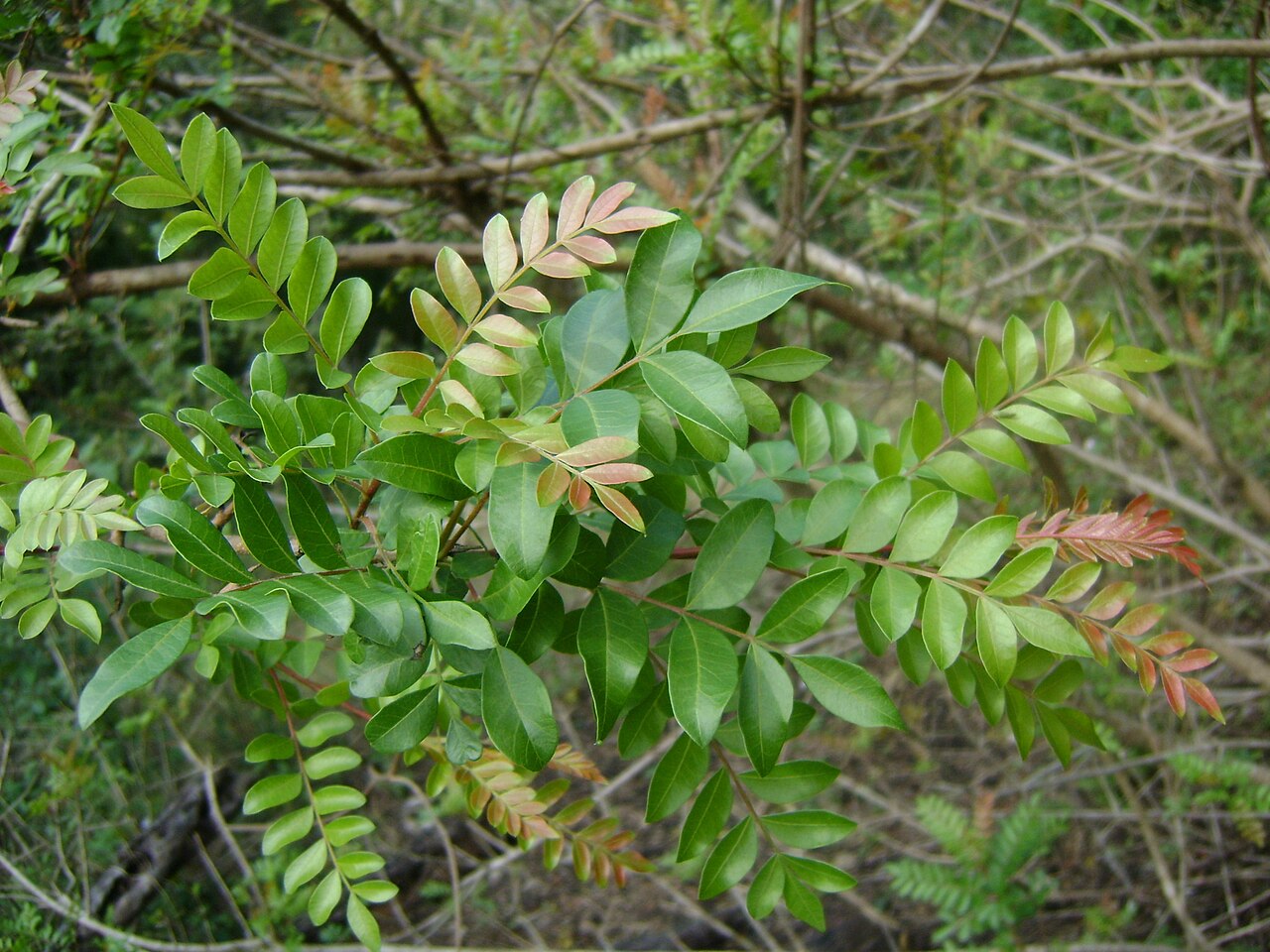
Pistacia mexicana (long known in Texas botany as Pistacia texana, now treated as a synonym of the accepted name), commonly called Texas Pistache — and also American Pistachio, Mexican Pistache, or Wild Pistachio — is a tough, drought-proof small tree of the limestone canyons along the Rio Grande. In the United States it is found only in far southwestern Texas, on the Edwards Plateau and in the rocky canyons that cut through the Rio Grande borderlands, making it one of the rarest native trees in the state.
This is a genuinely rugged plant. Texas Pistache grows directly out of limestone cracks and canyon walls where almost nothing else can take root, tolerating searing summer heat, thin alkaline soil, and long stretches without rain. Its small, glossy, evergreen to semi-evergreen compound leaves give it a neat, fine-textured look that belies its toughness, and new growth often emerges in shades of bronze and red before maturing to deep green.
Despite its toughness and good looks, Texas Pistache is a true specialty plant: rare in the wild, uncommon in cultivation, and listed as Near Threatened by the IUCN due to habitat loss. For gardeners in its native range — especially in and around the Rio Grande canyonlands of Val Verde and neighboring counties — it is an outstanding low-water native tree or large shrub for rock gardens, xeriscapes, and limestone slopes, and planting it responsibly (from nursery-propagated stock) helps support a regionally rare species.
Identification
Texas Pistache typically grows as a small tree or large shrub, 10 to 40 feet tall depending on site and age, with a short trunk, rounded crown, and dense, fine-textured foliage. Older trees on favorable sites can reach tree stature, while plants rooted directly in rock crevices often stay shrubbier.
Bark & Stems
Bark is gray to grayish-brown, relatively smooth on young stems and becoming slightly furrowed with age. Twigs are slender and often reddish when young, giving young growth flushes a warm, coppery cast.
Leaves
Leaves are pinnately compound, 2 to 4 inches long, with 7 to 19 small, narrow, glossy leaflets arranged along a slender central stalk. The foliage is evergreen to semi-evergreen depending on winter severity and drought stress, and new leaflets often emerge reddish or bronze before turning a deep, glossy green.
Flowers & Fruit
Like other pistachios, Texas Pistache is dioecious, meaning individual plants are either male or female. Flowers are small, inconspicuous, and petal-less, appearing in short clusters in late winter to early spring before or with new leaves. Female plants produce small, round drupes about a quarter inch across that ripen from red to dark purple or blackish, borne in loose clusters and relished by wildlife, though they are of no culinary value to people (unlike the related commercial pistachio, Pistacia vera).
Quick Facts
| Scientific Name | Pistacia mexicana (syn. Pistacia texana) |
| Family | Anacardiaceae (Cashew/Sumac) |
| Plant Type | Evergreen to Semi-Evergreen Small Tree/Large Shrub |
| Mature Height | 10–40 ft |
| Mature Spread | 10–15 ft |
| Growth Rate | Slow to moderate |
| Sun Exposure | Full Sun to Part Sun |
| Water Needs | Very low once established |
| Soil Type | Thin, rocky limestone; well-drained |
| Soil pH | Alkaline |
| Bloom Time | Late winter – early spring |
| Flower Color | Greenish, inconspicuous |
| Fall Color | None to slight bronze (mostly evergreen) |
| Fruit | Small red-to-purple drupes (female plants only); not edible to people |
| Deer Resistant | Yes |
| USDA Hardiness Zones | 8–9 |
Native Range
In the United States, Texas Pistache is confined to far southwestern Texas, where it grows on the Edwards Plateau and in the limestone canyons carved by the Rio Grande and its tributaries, with Val Verde County — home to Seminole Canyon and the Devils River — at the heart of its U.S. range. South of the border, the species extends through northeastern Mexico into Guatemala, making the small Texas population the northernmost outpost of a largely Mexican and Central American range.
Throughout this range, Texas Pistache is a plant of harsh, rocky terrain: steep limestone canyon walls, rocky slopes, and thin-soiled uplands where competition from larger trees is limited by the lack of soil and water. It often grows rooted directly in cracks and ledges on exposed cliff faces, alongside other drought-adapted shrubs and succulents of the Chihuahuan Desert borderlands.
Because its U.S. range is so narrow and its habitat so specific, Texas Pistache is considered rare in Texas, and the IUCN lists the species as Near Threatened across its full range due to habitat loss and fragmentation. It is not formally protected, but conscientious gardeners and land managers within its range are encouraged to propagate and plant it rather than collect from wild populations.
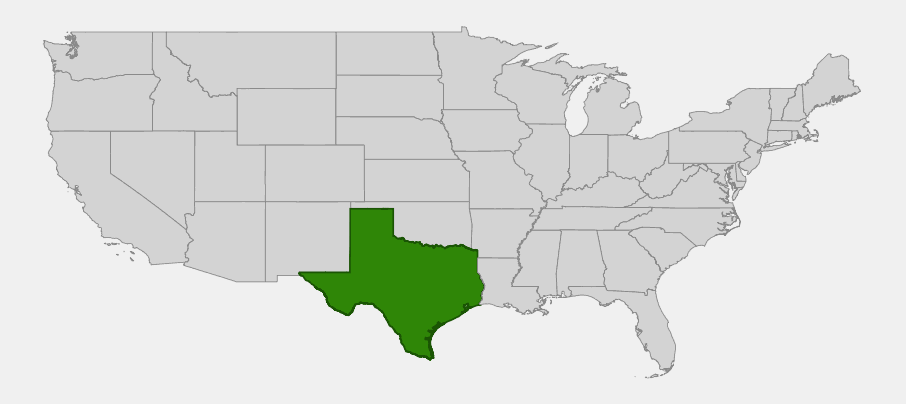
📋 Texas Pistache’s native range is limited to the far southwestern Edwards Plateau and Rio Grande canyonlands, an area not yet covered by any of our current regional native plant lists. Texas nurseries specializing in native and xeric plants are the best source for responsibly propagated stock — see the nursery directory below.
Growing & Care Guide
Texas Pistache rewards gardeners who can offer it heat, sun, and sharp drainage, and it struggles in rich, moist, or poorly drained soils. Within its native Texas range it is an excellent low-water landscape tree; outside that climate and soil context, success is less predictable.
Light
Full sun is best, though plants tolerate part sun, especially in the hottest parts of its range. More shade generally means a looser, less dense form.
Soil & Water
This species demands excellent drainage and is perfectly suited to thin, rocky, alkaline limestone soils; it performs poorly in heavy clay or any soil that stays wet. Once established, it is extremely drought tolerant and needs little to no supplemental water, reflecting its native life in canyon-wall crevices. Young plants benefit from occasional deep watering during their first one to two summers to encourage a strong root system.
Planting Tips
Choose the driest, rockiest, best-drained spot available, ideally on a slope or raised area. Because Texas Pistache is dioecious, a planting of several seedlings from varied stock increases the odds of having both male and female plants nearby, which is necessary if fruit production is desired for wildlife value. Plant young, container-grown stock in fall or early spring to allow roots to establish before summer heat arrives.
Pruning & Maintenance
Texas Pistache needs little pruning. Remove dead or crossing branches as needed, and prune lightly to shape young plants toward a single-trunk tree form if a tree habit (rather than large shrub) is preferred. It is naturally pest- and disease-resistant and extremely low-maintenance once established.
Landscape Uses
- Xeriscaping and low-water native gardens in hot, dry climates
- Rock gardens and limestone slope plantings
- Screen or hedge when several plants are grouped
- Wildlife gardens — fruiting female plants draw birds
- Canyon or caliche-soil restoration within its native range
Wildlife & Ecological Value
Texas Pistache provides food and cover in one of the harshest habitats in Texas, where few other woody plants can establish.
For Birds
The small red-to-purple fruits on female plants are eaten by a variety of songbirds and other canyon-dwelling birds, which help disperse seeds to new rock crevices and ledges. The dense evergreen to semi-evergreen foliage also offers year-round cover in a landscape with relatively little woody vegetation.
For Mammals
Small mammals native to the Rio Grande canyonlands take advantage of the fruit and the shelter provided by the tree’s dense branching, particularly where it grows as a large multi-stemmed shrub rather than a single-trunked tree.
For Pollinators
Though wind plays a role in pollination for some Pistacia species, the small flowers also attract a range of native insects during their late-winter to early-spring bloom, when few other canyon plants are flowering, making Texas Pistache a modest early-season nectar and pollen source.
Ecosystem Role
As one of the few woody species able to root directly into limestone cliff faces and thin canyon soils, Texas Pistache plays an outsized structural role in its habitat, stabilizing rocky slopes and providing nearly the only tree-form shelter and food source across large stretches of exposed canyon wall in its native range.
Cultural & Historical Uses
Texas Pistache has a long history of local use along the Rio Grande borderlands, though it has never been a major commercial species. The common name “lentisco,” used in parts of its Mexican and Texan range, echoes the Spanish name for the related Mediterranean mastic tree (Pistacia lentiscus), reflecting the family resemblance among Pistacia species even across very different climates.
Historically, the wood of Texas Pistache has been used locally for small woodworking and fuel, though its typically small, often crooked trunk limits its use for larger timber purposes. The tree’s resilience in extreme, rocky terrain has long made it a recognized feature of the canyonlands around the Rio Grande, including areas now protected within Seminole Canyon State Park and Amistad National Recreation Area in Val Verde County.
In recent decades, interest in Texas Pistache has grown among native-plant and xeriscape gardeners seeking tough, attractive, low-water trees for hot, dry regions of Texas and the Southwest, and it is increasingly propagated and offered by native plant nurseries specializing in Edwards Plateau and Trans-Pecos species.
Frequently Asked Questions
Is Texas Pistache the same plant as Pistacia texana?
Yes. Pistacia texana was long used as the species name for this Texas population, but botanists now treat it as a synonym of the earlier-named Pistacia mexicana, which also occurs in Mexico and Guatemala. Texas nurseries and older references may still use either name for the same plant.
Does Texas Pistache produce edible pistachios?
No. Despite the common names “American Pistachio” and “Wild Pistachio,” the small fruits of Texas Pistache are not the edible pistachio nuts sold in stores — those come from the related but different species Pistacia vera. Texas Pistache fruit is valuable to wildlife but has no culinary use for people.
Why is Texas Pistache so rare in Texas?
Its native range in the state is limited to a specific habitat — limestone canyon walls and rocky slopes along the Rio Grande borderlands — that simply covers a small area. The IUCN also lists the broader species as Near Threatened due to habitat loss across its Mexican and Central American range.
Will Texas Pistache grow outside of rocky, alkaline soil?
It can tolerate a range of well-drained soils, but it is specifically adapted to thin, rocky, alkaline conditions and performs poorly in heavy clay, acidic soil, or any site that holds moisture. Excellent drainage matters more than exact soil type.
Do I need a male and a female plant to get fruit?
Yes. Texas Pistache is dioecious, meaning individual plants are either male or female, and only female plants bear fruit — and only if a male plant is growing nearby to provide pollen. If fruit and the wildlife value it brings are a goal, plant more than one seedling of mixed, unrelated origin.

Looking for a nursery that carries Texas Pistache?
Browse our native plant nursery directory: Texas