
California Sycamore (Platanus racemosa)
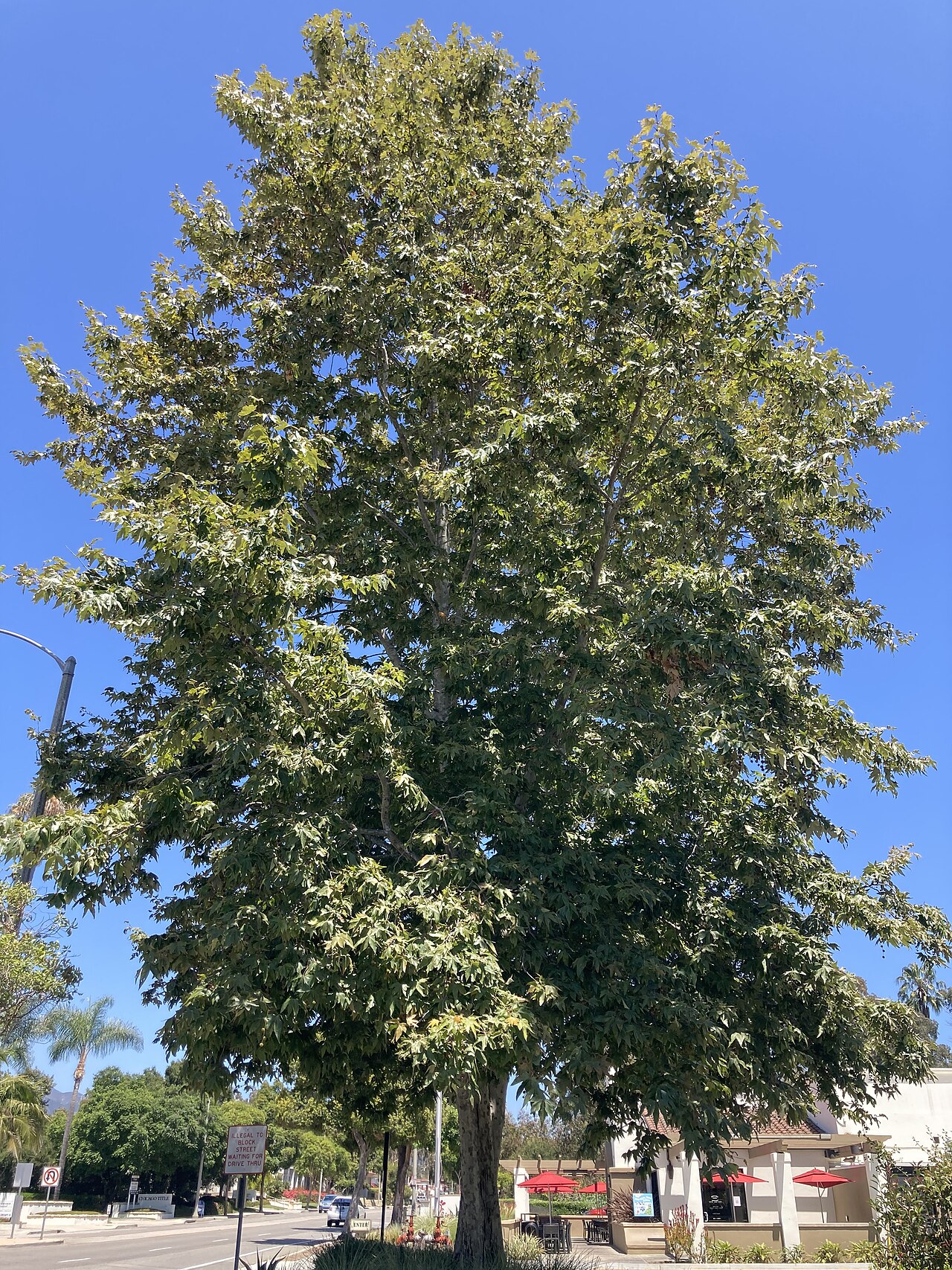
Platanus racemosa, the California Sycamore (also called Western Sycamore or, in Spanish, Aliso), is one of the signature large trees of California’s streams and valleys. It is instantly recognizable by its mottled, peeling white-and-tan bark, its huge maple-like leaves, and its habit of leaning and twisting as it grows — few California natives have such a distinctive, almost sculptural silhouette. Found along nearly every permanent and seasonal watercourse from the Coast Ranges to the Sierra foothills, it is a true riparian specialist, rarely found far from groundwater.
California sycamore typically grows 40 to 80 feet tall, with old specimens in favorable canyon bottoms reaching well over 100 feet and trunks 3 to 4 feet across. The trunk is often crooked or multi-stemmed, leaning out over streambeds in a way that has made old sycamores local landmarks throughout the state. Its deeply lobed leaves turn papery brown in fall, and its fuzzy seed balls, usually strung two to seven on a single dangling stalk, persist into winter long after the leaves have dropped.
For gardeners and land managers working on streambank restoration, erosion control, or simply wanting a fast-growing native shade tree with real presence, California sycamore is hard to beat — provided there is room for its eventual size and its need for consistent water. It is widely planted as a street and park tree throughout its native state, though it is not native outside California; interior and desert plantings beyond reach of summer water often struggle.
Identification
California sycamore is a large, fast-growing deciduous tree with an open, rounded to irregular crown. Trunks are frequently forked near the base or lean dramatically where they have grown out over a streambank chasing light, giving mature trees a gnarled, picturesque form unlike the straighter trunks of planted street trees.
Bark & Stems
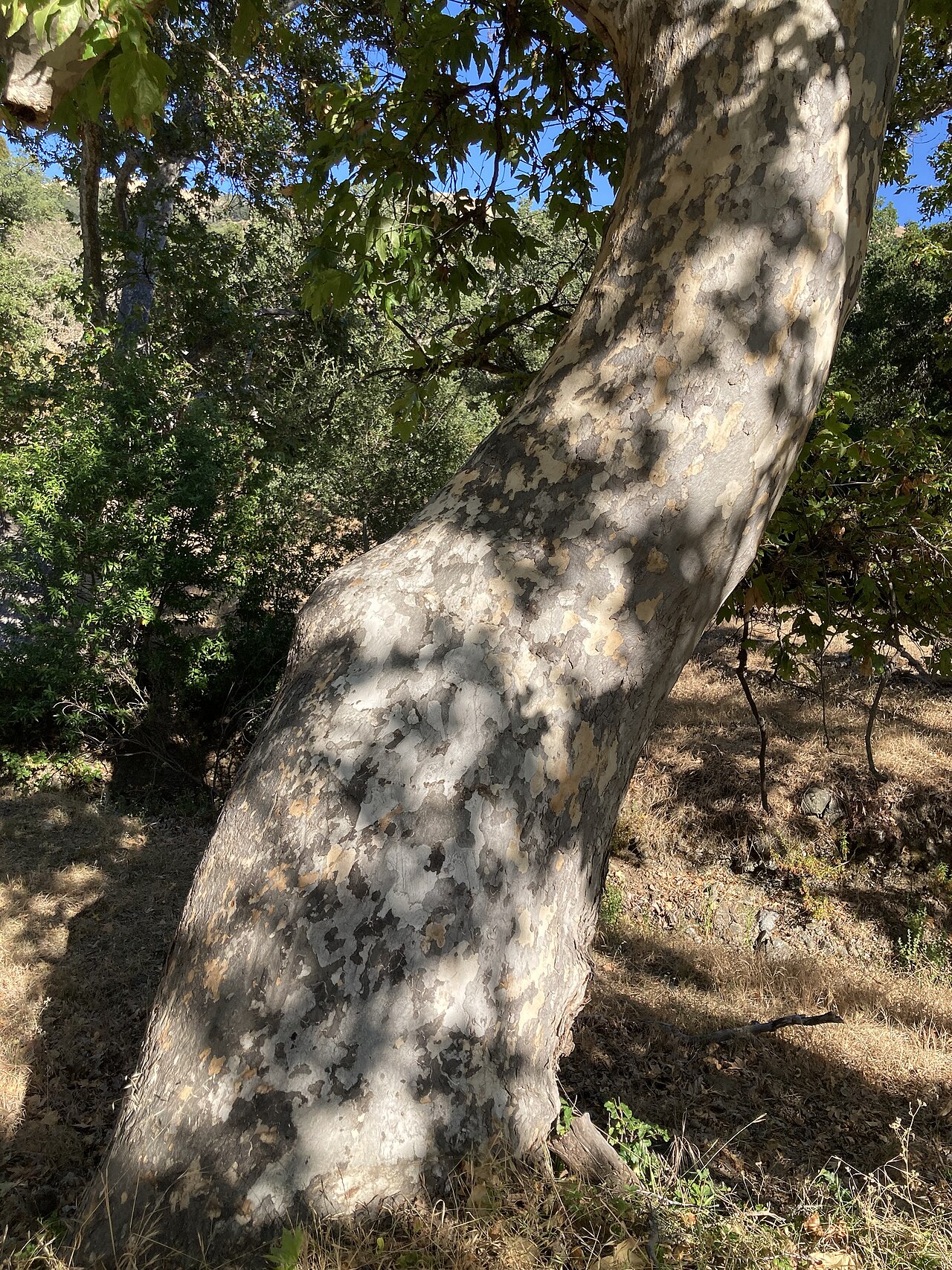
The bark is the single most distinctive feature: smooth and pale gray-green to white on young wood, it exfoliates in irregular puzzle-piece plates to reveal patches of cream, tan, and olive beneath. On older lower trunks the bark thickens and darkens into gray-brown plates, but the upper trunk and limbs stay pale and mottled, visible from a distance even in winter. Young twigs are covered in dense, pale fuzz (tomentum) that wears off by the second year.
Leaves
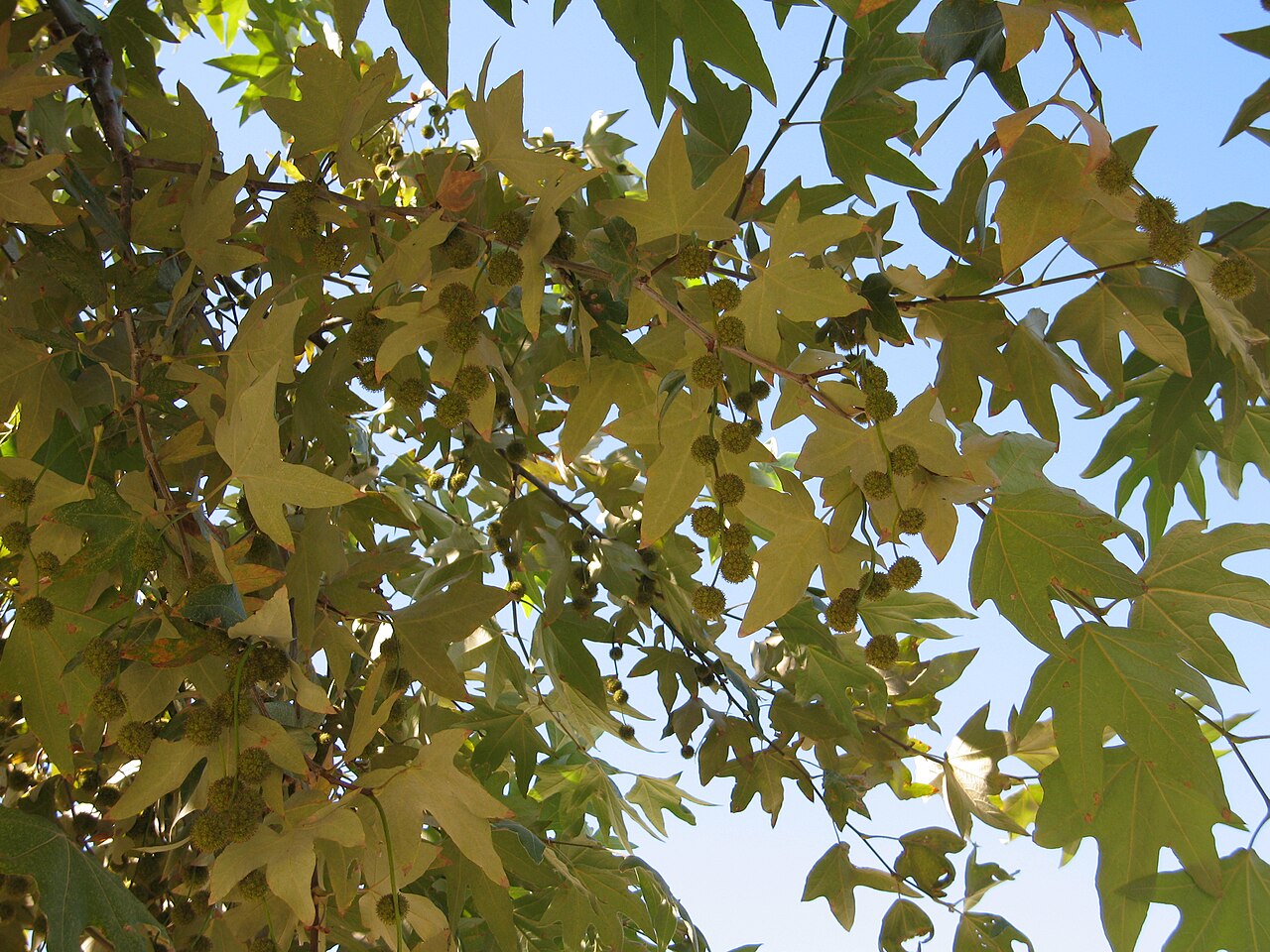
Leaves are alternate, simple, and large — typically 6 to 10 inches across — palmately lobed into 3 to 5 pointed lobes with coarse, irregular teeth, resembling a maple leaf but larger and thinner-textured. The leaf base is broad and the petiole base is hollow, enclosing the next year’s bud (a trait shared by all sycamores). Foliage is bright green above and pale, downy beneath, turning tan to brown — rarely a bright color — before dropping in fall.
Flowers & Fruit
Flowers are tiny and wind-pollinated, borne in separate male and female round clusters on the same tree in spring as the leaves emerge; neither sex is showy. The fruit is a bristly ball about an inch across made of hundreds of tiny seeds, and California sycamore’s balls hang in distinctive chains of two to seven per stalk — the single best field mark separating it from Arizona sycamore, whose balls hang singly or occasionally in pairs. The seed balls break apart gradually through fall and winter, scattering fluffy, wind-borne seeds.
Quick Facts
| Scientific Name | Platanus racemosa |
| Family | Platanaceae (Sycamore/Plane) |
| Plant Type | Deciduous Tree |
| Mature Height | 40–80 ft (occasionally over 100 ft) |
| Mature Spread | 30–60 ft, often wider than tall with age |
| Growth Rate | Fast |
| Sun Exposure | Full Sun |
| Water Needs | Moderate to high; needs reliable moisture or groundwater access |
| Soil Type | Deep, sandy or loamy alluvial soils; tolerates seasonal flooding |
| Soil pH | 6.0–8.0 |
| Bloom Time | March – April |
| Flower Color | Greenish-red, inconspicuous |
| Fall Color | Tan to brown |
| Fruit | Bristly 1-in seed balls, 2–7 per stalk, persisting into winter |
| Deer Resistant | Yes, generally |
| USDA Hardiness Zones | 7–10 |
Native Range
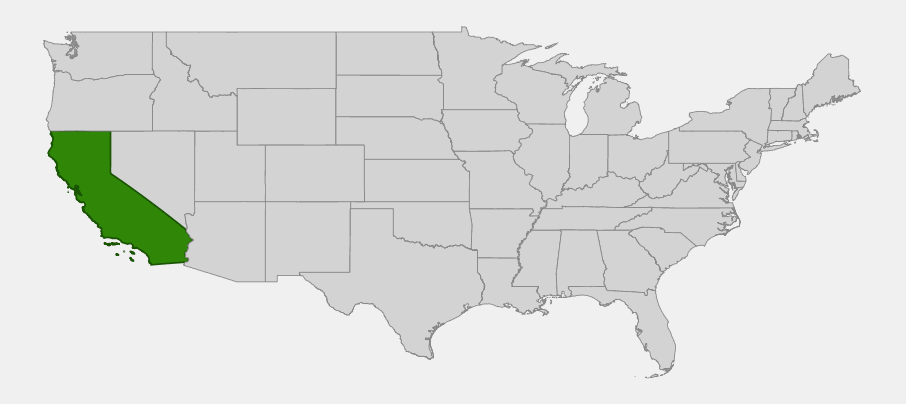
California sycamore is endemic to California, where it follows streams, rivers, and seasonal washes from the Coast Ranges through the Transverse and Peninsular Ranges, the Sierra Nevada foothills, and much of the Central Valley, south to the Mexican border and on into northern Baja California. It is not native anywhere else in the United States; despite being widely planted as a landscape and street tree in Arizona, Nevada, and other warm regions, those plantings are entirely cultivated, not wild populations.
Within California it is a defining species of riparian woodland, growing in the moist, well-drained alluvial soils of canyon bottoms, floodplains, and streambanks from near sea level up to about 4,000 feet. It is adapted to the state’s Mediterranean climate of wet winters and bone-dry summers because its roots reach the water table along permanent or intermittent watercourses, allowing it to stay green through months without rain.
California sycamore woodlands have been heavily reduced by urban development, stream channelization, and agriculture, particularly in the Los Angeles Basin and Central Valley, where sycamore alluvial woodland is now considered a sensitive natural community in several counties. Mature streamside groves are correspondingly valuable habitat and are often protected or restored as part of watershed conservation projects.
📋 California sycamore does not currently have a dedicated regional plant list on this site — browse our full native plant directory for more California natives.
Growing & Care Guide
California sycamore is easy to grow in the right setting — a large, open space with access to consistent moisture — but it is not a tree for a small yard or a spot without summer water. Its size, surface roots, and heavy leaf and seed-ball drop make it best suited to parks, large properties, streambank restoration, and roomy parking strips rather than tight residential beds.
Light
Give California sycamore full sun. It is a fast-growing pioneer tree of open streambanks and does not perform well in shade, becoming sparse and leggy if crowded by taller trees while young.
Soil & Water
In the wild it grows in deep, well-drained alluvial soils with access to groundwater, and it tolerates occasional flooding or saturated soil for short periods. In cultivation, young trees need regular deep watering to establish; mature trees planted away from a natural water table need occasional deep summer irrigation in most of California’s dry interior, though trees along perennial streams need none. It adapts to a range of soil textures from sand to clay loam as long as drainage is reasonable.
Planting Tips
Plant young trees in fall or winter so roots establish before the first dry season. Because surface roots can be aggressive and the canopy casts heavy shade, keep California sycamore well away from foundations, pavement, and septic lines — a minimum of 15 to 20 feet is a reasonable starting point for most sites. It is an excellent choice for restoring a degraded streambank or for the far end of a large lot where its mature size will not be a problem.
Pruning & Maintenance
Young trees benefit from structural pruning to establish a strong central leader or well-spaced scaffold branches, since open-grown sycamores can develop weak, included bark unions if left unpruned. Established trees need little regular care beyond removing dead or crossing wood in the dormant season. Anthracnose, a fungal leaf blight that causes early leaf drop in cool, wet springs, is common on this genus but rarely threatens tree health; raking and disposing of fallen leaves reduces reinfection.
Landscape Uses
- Streambank and riparian restoration, where its deep roots help stabilize banks
- Shade tree for large properties, parks, and school grounds
- Erosion control on seasonal wash margins with access to moisture
- Wildlife habitat plantings in riparian corridor projects
- Specimen tree where its sculptural trunk and bark can be appreciated up close
Wildlife & Ecological Value
California sycamore stands anchor some of the richest wildlife habitat left in California’s lowland and foothill landscapes, especially where development has replaced most other large native trees along valley streams.
For Birds
Mature sycamores with cavities and dead limbs are prime nest sites for cavity-nesting birds including woodpeckers, which excavate the soft, decaying wood, and secondary cavity-nesters such as owls and songbirds that reuse old woodpecker holes. The dense canopy also provides nesting cover for raptors like red-shouldered hawks, and the seed balls are eaten by finches and other seed-eating birds through winter.
For Mammals
Squirrels and other small mammals forage in the canopy and use cavities for den sites, while the shade and leaf litter beneath streamside sycamores support a cooler, moister microhabitat used by a range of small mammals moving along riparian corridors.
For Pollinators
The flowers are wind-pollinated and offer little floral reward, but the tree’s broader riparian woodland habitat supports many native bees and other insects that use the understory plants growing in its shade and moisture.
Ecosystem Role
As one of the largest native trees along many California waterways, sycamore woodland moderates stream temperature, stabilizes banks with its extensive root system, and contributes large woody debris to streams when branches or whole trees fall — structure that supports aquatic invertebrates and fish. Sycamore alluvial woodland is recognized as a sensitive, declining plant community in parts of southern California.
Cultural & Historical Uses
California’s Indigenous peoples, including Chumash and other coastal and valley groups, used sycamore wood for implements and the broad leaves for wrapping and lining earth ovens used to cook food. The tree’s common Spanish name, “aliso,” was applied by early Spanish colonists and survives today in numerous California place names — Sycamore Canyon, Aliso Creek, and Sycamore Grove among them — a reminder of how prominent these trees were as landmarks along historic travel routes that followed watercourses.
In the 19th and 20th centuries, large individual sycamores often served as meeting points, boundary markers, and campsites precisely because they were reliable indicators of water nearby. Today the species remains mostly a shade and landscape tree in California cities, though its wood has occasionally been used for furniture veneer and small turned items, taking advantage of its attractive, fine-grained figure.
The tree continues to carry ecological and cultural weight as a symbol of California’s vanishing lowland riparian woodlands, and restoration groups across the state plant it specifically to rebuild the streamside forests that once lined most of the state’s rivers and creeks.
Frequently Asked Questions
How can I tell California sycamore from Arizona sycamore?
The clearest field mark is the seed balls: California sycamore typically carries two to seven balls strung along one stalk, while Arizona sycamore usually carries just one, occasionally two. Their native ranges barely overlap in the wild, which also helps — California sycamore is a California and northern Baja California species, while Arizona sycamore belongs to Arizona, New Mexico, and northern Mexico.
Is California sycamore messy?
Yes, by most standards. It drops leaves, twigs, and bristly seed balls over a long season, and its surface roots can heave nearby pavement. It is best planted where this leaf and fruit litter is not a problem — lawns, parks, and naturalized areas rather than patios or driveways.
Does California sycamore need a stream to grow well?
Not strictly, but it performs best with reliable access to moisture. Many street and park specimens thrive with occasional deep irrigation during the dry season; trees planted in truly dry upland sites without supplemental water tend to be stunted and stressed.
How fast does California sycamore grow?
Quickly — young trees in good conditions can add several feet per year, reaching substantial size within a couple of decades. This fast growth is part of why it is favored for restoration projects needing rapid canopy cover.
Is California sycamore susceptible to disease?
Anthracnose, a fungal leaf blight, commonly causes early leaf drop in cool, damp spring weather but rarely kills established trees. Better air circulation and removing fallen infected leaves each year helps reduce recurrence.

Looking for a nursery that carries California Sycamore?
Browse our native plant nursery directory: California