Resurrection Fern (Pleopeltis michauxiana)
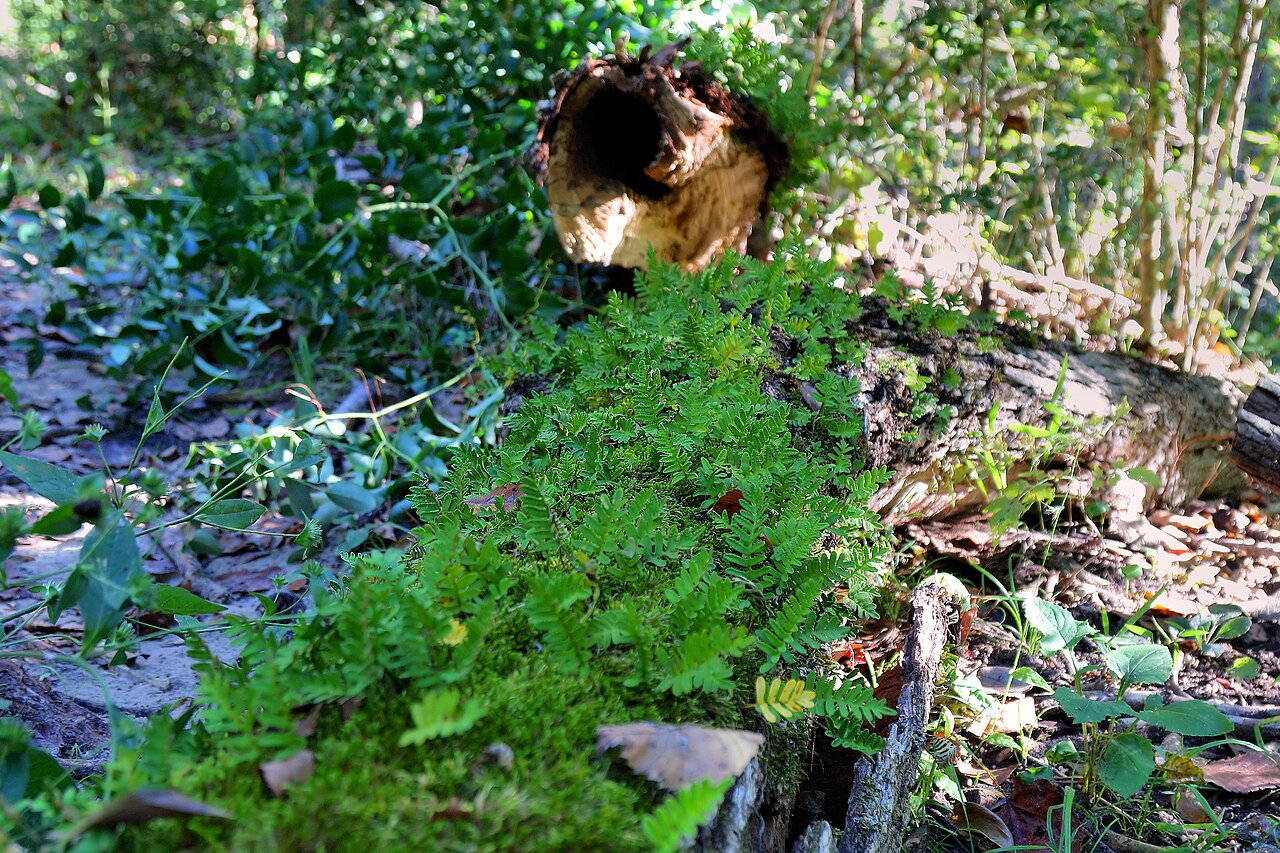
Pleopeltis michauxiana, commonly known as Resurrection Fern (also called Scaly Polypody or Gray’s Polypody), is a small, tough epiphytic fern famous for its ability to shrivel to a dry, brown, seemingly dead mat during droughts and spring fully back to green within hours of rain. It is the most widespread epiphytic fern in North America, found carpeting the limbs and trunks of mature trees — oaks especially — across the lower Midwest and Southeastern United States, into Mexico and Central America. Until recently it was classified as a variety of the more tropical Pleopeltis polypodioides, and USDA PLANTS still lists it formally as Pleopeltis polypodioides ssp. michauxiana; most current regional floras (Flora of North America, Flora of the Southeastern United States) treat it as the distinct species Pleopeltis michauxiana.
Unlike most ferns, which need consistently moist soil, resurrection fern grows directly on bark, drawing moisture and nutrients from rainfall and the thin layer of organic debris that collects in bark crevices rather than from soil at all. Its fronds curl, shrivel, and turn gray-brown within days of dry weather, appearing completely dead, only to unfurl and green up again within a few hours of the next rain — a dramatic survival trick that has made it a favorite teaching example of desiccation tolerance in plants.
For gardeners in its native range with a mature, rough-barked tree and a taste for low-maintenance, offbeat native plants, resurrection fern is an easy and rewarding species to establish. It asks for almost nothing once settled, adds year-round texture to tree limbs, and offers a genuinely interesting talking point every time a dry spell gives way to rain.
Identification
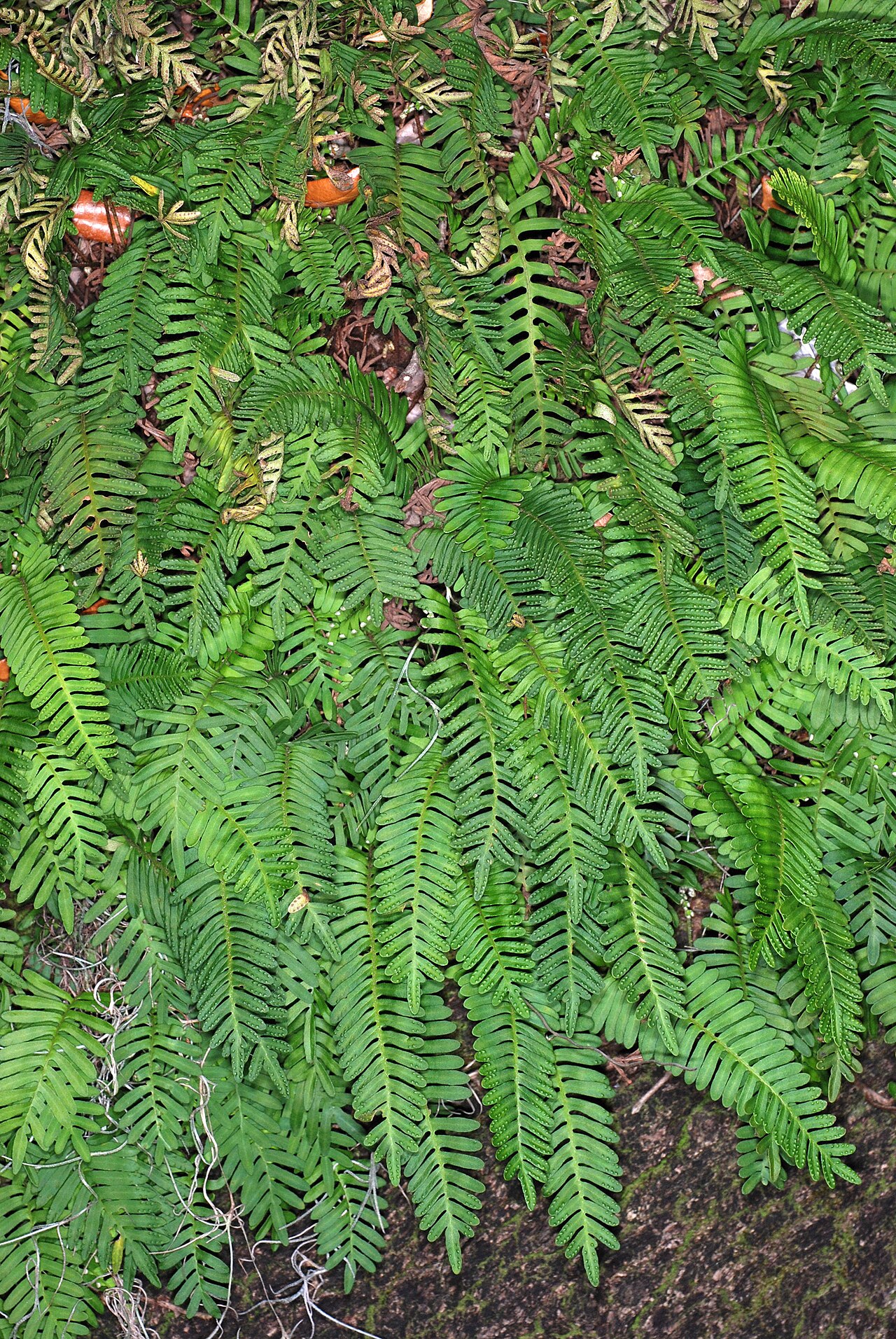
Resurrection fern forms spreading colonies of small, once-pinnate fronds rising from long, branching, scaly rhizomes that creep along bark or rock surfaces. Individual fronds are narrow, 2 to 10 inches long, divided into rounded, oblong lobes along a central stalk, giving each frond a simple, comb-like outline. The whole colony typically forms a dense, low mat rather than individual upright plants.
Fronds & Growth Habit
Fronds are monomorphic (fertile and sterile fronds look alike) and strongly hygroscopic — meaning they respond dramatically to moisture. In dry conditions the lobes curl inward and the whole frond shrivels, turns gray-brown, and presses flat against the bark, looking dead. Within hours of rain, the fronds rehydrate, unfurl, and turn bright green again, a cycle the plant can repeat many times without harm thanks to specialized cellular proteins called dehydrins that keep cell walls from collapsing as the plant dries out.
Scales
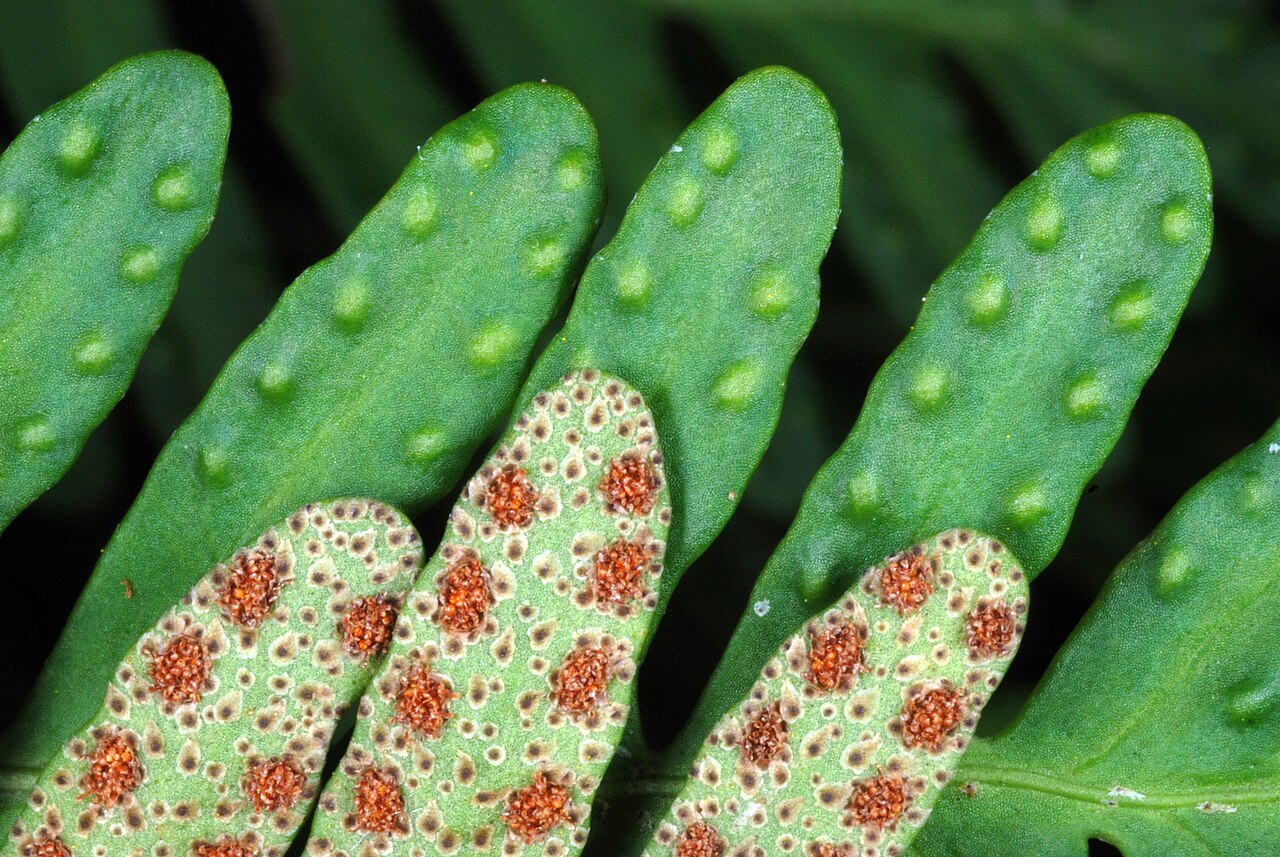
Both the rhizomes and the undersides of the fronds are covered in small, distinctly bicolored scales — dark brown in the center with broad, pale, papery margins — that give dry fronds a grayish, dusty look and provide the “scaly polypody” and “gray polypody” common names. These scales help the fern limit water loss between rains.
Sori (Fruit Dots)
Spores are produced in round, discrete sori on the underside of fertile frond lobes, each sorus deeply embossed, creating a noticeable raised bump visible on the upper leaf surface directly above it. Sori mature from pale to a rusty orange-brown and are visible from June through October, often several per lobe arranged in two rows flanking the central vein.
Quick Facts
| Scientific Name | Pleopeltis michauxiana (syn. Pleopeltis polypodioides ssp. michauxiana) |
| Family | Polypodiaceae (Polypody) |
| Plant Type | Evergreen epiphytic fern |
| Mature Height | Fronds 2–10 in; forms a low, spreading mat |
| Mature Spread | Colonies spread slowly, indefinitely, via creeping rhizomes |
| Growth Rate | Slow |
| Sun Exposure | Part Shade to Shade |
| Water Needs | Rainfall only; extremely drought tolerant (desiccation-tolerant) |
| Soil Type | None required; epiphytic on bark, occasionally on rock |
| Soil pH | Not applicable (epiphytic) |
| Bloom Time | Not applicable (fern; spores June–October) |
| Flower Color | None (fern) |
| Fall Color | None (evergreen, shrivels gray-brown in drought) |
| Fruit | None; reproduces by spores in sori on frond undersides |
| Deer Resistant | Yes |
| USDA Hardiness Zones | 6–10 |
Native Range
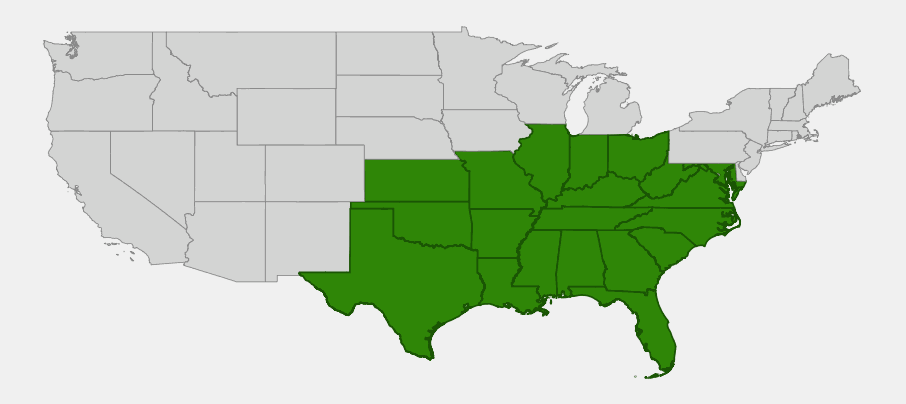
Resurrection fern is native to the lower Midwest and Southeastern United States, ranging from eastern Texas, Oklahoma, and Kansas east through Arkansas, Louisiana, Missouri, Illinois, Indiana, Ohio, and Kentucky to the Mid-Atlantic and Southeast, including Maryland, Virginia, West Virginia, the Carolinas, Tennessee, Georgia, Alabama, Mississippi, and Florida, and south into Mexico and Guatemala. It is the most widespread epiphytic fern native to North America.
Within this range it grows almost entirely as an epiphyte on the bark of mature, rough-barked trees — live oak, other oaks, elms, and magnolias are favorite hosts — typically on horizontal or leaning limbs and upper trunk surfaces where moisture lingers longest after rain. It less commonly grows directly on rock, especially limestone or sandstone outcrops, and occasionally on old wooden fence posts, shingled roofs, or other weathered wooden structures that mimic bark.
Resurrection fern is not rare or protected across most of its range and remains common wherever old, structurally complex trees persist, though it can be locally reduced by the loss of mature trees to development or storm damage, since young, smooth-barked trees rarely support established colonies.
📋 Regional plant lists featuring Resurrection Fern: Georgia, Alabama & Mississippi · Arkansas, Louisiana, Eastern Oklahoma & Eastern Texas · Illinois, Iowa & Missouri · Ohio & Indiana · Maryland, Virginia & West Virginia · North Carolina & South Carolina · Nebraska, Kansas & Eastern Colorado · Kentucky & Tennessee
Growing & Care Guide
Resurrection fern is one of the easiest native ferns to establish, provided it has the right host — a mature, rough-barked tree in a shaded or partly shaded spot — and the patience to let a slow-spreading epiphyte fill in over years rather than months.
Light
Give resurrection fern light to moderate shade, such as beneath an oak canopy or on the north or east side of a trunk. It tolerates brief direct sun but colonies in deep shade on humid, moisture-retentive bark tend to stay green longer between rains than those in hot, exposed positions.
Substrate & Water
This fern needs no soil at all; it grows directly on bark or rock, drawing water from rain and humidity and nutrients from thin films of organic debris and dust that collect in bark crevices. It relies entirely on rainfall and ambient moisture, and the dramatic wilt-and-revive cycle in response to wet and dry periods is completely normal, not a sign of a struggling plant. Established colonies need no watering or feeding whatsoever.
Planting Tips
To establish resurrection fern, transplant small sections of rhizome with attached fronds from an existing colony (with landowner permission, never from a protected natural area) and press them gently into a crevice in rough bark, securing loosely with twine or mesh until the rhizome roots in — usually within a season if kept reasonably moist at first. Oaks, elms, and other rough-barked native trees make the best hosts; smooth-barked species rarely hold a colony. Avoid dead or badly decaying wood, which will not support the fern long-term.
Propagation
Resurrection fern spreads naturally by windblown spores released from the sori on fertile fronds, as well as by vegetative spread of its creeping rhizomes across suitable bark. Gardeners most often propagate it by moving small rhizome divisions to a new host tree rather than from spores, since spore propagation is slow and unpredictable outside of specialized conditions.
Landscape Uses
- Naturalizing on mature oaks and other rough-barked shade trees
- Woodland gardens as a textural groundcover-like accent on fallen logs and stumps
- Low-maintenance native plantings that need essentially no irrigation once established
- Educational and wildlife gardens, where its dramatic drought response makes it a conversation piece
- Restoring epiphyte diversity on mature trees in managed forests and parks
Wildlife & Ecological Value
Resurrection fern is a small but ecologically meaningful part of the mature forest canopy, contributing to the layered epiphyte communities that develop on old trees across the Southeast and lower Midwest.
For Pollinators
As a fern, resurrection fern produces no flowers or nectar and offers no direct forage for pollinators.
For Birds
The dense mats formed on limbs and trunk crevices provide shelter for insects and other small invertebrates that in turn become forage for bark-foraging birds such as nuthatches, brown creepers, and various warblers working their way along branches.
For Mammals
Resurrection fern is not a significant food source for mammals, but the moist microhabitat it creates on bark supports invertebrate populations that indirectly benefit insectivorous mammals such as bats foraging along forest edges and canopy gaps.
Ecosystem Role
As an epiphyte, resurrection fern occupies a niche most other plants cannot use, adding to the structural and species diversity of mature forest canopies without competing for soil resources. Its presence is often considered an indicator of forest maturity, since it depends on old, structurally complex trees with deeply furrowed or crevassed bark that takes decades to develop.
Cultural & Historical Uses
Resurrection fern’s dramatic desiccation-and-revival cycle has long fascinated observers, and it carries both folk and scientific interest as one of the best-known examples of a desiccation-tolerant vascular plant in North America. The species epithet honors André Michaux, the French royal botanist who explored and collected extensively across North America in the late 18th century, cataloguing much of the flora that later Southeastern botanists would build on.
The fern has no significant history of medicinal or material use among Indigenous peoples of its range, unlike many of its more prominent neighbor species, and its cultural significance today is almost entirely educational and ornamental — a frequently cited classroom and nature-center example of how some plants survive extreme, repeated drought without dying.
In recent decades, resurrection fern has drawn scientific attention from researchers studying desiccation tolerance for potential applications in agriculture and crop drought resistance, since the dehydrin proteins that let its cells survive near-total water loss are of interest well beyond botany.
Frequently Asked Questions
Is resurrection fern the same thing as Pleopeltis polypodioides?
They are closely related. USDA PLANTS currently lists this plant as Pleopeltis polypodioides ssp. michauxiana, while Flora of North America and most recent regional floras recognize it as the full species Pleopeltis michauxiana, the temperate North American segregate of a broader tropical species complex. Either name refers to the same plant found across the Southeast and lower Midwest.
Why does resurrection fern turn brown and look dead?
During dry weather the fronds curl up, shrivel, and turn gray-brown as the plant loses most of its water content — it can survive losing more than 90 percent of its water. This is a normal survival strategy, not disease or death; the fern rehydrates and turns green again within hours of the next rain.
Does resurrection fern harm the tree it grows on?
No. It is an epiphyte, meaning it uses the tree only as a physical surface to grow on, taking moisture and nutrients from rainfall and debris rather than from the tree itself. It does not parasitize or weaken its host.
Can I grow resurrection fern without a tree?
It needs a rough, bark-like surface to establish on, so a mature tree, old wooden fence post, or suitable rock surface such as limestone is necessary. It cannot be grown in a conventional garden bed or container of potting soil the way most ferns are.
How long can resurrection fern survive without rain?
It can remain dormant and apparently dead for months during extended drought and still revive fully once rain returns, making it one of the most drought-tolerant ferns in North America.

Looking for a nursery that carries Resurrection Fern?
Browse our native plant nursery directory: Alabama & Arkansas · Florida & Georgia · Illinois, Indiana & Kansas · Kentucky, Louisiana, Maryland, Mississippi & Missouri · North Carolina, Ohio & Oklahoma · South Carolina, Tennessee, Texas & Virginia · West Virginia