Indian Physic (Gillenia stipulata)
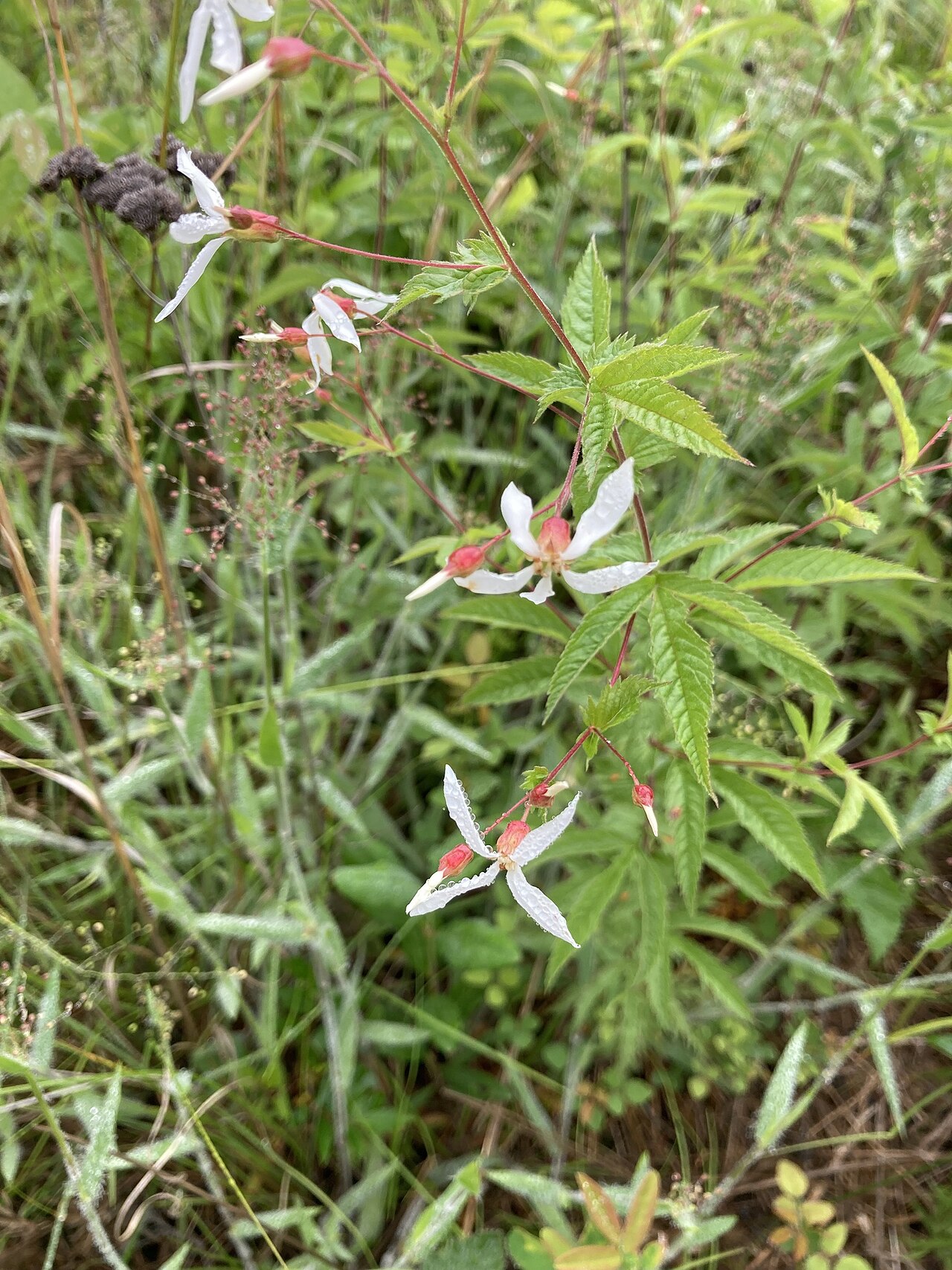
Gillenia stipulata (long classified as Porteranthus stipulatus, and still sold or listed under that older name in some references), commonly called Indian Physic or American Ipecac, is a clump-forming herbaceous perennial of open woods and dry uplands across the eastern and south-central United States. It belongs to the Rosaceae, the rose family, where it sits in the small genus Gillenia alongside its close relative Gillenia trifoliata (Bowman’s root). Despite the family name, there is nothing showy-rose about it: the flowers are small, airy, and starry rather than full and round, giving the plant a light, wildflower-meadow texture rather than a formal garden presence.
The common names reference an old medicinal use: dried, powdered root from this plant was used historically by Native American peoples and later by European settlers as a emetic and laxative, in a manner similar to true ipecac. That history is worth knowing, but it is strictly history — the plant is a strong emetic, and no part of it should be eaten, brewed, or used medicinally today. In the modern garden, Indian Physic earns its place for a different reason: it is an adaptable, low-maintenance native perennial for dry shade and part sun, with a long season of delicate white bloom, attractive stipuled foliage, and good fall color.
Easily distinguished from its cousin Gillenia trifoliata by its large, leafy, toothed stipules at the base of each leaf (the source of the species name stipulata), Indian Physic is well suited to naturalistic woodland gardens, dry shade borders, and native plant restoration plantings across much of its historic range.
Identification
Indian Physic is an upright, clump-forming herbaceous perennial reaching roughly 2 to 3 feet (60–90 cm) tall, with slender, reddish-brown, somewhat wiry stems that branch toward the top of the plant.
Stems
Stems are slender, wiry, and reddish-brown to purplish, rising from a woody rootstock. The plant forms a loose, airy clump rather than a dense mound, with stems that branch in the upper third where the flower clusters form.
Leaves
Leaves are trifoliate (divided into three leaflets), alternate, and sharply, often doubly toothed along the margins. The defining identification feature is the pair of large, leaf-like, toothed stipules at the base of each leaf stalk — conspicuously bigger and more leaf-like than in the similar Gillenia trifoliata, which has small, narrow stipules. Foliage is medium green through the growing season, turning bronze to reddish in fall.
Flowers
Flowers appear in loose, open clusters (panicles) at the stem tips in late spring to early summer. Each flower has five very narrow, widely spaced white petals that give the bloom a sparse, star-like look rather than a full, round one, with a pink-to-reddish calyx and center that shows through between the petals. The airy, uncrowded flower clusters are one of the plant’s most distinctive garden traits.
Fruit & Seeds
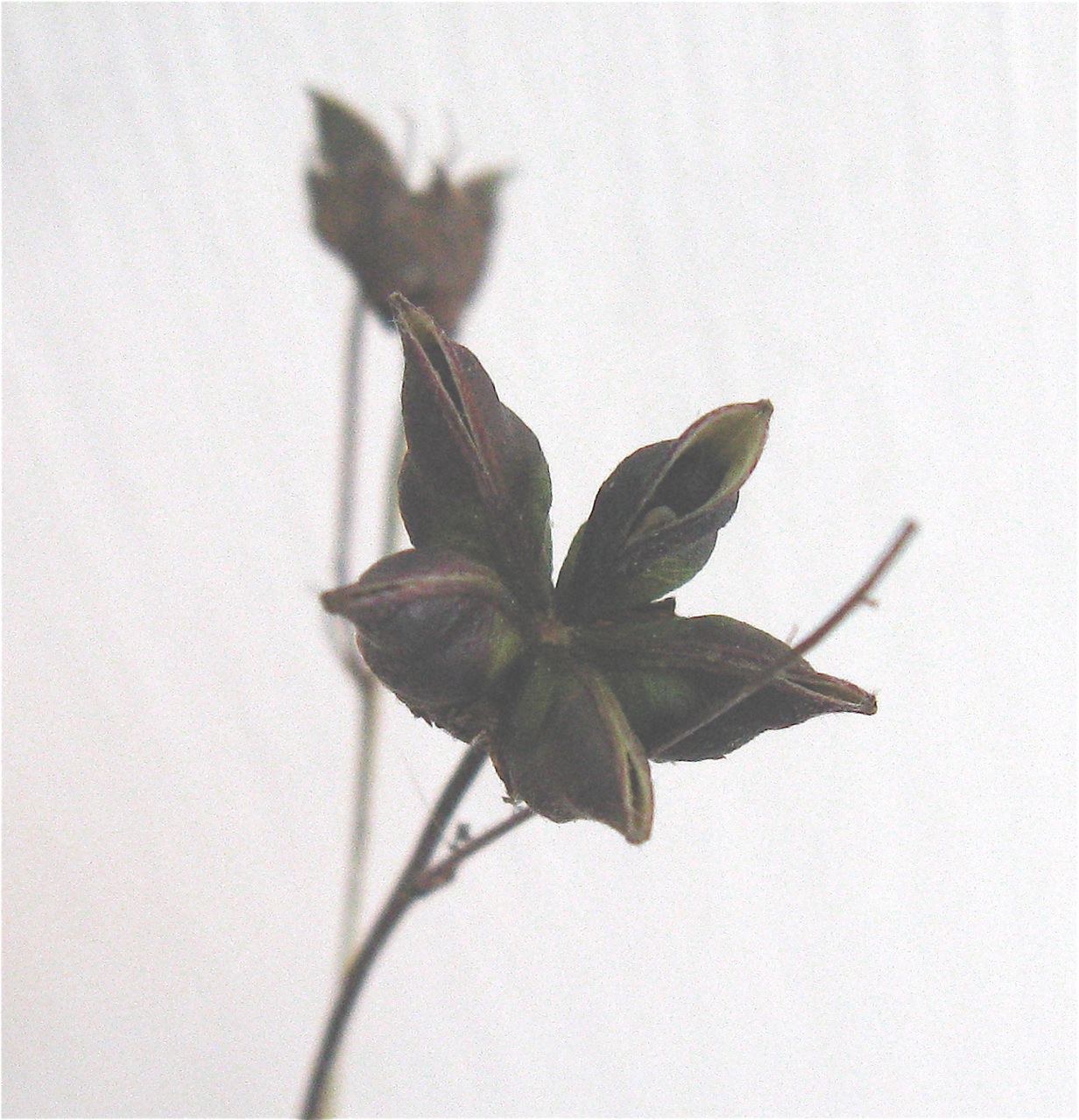
The fruit is a small, dry aggregate of several follicles (pod-like seed capsules) that split open at maturity to release their seeds. The follicles are not fleshy and are not a wildlife food source in the way berries are; they are of interest mainly for identification and seed collection, turning from green to brown as they ripen and split.
Quick Facts
| Scientific Name | Gillenia stipulata (syn. Porteranthus stipulatus) |
| Family | Rosaceae (Rose) |
| Plant Type | Herbaceous perennial |
| Mature Height | 2–3 ft (60–90 cm) |
| Mature Spread | 1.5–2 ft (45–60 cm) |
| Growth Rate | Moderate |
| Sun Exposure | Part sun to full shade |
| Water Needs | Low to moderate; tolerates dry soil well |
| Soil Type | Dry, rocky, or average upland soils; well-drained |
| Soil pH | Acidic to neutral |
| Bloom Time | Late spring to early summer |
| Flower Color | White, with pink-tinged calyx |
| Fall Color | Bronze to reddish |
| Fruit | Dry follicle clusters, not fleshy |
| Deer Resistant | Moderate (occasionally browsed when young) |
| USDA Hardiness Zones | 5–9 |
Native Range
Indian Physic is native to a broad swath of the eastern and south-central United States, from New York and the lower Great Lakes states south through the Ohio Valley and Appalachians into the Deep South, and west across the Ozarks and the southern Great Plains margin into Oklahoma and Texas. Within this range it grows from roughly sea level in the South up to moderate elevations in the Appalachian and Ozark uplands.
The species is a plant of dry, open upland habitats rather than rich, moist bottomland: look for it in open woods, woodland edges, dry rocky slopes, glades, and thickets, typically on well-drained, often acidic soils. It tolerates considerably more sun and drought than many woodland wildflowers, which is part of why it performs well in home gardens outside of deep, constantly moist shade.
Indian Physic is not reported as naturalized or weedy outside this native range, and it is not known to pose an invasiveness concern where it is planted within its native region. Gardeners well outside its historic range, however, should still prioritize locally native alternatives where available.
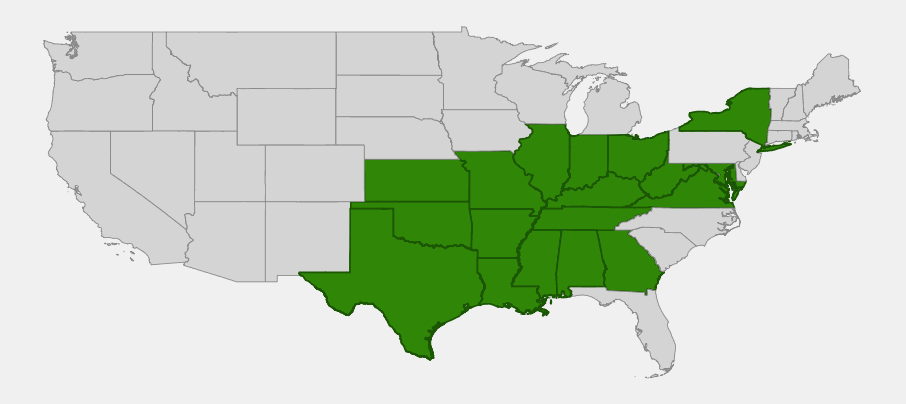
📋 Regional plant lists featuring American Ipecac: New York, Pennsylvania & Northern New Jersey · Maryland, Virginia & West Virginia · Ohio & Indiana · Illinois, Iowa & Missouri · Kentucky & Tennessee · Arkansas, Louisiana, Eastern Oklahoma & Eastern Texas · Georgia, Alabama & Mississippi · Nebraska, Kansas & Eastern Colorado
Growing & Care Guide
Indian Physic is an undemanding native perennial once it is sited in reasonably well-drained soil, and it tolerates more sun and dry spells than many woodland wildflowers.
Light
Grow Indian Physic in part sun to full shade. It flowers more freely with some morning sun or dappled light, but it also performs well in fairly deep shade, making it useful for difficult dry-shade spots under established trees.
Soil & Water
This species prefers dry to average, well-drained, slightly acidic soils and is notably more drought-tolerant than most Rosaceae perennials once established — a reflection of its native habitat on rocky slopes and open dry woods. Avoid heavy, poorly drained, or constantly wet soils, which can lead to root problems. Established plants need little supplemental watering outside of extended drought.
Planting Tips
Plant in spring or fall into well-drained soil, siting it where its airy, open growth habit and fine-textured foliage can be appreciated at the front or middle of a woodland border. It combines well with other dry-shade natives and looks most natural in informal, naturalistic plantings rather than tight formal beds.
Pruning & Maintenance
Cut back spent flowering stems after bloom if a tidier appearance is desired, though seed heads can be left for winter interest and self-sowing. In early spring, cut back the previous year’s dead stems to make way for new growth. The plant is generally pest- and disease-free and needs minimal ongoing care.
Propagation
Propagate by dividing established clumps in early spring or fall, or by sowing fresh seed in fall for natural cold stratification over winter. Division is the more reliable method for maintaining a particular plant’s characteristics.
Landscape Uses
- Dry shade gardens beneath established trees where many perennials struggle
- Naturalistic woodland borders and native plant meadows
- Restoration plantings on dry, rocky, or upland sites within its native range
- Pollinator gardens, for its late-spring bloom and open flower form
- Erosion control on dry slopes, thanks to its tolerant root system
Wildlife & Ecological Value
Indian Physic contributes modest but real wildlife value, particularly for pollinators active during its late-spring bloom period.
For Pollinators
The small, open white flowers attract a range of native bees and other pollinating insects, which can access nectar and pollen easily in the flower’s wide, starry form. The bloom period provides a nectar source in dry, open woodland settings during late spring and early summer.
For Birds & Mammals
Because the dry, non-fleshy follicle fruit is not a notable wildlife food source, Indian Physic’s main contribution to the surrounding food web runs through the insects it supports rather than through seed-eating birds or mammals; those insects, in turn, are an important food source for songbirds during the breeding season.
Ecosystem Role
As a dry-upland woodland species, Indian Physic fills a niche in open, rocky, or sun-dappled forest understories where many moisture-loving woodland wildflowers cannot persist. Its tolerant root system helps stabilize soil on the dry slopes and glades where it naturally occurs.
Cultural & Historical Uses
The common names Indian Physic and American Ipecac point directly to the plant’s historical use in traditional medicine: the dried, powdered root was used by Native American peoples and later adopted by early European settlers as a strong emetic (inducing vomiting), with additional reported use as a laxative, diaphoretic, and expectorant. The name draws a direct comparison to true ipecac (Carapichea ipecacuanha), an unrelated South American plant with similar historic emetic use, because the root’s physiological action was said to resemble it.
This history is notable, but it is history only: Gillenia stipulata is a strong emetic, and no part of the plant should be eaten, brewed, or used as a home remedy today. Historical emetic use does not translate to a safe modern dose, and unsupervised use of plant-based emetics carries real risk of harm. The plant’s value today is firmly as a garden and restoration perennial, not as a source of any home treatment.
The genus name Gillenia honors German botanist Arnold Gille, while the species name stipulata references the plant’s most distinctive identifying feature — its large, leafy stipules — a detail botanists have used to separate it from its close relative Gillenia trifoliata since the earliest taxonomic descriptions of the genus.
Frequently Asked Questions
Is Indian Physic the same as Porteranthus stipulatus?
Yes. Gillenia stipulata is the currently accepted scientific name; Porteranthus stipulatus is an older synonym still found in many field guides, older nursery catalogs, and some regional plant lists.
Can I eat or use Indian Physic as a home remedy?
No. Despite its historical use as an emetic and laxative, the plant is not safe for home medicinal use today. It is a strong emetic, and modern gardeners should grow it strictly as an ornamental native plant, not as a source of any treatment.
How do I tell Indian Physic apart from Gillenia trifoliata (Bowman’s root)?
Look at the stipules at the base of each leaf: Gillenia stipulata has large, conspicuous, leaf-like, toothed stipules, while Gillenia trifoliata has small, narrow, less noticeable ones. This single feature is the most reliable way to distinguish the two species.
Does Indian Physic need shade, or can it take sun?
It is flexible, tolerating part sun to full shade, and it is notably more drought- and sun-tolerant than many other woodland perennials in the rose family, reflecting its native habitat on dry, open, rocky slopes.
Is Indian Physic good for pollinators?
Yes, its open white flowers attract native bees and other pollinating insects during its late spring to early summer bloom period, making it a useful addition to native pollinator plantings in dry shade.

Looking for a nursery that carries American Ipecac?
Browse our native plant nursery directory: New York, Ohio & Oklahoma · Kentucky, Louisiana, Maryland, Missouri & Mississippi · Virginia, Tennessee & Texas · West Virginia · Indiana, Illinois & Kansas · Arkansas & Alabama · Georgia