
Chihuahuan Fishhook Cactus (Glandulicactus uncinatus)
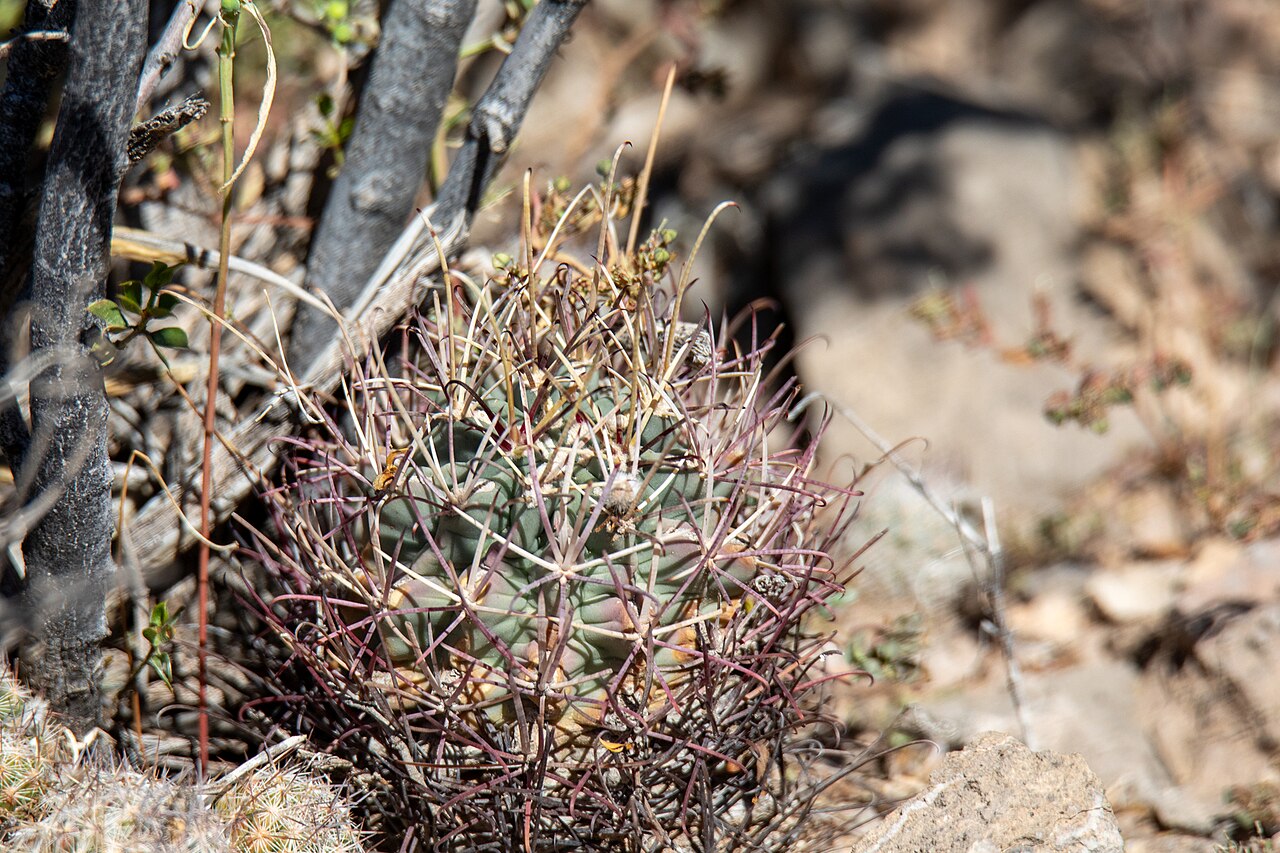
Glandulicactus uncinatus, long known to gardeners and botanists under the older name Sclerocactus uncinatus (and also seen as Ancistrocactus uncinatus), is the Chihuahuan Fishhook Cactus — a small, solitary, globe-shaped cactus of the Chihuahuan Desert. It is instantly recognizable by its unusually long, curling central spines, several of which end in a sharp hook, the feature that gives the plant both its common name and its tangled, almost wiry appearance.
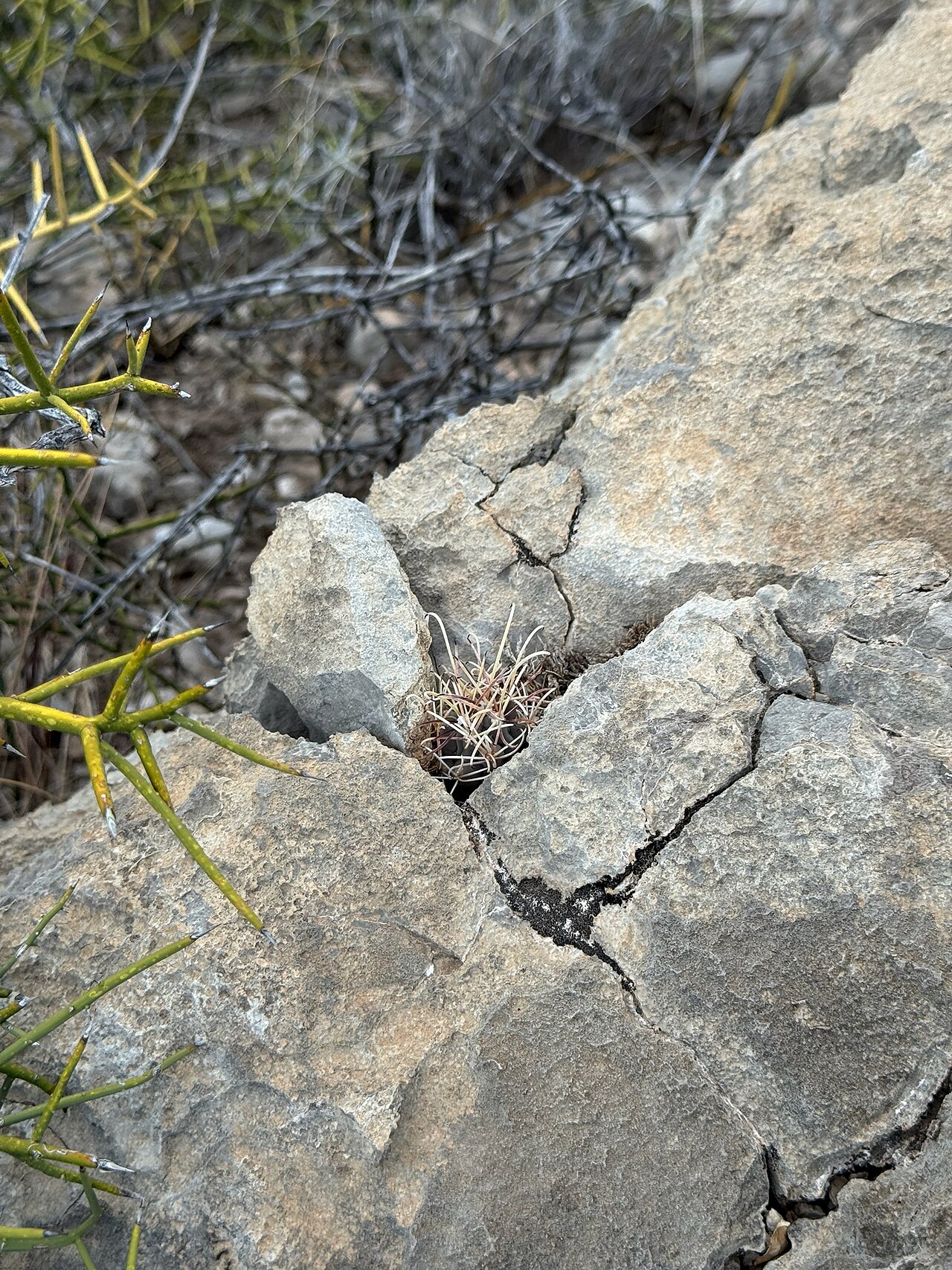
This is a genuinely tough, slow-growing desert cactus, typically found tucked into limestone crevices, gravelly slopes, and rocky desert scrub across the Trans-Pecos region of far west Texas and adjacent southern New Mexico, with its range continuing south into northern Mexico. Despite its small size — rarely more than a few inches tall — a mature plant’s spine cluster is dramatic, with hooked centrals reaching several inches in length and curling in every direction.
Like most small desert cacti, the Chihuahuan Fishhook Cactus is slow-growing and long-lived, and wild populations are vulnerable to collection. This page is written to help gardeners identify and appreciate the species and source it responsibly from nursery-propagated stock — never to encourage digging plants from the wild.
Identification
The Chihuahuan Fishhook Cactus is a small, solitary, unbranched cactus that stays close to the ground and is easily overlooked until its distinctive spines or flowers catch the eye.
Stem
The stem is globose to short-cylindrical, typically 4 to 10 inches tall and 3 to 5 inches in diameter at maturity, with 8 to 13 low, somewhat spiraled ribs bearing well-spaced, raised areoles. Plants are usually solitary, only rarely forming small offsets, which helps distinguish this species from clustering cacti that share its habitat.
Spines
The spines are the plant’s signature feature: each areole carries one to four long central spines, the longest reaching up to 5 inches, pale yellow to straw-colored, and distinctly hooked at the tip. Five to ten shorter, more slender radial spines surround each cluster, typically more reddish in color, with the lowest radials also hooked. The overall effect is a wiry, tangled halo of curving spines that can make the stem itself hard to see from a distance.
Flowers & Fruit
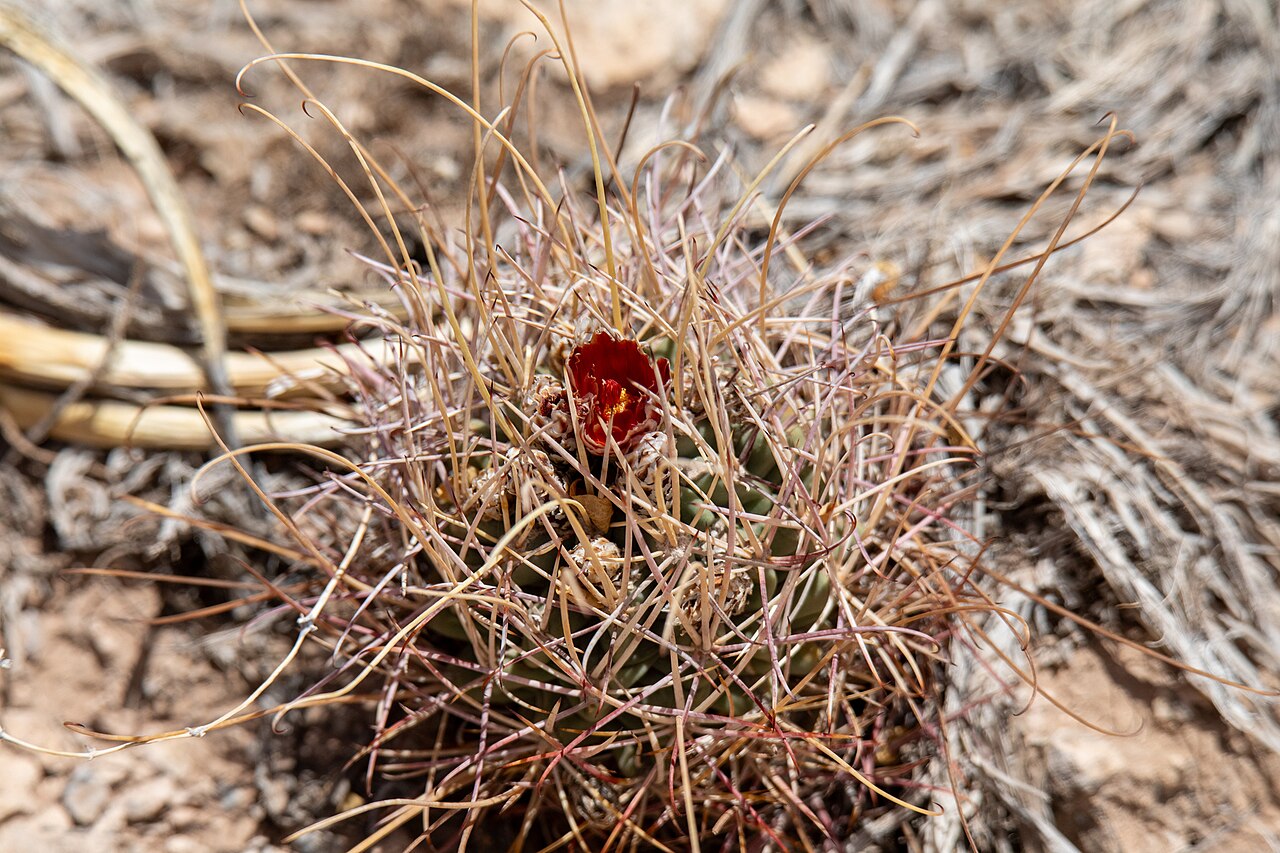
Flowers emerge from the crown of the plant from March through May, brownish-red to orange in color, funnel-shaped, and roughly 1 to 1.5 inches across when fully open. They are followed by round to egg-shaped fruit up to an inch across, green at first and ripening to bright red, which split or dry at maturity to release numerous small black seeds.
Quick Facts
| Scientific Name | Glandulicactus uncinatus (syn. Sclerocactus uncinatus, Ancistrocactus uncinatus) |
| Family | Cactaceae |
| Plant Type | Solitary Globose Cactus |
| Mature Height | 4–10 in (10–25 cm) |
| Mature Spread | 3–5 in (8–13 cm) stem diameter; spines extend several inches further |
| Growth Rate | Slow |
| Sun Exposure | Full Sun |
| Water Needs | Very Low; drought tolerant desert species |
| Soil Type | Rocky, gravelly, sharply drained; often limestone-derived |
| Soil pH | Alkaline; typical of Chihuahuan Desert limestone soils |
| Bloom Time | March – May |
| Flower Color | Brownish-red to orange |
| Fall Color | None; evergreen stem |
| Fruit | Round to egg-shaped, green ripening to red, to 1 in across |
| Deer Resistant | Yes (heavily spined) |
| USDA Hardiness Zones | 8–10 |
Native Range
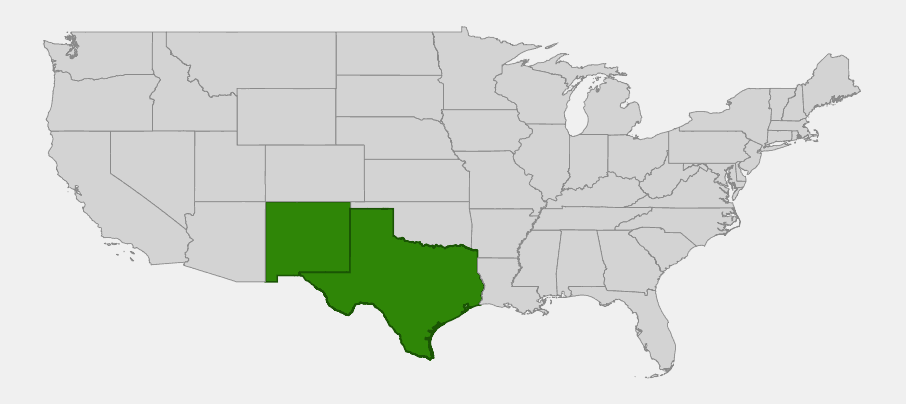
In the United States, the Chihuahuan Fishhook Cactus is native to the Trans-Pecos region of far west Texas — including the Big Bend area and the Rio Grande corridor east to around Del Rio, with an additional isolated population in Starr County in south Texas — and to adjacent south-central New Mexico near the Texas border. Its range continues south into the Mexican states of Chihuahua, Coahuila, and neighboring areas, where it is more widespread, but this page covers only its native U.S. range.
Within this range, it grows on rocky limestone slopes, gravelly desert flats, and among shrubby Chihuahuan Desert scrub, usually in full sun and sharply drained soil. It is a true desert specialist, tolerant of intense heat and long dry spells but intolerant of standing water or heavy, poorly drained soils.
Because it is small, slow-growing, and often found in the same limestone hill country prized by rock-garden and cactus collectors, wild populations face ongoing pressure from illegal collection. Texas regulates the harvest of native cacti under the Parks and Wildlife Code, and removing plants from public land, or from private land without the owner’s written permission, is against the law; the species is also listed under CITES Appendix II, which restricts international trade. Gardeners who want to grow this cactus should always buy nursery-propagated plants rather than collecting from the wild.
📋 Regional plant lists featuring Chihuahuan Fishhook Cactus: Arizona & New Mexico
Growing & Care Guide
The Chihuahuan Fishhook Cactus is a rewarding but slow-growing plant for xeriscape and rock-garden settings in hot, dry climates, and does equally well in a well-drained container for gardeners outside its hardiness range.
Light
Give this cactus full sun. In its native Chihuahuan Desert habitat it grows in fully exposed, rocky sites, and it needs strong light to maintain a compact, healthy form and to flower well.
Soil & Water
Sharp drainage is essential — a gritty, mineral cactus mix or native rocky, alkaline soil works best. Water sparingly; this species is adapted to long dry periods and is highly susceptible to rot if kept wet, especially in winter. In the ground, established plants need little to no supplemental water beyond natural rainfall in their native range.
Planting Tips
Plant in spring after the last frost, in a raised bed, rock garden, or container with excellent drainage. Handle the plant with thick gloves or wrapped newspaper, since the long hooked spines catch on skin and clothing readily and can be painful to remove. Avoid planting in low spots where water collects.
Pruning & Maintenance
No pruning is needed. Periodically check for mealybugs or scale in the spine clusters, which can be treated with a targeted insecticidal soap application. Otherwise, this is a very low-maintenance plant once established.
Propagation
Propagation is by seed, sown in a gritty mix and kept warm and lightly moist until germination. Seedlings grow slowly and may take several years to reach flowering size. Because wild collection threatens native populations, always source plants or seed from reputable nurseries or seed companies rather than the wild.
Landscape Uses
This small cactus suits a handful of specific garden roles:
- Rock gardens and gravel beds that mimic its native limestone habitat
- Xeriscape and desert-themed plantings needing little to no irrigation
- Container and trough culture for cactus collectors
- Accent plantings where the dramatic hooked spines can be appreciated up close but safely out of foot-traffic areas
Wildlife & Ecological Value
Though small, the Chihuahuan Fishhook Cactus plays a quiet but meaningful role in the Chihuahuan Desert ecosystem.
For Pollinators
The spring flowers provide nectar and pollen for native desert bees and other insects at a time of year when blooming resources are limited in the desert scrub community.
For Birds
The red fruit offers a small food source for desert birds, and the dense, hooked spine clusters can provide limited protective cover for small birds nesting or sheltering nearby.
For Mammals
Small mammals generally avoid handling the plant directly because of its spines, but some desert rodents are known to feed on cactus fruit and pulp opportunistically when it is available.
Ecosystem Role
As with many small desert cacti, this species contributes to the structural diversity of sparse Chihuahuan Desert plant communities and helps stabilize the thin, rocky soils it grows in. Its presence is also an indicator of relatively undisturbed limestone desert habitat, since the species does not recover quickly from grazing damage, off-road vehicle disturbance, or collection.
Cultural & Historical Uses
The Chihuahuan Fishhook Cactus does not have a well-documented history of use by Indigenous peoples of the region in the way that larger, more conspicuous cacti such as prickly pear or barrel cactus do. Its small size and sparse, slow-growing populations likely made it a less practical resource than more abundant desert plants.
In more recent history, the species has become primarily known among cactus and succulent collectors and rock-garden enthusiasts, prized for its unusual hooked spines. This popularity has, unfortunately, also made it a target for illegal wild collection, a pressure shared by many small Chihuahuan Desert cacti.
Today, the plant’s cultural significance is largely tied to ongoing conservation efforts in the Trans-Pecos region, where botanists and land managers work to document and protect remaining wild populations from poaching and habitat disturbance.
Frequently Asked Questions
Is it legal to dig up a Chihuahuan Fishhook Cactus I find in the wild?
No. In Texas, removing native cacti from public land, or from private land without the landowner’s written permission, is regulated and generally illegal under the state’s Parks and Wildlife Code, and the species is also protected internationally under CITES. Always buy nursery-propagated plants instead.
Why is it sometimes called Sclerocactus uncinatus instead of Glandulicactus uncinatus?
The species has been moved between genera over the years by different botanists, and older references, nursery tags, and some databases still use Sclerocactus uncinatus or Ancistrocactus uncinatus. Glandulicactus uncinatus is the name used in the USDA PLANTS database and reflects current taxonomic treatment.
How big does this cactus get?
It stays small, typically 4 to 10 inches tall and 3 to 5 inches across at the stem, though the long hooked spines extend several inches beyond the stem itself, making the plant look larger than its actual body size.
Can I grow this cactus outside Texas and New Mexico?
Yes, in a sufficiently warm, dry climate or in a container with sharp drainage, gardeners elsewhere can grow it successfully, as long as winter wet and cold are avoided. It is commonly grown by cactus collectors well outside its native range.
Do the hooked spines cause problems for pets or people?
Yes — the long, curved central spines can hook firmly into skin, fur, and clothing and are genuinely difficult to remove without tearing. Site this cactus away from paths, play areas, and spots where pets roam freely, and handle it only with thick gloves or wrapped protection.

Looking for a nursery that carries Chihuahuan Fishhook Cactus?
Browse our native plant nursery directory: New Mexico · Texas