
Royal Catchfly (Silene regia)
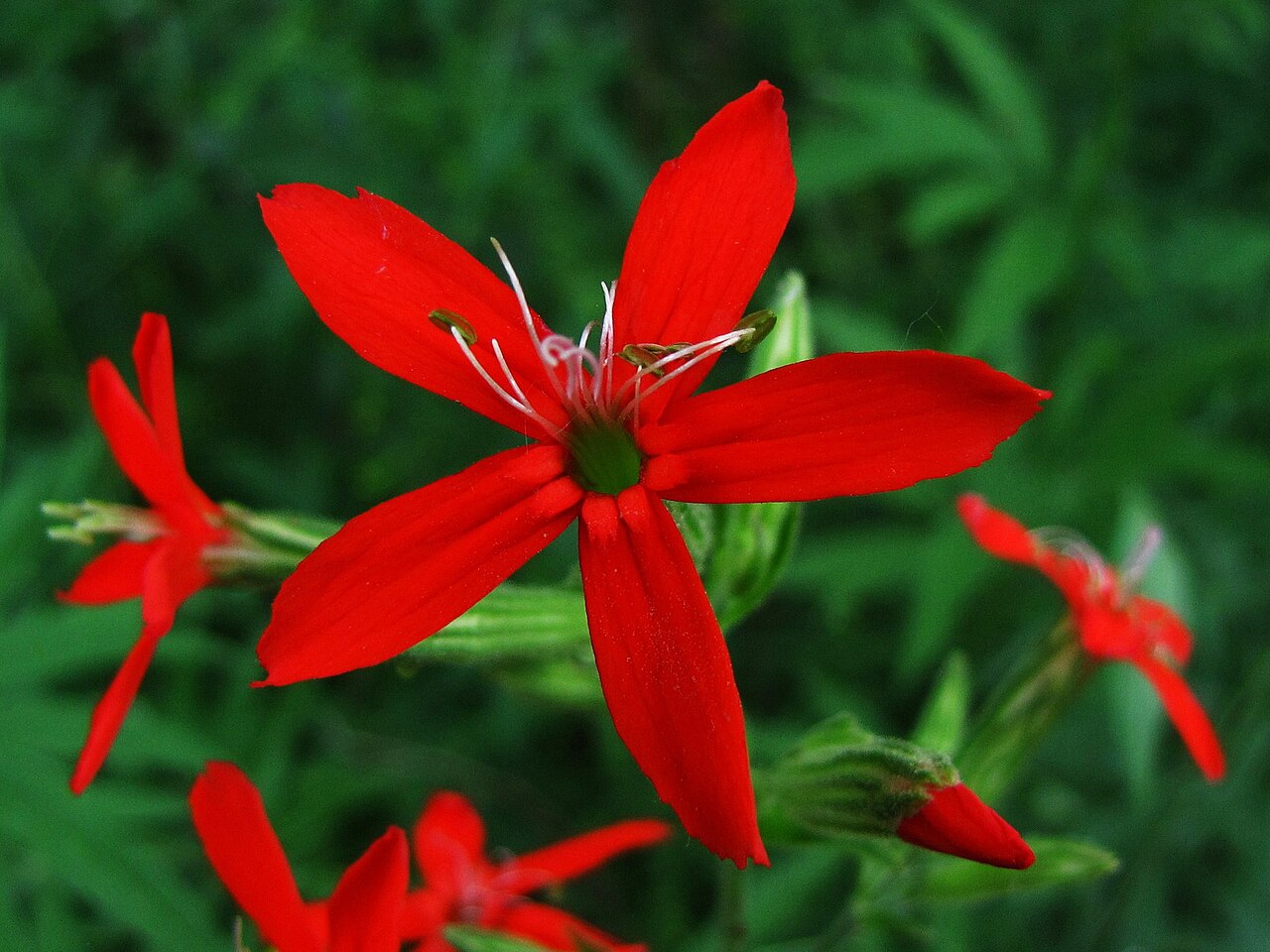
Silene regia, the Royal Catchfly, is one of the most electric wildflowers of the tallgrass prairie, sending up stiff, unbranched stems topped with clusters of brilliant scarlet, star-shaped flowers from midsummer into early fall. A member of the pink family (Caryophyllaceae), it grows from a thick, fleshy taproot and reaches 2 to 5 feet tall, standing well above most of its prairie neighbors so that its red blooms are visible from a distance — exactly the display a hummingbird-pollinated plant needs.
Royal Catchfly is a true prairie and open-woodland specialist of the central and lower Midwest and mid-South, historically tied to tallgrass prairie, glades, open oak woodland and limestone outcrops from Missouri and Kansas east through the Ohio Valley and south into the Gulf states. It has never been a common plant anywhere in its range, and decades of prairie conversion to row crops, combined with fire suppression that lets woody brush crowd out open, sunny habitat, have made it considerably rarer still. Royal Catchfly is extirpated from Kansas and Tennessee, where it once grew, and it is state-listed as threatened in Ohio; across most of the rest of its range it persists only in scattered, often small, colonies.
For prairie restoration and pollinator gardens, Royal Catchfly is a spectacular, well-behaved addition — clump-forming rather than spreading, long-lived once established, and one of the best true-red, hummingbird-pollinated natives available for the eastern and central United States. Because wild populations are already under pressure, always start with nursery-propagated plants or seed from a reputable native-plant supplier rather than digging or collecting from wild colonies.
Identification
Royal Catchfly grows as an upright, single- or few-stemmed perennial from a stout taproot, typically reaching 2 to 5 feet tall at bloom. The stems and leaves have a faintly sticky, fine-haired texture — the “catchfly” in the common name refers to this stickiness, shared with other Silene species, which can trap small crawling insects (though the plant is not carnivorous and gains no nutrition from this).
Stems
The stems are stout, round in cross-section, and typically unbranched below the flowering portion, rising straight out of the basal rosette of leaves. They are covered in fine, somewhat sticky hairs, especially near the inflorescence, which helps distinguish Royal Catchfly from smoother-stemmed prairie forbs nearby.
Leaves
Leaves are opposite, lance-shaped to oval, up to about 5 inches long near the base of the plant and progressively smaller higher up the stem. They have smooth (entire) margins and a slightly rough, hairy surface, and clasp the stem loosely at their base without a petiole.
Flowers
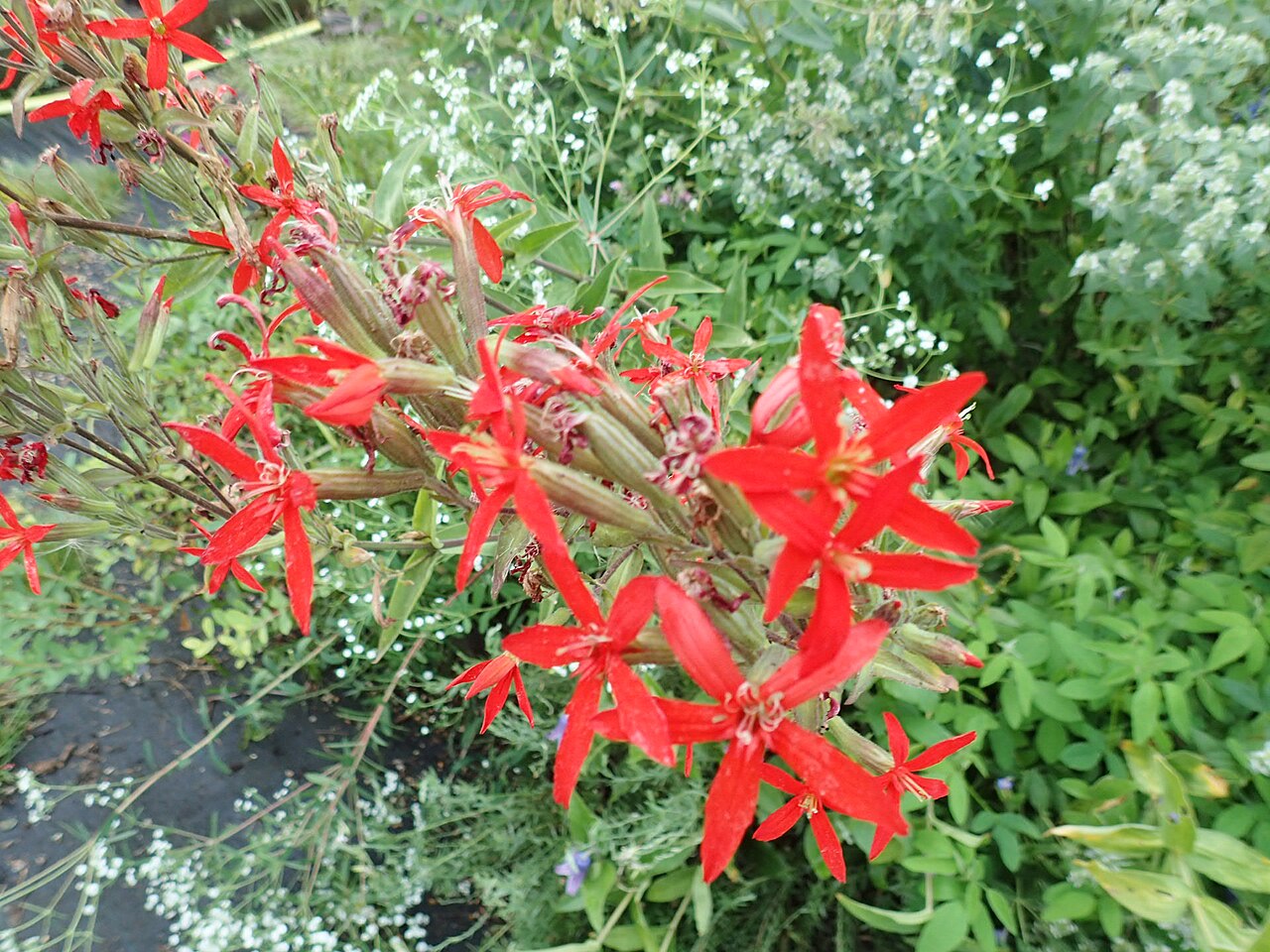
The inflorescence is an open cluster of flowers at the top of the stem, each flower built around an elongated, tubular calyx up to an inch long, marked with ten fine longitudinal veins — a distinctive detail visible on close inspection. From this tube flare five brilliant scarlet petal lobes, each deeply notched at the tip into narrow points, giving the open flower a jagged, star-like outline quite different from the rounder flowers of its close relative Fire Pink (Silene virginica). Flowers open from June into September, with a long white-stamened throat that channels pollinating hummingbirds straight to the nectar at the tube’s base.
Quick Facts
| Scientific Name | Silene regia |
| Family | Caryophyllaceae (Pink) |
| Plant Type | Herbaceous perennial wildflower |
| Mature Height | 2–5 ft |
| Mature Spread | 1–1.5 ft, clump-forming |
| Growth Rate | Slow to establish; long-lived once rooted in |
| Sun Exposure | Full Sun |
| Water Needs | Average; good drought tolerance once established |
| Soil Type | Well-drained loam, rocky or limestone-based soils |
| Soil pH | Neutral to alkaline (about 6.5–7.5) |
| Bloom Time | June – September |
| Flower Color | Brilliant scarlet red |
| Fall Color | None notable; foliage senesces after frost |
| Fruit | Small dry capsule with numerous tiny seeds |
| Deer Resistant | Yes, generally avoided by deer and rabbits |
| USDA Hardiness Zones | 5–9 |
Native Range
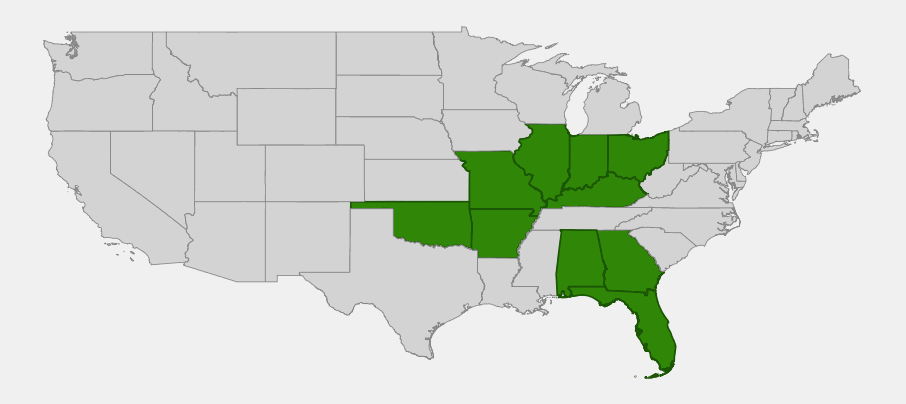
Royal Catchfly’s native range centers on the prairie and prairie-woodland transition zone of the central and lower Midwest, extending into the mid-South and the northern edge of the Gulf Coastal Plain. It is found in Missouri, Arkansas, eastern Oklahoma, Illinois, Indiana, Ohio, Kentucky, Georgia, Florida and Alabama, with Missouri generally considered its stronghold. The species is extirpated from Kansas and Tennessee, where historical records exist but no extant wild populations remain, and it is state-listed as threatened in Ohio.
Typical habitat is open, sun-drenched ground: remnant tallgrass prairie, limestone and dolomite glades, rocky open woodland edges, and historically, roadsides and utility rights-of-way that mimic the open conditions the species needs. It is almost always found in full sun and depends on periodic disturbance, historically fire, to keep woody shrubs and trees from shading it out — the same fire regime that shaped the tallgrass prairie ecosystem as a whole.
Habitat loss from the conversion of prairie to agriculture has been the dominant threat to Royal Catchfly across its range, compounded by decades of fire suppression that allows brush encroachment into the open glades and prairie remnants where it survives. Genetic studies have found that populations in the western part of the range (Missouri and Arkansas) carry higher genetic diversity than the more fragmented, isolated eastern populations (Indiana and Alabama), a pattern consistent with long-term habitat fragmentation limiting gene flow between colonies.
📋 Regional plant lists featuring Royal Catchfly: Illinois, Iowa & Missouri · Arkansas, Louisiana, Eastern Oklahoma & Eastern Texas · Ohio & Indiana · Kentucky & Tennessee · Georgia, Alabama & Mississippi
Growing & Care Guide
Royal Catchfly rewards patience: it is slow to bulk up from seed or a small transplant, often not flowering until its second or third year, but once established it is a tough, long-lived prairie perennial that needs very little upkeep.
Light
Give Royal Catchfly full sun. It is a true prairie and glade plant that needs at least 6 hours of direct sun daily to bloom well and stay upright; in shade it stretches, flops, and flowers poorly, if at all.
Soil & Water
Well-drained soil is essential — Royal Catchfly comes from rocky glades and prairie soils that never stay soggy, and it is prone to crown rot in heavy, poorly drained clay. A neutral to slightly alkaline pH suits it best, reflecting its affinity for limestone-influenced soils in much of its range. Water regularly during the first growing season to help the taproot establish; mature plants are quite drought tolerant and need supplemental water only in extended dry spells.
Planting Tips
Because Royal Catchfly develops a deep taproot, plant small container stock or direct-sow seed rather than attempting to transplant larger, more established plants, which resent root disturbance. Fall sowing works well, since the seed benefits from a period of cold, moist stratification over winter. Give each plant 12 to 18 inches of space; the clump stays narrow, so it mixes well among shorter prairie grasses and forbs without overwhelming neighbors.
Pruning & Maintenance
Little maintenance is needed beyond removing spent flower stalks after seed drop, which can be left standing through winter for seed-eating birds and then cut back in late winter or early spring. In a restoration or meadow planting, periodic prescribed fire or mowing every few years helps control woody encroachment and keeps the open, sunny conditions Royal Catchfly depends on.
Landscape Uses
- Prairie and meadow restoration, where its height and color make it a natural focal point
- Hummingbird gardens, as one of the best true-red nectar sources for the eastern and central U.S.
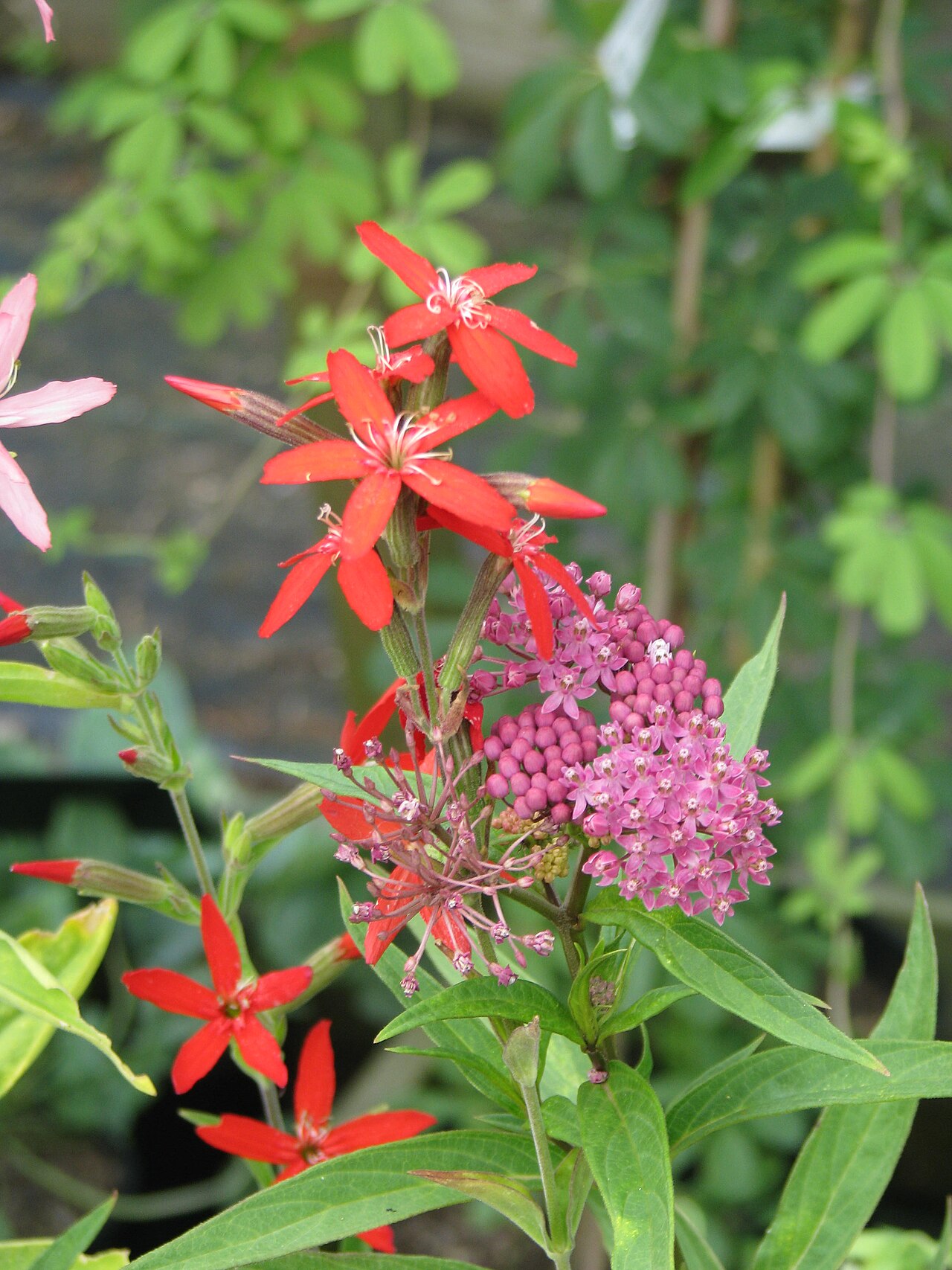
- Pollinator borders paired with butterfly milkweed and purple coneflower
- Limestone glade and rock garden plantings on well-drained, alkaline sites
- Cut flower use in informal native arrangements, where the scarlet blooms hold up well
Wildlife & Ecological Value
Royal Catchfly is built around one particular pollinator relationship, but it supports a wider circle of prairie wildlife through the season.
For Pollinators & Hummingbirds
The long, narrow floral tube and brilliant red color are a textbook hummingbird-pollination syndrome, and the Ruby-throated Hummingbird is the plant’s primary pollinator, probing the deep tube for nectar that is largely inaccessible to short-tongued insects. Some long-tongued butterflies and moths, including swallowtails and sphinx moths, also visit the flowers for nectar, though less effectively than hummingbirds at achieving pollination.
For Birds
Beyond the hummingbirds it is adapted to attract, the dry seed capsules that persist into fall and winter provide seed for small songbirds foraging in prairie and glade remnants.
For Mammals
Deer and rabbits generally leave Royal Catchfly alone, likely due to the slightly sticky, bitter foliage, which makes it a reliable choice in gardens where browsing pressure limits other native perennials.
Ecosystem Role
As a conspicuous, fire-adapted prairie forb, Royal Catchfly is both a pollinator resource and an indicator of healthy, open prairie and glade habitat. Its continued presence in a remnant prairie or managed meadow is a useful sign that fire or mowing is successfully holding back woody encroachment, since the species quickly declines and disappears from sites that go unmanaged and grow up in brush.
Cultural & Historical Uses
Royal Catchfly has little documented history of use by Indigenous peoples or early settlers as a food, fiber or medicinal plant; like many showy but non-staple prairie wildflowers, its significance has been primarily ornamental and, more recently, ecological. Its vivid color made it a favorite of nineteenth- and twentieth-century prairie botanists cataloging the flora of the tallgrass region, and the species name “regia,” Latin for “royal” or “kingly,” reflects the striking impression its scarlet flowers made on early collectors.
In the twentieth century, as tallgrass prairie across the Midwest was reduced to a tiny fraction of its original extent, Royal Catchfly became one of the signature species of the prairie conservation movement, frequently featured in restoration seed mixes and used by botanical gardens, including the Chicago Botanic Garden, as a public-facing example of a native plant that is both ecologically important and simply beautiful to grow.
Today, the species is primarily valued by native-plant gardeners and prairie restoration practitioners, and its cultivation in home gardens and public plantings plays a small but real role in supporting genetic diversity and awareness for a plant that has declined significantly in the wild.
Frequently Asked Questions
Is Royal Catchfly endangered?
It is not federally listed, but it is uncommon throughout its range, extirpated from Kansas and Tennessee, and state-listed as threatened in Ohio. Treat wild populations as off-limits to collection, and source garden plants from nurseries or native-plant seed programs rather than digging from the wild.
Why is it called “catchfly”?
The stems and calyx are covered in fine, slightly sticky hairs that can trap small crawling insects, a trait shared by several Silene species. The plant does not digest or benefit nutritionally from trapped insects; it is not carnivorous.
Will Royal Catchfly attract hummingbirds to my garden?
Yes — its tubular scarlet flowers are specifically adapted to Ruby-throated Hummingbird pollination and are one of the most reliable hummingbird magnets among eastern and midwestern native wildflowers.
How long does it take Royal Catchfly to bloom from seed?
Expect two to three years before a seed-grown plant flowers well, since the species invests early energy into building its deep taproot. Once established, plants are long-lived and bloom reliably every summer.
Can Royal Catchfly grow in clay soil?
Heavy, poorly drained clay is risky, since the thick taproot is prone to rot in soil that stays wet. Amend heavy clay with coarse material to improve drainage, or choose a naturally well-drained, rocky or loamy site instead.

Looking for a nursery that carries Royal Catchfly?
Browse our native plant nursery directory: Missouri & Kentucky · Alabama & Arkansas · Ohio & Oklahoma · Illinois & Indiana · Georgia & Florida