Southern Shield Fern (Thelypteris kunthii)
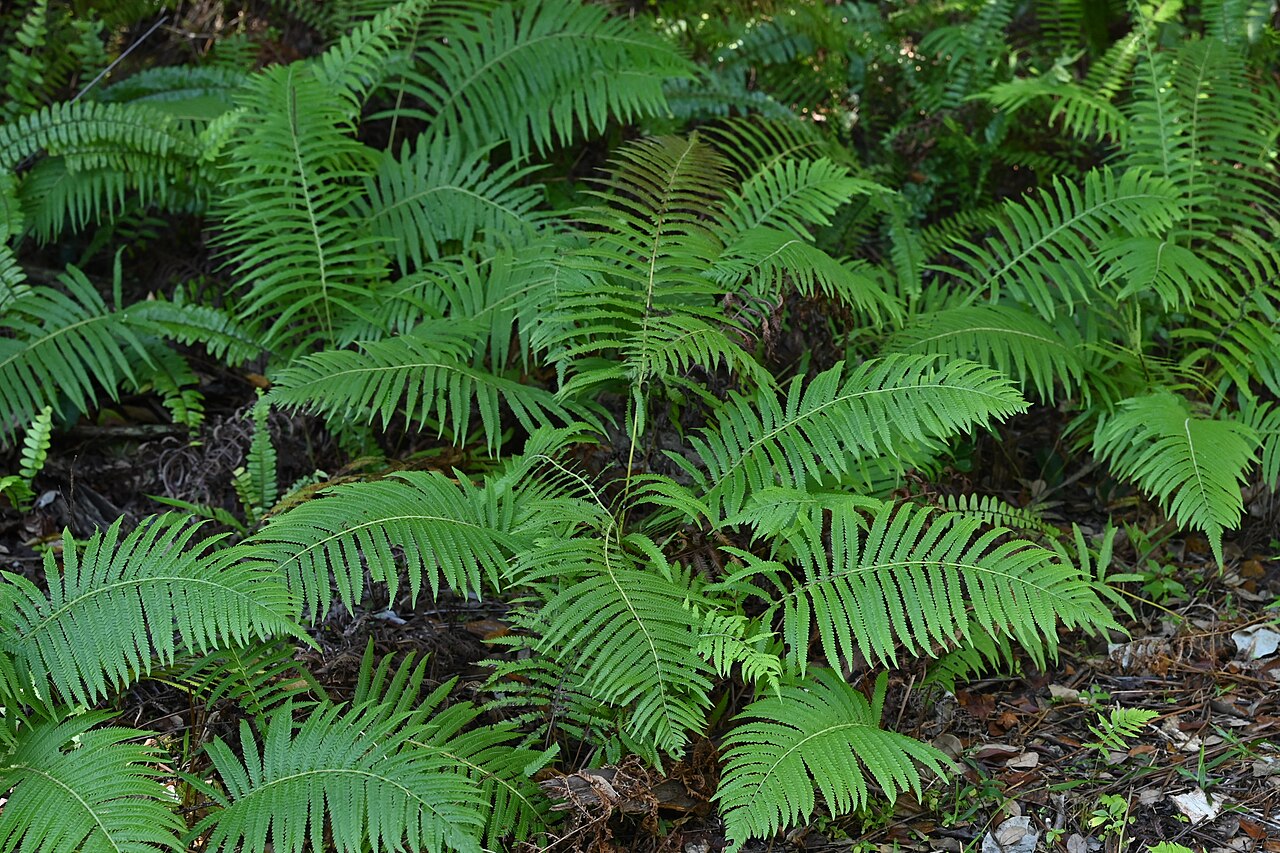
Thelypteris kunthii, commonly called Southern Shield Fern, is one of the most widely grown native ferns of the Gulf South, prized by gardeners for its graceful, arching, sea-green fronds and its willingness to thrive in difficult shady spots where little else will grow. Also known as Kunth’s maiden fern, widespread maiden fern, or river fern, it is the most common of the maiden ferns across the southeastern United States south of the fall line, ranging west to Texas.
This is a tough, forgiving fern. It tolerates heat, humidity, poor drainage, short droughts, and a wide range of soils from rich humus to sand or loam, and it grows equally well in deep shade or with brief exposure to direct sun. Short and long creeping rhizomes let it spread steadily into broad colonies, making it an excellent woodland groundcover and an effective tool for stabilizing shaded slopes near streams and drainage ways.
In frost-free areas Southern Shield Fern is evergreen to semi-evergreen; farther north in its range the fronds turn an attractive bronze before going dormant for winter, then push up fresh fiddleheads among the last of any fern in late spring. Its combination of texture, reliability, and true native status throughout the Deep South has made it a staple of woodland and shade gardens from Texas to Florida.
Identification
Southern Shield Fern forms clumps of upright-arching fronds from 2 to 4 feet long, spreading gradually into broad colonies by both short and long creeping rhizomes. Unlike clumping ferns that stay put, this species is a true colonizer, which is part of what makes it so effective as a groundcover.
Fronds
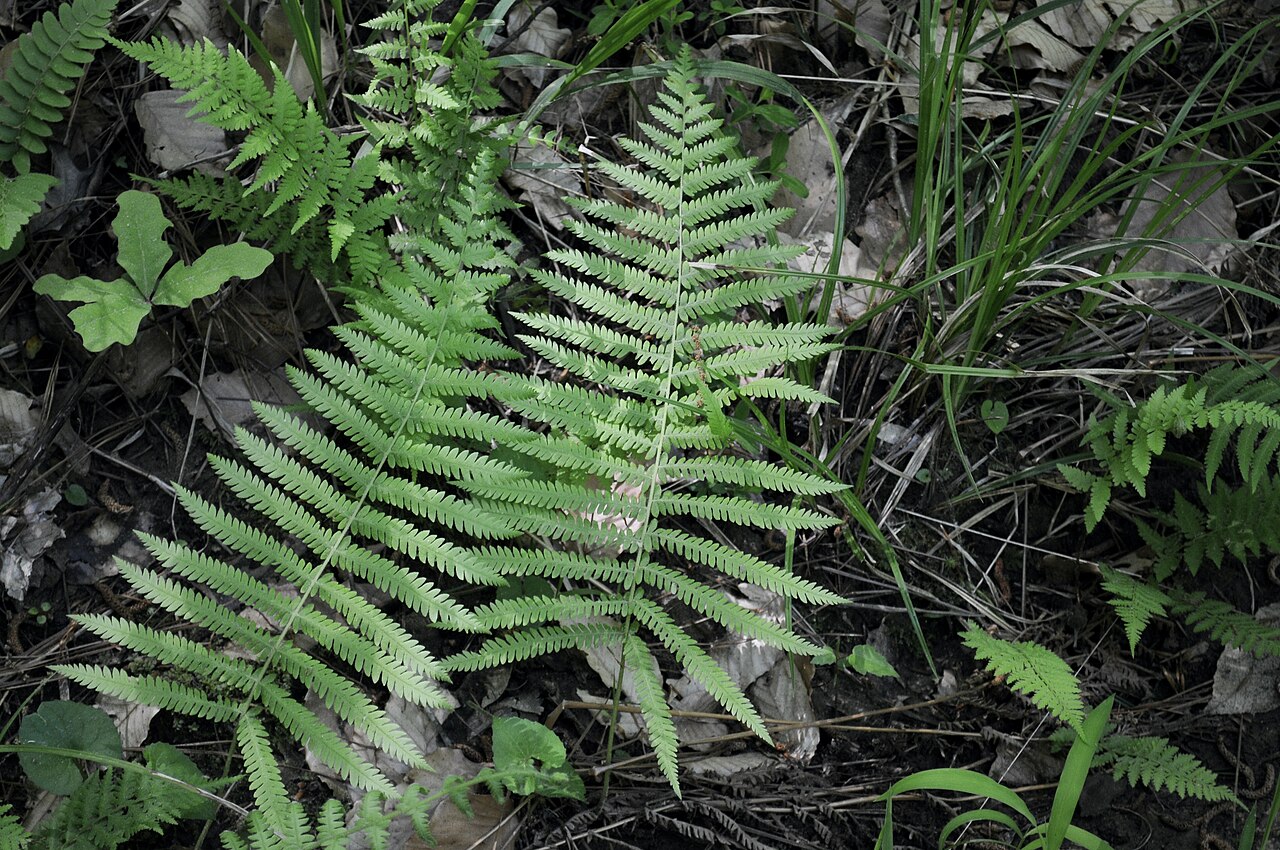
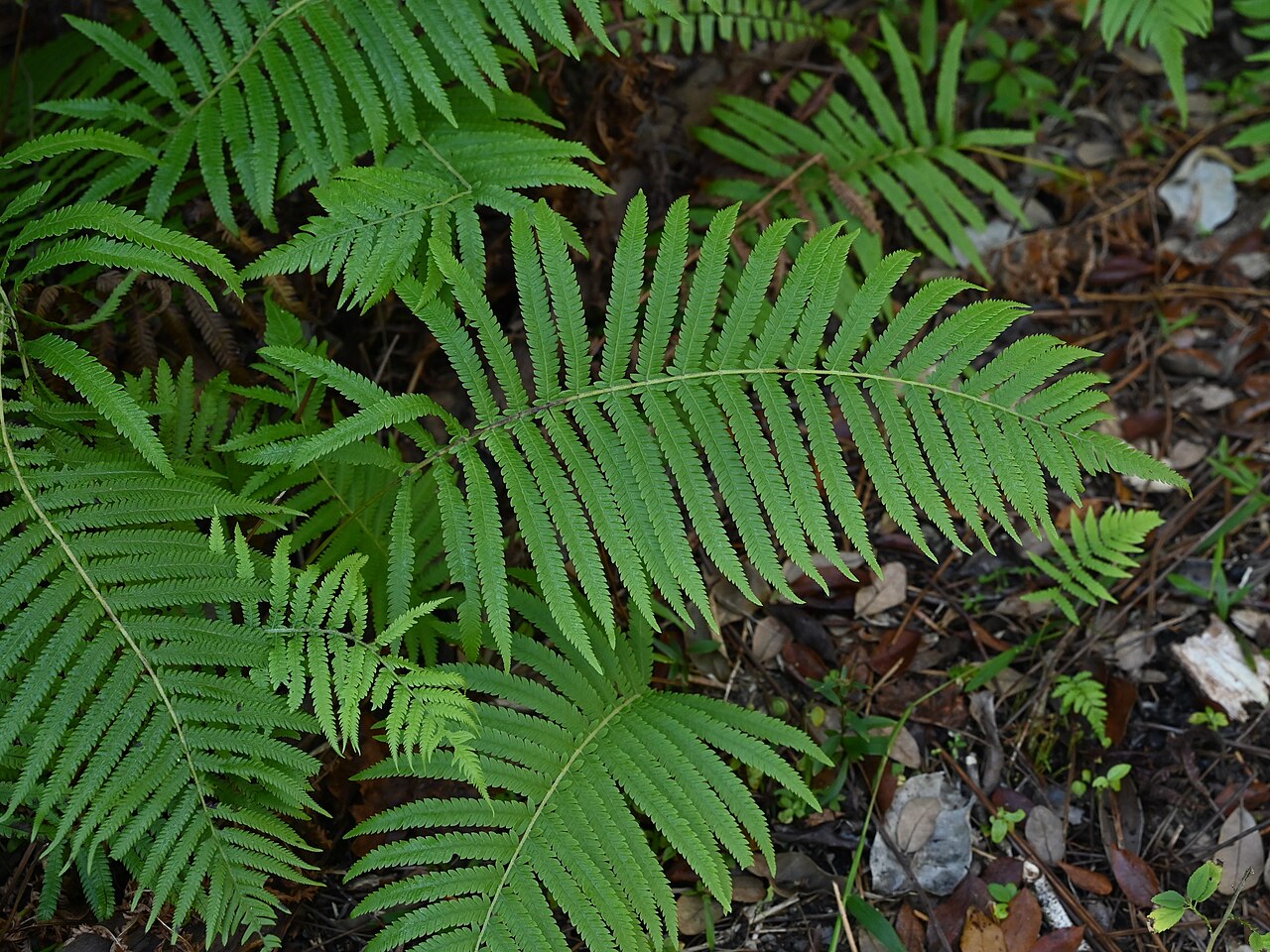
Fronds are once-pinnate-pinnatifid (the pinnae are deeply lobed but not fully divided into separate leaflets), lance-shaped in outline, and a bright sea-green color that darkens slightly with age. Very fine, translucent hairs cover both surfaces of the leaf, a useful field mark when the fern is not in a identifiable habitat. New fiddleheads emerge in late spring, among the last ferns to break dormancy, and the fronds arch outward and downward as they mature, giving the whole clump a fountain-like form.
Fertile Fronds & Spores
Like other ferns, Southern Shield Fern reproduces by spores rather than flowers or seeds. The sori (spore clusters) are kidney-shaped and arranged in two rows running parallel to the midvein on the underside of each pinna, with small hairy indusia covering them while immature.
Seasonal Change
In the colder parts of its range, fronds shift from bright green to a warm bronze color in autumn before dying back for winter. In the frost-free Gulf Coast and peninsular Florida, the fern is evergreen to semi-evergreen, holding its fronds through most or all of the winter.
Quick Facts
| Scientific Name | Thelypteris kunthii (syn. Christella normalis, Thelypteris normalis) |
| Family | Thelypteridaceae (Marsh Fern) |
| Plant Type | Herbaceous Fern, Rhizomatous, Colony-forming |
| Mature Height | 2–4 ft |
| Mature Spread | Spreading, forms colonies several feet wide |
| Growth Rate | Medium |
| Sun Exposure | Part Shade to Full Shade (tolerates brief direct sun) |
| Water Needs | Moderate; tolerates short droughts once established |
| Soil Type | Adaptable: humus-rich, loam, or sand; tolerates poor drainage |
| Soil pH | Adaptable, slightly acidic to neutral preferred |
| Bloom Time | None (ferns reproduce by spores, not flowers) |
| Flower Color | Not applicable |
| Fall Color | Fronds turn bronze before winter dieback in cooler areas |
| Fruit | None; reproduces by spores (sori on frond undersides) |
| Deer Resistant | Yes (ferns are rarely browsed) |
| USDA Hardiness Zones | 7–10 |
Native Range
Southern Shield Fern is native to the Gulf Coast and lower Southeast, from South Carolina south through Georgia, Florida, Alabama, and Mississippi to Louisiana and eastern and central Texas. BONAP county records show it absent from North Carolina despite being sold there, so this site does not list North Carolina as a native state. Beyond the United States, the species continues through Mexico, Central America, the Caribbean, and into the northern reaches of South America.
Within its range it grows in a wide variety of moist to seasonally dry shaded habitats: bottomland and floodplain forests, shaded ravines and slopes, stream banks, and the margins of swamps and wet woods, as well as disturbed shady sites such as roadside ditches and old home sites. It is notably adaptable to both consistently moist, poorly drained soil and brief dry spells, which is part of why it has become such a dependable garden plant throughout the Deep South.
Southern Shield Fern typically grows at low elevations across the coastal plain and Piedmont of its range, rarely venturing into higher, cooler mountain terrain where other native ferns take over.
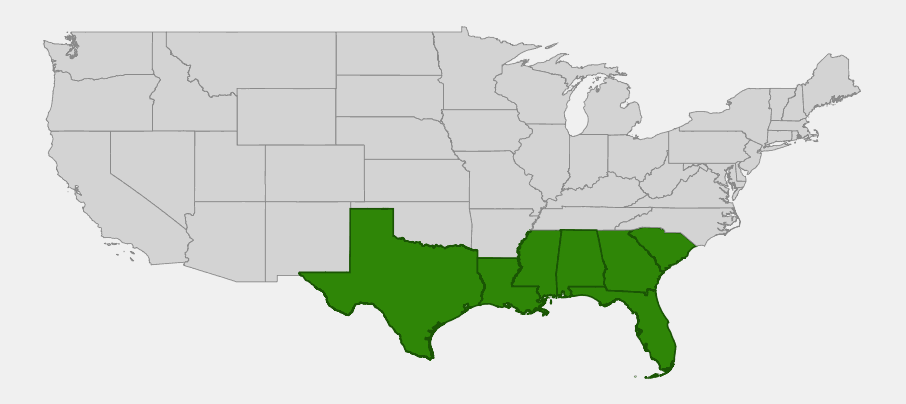
📋 Regional plant lists featuring Southern Shield Fern: Georgia, Alabama & Mississippi · North Carolina & South Carolina · Arkansas, Louisiana, Eastern Oklahoma & Eastern Texas
Growing & Care Guide
Few native ferns are as forgiving as Southern Shield Fern, which is exactly why it has become a go-to groundcover for shaded Gulf South gardens.
Light
This fern grows best in part shade to full shade, including deep shade beneath dense tree canopy where few flowering plants will perform. It tolerates brief periods of direct morning or filtered sun, especially with adequate soil moisture, but hot afternoon sun will scorch the fronds.
Soil & Water
Southern Shield Fern is remarkably adaptable, growing in soils from rich organic humus to plain loam or sand, and tolerating poor drainage better than most ferns. Regular moisture produces the lushest growth, but established plants shrug off short dry spells without major damage, a real advantage during Gulf Coast summer dry stretches.
Planting Tips
Plant in spring or fall, spacing divisions 18 to 24 inches apart to allow room for the colony to fill in. Because it spreads by rhizomes, give it room to roam, or plant it where a spreading groundcover is exactly what’s wanted — beneath trees, along shaded fence lines, or on a shaded slope that needs stabilizing.
Pruning & Maintenance
In cooler parts of its range, cut back frost-damaged or bronzed fronds in late winter before new fiddleheads emerge. In frost-free areas where the fern stays evergreen, little pruning is needed beyond removing an occasional damaged frond. The plant has no serious pest or disease problems.
Propagation
The easiest method is division of the spreading rhizomes in spring, which also helps control the colony’s size if it has outgrown its space. Southern Shield Fern can also be grown from spores, though division is far faster and more reliable for most gardeners.
Landscape Uses
Southern Shield Fern earns its popularity through sheer versatility:
- Woodland groundcover beneath trees where turf and many perennials fail
- Slope and streambank stabilization in shaded, erosion-prone spots
- Shade garden companion for hostas, heucheras, trillium, and woodland phlox
- Mass plantings for a lush, textured understory look
- Foundation plantings on the shaded side of a house
- Container and raised bed plantings in shaded courtyards
Wildlife & Ecological Value
As a non-flowering fern, Southern Shield Fern does not offer nectar or pollen, but it still contributes meaningfully to the habitats where it grows.
For Pollinators
Ferns do not produce flowers, so Southern Shield Fern offers no direct pollinator resources. Its value lies instead in the structural habitat it provides within a diverse native plant community.
For Birds
Dense fern colonies offer ground-level cover and foraging habitat for towhees, thrushes, and other birds that work the leaf litter for insects, especially in the bottomland and ravine habitats where this species thrives.
For Mammals
Southern Shield Fern is rarely browsed by deer or rabbits, making it one of the more dependable groundcovers in areas with heavy browse pressure. Small mammals may use dense colonies for cover.
Ecosystem Role
The fern’s spreading rhizome network helps bind soil on shaded slopes and streambanks, reducing erosion in the bottomland forests and ravines where it is most common. As a true native groundcover, it also helps crowd out opportunistic weeds in shaded sites, supporting a more diverse native understory.
Cultural & Historical Uses
Southern Shield Fern does not carry the extensive documented ethnobotanical history of some larger native plants, but ferns in general have long been valued across the Southeast as woodland groundcover and as indicators of healthy, shaded bottomland habitat. Early botanists collecting across the Gulf South and Texas noted it among the most common and conspicuous ferns of the region’s bottomland forests.
In more recent decades, Southern Shield Fern has become a favorite of native-plant and xeriscape-adjacent gardeners throughout the Gulf Coast and Texas for its reliability, texture, and tolerance of the region’s heat and humidity, often replacing non-native ferns in shaded landscape designs.
Today its main significance is horticultural: a dependable, attractive, true native alternative to introduced ferns for the many gardeners working with the deep shade so common under southern tree canopies.
Frequently Asked Questions
Is Southern Shield Fern the same as Kunth’s maiden fern?
Yes. Kunth’s maiden fern, widespread maiden fern, river fern, and Southern Shield Fern are all common names for the same species, Thelypteris kunthii. The USDA PLANTS Database lists “Kunth’s maiden fern” as its official common name, but “Southern Shield Fern” is the name most often used in nurseries and gardens.
Does Southern Shield Fern need constant moisture?
No. While it grows lushest with regular moisture, established plants tolerate short dry spells better than most ferns, which is part of why it performs so well in Gulf South gardens through summer dry stretches.
Will Southern Shield Fern take over my garden?
It spreads steadily by rhizomes to form colonies, so give it room or plant it where a spreading groundcover is wanted. It is not aggressive enough to be considered invasive within its native range, but it will fill in an open shaded bed over a few seasons.
Is Southern Shield Fern evergreen?
In frost-free areas along the Gulf Coast and in peninsular Florida, it is evergreen to semi-evergreen. Farther north and in cooler winters, fronds turn bronze and die back, with fresh fiddleheads emerging again in late spring.
Can Southern Shield Fern grow in full sun?
It tolerates brief exposure to direct sun, especially morning sun with consistent soil moisture, but it performs best and looks its best in part to full shade. Hot afternoon sun will scorch the fronds.

Looking for a nursery that carries Southern Shield Fern?
Browse our native plant nursery directory: Texas & South Carolina · Louisiana & Mississippi · Alabama · Georgia & Florida