Narrowleaf Yucca (Yucca angustissima)
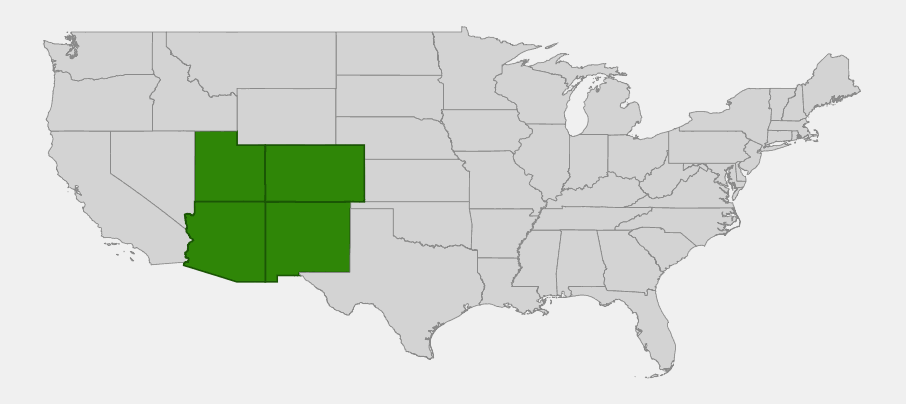
Yucca angustissima, the Narrowleaf Yucca, is a low, spiny-leaved succulent of the Colorado Plateau, where it grows scattered across slickrock benches, sandy flats and pinyon-juniper woodlands from northern Arizona and southern Utah into western Colorado and the northwest corner of New Mexico. It belongs to the agave subfamily (Agavoideae) within Asparagaceae, and like all yuccas it is a true desert perennial, storing water in tough, fibrous leaves rather than the soft pads of a cactus.
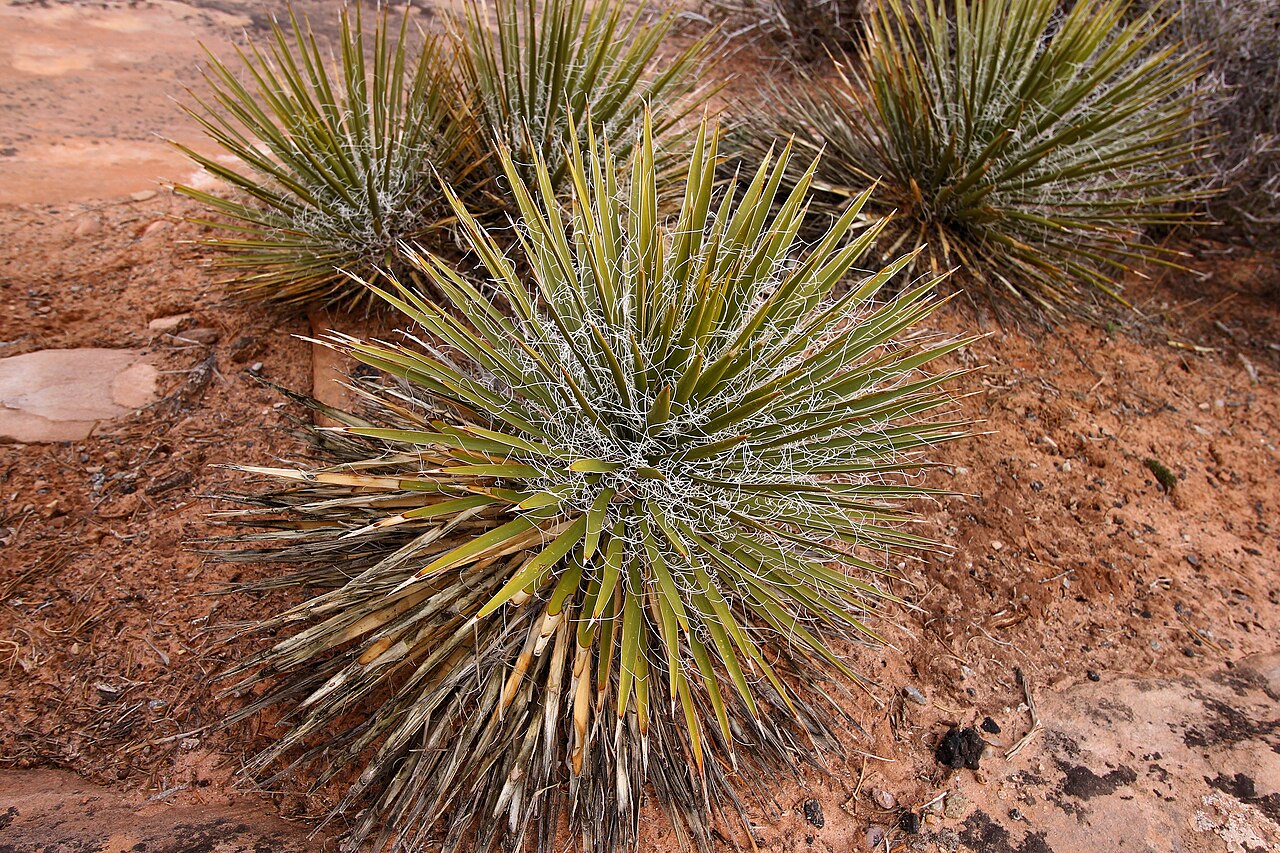
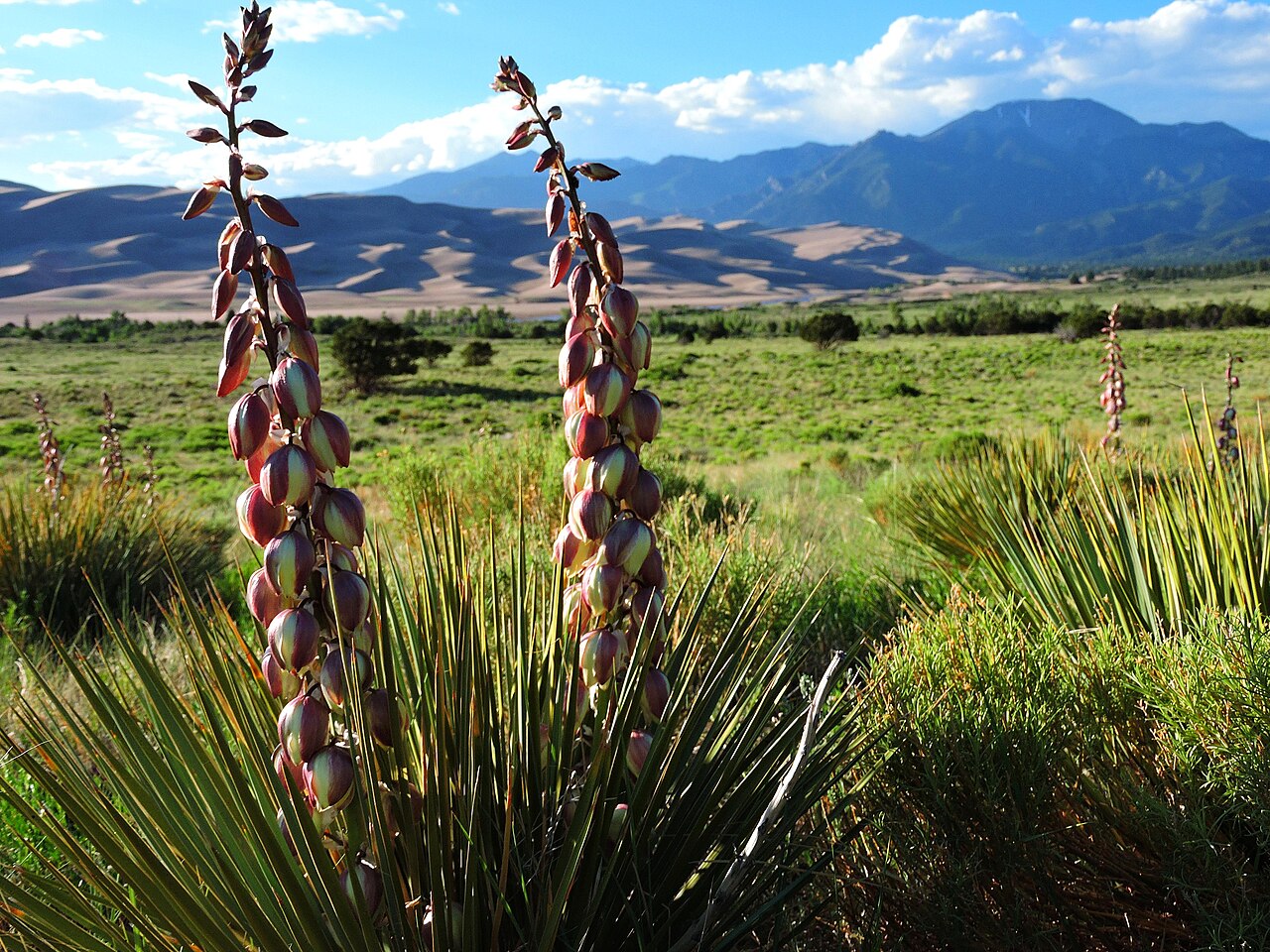
Unlike the tree-forming yuccas of the Mojave or the trunked soaptree yucca of the lower deserts, narrowleaf yucca almost always stays stemless or very short-stemmed, forming tight rosettes of needle-thin, blue-green to yellow-green leaves no more than about half an inch wide. Plants often cluster into colonies several feet across as offsets form around an older rosette, giving a sandy slope or rocky bench a scattering of spiky green pincushions. In late spring the look changes dramatically: each mature rosette sends up a single unbranched flower stalk hung with dozens of pendant, cream to greenish-white blossoms, visible for miles across open country.
For gardeners in the Four Corners region, narrowleaf yucca is a strikingly low-maintenance native for the driest, sunniest, least-watered part of the yard. It asks for almost nothing once established — no supplemental water, no fertilizer, no winter protection — and in return it offers bold winter-hardy structure, a dramatic bloom display, and a direct ecological link to the specialized moth that alone can pollinate it. Because wild populations on public land are protected and slow to recover from digging, always start with nursery-grown plants rather than collecting from the wild.
Identification
Narrowleaf yucca is usually stemless or has only a short, mostly buried stem, so what you see above ground is a dense rosette of leaves sitting more or less at soil level. Individual rosettes typically stand 1.5 to 3 feet tall and about as wide, but plants spread by basal offsets into clumps or loose colonies that can reach several feet across over many years. The whole plant stays evergreen, with no fall color change, and the stiff rosette persists through the coldest Colorado Plateau winters.
Rosette & Leaves
The leaves are the plant’s defining feature: straight-edged, very narrow — usually under an inch and often closer to half an inch wide — but long, commonly 1 to 2.5 feet and occasionally longer, tapering evenly to a sharp, rigid terminal spine capable of puncturing skin or light clothing. Leaf color ranges from blue-green to yellow-green, and the margins are typically straight rather than toothed, though they often fray into long, curling, pale fibers (“yucca hair”) that catch light and give the rosette a slightly shaggy, silvery look. Four recognized varieties are told apart mainly by leaf length and flower details, with the typical variety (var. angustissima) the most widespread across the Colorado Plateau.
Flowers
From late spring into early summer, mature rosettes send up a single stiff, unbranched flowering stalk 3 to 7 feet tall, well above the leaves. Dozens of bell-shaped, pendant flowers hang from the upper half of the stalk in a loose, elongated raceme. Each flower is 1.5 to 2.5 inches long, with six waxy, cream to white tepals that are often washed with green or dusky purple-pink on the outside, especially in bud. The flowers open mostly in the evening and have a mild, sweetish fragrance that helps draw in their night-flying pollinator.
Fruit & Seeds
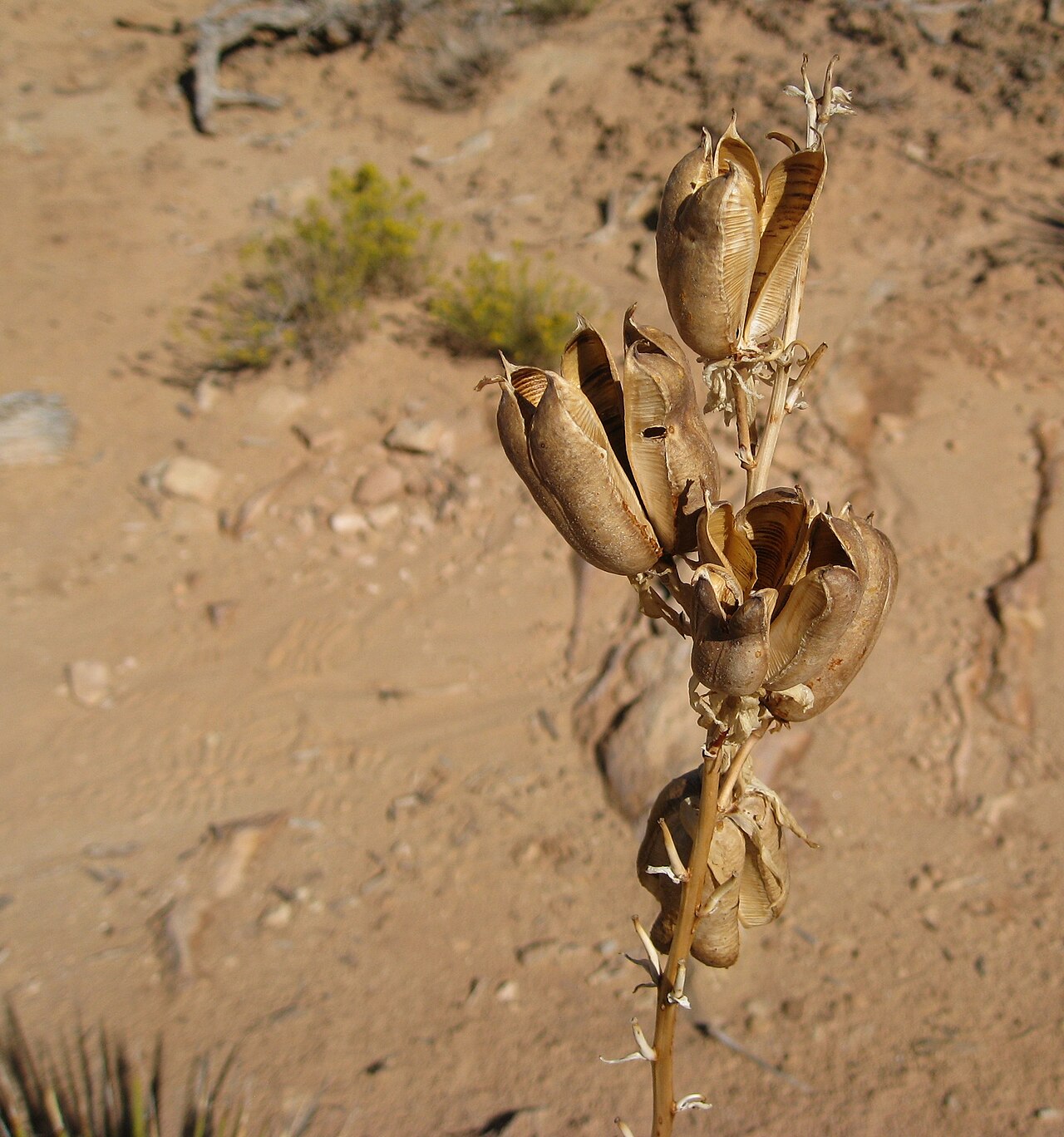
Pollinated flowers develop into upright, dry, three-chambered capsules roughly 1.5 to 3 inches long, green ripening to straw-brown, often slightly pinched in at the middle. This dry, erect capsule is an easy way to separate narrowleaf yucca from the fleshy, drooping, banana-like fruit of its lowland relative banana yucca (Yucca baccata). As the capsules dry and split open, flat black seeds are released and scattered by wind and gravity down the flowering stalk.
Quick Facts
| Scientific Name | Yucca angustissima Engelm. ex Trel. |
| Family | Asparagaceae, subfamily Agavoideae (formerly Agavaceae) |
| Plant Type | Evergreen, stemless to short-stemmed rosette succulent |
| Mature Height | Rosette 1.5–3 ft; flower stalk 3–7 ft |
| Mature Spread | 1.5–3 ft per rosette; clumps slowly widen as offsets form |
| Growth Rate | Slow |
| Sun Exposure | Full sun |
| Water Needs | Low; very drought tolerant once established |
| Soil Type | Sandy or rocky, sharply drained |
| Soil pH | 6.5–8.0 (neutral to alkaline) |
| Bloom Time | Late May – July |
| Flower Color | Cream to white, often tinged green or purplish-pink |
| Fall Color | None (evergreen) |
| Fruit | Dry, upright, 3-chambered capsule |
| Deer Resistant | Yes (rigid spine-tipped leaves) |
| USDA Hardiness Zones | 5–9 |
Native Range
Narrowleaf yucca is a Colorado Plateau endemic in the broad sense, concentrated in northern Arizona and southern Utah and reaching into western Colorado and the extreme northwestern corner of New Mexico. Within this range it is often locally common, dotting mesa tops, canyon rims and sandy flats across the Four Corners country, but it is not found as a wild native plant outside this four-state region — reports of it elsewhere in gardens or botanical collections reflect cultivation, not natural range.
It grows from roughly 3,000 feet up to about 7,000 feet in elevation, favoring open, sun-baked sites with excellent drainage: wind-scoured sand dunes, slickrock benches, gravelly desert pavement and the thin soils of pinyon-juniper woodland and desert shrubland. It tolerates the Colorado Plateau’s wide temperature swings, from summer heat into the 100s°F to winter lows well below zero, and its rigid, waxy-coated leaves help it withstand both intense sun and desiccating wind.
Across this range, narrowleaf yucca is a reliable associate of Utah juniper and Colorado pinyon woodland, often growing alongside blackbrush, big sagebrush, Mormon tea and various cacti on the same well-drained sites. It is listed as a species of Least Concern by the IUCN, and while informal digging of plants for the nursery or landscaping trade is a localized threat, overall populations across its range remain stable.
📋 Regional plant lists featuring Narrowleaf Yucca: Arizona & New Mexico · Utah & Western Colorado
Growing & Care Guide
Narrowleaf yucca rewards gardeners who can give it the one thing it truly needs — sharp drainage — and otherwise leave it alone. It is a natural fit for xeriscapes, gravel gardens and rock gardens anywhere in its hardiness range, including well outside its native Four Corners footprint, as long as winters aren’t too wet.
Light
Give narrowleaf yucca full sun. In the wild it grows on the most exposed, sun-baked sites available, and in cultivation it will etiolate and flower poorly in shade. A minimum of six to eight hours of direct sun a day keeps the rosette compact and encourages regular bloom.
Soil & Water
Drainage matters more than fertility. Plant in sandy, gravelly or rocky soil that never stays soggy; heavy clay or any site that holds winter moisture around the crown is the most common cause of rot and plant loss. Once established, narrowleaf yucca needs no supplemental irrigation in most climates and is best left on natural rainfall, with an occasional deep soak during extended summer drought in its first year or two.
Planting Tips
Plant in spring or fall from nursery-propagated container stock — never dig plants from the wild, which is both illegal on public land in much of its range and slow for the plant to recover from. Set the crown slightly above grade so water sheds away from it, and amend heavy soils with coarse sand or gravel before planting. Handle the rigid, spine-tipped leaves with heavy gloves, and site plants well back from paths, play areas and low windows.
Pruning & Maintenance
Maintenance is minimal: trim off dried, browned leaves from the lower rosette occasionally for appearance, and cut the spent flower stalk back to the base once the capsules have shed their seed, unless you want to collect seed from a known, legally obtained garden plant. The plant needs no fertilizer and is essentially pest-free.
Propagation
In the wild, seed set depends entirely on pollination by a yucca moth, so garden-grown plants far from their native range or without the moth present may flower heavily but set little seed. Propagation is more reliable from rooted basal offsets, carefully separated from an established clump with some root attached and allowed to callus before replanting. Purchase plants and seed only from reputable native-plant nurseries that propagate their own stock.
Landscape Uses
Narrowleaf yucca’s sculptural form suits a range of dry-garden settings:
- Xeriscape and gravel gardens where no irrigation is available
- Rock gardens and slickrock-style plantings that echo its native habitat
- Dry slopes and banks needing erosion-resistant, deep-rooted cover
- Accent or specimen planting for year-round structure and a dramatic early-summer bloom
- Wildlife and pollinator gardens as a host plant for the yucca moth
- Barrier or deterrent plantings along fences, thanks to its sharp leaf tips
Wildlife & Ecological Value
Narrowleaf yucca anchors one of the most specialized plant-insect partnerships in North American deserts, and its spiny rosettes provide year-round structure in an otherwise open, low-growing landscape.
For Pollinators
Like all yuccas, narrowleaf yucca is pollinated almost exclusively by small, white yucca moths (Tegeticula species) in an obligate mutualism: the female moth actively gathers pollen and packs it onto the flower’s stigma, then lays her eggs in the developing ovary, and her larvae feed on a portion of the developing seeds while leaving enough seed for the plant to reproduce. Neither partner can complete its life cycle without the other, making an established yucca moth population essential to seed production in the wild.
For Birds
The dense, low rosettes offer secure nesting and escape cover for ground-nesting and brush-dwelling birds of open pinyon-juniper country, while seed-eating species take advantage of the capsules once they split open in late summer and fall.
For Mammals
The rigid, spine-tipped leaves make narrowleaf yucca one of the most reliably deer-resistant plants of the high desert, and it is rarely browsed by mule deer or elk. Rodents and other small mammals shelter within and beneath the protective rosettes and may feed on fallen seed, while the plant’s root system helps stabilize the loose, sandy or rocky soils it typically grows in.
Ecosystem Role
As a slow-growing, long-lived perennial of sparsely vegetated sites, narrowleaf yucca adds structural diversity and erosion resistance to pinyon-juniper and desert shrubland communities, and its tight link to the yucca moth makes it a keystone species for that insect across the Colorado Plateau.
Cultural & Historical Uses
Narrowleaf yucca was an important fiber plant for the Ancestral Puebloan people and other Indigenous communities of the Colorado Plateau for well over a thousand years. The long, tough leaf fibers were pounded, separated and twisted into cordage used for netting, snares, bowstrings and binding, and — most famously — woven into the finely made sandals found throughout Four Corners archaeological sites, a tradition that persisted from roughly 100 BCE into the thirteenth century CE.
The fibrous roots of narrowleaf yucca contain natural saponins and were sometimes pounded and worked into water to create a lather used as a soap or shampoo, though ethnobotanical sources note this use was less common for narrowleaf yucca than for soaptree and banana yucca, which were more widely favored for the purpose. Flowers and young flower stalks were gathered and eaten by some regional tribes historically, prepared cooked or raw; this is a documented historical practice, not a present-day recommendation, and the species is not part of this guide’s growing advice as a food crop.
Today narrowleaf yucca’s main cultural role has shifted from utility to habitat value and dryland landscaping. Because digging wild plants damages slow-recovering native populations and is prohibited on most public land within its range, anyone wanting to grow it — whether for its historical significance, its drought tolerance, or its tie to the yucca moth — should buy only nursery-propagated plants.
Frequently Asked Questions
Is narrowleaf yucca the same plant sometimes called “narrowleaf yucca” in the Great Plains?
No. The common name “narrowleaf yucca” is also used for Yucca glauca (soapweed yucca), a different species native much farther east across the Great Plains. This page covers Yucca angustissima, the Colorado Plateau species found in Arizona, Utah, Colorado and New Mexico. Always check the scientific name if the two could be confused in your area.
How is narrowleaf yucca different from banana yucca?
The easiest field mark is the fruit: narrowleaf yucca produces a dry, upright capsule that splits open to release seed, while banana yucca (Yucca baccata) produces a fleshy, drooping, banana-shaped fruit that stays soft at maturity. Banana yucca also tends to have wider leaves and often forms a short, visible trunk over time.
Can I eat narrowleaf yucca flowers or fruit?
Some regional tribes historically gathered and ate the flowers and young flower stalks. This is a documented historical use, not a foraging recommendation, and this guide does not advise harvesting from wild plants, which are slow-growing and often protected on public land.
Does narrowleaf yucca need a yucca moth to grow in my garden?
No — established plants will grow, flower and spread by offsets without the moth. The yucca moth is needed for seed production specifically; without it, plants may bloom reliably but produce little or no viable seed.
How fast does narrowleaf yucca grow, and how long does it live?
It is a slow grower, often taking several years to reach flowering size from seed or a small division. Once established, individual rosettes and the clumps they form are very long-lived, persisting and slowly expanding for decades with minimal care.

Looking for a nursery that carries Narrowleaf Yucca?
Browse our native plant nursery directory: Arizona · Utah · Colorado · New Mexico