Black Sage (Salvia mellifera)
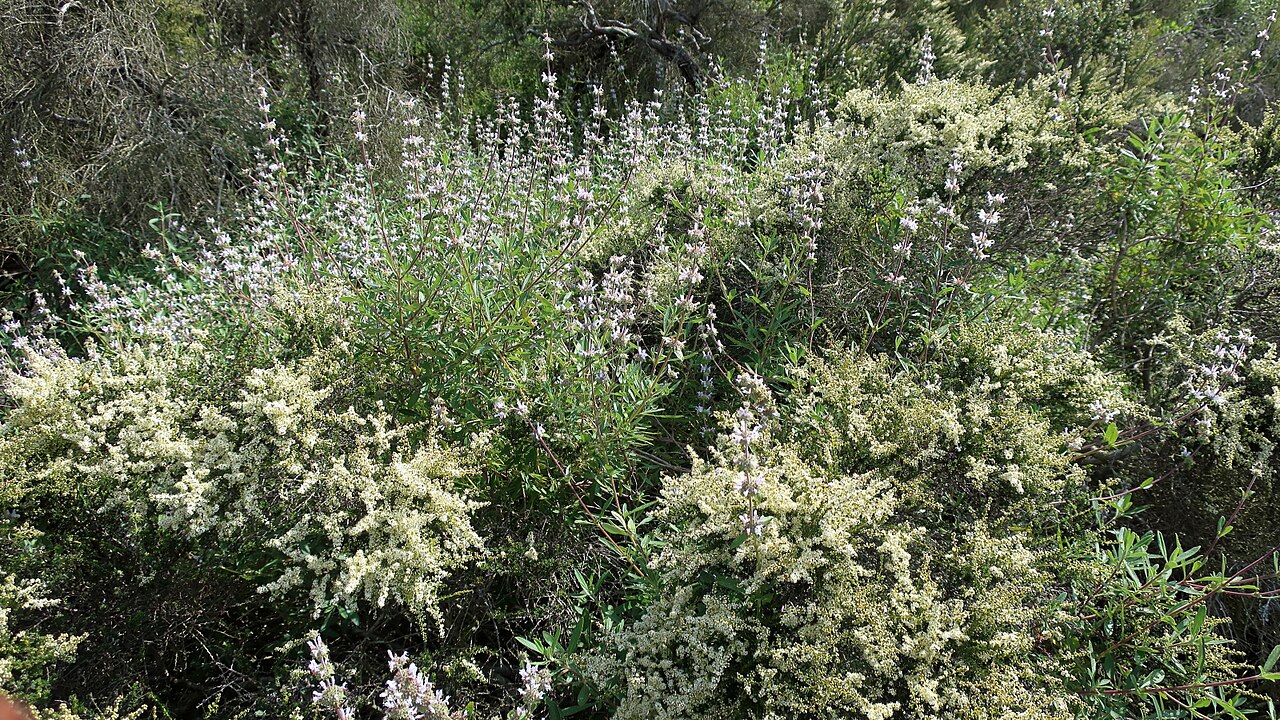
Salvia mellifera, commonly known as black sage, is the aromatic backbone of California’s coastal sage scrub — the low, silvery-green shrubland that blankets so many of Southern California’s hillsides, mesas, and canyon walls. Crush a leaf between your fingers and the smell is unmistakable: sharp, resinous, and distinctly “California chaparral.” The species name mellifera means “honey-bearing,” a nod to the prized, peppery black sage honey that beekeepers produce from its nectar in good rain years.
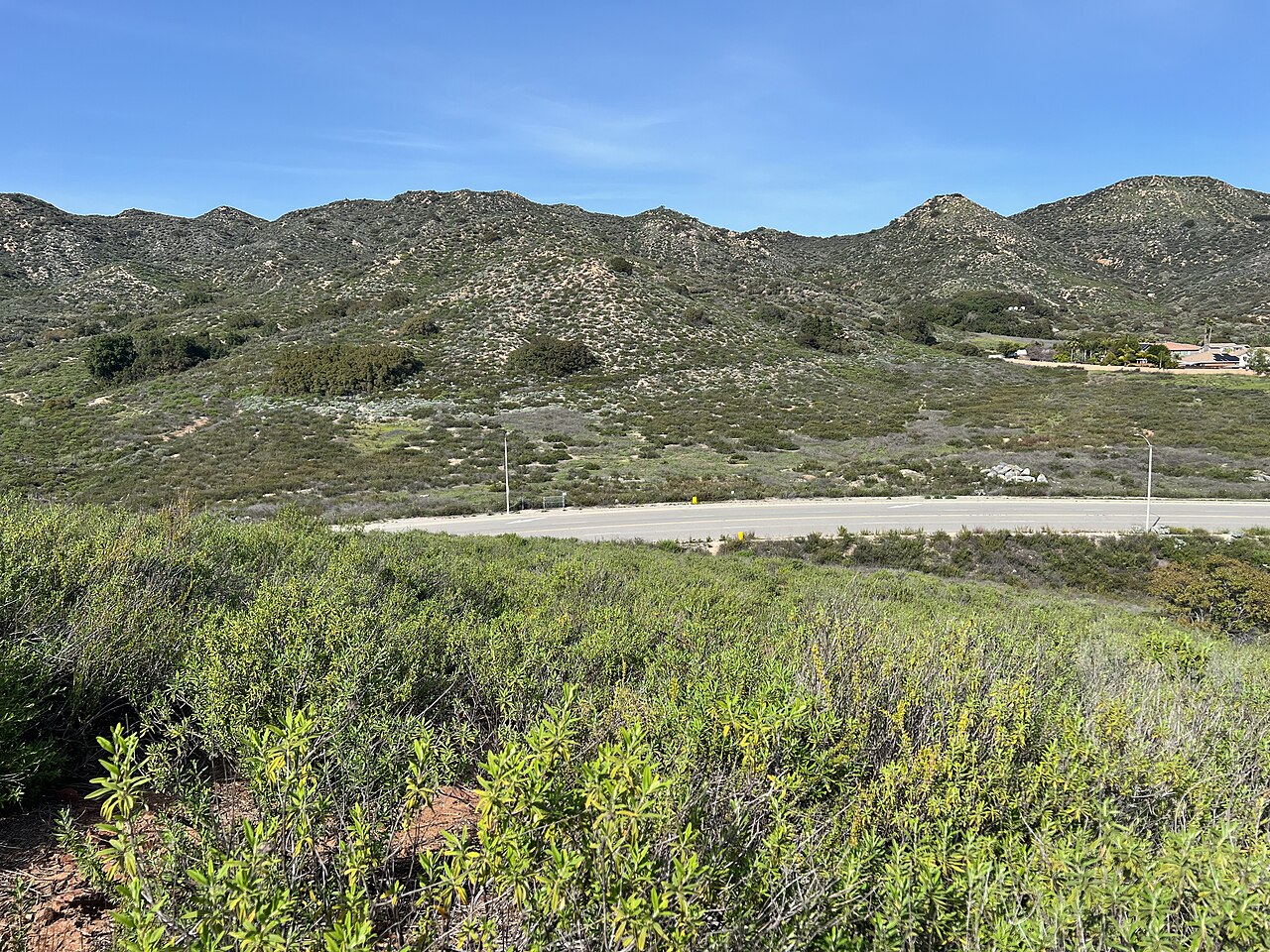
Black sage is native to California and northern Baja California, Mexico, where it is one of the most common and recognizable shrubs of coastal sage scrub and lower chaparral, often growing alongside California sagebrush, white sage, and chamise. Its dark, resin-coated stems give the plant its common name and a slightly somber look even in full bloom, when pale lavender-blue flower spikes rise well above the foliage and draw in bees, butterflies, and hummingbirds by the dozen.
For gardeners, black sage offers a tough, long-lived, extremely low-water shrub that asks for almost nothing beyond good drainage and full sun. It is a mainstay of habitat restoration projects throughout its range, valued both for its soil-holding roots and for the dense cover and nectar it provides to native pollinators through a long spring bloom season.
Identification
Black sage is a small to medium evergreen (semi-deciduous in drought) shrub, typically rounded and shrubby in form, reaching about 3 to 6 feet tall and equally wide, though exceptional plants in favorable sites can grow taller.
Stems
Stems are covered in fine hairs along with scattered glandular hairs, giving the plant a somewhat dark, resinous, slightly sticky texture and its characteristic strong herbal scent, most noticeable in the heat of a dry summer day. The plant is shallow-rooted but deep enough to resprout reliably after fire or heavy pruning.
Leaves
Leaves are oblong-elliptic to wedge-shaped (obovate), about 1 to nearly 3 inches long, with a smoother, slightly glossy upper surface and a hairier, paler underside. In drought, the plant is semi-deciduous and curls its leaves inward to reduce water loss rather than shedding them outright — a water-saving strategy distinct from species that drop their leaves entirely during the dry season.
Flowers
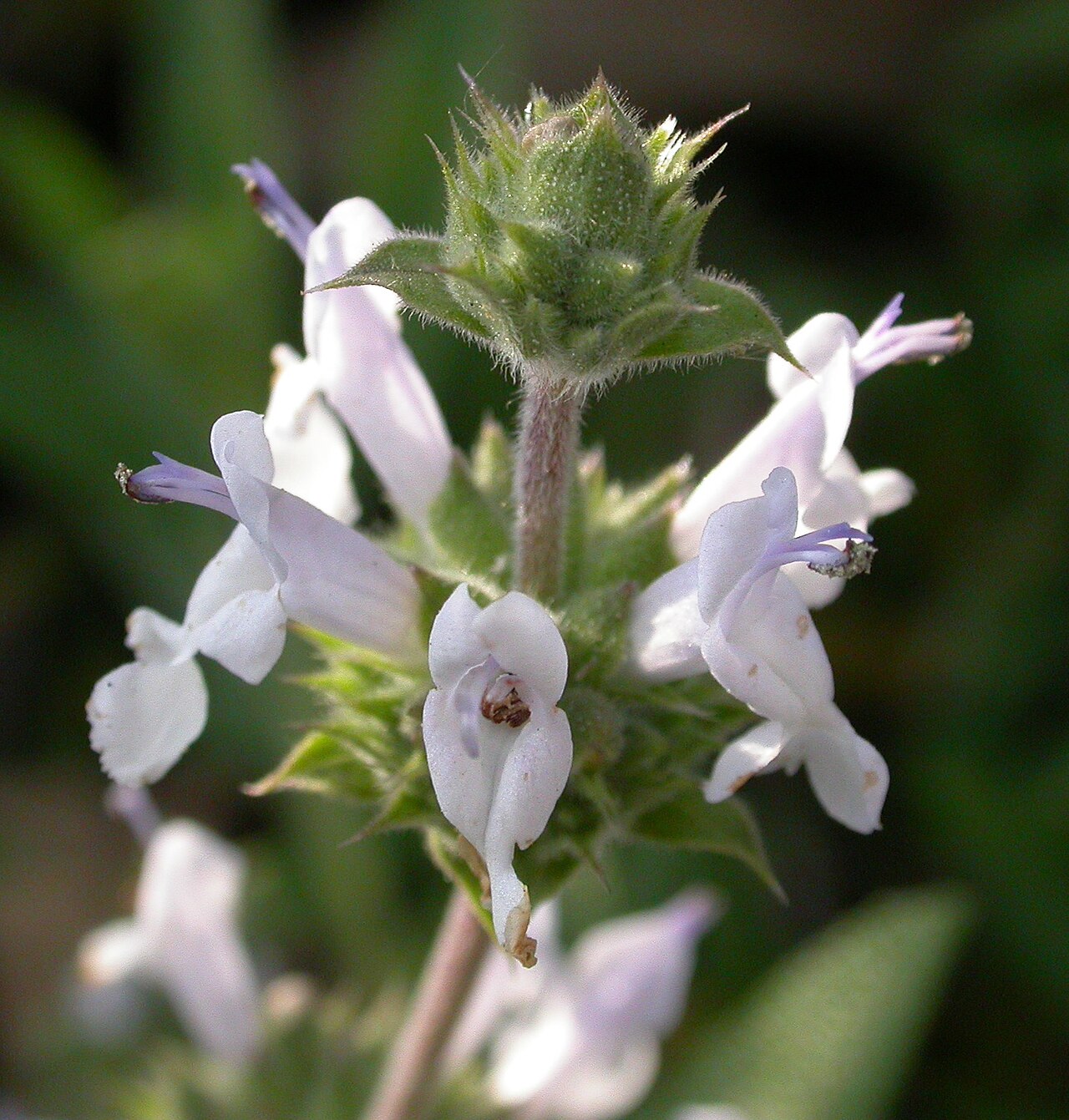
Flowers are small, pale blue to lavender (rarely pale rose), clustered in tight whorls along upright flowering spikes that stand well above the foliage. The upper lip of each flower is two-lobed, with the style and stamens slightly protruding, a classic sage (Salvia) flower form built for pollinator contact. Bloom season runs from roughly March through June, peaking in April and May, with the heaviest flowering following a wet winter.
Fruit & Seeds
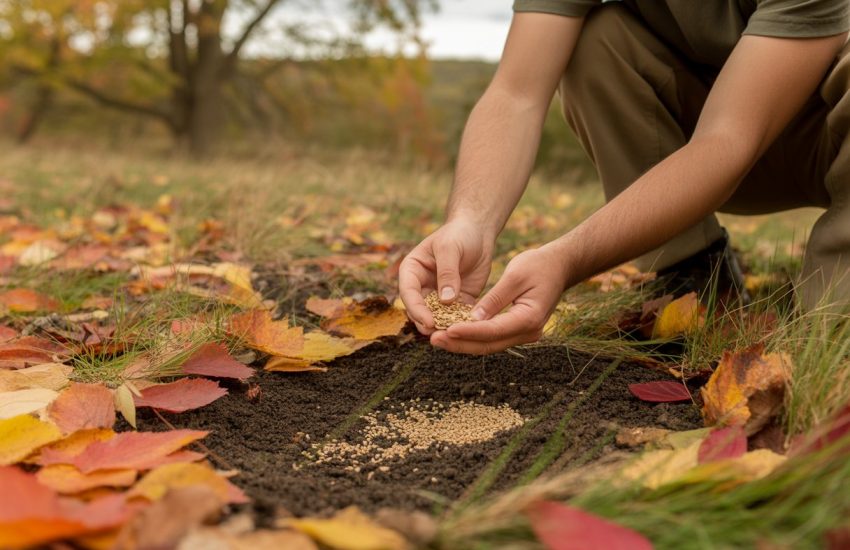
After flowering, each bloom matures into a schizocarp that splits into four small, smooth brown nutlets only about 1/10 inch long. The papery calyx that held the flower remains in place around the ripening seed, and the seeds themselves are wind- and gravity-dispersed close to the parent plant, helping black sage form dense, long-lived stands over time.
Quick Facts
| Scientific Name | Salvia mellifera |
| Family | Lamiaceae (Mint) |
| Plant Type | Evergreen (semi-deciduous) Shrub |
| Mature Height | 3–6 ft |
| Mature Spread | 3–6 ft |
| Growth Rate | Slow (reaches maturity in 3–5 years) |
| Sun Exposure | Full Sun |
| Water Needs | Low once established |
| Soil Type | Sandstone, shale, granite or other well-drained soils |
| Soil pH | Slightly acidic to neutral |
| Bloom Time | March – June |
| Flower Color | Pale blue to lavender; rarely pale rose |
| Fall Color | Evergreen to semi-deciduous (no notable change) |
| Fruit | Tiny brown nutlets in papery calyces |
| Deer Resistant | Yes (aromatic, resinous foliage) |
| USDA Hardiness Zones | 9–11 |
Native Range
Black sage is native to California, where it ranges from the San Francisco Bay Area south through the Coast Ranges and Southern California to the U.S.–Mexico border, continuing into northern Baja California. It is one of the most abundant and widespread shrubs of coastal sage scrub, and also occurs commonly in lower-elevation chaparral, typically from sea level up to around 3,900 feet.
Within this range, black sage grows across a wide variety of parent materials — sandstone, shale, granite, serpentinite, gabbro and basalt among them — on flats, mesas, foothills, canyons, and shallow to moderate slopes. It is shallow-rooted but highly drought tolerant, surviving the long rainless California summer by curling its leaves rather than dropping them, and it resprouts readily from its root crown after fire, playing a central role in how coastal sage scrub recovers after burning.
Black sage is not native to Nevada, Texas, or anywhere outside California and northern Baja California, despite its popularity on combined West Coast native-plant lists. It is common and not of conservation concern within its range.
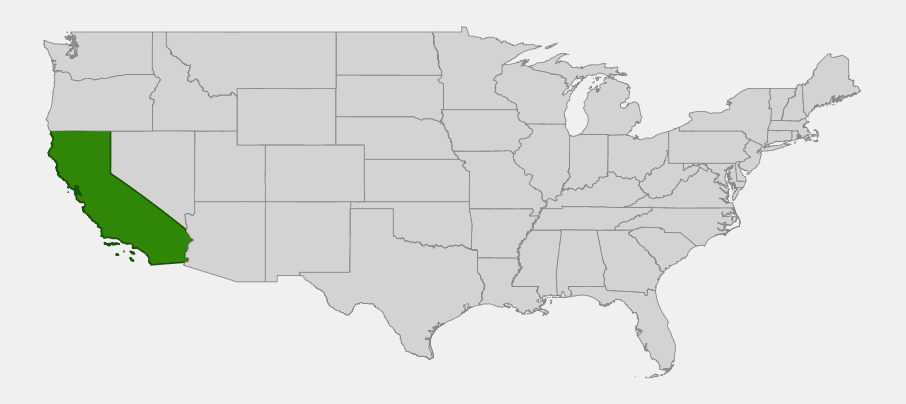
📋 Regional plant lists featuring Black sage: California & Nevada
Growing & Care Guide
Black sage is a workhorse of the dry California garden, happiest when treated the way the chaparral treats it: full sun, lean soil, and water only when it’s young.
Light
Give black sage full sun. It is adapted to open, exposed coastal sage scrub and chaparral and will become leggy and bloom poorly with too much shade.
Soil & Water
Fast drainage matters more than soil type — black sage grows naturally in sandstone, shale, granite, and even serpentine and gabbro soils, so it is not fussy about mineral content as long as water doesn’t pool at the roots. Water regularly through the first year to establish the root system, then taper off; established plants need little to no summer irrigation and are highly susceptible to root rot if watered on a lawn-style schedule.
Planting Tips
Plant from small container stock in fall ahead of winter rains. Space plants 4 to 6 feet apart to accommodate their mature spread and allow for good air circulation, which helps prevent fungal problems in humid coastal microclimates.
Pruning & Maintenance
Light tip-pruning after the main spring bloom keeps plants compact and encourages denser growth; avoid hard pruning into bare wood, which black sage does not reliably resprout from except at the root crown after fire or severe dieback. Removing spent flower spikes can tidy the plant’s appearance, though leaving some seed heads benefits seed-eating birds.
Propagation
Black sage grows readily from seed sown in fall, or from semi-hardwood cuttings taken in late summer. Wild stands also spread naturally by wind-dispersed seed and by resprouting from the root crown after fire.
Landscape Uses
Black sage fits naturally into a range of low-water, wildlife-friendly plantings:
- Coastal sage scrub and chaparral restoration plantings
- Pollinator and hummingbird gardens, valued for its long bloom season
- Slope stabilization and erosion control once established
- Fragrant, low-water borders and hedges
- Firescaping, combined with careful spacing and deadwood removal
- Beekeeping gardens, as a source of prized black sage honey
Wildlife & Ecological Value
Black sage is one of the most valuable nectar and structural plants in the coastal sage scrub ecosystem, supporting pollinators and wildlife across its long bloom season.
For Pollinators
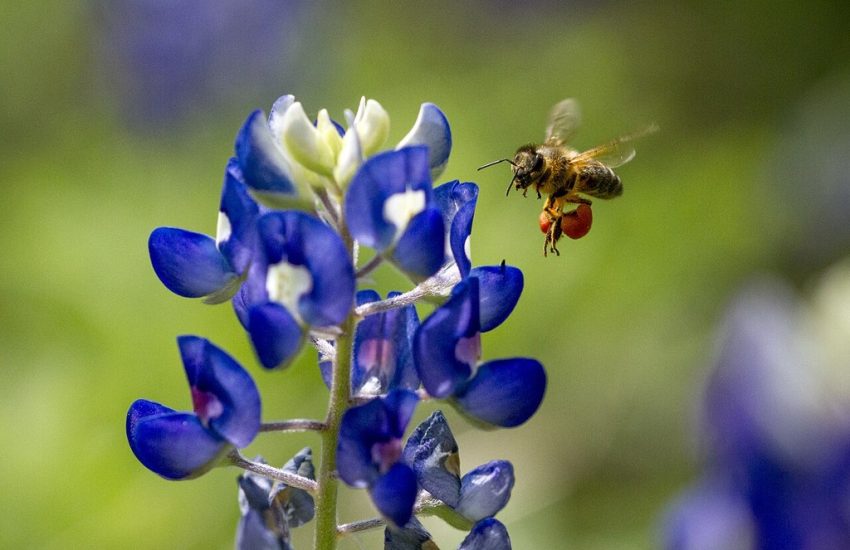
The flowers are a major nectar source for native bees, honeybees, and butterflies from March through June, and the prized black sage honey — peppery, strong, and only produced in favorable rain years — is a direct product of this abundant nectar flow. Hummingbirds also visit the flower spikes regularly, drawn by the tubular flower shape and steady nectar supply.
For Birds & Mammals
Seed-eating birds forage on the small nutlets left in the dried calyces after bloom, and the dense, resinous shrub canopy offers secure cover for small birds and mammals navigating otherwise open scrubland. The strong aromatic oils that make the foliage so fragrant to people also make it unappealing to deer and most browsing mammals.
Ecosystem Role
As one of the defining shrubs of coastal sage scrub, black sage anchors the structure of a plant community that is itself one of California’s most reduced and threatened habitat types, largely lost to coastal development. Its deep-enough root system stabilizes slopes, and its reliable resprouting after fire helps the broader sage scrub community recover its structure and biodiversity following the periodic burns that are a natural part of this ecosystem.
Cultural & Historical Uses
The Chumash people used a strong infusion of black sage leaves and stems, prepared as a sun tea, applying it to sore areas of the body or using it as a foot soak. The plant’s leaves contain diterpenoid compounds, including ursolic acid, that are associated with pain-relieving properties, which may explain this traditional use — though it is recorded here as documented ethnobotanical history, not as guidance for self-treatment.
Beyond its medicinal history, black sage has long been valued simply for its fragrance, and the strong herbal scent released when the foliage is brushed or crushed remains one of the signature smells of a California chaparral hike. Its nectar has also long supported regional beekeeping; black sage honey remains a specialty product, sought after for its distinctive peppery flavor and its dependence on the right combination of rainfall and bloom.
Today, black sage’s greatest cultural role may be in habitat restoration. As one of the most reliable and widely available plants for reestablishing coastal sage scrub on degraded or developed land, it has become a standard component of revegetation projects throughout Southern California.
Frequently Asked Questions
Is black sage the same as the sage used in cooking?
No. Culinary sage is typically Salvia officinalis, a different species from the Mediterranean. Black sage is a California native grown for habitat, fragrance and its honey rather than as a kitchen herb, and it is not a direct substitute in cooking.
Why does black sage smell so strong?
Its stems and leaves are covered in fine hairs and glandular hairs that produce aromatic resins, especially concentrated during dry weather. Brushing against the foliage or crushing a leaf releases this sharp, herbal scent, a classic smell of California chaparral and coastal sage scrub.
Does black sage need water in summer?
No, not once established. Black sage is adapted to California’s long, dry summers and survives by curling its leaves to conserve moisture rather than relying on irrigation. Routine summer watering increases the risk of root rot.
Is black sage native to Nevada or Texas?
No. Black sage is native only to California and northern Baja California, Mexico. It is sometimes recommended on combined California and Nevada garden lists, but it is not part of Nevada’s or Texas’s native flora.
Does black sage recover after wildfire?
Yes. Black sage has a deep-enough root system to resprout from its root crown after being burned, and it is considered one of the more fire-resilient shrubs of coastal sage scrub, helping the broader plant community recover its structure after fire.

Looking for a nursery that carries Black sage?
Browse our native plant nursery directory: California