Purple Sage (Salvia leucophylla)
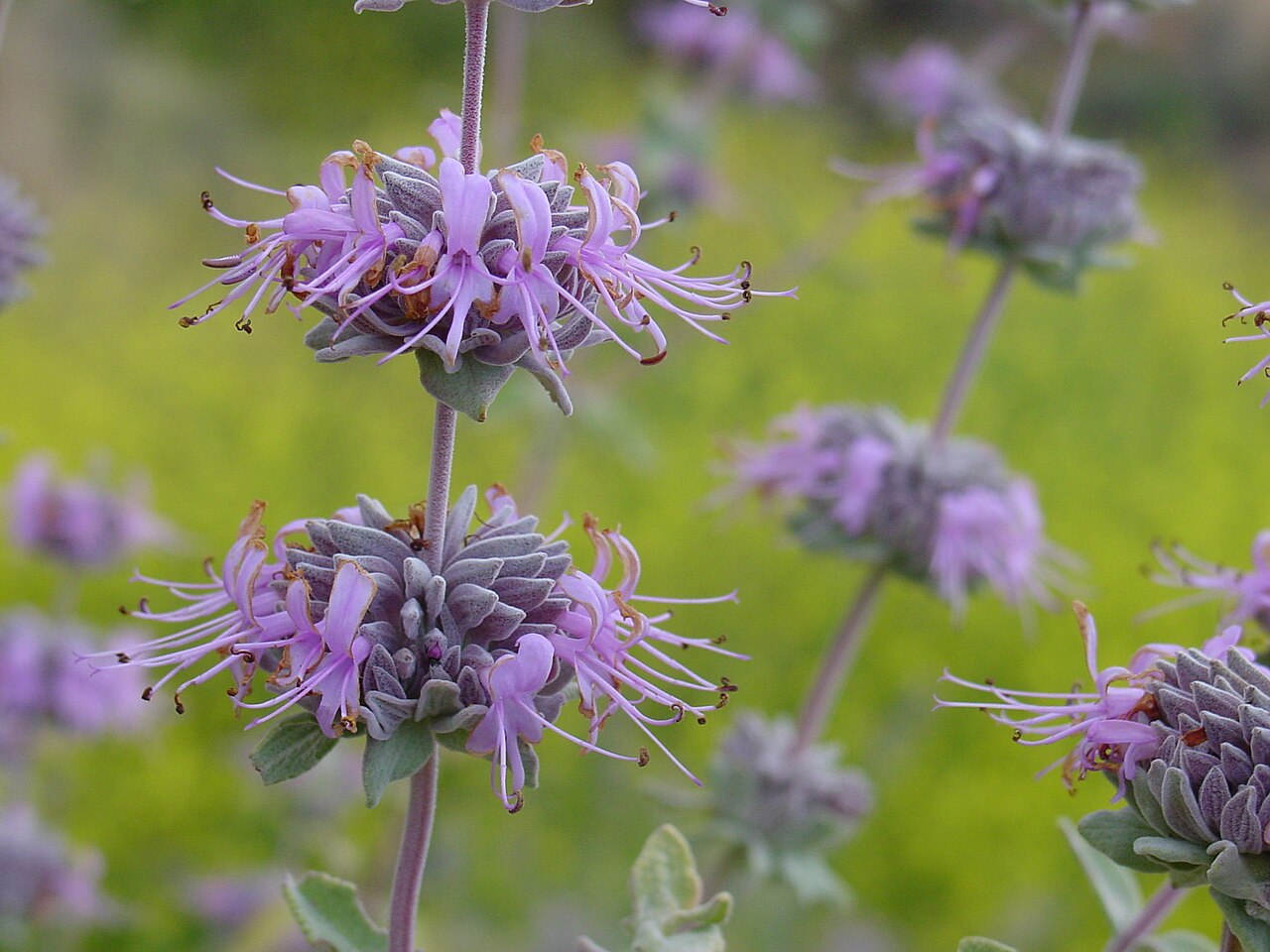
Salvia leucophylla, known as purple sage, San Luis purple sage, or gray sage, is one of the most distinctive shrubs of Southern California’s coastal sage scrub — a rounded mound of pale, silvery-gray foliage that erupts each spring into tall spikes of whorled, pinkish-purple flowers. The species name leucophylla means “white-leaved,” describing the way its young spring foliage, a soft light green, matures into the ghostly gray-white color that gives the plant its “gray sage” nickname and makes it instantly recognizable on a hillside even from a distance.
Purple sage is native to the southern coastal mountain ranges of California and northern Baja California, where it is a defining member of coastal sage scrub alongside black sage, California sagebrush, and white sage. Its arching branches often touch the ground and root where they land, giving older plants a sprawling, almost shrubby-groundcover habit distinct from the more upright black sage. In spring, the plant’s dense flower spikes — sometimes 6 to 8 inches long — draw in bees and hummingbirds in large numbers.
For low-water California gardens, purple sage is both strikingly beautiful and remarkably easy, needing nothing more than full sun, good drainage, and a hands-off approach to summer water. It is widely used in xeriscaping and has also given rise to several popular low-growing cultivars bred from its naturally spreading habit.
Identification
Purple sage is a rounded, evergreen shrub typically growing 3 to 5 feet tall and as wide or wider, with graceful, arching branches that often bend down to touch the soil and root where they make contact — a trait that helps the plant spread locally and stabilize the loose, gravelly slopes it favors.
Leaves
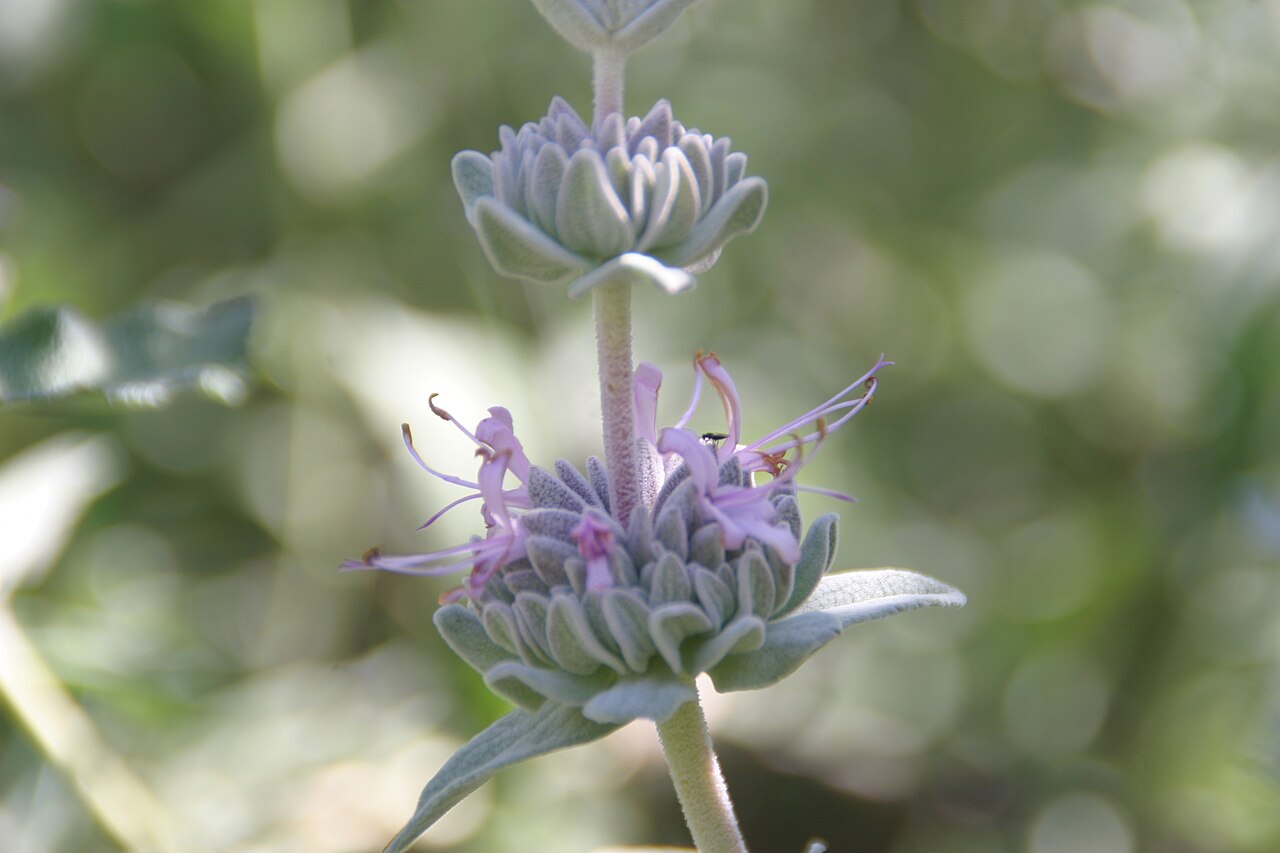
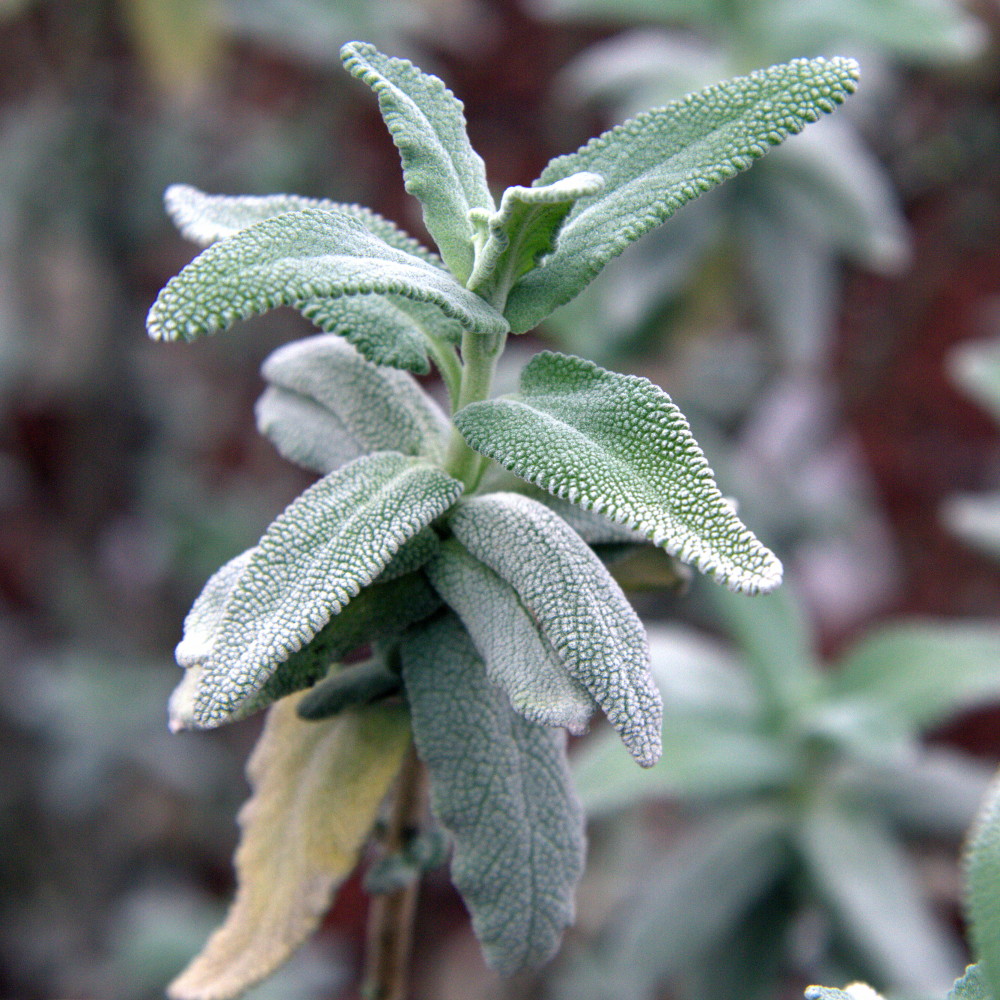
Leaves emerge a soft light green in spring and quickly mature to a pale, grayish-white, giving the whole shrub its silvery cast and lending it the alternate common name “gray sage.” The leaf surface has a fine, felted or crinkled texture, densely covered in tiny hairs that reflect sunlight and reduce water loss — a classic adaptation for a shrub that must survive a rainless Mediterranean summer.
Flowers
Flowers are packed into tight whorls stacked along flowering spikes (inflorescences) that can reach 6 to 8 inches long, rising well above the foliage on pinkish-purple stems. Individual flowers are about an inch long, pinkish-purple, and held within a purple-tinged gray calyx that persists after bloom. The effect at a distance is a soft haze of pale purple-pink spikes rising above silvery-gray foliage — one of the signature looks of a Southern California spring.
Fruit & Seeds
Like other sages, the flowers mature into small, hard nutlets held inside the persistent papery calyx, dispersing close to the parent plant by gravity and wind. Purple sage also spreads vegetatively wherever its low, arching branches root into the soil.
Quick Facts
| Scientific Name | Salvia leucophylla |
| Family | Lamiaceae (Mint) |
| Plant Type | Evergreen Shrub |
| Mature Height | 3–5 ft |
| Mature Spread | 4–6 ft, sometimes wider |
| Growth Rate | Moderate to fast |
| Sun Exposure | Full Sun |
| Water Needs | Low once established |
| Soil Type | Dry, gravelly or rocky, well-drained |
| Soil pH | Slightly acidic to neutral |
| Bloom Time | April – June |
| Flower Color | Pinkish-purple |
| Fall Color | Evergreen (silvery-gray foliage year-round) |
| Fruit | Small nutlets in persistent gray calyces |
| Deer Resistant | Yes (aromatic foliage) |
| USDA Hardiness Zones | 9–11 |
Native Range
Purple sage is native to the southern coastal mountain ranges of California, roughly from Monterey and San Luis Obispo counties south through the Transverse Ranges and Southern California coast, continuing into northern Baja California, Mexico. It is especially characteristic of the Santa Barbara and Ventura County coast, where stands strongly dominated by purple sage form a recognized plant community of their own within the broader coastal sage scrub.
Within this range, purple sage favors dry hillsides and gravelly or rocky soils at low elevation, often on exposed, sun-baked slopes where few other shrubs compete successfully. Like several of its coastal sage scrub neighbors, purple sage is known to be allelopathic: chemical compounds released from its leaves and litter appear to suppress the germination and growth of competing seedlings nearby, helping to maintain the open, shrub-dominated character of the sage scrub it grows in.
Purple sage is not native to Nevada or Texas, despite its popularity in West Coast native-plant gardening. It is common and not of conservation concern within its native range, though the coastal sage scrub community it depends on has been heavily reduced by coastal development across Southern California.
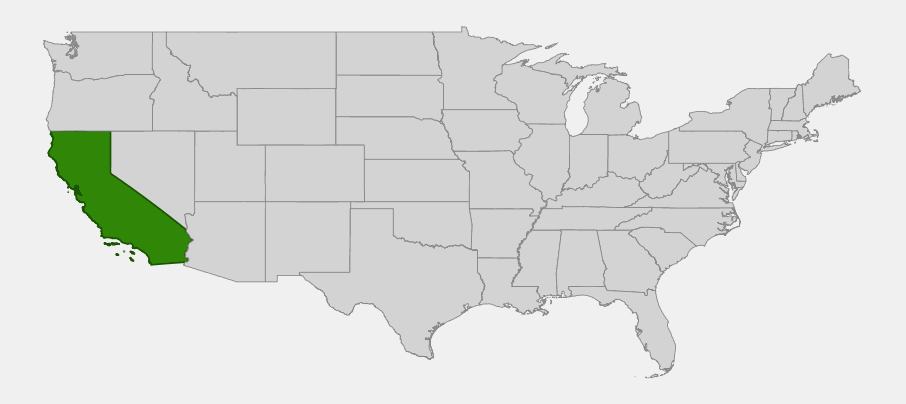
📋 Regional plant lists featuring Purple sage: California & Nevada
Growing & Care Guide
Purple sage is an easy, fast-rewarding shrub for a low-water California garden, performing best when its coastal sage scrub origins are respected.
Light
Give purple sage full sun. It is adapted to open, exposed hillsides and will grow leggy, flower poorly, and become more prone to fungal problems in shade.
Soil & Water
Fast drainage is essential — purple sage is naturally found on dry, gravelly or rocky slopes and performs poorly in heavy, poorly drained clay. Water to establish young plants through their first year, then back off sharply; established purple sage wants little to no summer water and is prone to root rot if kept consistently moist. This is a plant to put on minimal or no irrigation once it has rooted in.
Planting Tips
Plant in fall to take advantage of winter rains for establishment. Give plants plenty of room — 5 to 6 feet of spacing — since the arching branches spread wide and will root where they touch soil, effectively expanding the plant’s footprint over time.
Pruning & Maintenance
Light shaping after the spring bloom keeps plants tidier and can control the spread of rooting branches if a more contained form is wanted. Avoid cutting back hard into old wood, which the plant may not reliably resprout from. Because of its allelopathic tendencies, avoid planting sensitive seedlings or small natives directly beneath an established purple sage.
Landscape Uses
Purple sage brings color, texture, and habitat value to a range of low-water plantings:
- Coastal sage scrub restoration on dry, sunny slopes
- Erosion control on gravelly banks, aided by rooting branches
- Silver-foliage accent plantings, paired with greener natives for contrast
- Pollinator and hummingbird gardens
- Xeriscape and Mediterranean-style gardens
- Low, informal hedges or screens given its wide spreading habit
Wildlife & Ecological Value
Purple sage is a significant nectar and habitat plant within the coastal sage scrub community, supporting a wide range of pollinators through its spring bloom.
For Pollinators
The dense whorled flower spikes attract native bees and honeybees in large numbers during the spring bloom, and hummingbirds regularly visit for nectar as well. The long, stacked inflorescences provide an extended nectar source compared to many shorter-blooming natives.
For Birds & Mammals
Seed-eating birds forage the small nutlets held in the dried calyces after bloom, and the dense, arching canopy — especially where branches have rooted to form a thicket-like mound — offers good ground-level cover for small birds and mammals in open scrubland. The aromatic foliage is unpalatable to deer and most browsing mammals.
Ecosystem Role
As a dominant or co-dominant shrub of Southern California’s coastal sage scrub, purple sage shapes the structure of a plant community that has been dramatically reduced by coastal development. Its allelopathic chemistry influences which other species can establish nearby, helping maintain the relatively open, shrub-dominated character typical of healthy sage scrub, while its rooting branches stabilize loose soil on the dry slopes it favors.
Cultural & Historical Uses
Purple sage belongs to the same aromatic group of coastal sage scrub Salvias that figured prominently in the plant knowledge of California’s Indigenous peoples, who made use of related sages for fragrance, ceremony, and traditional remedies. As with its sage scrub relatives, specific historical uses of purple sage itself are less thoroughly documented than those of white sage or black sage, but the plant shares the same aromatic, resinous character that made the broader group culturally significant.
In modern horticulture, purple sage’s striking silvery foliage and naturally spreading habit have made it a popular parent for garden cultivars selected for low, groundcover-like growth or more compact form, widely sold at California native plant nurseries. Its allelopathic properties have also drawn scientific interest, with researchers studying the monoterpenoid compounds it releases as a case study in how California shrubs compete for space and resources in the harsh, rainless sage scrub environment.
Today, purple sage’s primary cultural role is horticultural and ecological: a signature plant of Southern California’s native garden movement and a key player in efforts to restore the fast-disappearing coastal sage scrub habitat along the state’s coast.
Frequently Asked Questions
Why do purple sage leaves turn gray?
New spring growth starts out light green, but the leaves quickly develop a dense coat of fine hairs as they mature, giving them their signature pale, silvery-gray color. This felted surface helps reflect sunlight and reduce water loss through the long California dry season.
Is purple sage allelopathic — will it hurt nearby plants?
Yes, to a degree. Purple sage releases monoterpenoid compounds thought to suppress the germination of nearby seedlings, a trait shared with some other coastal sage scrub shrubs. Established shrubs and larger plants generally aren’t affected, but avoid direct underplanting with small natives or seedlings close to its canopy.
Is purple sage native to Nevada?
No. Purple sage is native only to the southern coastal mountain ranges of California and northern Baja California, Mexico. It does not occur naturally in Nevada or Texas, though it is sometimes grown there as a garden plant.
How is purple sage different from black sage?
Purple sage has pale, silvery-gray foliage, longer flower spikes (6–8 inches), and a sprawling, arching habit with branches that root where they touch the ground. Black sage has darker green, more resinous foliage and a more upright, rounded shrub form. Both are common coastal sage scrub natives and often grow side by side.
Does purple sage need pruning?
Only lightly. A trim after spring bloom keeps the shape tidy and can limit how far the arching branches spread and root, but purple sage does not need — and does not respond well to — hard pruning into old wood.

Looking for a nursery that carries Purple sage?
Browse our native plant nursery directory: California