Beavertail Cactus (Opuntia basilaris)
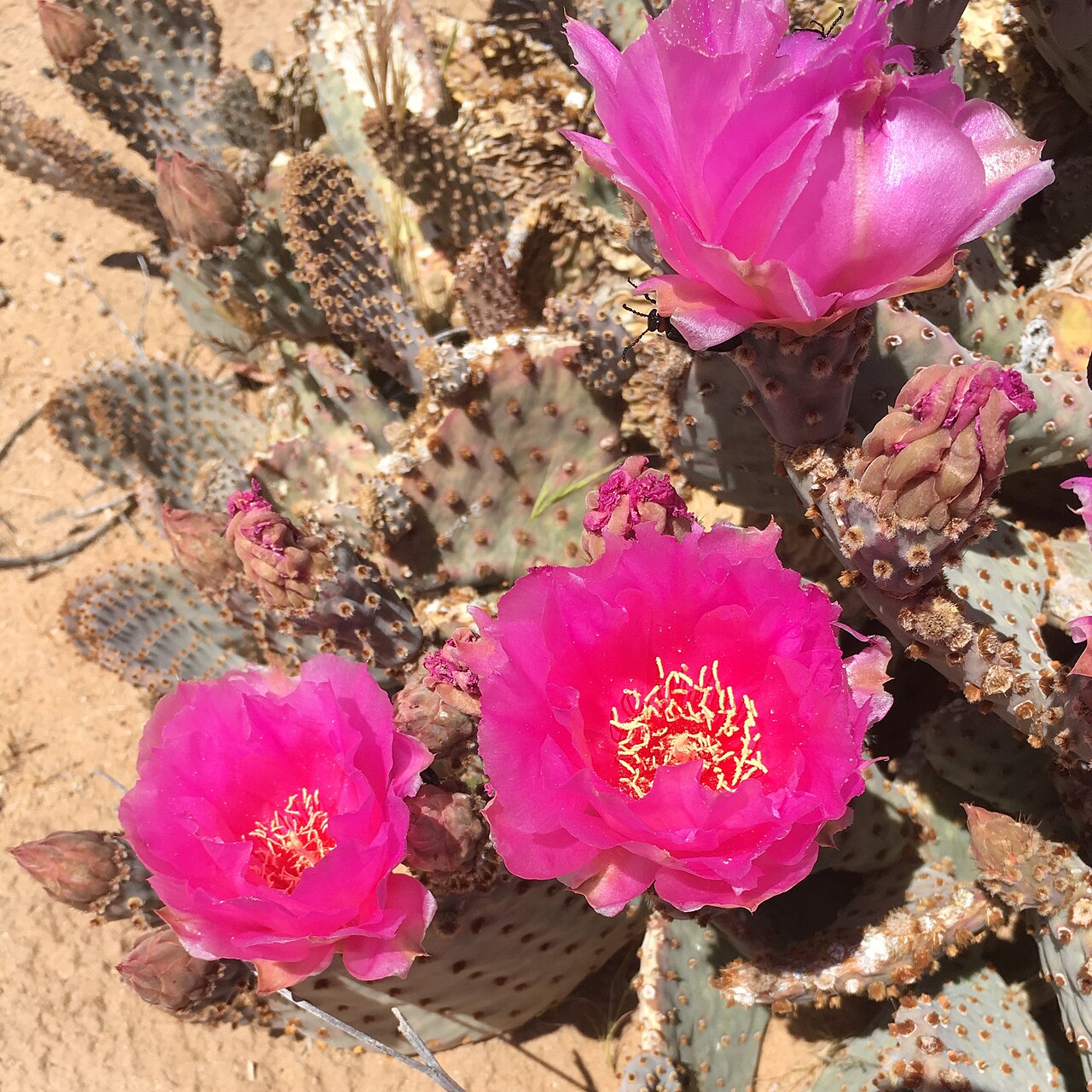
Opuntia basilaris, known as beavertail cactus, is one of the most recognizable and widely admired cacti of the American Southwest desert. A member of the cactus family (Cactaceae), it gets its common name from its flattened, blue-gray to purplish pads, which are broad and rounded at the tip like the tail of a beaver. Unlike most prickly pears, beavertail cactus has no true spines, though its pads are armed with dense clusters of fine, barbed bristles called glochids that are easily as irritating to skin as any spine.
Low-growing and sprawling, beavertail cactus forms spreading clumps or mats of jointed pads rarely more than a foot tall, making it one of the most garden-friendly cacti for rock gardens and xeriscapes. For a few weeks each spring it produces an extravagant show of large, silky, magenta-pink to rose-purple flowers that open in full sun and close at night, among the showiest blooms of any North American cactus.
Beavertail cactus is extremely drought tolerant and thrives in the same hot, rocky, well-drained soils that defeat most other garden plants, which has made it a favorite for low-water landscaping throughout its native range in California, Nevada, Arizona, and Utah. It asks for almost nothing once established and rewards minimal care with reliable spring color and striking year-round form.
Identification
Beavertail cactus is a low, spreading, mat-forming cactus, typically 6 to 20 inches tall but spreading several feet wide as pads root where they touch the ground or are knocked loose by animals. Individual plants eventually form sprawling colonies of dozens of connected pads.
Pads (Stems)
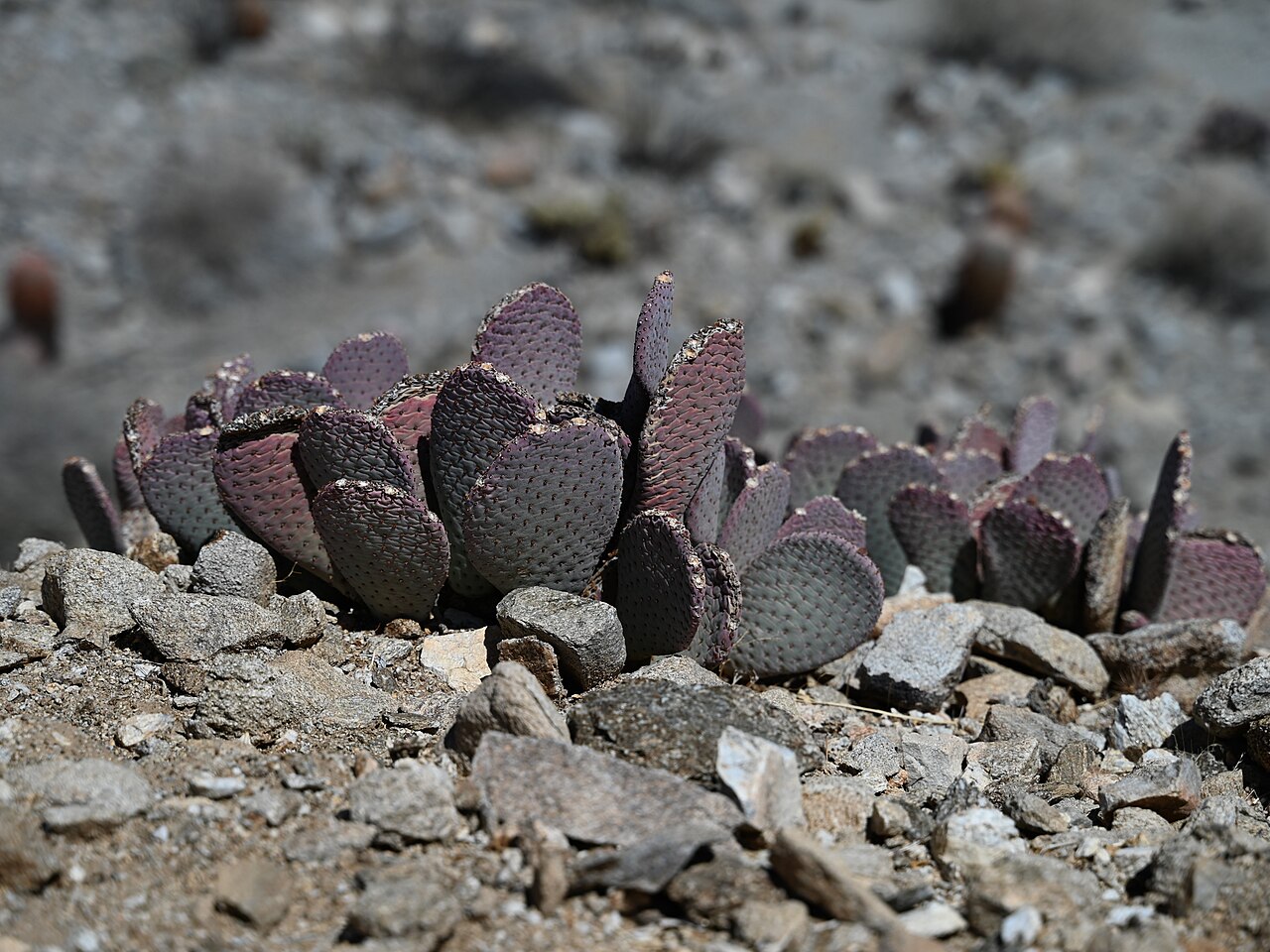
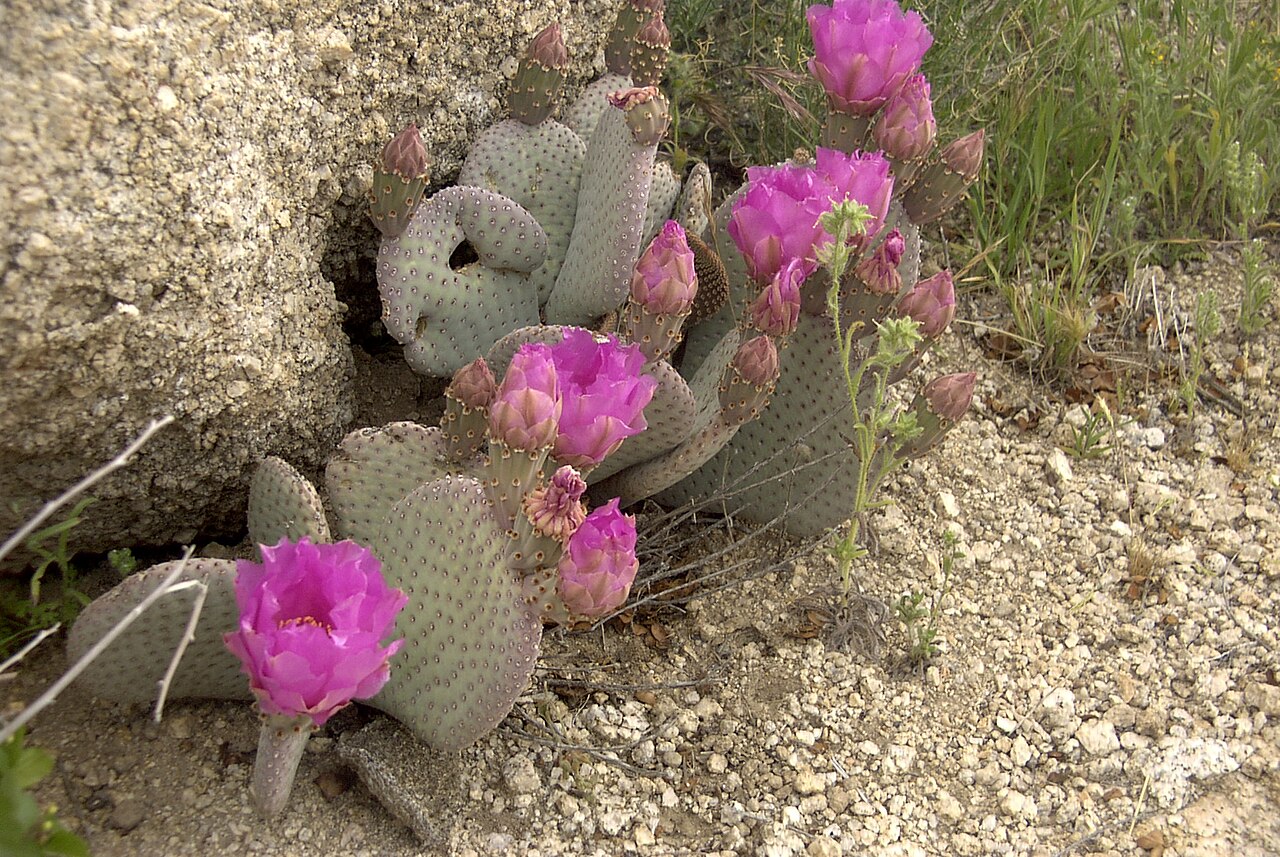
The flattened, fleshy pads (cladodes) are 2 to 6 inches long and distinctively obovate — wide and rounded at the tip, narrower at the base — giving rise to the “beavertail” name. Color ranges from blue-gray to gray-green, often flushing purple or lavender under stress from cold, drought, or intense sun. Unlike most Opuntia species, beavertail cactus lacks true spines entirely. Instead, each pad is studded with small, oval areoles bearing dense tufts of tiny, barbed glochids — usually brown, reddish, or tan — that detach at the slightest touch and can embed painfully in skin.
Flowers
Flowers are 2 to 3 inches across, with many silky, magenta to deep rose-pink petals surrounding a dense cluster of yellow to greenish-yellow stamens. They emerge from areoles along the upper pad margins in mid-spring, each bloom lasting only a few days but a healthy plant produces a long succession of flowers over several weeks. Flower color occasionally varies to paler pink or, rarely, near-white.
Fruit & Seeds
After flowering, plants produce dry, grayish-tan, spineless fruits about an inch long, covered in glochids like the pads. Unlike the fleshy, edible fruit of many other prickly pears, beavertail cactus fruit is dry and seedy rather than juicy, and historically required careful preparation before use. Seeds are flattened, pale tan, and relatively large for a cactus.
Quick Facts
| Scientific Name | Opuntia basilaris |
| Family | Cactaceae (Cactus) |
| Plant Type | Evergreen Succulent / Cactus |
| Mature Height | 6–20 in |
| Mature Spread | 2–6 ft (spreading colony) |
| Growth Rate | Slow |
| Sun Exposure | Full Sun |
| Water Needs | Very Low |
| Soil Type | Sandy, gravelly, or rocky; excellent drainage required |
| Soil pH | 6.5–8.0 (neutral to alkaline) |
| Bloom Time | March – May |
| Flower Color | Magenta to rose-pink |
| Fall Color | None; pads may flush purple in cold |
| Fruit | Dry, gray-tan, glochid-covered (not fleshy) |
| Deer Resistant | Yes |
| USDA Hardiness Zones | 7–10 |
Native Range
Beavertail cactus is native across the hot, arid lands of the Mojave, Sonoran, and Colorado deserts, with a range spanning southern California, southern Nevada, western Arizona, and southwestern Utah. It is one of the most widespread and commonly encountered cacti within this range, often abundant along desert washes, bajadas, and rocky slopes.
It grows in creosote bush scrub, Joshua tree woodland, and other low-elevation desert plant communities, typically on well-drained, rocky or sandy soils from near sea level up to around 7,000 feet in some mountain foothill populations. It is frequently found alongside creosote bush, brittlebush, and various other cacti and yuccas that share its tolerance for intense heat and minimal rainfall.
Despite its tough desert constitution, beavertail cactus is sensitive to excess winter moisture and poor drainage, which is the most common cause of failure when the species is planted outside its native arid range.
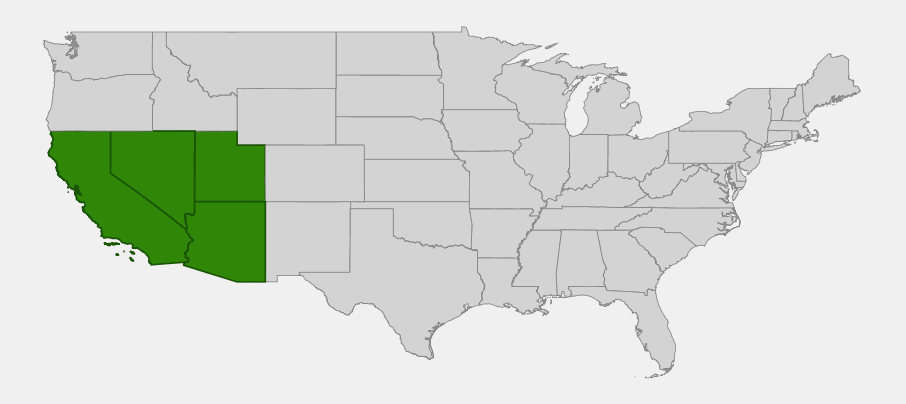
📋 Regional plant lists featuring Beavertail Cactus: California & Nevada · Arizona & New Mexico · Utah & Western Colorado
Growing & Care Guide
Beavertail cactus is remarkably easy to grow in the right setting — hot, dry, and sunny — and extremely difficult to keep alive in the wrong one. Match its native desert conditions and it will thrive for decades with almost no attention.
Light
Full sun is essential. Beavertail cactus needs intense, unfiltered sunlight to flower well and maintain its compact form; in shade it becomes stretched, pale, and reluctant to bloom. It tolerates the hottest, most exposed sites in the garden without any sign of stress.
Soil & Water
Drainage is the single most critical factor for success. Beavertail cactus demands sandy, gravelly, or rocky soil that drains quickly after rain; in heavy or poorly drained soils, the pads quickly rot, especially during cool, wet winter weather. Water sparingly, if at all, once established — a deep soak every few weeks during the active summer growing season is plenty, and plants should be kept nearly dry through winter dormancy. Raised beds or berms are a reliable way to guarantee adequate drainage in gardens with heavier native soil.
Planting Tips
Plant in spring after the last frost, handling pads only with tongs, thick leather gloves, or several layers of folded newspaper — the glochids are far more irritating than they look and are difficult to remove from skin. Amend heavy soil generously with coarse sand or decomposed granite before planting, or build a dedicated cactus bed. Space plants at least 2 to 3 feet apart to allow for spreading growth.
Pruning & Maintenance
Little pruning is needed. Remove damaged or diseased pads with tongs as needed, cutting cleanly at a joint. Plants left undisturbed will slowly form attractive spreading colonies as pads root where they touch soil; remove unwanted pads to control spread if space is limited.
Propagation
Beavertail cactus is propagated almost exclusively from pad cuttings. Remove a healthy pad, let the cut end callus over in a dry, shaded spot for one to two weeks, then set it upright an inch or two into well-drained soil. Rooting typically occurs within a few weeks during the warm growing season. Seed propagation is possible but slow and less commonly used by home gardeners.
Landscape Uses
- Xeriscape and waterwise gardens in hot, dry climates
- Rock gardens and gravel beds
- Desert-themed borders paired with other native cacti and succulents
- Erosion control on dry, rocky slopes
- Barrier or deterrent plantings along property edges, thanks to irritating glochids
- Container and raised-bed specimens in climates needing extra winter drainage
Wildlife & Ecological Value
Beavertail cactus is a cornerstone resource in the harsh desert environments where it grows, providing food, moisture, and shelter in a landscape where all three are scarce.
For Pollinators
The large, pollen-rich flowers are a major early-season resource for native desert bees, including specialist cactus bees that time their emergence to coincide with Opuntia bloom. Flowers also draw beetles and other insects that forage among the abundant stamens.
For Birds
Desert birds such as cactus wrens and various sparrows use dense beavertail colonies for nesting cover and foraging, picking insects from the pads and flowers. The dry fruits are eaten by some desert birds, though they are a less significant food source than the fleshier fruit of larger prickly pears.
For Mammals
Desert tortoises, jackrabbits, and other desert mammals browse the pads for both food and moisture during dry periods, with the plant’s high water content making it a valuable resource in drought. Packrats (woodrats) often incorporate pieces of beavertail cactus into their dens, likely for the defensive value of the glochids against predators.
Ecosystem Role
As a widespread, long-lived component of desert scrub communities, beavertail cactus contributes structural diversity and ground cover in open, sparsely vegetated terrain. Its low, spreading form helps stabilize loose desert soils, and its resilience to extreme heat and drought make it one of the more dependable sources of forage and shelter through the harshest parts of the desert year.
Cultural & Historical Uses
Beavertail cactus has a long history of use among Indigenous peoples of the Mojave and Colorado deserts, including the Cahuilla, Mojave, and other desert tribes, who carefully singed off the glochids before using the young pads as a cooked vegetable, similar to the more widely known practice with other prickly pear species. The dry fruits and seeds were also processed and eaten after careful preparation to remove the irritating glochids.
Beyond food use, the pads were sometimes applied externally in traditional practice, reflecting a broader regional pattern of using various cactus species for topical treatment of minor skin ailments; this is a documented historical practice, not a current medical recommendation, and raw cactus material should never be applied to skin or wounds without proper preparation and caution regarding glochids.
Today, beavertail cactus is primarily valued horticulturally, both in its native range and among cactus and succulent collectors worldwide, prized for its spectacular spring flowers and striking blue-gray pad color, which have made it one of the most commonly offered native cacti in Southwestern nurseries.
Frequently Asked Questions
Does beavertail cactus have spines?
No, unlike most prickly pears, beavertail cactus lacks true spines. However, its pads are densely covered in tiny, barbed glochids that detach easily and can be just as painful and difficult to remove as spines, so handling still requires care.
How much water does beavertail cactus need?
Very little. Established plants are highly drought tolerant and need only occasional deep watering during the active summer growing season; overwatering, especially in winter, is the most common cause of rot and plant failure.
Can beavertail cactus survive frost?
Yes, established plants tolerate occasional light frost and are generally hardy to USDA zones 7–10, though pads may flush purple as a cold-stress response. Prolonged freezing combined with wet soil is more likely to cause damage than cold alone.
Is beavertail cactus edible?
The young pads and fruit have a documented history of use by Indigenous peoples after the glochids were carefully removed, but this requires skill and caution; home gardeners should not attempt to eat any part of the plant without proper knowledge of safe preparation.
How fast does beavertail cactus grow?
Growth is slow. New pads form gradually each warm season, and a plant may take several years to form a substantial spreading clump, though it is very long-lived once established.

Looking for a nursery that carries Beavertail Cactus?
Browse our native plant nursery directory: California · Nevada · Arizona · Utah