Texas Madrone (Arbutus xalapensis)
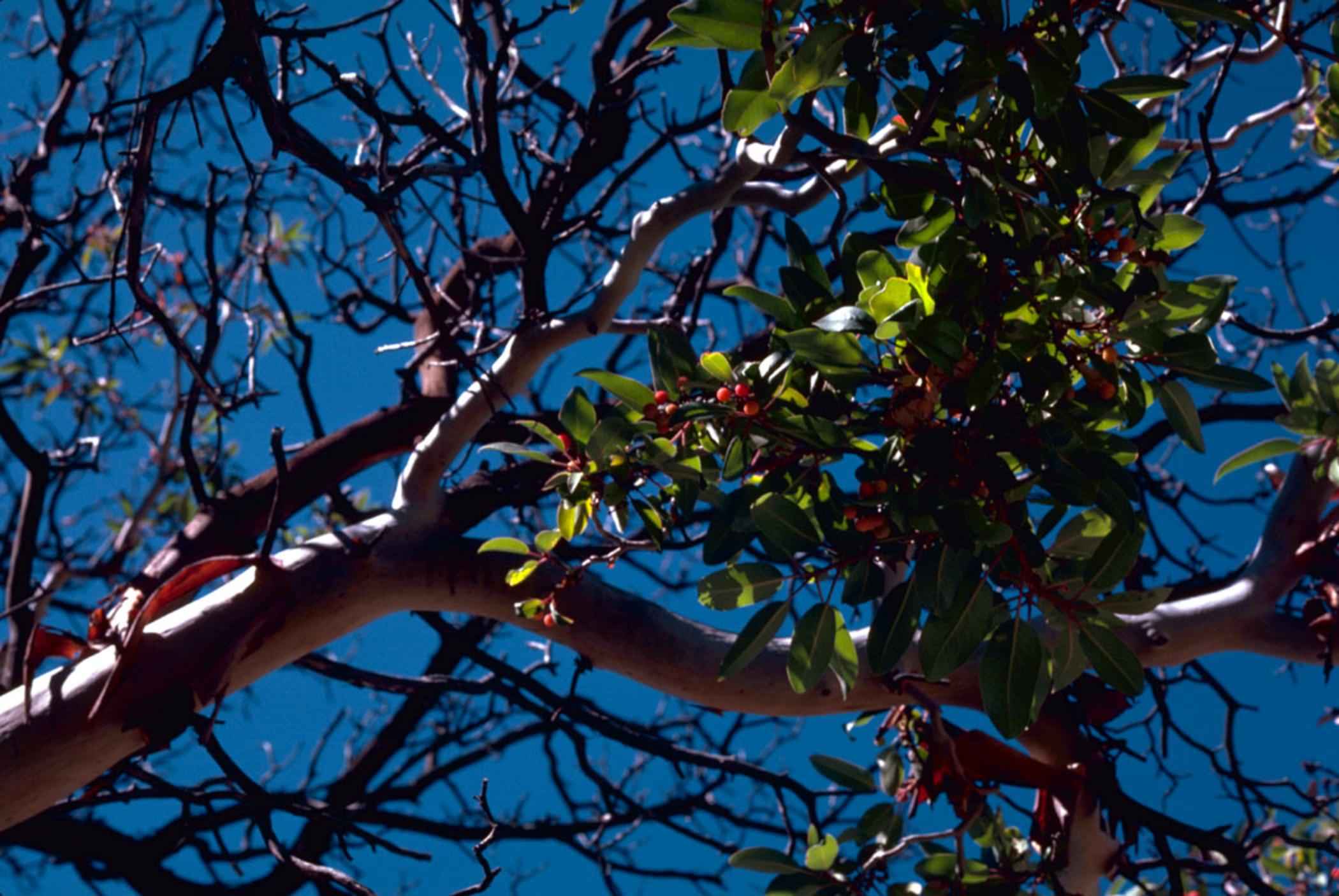
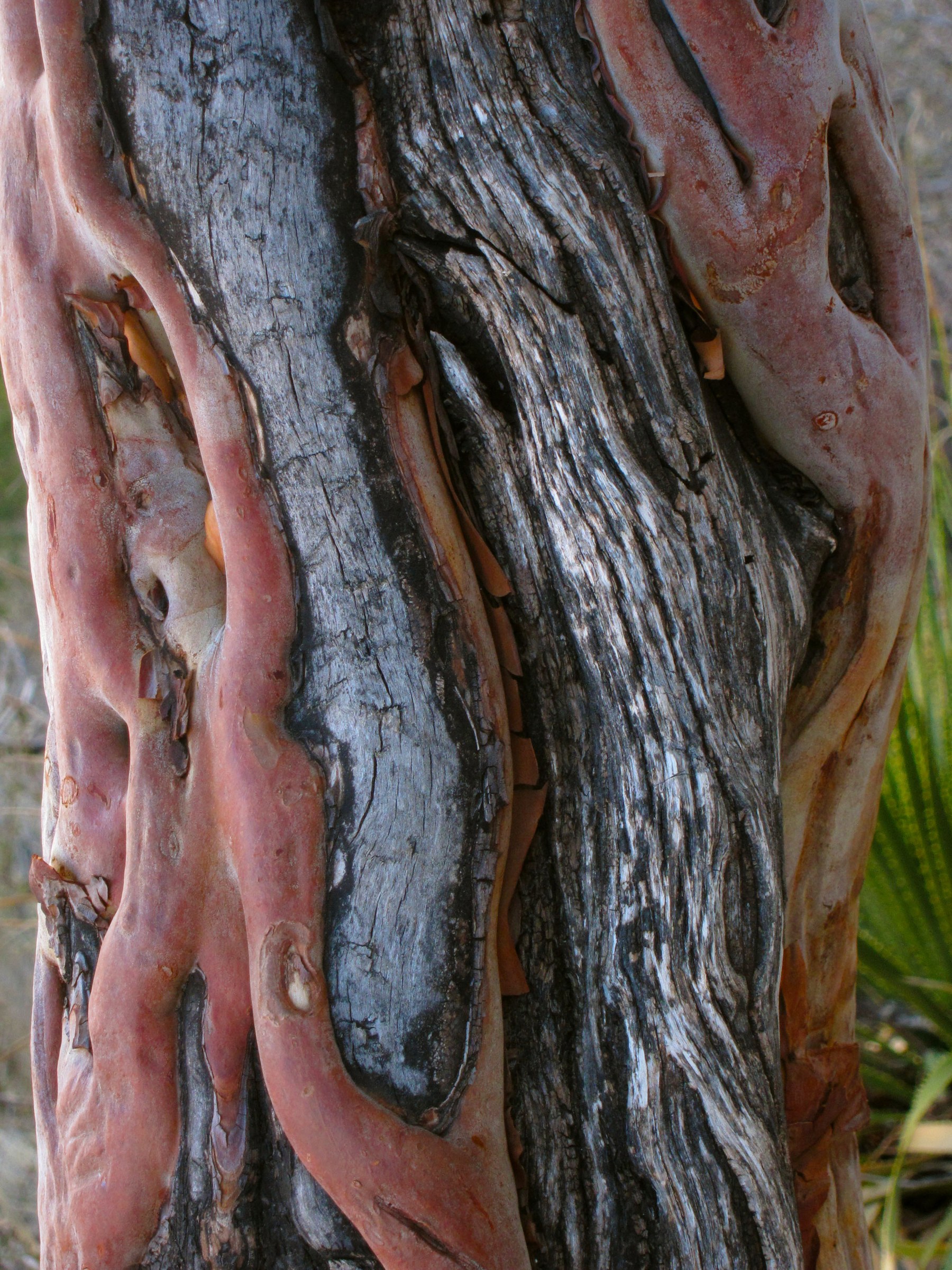
Arbutus xalapensis, known in Texas as the Texas madrone and sometimes still listed under the older name Arbutus texana, is widely considered the most beautiful native tree of the Edwards Plateau and Trans-Pecos — and arguably one of the most beautiful trees in Texas, period. It belongs to the heather family (Ericaceae), the same family as manzanitas and blueberries, and shares their taste for lean, well-drained, often limestone soils. What sets Texas madrone apart from almost every other tree in the region is its bark: smooth, thin, and constantly peeling away in curling sheets to reveal new bark underneath in shades of cinnamon, salmon, and terracotta.
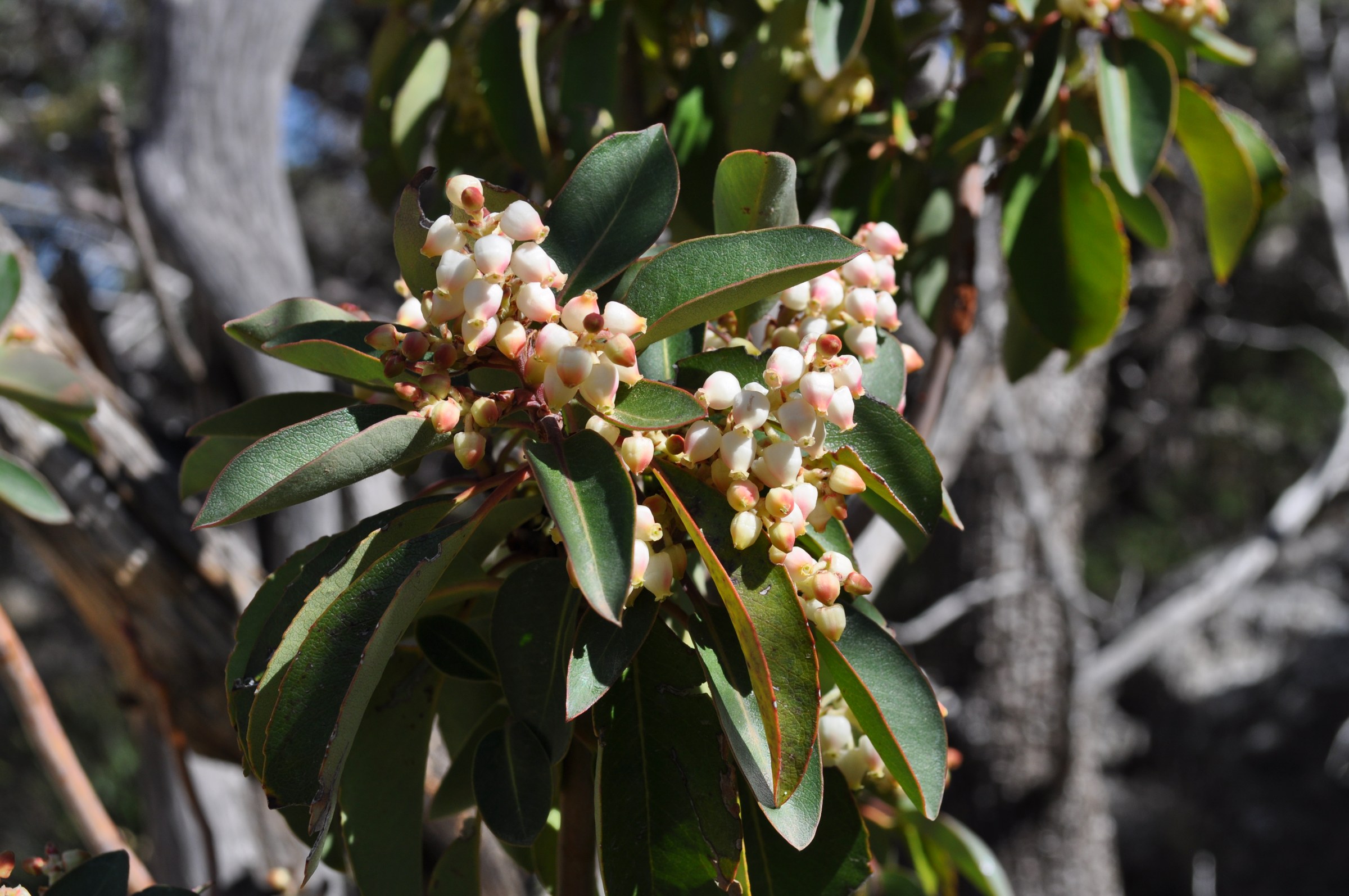
Texas madrone grows slowly into a small to medium evergreen tree, typically 15 to 30 feet tall, with a broad, rounded crown of leathery, dark green leaves. Clusters of small, urn-shaped white to pink flowers appear in late winter and early spring, followed later in the year by round, warty-skinned orange-red berries that songbirds strip from the branches almost as fast as they ripen. Few native Texas trees offer this much visual interest across every season: flowers in late winter, fruit in fall, and striking bark color year-round.
This is not an easy tree to establish, and it has a reputation among Texas gardeners as temperamental — intolerant of soil disturbance, irrigation, and heavy or poorly drained soils. But on the right rocky hillside, left largely alone once planted, Texas madrone rewards patience with one of the most distinctive specimen trees the Edwards Plateau has to offer.
Identification
Texas madrone grows as a single- or multi-trunked small tree, usually 15 to 30 feet tall, though old specimens in favorable canyon sites can reach 40 feet. The trunk and major limbs often twist and lean toward light, giving older trees a sculptural, almost bonsai-like form.
Bark
The bark is the tree’s signature feature: thin, smooth, and constantly exfoliating in large curling flakes, exposing fresh under-bark that ranges from pale cream and pink to deep red-orange and cinnamon-brown. This peeling habit happens year-round but is most noticeable in summer. Older basal bark near the ground can become gray and furrowed, but the upper trunk and limbs stay smooth and vividly colored.
Leaves
Leaves are evergreen, alternate, simple, and leathery, 2 to 4 inches long, elliptical to oval, with smooth or finely toothed margins depending on the individual tree. The upper surface is glossy dark green; the underside is a paler, dull green. Leaves persist through winter, giving the tree year-round structure, and are shed gradually rather than all at once.
Flowers
Small, urn- or bell-shaped flowers, white to pale pink, bloom in drooping clusters (panicles) at branch tips from late winter into early spring — often as early as January in warm years. The flowers are similar in shape to those of blueberries and manzanitas, familiar relatives in the heather family, and are a significant early-season nectar source when little else is blooming.
Fruit & Seeds
Fruit is a small, round berry, roughly 1/4 to 1/3 inch across, with a distinctive warty or granular orange-to-red skin. Berries ripen in fall and persist into winter if birds don’t strip them first. Each berry contains numerous small seeds. The fruit is edible to wildlife and has a mild, mealy flavor to humans, though it is rarely eaten by people in any quantity.
Quick Facts
| Scientific Name | Arbutus xalapensis (syn. Arbutus texana) |
| Family | Ericaceae (Heather) |
| Plant Type | Evergreen tree |
| Mature Height | 15–30 ft (to 40 ft in favorable sites) |
| Mature Spread | 15–25 ft |
| Growth Rate | Slow |
| Sun Exposure | Full Sun to Part Shade |
| Water Needs | Low; intolerant of summer irrigation once established |
| Soil Type | Shallow, rocky, well-drained limestone soils |
| Soil pH | 7.0–8.5 (alkaline preferred) |
| Bloom Time | January – March |
| Flower Color | White to pale pink |
| Fall Color | Evergreen; no fall leaf color |
| Fruit | Small warty orange-red berries, fall into winter |
| Deer Resistant | Good (foliage rarely browsed) |
| USDA Hardiness Zones | 7–9 |
Native Range
In the United States, Texas madrone is found from the Edwards Plateau of south-central Texas west through the Trans-Pecos — including the Davis Mountains, Chisos Mountains, and Guadalupe Mountains — and into adjacent southeastern New Mexico. South of the border it continues through Mexico’s highlands and is, in fact, the most widespread madrone species in Mexico, ranging south through Central America. The Texas and New Mexico populations represent the northern edge of a much larger range.
Within its U.S. range, Texas madrone is a tree of rocky canyons, limestone hillsides, and mountain slopes, typically growing at elevations from about 1,500 to 7,000 feet. It favors thin, well-drained, often calcareous soils on north- and east-facing slopes where it gets some protection from the harshest afternoon sun, frequently rooting directly into limestone cracks and ledges where few other trees can establish.
Texas madrone is uncommon enough, and slow-growing enough, that mature specimens are treasured landmarks on private land across the Hill Country and Trans-Pecos. It is not listed as federally threatened or endangered, but its narrow habitat requirements and sensitivity to soil disturbance mean populations can be easily damaged by development, overgrazing, or changes in surface drainage.
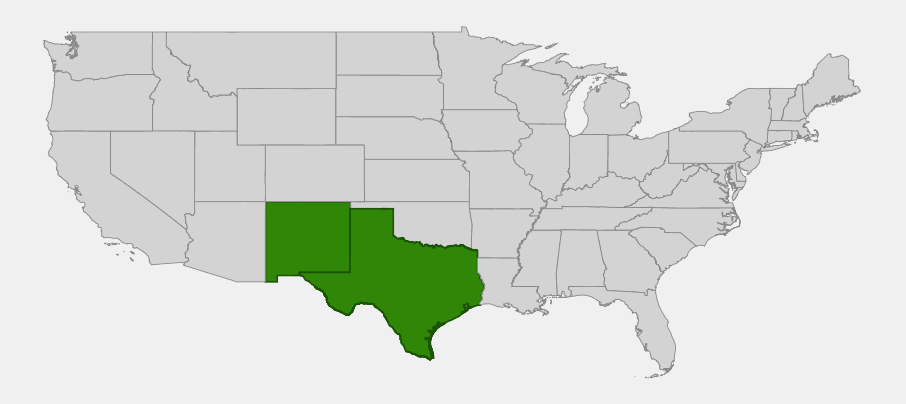
📋 Regional plant lists featuring Texas madrone: South and West Texas · Arizona & New Mexico
Growing & Care Guide
Texas madrone has a well-earned reputation for being difficult to transplant and slow to establish, but understanding why makes success much more likely: this is a tree adapted to thin, undisturbed, fast-draining rocky ground, and it struggles wherever those conditions are altered.
Light
In the wild, Texas madrone often grows on north- or east-facing slopes that get morning sun and afternoon shade, which helps protect it from the most intense summer heat. Full sun is tolerated in cooler, higher-elevation sites, but in hot low-elevation gardens some afternoon shade improves long-term vigor.
Soil & Water
This is the single most important factor in success: Texas madrone demands sharply drained, rocky, alkaline soil and performs very poorly in heavy clay or any soil that holds moisture around the roots. Established trees are drought tolerant and are notorious for declining or dying when given regular garden irrigation, especially in summer — root rot from excess moisture is the most common cause of failure. Once planted, resist the urge to water on a typical landscape schedule.
Planting Tips
Texas madrone transplants poorly from the wild and resents root disturbance even from containers, so start with small, young container stock rather than attempting to move an established tree. Plant on a slope or berm that sheds water away from the root zone, in a spot that will not receive supplemental irrigation meant for lawns or garden beds nearby. Avoid any soil amendment or tilling around the planting hole; mimicking the thin, rocky native soil gives the best results.
Pruning & Maintenance
Prune minimally and only to remove dead or damaged wood, ideally in winter. Texas madrone does not respond well to heavy pruning or shaping, and its naturally irregular, wind-sculpted form is part of its appeal. Avoid any mechanical damage to the trunk, since the thin bark is easily injured and injuries can introduce disease.
Propagation
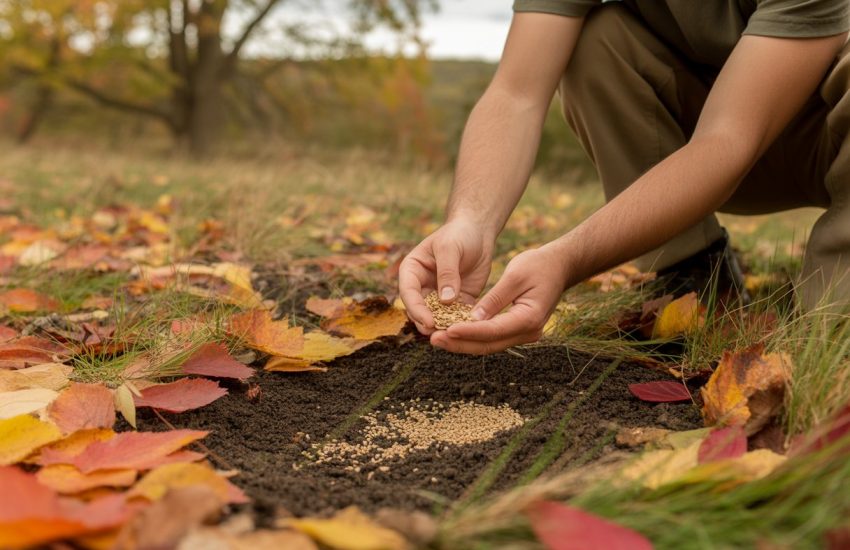
Propagation from seed is the most common and most reliable method; fresh seed cleaned of fruit pulp and given a period of cold stratification germinates reasonably well. Cuttings are difficult to root. Because seedlings are sensitive to transplant shock, growers typically start them in deep containers and keep root disturbance to an absolute minimum when moving them to a permanent site.
Landscape Uses
- Specimen tree on a rocky slope or berm where its bark and form can be appreciated up close
- Xeriscape and dry garden plantings on unirrigated ground
- Wildlife gardens, for fall and winter fruit that draws songbirds
- Hillside and limestone outcrop restoration where few other trees will establish
- Winter interest plantings, combining evergreen foliage with colorful peeling bark
Wildlife & Ecological Value
Texas madrone pulls real weight as a wildlife tree despite its modest size, offering resources in seasons when little else is available.
For Pollinators
The late-winter to early-spring flowers are an important early nectar source for native bees and other pollinating insects at a time of year when few other woody plants in the Edwards Plateau and Trans-Pecos are blooming.
For Birds
The fall and winter berry crop is heavily used by songbirds, including robins, mockingbirds, and various thrushes, as well as wild turkey where their ranges overlap. Birds strip ripe fruit quickly, and in the process disperse the seeds to new rocky outcrops.
For Mammals
Deer generally avoid browsing the leathery evergreen foliage, which is one reason Texas madrone has a reputation as a relatively deer-resistant native tree in areas with heavy deer pressure. Small mammals take advantage of fallen fruit and the cover provided by the tree’s broad crown.
Ecosystem Role
By rooting directly into bare limestone and thin soils where almost nothing else grows into a full tree, Texas madrone adds structural and seasonal diversity to otherwise sparse rocky woodlands, supplying flowers, fruit, shade, and perch sites in habitats that would otherwise be dominated by low shrubs and juniper.
Cultural & Historical Uses
Texas madrone has long been admired by Texas Hill Country residents and naturalists as one of the most strikingly beautiful native trees in the state, and its distinctive bark has made it a favorite subject for photographers and painters working in the Trans-Pecos mountains. The tree’s slow growth and particular site requirements mean that old, well-formed specimens are often treated as local landmarks on ranch land.
The wood is hard and dense, though the tree’s modest size and slow growth have historically limited commercial timber use; where it has been cut, the wood has occasionally been used for small turned items and tool handles. The fruit, while edible, has never been an important food source for people in Texas, though Indigenous peoples in parts of its broader Mexican range are reported to have eaten the berries and used various parts of related madrone species medicinally.
In recent decades, growing interest in native and water-wise landscaping has made Texas madrone a sought-after, if challenging, nursery plant, and botanical gardens and native plant societies across the Hill Country actively promote its cultivation as an alternative to non-native ornamental trees.
Frequently Asked Questions
Why is Texas madrone so hard to grow?
The tree is adapted to thin, rocky, undisturbed, fast-draining limestone soil, and it is highly sensitive to root disturbance and excess soil moisture. Most failures come from planting in heavy soil, over-watering an established tree, or transplanting a large specimen whose roots cannot tolerate the disruption.
Why does Texas madrone bark peel?
The thin outer bark sheds continuously as the tree grows, revealing fresh inner bark in shades of cream, pink, and cinnamon underneath. This peeling happens year-round and is one of the tree’s most recognizable features.
Is Texas madrone the same as Arbutus texana?
Yes. Arbutus texana is an older scientific name for the same species now classified as Arbutus xalapensis, which is also the widespread madrone of the Mexican highlands.
Can you eat Texas madrone berries?
The berries are not toxic and are technically edible, with a mild, mealy flavor, but they are rarely eaten by people in any quantity. Birds and other wildlife make far more use of the fruit than humans do.
How fast does Texas madrone grow?
Very slowly, which is part of why mature trees are so valued. Expect modest growth even under good conditions, and patience is essential — this is a long-term planting, not a quick-shade tree.

Looking for a nursery that carries Texas Madrone?
Browse our native plant nursery directory: Texas · New Mexico