Texas Sotol (Dasylirion texanum)
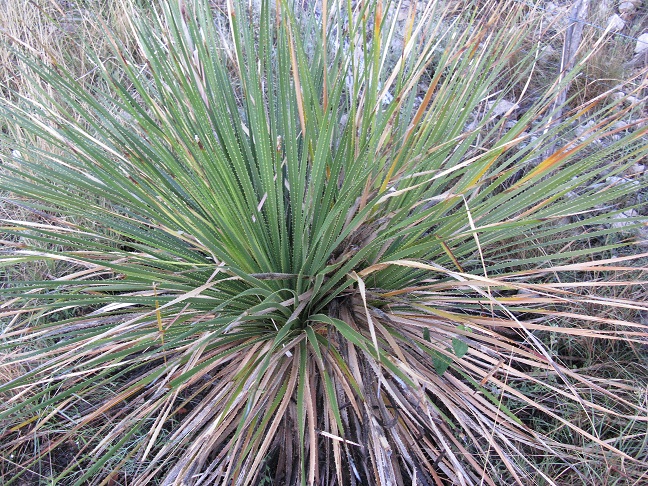
Dasylirion texanum, commonly called Texas Sotol or Green Sotol, is a tough, slow-growing evergreen native to the limestone hills and canyons of central and southwestern Texas. A member of the Asparagaceae family (subfamily Nolinoideae, formerly placed in its own family Dasylirionaceae or Agavaceae), it forms a dense, shrub-sized rosette of narrow, blue-green to yellow-green leaves armed with small, curved, hook-like teeth along their margins. Unlike true yuccas or agaves, sotol leaves are thin and flexible rather than stiff and dagger-pointed, giving the plant a shaggy, fountain-like silhouette that is unmistakable on the rocky slopes of the Edwards Plateau and the Trans-Pecos.
Texas Sotol grows slowly from a woody underground caudex, eventually forming a trunk-like base in old specimens, though most garden and wild plants stay low and clumped, rarely exceeding 3 feet in height apart from the flower stalk. When mature, it sends up a spectacular flowering spike that can tower 9 to 15 feet above the rosette, studded with thousands of tiny cream to tan flowers. This architectural quality, combined with extreme drought tolerance and cold hardiness, has made it a favorite accent plant for xeriscape and rock gardens far beyond its native range.
In the wild, Texas Sotol is a keystone plant of the limestone savannas and canyon rims of the Hill Country and the Stockton Plateau, often growing alongside agaves, prickly pear, and native grasses in thin, rocky soils where few other plants can compete. It has deep cultural roots as well: the fermented hearts of sotol plants are distilled into the traditional Mexican and West Texas spirit also called sotol, a practice that predates tequila and mezcal production in the region.
Identification
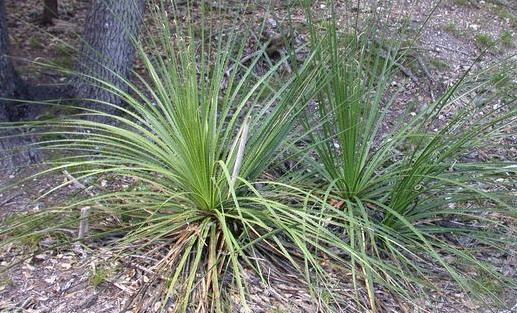
Texas Sotol is best identified by its dense, rounded rosette of long, narrow, strap-like leaves radiating outward from a low central crown, combined with the tall, wand-like flower spike produced by mature plants.
Leaves
The leaves are linear, 20 to 40 inches long and about ½ inch wide, blue-green to dull green, and gently curved or twisted along their length. Leaf margins carry small, hooked, yellowish teeth spaced closely along both edges — sharp enough to catch skin and clothing but much finer than the spines of agave or yucca. Leaf tips are not rigid or dagger-like; they fray and curl with age, often appearing straw-colored and shredded at the ends of old leaves, especially after dry summers.
Flowers
Dasylirion texanum is dioecious, meaning individual plants are either male or female. Flowering stalks emerge from the center of mature rosettes (typically plants 10 years or older) in late spring to early summer, growing rapidly to 9–15 feet tall. The upper half to two-thirds of the stalk is densely packed with tiny, cream to pale yellow flowers in a narrow, plume-like cluster. Male flowers are slightly showier; female flowers, once pollinated by wind and insects, develop into small three-winged fruits.
Fruit & Base
Fruits are small, dry, three-angled capsules about ¼ inch across that ripen tan to brown and persist on the dried stalk into fall. At the base of the rosette, older plants develop a short, stout, woody caudex partially buried in rock and soil, from which new leaves continually emerge as old ones are shed.
Quick Facts
| Scientific Name | Dasylirion texanum |
| Family | Asparagaceae (Nolinoideae) |
| Plant Type | Evergreen Rosette Succulent (Shrub-like) |
| Mature Height | 2–3 ft rosette; flower stalk 9–15 ft |
| Mature Spread | 3–5 ft |
| Growth Rate | Slow |
| Sun Exposure | Full Sun |
| Water Needs | Low (excellent drought tolerance) |
| Soil Type | Rocky, thin, well-drained; limestone-based |
| Soil pH | 7.0–8.5 (neutral to alkaline) |
| Bloom Time | May – July |
| Flower Color | Cream to pale yellow |
| Fall Color | None (evergreen) |
| Fruit | Small tan, three-winged dry capsules |
| Deer Resistant | Yes |
| USDA Hardiness Zones | 7–10 |
Native Range
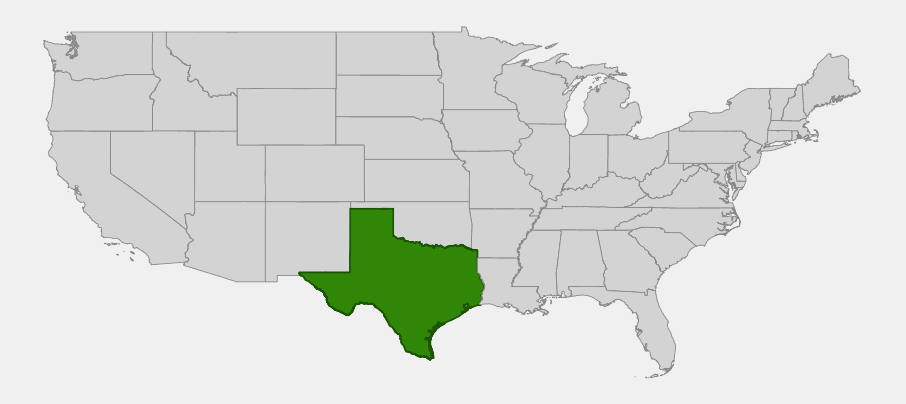
Texas Sotol is native to the limestone hills, canyons, and plateaus of central and southwestern Texas, with its range centered on the Edwards Plateau (the Texas Hill Country), the Stockton Plateau, and the eastern edge of the Trans-Pecos around the Pecos River. From there it extends south through the Rio Grande Plain toward the Mexican border and continues into adjacent northeastern Mexico.
Within Texas, Texas Sotol is most common on rocky limestone slopes, canyon rims, and caliche outcrops at elevations from roughly 500 to 5,000 feet, often in open oak-juniper woodland or desert scrub where competition from taller vegetation is limited. It tolerates thin, nutrient-poor soils that would challenge most other landscape plants, making it a defining species of the rugged terrain where it grows.
Although widely planted for its architectural form well outside Texas — including in California, the Southeast, and even mild areas of Europe — Texas Sotol is not native to any state besides Texas; gardeners outside its native range should treat it as a drought-adapted ornamental rather than a native planting.
📋 Regional plant lists featuring Texas Sotol: South and West Texas
Growing & Care Guide
Texas Sotol is remarkably low-maintenance once established, thriving on neglect in hot, dry landscapes where overwatering is the main threat to its survival.
Light
Plant in full sun for the tightest, most compact rosette form and the best chance of flowering. In partial shade the plant survives but grows looser and leggier, reaching for light, and is less likely to bloom.
Soil & Water
Good drainage is essential — Texas Sotol rots quickly in heavy clay or any soil that stays wet. Rocky, caliche, or gravelly soils that mimic its native limestone habitat are ideal. Established plants need no supplemental irrigation in most of Texas, relying on natural rainfall even through extended drought. Young plants benefit from occasional deep watering during their first one to two summers to encourage root establishment.
Planting Tips
Plant in spring or fall, setting the crown slightly above grade to keep water from pooling at the base. Space plants 4 to 5 feet apart to allow for the mature spread and to leave room to approach without brushing against the toothed leaf margins. Raised beds or slopes improve drainage on heavier soils.
Pruning & Maintenance
Little pruning is needed. Remove dried, frayed leaf tips or fully dead leaves at the base as they accumulate, wearing heavy gloves to avoid the hooked leaf-margin teeth. After flowering, the spent stalk can be cut near the base once it has dried and shed its seed, though many gardeners leave it standing for winter interest and for birds that use it as a perch.
Propagation
Texas Sotol is propagated almost exclusively from seed, which germinates readily when fresh but loses viability within a year or two of collection. Division is rarely possible since plants do not offset or sucker; each sotol grows as a single, long-lived individual from one seed.
Landscape Uses
- Xeriscape focal point — the rosette form and flower spike anchor a dry garden bed
- Rock gardens and caliche or limestone slopes where few other plants thrive
- Natural barrier planting — toothed leaves discourage foot traffic along property edges
- Container specimen for patios in frost-free areas
- Erosion control on steep, rocky, sun-exposed slopes
Wildlife & Ecological Value
Texas Sotol plays an outsized ecological role in the dry limestone country where it grows, offering food and shelter in a landscape with few other large perennial plants.
For Pollinators
The towering flower spikes attract a wide range of native bees and other insects drawn to the sheer volume of tiny blooms, which provide nectar and pollen during the late spring to summer bloom period when fewer other flowers are available in dry rocky terrain.
For Birds
Dried flower stalks left standing through winter serve as valuable perches and lookout points for flycatchers, hawks, and other birds surveying open rocky terrain. Seed-eating birds also pick through the dried capsules after the stalk matures.
For Mammals
Javelinas and other wildlife will chew into the fibrous leaf bases and tender inner leaves during drought when little else is available, and the dense rosette provides cover for small mammals and reptiles navigating open, exposed terrain.
Ecosystem Role
As one of the few large, long-lived perennials able to colonize thin limestone soils, Texas Sotol adds structural diversity to otherwise sparse rocky habitats, stabilizing soil on slopes and creating microhabitat niches at its base that smaller plants and animals depend on.
Cultural & Historical Uses
Sotol has a long history of use among Indigenous peoples of Texas and northern Mexico, including the Mescalero Apache and other groups of the Trans-Pecos and Chihuahuan Desert, who roasted the starchy, fibrous hearts of sotol plants as a food source, similar to the use of agave hearts further west. The leaves were also split and woven into baskets, mats, and cordage.
The most widely known historical use of sotol is as the base ingredient for the distilled spirit of the same name, produced in the Mexican state of Chihuahua and parts of West Texas by roasting and fermenting the plant’s heart before distillation. Sotol spirit production — using related Dasylirion species as well as D. texanum — is considered one of the oldest distilling traditions in North America, predating large-scale tequila and mezcal production, and it continues today under a protected denomination of origin in Mexico.
In more recent decades, Texas Sotol has become a prized ornamental for its sculptural form, and its cultivation for horticulture has added a modern layer to its long relationship with the people of the region.
Frequently Asked Questions
Is Texas Sotol the same plant used to make sotol liquor?
Several Dasylirion species are used to make the traditional Mexican spirit sotol, and Dasylirion texanum is among them, particularly in parts of West Texas and adjacent Mexico. The plant is roasted and fermented before distillation, much like agave in mezcal production.
Is Texas Sotol a yucca or agave?
No. Although it resembles yuccas and agaves in general form, Texas Sotol belongs to a different genus (Dasylirion) within the Asparagaceae family. Its leaves are thinner, more flexible, and lined with small hooked teeth rather than being stiff and dagger-tipped like most yuccas and agaves.
How long does it take for Texas Sotol to flower?
Plants typically need around a decade of growth before they reach flowering size and send up their tall central spike. Once mature, well-established plants may flower periodically for many years.
Can Texas Sotol handle freezing temperatures?
Yes. It is hardy to roughly USDA zone 7, tolerating temperatures well below freezing, which is one reason it has become popular in xeriscape gardens throughout the Texas Hill Country and beyond, where winter cold can be significant even in an otherwise arid climate.
Is Texas Sotol safe to have around pets and children?
The leaf margins carry small hooked teeth that can scratch skin, so plant it away from high-traffic areas. The plant is not known to be toxic, but its main hazard is mechanical — the spiny leaf edges — rather than chemical.

Looking for a nursery that carries Texas Sotol?
Browse our native plant nursery directory: Texas