Copper Lily (Habranthus tubispathus)
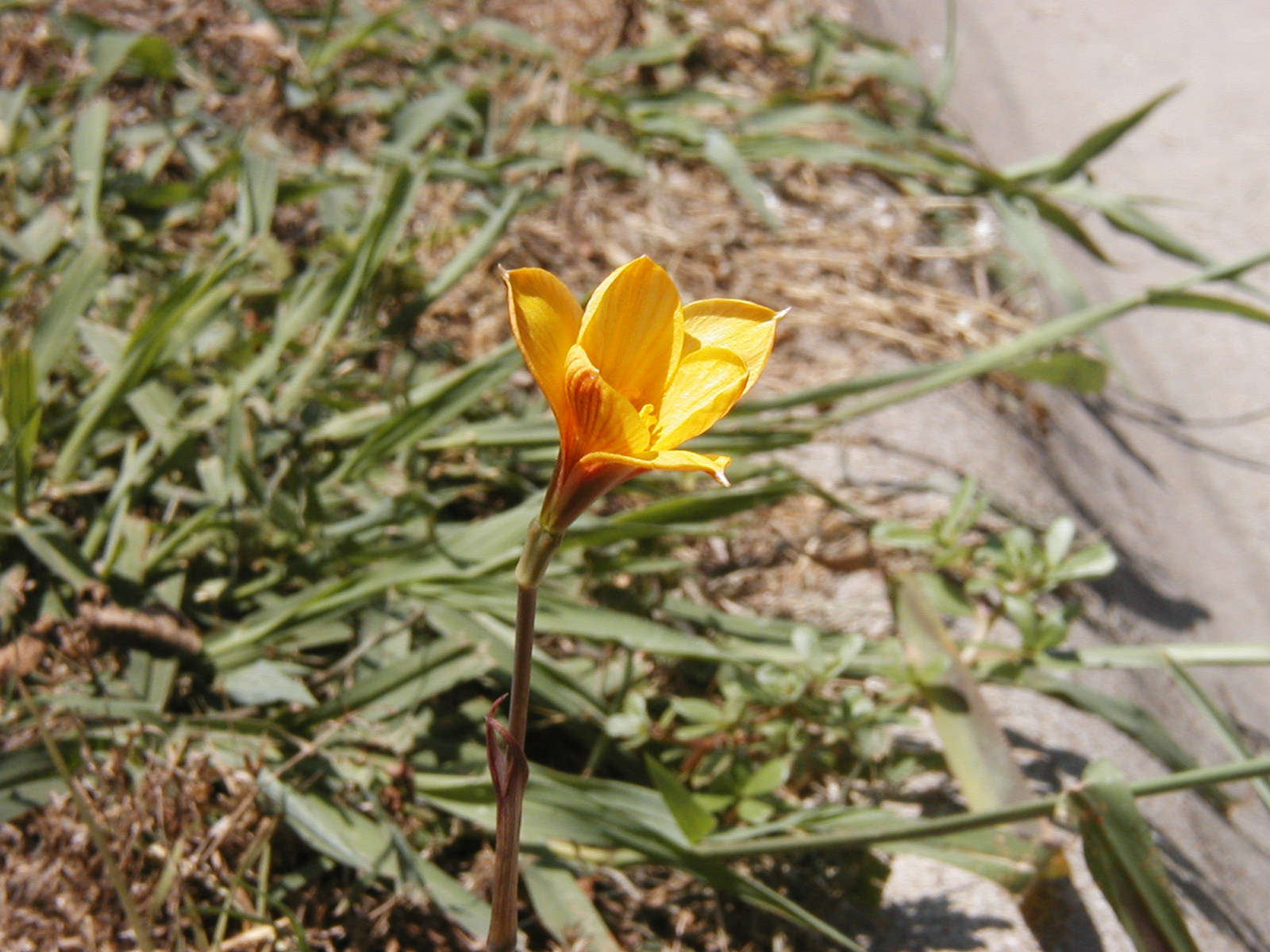
Habranthus tubispathus, commonly called Copper Lily or Rio Grande Copperlily, is a small bulbous perennial wildflower native to Texas and a beloved “surprise lily” of late summer and fall gardens. Like its rain-lily relatives, Copper Lily spends most of the year as an inconspicuous clump of grass-like leaves, then erupts into bloom within days of a good soaking rain, sending up solitary, golden-yellow, trumpet-shaped flowers on bare stalks. The native Texas form, long known in gardens as Habranthus texensis or variety texensis, is distinguished from the related South American forms of the species by its compact size and richly marked flowers.
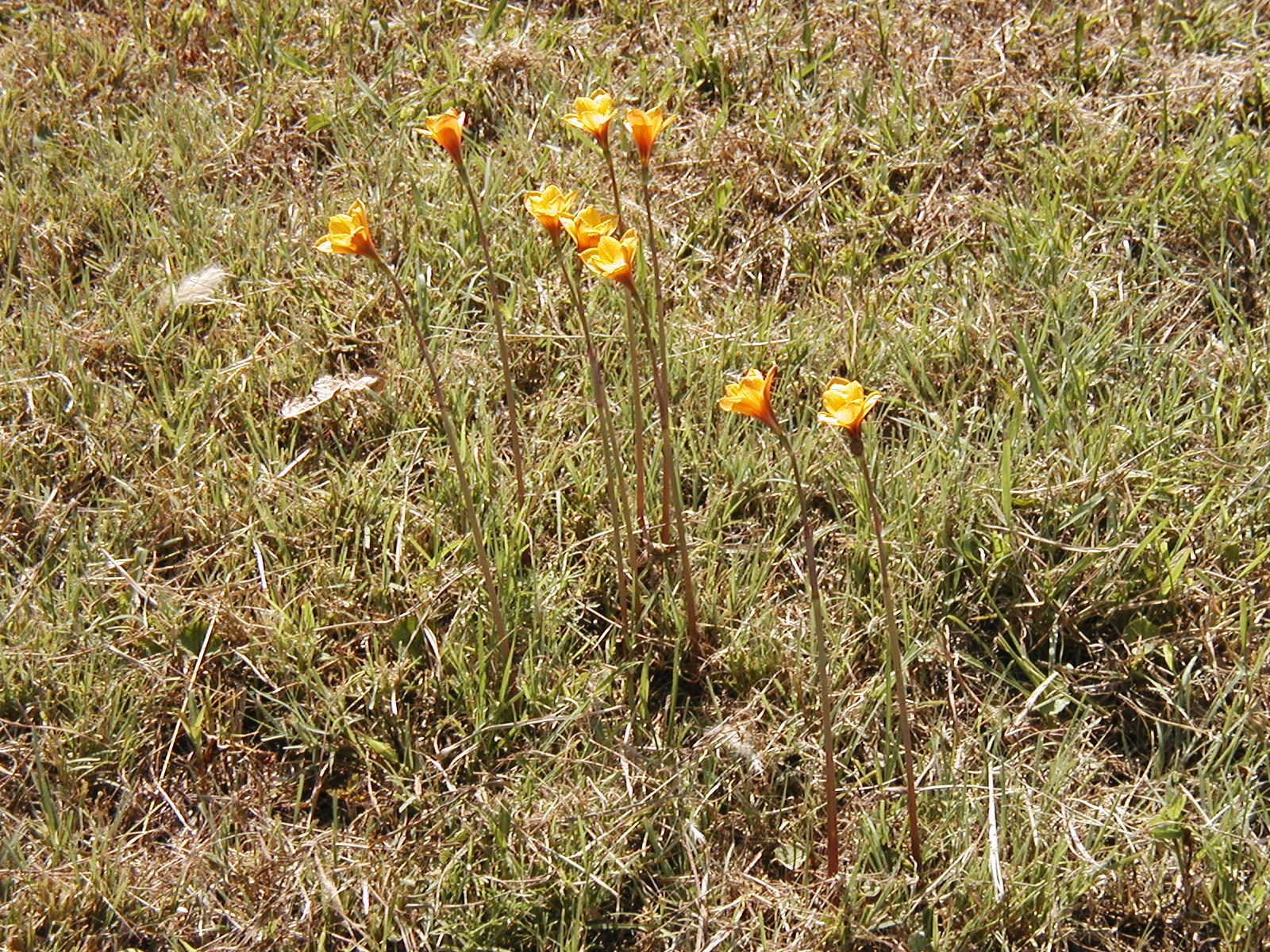
Standing just 6 to 12 inches tall, Copper Lily is easy to overlook until it blooms, when its cheerful flowers — golden-yellow with a copper-red flush at the throat — appear scattered across moist pastures, roadside ditches, and grassy swales throughout the eastern two-thirds of Texas. Because flowering is triggered by rainfall rather than a fixed calendar date, a single rain event in August or September can bring an entire colony into bloom almost overnight, a phenomenon long appreciated by Texas wildflower enthusiasts.
Copper Lily is an easy, low-maintenance addition to a Texas native garden, particularly in naturalistic plantings, rock gardens, and borders where its sudden bursts of color provide a welcome surprise during the slow, hot stretch of late summer. It asks for very little once established and multiplies readily by bulb offsets and seed in a favorable spot.
Identification
Copper Lily is a low, smooth-leaved bulb perennial, typically no more than about a foot tall even in full bloom. Its narrow, strap-like leaves and solitary flowers on slender stalks place it among the rain lilies, a group of Amaryllidaceae bulbs famous for blooming in response to rain rather than season.
Bulb & Leaves
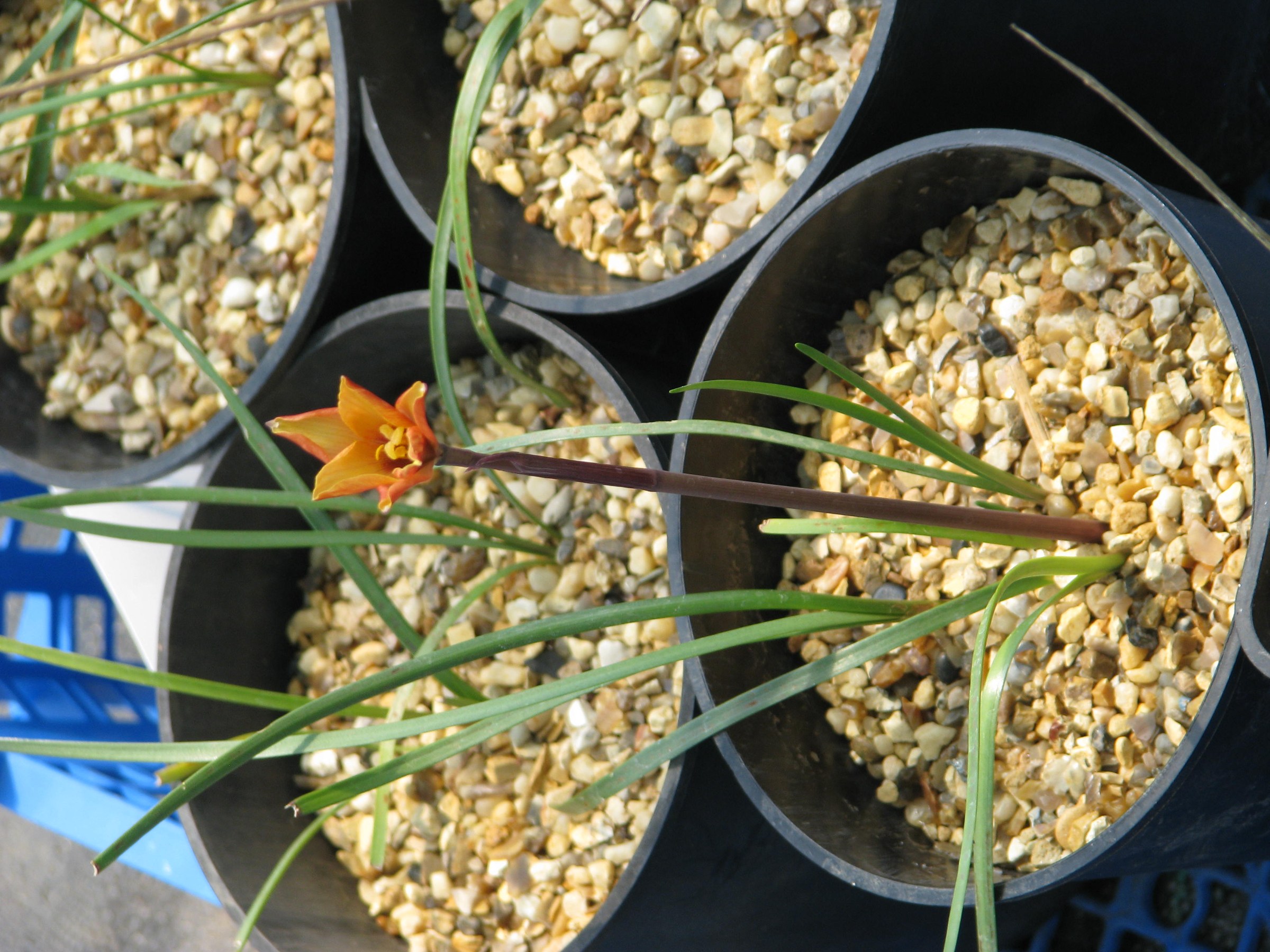
Copper Lily grows from a small underground bulb that persists through dry periods and winter dormancy. Narrow, smooth, somewhat thick, grass-like leaves emerge from the bulb, often appearing after the flowers have already withered rather than alongside them. The foliage is easy to mistake for ordinary turf grass when not in bloom, which is part of why the plant is so often overlooked outside its flowering window.
Flowers
Each bulb sends up a single, leafless flowering stalk bearing one terminal, funnel-shaped flower about 1.5 to 2 inches across. The six tepals are golden yellow, often with a coppery red-orange flush or streaking toward the throat, giving the species both its common name and part of its scientific epithet. Flowering is triggered by rain and can occur anytime from late summer into fall, most commonly August through October, with a colony sometimes blooming in near-unison a day or two after a significant rain.
Fruit & Seeds
After flowering, Copper Lily produces a three-chambered capsule containing flat, dark brown to black seeds. The capsules mature and split open within a few weeks of flowering, releasing seed that can establish new plants in favorable, undisturbed grassy sites.
Quick Facts
| Scientific Name | Habranthus tubispathus (syn. Habranthus texanus, Zephyranthes texana) |
| Family | Amaryllidaceae (Amaryllis Family) |
| Plant Type | Bulbous Perennial Wildflower |
| Mature Height | 6–12 in. |
| Mature Spread | 4–6 in. per bulb clump (spreads by offsets) |
| Growth Rate | Moderate (spreads gradually by bulb offsets and seed) |
| Sun Exposure | Full Sun |
| Water Needs | Medium |
| Soil Type | Moist, various somewhat heavy or loamy soils |
| Soil pH | 6.0–7.5 (slightly acidic to neutral) |
| Bloom Time | August – October, triggered by rain |
| Flower Color | Golden yellow with copper-red throat markings |
| Fall Color | None (herbaceous bulb foliage) |
| Fruit | Three-chambered capsule with flat dark seeds |
| Deer Resistant | Yes (bulb foliage generally avoided) |
| USDA Hardiness Zones | 7–10 |
Native Range
Copper Lily is native to Texas, where it occurs across roughly the eastern two-thirds of the state, from the Blackland Prairies and Hill Country east through the Pineywoods and Gulf Prairies. It grows in moist, grassy swales, low pastures, roadside ditches, and open woodland edges wherever soils stay damp enough, at least seasonally, to support the bulb through its dormant period.
Within this range, Copper Lily tends to appear in scattered colonies rather than as a dominant groundcover, often going unnoticed for months before a rain event brings a flush of bloom. It shares this habitat and bloom-triggering behavior with other Texas rain lilies in the genera Zephyranthes and Cooperia, several of which overlap its range.
Garden forms of this species descended from South American populations of Habranthus tubispathus are also widely cultivated and have naturalized in parts of the Gulf Coast outside Texas; gardeners outside Texas should confirm they are sourcing regionally appropriate, Texas-origin stock if native provenance matters for their planting.
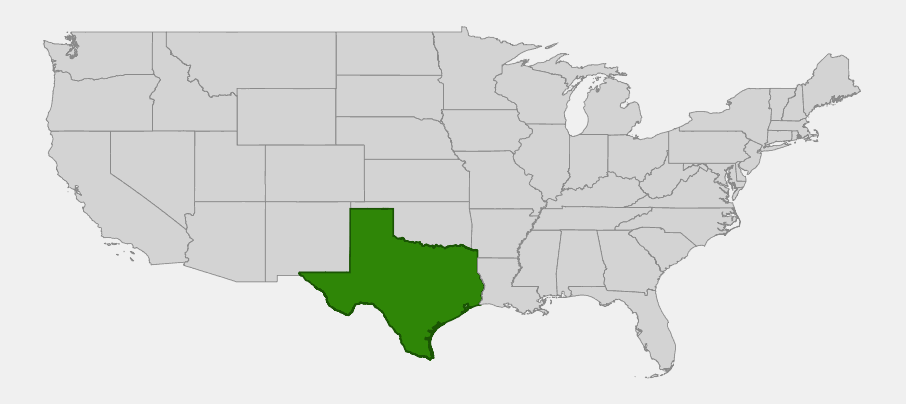
📋 Regional plant lists featuring Copper Lily: South and West Texas
Growing & Care Guide
Copper Lily is an easy, carefree bulb for Texas gardeners who want a bit of late-summer surprise without any fuss. Once planted in a congenial spot, it needs very little attention and will reward a good rain with a flush of unexpected color.
Light
Grow Copper Lily in full sun for the strongest flowering, though it tolerates light, open shade for part of the day. Dense shade will reduce bloom.
Soil & Water
Plant in a variety of somewhat moist, moderately fertile soils; Copper Lily is not picky about soil type as long as drainage is adequate and the site does not dry out completely for extended periods. Medium, regular moisture produces the best growth, and the bulbs respond quickly to rain with a flush of bloom even after a dry spell. Avoid soils that stay waterlogged, which can rot the bulbs.
Planting Tips
Set bulbs 2 to 3 inches deep in fall or early spring, spacing them 3 to 4 inches apart for a naturalistic drift. Plant in groups for the best display, since a mass of Copper Lily blooming together after rain is far more striking than scattered singles. Good spots include the front of a border, a rock garden, or naturalized in a lawn area that is not mowed too closely during bloom season.
Propagation
Copper Lily multiplies readily from bulb offsets, which can be lifted and divided every few years during dormancy to create new drifts elsewhere in the garden. It also self-seeds in favorable conditions; ripe capsules can be collected and sown fresh for new plants, though offsets are the faster route to flowering-size bulbs.
Landscape Uses
Copper Lily earns its keep in several garden settings:
- Naturalized drifts in lawns, meadows, or prairie plantings
- Rock gardens and border edges
- Rain gardens and low, seasonally moist areas
- Pollinator and wildflower gardens for late-summer color
- Container plantings where its surprise blooms can be enjoyed up close
Wildlife & Ecological Value
Although a modest presence for most of the year, Copper Lily contributes meaningfully to pollinator resources during its rain-triggered bloom windows.
For Pollinators
The showy, nectar-rich flowers attract native bees and other pollinating insects during the late-summer and fall bloom period, a time when many spring wildflowers have already finished and food sources can be scarcer on the Texas prairie.
For Birds & Mammals
Copper Lily’s bulb foliage is generally left alone by deer and rabbits, making it a reliably deer-resistant choice for gardens with heavy browsing pressure. Its direct wildlife value beyond pollinators is limited, consistent with its modest presence in the landscape outside of bloom.
Ecosystem Role
As a rain-triggered bloomer, Copper Lily is part of a guild of Texas rain lilies whose synchronized flowering tracks seasonal rainfall, providing a pulse of nectar resources tied to moisture availability rather than a fixed calendar. This bet-hedging strategy, shared with other bulbous prairie wildflowers, helps the species persist through the boom-and-bust rainfall patterns typical of Texas grasslands.
Cultural & Historical Uses
Copper Lily has long been a familiar, if often overlooked, part of the Texas prairie and pasture landscape, known to generations of rural Texans simply as one of the “rain lilies” that pop up unexpectedly after a storm. Its rapid, rain-triggered bloom has made it a small but delightful marker of seasonal change in the eastern two-thirds of the state, celebrated informally by Texas wildflower enthusiasts and native plant societies rather than tied to any specific documented traditional use.
In more recent decades, Copper Lily and its close relatives have become popular additions to Texas native plant gardens, promoted by organizations such as the Native Plant Society of Texas and the Lady Bird Johnson Wildflower Center as low-maintenance, water-wise bulbs suited to naturalistic plantings. Bulb collectors and specialty nurseries, both in Texas and internationally, have also taken an interest in the species and its showy South American relatives, cultivating selections for their reliable, richly colored blooms.
The plant has no documented history of medicinal or culinary use, and like many Amaryllidaceae bulbs, it should be treated as not for consumption; its garden value lies entirely in its ornamental, pollinator-friendly bloom.
Frequently Asked Questions
Why do Copper Lily flowers appear so suddenly?
Copper Lily is a true rain lily: its bloom is triggered by rainfall rather than a fixed date. Dormant bulbs can sit for weeks or months, then send up flowers within just a few days of a good soaking rain, often in near-unison across an entire colony.
Is Copper Lily the same plant as other Texas rain lilies?
No, though they are close relatives. Texas is home to several rain lily species in the genera Habranthus, Zephyranthes, and Cooperia, all sharing the rain-triggered bloom habit. Copper Lily is distinguished by its golden-yellow flowers with copper-red throat markings.
How do I get my Copper Lily to multiply?
Plant bulbs in groups and leave them undisturbed; they will gradually multiply by offsets. Established clumps can be lifted and divided every few years during dormancy to start new drifts elsewhere in the garden.
Will Copper Lily survive a Texas winter?
Yes, within its hardiness range (USDA zones 7–10) the bulb overwinters in the ground without protection, going dormant until favorable spring or late-summer conditions return.
Is Copper Lily deer resistant?
Generally yes. Its grass-like foliage is not a preferred browse for deer or rabbits, making it a dependable choice for gardens where deer pressure limits other flowering perennials.

Looking for a nursery that carries Copper Lily?
Browse our native plant nursery directory: Texas