Red Bush Monkeyflower (Diplacus puniceus)
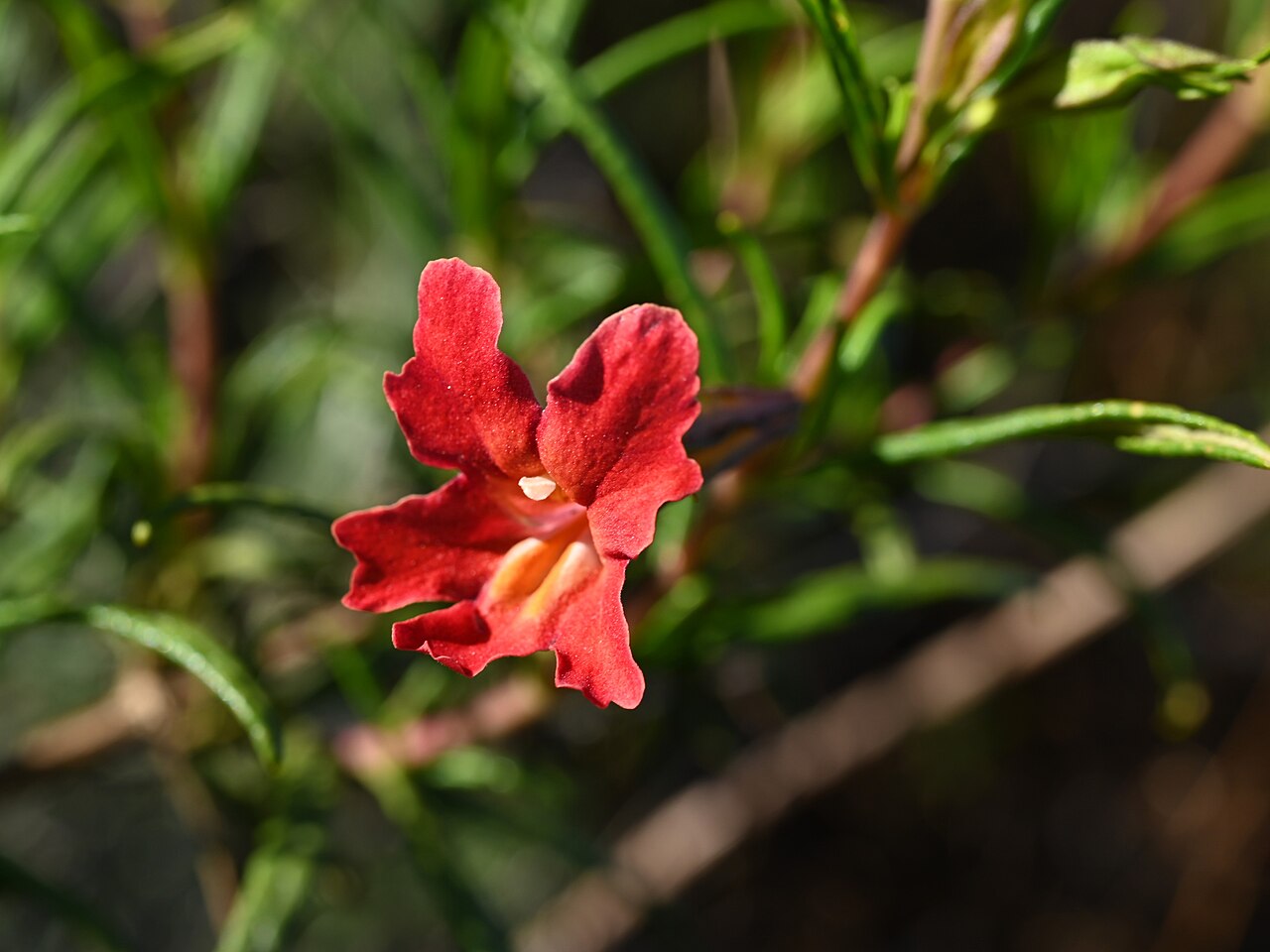
Diplacus puniceus (long known as Mimulus puniceus, and still sometimes listed as Mimulus aurantiacus var. puniceus), commonly called Red Bush Monkeyflower or San Diego Monkeyflower, is a small, wiry evergreen shrub found only along the immediate coast of Southern California and northern Baja California. It is the deepest-colored member of the bush monkeyflower group that grows wild along the California coast, with tubular flowers in shades of brick red, dark orange-red, or deep maroon-red — a color that stands out sharply against the pale, sticky, narrow foliage.
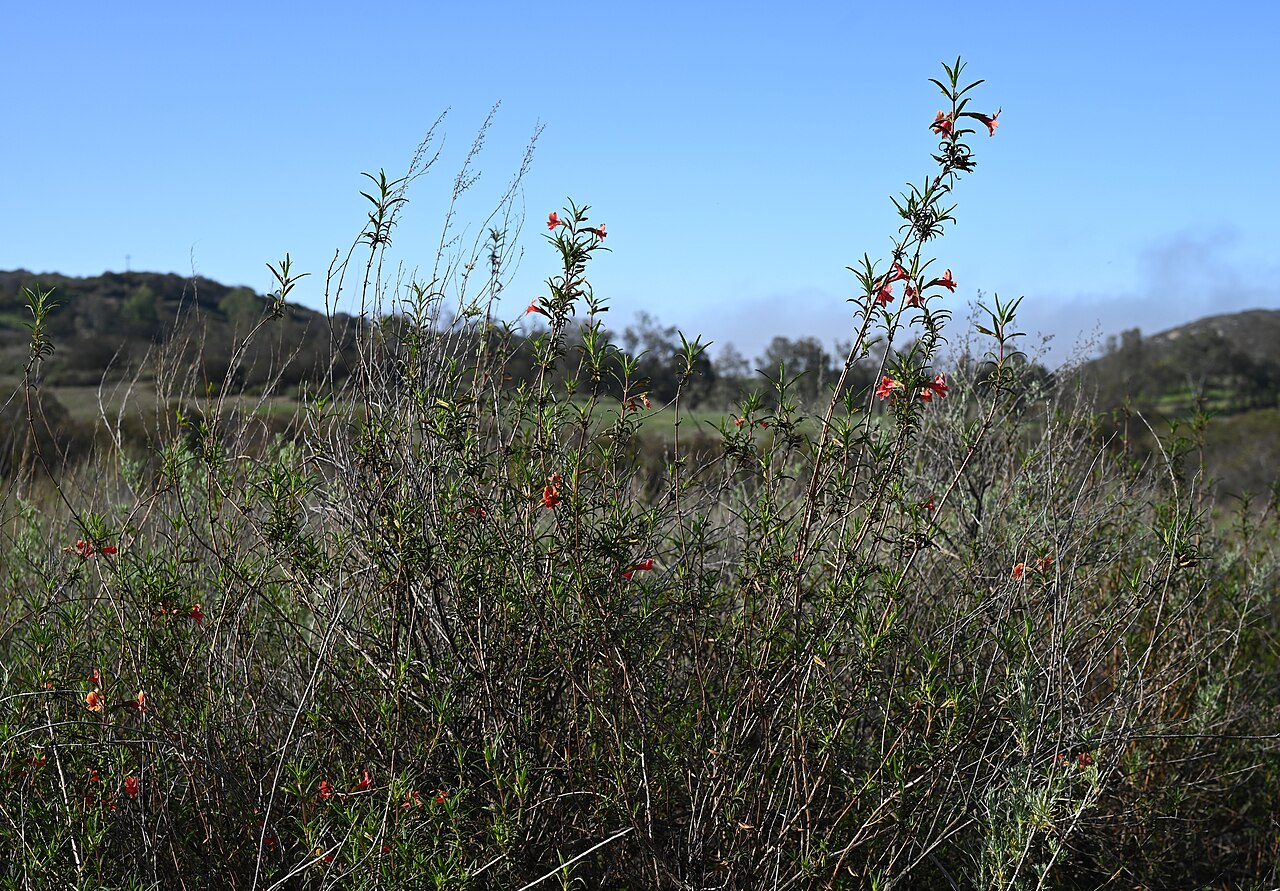
Growing in coastal sage scrub and chaparral from Santa Barbara County south through San Diego County, Red Bush Monkeyflower is a small, open shrub rarely more than a couple of feet tall, often found tucked among rocks, on steep coastal bluffs, or scrambling up through larger shrubs. Its tubular flowers are built for hummingbirds, and a blooming patch on a coastal hillside is a reliable stop for Anna’s and Allen’s hummingbirds for much of the year.
In the garden, Red Bush Monkeyflower is a compact, low-water choice for coastal and near-coastal Southern California gardens, rock gardens, and hummingbird plantings. Its diminutive size and long bloom season make it a good fit for small spaces where a full-sized shrub would be too much, and its striking flower color adds a jolt of red to a native plant palette that leans heavily on yellows, purples, and whites.
Identification
Red Bush Monkeyflower is a small, slender, evergreen shrub typically 1 to 3 feet (30–90 cm) tall and somewhat wider, with an open, sprawling to semi-upright habit. Young stems are green and somewhat sticky-glandular, aging to thin, woody, pale tan or gray stems. The whole plant has a slightly resinous, aromatic quality common to this group of monkeyflowers.
Stems
Stems are slender, four-angled when young, and often sticky to the touch from fine glandular hairs. They branch freely from the base, giving the shrub a loose, airy structure rather than a dense, rounded one.
Leaves
Leaves are opposite, narrow and linear to narrowly lance-shaped, 1 to 3 inches (2.5–7.5 cm) long, with smooth or slightly rolled-under margins. They are a dull gray-green and somewhat sticky-glandular, an adaptation that helps reduce water loss on exposed coastal sites. The narrow leaf shape distinguishes Red Bush Monkeyflower at a glance from the broader-leaved Sticky Monkeyflower (Diplacus aurantiacus), a related species that often grows nearby.
Flowers
Flowers are solitary on short stalks from the upper leaf axils, tubular with a flared, two-lipped face about 1.5 to 2.5 inches (4–6 cm) long. Color ranges from deep brick red to dark orange-red, occasionally with darker nectar guides in the throat. The tubular shape and vivid color are a classic hummingbird-pollination syndrome, and the species blooms over an unusually long season, with some flowers present nearly year-round in mild coastal climates, peaking from late winter through summer.
Fruit & Seeds
After flowering, Red Bush Monkeyflower produces a small, dry, two-chambered capsule that splits open to release numerous tiny seeds. The capsules are inconspicuous and not an ornamental feature, but they allow the species to self-sow readily in favorable garden conditions.
Quick Facts
| Scientific Name | Diplacus puniceus (syn. Mimulus puniceus) |
| Family | Phrymaceae (Lopseed) |
| Plant Type | Evergreen Shrub |
| Mature Height | 1–3 ft (30–90 cm) |
| Mature Spread | 1–3 ft (30–90 cm) |
| Growth Rate | Moderate to Fast |
| Sun Exposure | Full Sun to Part Shade |
| Water Needs | Low; occasional summer water appreciated near coast |
| Soil Type | Well-drained; rocky, sandy, or clay-loam |
| Soil pH | 6.0–7.5 (slightly acidic to neutral) |
| Bloom Time | Nearly year-round near coast; peak February – July |
| Flower Color | Brick red to dark orange-red |
| Fall Color | None (evergreen) |
| Fruit | Small dry capsule (not ornamental) |
| Deer Resistant | Moderately |
| USDA Hardiness Zones | 9–11 |
Native Range
Red Bush Monkeyflower is native only to the coastal strip of Southern California, from around Santa Barbara County south through Ventura, Los Angeles, Orange, and San Diego Counties, continuing a short distance into northern Baja California, Mexico. It is a true coastal species, rarely found more than a few dozen miles from the ocean, and it is absent from California’s interior valleys and deserts.
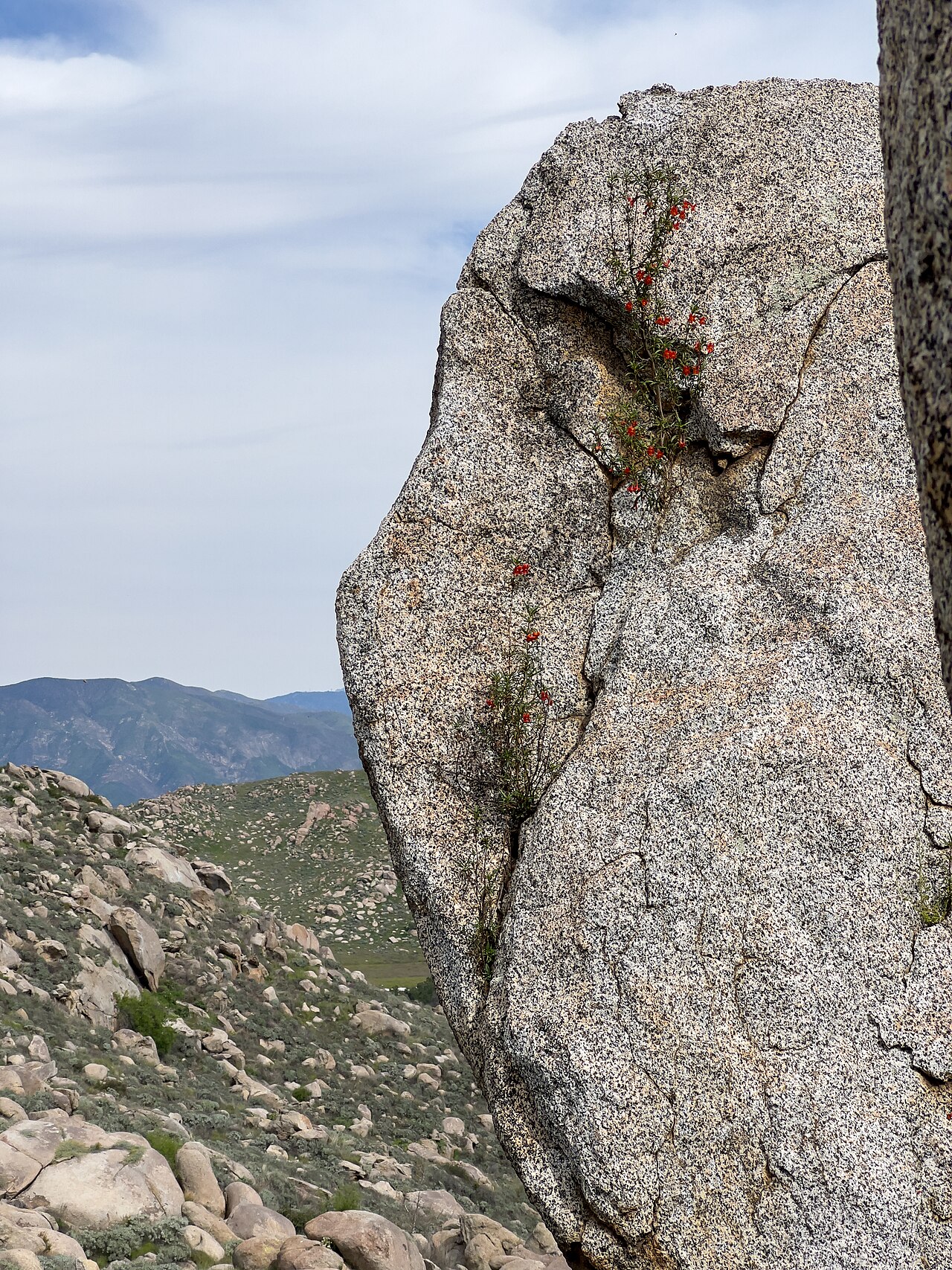
Within this narrow coastal band, Red Bush Monkeyflower grows in coastal sage scrub and chaparral, often on steep, rocky slopes, canyon walls, and coastal bluffs, from near sea level up to roughly 3,000 feet (900 m) in the coastal foothills. It is frequently found rooted in rock crevices on granite outcrops, where its narrow leaves and sticky surface help it withstand salt-laden coastal wind and summer drought.
The species is not currently considered rare or threatened, though coastal sage scrub habitat throughout its range has been heavily reduced by development, making garden and restoration plantings within its native coastal counties genuinely useful for supporting the hummingbirds and native bees that depend on it.
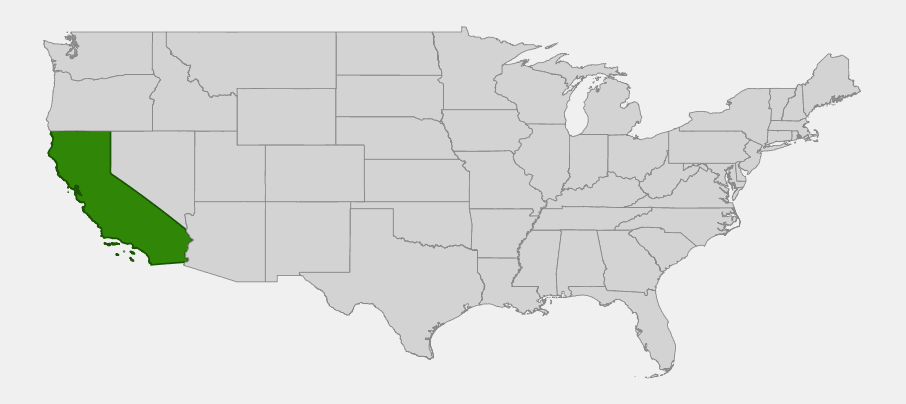
📋 Regional plant lists featuring Red Bush Monkeyflower: California & Nevada
Growing & Care Guide
Red Bush Monkeyflower is a forgiving, low-maintenance shrub for coastal and near-coastal Southern California gardens, well suited to rock gardens, slopes, and small spaces where its compact size is an asset.
Light
Full sun is best near the immediate coast, where fog and mild temperatures keep the plant from stressing. A few miles inland, where summer heat is more intense, light afternoon shade helps keep foliage from scorching and extends the bloom season.
Soil & Water
Red Bush Monkeyflower tolerates a range of well-drained soils, from rocky and sandy to clay-loam, but does not like to sit in constantly wet ground. It is drought tolerant once established, though it looks best and blooms longest with an occasional deep watering during long dry stretches, particularly in gardens set back from direct coastal influence. Avoid heavy, poorly drained soil and overhead watering that keeps foliage wet.
Planting Tips
Plant from containers in fall or early winter to take advantage of winter rains for establishment. Tuck plants into rock crevices, raised beds, or slopes where drainage is excellent — the species naturally grows wedged into rocky outcrops and does well mimicking that setting in cultivation. Space plants 2 to 3 feet apart for a naturalistic coastal scrub planting.
Pruning & Maintenance
Light tip-pruning after flushes of bloom encourages bushier growth and more flowers, since the plant can become leggy and sparse without occasional grooming. Cut back lightly in late summer or fall if the plant looks tired. Red Bush Monkeyflower is generally short-lived, often 5 to 10 years, so allowing a few volunteer seedlings to establish nearby helps maintain a planting over time.
Landscape Uses
Red Bush Monkeyflower fits neatly into several small-scale native garden settings:
- Hummingbird gardens, where its red tubular flowers are a magnet for Anna’s and Allen’s hummingbirds
- Rock gardens and crevice plantings on slopes or retaining walls
- Coastal sage scrub restoration within its native range
- Small-space native gardens where a full-sized shrub would overwhelm the site
- Container plantings on patios and balconies in coastal climates
Wildlife & Ecological Value
Red Bush Monkeyflower’s tubular red flowers make it one of the more valuable hummingbird plants among California’s coastal chaparral shrubs.
For Pollinators
The long, tubular, red flowers are a hummingbird-pollination specialist, well matched to the bill length and foraging behavior of Anna’s and Allen’s hummingbirds, which visit regularly throughout the long bloom season. Native bees and some butterflies also visit for nectar and pollen, though hummingbirds are the primary pollinators.
For Birds
Beyond nectar for hummingbirds, the dense, wiry branching of mature shrubs offers cover for small songbirds moving through coastal scrub, and the tiny seeds in the dry capsules provide a minor food source for seed-eating birds later in the season.
Ecosystem Role
As a component of increasingly fragmented coastal sage scrub, Red Bush Monkeyflower helps anchor steep, rocky slopes and contributes to the structural diversity of this threatened plant community. Its long bloom season helps bridge nectar gaps for pollinators between the peak flowering periods of other coastal scrub shrubs.
Cultural & Historical Uses
Red Bush Monkeyflower has a more limited documented history of use compared to some California native plants, reflecting its restricted coastal range and relatively small stature. It has long been recognized by California botanists as one of the showiest coastal monkeyflowers, and it has been collected and described in regional floras since the nineteenth century under its original name, Mimulus puniceus.
In recent decades, Red Bush Monkeyflower has become an increasingly popular plant in California native-plant horticulture, valued for its compact size, long bloom season, and vivid flower color, which are relatively unusual combinations among low-water coastal natives. It is commonly offered by Southern California native plant nurseries and is frequently used in coastal restoration and hummingbird garden projects.
There is no significant documented traditional food or medicinal use of this species; its primary historical and modern value lies in its ornamental and ecological role within Southern California’s coastal landscape.
Frequently Asked Questions
What is the difference between Red Bush Monkeyflower and Sticky Monkeyflower?
Red Bush Monkeyflower (Diplacus puniceus) has narrow leaves and deep brick-red to orange-red flowers, and is restricted to the coast. Sticky Monkeyflower (Diplacus aurantiacus) has broader leaves and typically orange to buff-colored flowers, and has a much wider range across California. They sometimes grow near each other and can hybridize.
Does Red Bush Monkeyflower attract hummingbirds?
Yes — its long, tubular red flowers are specifically adapted for hummingbird pollination and are a reliable nectar source for Anna’s and Allen’s hummingbirds through much of the year in mild coastal climates.
How much water does this plant need?
Very little once established, especially right along the coast where fog and mild temperatures reduce stress. A few miles inland, occasional deep watering during extended dry spells keeps the plant healthier and extends bloom.
Can Red Bush Monkeyflower be grown away from the coast?
It can be grown somewhat inland with afternoon shade and a bit more summer water, but it performs best and lives longest in the mild, foggy conditions of its native coastal range; hot, dry interior gardens are more challenging for it.
Is Red Bush Monkeyflower toxic?
It is not documented as a significant toxicity concern for people or pets, but like most ornamental natives it is not a food plant and should not be eaten; its value is horticultural and wildlife-related rather than edible.

Looking for a nursery that carries Red Bush Monkeyflower?
Browse our native plant nursery directory: California