Interior Live Oak (Quercus wislizeni)
Quercus wislizeni, the Interior Live Oak, is one of California’s most widespread evergreen oaks — a tough, deep-rooted tree of the inland foothills that stays green through the driest months of the year while deciduous oaks around it go bare. Unlike its coastal cousin the coast live oak, Interior Live Oak is a plant of the state’s interior: the Sierra Nevada foothills, inner Coast Ranges, and the drier mountains of Southern California, where summers are hotter and winters colder than along the shore.
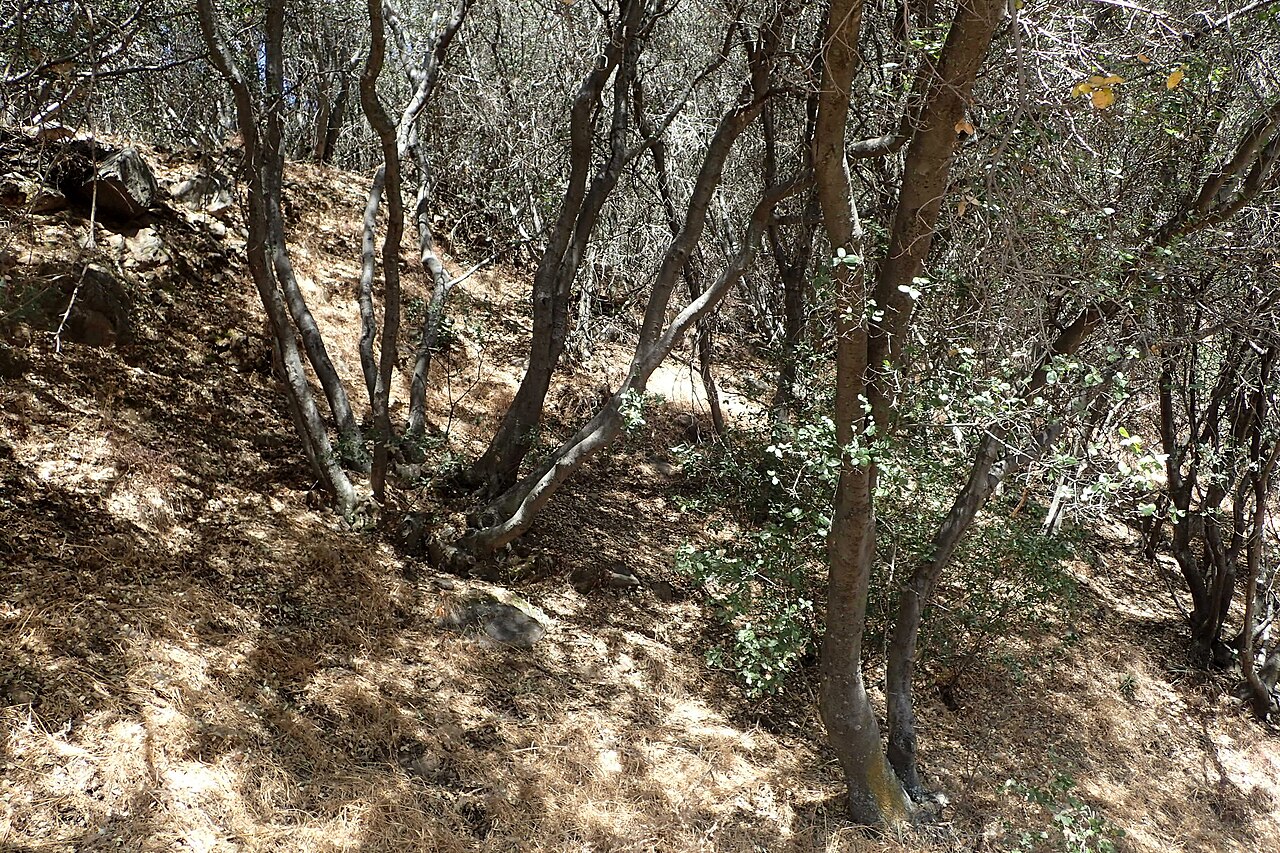
This species belongs to the red oak group, identifiable by its small, holly-like leaves with bristle-tipped teeth and by acorns that take two years to mature rather than one. Depending on site conditions it grows either as a substantial tree with a broad, dense crown or, on drier and more exposed slopes, as a sprawling, multi-stemmed large shrub — a variability that lets it occupy an unusually wide range of foothill habitats.
Interior live oak is a keystone species of California’s foothill woodlands, its acorns and year-round cover supporting wildlife through every season. For gardeners and land managers working in the state’s hot, dry interior, it is one of the most reliable native evergreen trees available, asking for little beyond the conditions it already thrives in naturally.
Identification
Interior live oak grows 30 to 75 feet tall as a tree in favorable foothill sites, with a dense, rounded crown nearly as wide as it is tall. On harsher, drier slopes or at higher elevations it often takes a shrubbier form, 6 to 20 feet tall with multiple trunks arising from the base — a growth habit sometimes separated as variety frutescens. Both forms are unmistakably evergreen, holding their dark foliage year-round.
Bark
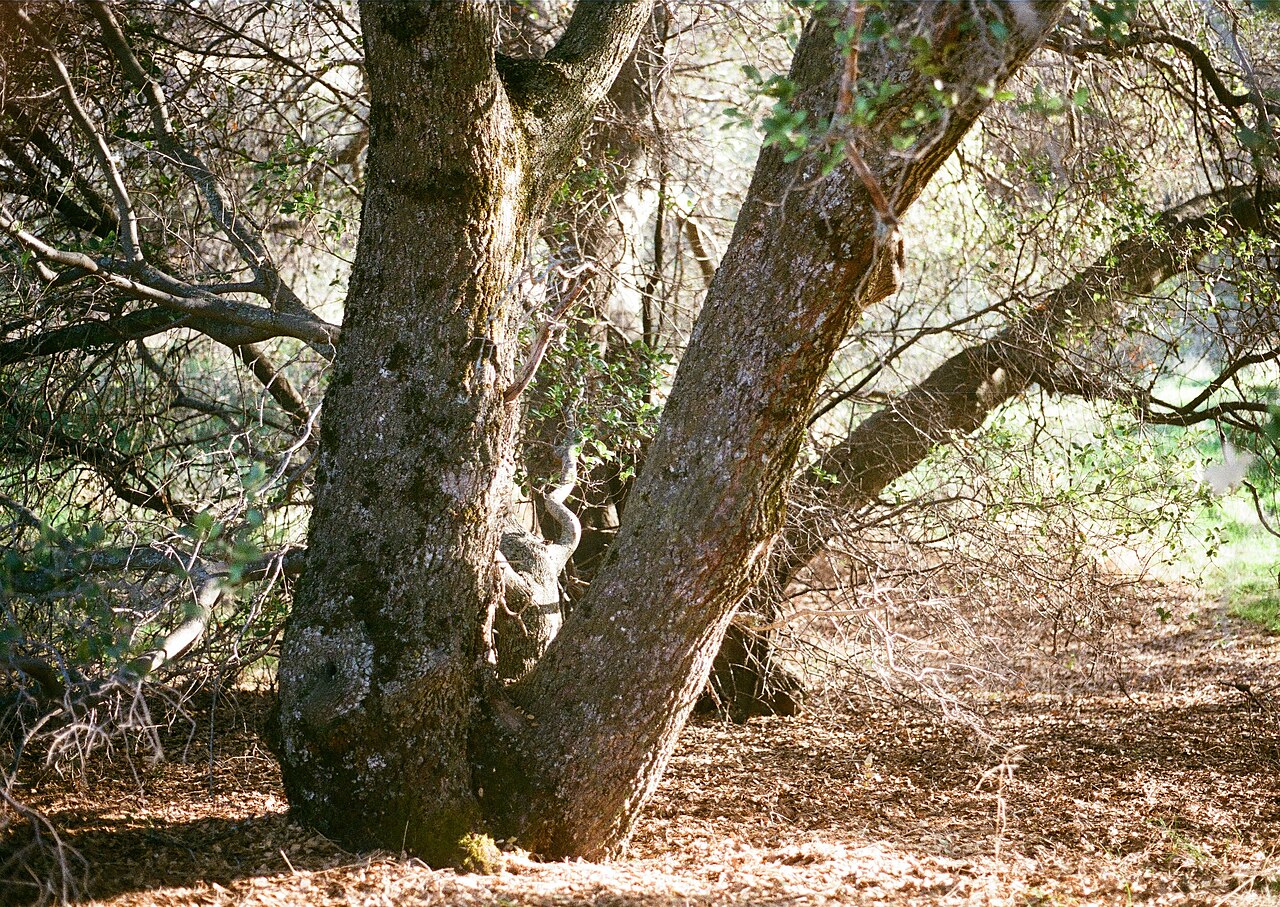
Young bark is smooth and pale gray, becoming fissured, darker gray to nearly black, and increasingly rough-textured on older trunks. Multi-trunked specimens often develop a gnarled, sculptural base with trunks leaning in different directions.
Leaves
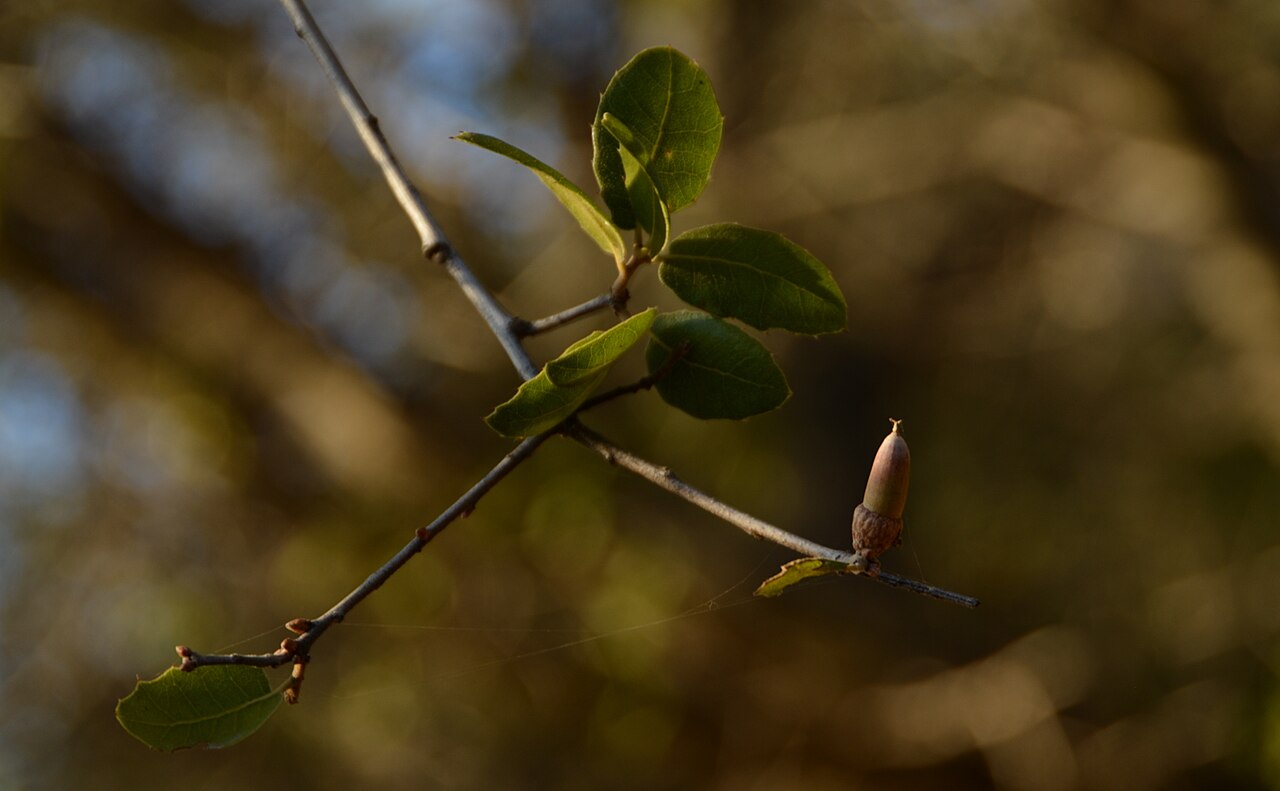
Leaves are small, 1 to 2 inches long, oval to nearly round, and notably convex or cupped rather than flat — a useful field mark that separates this species from the flatter-leaved coast live oak. Margins are typically spiny-toothed like holly leaves, though shade leaves or leaves on older growth can be nearly smooth-edged. The upper surface is glossy dark green; new spring growth often emerges with a reddish or bronze tint before hardening off.
Flowers & Fruit
Male flowers hang in slender, pale yellow-green catkins in spring, often conspicuous enough to dust nearby surfaces with pollen. Acorns are narrow and sharply pointed, about ¾ to 1¼ inches long, maturing over two growing seasons in classic red oak fashion. They are notably bitter and high in tannin compared to white oak acorns, requiring more processing before they are palatable to people, though wildlife eat them readily.
Quick Facts
| Scientific Name | Quercus wislizeni |
| Family | Fagaceae (Beech/Oak) |
| Plant Type | Evergreen Tree or Large Shrub |
| Mature Height | 6–75 ft (tree form 30–75 ft; shrub form 6–20 ft) |
| Mature Spread | 20–60 ft (tree form) |
| Growth Rate | Slow to moderate |
| Sun Exposure | Full Sun to Part Shade |
| Water Needs | Low once established |
| Soil Type | Well-drained; tolerates rocky, shallow, or clay soils |
| Soil pH | 6.0–7.5 (neutral to slightly acidic) |
| Bloom Time | March – April |
| Flower Color | Pale yellow-green (inconspicuous) |
| Fall Color | None (evergreen) |
| Fruit | Narrow, pointed acorns, maturing over two years |
| Deer Resistant | Mostly (spiny leaves deter browsing) |
| USDA Hardiness Zones | 7–10 |
Native Range
Interior live oak is native to California only, where it is widespread through the state’s interior foothill belt. Its range runs along the inner Coast Ranges, through the Sierra Nevada foothills on the west side of the range, and into the drier mountains and foothills of central and Southern California, generally between about 300 and 5,000 feet in elevation. It is absent from the immediate coast, where coast live oak takes its place, and from the true high Sierra and desert interior, where conditions are too cold or too dry.
The species also occurs in northern Baja California, Mexico. It is sometimes described in the nursery trade as reaching into southwestern Oregon, but that range more accurately applies to Oracle Oak (Quercus ×morehus), a naturally occurring hybrid between Interior Live Oak and California Black Oak found in a few southwestern Oregon counties; county-level botanical records do not support Interior Live Oak itself occurring natively outside California.
Within its range, Interior Live Oak typically grows on dry slopes and ridges with well-drained, often rocky or shallow soils, frequently alongside blue oak, valley oak, California black oak, and foothill pine in mixed oak woodland, or forming dense, nearly pure stands on harsher sites where it takes its shrubbier form. It is highly drought tolerant and fire-adapted, resprouting vigorously from the root crown after fire or cutting.
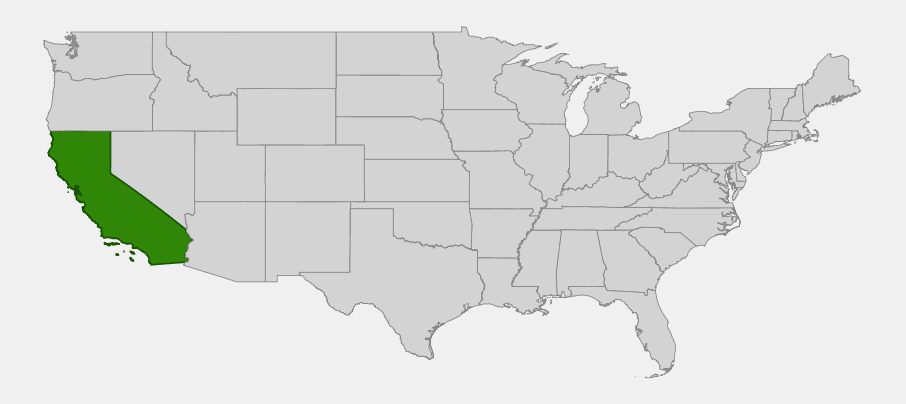
📋 Regional plant lists featuring Interior Live Oak: California & Nevada
Growing & Care Guide
Interior Live Oak is one of the most dependable evergreen trees for California’s hot, dry interior, well suited to low-water landscapes and foothill restoration once its basic needs are understood.
Light
Grow Interior Live Oak in full sun for the densest, most symmetrical form. It tolerates part shade, especially when young or growing beneath taller conifers in mixed woodland, but develops a looser crown with less direct light.
Soil & Water
This oak thrives in well-drained soils, including the rocky, shallow, and clay soils common on foothill slopes, and is excellent drought tolerant once established, needing no supplemental irrigation through most of its range after the first few years. As with most California oaks, consistent summer water around the root zone of an established tree is the most common cause of decline, promoting root and crown disease. Water young trees sparingly through their first one to two dry seasons, then taper off.
Planting Tips
Plant from small container stock in fall so winter rains can help establish the root system, and expect slow early growth as the tree invests energy belowground. Give trees room — 25 to 40 feet from structures or other trees — to accommodate the eventual dense, wide crown, and avoid disturbing soil or grading within the root zone of established specimens, which are sensitive to changes in grade and drainage.
Pruning & Maintenance
Prune only to remove dead, damaged, or crossing limbs, preferably in late summer or early fall when oaks are least vulnerable to fungal pathogens that spread more readily during wet weather. The species tolerates occasional hard pruning or coppicing better than many oaks, since it resprouts vigorously, but a light touch produces the best long-term form.
Landscape Uses
- Evergreen shade tree for hot, dry interior gardens
- Screening hedge when planted in groups and allowed to grow in its shrubby form
- Foothill woodland restoration alongside blue oak and valley oak
- Erosion control on dry slopes within its native elevation range
- Wildlife habitat providing year-round cover and a reliable fall acorn crop
Wildlife & Ecological Value
Interior Live Oak woodland is a major wildlife corridor and food source across California’s foothill belt, its evergreen canopy offering year-round shelter that deciduous oaks cannot match in the off season.
For Birds
Acorn Woodpeckers depend heavily on Interior Live Oak acorns, drilling storage holes into snags and dead limbs to create communal granary trees that can hold thousands of acorns. Western Scrub-Jays cache acorns across the landscape, inadvertently helping the species spread, while the dense evergreen canopy provides year-round nesting and roosting cover for towhees, wrens, and resident songbirds that would otherwise lack winter shelter in deciduous woodland.
For Mammals
Acorns are a critical fall and winter food source for California ground squirrels, mule deer, and black bears in parts of the range, while the dense shrub form provides excellent cover and thermal protection for smaller mammals navigating open foothill terrain.
For Pollinators
Though wind-pollinated and offering no nectar, the tree’s abundant spring catkins provide pollen that some native bee species collect, and the surrounding woodland understory it shelters typically supports a richer pollinator community than open grassland alone.
Ecosystem Role
As one of the few evergreen oaks in California’s interior, this species maintains year-round canopy cover, moderates soil temperature and moisture beneath it even through the dry season, and is highly fire-adapted, resprouting from its root crown after burns that would kill many other woody plants outright — a trait that helps stabilize foothill slopes and speeds post-fire habitat recovery.
Cultural & Historical Uses
Acorns from Interior Live Oak were gathered and processed by many California Indigenous groups across the Sierra foothills and interior Coast Ranges, including Sierra Miwok and Yokuts communities, who leached out the high tannin content through repeated rinsing before grinding the acorns into meal — a labor-intensive process reflecting how central oak acorns were to the regional diet.
The dense, hard wood of Interior Live Oak has historically been used for fuelwood and fence posts in rural California, valued for burning hot and long. Because the tree often grows in dense, shrubby thickets on marginal land, it has also played a practical role as a natural windbreak and property boundary in foothill ranching country.
Today the species’ main significance is ecological and aesthetic: it remains one of the defining evergreen trees of California’s oak woodland landscape, increasingly valued in restoration projects and low-water gardens as interest grows in planting trees adapted to the state’s hotter, drier future.
Frequently Asked Questions
How is Interior Live Oak different from Coast Live Oak?
Interior Live Oak has small, distinctly convex or cupped leaves and grows inland in the foothills, while Coast Live Oak (Quercus agrifolia) has larger, flatter leaves and sticks closer to the immediate coast. Their ranges overlap only in a narrow band and the two are usually easy to tell apart by leaf shape and growing site.
Does Interior Live Oak grow in Oregon?
Not natively. County-level botanical records show its range is limited to California and northern Baja California. The species sometimes gets conflated with Oracle Oak, a natural hybrid between Interior Live Oak and California Black Oak that does occur in a few southwestern Oregon counties.
Is it a tree or a shrub?
Both, depending on the site. On favorable foothill ground it grows into a substantial 30- to 75-foot tree; on harsher, drier, or more exposed slopes it more often forms a dense, multi-trunked shrub 6 to 20 feet tall. Gardeners can expect either form depending on local conditions and how the plant is pruned.
Can you eat the acorns?
Technically yes, after extensive leaching to remove the bitter tannins, following traditional processing methods. Raw acorns are unpalatably bitter and not something to eat directly off the tree; they are primarily valuable left for the wildlife that depend on them.
How drought tolerant is Interior Live Oak?
Very. Established trees in their native range typically need no supplemental irrigation at all and can go through California’s long dry summers on winter rainfall alone, making this one of the lowest-maintenance native shade trees available for interior gardens.

Looking for a nursery that carries Interior Live Oak?
Browse our native plant nursery directory: California