Ithuriel’s Spear (Triteleia laxa)
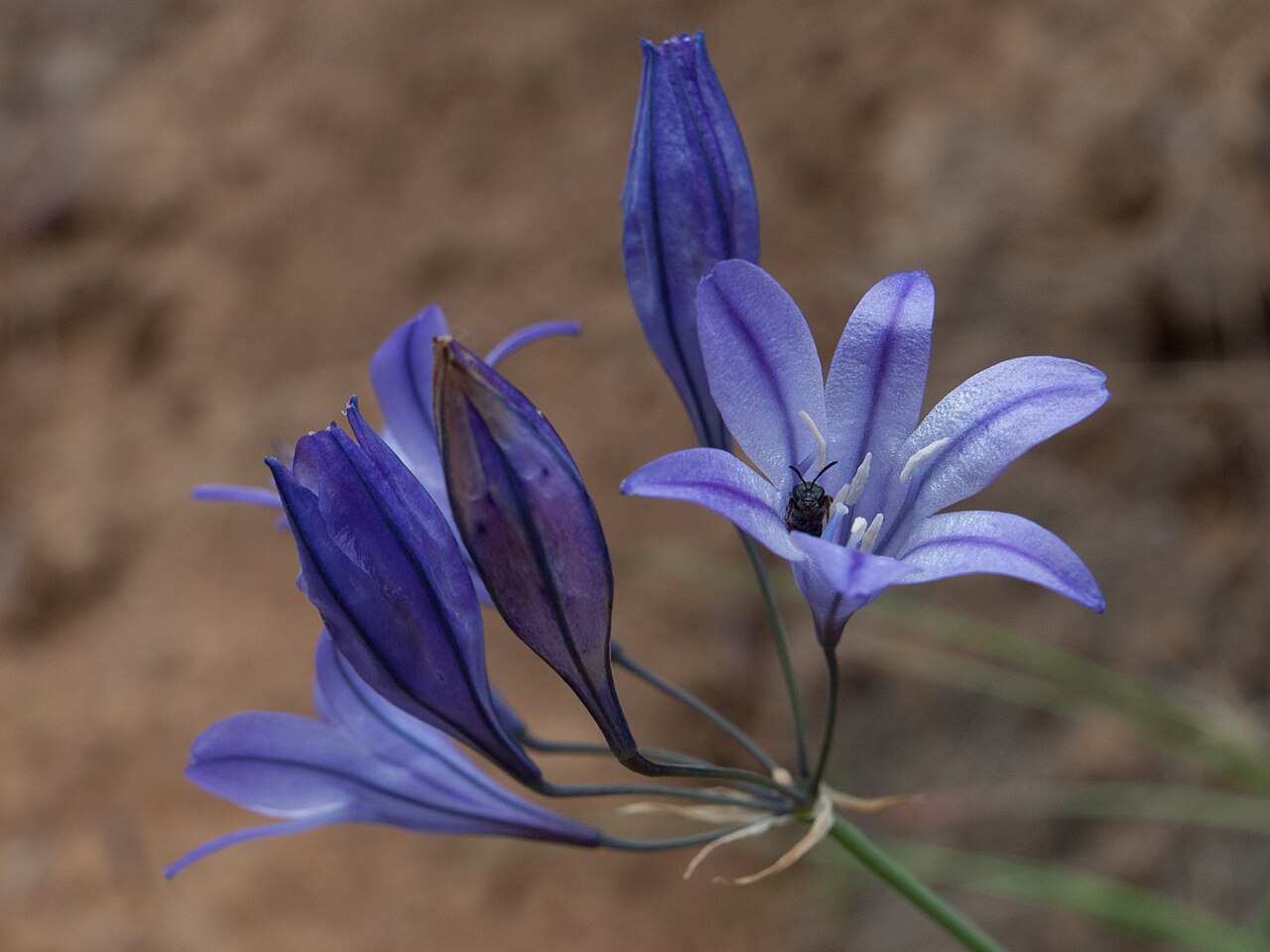
Triteleia laxa, known as Ithuriel’s spear (also grassnut or common triteleia), is a bulb-forming perennial wildflower native to California, where it is one of the most familiar spring bulbs of the state’s grasslands and oak woodlands. It belongs to the brodiaea tribe of the asparagus family (Asparagaceae, subfamily Brodiaeoideae), a California-centered group of corm-forming “wild hyacinths” that bloom in spring and vanish underground for the long dry summer.
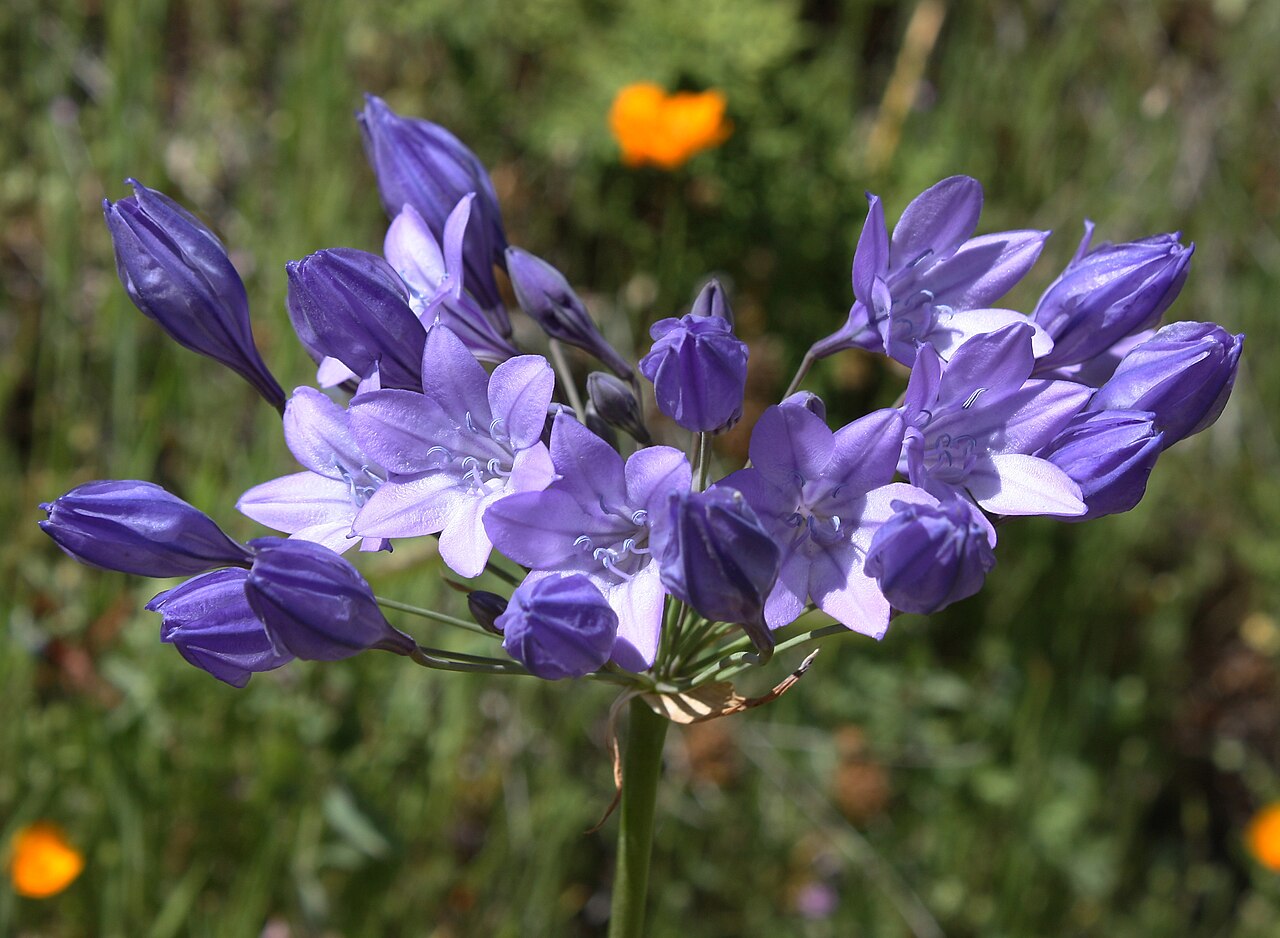
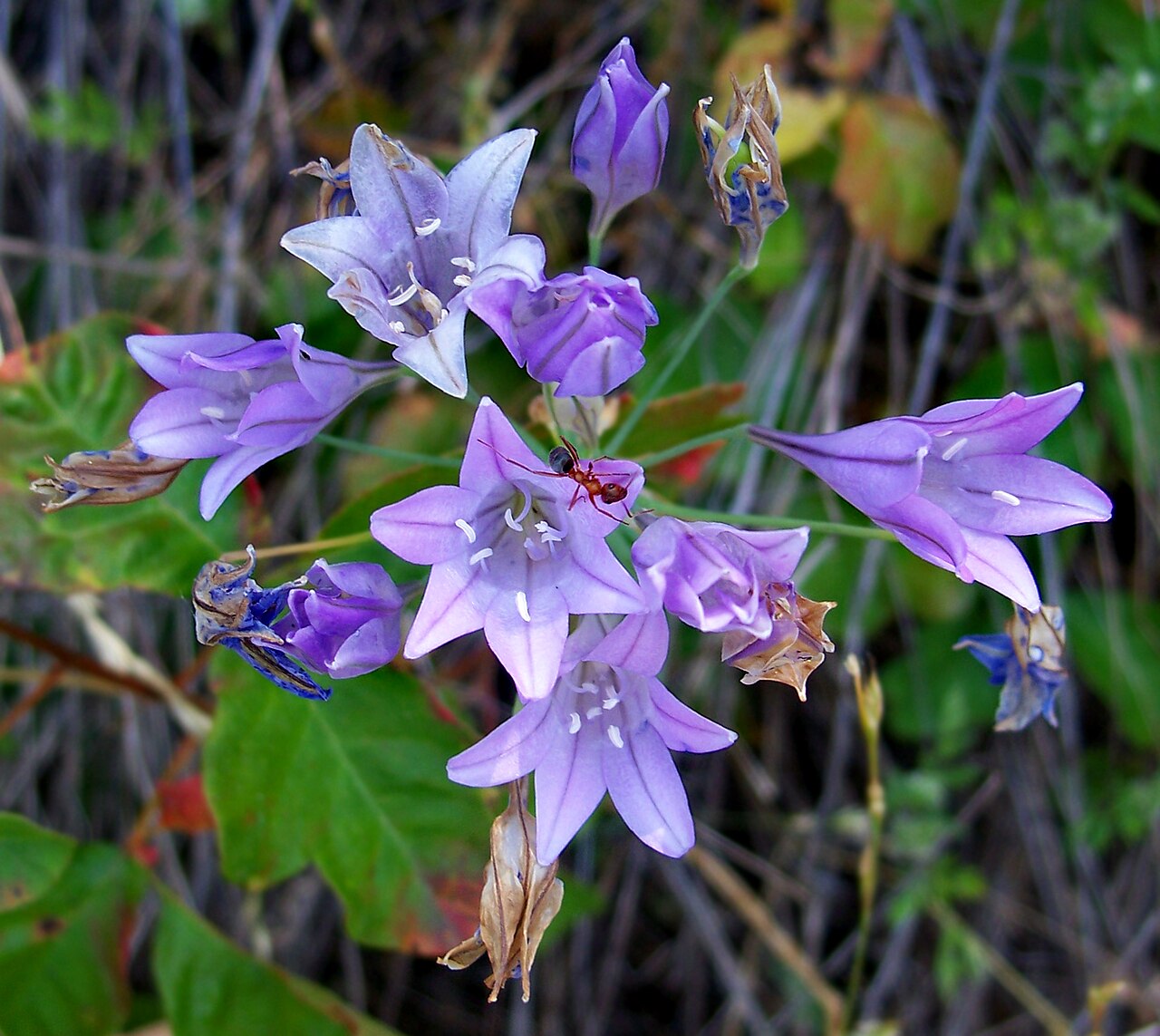
The common name comes from John Milton’s Paradise Lost: Ithuriel is an angel whose spear reveals deception at the lightest touch, a fittingly dramatic name for a plant whose tall, wiry flowering stalk rises bare from the ground to a crown of large, funnel-shaped blue-violet flowers. Each flower opens into six broad, pointed lobes around a pale throat, several held together in a loose, open umbel atop a single naked stem.
Ithuriel’s spear is a workhorse of California native gardening: it asks for almost nothing, blooms reliably in its second spring from seed or the first spring from a purchased corm, and supplies months of nectar for native bees with no summer water at all. It pairs naturally with California poppies, lupines, and native bunchgrasses in a dry meadow planting.
Identification
Like other brodiaea relatives, Ithuriel’s spear grows from an underground corm and produces one or two long, grass-like basal leaves in late winter that typically wither by bloom time, followed by a single leafless flowering stalk.
Leaves
The one or two basal leaves are linear and grass-like, 8 to 20 inches long, somewhat channeled, and often withered or dried by the time flowering peaks — so, as with many California geophytes, the plant is frequently seen in bloom with little or no green foliage visible.
Flowers
The flowering stalk (scape) rises 8 to 24 inches, sometimes taller, bearing an open, loose umbel of 6 to 15 (occasionally many more) flowers on pedicels of unequal length, giving the cluster an airy, uneven look rather than a tight ball. Each flower is funnel-shaped, 1 to 2 inches long, typically a rich blue-violet shading to a paler, almost white throat, with six spreading, pointed tepal lobes. Color can vary from deep violet-blue to pale lavender or, rarely, white. Bloom runs from April into June, generally later at higher elevations.
Fruit & Seeds
Pollinated flowers form a small three-chambered capsule that dries in place through early summer, releasing angular black seeds. The entire plant then disappears above ground, with the corm surviving summer drought below the soil surface.
Quick Facts
| Scientific Name | Triteleia laxa (syn. Brodiaea laxa) |
| Family | Asparagaceae (subfamily Brodiaeoideae) |
| Plant Type | Perennial bulb (corm), summer-dormant |
| Mature Height | 8–24 in flowering stalk |
| Mature Spread | 4–8 in |
| Growth Rate | Slow to moderate (corm offsets) |
| Sun Exposure | Full sun to part shade |
| Water Needs | Low; needs dry summer dormancy |
| Soil Type | Heavy clay, loam or gravelly soils |
| Soil pH | 6.0–7.5 |
| Bloom Time | April – June |
| Flower Color | Blue-violet to lavender, rarely white |
| Fall Color | None (dormant, no foliage present) |
| Fruit | Small three-chambered capsule, black seeds |
| Deer Resistant | Yes |
| USDA Hardiness Zones | 7–10 |
Native Range
Ithuriel’s spear is native to California, where it grows in the Coast Ranges, the foothills of the Sierra Nevada, the Central Valley margins, and the Klamath Ranges, from the state’s southern counties north to the Oregon border. It is additionally documented in the mountains of southwestern Oregon, just north of the California line, though it is far less widespread there than in California itself.
It grows on heavy clay or gravelly soils in open grassland, grassy openings in oak woodland, and brushy slopes, usually below about 5,000 feet. It is a classic companion of California’s spring wildflower displays, often flowering alongside California poppy, lupines and blue dicks on the same gravelly or clay-rich ground that keeps its corms dry in summer.
Because it is adapted to California’s long dry season, Ithuriel’s spear is not a good match for gardens outside its Mediterranean-climate native range that cannot offer a true summer dry period; in wetter eastern or southeastern gardens the corms are prone to rot.
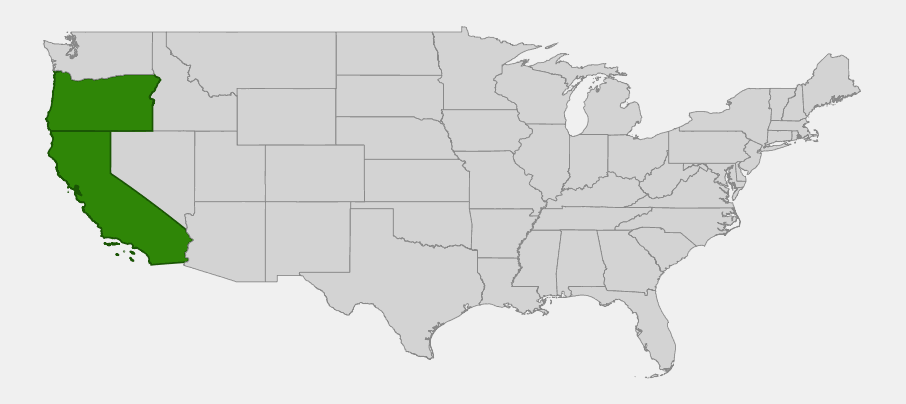
📋 Regional plant lists featuring Ithuriel’s Spear: California & Nevada · Western Oregon & Western Washington
Growing & Care Guide
Ithuriel’s spear is among the easiest California native bulbs to grow, asking only for sun, reasonable drainage and a dry summer to go dormant properly.
Light
Full sun gives the strongest bloom, though light dappled shade under oaks is tolerated and mirrors its natural woodland-edge habitat. Avoid deep shade, which reduces flowering.
Soil & Water
This species is notably tolerant of heavy clay soils that give many bulbs trouble, as well as gravelly or loamy ground — the common thread in the wild is a soil that is wet in winter and bone-dry in summer. Water during the winter-spring growing season; once leaves yellow in late spring, stop watering completely. Corms left in irrigated summer beds are prone to rot.
Planting Tips
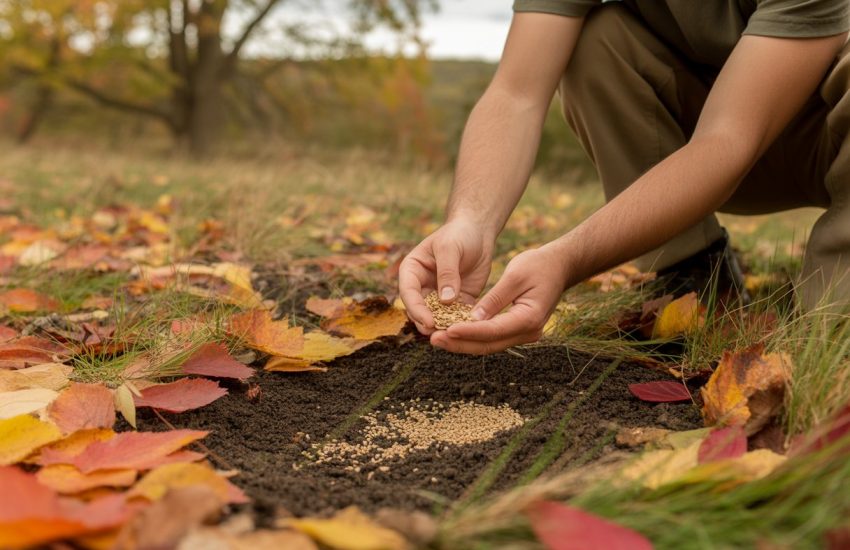
Plant corms 3 to 4 inches deep in fall, spaced 3 to 6 inches apart for a natural drift. Ithuriel’s spear combines well with California poppy, lupine and native bunchgrasses, which share the same bloom-then-go-dormant rhythm. It also naturalizes readily from seed in an established dry meadow planting.
Pruning & Maintenance
Allow foliage and flower stalks to yellow and dry naturally before removing them; this lets the corm store energy for the next season. Deadheading spent flowers is optional and mainly cosmetic. No fertilizer is typically needed in average garden soil.
Propagation
Established clumps slowly produce cormlets (offset corms) that can be divided and replanted during summer dormancy. Seed is also an easy and economical way to establish a meadow planting, though seed-grown plants generally take two to three years to reach flowering size.
Landscape Uses
- Dry wildflower meadows with California poppy, lupine and native grasses
- Oak woodland understory in dappled light at the drip line
- Clay-soil gardens where many other bulbs struggle
- Pollinator gardens for native bees
- Cut flowers — the open umbels hold well in arrangements
- Naturalized plantings that are mowed or left unwatered through summer
Wildlife & Ecological Value
Ithuriel’s spear is a reliable spring nectar source in California grasslands, supporting a range of native insects during the main wildflower bloom.
For Pollinators
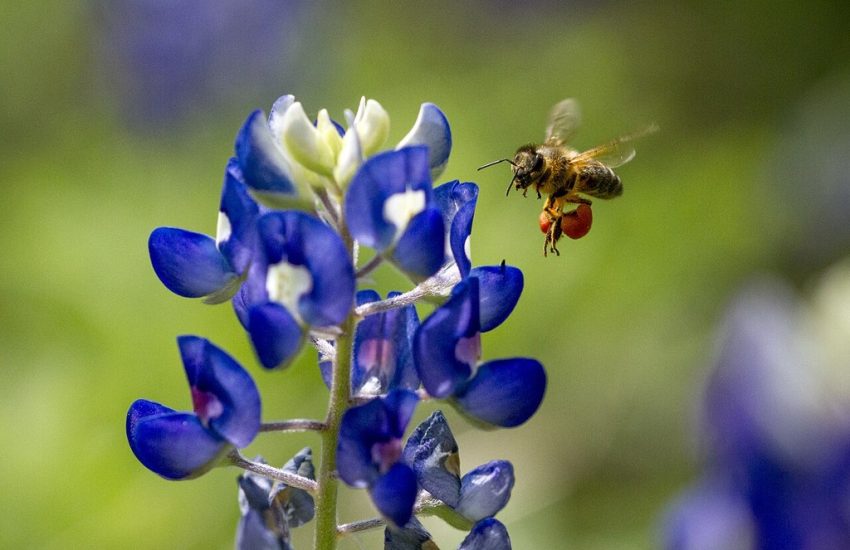
The open, funnel-shaped flowers are visited by a variety of native bees, which are the primary pollinators, along with smaller flies, beetles, and occasionally ants drawn to the nectar. The wide, accessible throat (unlike the narrow tube of its red-flowered relative firecracker flower) makes the nectar available to a broader range of visitors.
Birds
Seed-eating birds take some of the ripened seed from dried capsules in early summer, though the plant is not a major bird food source compared with its ecological role for insects.
Mammals
Ground squirrels and other small rodents occasionally dig and eat the corms, and historically the corms were an important food source for people, as described below; deer generally leave the grass-like foliage alone.
Ecosystem Role
As a geophyte, Ithuriel’s spear uses the brief window of winter-spring moisture in California’s grasslands before retreating underground, helping fill out the diversity and the extended bloom sequence of native wildflower meadows alongside annuals and other bulbs.
Cultural & Historical Uses
Like several of its brodiaea relatives, the corms of Ithuriel’s spear were gathered and eaten by California Indigenous peoples, including groups in the Sierra foothills and Coast Ranges, who dug, roasted or steamed the starchy corms as a seasonal food, often harvesting them alongside other native bulbs such as blue dicks and mariposa lilies.
The common name “Ithuriel’s spear” was coined in the 19th century, drawing on the angel Ithuriel from John Milton’s Paradise Lost, whose spear reveals hidden deception at a touch — an allusion to the plant’s tall, otherwise bare flowering stalk suddenly “revealing” its crown of flowers. The species was formally described as Brodiaea laxa before later botanical revision placed it in the genus Triteleia.
Today the plant is grown almost entirely as an ornamental bulb and a staple of California native plant gardening, valued for its low water needs and reliable spring color in dry meadow plantings.
Frequently Asked Questions
Is Ithuriel’s spear the same as Brodiaea laxa?
Yes. Triteleia laxa was formerly classified as Brodiaea laxa; older books and nursery catalogs may still use that name.
Why do my Ithuriel’s spear corms rot instead of blooming?
The most common cause is summer irrigation. These corms need a genuinely dry summer dormancy; if they’re planted in a bed that’s watered through summer for other plants, they are prone to rot.
Can Ithuriel’s spear tolerate clay soil?
Yes — it’s notably more tolerant of heavy clay than many other California native bulbs, as long as the soil dries out in summer.
How long does it take a corm to flower?
A purchased, mature corm typically flowers its first spring. Plants grown from seed usually take two to three years to reach flowering size.
Is Ithuriel’s spear deer resistant?
Yes, it is generally considered deer resistant, in part because its narrow grass-like leaves wither before the main browsing season and the flowering stalk offers little forage value.

Looking for a nursery that carries Ithuriel’s Spear?
Browse our native plant nursery directory: California · Oregon