Bitterroot (Lewisia rediviva)
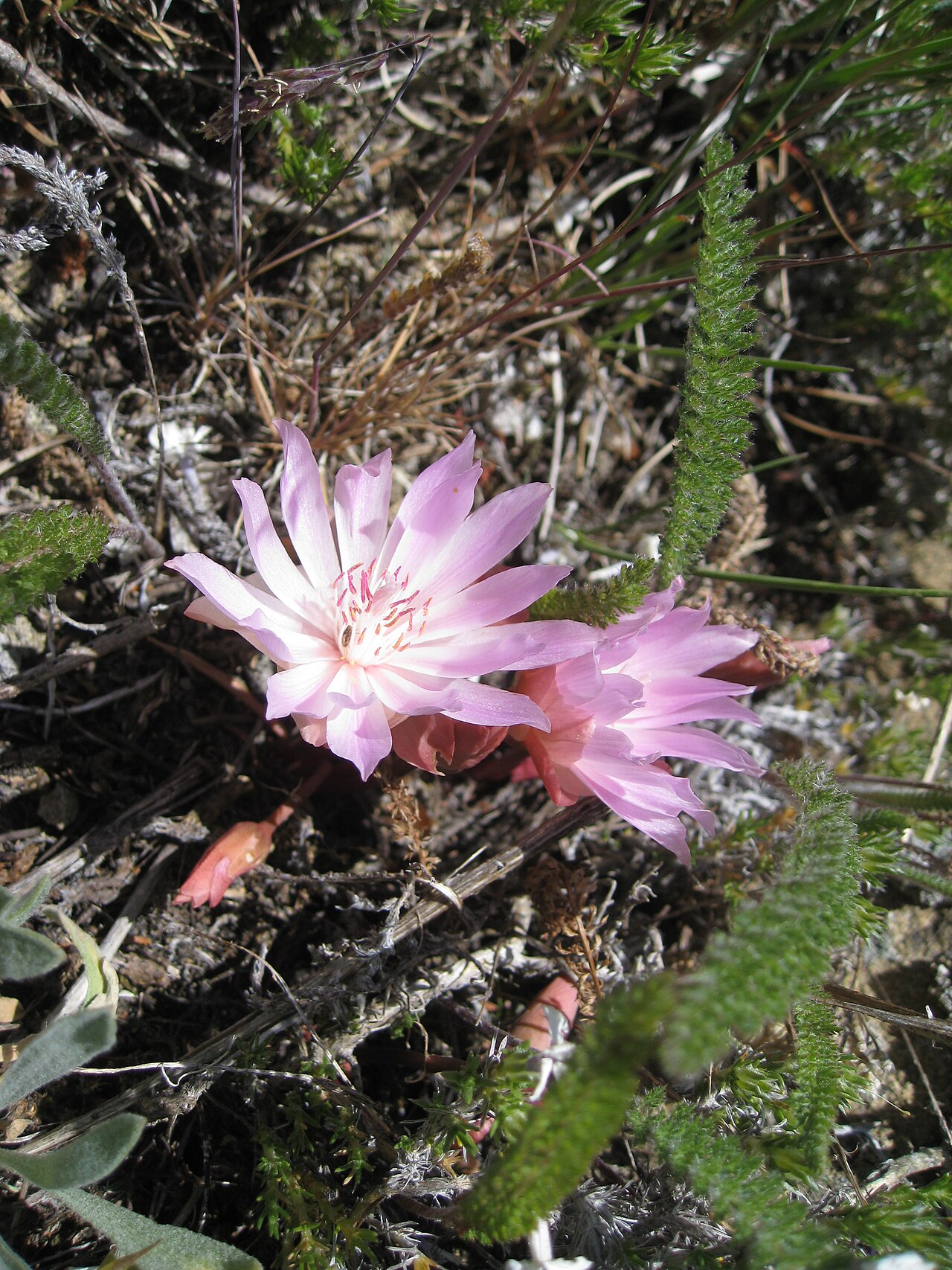
Lewisia rediviva, commonly called Bitterroot, is a remarkable low-growing succulent perennial of dry, rocky ground across the interior western United States. It is the state flower of Montana, the namesake of the Bitterroot Mountains and Bitterroot River, and one of the most storied native plants of the Columbia Plateau and northern Rockies — a long-lived taproot survivor that spends most of the year invisible underground, then produces a burst of large, many-petaled pink to white flowers that seem to rise directly out of bare gravel and rock.
Bitterroot’s life cycle is unusual among western wildflowers: fleshy, cylindrical leaves emerge in fall and winter, through the cooler, wetter months, then wither and disappear by the time the flowers open in late spring — so the plant typically blooms with no leaves visible at all, just a rosette of large, satiny petals sitting on bare, stony soil. The thick taproot, which can be a foot or more long, allows bitterroot to survive baking summer heat and drought that would kill most other perennials outright.
For gardeners in the interior West with hot, dry summers, bitterroot is a striking choice for a rock garden, gravel bed, or trough planting. It demands exceptional drainage and almost no summer water, making it a poor fit for a conventional garden bed but an outstanding specialty plant for anyone building a true xeric or alpine-style planting.
Identification
Bitterroot is a low, stemless, taprooted perennial succulent, with foliage and flowers arising directly from a basal rosette at or near ground level, generally reaching only 1 to 2 inches in height when not in bloom and 2 to 4 inches including the flower.
Roots & Leaves
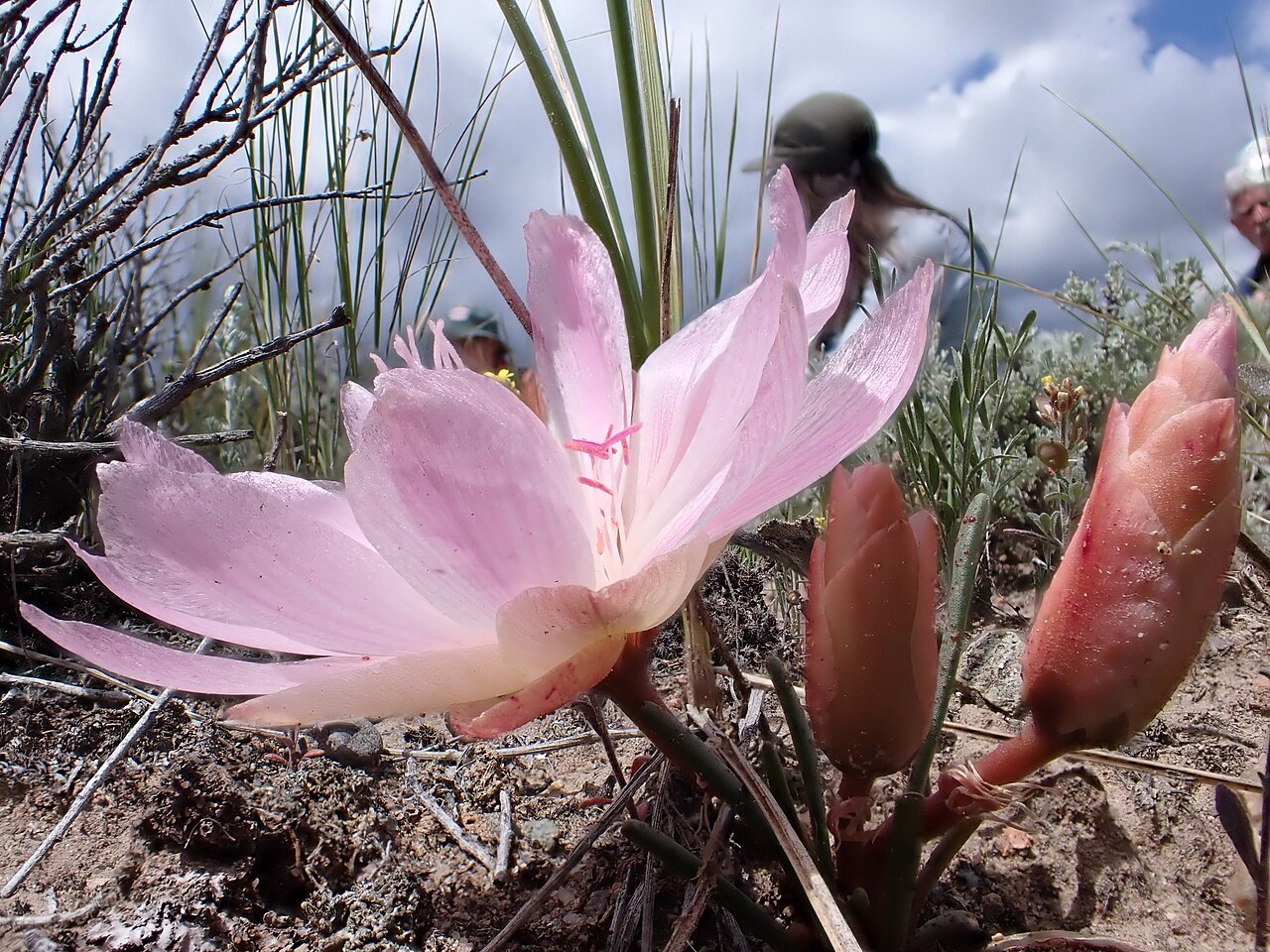
The taproot is thick, fleshy, and can extend a foot or more into rocky soil, storing the water and reserves that let the plant survive extreme drought and heat. Leaves are narrow, cylindrical, and succulent, 1 to 2 inches long, forming a tight rosette that appears in fall and through winter and spring, then withers and disappears entirely by bloom time — a highly unusual trait that often leaves the flowers appearing to emerge from completely bare ground.
Flowers
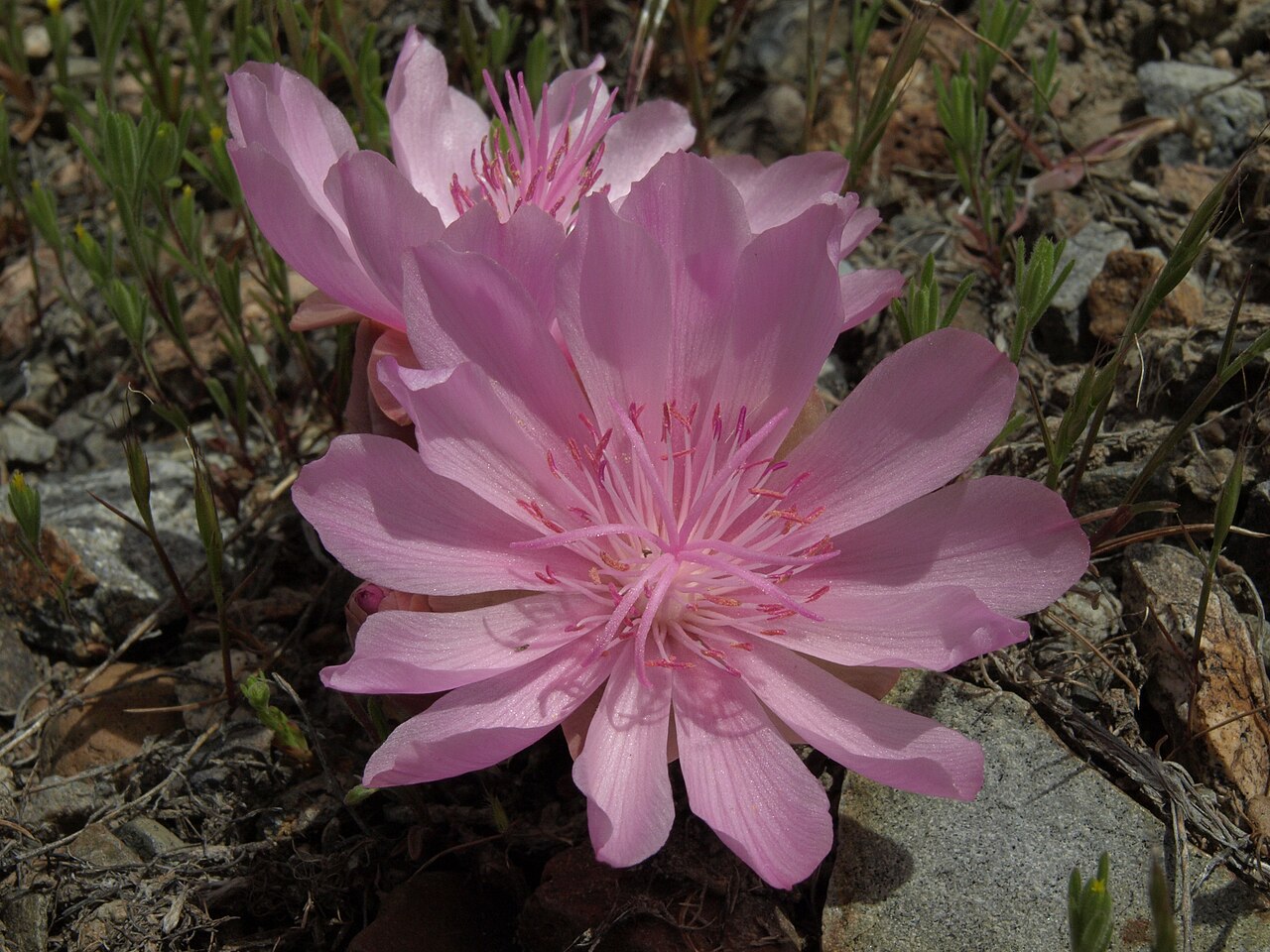
The flowers are the plant’s defining feature: large relative to the rest of the plant, 1½ to 2½ inches across, with 12 to 18 or more satiny, pointed petals in shades from pale pink to deep rose-magenta to, less commonly, white. Each flower sits on a very short stalk close to the ground and opens fully only in direct sun, closing on cloudy days and at night. Numerous thread-like pink to yellow stamens surround the center. Bloom is brief and timed to late spring, typically April through June depending on elevation, with each individual flower lasting only a few days.
Fruit & Seeds
After flowering, each bloom develops into a small capsule that splits open to release tiny, shiny black seeds. By the time seed matures in early summer, the leaves are long gone and the plant may be entirely dormant and invisible above ground until the following fall’s leaf flush.
Quick Facts
| Scientific Name | Lewisia rediviva |
| Family | Montiaceae (Miner’s Lettuce) |
| Plant Type | Succulent taprooted perennial |
| Mature Height | 1–4 in (in bloom) |
| Mature Spread | 3–6 in |
| Growth Rate | Slow |
| Sun Exposure | Full Sun |
| Water Needs | Very low; dry summer dormancy required |
| Soil Type | Rocky, gravelly; sharply drained, low fertility |
| Soil pH | 6.5–8.0 (neutral to alkaline) |
| Bloom Time | April – June |
| Flower Color | Pale pink to rose-magenta, occasionally white |
| Fall Color | None; leaves emerge in fall, gone by bloom |
| Fruit | Small capsules with shiny black seeds |
| Deer Resistant | Yes, generally avoided |
| USDA Hardiness Zones | 4–9 |
Native Range
Bitterroot ranges widely across the interior West, from the Cascade Range of Washington and Oregon east through the Columbia Plateau and Rocky Mountains of Idaho, Montana, and Wyoming, and south through the Great Basin and intermountain West into California, Nevada, Utah, and western Colorado. BONAP county-level data confirm native populations concentrated through this entire interior region, with especially dense records through the Columbia Plateau, the northern Rockies, and the Great Basin.
Throughout this range it grows on dry, exposed, often rocky or gravelly ground: sagebrush steppe, open pine and juniper woodland, rocky ridges, and thin, stony soils where competing vegetation is sparse. It is particularly characteristic of the sagebrush-steppe and bunchgrass prairie of eastern Washington, Oregon, Idaho, and Montana, where it is one of the earliest and most eye-catching spring wildflowers on otherwise bare-looking ground.
Bitterroot is not documented as native to Arizona or New Mexico by county-level records, though it does reach western Colorado; gardeners in the desert Southwest should confirm a more locally appropriate Lewisia species before planting this one outside its confirmed range.
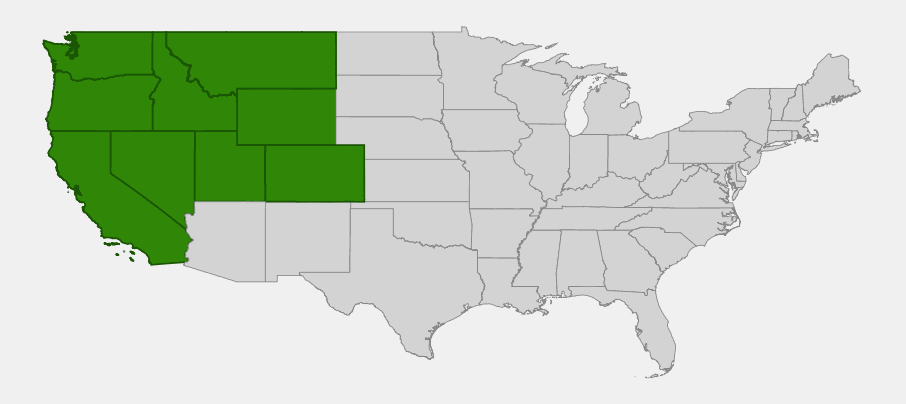
📋 Regional plant lists featuring Bitterroot: California & Nevada, Western Oregon & Western Washington, Idaho, Eastern Oregon & Eastern Washington, Utah & Western Colorado, Montana & Wyoming
Growing & Care Guide
Bitterroot is a rewarding but highly specialized garden plant: it needs the sharp drainage and bone-dry summer dormancy of its native rocky steppe, and it will quickly rot in ordinary garden soil or with regular summer watering.
Light
Full sun is essential; bitterroot’s flowers only open fully in direct sunlight and close on overcast days, and the plant needs maximum sun exposure to thrive in its typically exposed, open native habitat.
Soil & Water
Plant in extremely sharp-draining, mineral soil — a rock garden scree mix, crushed gravel, or decomposed granite blend is ideal. Water lightly through fall, winter, and spring while leaves are present, then withhold water almost entirely through summer dormancy; this dry summer rest is essential to the plant’s survival and is the single most common point of failure in cultivation. A raised bed, trough, or crevice garden with excellent drainage is strongly preferred over a flat garden bed.
Planting Tips
Plant container-grown stock in fall, when the plant’s natural growth cycle is beginning. Avoid any site where water collects or soil stays damp in summer. Bitterroot is slow to establish and resents transplanting once its taproot is set, so choose the permanent site carefully from the start.
Pruning & Maintenance
No pruning is needed. Simply allow the plant to follow its natural cycle: leaf growth in fall and winter, bloom in spring, and complete dormancy through summer, when the plant may appear entirely absent from the garden.
Landscape Uses
Bitterroot’s small size and exacting needs suit a narrow but rewarding set of garden situations:
- Rock gardens and scree beds with maximum drainage
- Troughs and raised alpine-style containers
- Crevice gardens among stones and gravel
- Dryland and xeriscape plantings in the interior West
- Native plant collector gardens focused on regional specialties
Wildlife & Ecological Value
Bitterroot contributes early-season nectar and a striking burst of color to sagebrush-steppe and dry-rangeland plant communities that otherwise bloom later in the season.
For Pollinators
The large, open flowers attract a range of native bees and other insects able to access the exposed pollen and nectar, particularly in the cooler, sunnier parts of the day when the flowers are fully open. Because bloom is brief and timed to a narrow spring window, bitterroot provides a concentrated, short-lived pulse of floral resources in habitats where little else is yet flowering.
Ecosystem Role
As a long-lived, drought-adapted perennial of thin, rocky soils, bitterroot helps anchor and diversify plant communities on sites too dry and exposed for most other perennials, contributing to the structure of sagebrush-steppe and intermountain grassland ecosystems across its wide range.
Cultural & Historical Uses
Bitterroot holds deep significance for many Indigenous peoples of the interior Northwest, including the Salish, Kutenai, Nez Perce, and other Plateau tribes, for whom the thick taproot was a staple food. Roots were traditionally dug in spring before or during flowering, when they are least bitter, then peeled and dried for storage or boiled fresh; the outer bark layer, which carries the bitter taste responsible for the plant’s common name, was typically removed before cooking.
The plant’s importance is reflected across the region’s place names — the Bitterroot Mountains, Bitterroot River, and Bitterroot Valley of Montana all take their name from the species, and it is the Montana state flower, adopted in 1895. Meriwether Lewis collected the plant during the Lewis and Clark Expedition, and botanist Frederick Pursh later honored him with the genus name Lewisia; the species name rediviva, meaning “revived” or “brought back to life,” refers to the plant’s extraordinary ability to resprout from a dried, apparently dead root years after collection.
Today bitterroot root-digging remains a living cultural practice for several tribes, marked by traditional root feasts and ceremonies that continue to honor the plant’s long history as a dependable spring food source in an otherwise harsh, arid landscape.
Frequently Asked Questions
Why do my bitterroot plants have no leaves when they bloom?
This is completely normal. Bitterroot’s succulent leaves emerge in fall and winter, then wither away before the flowers open in spring, so established plants commonly bloom with no visible foliage at all — just flowers rising from bare ground.
Why did my bitterroot die after I watered it in summer?
Bitterroot requires a dry summer dormancy and is highly prone to root rot if watered during that period. The plant’s thick taproot is adapted to survive on stored moisture through the dry season; regular summer irrigation is one of the most common ways gardeners lose this plant.
Is bitterroot edible?
The taproot has a long history as a traditional food among Indigenous peoples of the interior Northwest, prepared by peeling and cooking. As with any wild-harvested plant, foraging bitterroot from the wild should be avoided without proper identification, respect for tribal harvesting traditions, and local regulations in mind; home gardeners should not rely on cultivated ornamental plantings as a food source.
Why is it called bitterroot?
The outer bark layer of the root has a notably bitter taste, which is traditionally removed before the root is cooked and eaten. The common name, as well as the names of the Bitterroot Mountains, River, and Valley in Montana, all derive from this characteristic.
Can bitterroot grow in regular garden soil?
Not well. It needs exceptionally sharp drainage and a dry summer rest period that ordinary, moisture-retentive garden soil cannot provide. A dedicated rock garden, scree bed, or trough with gritty, mineral soil gives it the best chance of long-term success.

Looking for a nursery that carries Bitterroot?
Browse our native plant nursery directory: California · Oregon · Washington · Idaho · Montana · Wyoming · Utah · Nevada