Pale Yucca (Yucca pallida)
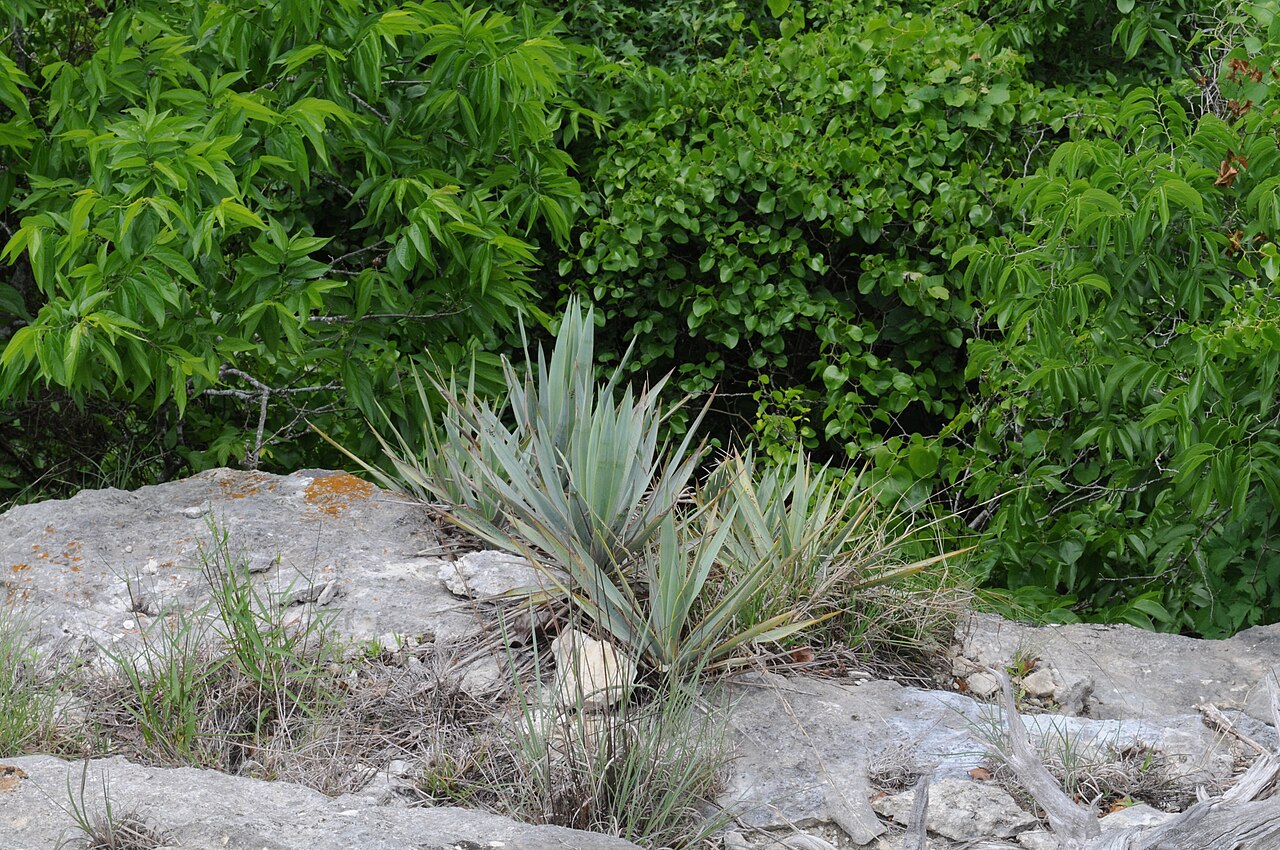
Yucca pallida, commonly called Pale Yucca or Twistleaf Yucca, is a small, stemless yucca found nowhere in the world except a narrow band of north-central Texas. It belongs to the Asparagaceae family (formerly classified in Agavaceae) and is instantly recognizable by its powdery, blue-gray to silvery-green leaves, which twist and curl as they age — a trait that gives the plant its “twistleaf” name. Unlike the much larger yuccas of the Trans-Pecos, Pale Yucca stays low and tidy, rarely reaching more than two feet tall in leaf height, making it one of the most garden-friendly native yuccas for Texas landscapes.
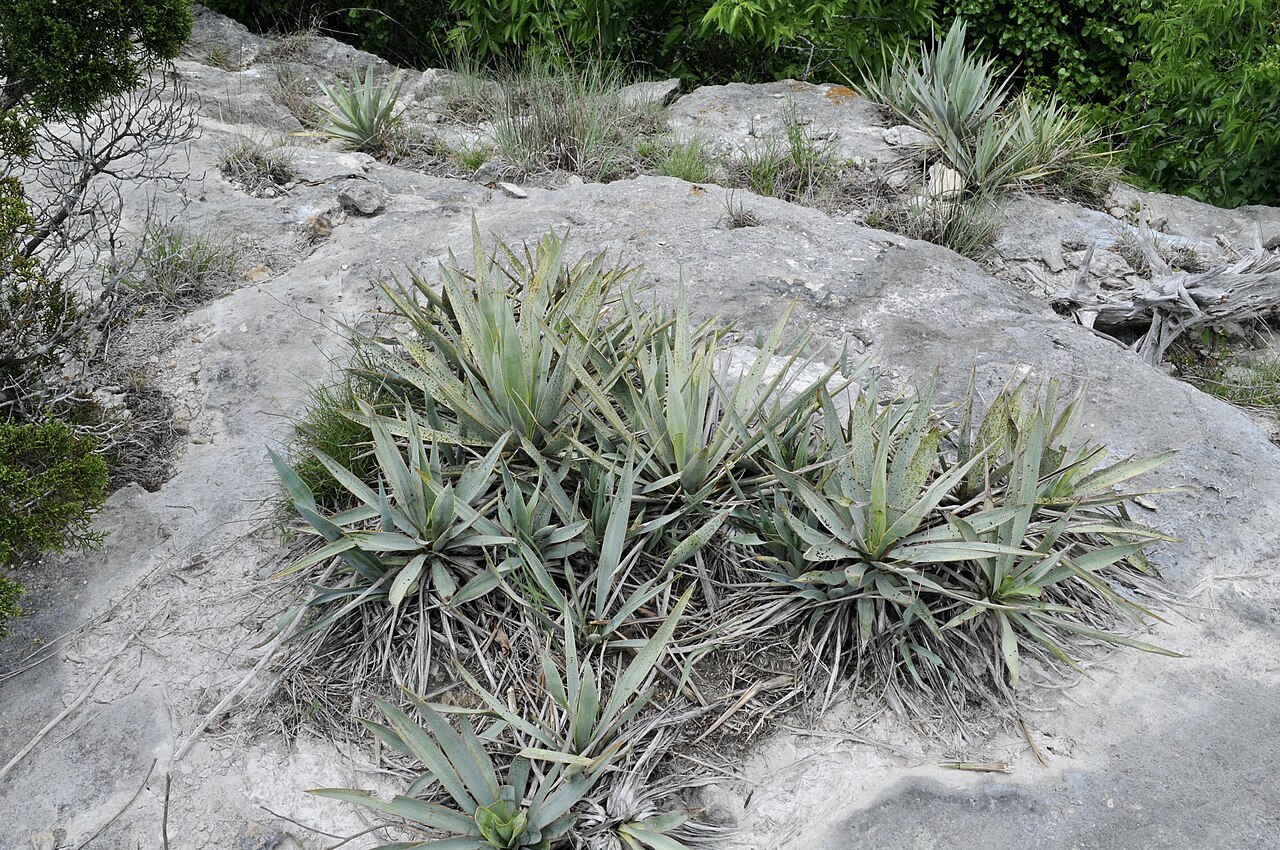
Pale Yucca is endemic to the Texas Blackland Prairie and the adjacent limestone outcrops of the Lampasas Cut Plain and Edwards Plateau fringe, where it roots directly into thin, rocky soil and exposed caliche. It typically grows as a solitary rosette or in small clustered colonies on south- and west-facing slopes, often alongside junipers, live oaks, and prairie grasses. The plant’s waxy, rigid leaves and deep taproot allow it to shrug off the region’s punishing summer heat and periodic drought without any irrigation once established.
Because its entire natural range sits within a handful of Texas counties around the Dallas–Fort Worth area and south toward the Hill Country, Pale Yucca is a genuine regional specialty — a plant that tells visitors exactly where they are. Gardeners restoring Blackland Prairie remnants, rock gardens, or xeric limestone plantings will find it both a conversation piece and a low-maintenance anchor plant that pairs beautifully with other calcareous-soil natives.
Identification
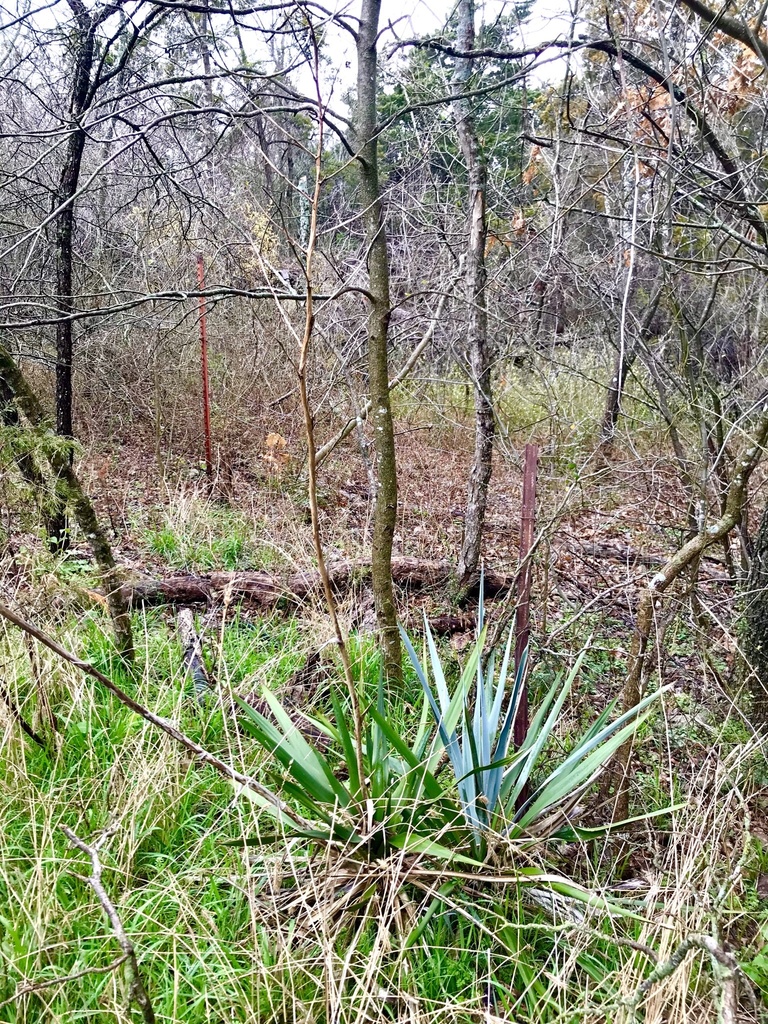
Pale Yucca is a low, stemless to very short-stemmed rosette plant, usually growing as a single clump 18 to 30 inches across and about as tall in leaf. Older plants may form small colonies of several rosettes as offsets develop from the base. Unlike tree-forming yuccas such as Yucca torreyi, Pale Yucca never develops a trunk — the rosette sits essentially at ground level, anchored by a thick, woody taproot that can reach several feet into cracked limestone.
Leaves
The leaves are the plant’s signature feature: stiff, flat to slightly concave, 12 to 24 inches long and about an inch wide, colored a pale, powdery blue-green to silvery gray — paler than almost any other Texas yucca. As leaves mature, they develop a characteristic twist along their length, and the margins are smooth or finely roughened rather than armed with the coarse curling fibers seen in many other yuccas. Leaf tips are sharply pointed and can puncture skin, so Pale Yucca is best sited away from paths and play areas.
Flowers
In late spring, typically April through June, Pale Yucca sends up a flowering stalk (panicle) that reaches 3 to 6 feet tall, rising well above the leaves — a dramatic sight on such a low-growing plant. The bell-shaped flowers are creamy white, often tinged with a faint purple or pink blush, and hang in nodding clusters along the upper stalk. Like other yuccas, Pale Yucca depends on yucca moths (Tegeticula species) for pollination in a tightly coevolved relationship: the moth lays her eggs in the flower ovary while simultaneously packing pollen onto the stigma, and her larvae later feed on some of the developing seeds.
Fruit & Seeds
Following successful pollination, Pale Yucca produces an upright, dry, three-chambered capsule 2 to 3 inches long that splits open at maturity to release flat, black seeds. The capsules persist on the dried flower stalk well into fall, and the dead stalk itself often remains standing through winter, making a useful marker for relocating the plant’s position in a naturalistic planting.
Quick Facts
| Scientific Name | Yucca pallida |
| Family | Asparagaceae (formerly Agavaceae) |
| Plant Type | Evergreen Succulent Shrub (stemless rosette) |
| Mature Height | 1.5–2.5 ft (leaves); flower stalk 3–6 ft |
| Mature Spread | 1.5–2.5 ft, slowly colonizing by offsets |
| Growth Rate | Slow |
| Sun Exposure | Full Sun to Part Sun |
| Water Needs | Low |
| Soil Type | Rocky, shallow, well-drained limestone or caliche |
| Soil pH | 7.0–8.5 (neutral to alkaline) |
| Bloom Time | April – June |
| Flower Color | Creamy white, sometimes blushed pink or purple |
| Fall Color | None (evergreen) |
| Fruit | Dry, upright three-chambered seed capsule |
| Deer Resistant | Yes (sharp, fibrous leaves deter browsing) |
| USDA Hardiness Zones | 7–9 |
Native Range
Pale Yucca is a true Texas endemic, found naturally nowhere else on Earth. Its range is concentrated in the Texas Blackland Prairie ecoregion and the adjoining limestone country of the Lampasas Cut Plain, running roughly from the Dallas–Fort Worth area southwest through Johnson, Hood, Somervell, and Bosque counties, with additional populations scattered farther south and west on exposed limestone in the eastern Edwards Plateau.
Within this range, Pale Yucca is a specialist of thin, rocky, calcareous soils — the kind of ground too shallow and dry for most prairie grasses to dominate. It is most often seen rooted directly in cracks and ledges of exposed limestone, on steep south- or west-facing slopes where competition from taller vegetation is limited and drainage is sharp. These are tough sites: full sun, reflected heat, and soil that may be only a few inches deep over solid rock.
Because Pale Yucca’s entire range lies within Texas and the species does not naturally occur in neighboring states, it is listed only on regional native-plant guidance for Texas. Gardeners outside its native limestone belt can still grow it successfully as a drought-tolerant accent, but should recognize that in deeper, richer, or consistently moist garden soil it loses the tight, compact form it shows in the wild.
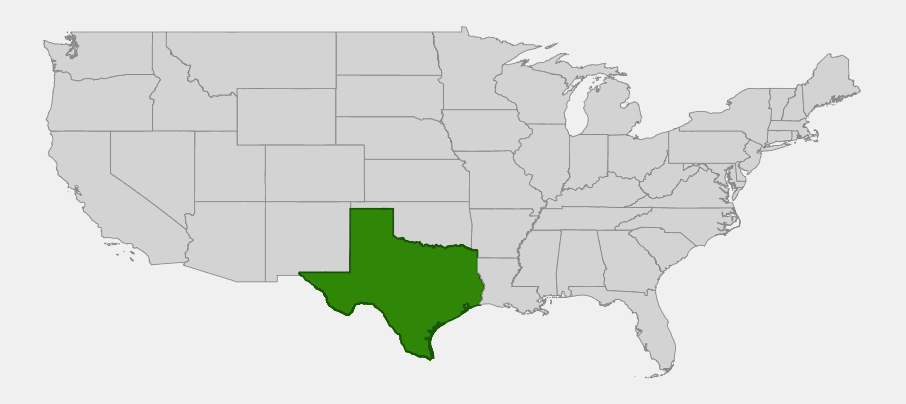
📋 Regional plant lists featuring Pale Yucca: South and West Texas
Growing & Care Guide
Pale Yucca rewards the gardener who gives it exactly what it has in the wild: sun, sharp drainage, and benign neglect. It is one of the easiest native succulents to keep alive in Texas gardens, provided it is not planted where water collects.
Light
Give Pale Yucca full sun for the tightest, most compact rosette and the best flowering. It tolerates light afternoon shade, especially in the hottest part of Texas, but will stretch and look less tidy with reduced light.
Soil & Water
Sharp drainage is non-negotiable. Pale Yucca is built for thin, rocky, alkaline soils and will rot in heavy clay or any spot where water stands after rain. Raised beds, rock gardens, or slopes amended with crushed limestone or decomposed granite mimic its native habitat well. Once established, it needs no supplemental irrigation in most of Texas and should be watered sparingly even during establishment — more plants are lost to overwatering than drought.
Planting Tips
Plant in spring or fall from containers, setting the crown slightly above grade so water sheds away from the base. Space plants 2 to 3 feet apart if planting in groups, since Pale Yucca slowly spreads by basal offsets over the years. Avoid mulching directly against the crown, which encourages rot; gravel mulch is a better choice than bark or wood chips.
Pruning & Maintenance
Maintenance is minimal. Remove the spent flower stalk after seed capsules have dried and dropped, or leave it standing through winter as a textural accent and seed source for wildlife. Trim only damaged or browned leaf tips; the plant does not need shaping. Wear thick gloves — the leaf tips are genuinely sharp.
Landscape Uses
Pale Yucca’s small scale and striking blue-gray color make it useful in many settings:
- Rock gardens and xeriscape beds where its color contrasts with green foliage
- Blackland Prairie or limestone habitat restoration plantings
- Foundation plantings in hot, reflective sites near pavement or stone
- Container specimens on patios or in raised planters with excellent drainage
- Erosion control on dry limestone slopes where little else will root
- Accent plant among native grasses in a naturalistic prairie garden
Wildlife & Ecological Value
Despite its small size, Pale Yucca plays an outsized ecological role within its narrow native range, supporting a specialized set of pollinators and providing shelter for ground-dwelling wildlife.
For Pollinators
Pale Yucca’s flowers are almost entirely dependent on yucca moths for pollination, a textbook example of obligate mutualism. The female moth collects pollen from one flower, then deliberately packs it onto the stigma of another while laying her eggs inside the ovary — without this behavior, the plant sets little to no seed, and without the plant’s developing seeds, the moth’s larvae have nothing to eat. Other native bees occasionally visit the flowers for nectar but are not effective pollinators.
For Birds
The dense, spiny rosette provides secure nesting and refuge cover for ground-foraging birds such as towhees and sparrows, which use the leaf base as protection from predators. Seed-eating birds will take fallen seeds from open capsules in fall.
For Mammals
Small mammals, including woodrats and ground squirrels, sometimes shelter beneath and among the spiny leaf bases, which deter larger predators. The tough, fibrous leaves are rarely browsed by deer or livestock, making Pale Yucca one of the more reliably deer-resistant plants for Texas gardens.
Ecosystem Role
As a specialist of thin, rocky Blackland Prairie and limestone-edge soils, Pale Yucca occupies a niche that few other plants can use, helping stabilize exposed caliche and limestone slopes against erosion. Its presence is also a useful indicator of relatively undisturbed native limestone habitat, since it does not compete well where soils have been deepened or disturbed by cultivation.
Cultural & Historical Uses
Like many yuccas, Pale Yucca has a history of use by Indigenous peoples of the southern Plains and Texas, who used the tough, fibrous leaves of related yucca species for cordage, basketry, and sandals. Because Pale Yucca’s range is so narrow and the plant itself relatively small, it was likely a minor resource compared to larger Trans-Pecos yuccas such as Yucca torreyi, but the leaf fibers would have been usable in the same ways where the plant was locally available.
The plant was first formally described by botanist Susan Delano McKelvey in the early twentieth century during her extensive taxonomic work on the genus Yucca, and it remains one of several yucca species recognized as true Texas endemics — plants that evolved in isolation on the state’s limestone geology and occur nowhere else in the world.
Today, Pale Yucca’s primary significance is horticultural and ecological rather than historical: it is valued by native-plant gardeners and prairie restorationists as a low-maintenance, climate-adapted accent that represents the unique flora of the Texas Blackland Prairie and adjacent limestone country.
Frequently Asked Questions
Is Pale Yucca the same as other Texas yuccas?
No. Pale Yucca is a distinct, smaller species endemic to north-central Texas, easily told apart from larger trunk-forming species like Yucca torreyi or Yucca treculeana by its stemless habit and powdery blue-gray leaf color.
Will Pale Yucca grow outside Texas?
It can be grown in similar hot, dry, alkaline-soil climates outside its native range, but it is not native anywhere else. Gardeners in cooler or consistently wet climates will likely struggle with rot.
How fast does Pale Yucca grow?
Slowly. A young plant may take several years to reach flowering size, and established clumps spread gradually by basal offsets rather than rapid growth.
Does Pale Yucca need a yucca moth to set seed?
Essentially yes. While a few other insects may incidentally move pollen, reliable seed production depends on the specialized yucca moth relationship, so isolated garden plants far from wild moth populations may flower without setting much seed.
Is Pale Yucca dangerous to pets or people?
The leaf tips are sharp enough to puncture skin and warrant caution around children and pets, but the plant is not considered toxic in the way some other landscape plants are. Site it away from walkways and play areas.

Looking for a nursery that carries Pale Yucca?
Browse our native plant nursery directory: Texas