Texas Beargrass (Nolina texana)
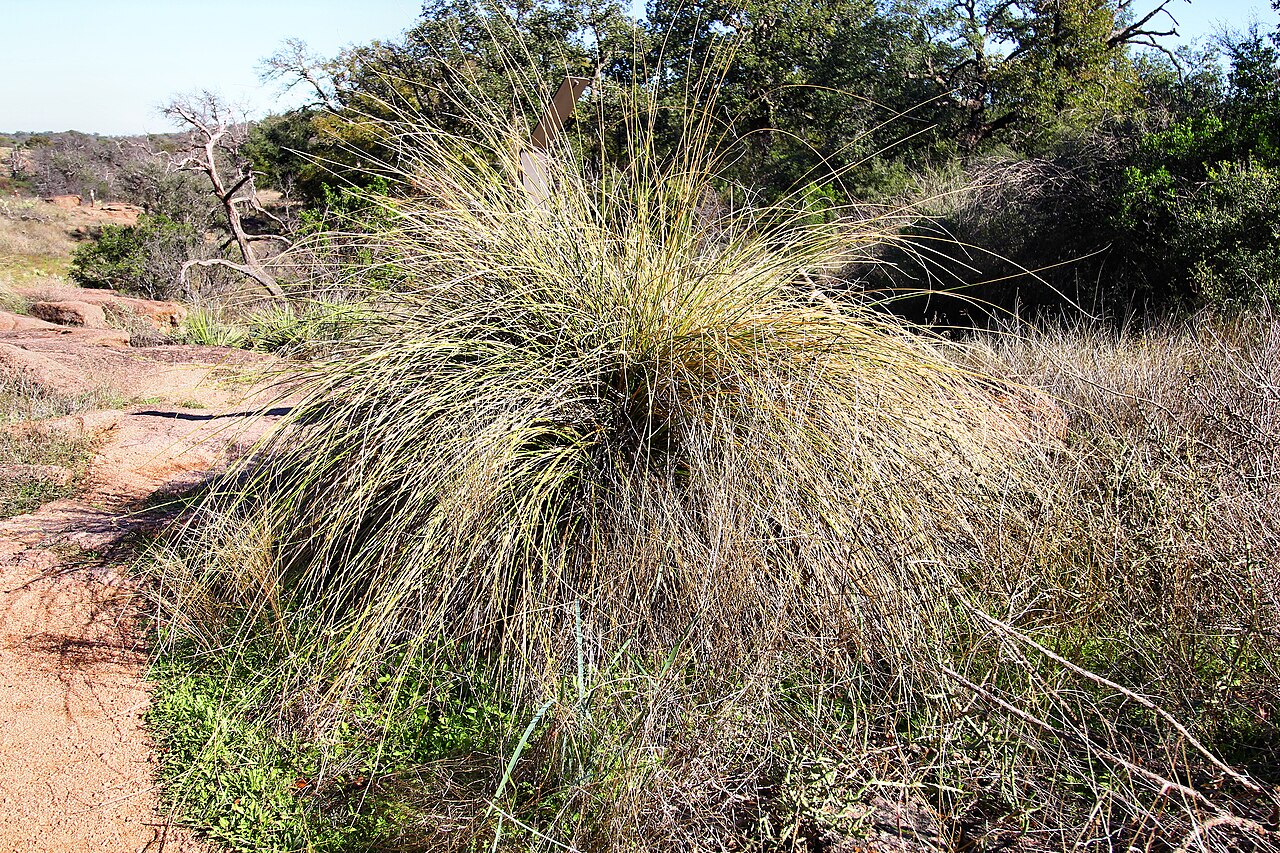
Nolina texana, known as Texas Beargrass or Texas Sacahuista, is a tough, evergreen, grass-like perennial that forms dense, fountain-like clumps of narrow leaves across the rocky hills and grasslands of Texas and southern New Mexico. Despite its grassy appearance, it is not a true grass at all but a member of the Asparagaceae family, more closely related to yuccas and agaves than to any turfgrass — a relationship made obvious once the tiny white flower clusters appear on tall stalks each spring.
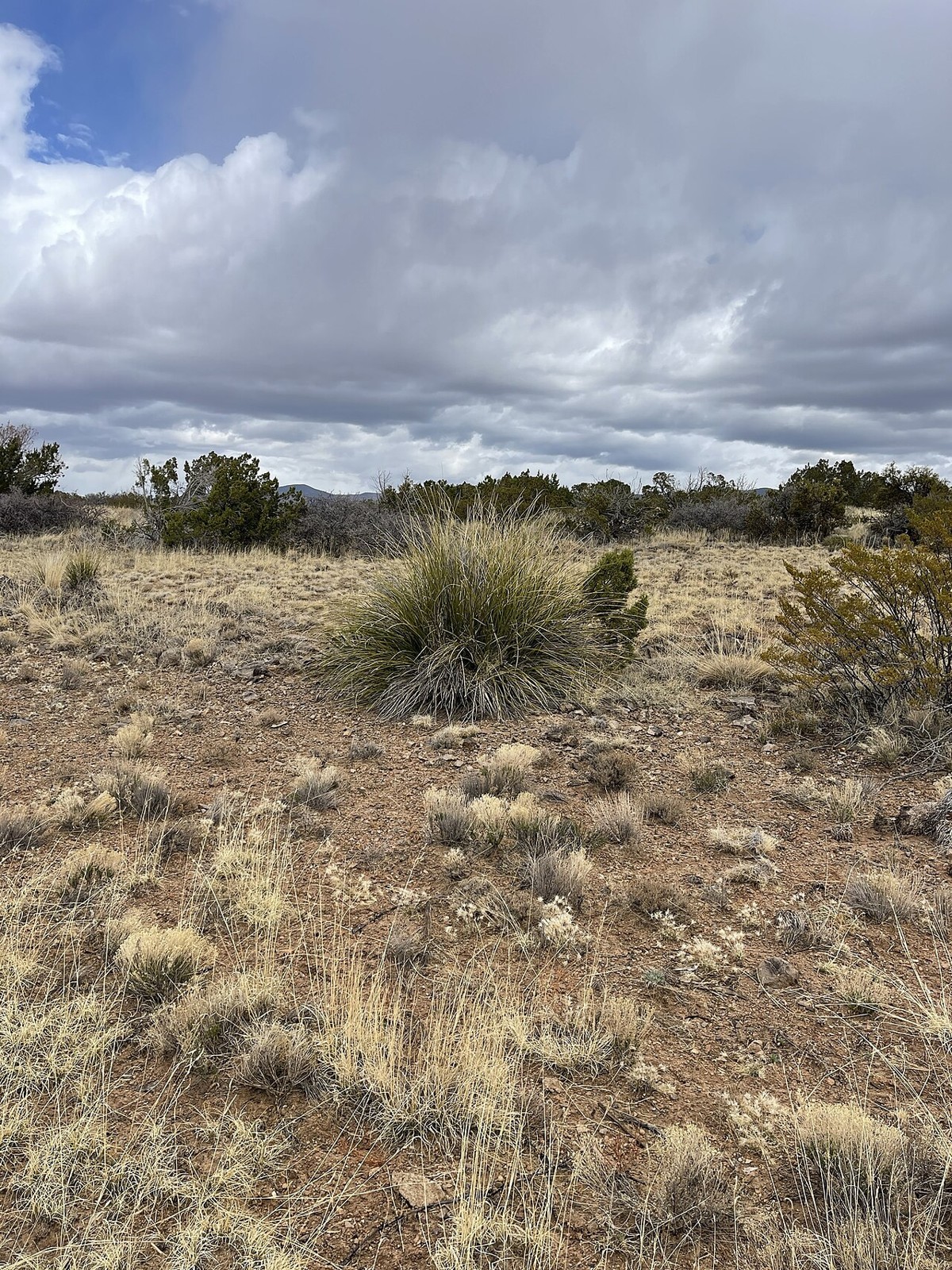
Texas Beargrass grows as a stemless to very short-stemmed rosette, with hundreds of thin, tough leaves radiating outward and arching gracefully toward the ground, giving mature plants a shaggy, rounded, almost sculptural silhouette on open rocky ground. It thrives in the thin, well-drained soils of limestone hills, granite outcrops, and desert grasslands, where its deep roots and leathery leaves allow it to shrug off extreme heat, drought, and poor soil that would stress most other plants.
For Texas and New Mexico gardeners seeking a durable, low-maintenance accent with year-round structure, Texas Beargrass offers an unusual, texturally rich alternative to ornamental grasses — one that is genuinely native, needs essentially no care once established, and provides valuable habitat for ground-dwelling wildlife.
Identification
Texas Beargrass forms a dense, rounded clump 2 to 4 feet tall and 3 to 5 feet across, composed of a short, often underground stem (caudex) from which hundreds of narrow leaves emerge in a radiating, fountain-like pattern. Unlike true grasses, it does not spread by rhizomes or stolons, remaining a single, slowly enlarging clump for decades.
Leaves
The leaves are thin, tough, and grass-like, typically 2 to 4 feet long and only about a quarter-inch wide, colored dull green to yellow-green. Leaf margins are finely roughened or minutely toothed — enough to be felt but not sharp enough to cut skin the way yucca leaves can. The long leaves arch outward and downward under their own weight, creating the clump’s characteristic cascading, mounded form.
Flowers
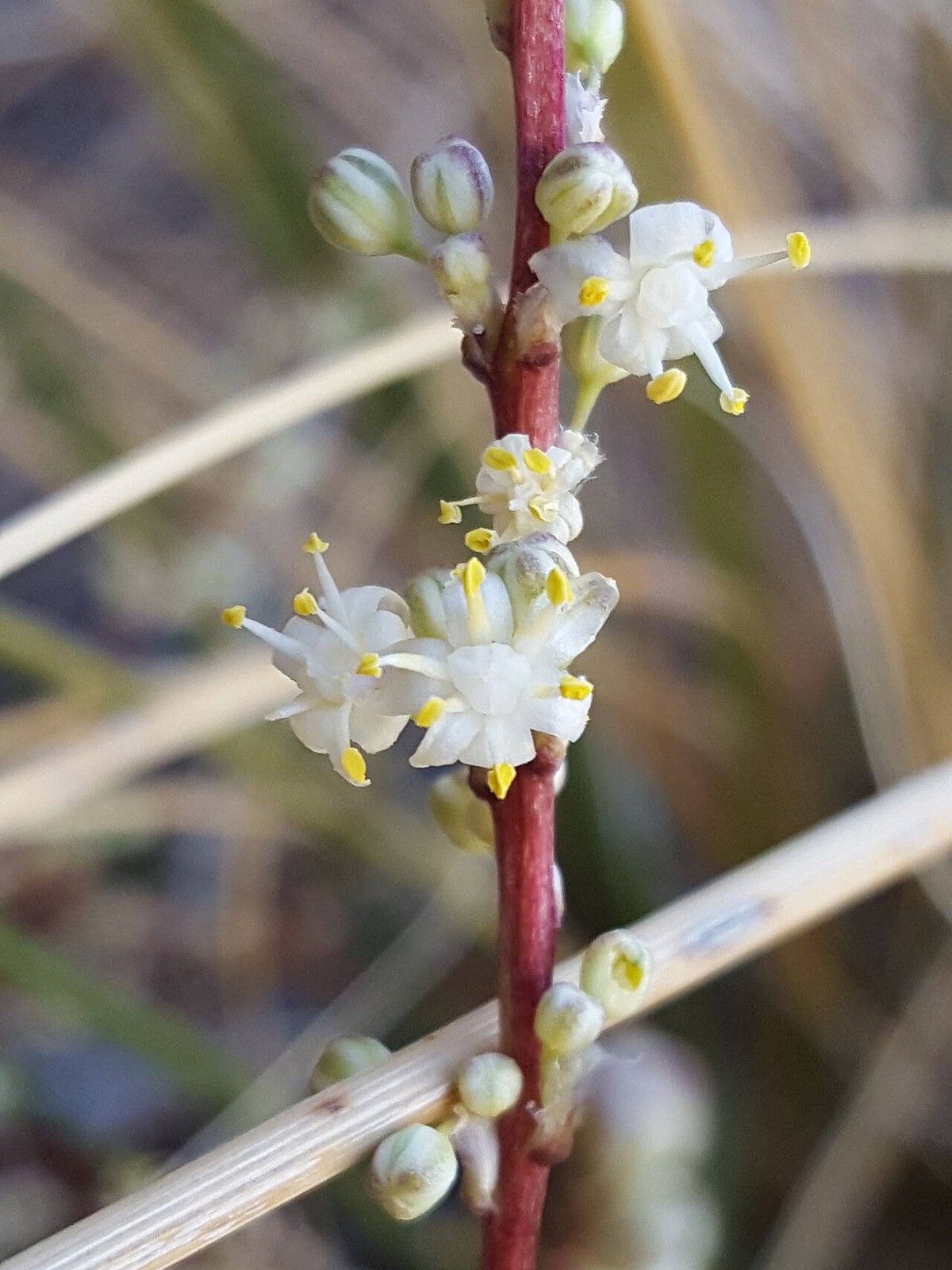
In spring, usually February through May, mature plants send up a flowering stalk 2 to 5 feet tall from the center of the clump, often rising above the surrounding leaves. The stalk bears a long, narrow panicle crowded with hundreds of tiny, creamy white, star-shaped flowers only about an eighth of an inch across. Texas Beargrass is dioecious or functionally so in many populations, meaning individual plants tend to produce either male or female flowers, though some populations show flowers with both functional parts.
Fruit & Seeds
Female plants produce small, dry, three-lobed capsules that turn papery tan at maturity, each containing a few small seeds. The dried flower stalks and capsules often persist into summer, adding further textural interest after the main bloom has finished.
Quick Facts
| Scientific Name | Nolina texana |
| Family | Asparagaceae |
| Plant Type | Evergreen Succulent / Grass-like Perennial |
| Mature Height | 2–4 ft (leaves); flower stalk to 5 ft |
| Mature Spread | 3–5 ft |
| Growth Rate | Slow |
| Sun Exposure | Full Sun to Part Sun |
| Water Needs | Low |
| Soil Type | Rocky, caliche, limestone or granite-derived, well-drained |
| Soil pH | 6.5–8.5 |
| Bloom Time | February – May |
| Flower Color | Creamy white |
| Fall Color | None (evergreen) |
| Fruit | Small, dry, three-lobed capsule |
| Deer Resistant | Yes (tough, fibrous leaves) |
| USDA Hardiness Zones | 7–10 |
Native Range
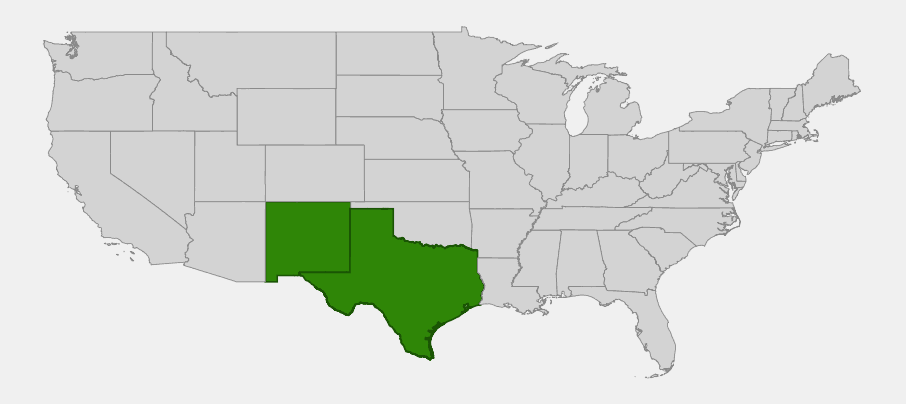
Texas Beargrass is native primarily to Texas, where it occurs widely from the Hill Country and Edwards Plateau west through the Trans-Pecos desert country, with its range extending into southern and central New Mexico. It is most abundant across the limestone hills, granite outcrops, and desert grasslands of central and western Texas.
Within this range, Texas Beargrass favors thin, rocky, well-drained soils on open slopes, rocky flats, and grassland margins, often growing alongside junipers, oaks, agaves, and bunchgrasses from roughly 500 to 6,500 feet elevation. It is notably tolerant of both limestone and granite-derived soils, which accounts for its presence on such geologically different sites as the granite domes of Enchanted Rock and the limestone hills of the Hill Country.
Although some older sources list Texas Beargrass more broadly across Oklahoma, Arizona, and Colorado, confirmed county-level native records concentrate in Texas and New Mexico; populations attributed to other states are frequently confused with the closely related species Nolina microcarpa. Gardeners should rely on Texas and New Mexico regional guidance when selecting this species.
📋 Regional plant lists featuring Texas Beargrass: South and West Texas · Arizona & New Mexico
Growing & Care Guide
Texas Beargrass is remarkably easy to grow in the right conditions, asking only for sun and sharp drainage in return for decades of low-maintenance structure.
Light
Full sun produces the fullest, most compact clump and the most reliable flowering, though plants tolerate light afternoon shade, particularly in the hottest parts of its range.
Soil & Water
Sharp drainage is essential. Texas Beargrass thrives in rocky, thin soils over limestone or granite and will rot in heavy clay or any spot where water stands. Once established — typically after the first one to two growing seasons — it needs no supplemental irrigation across most of its native range and should be watered only sparingly even during establishment.
Planting Tips
Plant from containers in fall or spring, choosing a site with excellent drainage such as a slope, rock garden, or raised bed. Space plants 3 to 5 feet apart to allow for the clump’s eventual mature spread. Avoid heavy mulching against the crown, which can encourage rot; gravel mulch suits this species better than bark or wood chips.
Pruning & Maintenance
Maintenance needs are minimal. Trim only dead or damaged leaves at the base, and remove spent flower stalks after seed drop if a tidier appearance is desired — though leaving them standing provides winter texture and seed for wildlife. The plant does not require division or renovation and can be left undisturbed indefinitely.
Landscape Uses
Texas Beargrass’s bold, grass-like texture suits many dry-garden roles:
- Xeriscape accent providing year-round structure and movement
- Rock gardens paired with agave, sotol, and native wildflowers
- Erosion control on dry limestone or granite slopes
- Habitat restoration in Hill Country or Trans-Pecos native plantings
- Foundation plantings in hot, reflective sites near stone or pavement
- Wildlife gardens supporting ground-nesting birds and small mammals
Wildlife & Ecological Value
Texas Beargrass provides important structural habitat and seasonal forage across its native rangeland, supporting a range of pollinators and ground-dwelling wildlife.
For Pollinators
The abundant, tiny spring flowers attract a variety of small native bees, flies, and beetles, which visit the dense panicles for nectar and pollen during a season when few other rocky-ground plants are in bloom.
For Birds
The dense base of radiating leaves offers secure ground-level nesting and refuge cover for quail and sparrows, which use the tough leaf mass as protection from predators and weather.
For Mammals
Javelina and other wildlife will feed on the base and flower stalks in some areas, and small mammals such as woodrats often shelter within the dense leaf clump. Because the tough leaves are not highly palatable, deer tend to leave established plants largely alone.
Ecosystem Role
As a long-lived, slow-growing clump plant, Texas Beargrass helps stabilize thin rocky soils on slopes and outcrops, and its persistent structure provides cover through fire and drought cycles that clear more ephemeral vegetation. Many populations survive and resprout after low-intensity grassland fires, helping maintain its presence across fire-adapted rangeland.
Cultural & Historical Uses
Texas Beargrass takes its common name “sacahuista” from a Spanish adaptation of a Nahuatl-derived word used broadly across the Southwest and Mexico for tough, fibrous grass-like plants used in weaving and cordage. Indigenous peoples and early settlers in Texas and the Southwest used the long, tough leaves of Nolina species for basketry, matting, and rough cordage, exploiting the same fiber strength that lets the plant withstand grazing and drought.
The species was first described botanically by Sereno Watson in the nineteenth century as part of broader surveys of Texas and southwestern flora. Unlike some of its showier yucca and agave relatives, Texas Beargrass has never been a major commercial crop, but it remains ecologically and botanically significant as a defining component of Edwards Plateau and Chihuahuan Desert grassland plant communities.
Today, the species is primarily valued by native-plant gardeners and restoration ecologists for its toughness, habitat value, and distinctive sculptural form — a quietly important plant across the limestone and granite country of Texas and New Mexico.
Frequently Asked Questions
Is Texas Beargrass actually a grass?
No. Despite its grass-like leaves, Texas Beargrass belongs to the Asparagaceae family and is more closely related to yuccas and agaves than to any true grass.
How is Texas Beargrass different from Nolina microcarpa?
The two species are similar and historically confused, particularly outside Texas and New Mexico. Nolina microcarpa (sacahuista or bear grass) tends to occur farther west in Arizona, while confirmed Nolina texana records concentrate in Texas and New Mexico; careful identification matters when selecting plants for a specific region.
How long before Texas Beargrass blooms?
It can take several years for a young plant to reach flowering size, since growth is slow throughout its life. Established clumps generally bloom reliably each spring.
Can Texas Beargrass be mowed or cut back like ornamental grass?
No — unlike many ornamental grasses, Texas Beargrass does not resprout vigorously from hard cutback and should not be mowed. Remove only dead individual leaves rather than shearing the whole clump.
Is Texas Beargrass safe around pets and livestock?
The leaves are tough and minimally palatable but are not reported as toxic. Leaf margins can be mildly abrasive, so it is not a preferred forage, but accidental contact is not a significant hazard.

Looking for a nursery that carries Texas Beargrass?
Browse our native plant nursery directory: Texas · New Mexico