Lindheimer’s Beeblossom (Oenothera lindheimeri)
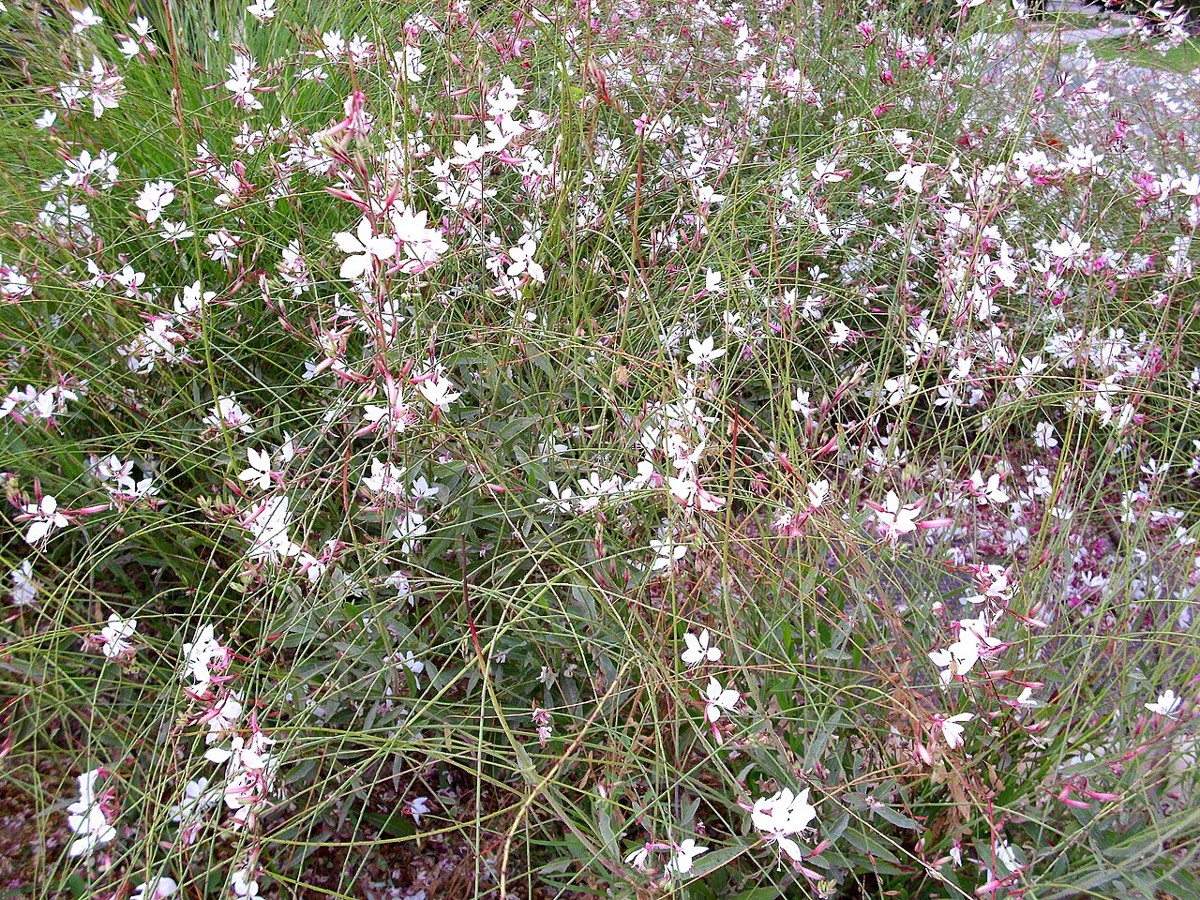
Oenothera lindheimeri (long sold under its older name, Gaura lindheimeri), commonly called Lindheimer’s Beeblossom or simply Gaura, is a graceful, long-blooming perennial wildflower native to the prairies and coastal plains of Texas and Louisiana. Its wiry, arching flower stems carry a constant flutter of small white-to-pink, four-petaled flowers from late spring deep into fall, moving in the slightest breeze — a habit that has earned it the nickname “whirling butterflies” in the nursery trade.
The plant honors Ferdinand Lindheimer (1801–1879), the German-born botanist and early Texas settler often called the “Father of Texas Botany,” who collected extensively around New Braunfels and sent specimens to botanists in the eastern United States and Europe, where many Texas plants — including this one — were first formally described. Lindheimer’s name is attached to dozens of Texas plants, and this beeblossom remains one of the most garden-friendly of them all.
In the wild, Lindheimer’s Beeblossom grows on prairies, roadsides, open woodlands and sandy or clay soils across much of Texas and into southern Louisiana. It has also become one of the most widely planted Texas natives nationally, prized far outside its native range for its months-long bloom, airy texture, heat tolerance and ease of care — though gardeners in other regions should recognize it as a Texas and Louisiana native being grown outside its home range, not as a local wildflower.
Identification
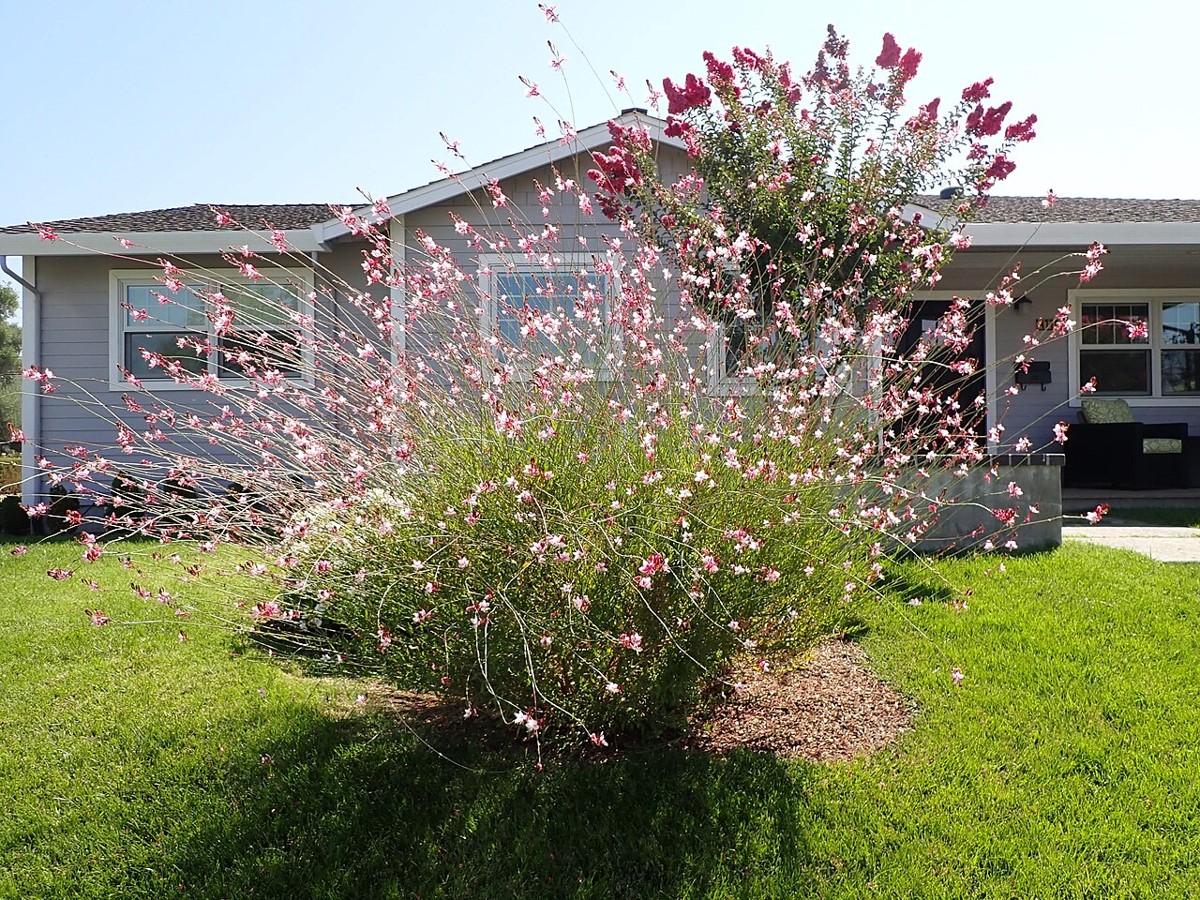
Lindheimer’s Beeblossom is a clump-forming herbaceous perennial with a deep, woody taproot and a basal rosette from which numerous slender, wiry flowering stems rise 2 to 4 feet tall (occasionally taller), arching outward in a loose, fountain-like form. The overall effect is light and see-through rather than dense or leafy, making it a useful “see-through” plant for the middle or back of a border.
Leaves
Basal leaves form a low rosette and are lance-shaped to oblong, 2 to 4 inches long, often with irregular wavy or toothed margins and sometimes a faint reddish midrib. Stem leaves are smaller, narrower, and more widely spaced as they ascend the flowering stems, giving the upper plant a sparse, airy look that lets the flowers take center stage.
Flowers
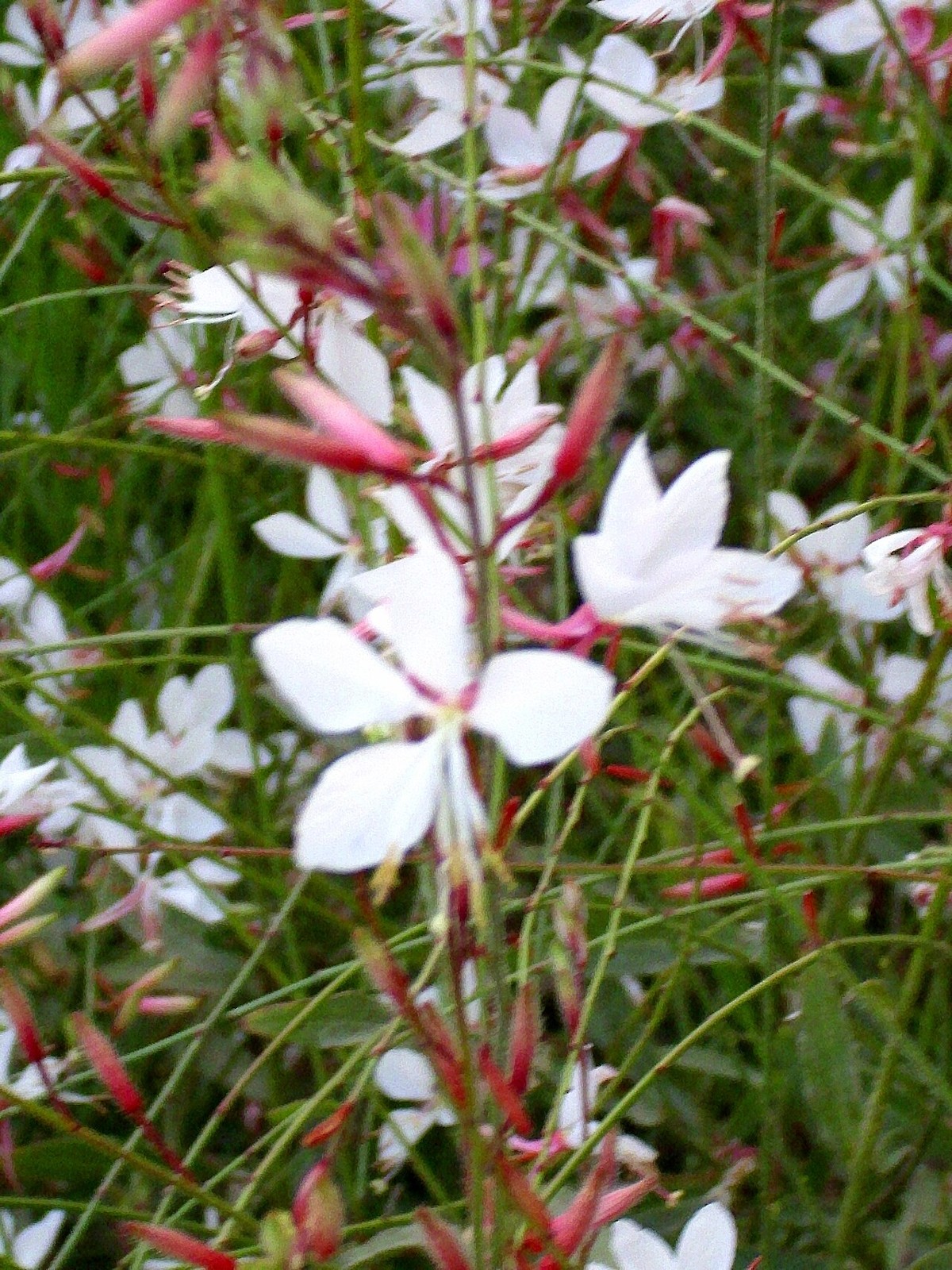
Flowers are borne along the upper portion of each wiry stem in a loose spike that elongates as the season progresses, opening a few at a time from the bottom up. Each flower is about 1 inch across with four spreading, slightly clawed petals that open white and age to pink as they fade — often giving a single stem a two-tone look of fresh white blooms near the tip and rosy pink older flowers below. Bloom runs from late spring through the first frost, one of the longest flowering seasons of any Texas native perennial.
Fruit & Seeds
After pollination, each flower develops into a small, hard, nut-like capsule (not a typical dry pod) that contains the seed. Capsules form along the stem below the still-blooming tip, and mature plants self-sow modestly where conditions suit them, though the species is not aggressive or weedy under normal garden care.
Quick Facts
| Scientific Name | Oenothera lindheimeri (syn. Gaura lindheimeri) |
| Family | Onagraceae (Evening Primrose) |
| Plant Type | Herbaceous Perennial Wildflower |
| Mature Height | 2–4 ft |
| Mature Spread | 2–3 ft |
| Growth Rate | Moderate to Fast |
| Sun Exposure | Full Sun to Light Shade |
| Water Needs | Low to Moderate; drought tolerant once established |
| Soil Type | Well-drained; sandy, loamy or clay soils |
| Soil pH | Adaptable; neutral to alkaline preferred |
| Bloom Time | Late spring – first frost |
| Flower Color | White, aging to pink |
| Fall Color | None notable; stems die back after hard frost |
| Fruit | Small hard capsules (inconspicuous) |
| Deer Resistant | Moderate; occasionally browsed |
| USDA Hardiness Zones | 5–9 |
Native Range
Lindheimer’s Beeblossom is native to Texas and southern Louisiana, where it grows across prairies, open woodlands, roadsides and disturbed ground on a wide range of soils. It is especially common in central, southern and eastern Texas — from the Hill Country and Blackland Prairies down through the Coastal Plain — and extends east into southern Louisiana.
Within this range it favors open, sunny sites: prairie remnants, pasture edges, roadside right-of-ways, and the sandy or clay soils of the Gulf Coastal Plain. It tolerates both seasonal drought and occasional wet spells, which helps explain its success both in the wild and in cultivated gardens with variable watering.
Because Lindheimer’s Beeblossom has become an extremely popular ornamental nationwide — commonly sold simply as “Gaura” at garden centers far outside Texas — gardeners elsewhere should know it is not native to their area even where it performs beautifully; treat it there as a well-behaved regional import rather than a local native.
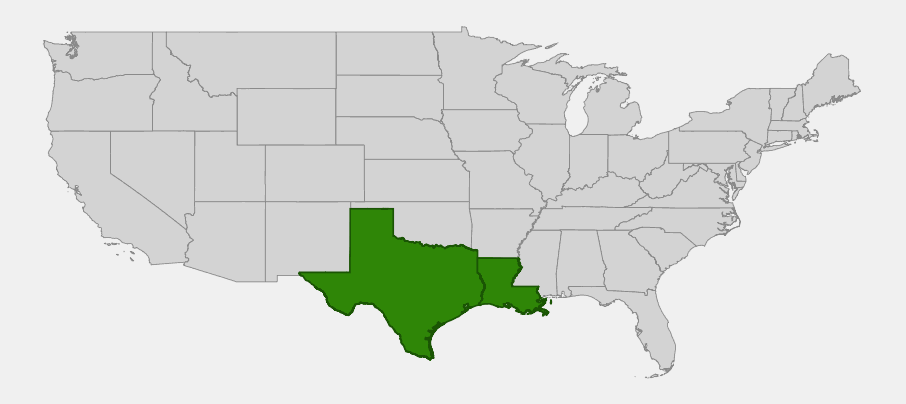
📋 Regional plant lists featuring Lindheimer’s Beeblossom: South and West Texas · Arkansas, Louisiana, Eastern Oklahoma & Eastern Texas
Growing & Care Guide
Lindheimer’s Beeblossom is one of the most forgiving and rewarding native perennials for a Texas or Gulf Coast garden, delivering months of movement and bloom for very little maintenance.
Light
Full sun produces the fullest, most floriferous plants, though it tolerates light afternoon shade, especially in the hottest parts of its range. In too much shade, stems stretch and flop and bloom thins out noticeably.
Soil & Water
This species is remarkably adaptable, growing well in sandy, loamy or clay soils as long as drainage is adequate — soggy, poorly drained ground is its main weak point, particularly in winter. Water regularly the first growing season to establish the taproot; afterward, established plants handle drought well and need only occasional deep watering during extended dry spells.
Planting Tips
Set out container plants in fall or spring, spacing them 2 to 3 feet apart to allow for their mature spread. Because the plant develops a deep taproot, it resents being moved once established, so choose a permanent spot from the start. Light, well-drained soil improves winter survival in the cooler parts of its hardiness range.
Pruning & Maintenance
Shear the plant back by about half in mid-summer if it becomes leggy or floppy; this encourages fresh growth and a renewed flush of bloom. Cut stems back hard to a few inches in late winter before new growth starts. Deadheading is not required for continued bloom, though removing spent stems keeps the clump tidier and limits self-sowing.
Landscape Uses
Lindheimer’s Beeblossom works beautifully in a range of garden styles:
- Cottage and pollinator borders, where its airy form softens bolder neighbors
- Xeriscapes and water-wise gardens once established
- Mixed prairie or meadow plantings alongside grasses and other wildflowers
- Mass plantings for a long-blooming drift of movement and color
- Container and patio plantings, where its arching stems spill attractively
Wildlife & Ecological Value
Despite its airy, delicate appearance, Lindheimer’s Beeblossom is a workhorse for pollinators across its long bloom season.
For Pollinators
The flowers are a magnet for native bees, honeybees, and a wide variety of butterflies and moths, including hummingbird moths drawn to its evening-primrose-family nectar. Its months-long bloom period makes it an unusually reliable, season-long nectar source compared to shorter-blooming prairie wildflowers.
For Birds
Hummingbirds occasionally visit the flowers for nectar, and the fine seed produced in the small capsules offers modest forage for seed-eating songbirds once stems mature and dry in late season.
For Mammals
The foliage is lightly to moderately palatable to deer and rabbits, who may browse young growth, though established plants generally tolerate light grazing without lasting harm thanks to their vigorous regrowth.
Ecosystem Role
As a long-blooming prairie forb, Lindheimer’s Beeblossom helps bridge the gap between spring’s heavier wildflower bloom and the grasses and composites of late summer, supplying a steady pollinator resource through the hottest months. Its deep taproot also helps it persist through drought on the open, often disturbed ground it favors.
Cultural & Historical Uses
Lindheimer’s Beeblossom commemorates Ferdinand Jacob Lindheimer, a German immigrant, scientist and newspaper editor who settled near New Braunfels, Texas, in the 1840s and spent decades collecting and cataloging the state’s flora, often at considerable personal risk during his travels through frontier Texas. His extensive specimen collections, sent to botanists George Engelmann and Asa Gray, resulted in dozens of Texas plants bearing his name, cementing his reputation as the “Father of Texas Botany.”
Unlike many prairie forbs of the region, Lindheimer’s Beeblossom has no significant documented history of food or medicinal use among Indigenous peoples or early settlers; its historical significance lies chiefly in its role in the formal botanical documentation of Texas flora during the 19th century.
In the 20th and 21st centuries, the species — usually still sold under its older name Gaura lindheimeri — became an international garden favorite, bred into numerous compact and colorful cultivars for the nursery trade. Its native Texas and Louisiana populations remain the wild source from which this now-global ornamental ultimately derives.
Frequently Asked Questions
Is Gaura the same plant as Lindheimer’s Beeblossom?
Yes. “Gaura lindheimeri” was the long-used scientific name, and “Gaura” remains the common nursery-trade name, but taxonomists have reclassified the species into the genus Oenothera as Oenothera lindheimeri. Native plant lists use the common name Lindheimer’s Beeblossom to avoid confusion with the many cultivated Gaura varieties sold.
Why do the flowers change from white to pink?
This is a normal part of the flower’s life cycle: blooms open white and gradually fade to pink as they age over a day or two, which is why a single flowering stem often shows both colors at once.
How long does Lindheimer’s Beeblossom bloom?
It is one of the longest-blooming native perennials available, typically flowering from late spring all the way to the first hard frost in fall — often four to six months of continuous color.
Does Lindheimer’s Beeblossom need deadheading to keep blooming?
No. It will continue producing new flowers along elongating stems without deadheading, though shearing back a leggy plant by half in midsummer often triggers a fresh flush of denser bloom.
Is Lindheimer’s Beeblossom native to my state if I live outside Texas or Louisiana?
No. It is native only to Texas and Louisiana. It is widely and successfully grown as an ornamental well beyond that range, but gardeners elsewhere should treat it as a regional import, not a local native, when making native-plant choices.