Pointleaf Manzanita (Arctostaphylos pungens)
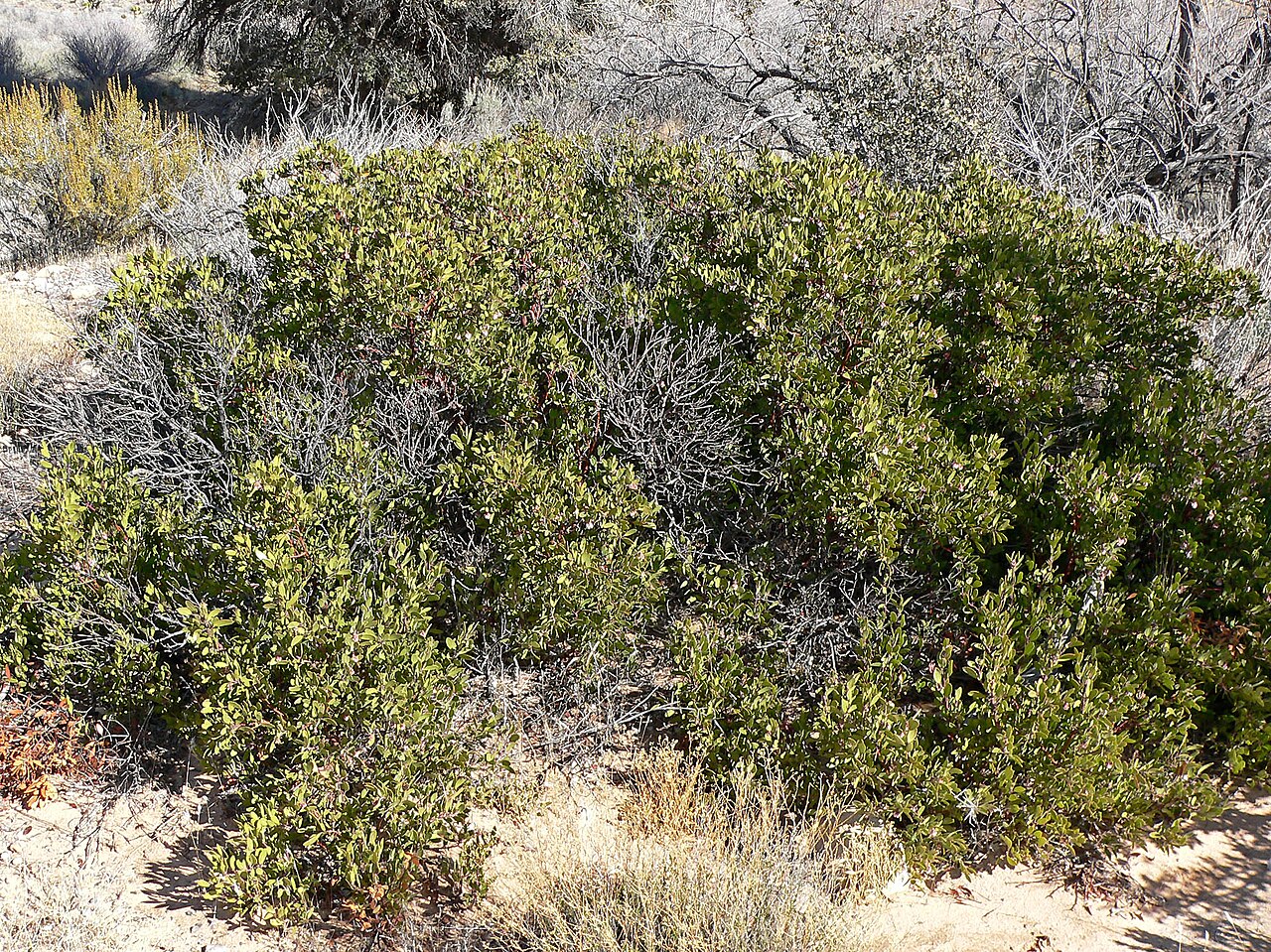
Arctostaphylos pungens, commonly called pointleaf manzanita, is the most widely distributed manzanita of the American Southwest, ranging from California across the desert and mountain Southwest into Texas and deep into Mexico. A member of the Ericaceae (heath family), it shares the genus’s hallmark smooth red bark and small urn-shaped flowers, but is distinguished by its pointed, lance-shaped leaves — the source of its common name — and its remarkable tolerance for dry, rocky terrain from chaparral foothills to Madrean evergreen woodland and desert ridges.
Pointleaf manzanita is an erect, rounded, many-branched evergreen shrub typically reaching 3 to 10 feet in height, forming dense, nearly impenetrable thickets on sun-exposed slopes. Its polished mahogany-red bark and glossy, pointed leaves make it one of the more ornamental and easily recognized manzanitas across its wide range, and its adaptability to everything from California chaparral to Chihuahuan Desert grassland edges makes it an unusually versatile choice for dry-climate native gardens across five states.
Though less showy in flower than some of its relatives, pointleaf manzanita more than makes up for it with toughness: it handles poor rocky soils, long dry seasons, and periodic fire with ease, and its fruit and dense cover support wildlife across a huge swath of the Southwest. For gardeners from the California foothills to the Trans-Pecos of Texas, it is one of the most dependable low-water native shrubs available.
Identification
Pointleaf manzanita is identified by its smooth, polished red-brown bark, pointed, lance-shaped evergreen leaves, and dense, rounded shrub form typically found on dry, open, rocky slopes. The combination of pointed (rather than rounded) leaf tips and lightly woolly new growth helps separate it from several similar manzanita species where its range overlaps with relatives.
Bark & Stems
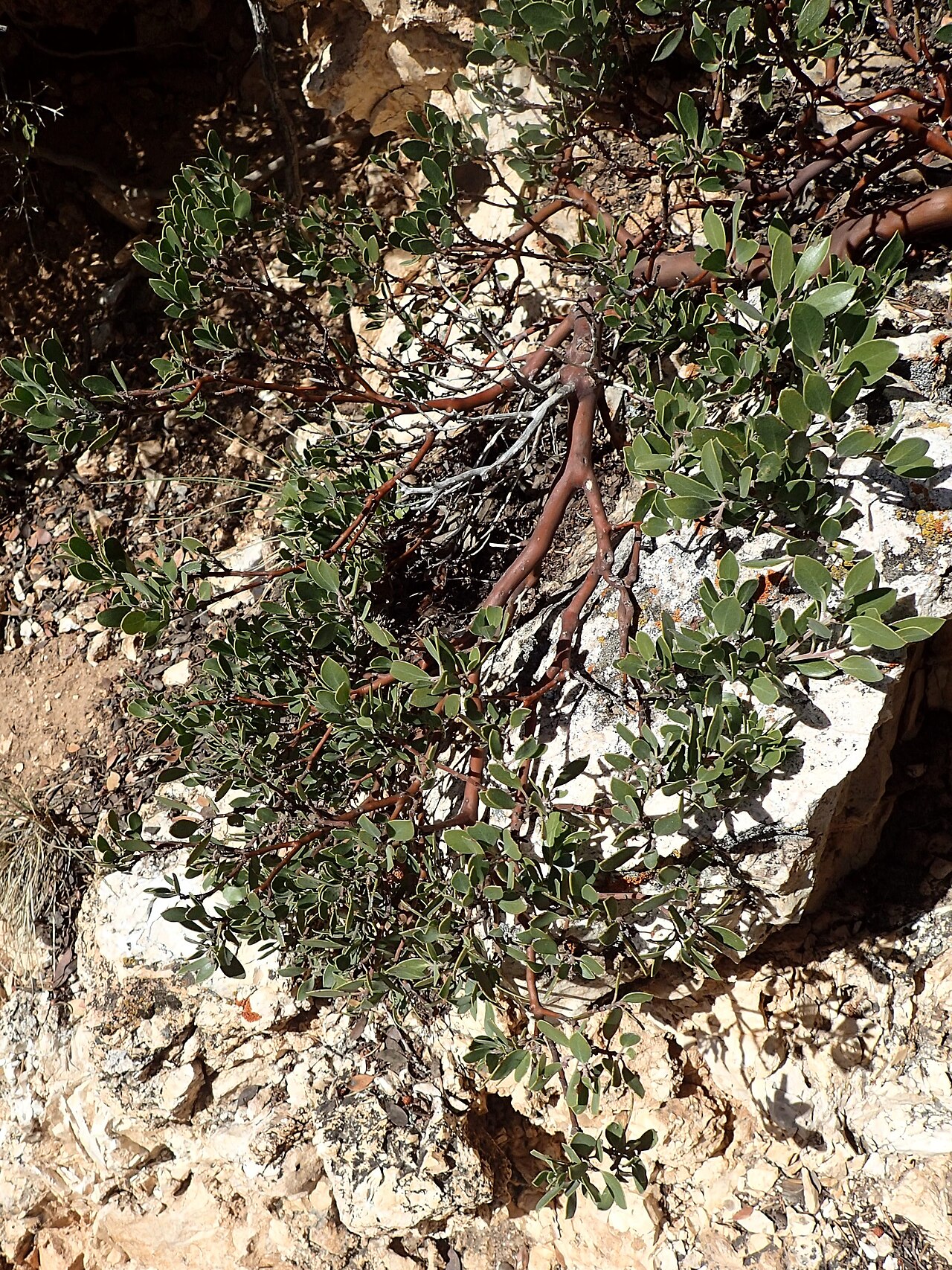
Mature stems are smooth, hard, and polished reddish to mahogany-brown, a hallmark of the genus, often peeling in thin curls on older wood. Young twigs are lightly woolly or hairy, becoming smooth with age. Many populations resprout vigorously from a woody basal burl after fire, allowing established plants to persist through repeated burns.
Leaves
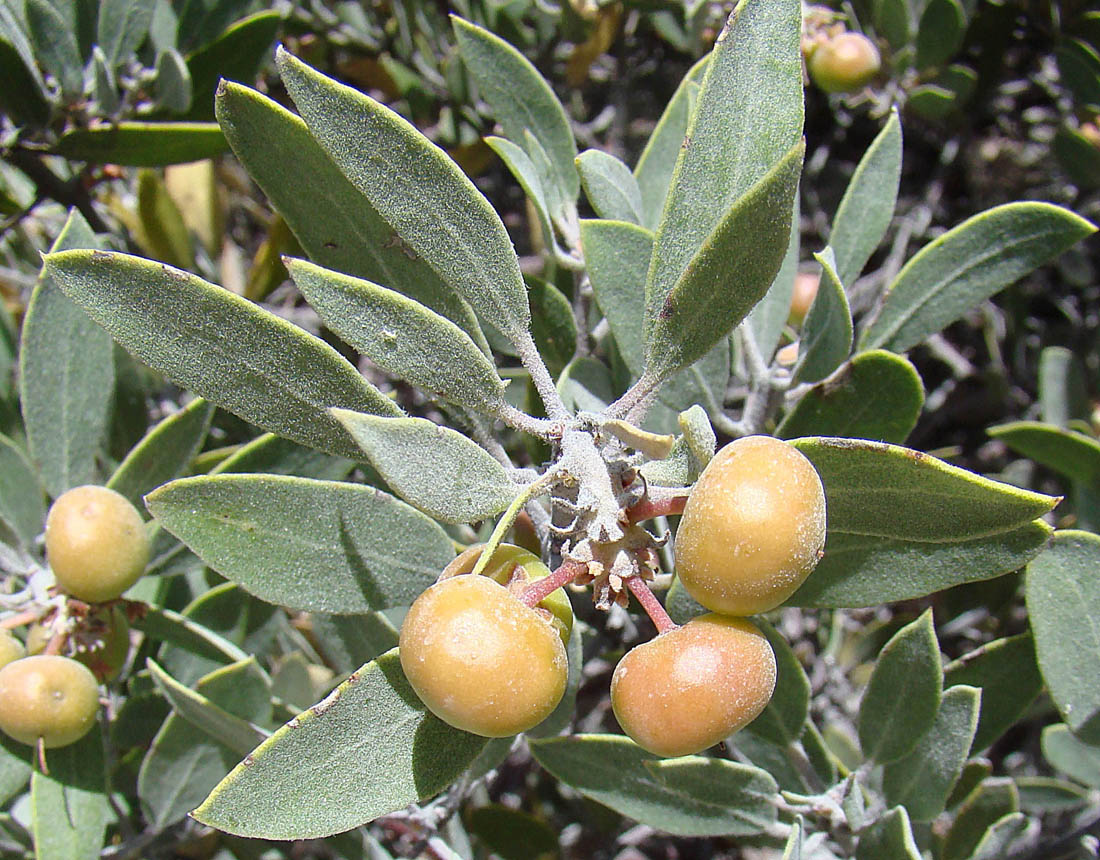
Leaves are evergreen, leathery, shiny green, and oval to narrowly lance-shaped, up to about 1.5 inches long, tapering to a distinct point at the tip — the trait that gives the species its common and scientific names (“pungens” means sharp-pointed). They are held at an angle to the sun, reducing heat and water loss during the hottest parts of the day.
Flowers
Flowers are small, white to pale pink, urn-shaped, and clustered in dense, rounded, spherical inflorescences at the branch tips — a more compact cluster shape than in many other manzanitas. Bloom time runs roughly from late winter into spring, varying with elevation and latitude across its wide range, and provides early-season nectar for hummingbirds and native bees.
Fruit & Seeds
The fruit is a small, round, berry-like drupe, roughly ¼ to ⅓ inch across, ripening from green to reddish-brown or orange-brown and often dusted with a fine, pale bloom. As in other manzanitas, the mealy flesh surrounds several hard, bony nutlets. Fruits ripen through summer and are an important food source for a wide range of desert and woodland wildlife.
Quick Facts
| Scientific Name | Arctostaphylos pungens |
| Family | Ericaceae (Heath) |
| Plant Type | Evergreen Shrub |
| Mature Height | 3–10 ft (0.9–3 m) |
| Mature Spread | 4–10 ft (1.2–3 m) |
| Growth Rate | Slow |
| Sun Exposure | Full Sun |
| Water Needs | Low |
| Soil Type | Rocky, gravelly, or sandy; well-drained |
| Soil pH | 6.0–7.5 |
| Bloom Time | February – April |
| Flower Color | White to pale pink |
| Fall Color | None (evergreen) |
| Fruit | Small reddish-brown mealy drupes (“little apples”) |
| Deer Resistant | Yes |
| USDA Hardiness Zones | 7–10 |
Native Range
Pointleaf manzanita has the broadest range of any manzanita in the Southwest, with confirmed county-level native populations across southern California, southern Nevada, Arizona, New Mexico, and the Trans-Pecos region of far western Texas, extending south through much of northern and central Mexico. It is one of relatively few manzanita species to grow natively outside California, reflecting its exceptional drought and heat tolerance.
It grows from roughly 2,000 to 7,000 feet in elevation, occupying a wide range of dry habitats: California and desert-mountain chaparral, Madrean evergreen (“oak”) woodland and encinal zones across the Sky Islands of Arizona and New Mexico, piñon-juniper woodland, and exposed desert ridges and canyon rims. This habitat breadth — from coastal-influenced California chaparral to the edge of the Chihuahuan Desert in Texas — is part of what makes pointleaf manzanita such a widely useful native landscape plant.
As with other manzanitas, pointleaf manzanita is adapted to periodic wildfire. Many populations resprout from a persistent basal burl after a burn, while fire also stimulates germination of long-dormant seed in the soil, allowing the species to recover quickly on burned slopes across its range.
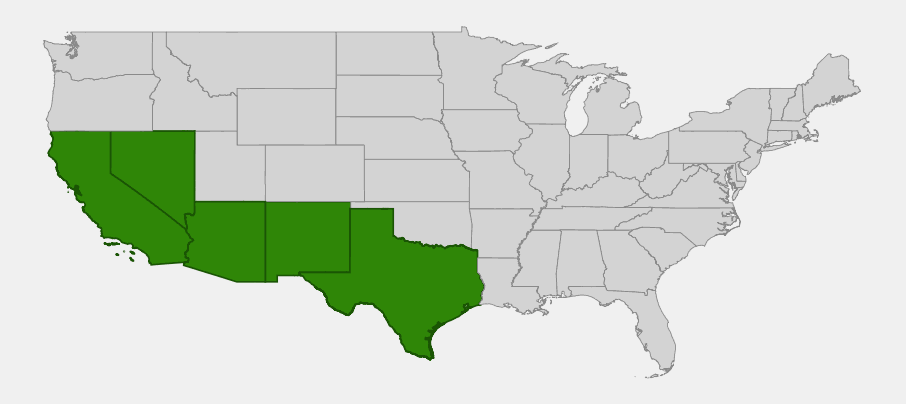
📋 Regional plant lists featuring pointleaf manzanita: California & Nevada · Arizona & New Mexico · South & West Texas
Growing & Care Guide
Pointleaf manzanita is one of the toughest, most drought-adapted shrubs available to Southwestern gardeners, thriving across a remarkably wide range of states once given the sharp drainage it needs.
Light
Full sun is essential. This is a shrub of open, exposed slopes and ridgelines, and it will grow thin and weak in shaded sites.
Soil & Water
Good drainage is critical. Pointleaf manzanita is naturally found on rocky, gravelly, or sandy soils with low organic content, and it is highly drought-tolerant once established, needing little to no supplemental water beyond natural rainfall in most of its range. Overwatering and heavy clay soils are the most common causes of failure in cultivation, typically leading to root and crown rot. Water during the first year or two to establish a deep root system, then reduce irrigation sharply.
Planting Tips
Plant from container stock in fall or early winter so roots can establish before summer heat arrives. Avoid heavily amended planting holes, which can trap moisture against the roots; native soil backfill is usually best. Keep irrigation away from the root crown and use gravel or coarse mulch rather than moisture-retentive wood chips piled against the stem base.
Pruning & Maintenance
Prune only to remove dead or damaged wood, since manzanitas generally do not resprout well from hard cuts into old growth. Once established on an appropriately lean, well-drained site, pointleaf manzanita needs very little ongoing care and is largely pest-free.
Landscape Uses
Its wide natural range makes pointleaf manzanita useful across many dry-climate gardens:
- Chaparral, woodland, and desert-edge restoration plantings
- Slope and bank stabilization on dry, rocky terrain
- Wildlife and pollinator gardens
- Xeriscape and low-water landscaping across its broad five-state range
- Fire-wise landscaping when maintained with defensible-space spacing
Fire Ecology
Pointleaf manzanita is well adapted to the fire-prone chaparral and woodland communities it inhabits. Many populations resprout from a basal burl after fire, and seed stored in the soil is stimulated to germinate by fire-related heat and chemical cues, allowing the species to recolonize burned ground across its range. As a resinous woody shrub it is flammable and should be sited with fire safety in mind near structures.
Wildlife & Ecological Value
Across its unusually broad range, pointleaf manzanita is an important food and cover plant for Southwestern wildlife.
For Birds
Early-season flowers provide nectar for hummingbirds, including migrating species passing through the Southwest, while the mealy summer fruit is eaten by scrub-jays, towhees, and other woodland and chaparral birds, which help disperse the seeds.
For Mammals
Black bears, coatis, gray foxes, and other mammals feed on the fruit where ranges overlap, and dense thickets provide cover and denning habitat. The tough, leathery leaves are generally unpalatable to deer, making this an effectively deer-resistant landscape shrub.
For Pollinators
The urn-shaped flowers are adapted for buzz pollination by native bees, including bumblebees, which are active in late winter and early spring when pointleaf manzanita is among the few shrubs in bloom across much of its range.
Ecosystem Role
As a widespread, fire-adapted shrub spanning chaparral, oak woodland, and desert-edge communities, pointleaf manzanita provides structural habitat and erosion control on steep, exposed terrain across five states and helps stabilize plant communities recovering from wildfire.
Cultural & Historical Uses
As with other manzanitas, the mealy fruit of pointleaf manzanita was historically gathered by Indigenous peoples across its range and prepared as a tart cider-like beverage, or dried and ground for storage. In parts of Mexico, the plant is known locally as “pingüica,” and its fruit and leaves have a history of traditional folk use. These are historical uses, not a foraging recommendation; always confirm plant identification with an expert before gathering wild plant material.
Frequently Asked Questions
Why does pointleaf manzanita grow in so many states?
Its exceptional tolerance for heat, drought, and poor rocky soils lets it thrive across a wide range of dry habitats, from California chaparral to Arizona and New Mexico oak woodland to the edge of the Chihuahuan Desert in Texas — a broader range than most other manzanita species, which tend to be narrowly restricted to California.
Can you eat the berries?
Yes, in small amounts — the fruit is not toxic — but it is dry and mealy rather than sweet or juicy, and historically was more often processed into a beverage than eaten raw.
Is pointleaf manzanita deer resistant?
Generally yes. Its tough, leathery leaves are not a preferred browse for deer, making it a reliable low-water choice in areas with deer pressure.
Why do manzanitas struggle in garden settings?
The most common problem is too much water, especially summer irrigation or planting in heavy, slow-draining soil. Give pointleaf manzanita sharp drainage and minimal water once established, and it is one of the most reliable native shrubs across its range.
What does “pungens” mean?
It refers to the sharply pointed tip of the leaves, which is the species’ most distinctive identifying feature compared to other manzanitas with blunter, more rounded leaves.

Looking for a nursery that carries pointleaf manzanita?
Browse our native plant nursery directory: California · Arizona · Nevada & New Mexico · Texas