Desert Senna (Senna armata)
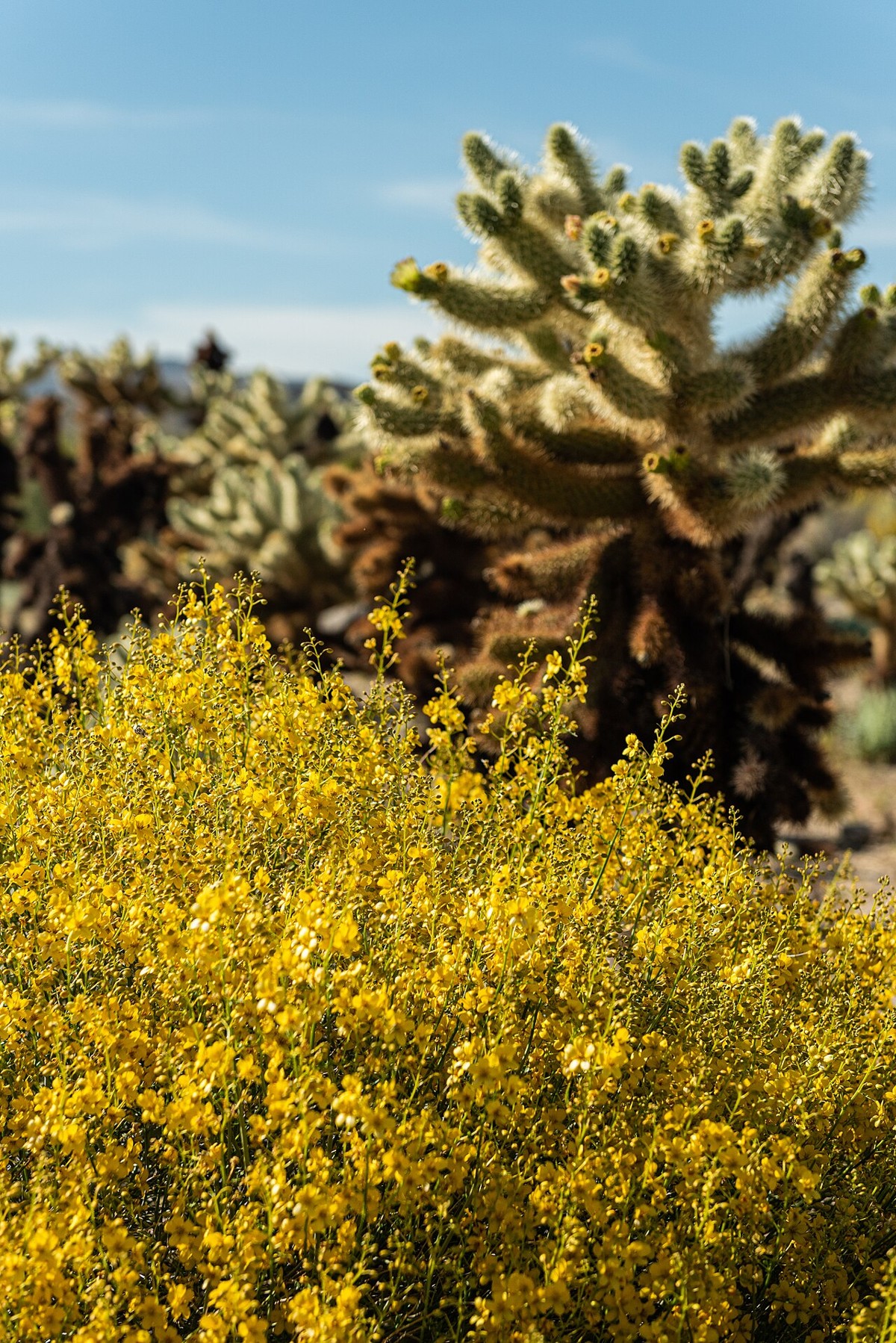
Senna armata, known as desert senna or spiny senna, is a wiry, thorn-tipped shrub of the Mojave and Sonoran deserts that spends most of the year looking like little more than a tangle of bare green stems — then erupts for a few weeks each spring into a haze of fragrant, bright yellow flowers. A member of the legume family (Fabaceae, subfamily Caesalpinioideae), it is one of the desert’s quiet workhorses: unglamorous for most of the year, but a genuinely striking and valuable plant when it blooms.
Desert senna rarely tops 3 feet in height, forming a rounded, intricately branched shrub of grooved green stems that taper to sharp spine tips. Its small leaves emerge after rain but drop again within days or weeks, so the plant photosynthesizes mainly through its green stems — a water-saving strategy shared by many true desert shrubs. When the spring flush of yellow-to-salmon flowers opens, it is one of the more conspicuous and sweetly scented blooms of the low desert, drawing bees to washes and rocky flats that otherwise look nearly bare.
In the garden, desert senna is a specialty plant for low-desert xeriscapes, native plant gardens, and habitat restoration within its natural range in Nevada, Arizona, and the eastern Mojave of California. It needs essentially no irrigation once established and tolerates heat, drought, and poor rocky soil that would stress most other flowering shrubs.
Identification
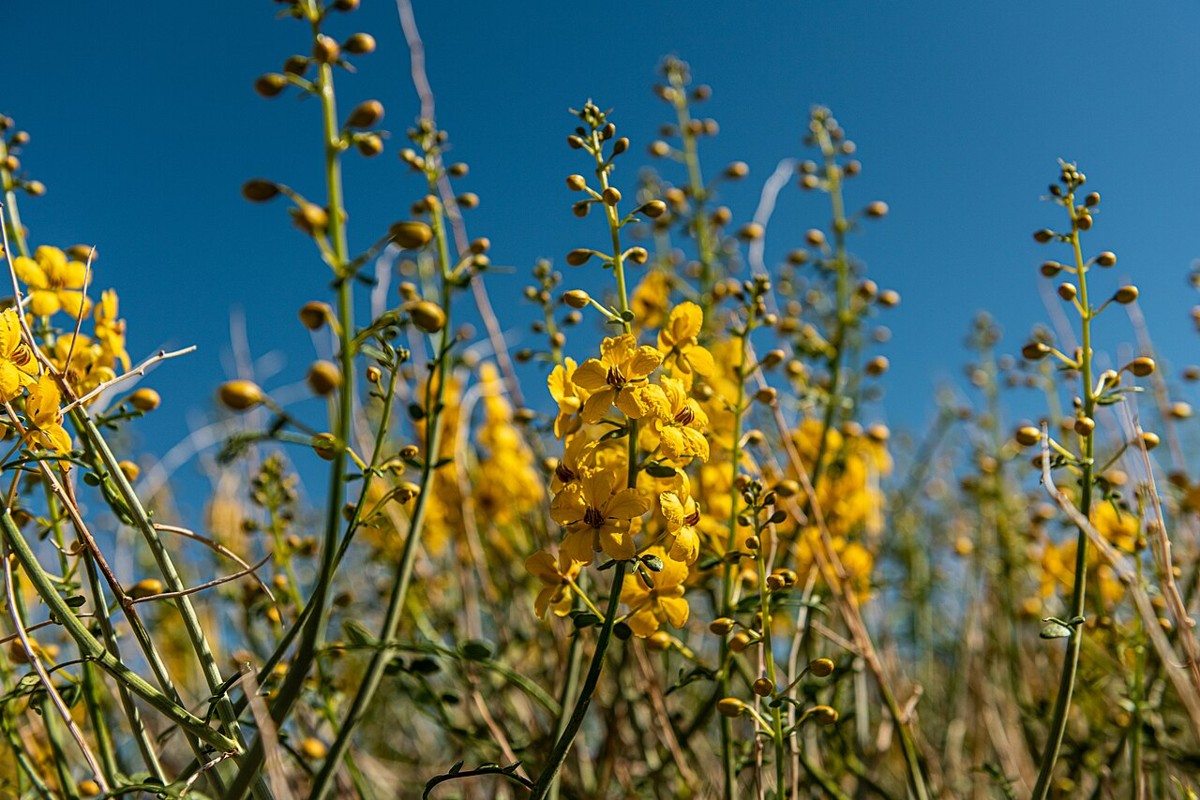
Desert senna is a many-branched shrub growing to about 3 feet (1 m) tall and somewhat wider, with distinctive grooved, blue-green to yellow-green stems that branch at wide angles and often narrow to sharp, rigid spine tips. The stems carry fine, soft hairs that help the plant cope with intense desert heat and light. Because the shrub is leafless for much of the year, its silhouette of interlacing, spine-tipped green stems is often the easiest way to recognize it even when not in bloom.
Leaves
Leaves are small and pinnately compound, each made up of two to four pairs of small, rounded leaflets. They appear briefly after rainfall, typically in late winter or spring, then drop within days to a few weeks — leaving the shrub’s green stems to carry on most of the year’s photosynthesis. This ephemeral leafing habit is a key water-conserving adaptation and the reason the shrub looks “leafless” more often than not.
Flowers
Flowers appear singly or in small clusters in the leaf axils in spring, each about ½ inch (roughly 1 cm) across with five rounded petals ranging from clear yellow to a warm salmon-pink, often with fine reddish veining near the center. The blooms are notably fragrant, filling desert washes with a sweet scent during the bloom window, usually from March into May depending on elevation and winter rainfall.
Fruit & Seeds
After flowering, desert senna produces slender, flattened legume pods up to about 1.5 inches (4 cm) long, typical of the pea family. The pods dry and eventually split to release small, hard seeds. Seed production can vary considerably from year to year depending on rainfall.
Quick Facts
| Scientific Name | Senna armata (syn. Cassia armata) |
| Family | Fabaceae (Caesalpinioideae) |
| Plant Type | Deciduous Desert Shrub |
| Mature Height | 2–3 ft (0.6–1 m) |
| Mature Spread | 2–4 ft |
| Growth Rate | Slow to moderate |
| Sun Exposure | Full Sun |
| Water Needs | Very Low once established |
| Soil Type | Sandy or rocky, well-drained; desert washes and flats |
| Soil pH | 7.0–8.5 (neutral to alkaline) |
| Bloom Time | March – May |
| Flower Color | Yellow to salmon-pink |
| Fall Color | None (leaves drop green, shortly after emerging) |
| Fruit | Flattened legume pods to 1.5 in (4 cm) |
| Deer Resistant | Yes (spiny stems deter browsing) |
| USDA Hardiness Zones | 8–10 |
Native Range
Desert senna is native to the hot, dry deserts of the American Southwest centered on the region where Nevada, Arizona, and eastern California converge, extending south into northern Baja California, Mexico. Within the United States, county-level records confirm it in southern Nevada, western and central Arizona, and the eastern Mojave and Colorado Desert portions of California.
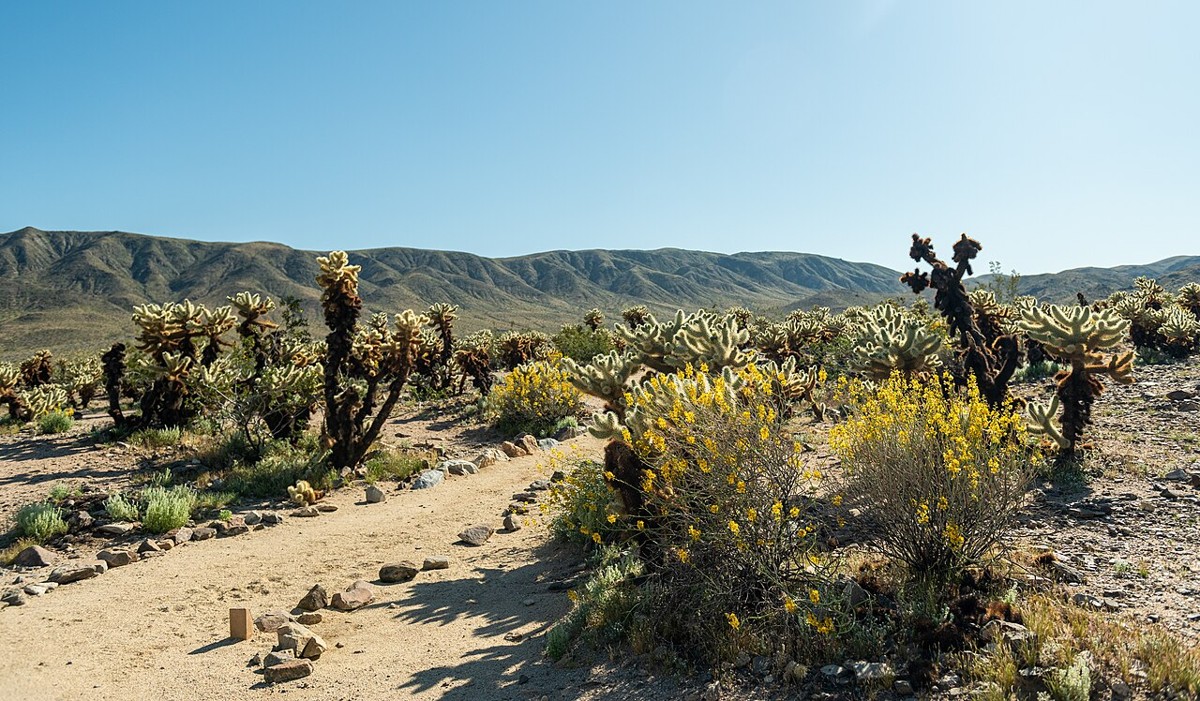
It grows in sandy and rocky desert habitats, especially along arroyos, washes, and the gravelly margins of desert flats where occasional flash flooding provides deeper soil moisture than the surrounding ground. It is a common associate of creosote bush scrub and cholla cactus gardens at low to moderate desert elevations, generally below about 4,000 feet.
Desert senna is not native outside this core Mojave–Sonoran desert region, and gardeners outside the Southwest’s hot desert climates should not expect it to naturalize or perform well; it is strictly a plant of hot, dry, low-elevation desert conditions.
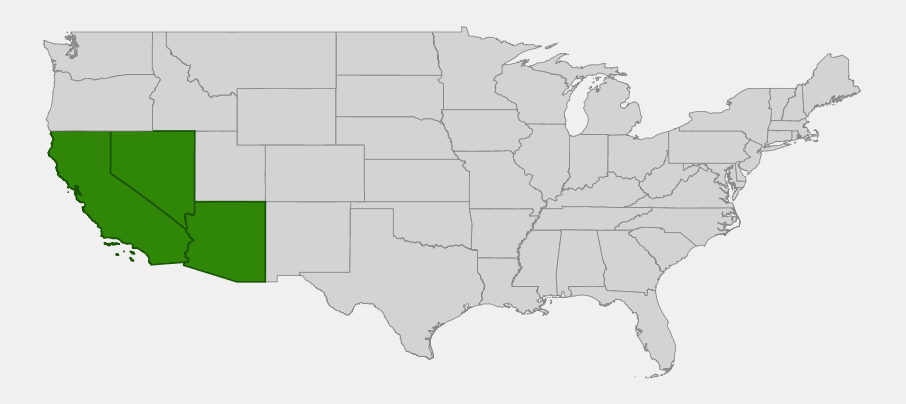
📋 Regional plant lists featuring Desert senna: California & Nevada · Arizona & New Mexico
Growing & Care Guide
Desert senna rewards gardeners who can offer it the hot, sunny, fast-draining conditions it experiences in the wild. It is not a plant for average garden soil or regular watering schedules, but in a low-desert xeriscape it thrives with almost no maintenance.
Light
Full sun is essential. Desert senna is adapted to some of the hottest, most exposed sites in the Southwest and shows its best flowering and most compact form in full, unshaded sun.
Soil & Water
Plant in sandy or rocky, fast-draining soil; a neutral to alkaline pH suits it well. Once established, desert senna needs very little supplemental water — occasional deep watering during the driest stretches of summer is usually enough, and established plants in their native range often receive no irrigation at all. Overwatering or heavy, poorly drained soil is the most common cause of failure.
Planting Tips
Set out young plants in fall or early spring so roots can establish before the heat of summer. Choose a site that mimics a desert wash or rocky flat — full sun, good drainage, and room for the shrub’s wide, airy branching habit. Because the stems taper to sharp spines, avoid planting directly along paths or in areas with heavy foot traffic.
Pruning & Maintenance
Little pruning is needed. Remove dead or damaged branches as they appear; because the plant is naturally leafless much of the year, dead wood can be hard to distinguish from the living green stems until new growth or flowering shows which branches are alive. Avoid shearing, which spoils the shrub’s natural, airy branching form.
Propagation
Desert senna is most commonly propagated from seed, which benefits from scarification (nicking the hard seed coat) to improve germination. Seedlings should be grown in a very free-draining cactus or desert-plant mix and given full sun as soon as they are established.
Landscape Uses
- Low-desert xeriscaping requiring essentially no irrigation once established
- Native habitat restoration in disturbed washes and desert flats
- Wildlife and pollinator gardens for its fragrant spring bloom
- Textural accent among cacti and succulents, thanks to its wiry, spine-tipped form
- Barrier or informal screen plantings where its spiny stems discourage foot traffic
Wildlife & Ecological Value
Despite its modest size, desert senna is an important spring resource in a landscape where blooming plants are often scarce.
For Pollinators
The fragrant, nectar-rich flowers attract native bees in large numbers during the spring bloom, along with other pollinating insects drawn by the scent and color. In the desert’s narrow spring bloom window, concentrated nectar sources like desert senna are especially valuable to foraging bees building up reserves before the dry season.
For Birds
The dense, spiny branching of desert senna offers small desert birds a measure of protection from predators while perching or nesting, and the seed pods can provide an incidental food source for seed-eating birds later in the season.
For Mammals
Small desert mammals use the tangled, spiny branches for cover from predators, and some rodents feed opportunistically on the seed pods. The plant’s spines make it unattractive browse for larger herbivores such as deer, which helps it persist in heavily grazed or browsed desert areas.
Ecosystem Role
As a nitrogen-fixing legume, desert senna can help enrich the famously poor soils of desert washes and flats, benefiting neighboring plants. Its brief, intense bloom period helps support pollinator populations during a critical early-season window, and its structure adds habitat complexity to otherwise open, sparsely vegetated desert ground.
Cultural & Historical Uses
Like many desert legumes, desert senna has a modest history of use among Indigenous peoples of the Mojave and Sonoran Desert region, though it was never a major food or medicinal plant compared to larger desert resources such as mesquite or agave. Some ethnobotanical accounts note the use of senna species more broadly within the region for their traditional purgative properties, consistent with the genus Senna‘s long association worldwide with mild laxative compounds found in the leaves and pods of various species.
Today desert senna is primarily valued by native plant gardeners, desert landscapers, and habitat restoration projects rather than for any commercial or medicinal use. Its chief modern contribution is ornamental and ecological — a tough, low-water shrub that adds spring color and pollinator value to desert gardens with almost no care.
Frequently Asked Questions
Why does desert senna look leafless most of the year?
Its small leaves emerge briefly after rain, usually in late winter or spring, then drop within days to weeks. The green, grooved stems take over photosynthesis for the rest of the year, which helps the plant conserve water in its hot desert habitat.
Is desert senna the same as the senna used in herbal laxative products?
Commercial senna laxatives are generally made from other Senna species, such as Senna alexandrina. Desert senna is a different, wild desert species grown for landscaping and habitat value, not harvested commercially for medicinal use, and should not be used as a home remedy.
Does desert senna need regular watering in the garden?
No. Once established, it is extremely drought-tolerant and generally needs only occasional deep watering during the hottest, driest parts of summer. Overwatering in heavy soil is far more likely to harm the plant than underwatering.
Are the spines on desert senna dangerous?
The stems taper to sharp, rigid spine tips that can scratch skin or snag clothing, so it’s best planted away from paths and play areas. The spines are a physical hazard rather than a toxic one.
Can desert senna be grown outside the Mojave and Sonoran deserts?
It is best suited to hot, dry, low-elevation desert climates similar to its native range. Gardeners in cooler, wetter, or higher-elevation regions are unlikely to have success with it outdoors and should consider other native shrubs suited to their local conditions instead.

Looking for a nursery that carries Desert senna?
Browse our native plant nursery directory: California · Nevada · Arizona